
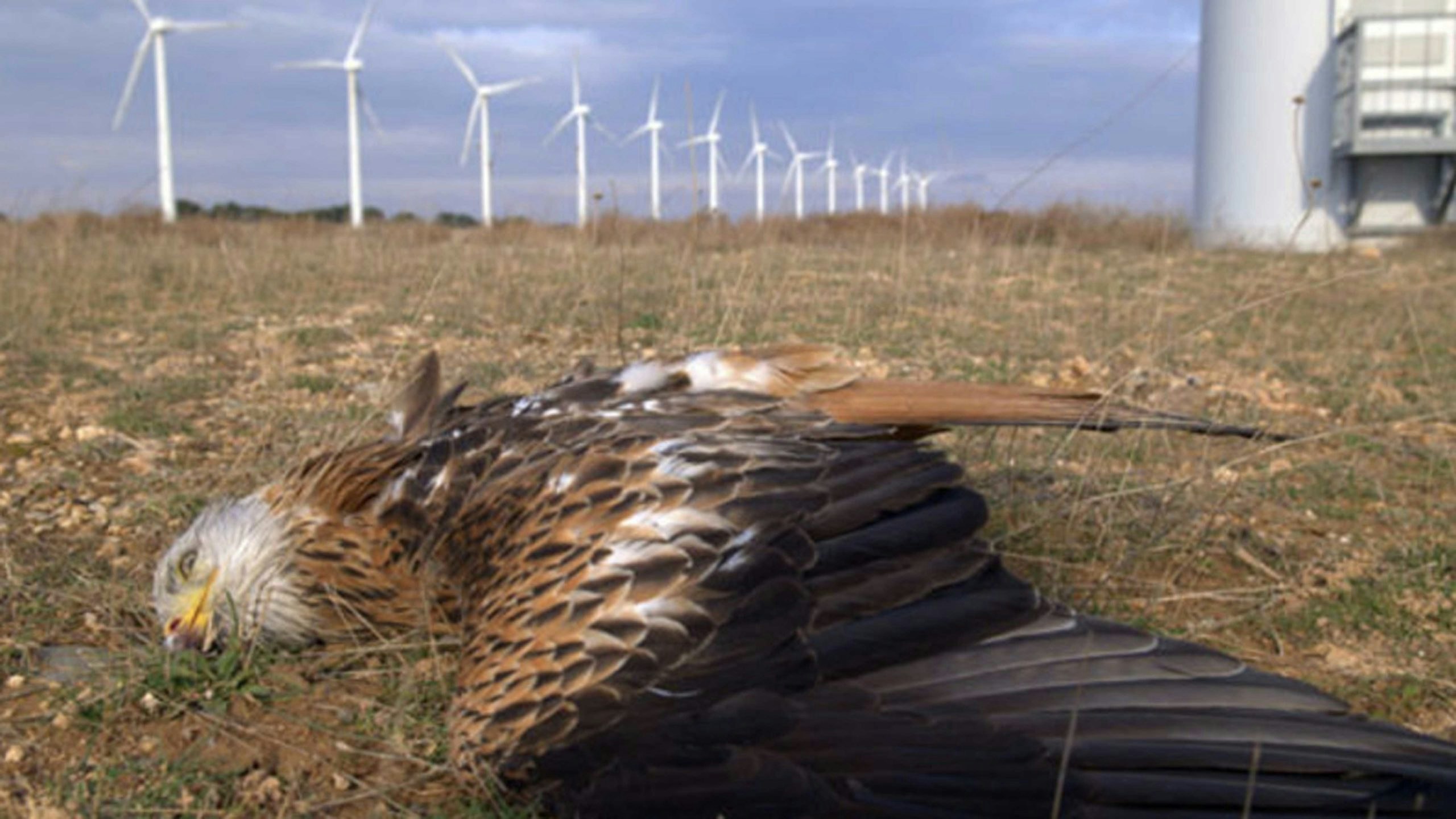
Wind turbines kill thousands of Wyoming birds and bats every year, but a wildlife official says that emerging technology might help lower the kill count.
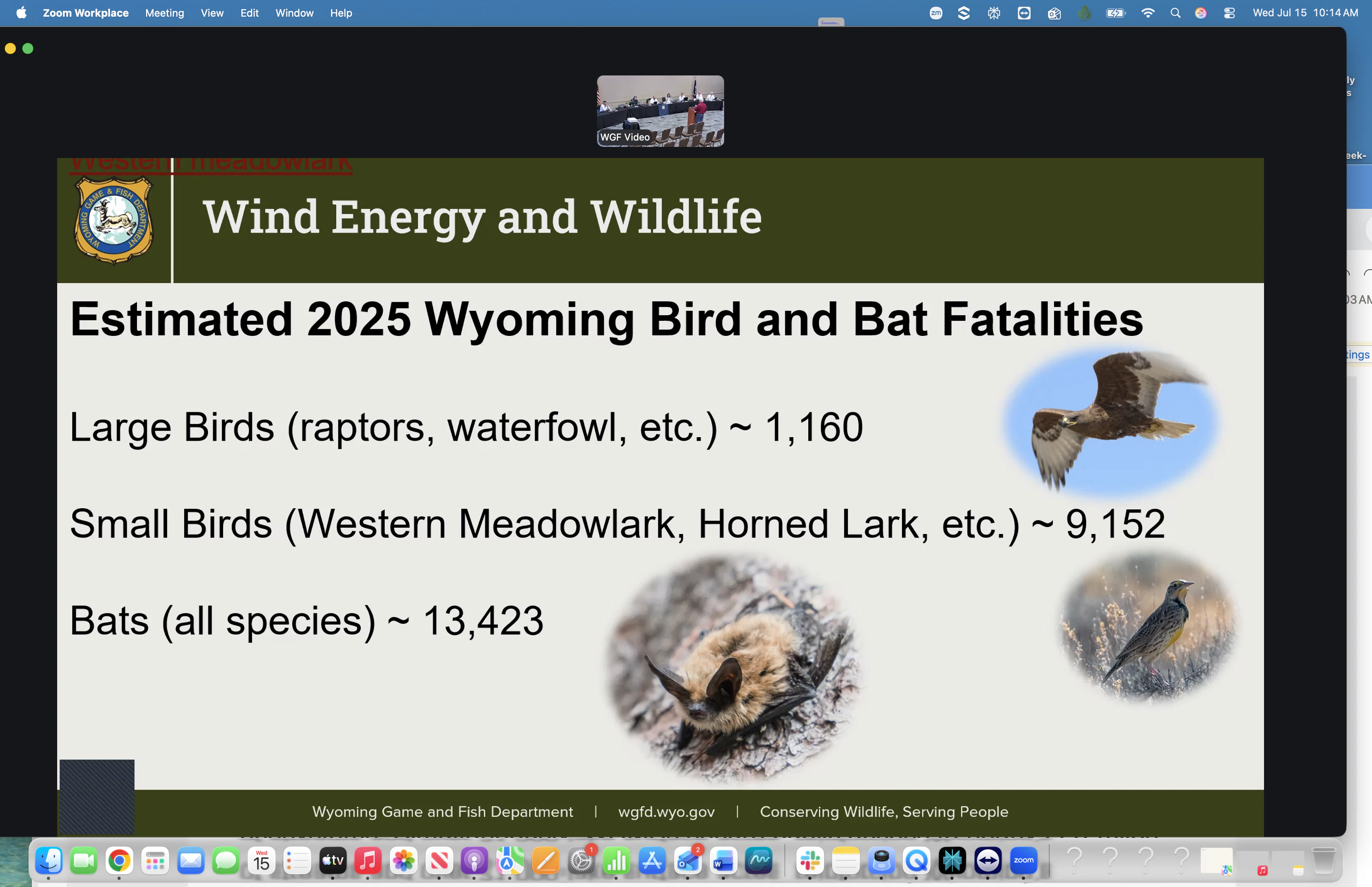
In 2025, wind turbines killed 1,160 large birds, such as raptors and waterfowl, Wyoming Game and Fish habitat protection program supervisor Will Schultz told the state Game and Fish Commission on Wednesday.
Turbine blades also killed 9,152 small birds, such as meadowlarks, and 13,423 bats, Schultz said.
Fast-spinning turbine blades aren’t always the most deadly, he added.
“A lot of the mortality for birds and bats happens at very low wind speeds, because they’re flying around and they’re not paying attention to those blades,” Schultz said.
The official tallies might not represent all the birds and bats killed by wind turbines, he said. The deaths are recorded by people, usually private contractors, who occasionally walk around underneath turbines and count carcasses.
Sometimes, dogs are brought in to help make the counts more accurate, Schultz said.
Wyoming’s bird and bat losses are generally considered to be within the acceptable range by region-wide standards, he said.
What Can Game And Fish Do?
Game and Fish doesn’t have the authority to approve or deny permits for wind power projects, Schultz said. That rests with the seven-member Industrial Siting Council under the Wyoming Department of Environmental Quality.
Game and Fish works closely with project permit applicants, usually long before ground is broken, he said.
Biologists determine what effects a project might have on Wyoming’s birds, wildlife, fish and plants, Schultz said. And they can offer guidance on how to lessen the effects on wildlife and the environment.
Game and Fish can also advise the Industrial Siting Council about what permit conditions might help save wildlife and conserve the ecosystem, he said.
Once a wind farm is up and running, Game and Fish can also help monitor its effects on wildlife and offer ideas for mitigation, he said.
Commissioner John Masterson asked Schultz if Game and Fish has the authority to tell a wind energy developer, “You have way exceeded the acceptable number of raptors that have been killed, you have to shut down until we figure that out.”
Schultz said in such an instance, Game and Fish could bring its concerns before the Siting Council, but only the council has the authority to shut a wind farm down.
Mitigation Efforts
Technology might help stem the tide of bird and bat deaths, Schultz said, adding that it’s been a common practice to post people with binoculars on wind farms.
Those people can watch for birds, particularly raptors, and shut turbines down, which allows for eagles and hawks to fly through safely, Schultz said.
Increasingly, a technology called IdentiFlight makes it unnecessary to post people on site, he said.
The system uses cameras to monitor bird traffic and can automatically shut down and restart turbines as needed, Schultz said.
In some cases “painting one blade of a wind turbine black” help birds see it before it’s too late, he said, adding that hundreds of hours of work and research have gone into wind farm risk mitigation.
Anti-Wind Farm Activist Remains Skeptical
Laramie resident Anne Brande, founder of the Albany County Conservancy, has lobbied against wind farms for years.
She wasn’t at Wednesday’s Game and Fish Commission meeting, but told Cowboy State Daily that she appreciates the department’s efforts to mitigate bird deaths.
She’s particularly concerned about golden eagles.
Wyoming has a significant resident population of the large raptors that favor wide-open country, where they can hunt rabbits and prairie dogs.
The state’s population of golden eagles is also thought to double during the winter when many of them migrate in from the north.
Golden eagles’ preferred habitat puts them at greater risk of hitting wind turbine blades, Brande said.
And the secondary effects of power lines spreading out from wind farms also isn’t considered, she said.
Golden eagles can be easily disturbed by too much human activity and new structures, which might cause them to abandon their nests, Brande said.
The eagles are also a key “indicator species” of how well Wyoming’s ecosystems are doing, she said.
“If every single golden eagle nest is valuable, can we afford to screw up?” Brande added.
She thinks the number of eagles, other birds and bats killed by wind turbines are undercounted “big time.”
While systems such as IdentiFlight might help, Brande said she’s skeptical whether that will be enough to make a real difference.
Mark Heinz can be reached at mark@cowboystatedaily.com.


