Note: Gold Rush Days was held on July 11 - 12, 2026
On a hot July afternoon, the boom of an anvil blast rolls through South Pass City like distant thunder. The windows rattle, the chests shake, and a nervous border collie scrambles for cover under the knees of a kind stranger from Ireland, who has stumbled on this scene completely by accident.
Tom Murphy was just looking for a cooler spot in Wyoming to be than the 103 degrees forecast elsewhere.
South Pass won at 87 degrees, and soon it had won his heart as well. He was loving what he saw. A place where history does not sit quietly behind glass. It explodes, it snorts, and it clanks, too.
Sometimes, it even bolts — which almost happened when one gentleman’s hat blew under Randy Melton’s period-correct stagecoach, which was being pulled by four jet-black mules.
“Whoa up!” Melton said firmly, pulling back on the reins, urging the mules to stand still so the hat could be retrieved untrammeled.
The mules weren’t having it, though.
The owner of the wayward hat had to wait for the stagecoach to leave the area before he could retrieve his hat.
Fortunately, it was only slightly battered and dusty for the escapade. It was back in place before the clatter of mule hooves on hardpan had quite faded away.
The people on the streets returned to their chatter, and Murphy marveled at the full-on sensory experience that chance had lured him to. He’d had no idea when he set out that he was about to visit one of the West’s best-preserved Gold Rush towns.
A young woman named Elizabeth Isenhart was soon floating across the dusty street toward Murphy and the stagecoach area, wearing a satiny green ballgown and hoop skirt that rippled in the breeze.
It was as if she’d stepped from a daguerreotype into the 21st century right before his eyes.
History was alive on the streets of South Pass City, a place of gold dust and dreams — though never enough gold to satisfy all those fevered dreams.
History That You Can See And Touch
Isenhart more typically avoids standing out, but South Pass City’s Gold Rush Days is an exception to the rule. It’s the one day of the year where she takes out her cloak of history and time travels to another era.
In a crowd full of cavalry uniforms and calico, her satiny mint green ball gown made her an instant celebrity.
Children asked if she was a princess. Strangers complimented her dress and asked for selfies.
Isenhart, normally shy, eagerly complied.
The dress was a graduation gift from her mother to a high schooler obsessed with history.
“I have always wanted an old-fashioned, hoop skirt — poofy dress,” she told Cowboy State Daily. “So that was her graduation present to me, making me one of those.”
Isenhart learned to love history in South Pass City as a fourth-grade girl. The first time her mother brought her, there was gold-panning by the riverside.
“She didn’t want to stop doing that,” her mother recalled with a chuckle.
But there was so much more to do and see in South Pass City.
“They had all this stuff going on,” she said. “Everyone’s dressed up. There were demonstrations.”
And there were exhibits, lots of exhibits, which started an endless stream of questions for her mother to answer.
“I’d be like, ‘Mom, why is this? Why is that?’ And she just explained to me how things were different back then.”
Teeny, tiny beds, for example, that two people would share. And stoves that sat so low to the floor, they were barely up to her waist.
“It’s different than history class,” she said. “It’s being there, looking at it, and then having her say, ‘Yeah, this is how it all works. This is how it was.’”
In South Pass City, the “old days” aren’t some phrase in a textbook. They’re something Isenhart and other children like her could see and smell and touch.
She has loved history ever since, and South Pass City in particular.

Once a roaring gold capital, South Pass City, Wyoming, comes to life for one summer weekend every year for Gold Rush Days. There's cannon fire, gold panning, and guests who look the part in one of the West’s best-preserved Gold Rush towns. (Renee Jean, Cowboy State Daily) 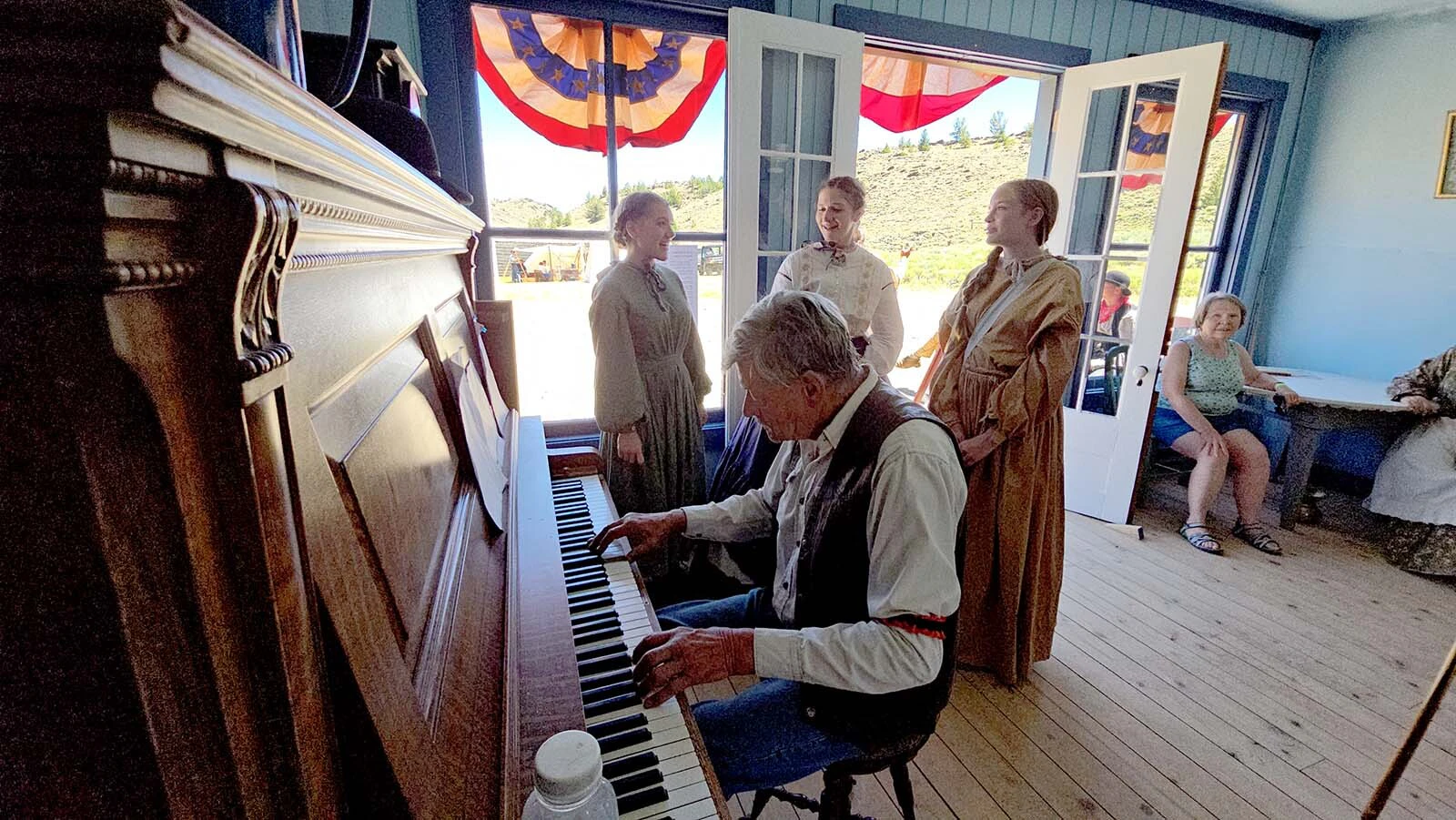
South Pass City's piano man John Mionczynski plays 1800s tunes while members of the North Platte Bridge Company sing along. (Renee Jean, Cowboy State Daily) 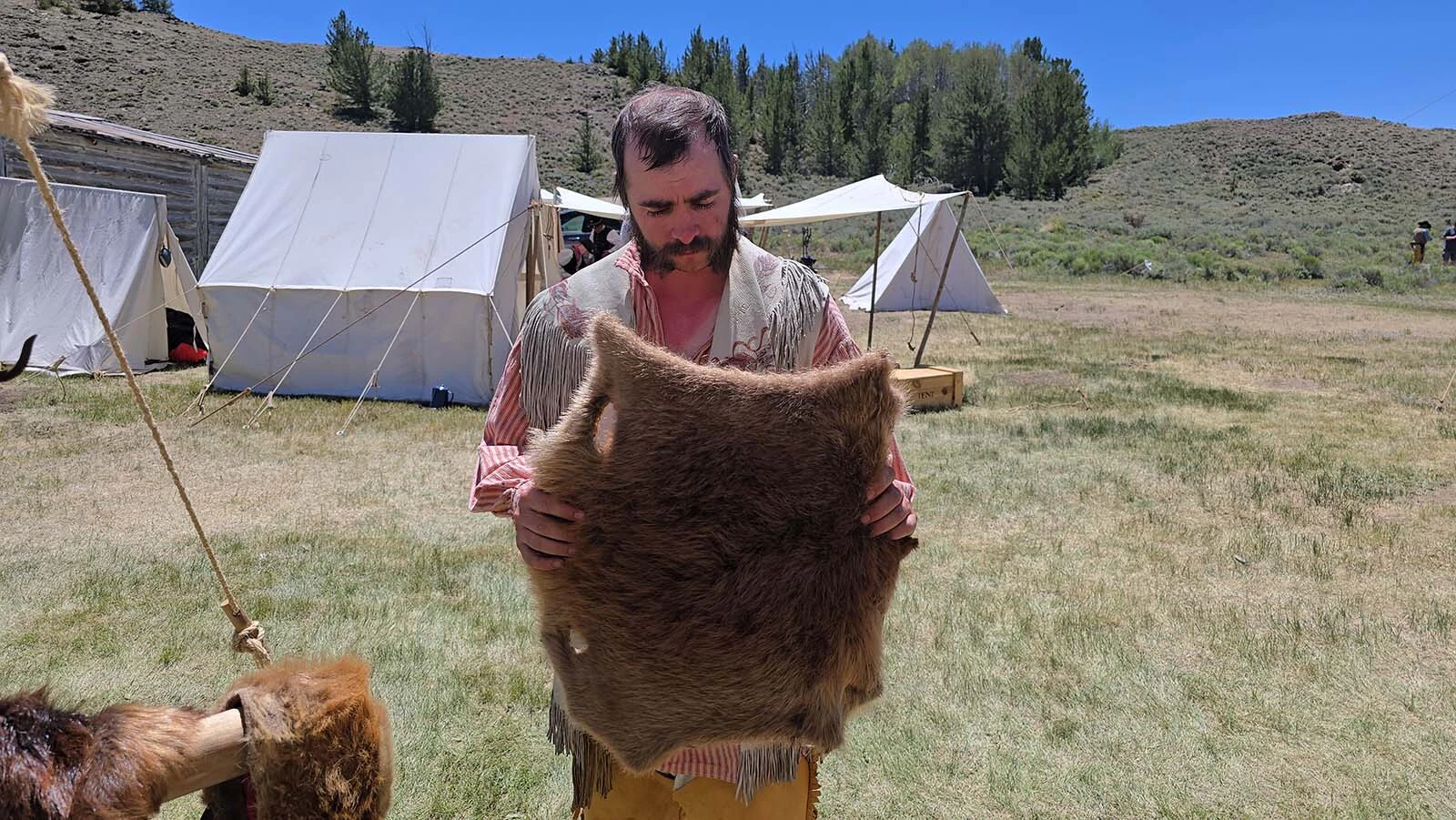
Josh Camp talks about beaver hides during Gold Rush Days, which for a brief time were worth more than gold in South Pass City. (Renee Jean, Cowboy State Daily) 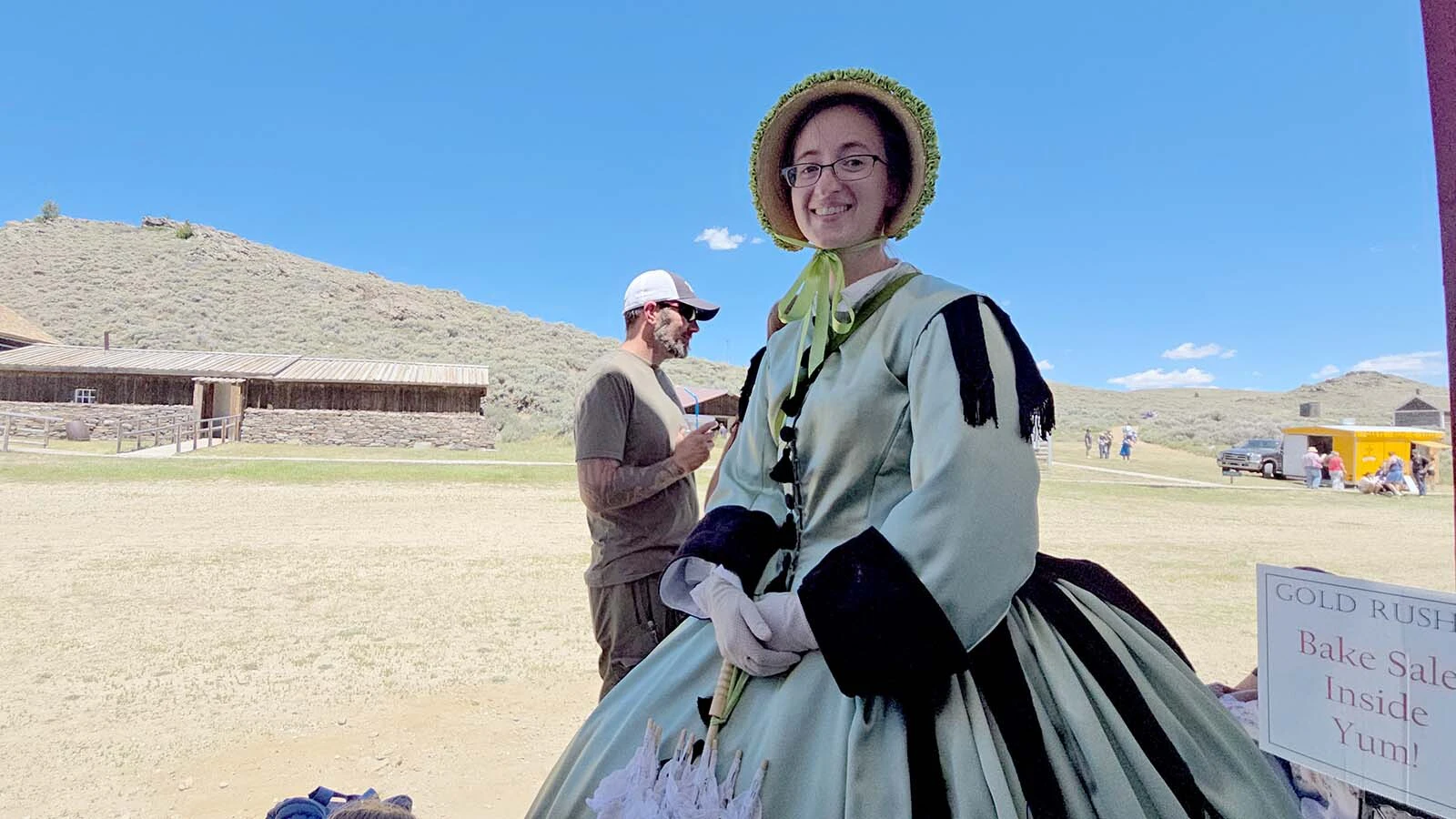
Elizabeth Isenhart showed up for South Pass City's Gold Rush Days in a mint green satin ball gown her mother gave her for a graduation gift. (Renee Jean, Cowboy State Daily) 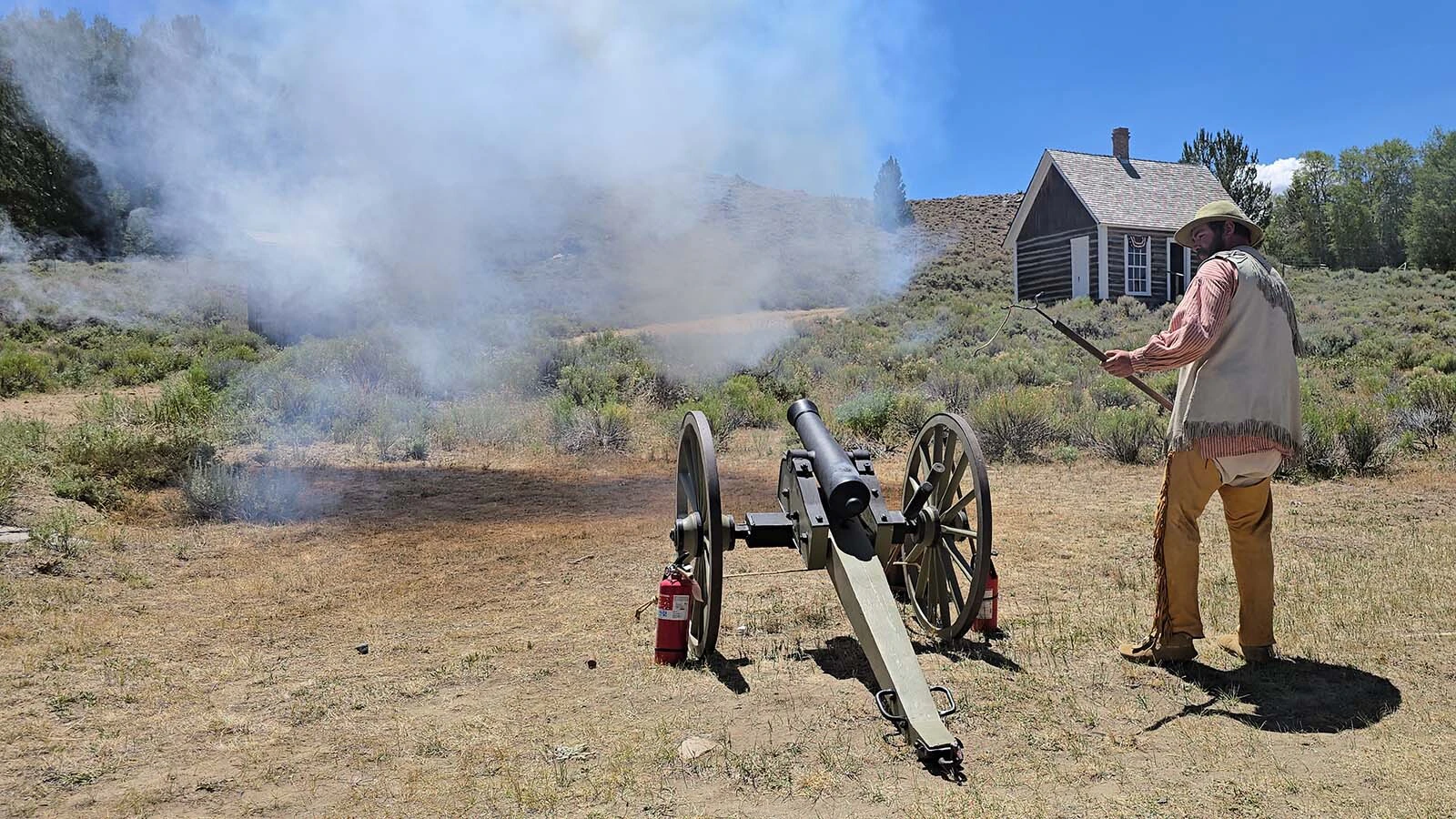
Josh Camp lights the cannon during Gold Rush Days at South Pass City. (Renee Jean, Cowboy State Daily) 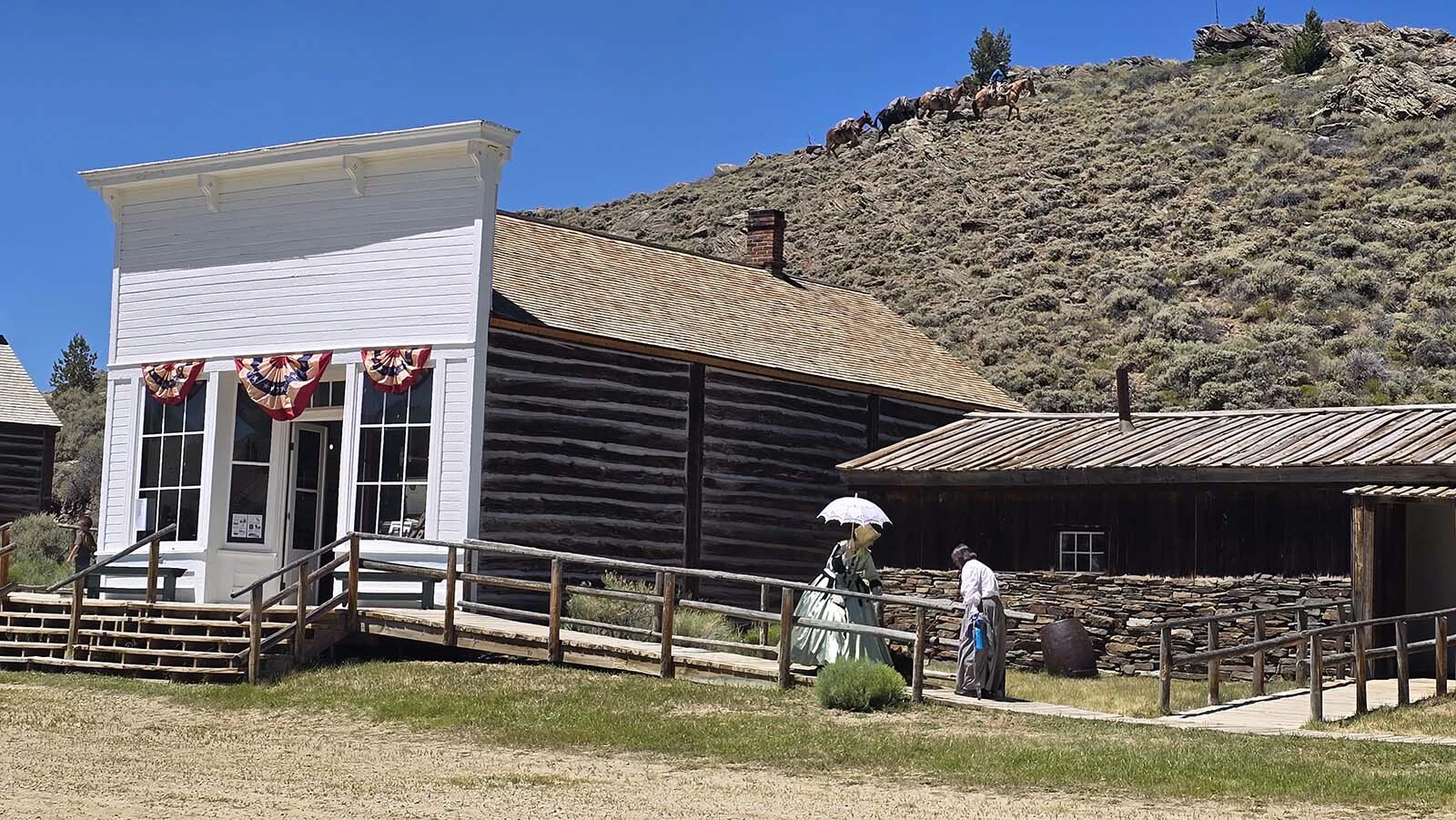
A pack mule team climbs the hill behind South Pass City while a pair of visitors dressed in period attire walk to the Sherlock Store. (Renee Jean, Cowboy State Daily)
South Pass And The Story Of Our Nation
People were coming to the South Pass region long before gold was discovered because it was a major western migration route.
“This is the convergence of the Rocky Mountains, the Continental Divide,” North Platte Bridge Company Commander Nick Salicky told Cowboy State Daily. “This is the one place where you can cross through without going over the mountains.”
Salicky brought a company of 24 reenactors to South Pass for Gold Rush Days, to help escort supply wagons and civilians, as well as help chase would-be robbers out of town — all roles that the military would have played when South Pass City was young.
Long before the cannon booms and stagecoaches of Gold Rush Days, thousands of emigrants crossed this same ground on the Oregon, Mormon and California trails. They were chasing dreams and hoping for fortune in a new land as they passed through its wide gentle gap — never realizing a literal fortune in gold lay under their feet.
When that gold was finally discovered, it may have been little more than a flash in the pan, but it still helped spur the new territory’s economy. It was also part of what helped bring people to Wyoming, to eventually create a state.
“This is our story as a nation,” Salicky said. “You can’t put a price tag on this land. You can’t put a price tag on the stories of the people, these visitors walking around, learning how to do things the traditional way.
“In a world where everything’s for sale, you’ve gotta have a place where that’s not the case. And historical places like this are significant for that right there.”
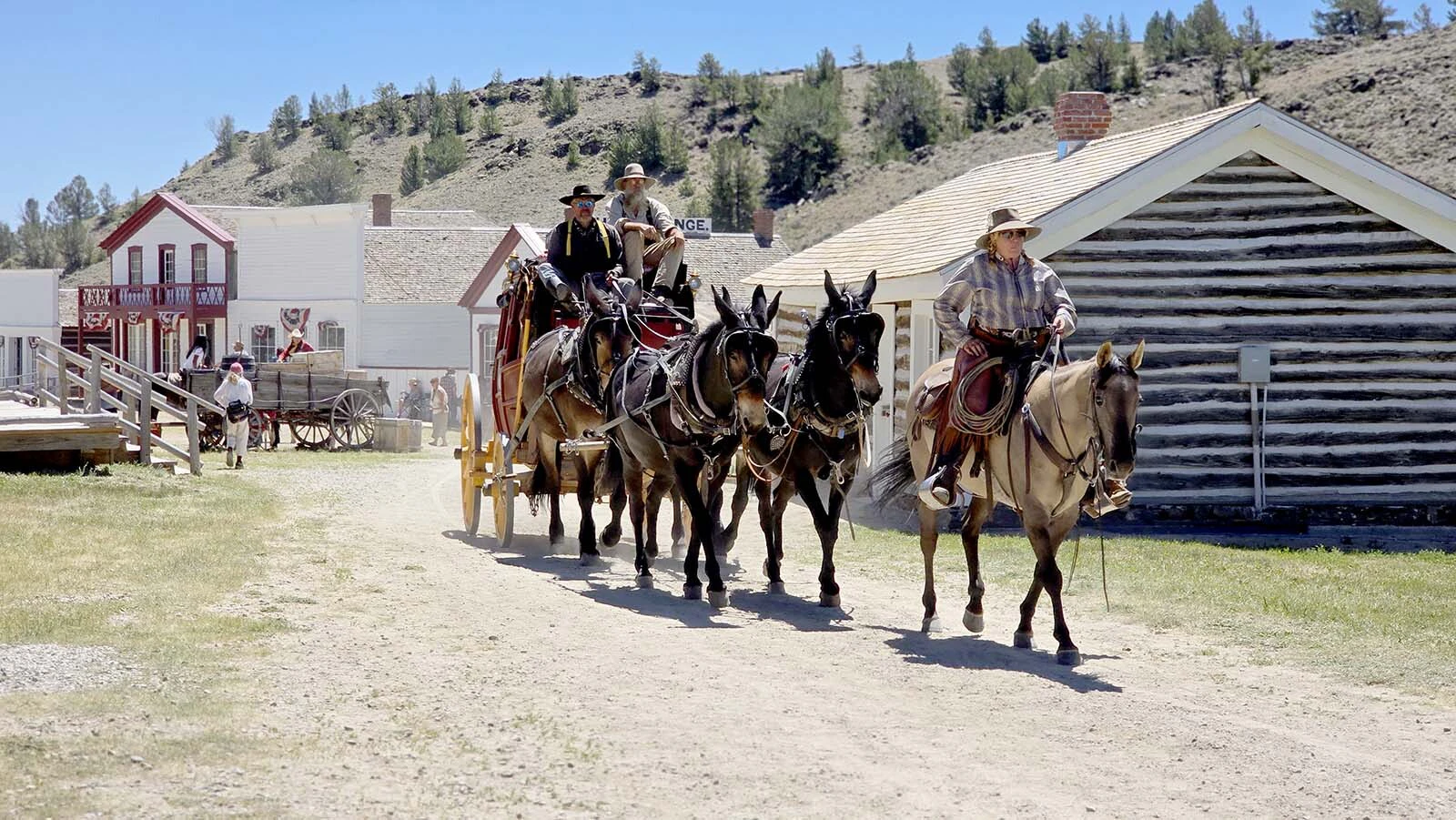
Randy Melton's stagecoach was busy nonstop during South Pass City's Gold Rush Days transporting guests from one end of South Pass City to another. (Renee Jean, Cowboy State Daily) 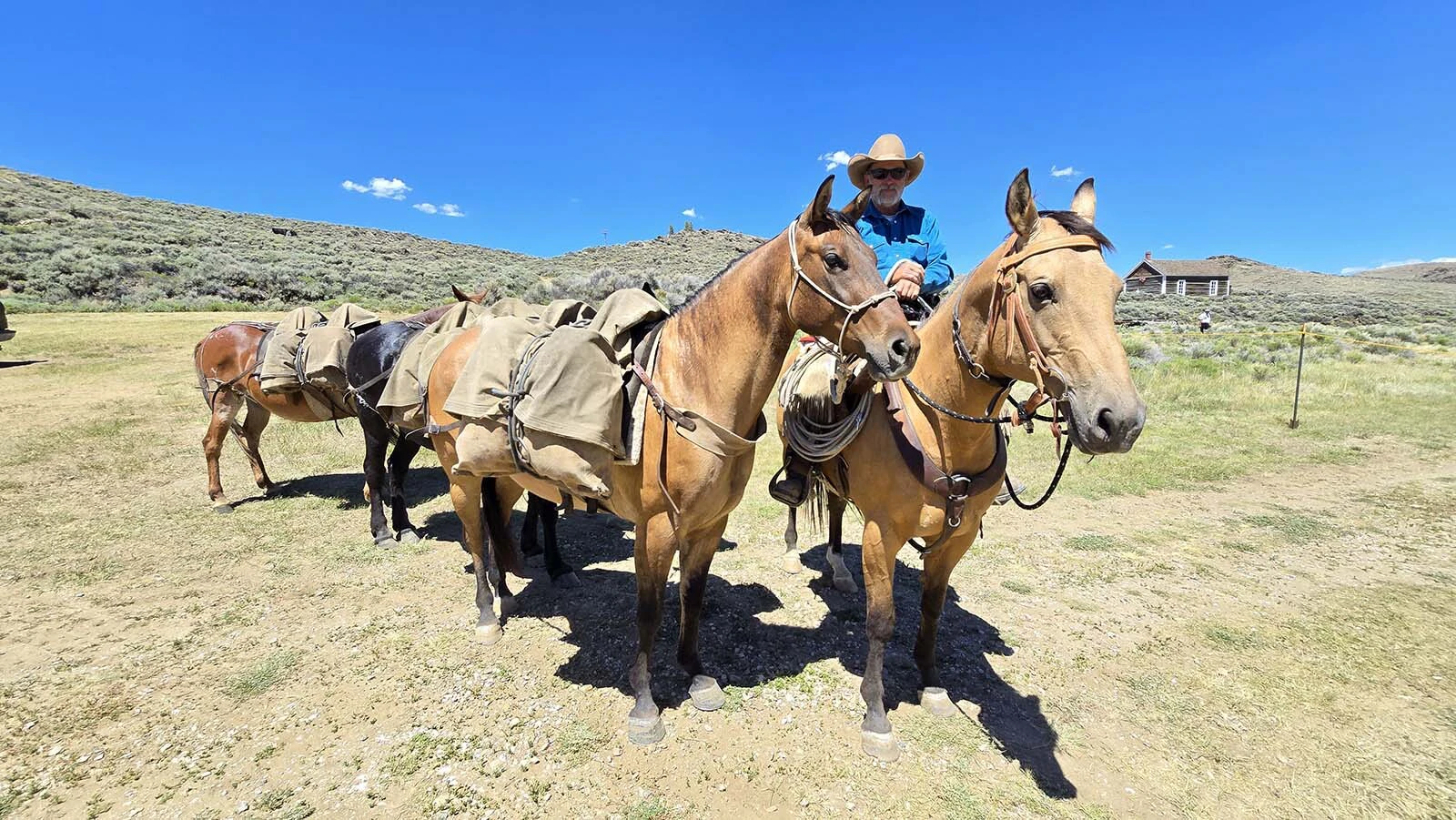
Jimmy Wiser poses with his pack mule team at South Pass City's Gold Rush Days. (Renee Jean, Cowboy State Daily) 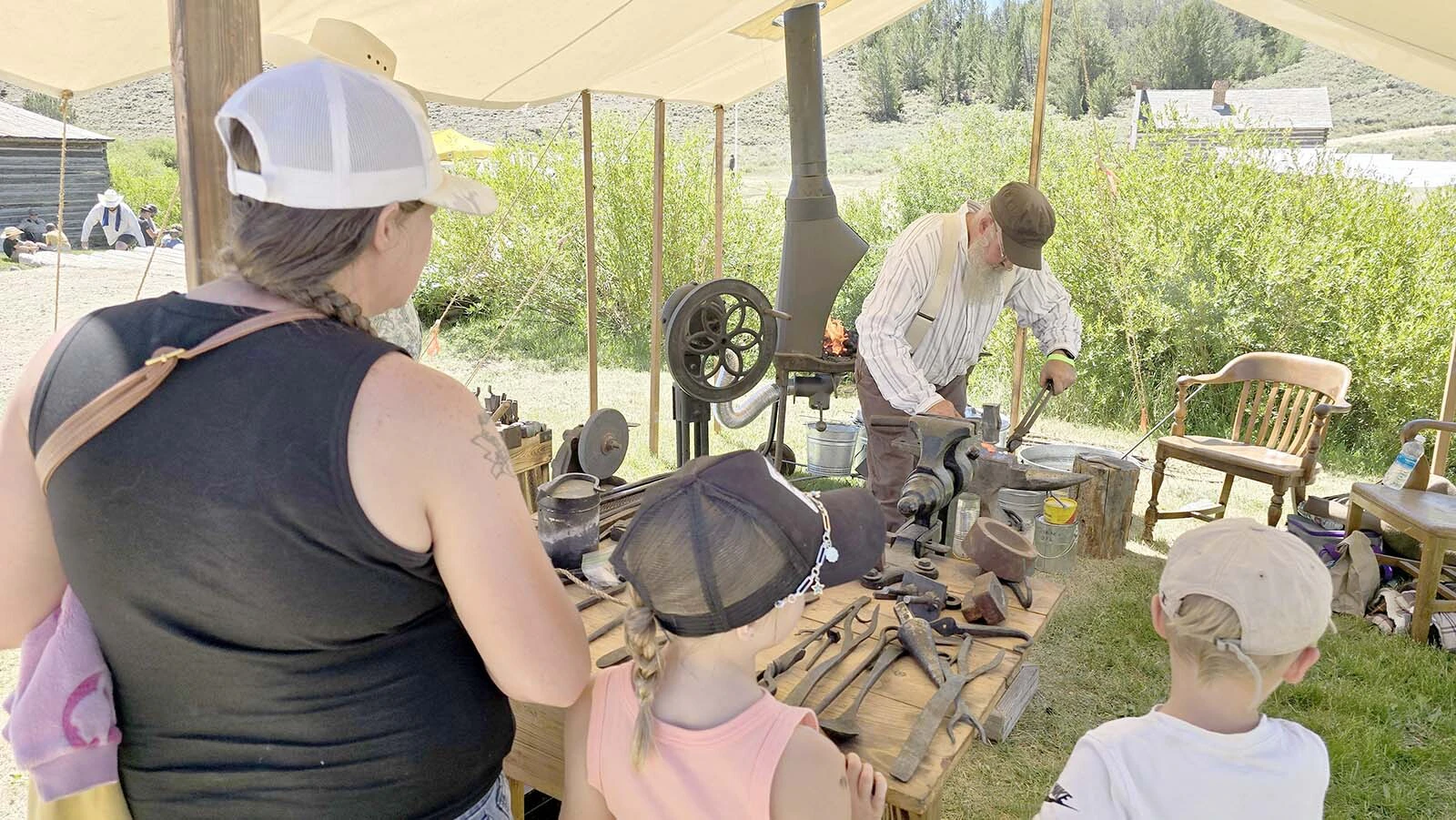
Guests watch as the blacksmith of South Pass City demonstrates the fine art of crafting metal tools back in the 1870s. (Renee Jean, Cowboy State Daily) 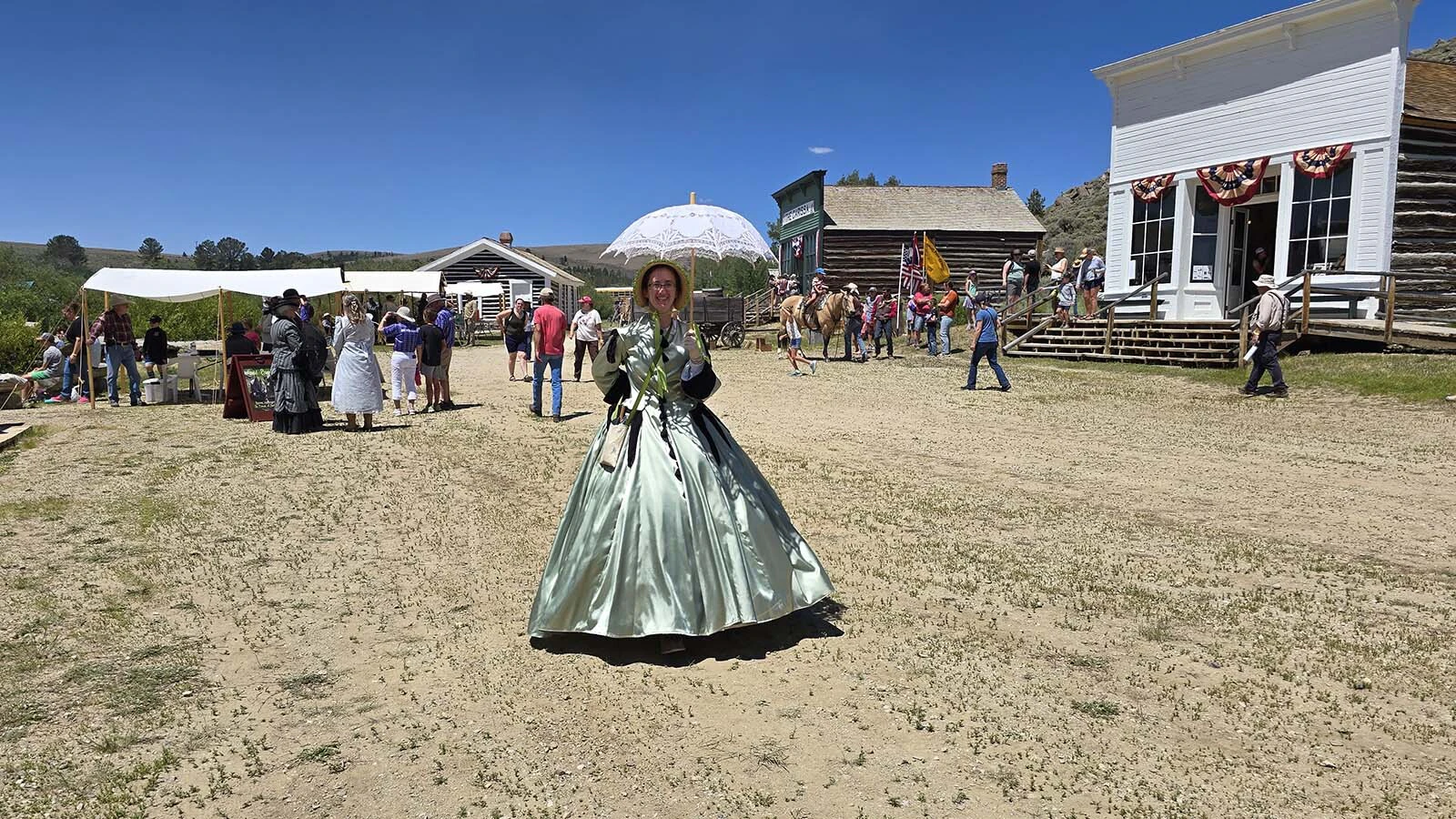
Elizabeth Isenhart showed up for South Pass City's Gold Rush Days in a mint green satin ball gown her mother gave her for a graduation gift. (Renee Jean, Cowboy State Daily) 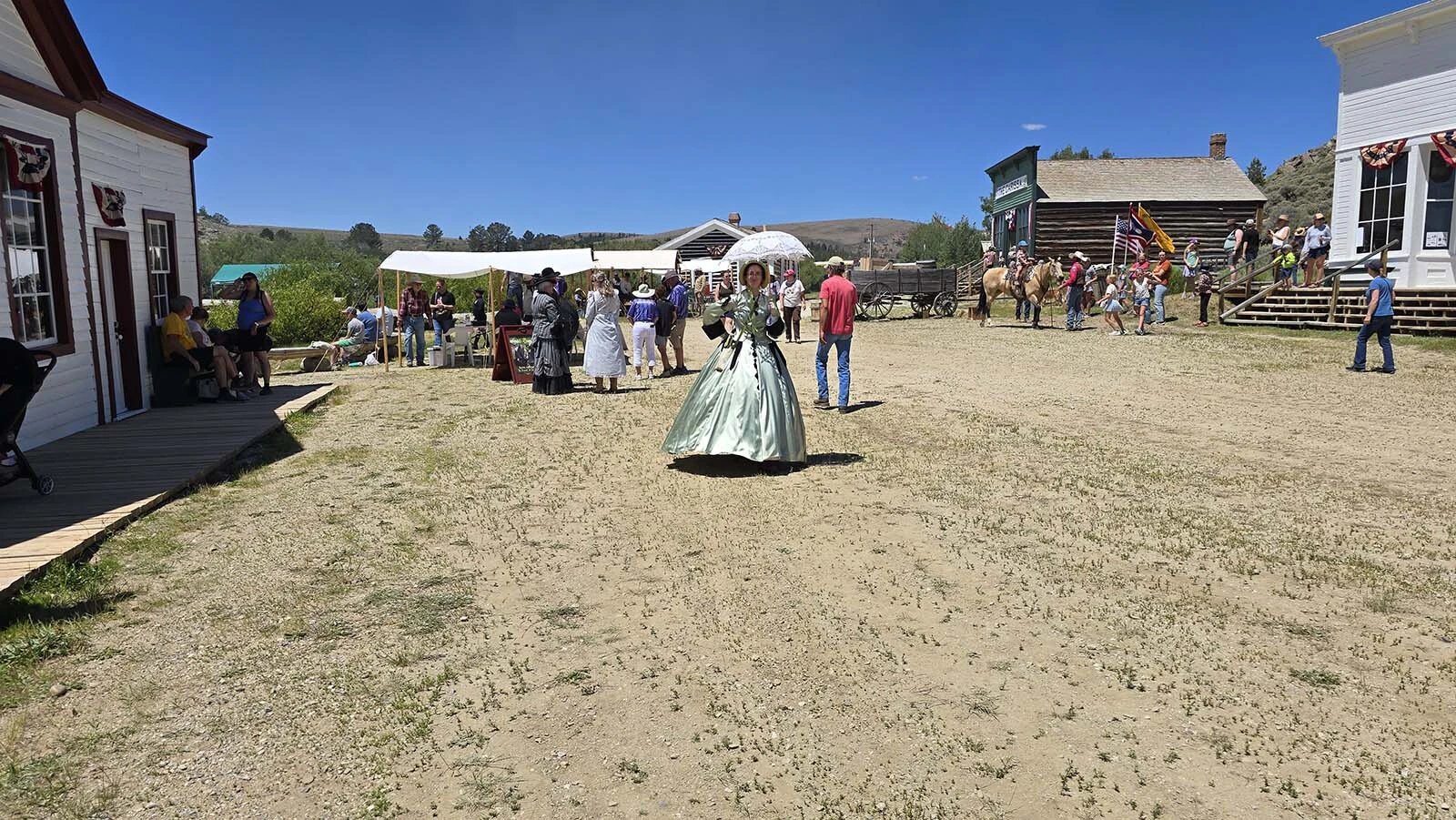
Elizabeth Isenhart showed up for South Pass City's Gold Rush Days in a mint green satin ball gown her mother gave her for a graduation gift. (Renee Jean, Cowboy State Daily)
Almost Wyoming’s Capital City
South Pass City popped up nearly overnight in the summer of 1867, after a group of prospectors out of Fort Bridger located a massive, rich vein of gold-bearing quartz along the Willow Creek — not far from where visitors pan for gold today. They called it the Cariso lode, though early records spelled it different ways — Carisso or Carissa. Some say it was named for a miner’s sweetheart, but no one knows for sure now.
The air here might have been thin, the winters brutal, and food scarce. And the risk of conflict with Shoshone and Arapaho people was real. But nothing was going to stop thousands of men and women from surging into the area. By 1868, South Pass City stretched for a mile, with more than 300 buildings and nearly 3,000 people.
It was barely contained chaos. Hotels, boarding houses, and saloons crowded together along the same kinds of dusty streets visitors walk today, and a simple pound of flour might cost more than a single day’s wages.
Just imagine the celebrations in this town, once considered for territorial capital, each time a rich pocket of gold was found. The overflow of cash and celebration washed through every South Pass saloon.
People had placed a bet on their future in South Pass City, and every gold strike seemed to prove them right.
But the glory days wouldn’t last long.
By the early 1870s, deeper workings at the Carissa had hit hard rock, groundwater, and more chemically complex ore.
Veins pinched out, capital grew skittish, and people began to drift away to other opportunities.
By 1884, South Pass had lost its status as the county’s seat to Lander and fell into what some locals have called a “long sleep” — a slow fade from gold capital to near ghost town.
A few families stayed, scratching out a living on small placer claims or on nearby ranches. Others, like the Sherlock family, became the town’s quiet stewards, running a hotel, store, and post office for decades.
They were protective of South Pass and its old buildings. They’re why so many of them survived as long as they did.
But South Pass was slowly but surely coming apart. By the time Wyoming bought the core of the town in 1966 as a 75th anniversary present for the state’s citizens, its buildings were “leaning with the wind,” as South Pass City piano man John Mionczynski puts it.
Instead of building a Wild West theme park, preservationists opted for authenticity as they preserved and restored the town.
Wallpaper in the Sherlock Hotel was recreated from surviving fragments, for example. The blacksmith shop was restocked with tools that matched old photographs.
Today, the 1890s Dance Hall serves as an information center with introductory videos and exhibits, but it still looks just like the log community hall it once was.
The Smith-Sherlock Co. Store, built in 1896 of logs salvaged from the 1870 Episcopal Church again functions as a general store, with a tiny post office tucked inside.
Across the street from it, the South Pass Hotel and Restaurant, opened in 1868 and later run by the widowed mother of five, Janet Sherlock, shows what frontier hospitality at 8,000 feet looked like.
Lessons Of The Past For The Future
All of that could make South pass feel like a static museum. But events like Gold Rush Days makes sure that the history lives.
Back behind the saloon, where Mionczynski is playing tune after 1800s tune, cannon man Tom Broadbent is loading black powder into a 5/8-scale Civil War-era gun he built himself.
Throughout the day, he brings in re-enactors and other volunteers to fire off a round, teaching them how a crew of five would have done it in days gone by, so that they could fire three rounds every minute.
After that, the cannon had to rest, otherwise it gets too hot to load with more black powder.
“The boom,” Broadbent says, is what he loves most. “When you get that percussion, it just goes and hits your body. It never gets old. Never gets old.”
Down by Willow Creek, it is standing room only in the creek as old-timers teach the art of gold panning. On the hill above them, canvas tents belonging to Salicky’s North Platte Bridge Company ripple in the wind — Sibley tents, A-frames, cavalry lines and cook flies, where they have spent the night as if they are truly the cavalry of old.
Most of the 24 reenactors are teenagers, who are sleeping shoulder-to-shoulder on bedrolls, eating chicken noodle soup with biscuits, and enjoying the time of their lives, drilling with each other, running children’s games of old, and helping stage Pony Express rides and robberies.
The youths had to research every stitch on their clothing and every tool they have with them, to ensure authenticity in every aspect.
“History, especially in our generation is starting to go away,” Libby Salicky told Cowboy State Daily. She and her friends, Emi and Helen, and her younger sister Lily glide from camp to saloon in their long skirts, playing frontier school teachers, dying theatrically in staged robberies, and singing old-fashioned songs in the saloon.
And then there are wild cards like Elizabeth, who arrived in a green dress to walk the streets of South Pass City with all the bearing of an 1800s princess.
For many visitors that day, she was the moment everything clicked. She was their bridge between past, present, and a future selfie they would always remember.
She walked a street where Esther Hobart Morris, Wyoming’s first judge, once walked alongside other characters of the 1870s gold rush like Jane Sherlock, Calamity Jane, William H. Bright, and more.
“Once a year I get to wear my hoop skirt,” she said with a giggle. “Gold Rush Days is the day to go and visit. It’s like the best.”
As the day drifts by, another cannon blast rolls across the city, echoing off the hills and through the wooden buildings.
People in the stream stand shoulder to shoulder, swirling sediment and hope together in a quest for gold that’s as old as the city itself.
Sometimes, it’s hard to tell just where the past ends and the present begins at South Pass City. Look the right way and it might actually be 1870 once again.
Note: Gold Rush Days was held on July 11 - 12, 2026
Renée Jean can be reached at renee@cowboystatedaily.com.