By the time most young people raised in Wyoming reach 30, roughly two-thirds are gone.
It’s a statistic that’s been talked about in interview after interview by state and local officials.
The exodus happens in spite of scholarships and local training. It’s to the point where Wyoming is “training the workforce for Colorado, Nebraska, Utah, Idaho and Montana,” as Gov. Mark Gordon put it in a recent interview with Cowboy State Daily.
For most of his life, Tommy Martin expected he’d be one of those exports.
“I think Mayor (Patrick) Collins said that our No. 1 export is our youth. It’s not oil and gas or coal, and that’s sad,” Martin told Cowboy State Daily. “That’s something I didn’t know was a fact, but I kind of felt anecdotally growing up here. Just conversations you have as a child growing up here.”
Instead, his story has turned out much differently than he expected — and so has the story for a number of his coworkers who are also from Cheyenne.
It’s a case study in how data center jobs are changing the game when it comes to a problem that’s been sapping Wyoming’s labor force for decades.
The Tech Kid
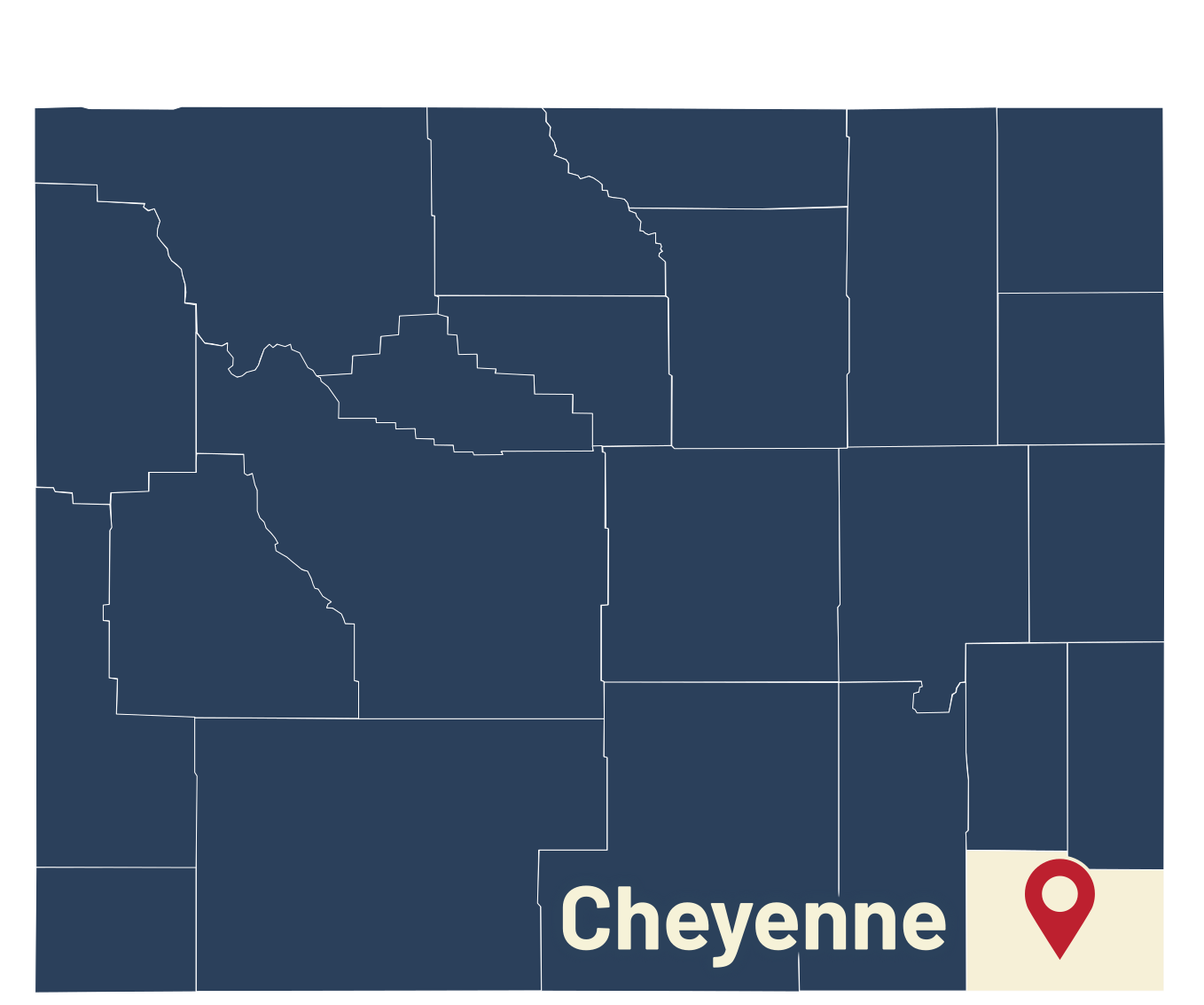
Martin grew up in a working-class family in Cheyenne, the kind where work is steady but options felt narrow.
In high school, he was the kid who could make misbehaving computers sit up and run right, swapping parts from hand-me-down desktops, troubleshooting Wi-Fi for neighbors, and helping teachers when classroom tech unexpectedly froze at the worst possible moment.
Everyone agreed he was the “tech kid.”
In kitchen-table conversations, at school, on the bleachers at games, the message he absorbed was if he wanted to work with advanced technology, he was looking at a move to Denver, Salt Lake, Seattle or Austin.
Wyoming was a good place to be from, but not a good place to be if he wanted to build a future. And he heard his friends making much the same calculation as well.
“Growing up here, it felt like everyone wanted to leave as soon as they had the opportunity to leave,” he said. “Whether it be for career reasons or just to go somewhere that felt like it was more of a city.”
Straight out of high school, Martin decided to join the military. That would let him say he was still a Wyoming guy, even if his job was taking him around the world.
“I did five deployments to Afghanistan and I was stationed in New Mexico,” he said. “And I kind of realized, while I was gone, that I would like to come back to where I grew up. The community I grew up in.”
An Unexpected Opportunity
At first, the idea sounded good but he thought it was false hope.
“I had no real game plan,” he said. “I thought I was going to come back home and attend college, get a degree in IT, and then I thought I would have to leave.”
But as he was looking into his degree, he discovered an opportunity to work at a global tech center at home. Microsoft was building its first data center in Cheyenne on the west side of town.
“So I applied out there, and ironically I ended up not pursuing a degree,” he said. “I’ve been able to have the success I’ve had just working through the roles in Microsoft.”
That was 10 years or so ago, he added. Since then he’s worked his way into management roles and better paying positions.
It’s not all IT positions either, Martin added.
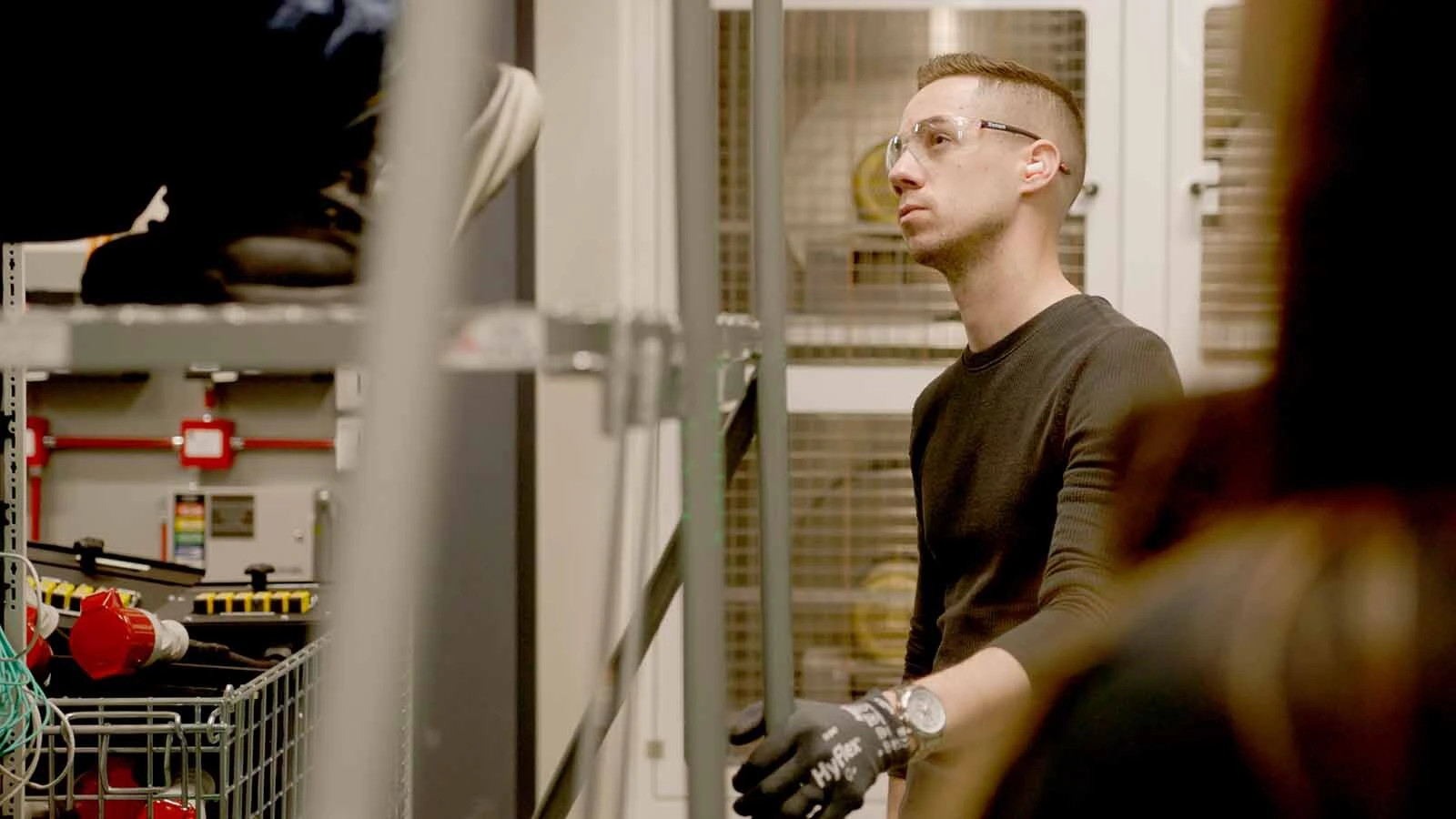
“I would say a significant number of the roles we have are not IT-focused,” he said. “That’s one of the cool things we have is when you look at the roles here. We have mechanics, electricians and then obviously the IT-focused portion. So there’s opportunity for all kinds of different careers out here.”
Good Jobs Are The Real Solution
Despite the global scale of Microsoft’s Cheyenne data centers, most of Martin’s workdays feel surprisingly small-town, he said.
That’s because he’s surrounded by people who also grew up in Cheyenne — former classmates, kids from rival high schools, and neighbors whose parents worked the same kinds of jobs his did.
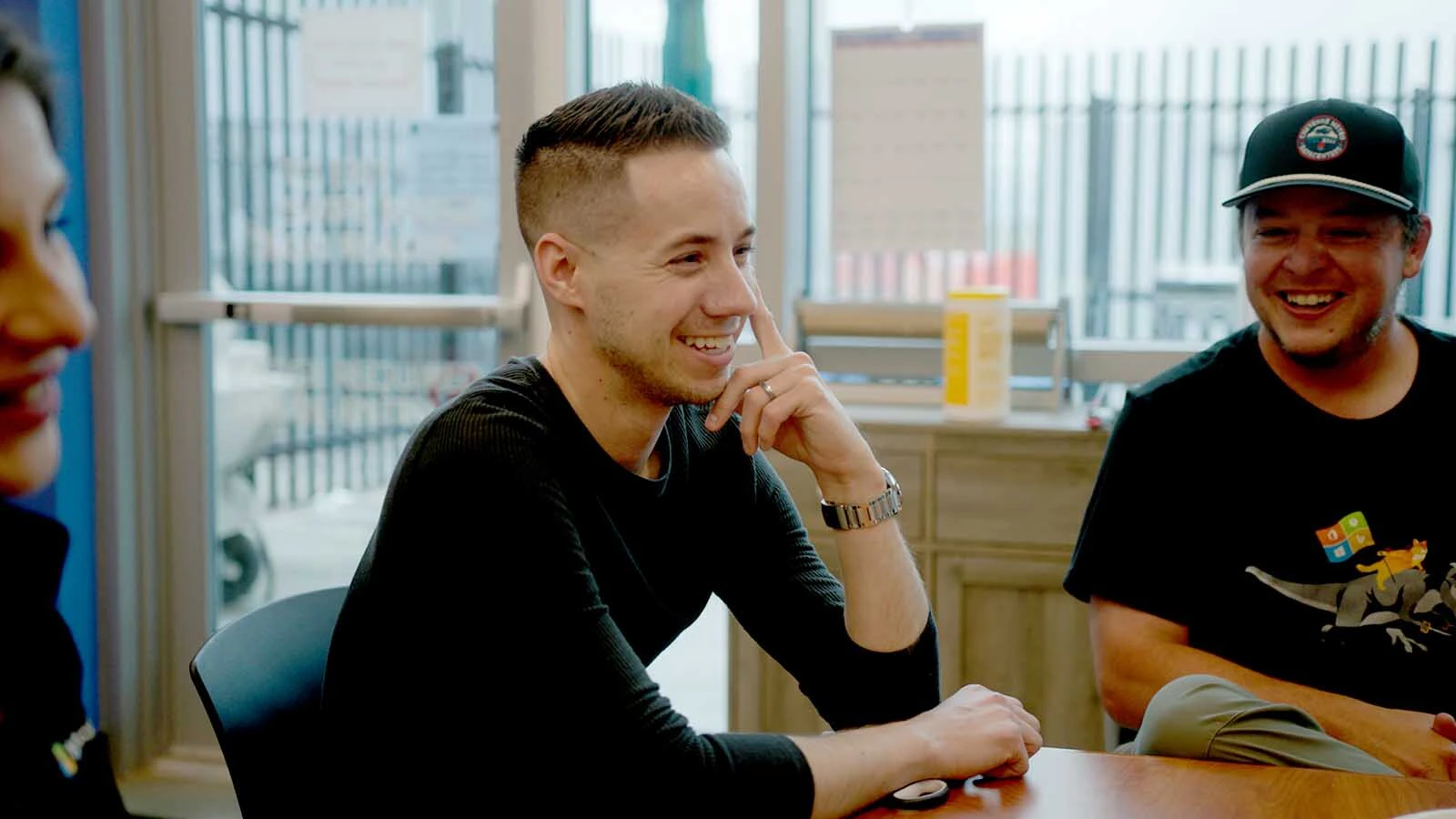
“I look around and find myself surrounded by people who were laid off from the oil field, or who have separated from the military,” he said. “And I think it’s cool they were able to find a home here and get into a career they probably didn’t expect that their path would take them or even think they had the skills for and still were able to get on the data center and build a career here.”
Many of the best employees, in fact, have been those joining Microsoft from blue-collar jobs like the oil field.
“The biggest misconception I want to clear up is that like any business, data centers included, it is built up of the people who work there,” he said. “People see the fence line, they see the walls, and they don’t really see behind the scenes. But it’s built up by hundreds of employees who work together to achieve a common goal, which is to deploy technology that supports what we do every single day. That’s the biggest thing I think gets lost.”
Martin said he is proud of his role as a Microsoft employee, and he’s also proud of what the company does to be a good community partner. He knows that happens because so many employees are people like him who grew up in the community and want to give back to it.
“That’s what builds up the data center,” he said. “It’s not servers, it’s not the electrical gear. It’s the people who work here.”
For Martin, the real story isn’t just that Microsoft gave him a reason to stay in Cheyenne. It’s how many others he can see at the facility who grew up in the same schools and neighborhoods, and also found a reason to stay.
“In my opinion, (solutions) start with career opportunity,” he said. “Everything else follows, whether it’s housing or anything else. It starts with people actually having money in their pockets from having jobs where they’re able to stay and live in the areas they grew up in, and feeling like they want to do that.”
Renée Jean can be reached at renee@cowboystatedaily.com.