
Wyoming is an energy state, and we are proud of it.
For generations, Wyoming workers have powered this country through coal, oil, natural gas, uranium, trona, and other resources that support industry, agriculture, transportation, national security, and daily life. We understand energy because we live with it. We know the value of good jobs, reliable power, private property, reclamation, and local tax revenue. We know what responsible development looks like.
We also know the difference between developing real resources and covering open country with federally subsidized industrial wind projects.
That difference is at the center of this debate.
The question is not whether Wyoming supports energy. Of course we do. The question is whether Wyoming must accept the permanent transformation of ridgelines, ranchland, wildlife habitat, and open horizons for wind projects that depend on federal preference, taxpayer support, and political fashion.
The answer should be no.
Wyoming's landscape is not empty land waiting for Washington to assign it a purpose. It is our home. It is part of our economy, heritage, and identity. The high plains, dark skies, sagebrush country, migration corridors, and wide-open views that define this state are not incidental features. They are part of what makes Wyoming Wyoming.
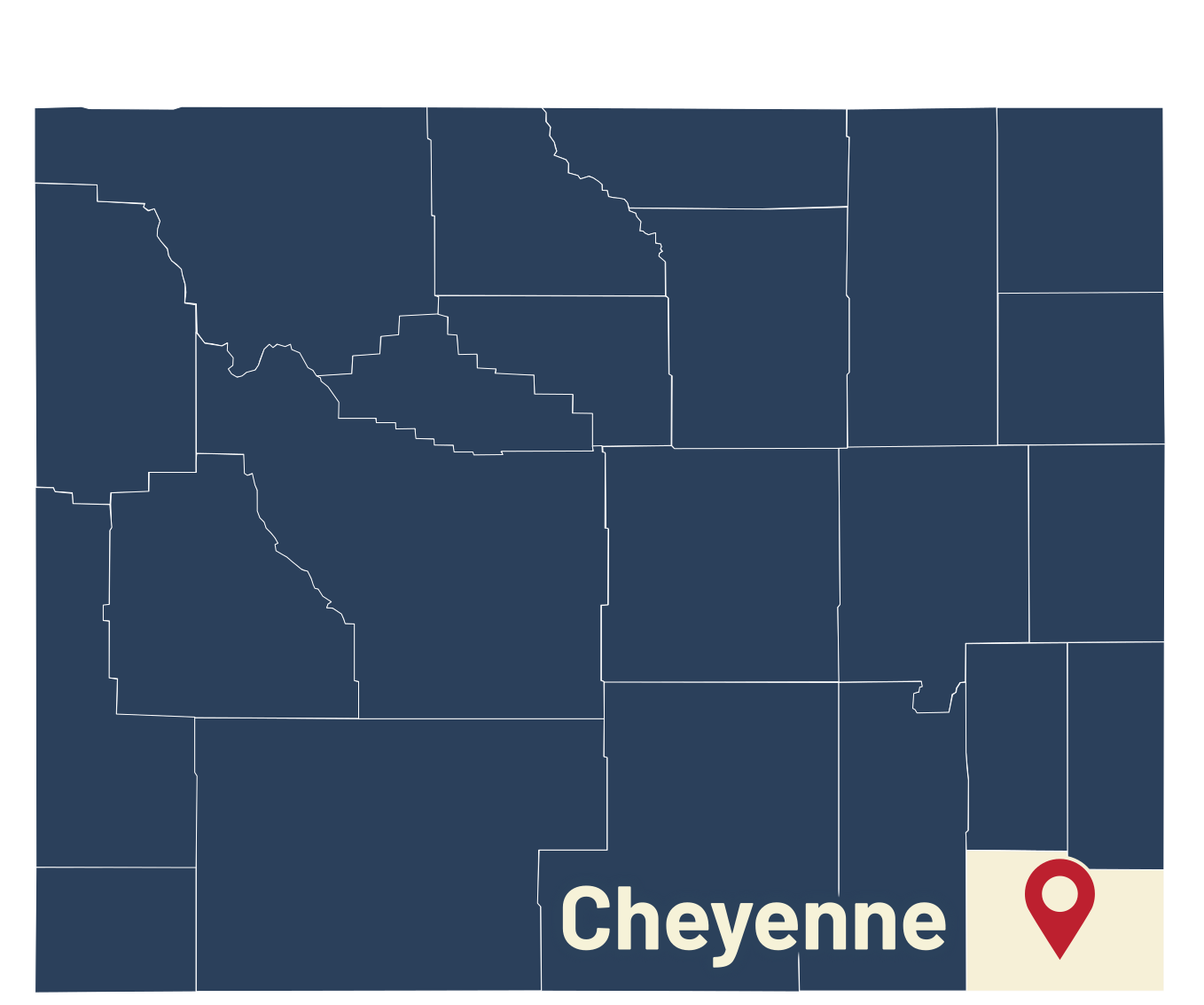
That is especially true in southeastern Wyoming. Around Cheyenne and across the surrounding plains, industrial wind projects threaten to turn turbines into the defining feature of the horizon. Anyone who drives those roads understands what is at stake. Open country risks becoming a landscape of towers, blades, blinking red lights, access roads, substations, and transmission lines. The land may still be called open, but it will no longer feel open.
That is why industrial wind deserves far more scrutiny than it often receives.
Supporters present wind as clean, affordable, and market-ready. But if wind power is as economically sound as its advocates claim, it should compete without taxpayers carrying so much of the load. The Production Tax Credit and related federal incentives distort the market by steering investment toward projects that qualify for federal preference, while long-term costs fall on local communities, landowners, wildlife, and the landscape itself.
That is not free enterprise. It is government-directed development.
A constitutional conservative should be skeptical whenever Washington uses the tax code and administrative power to pick winners and losers. Limited government means restraining federal power so distant officials do not remake rural states according to national political agendas. It also means the people closest to the land should not be forced to bear lasting consequences from decisions made by people who will never live with them.
When Washington subsidizes industrial wind, Washington does not bear the full burden. Wyoming does.
Wyoming lives with flashing red lights across once-dark horizons. Wyoming lives with new roads, substations, transmission corridors, and industrial visual impacts. Wyoming lives with disruption in sage grouse country, eagle country, pronghorn country, mule deer country, and migration country. Wyoming lives with the consequences when open country becomes an energy platform designed around federal policy instead of local judgment.
That matters because conservation still ought to mean something.
The dedication of the Theodore Roosevelt Presidential Library in Medora, North Dakota, is a useful reminder of that principle. Roosevelt's conservation legacy is not anti-development. It is anti-waste. It is rooted in stewardship, prudence, and the duty to preserve what is permanent from those who would consume it for temporary advantage. He understood that the American landscape is not merely useful. It is also an inheritance.
That standard applies directly to Wyoming.
There is a real difference between developing Wyoming's natural resources and covering large sections of the state with subsidized industrial infrastructure that likely would not exist on the same scale without federal support. One approach responds to real demand, produces reliable value, and supports communities. The other depends too heavily on subsidy, intermittency, and the assumption that Wyoming should absorb lasting costs for someone else's policy priorities.
Reliability must remain central to any serious energy discussion. Wyoming knows winter. Communities, ranches, businesses, schools, hospitals, and senior citizens need dependable power. Energy policy should begin with reliability, affordability, and long-term strength, not slogans or fashionable labels. Wind is intermittent by nature. It produces when conditions allow, not necessarily when families and businesses need power most.
That does not make wind useless. It does mean wind should not receive special federal treatment at the expense of more dependable generation that has long served this state and nation well.
Wyoming has better answers. Coal provides baseload power. Natural gas supports dispatchable generation. Uranium points toward nuclear energy. Trona and critical minerals support manufacturing, defense, and technology. Oil and gas support mobility, industry, and national security. These resources exist here. Wyoming workers know how to produce them. Wyoming communities know how to regulate and live with them.
The wildlife concerns surrounding industrial wind are real. Federal wildlife authorities acknowledge that wind facilities kill birds and bats and can affect raptors and ground-nesting birds, including sage grouse. In Wyoming, those are not minor details. They go directly to the ecological health and character of the land.
Wyoming is not just wind country. It is wildlife country. It is sage country. It is migration country. Conservation means something here because people still live close enough to the land to understand what is being conserved.
For these reasons, Wyoming's congressional delegation should push to end federal subsidies that distort energy markets and encourage the industrialization of Western landscapes. If wind development is truly competitive, it should stand on its own. If it cannot survive without taxpayer support, taxpayers should not be forced to prop it up.
Wyoming can power America without surrendering its identity, its horizon, or its right to determine its future. Wyoming's horizon is not Washington's to spend.