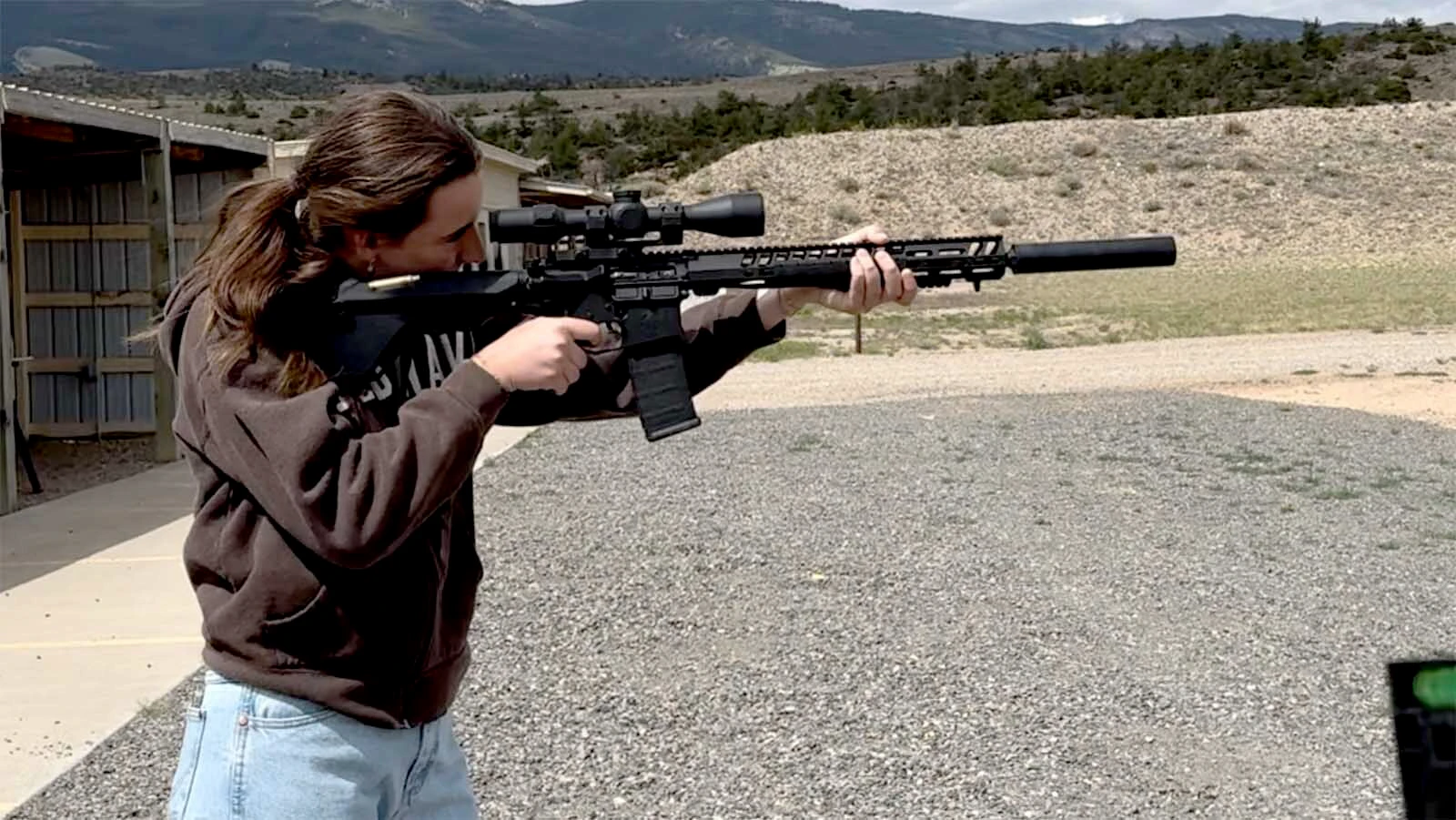
The U.S. Supreme Court could be poised to overturn bans on so-called “assault weapons” in Connecticut and the Chicago area, which in turn could topple similar bans across a dozen states.
Some Wyoming firearms dealers told Cowboy State Daily that could clear the way to better serving customers from states with stricter gun regulations, including Colorado.
Colorado doesn’t have a statewide assault-weapons ban, although there are some local bans, such as in Denver. There’s a statewide prohibition on “high-capacity magazines” capable of carrying more than 15 rounds.
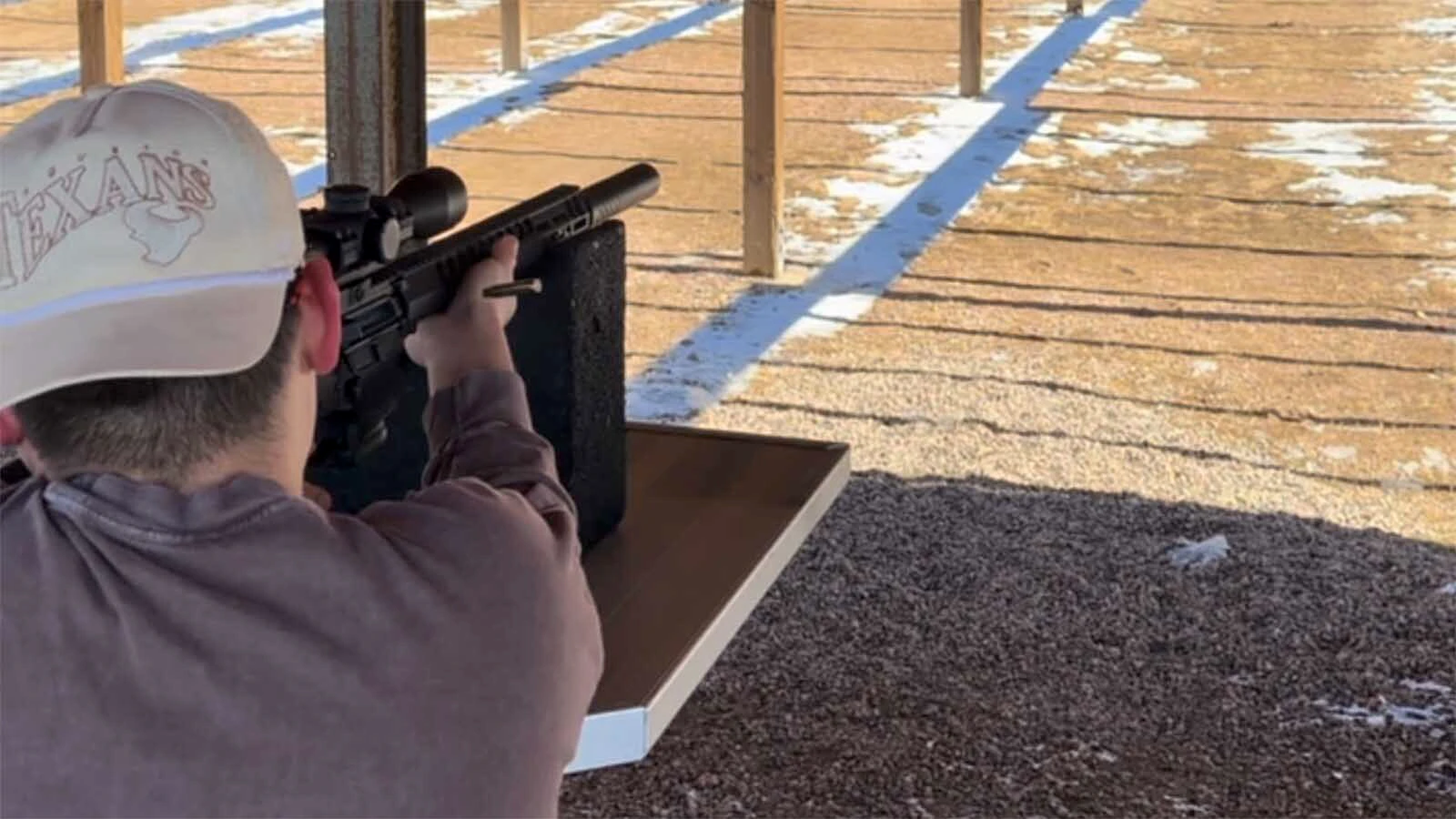
“I don’t know how many times I’ve been to a gun range where we let people try out our products, and they told us they aren’t allowed to own those products in their state,” said Joshua Kinderknecht, owner of Wyoming Tactical Firearms and W.T.F. Silencers.
Gun-Friendly Court
The Supreme Court announced Tuesday it will hear appeals challenging bans on AR-15s and similar semiautomatic rifles in Connecticut and the Chicago area, the Associated Press reported.
SCOTUS in recent years has been criticized by gun-control advocates and praised by Second Amendment rights supporters for its firearms-related rulings.
The 2008 District of Columbia Heller decision established that the Second Amendment protects an individual’s right to possess firearms for traditionally lawful purposes, such as self-defense in the home, unconnected to militia service.
In 2010, the McDonald v. City of Chicago decision ruled that right applies to the states. The court incorporated the right against state and local governments through the Due Process Clause of the 14th Amendment.
In the 2022 New York State Rifle & Pistol Association v. Bruen ruling, the court struck down a restrictive New York concealed-carry law, declaring that the Second Amendment protects an individual's right to carry a handgun in public for self-defense.
The court is going in the right direction, but “I don’t think they’re going nearly far enough,” said Art Manning, owner of The Armorer in Laramie County. “I think they ought to go back to the Constitution and go back to what the damn thing says.”
As far as assault-weapons bans, “those states should pull their heads out of their asses” and overturn the bans themselves, he added.
What Is An ‘Assault Weapon?’
Advocates for banning or restricting AR-15s and similar firearms argue that the terms “assault weapon” or “assault rifle” are apt because of their high ammunition capacity and rate of fire.
George Mocsary, professor of law at the University of Wyoming and director of UW’s Firearms Research Center, previously told Cowboy State Daily the term “assault rifle” is misused for hyperbole.
The concept of the assault rifle dates to the StG 44, a weapon the German military fielded late in World War II. As the tide turned against Nazi forces, weapons designers were trying to come up with an upgrade.
When the new weapon was presented to Hitler in 1944, he was supposedly so impressed he called it the “Sturmgewehr,” which translates to “storm rifle” or “assault rifle.” The StG 44 became its official moniker, with the “44” designating the year 1944, when it went into production.
Some of its features inspired a Soviet war veteran named Mikhail Kalashnikov, who in 1947 designed the AK-47, widely considered the world’s first true assault rifle.
In military contexts, “assault rifle” refers to an infantry weapon that has three basic characteristics.
First, it’s fed by high-capacity, detachable ammunition magazines. Second, it’s chambered for a mid-sized cartridge, larger than the ammunition for pistols and submachine guns but smaller than cartridges for battle rifle or machine guns.
Also, the weapon features a selective fire switch. That means it can be toggled between semi-automatic fire (one shot per trigger pull) and fully automatic fire (once the trigger is pulled, it fires rapidly until the trigger is released or the ammunition runs out).
Some more modern military weapons also have “burst fire,” meaning about three shots are fired for every pull of the trigger.
Because AR-15s and similar civilian arms don’t have selective fire switches, they aren’t considered “assault rifles” like military assault rifles, Mocsary said.
Manning said the term “assault weapon” is applied too broadly.
“If it’s black and plastic and has a high-capacity magazine, that’s what people assume is an assault weapon,” he said.
And restrictions can affect firearms that aren’t even classified as assault weapons under some states’ regulations, said Lars Luhrsen, owner of Prairie Grizzly Arms, LLC, in Cheyenne.
For some out-of-state customers, “I can sell them a Ruger Mini 14, which technically isn’t even classified as assault rifle, but I can’t sell them the 30-round magazine that comes with it,” he said.
Does The Case Have Merit?
Aaron Dorr, policy advisor for Wyoming Gun Owners, said he hopes SCOTUS will overturn the bans.
The 2008, 2010 and 2022 gun-rights decisions were “stepping stones” that led to the court considering an end to assault weapons bans, he said.
Wyoming Gun Owners plans to file briefs with the court in favor of overturing the bans, Dorr said.
“We’ve been waiting for this decision for 50 years,” he said. “It would be the biggest gun-rights victory in a long time and we’re definitely for it.
Mocsary said Wednesday the case could hinge on arguments over the principle of sweeping gun bans.
“On the merits, I would frame the issue narrowly: Legislatures may punish misuse of firearms and may disarm people who fall within constitutionally permissible limits, but that is different from banning peaceable citizens from possessing an entire class of commonly owned arms,” he wrote in a message to Cowboy State Daily.
“The petitioners’ strongest argument is that Heller protects arms in common lawful use, and AR-15-platform rifles are among the most common in the country. They are owned by millions, and perhaps tens of millions, of people, Mocsary added.
Public safety should be considered, he noted. However, the government’s “historical authority” to prohibit commonly owned firearms should also be questioned.
As an example of what Mocsary considers to be hyperbole tainting the discussion of firearms policy, he cited a memo from Violence Policy Center Executive Director Strategist Josh Sugarmann.
“The weapons’ menacing looks, coupled with the public’s confusion over fully automatic machine guns versus semi-automatic assault weapons — anything that looks like a machine gun is assumed to be a machine gun — can only increase the chance of public support for restrictions on these weapons,” according to the memo, which Mocsary shared with Cowboy State Daily.
‘They Should Be Able To Buy Them’
Kinderknecht said he’s eager to see gun owners in other states enjoy the same rights as Wyomingites.
“I think it would be cool to allow people in those other 10-12 states to buy the semiautomatic rifles without jumping though a bunch of hoops,” he said.
He’s optimistic SCOTUS will overturn the bans. But he also expects some states will seek “workarounds” to continue banning or restricting certain firearms, high-capacity magazines and the like.
Luhrsen said he moved from Colorado about five years ago to open his firearms business and enjoy Wyoming's freedom.
He said he likes helping people buy their first gun and learn how to safely shoot it, clean it and maintain it.
He’d like to see Wyoming’s standards applied nationwide.
“If we can buy them (semiautomatic rifles) here, they should be able to buy them there,” he said.
Editor's note: This story has been changed to correctly attribute a quote about the "menacing looks" of the weapons to a Violence Policy Center memo.
Mark Heinz can be reached at mark@cowboystatedaily.com.