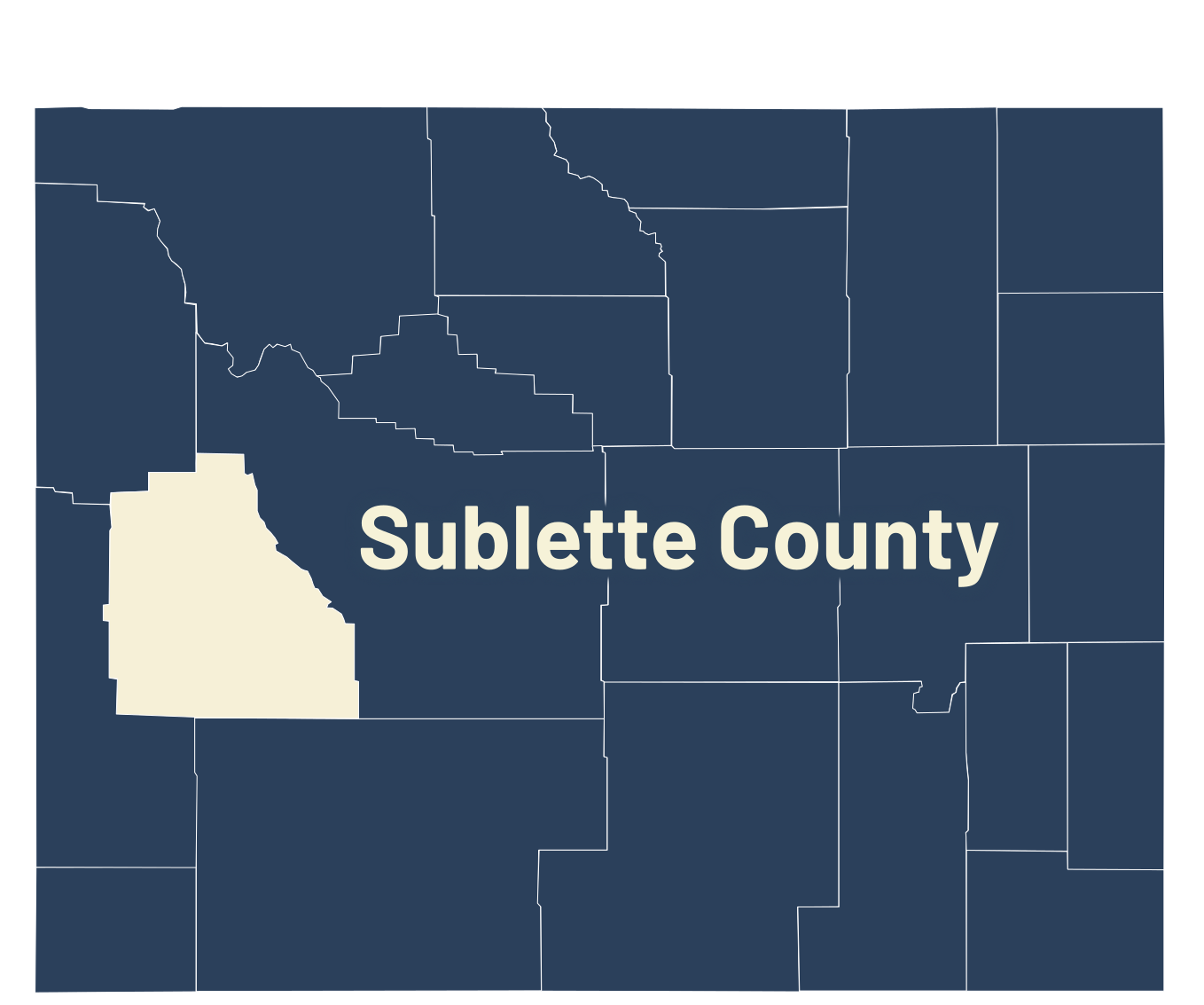
A 34-acre parcel of land donated to Sublette County more than a decade ago to benefit 4-H, FFA and youth agricultural education has become the center of a bitter dispute between two organizations that both work with local children.
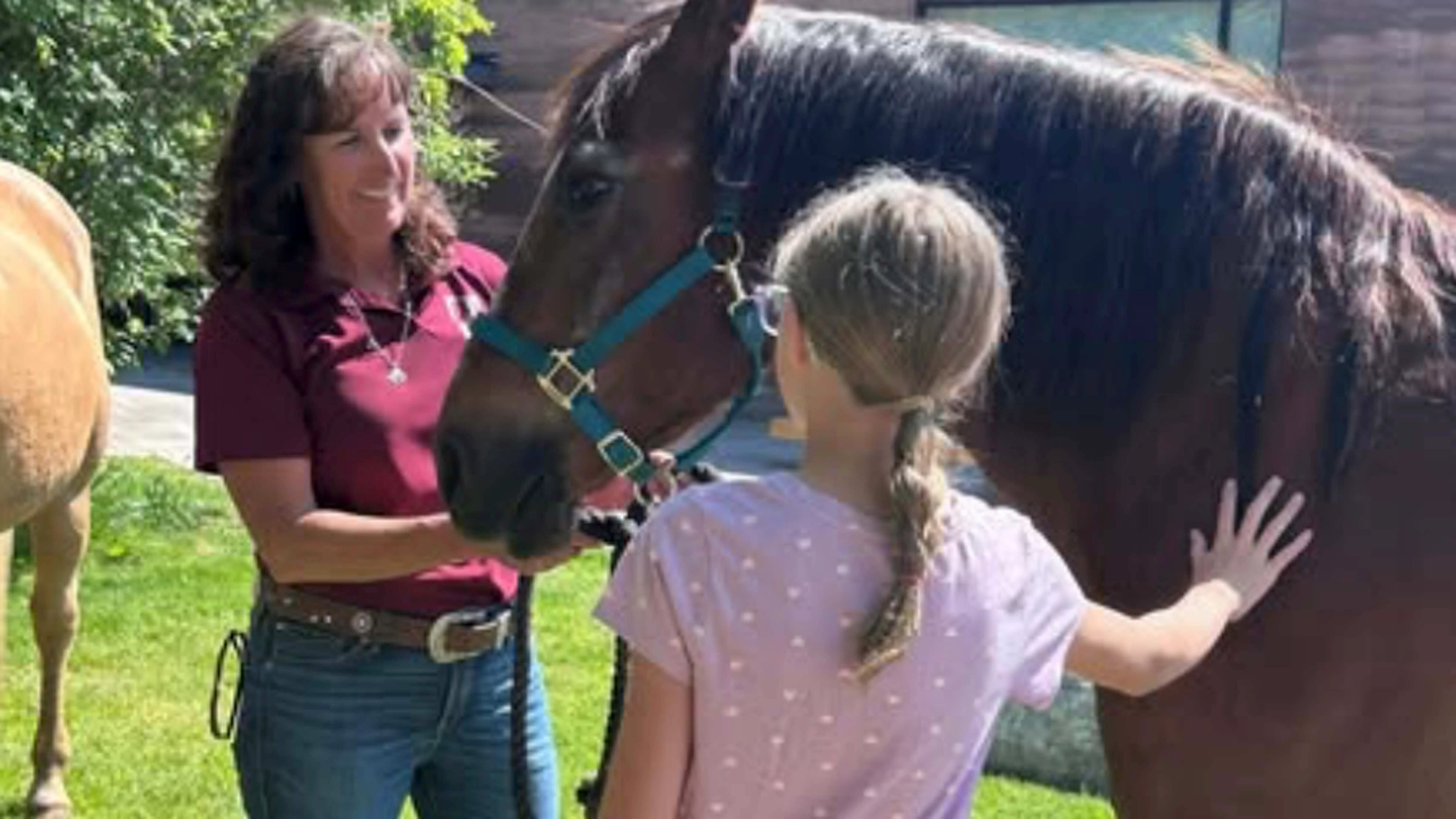
MESA Equine Assisted Services, a Sublette County nonprofit that provides adaptive horseback riding for children with physical and mental limitations, wants to lease part of the county-owned property to establish a permanent home for its growing program.
Sublette County 4-H opposes the proposal, arguing that allowing MESA exclusive use of a significant portion of the property — including space to house horses long-term — would conflict with the donor’s intended purpose and could limit 4-H’s future use.
According to Director Carla Seely, MESA is seeking a permanent facility to keep and increase its number of horses before it can serve more children. The county-owned parcel was a fitting place to look, she said, because MESA supports youth and agriculture through equine therapy. She also contended that 4-H uses only a portion of the 34 acres, while a portion of the donated land remains vacant.
4-H says it needs to preserve the entire property so it can eventually develop the agricultural programs for which the land was donated.
Both organizations say they are committed to helping local youth.
But they have been unable to agree on how — or whether — they can share the same ground.
“We’re really trying to be proactive,” Seely told Cowboy State Daily. “We want to do some succession planning (and) make sure MESA is as successful as possible.”
According to a Sublette County 4-H memorandum of justification viewed by Cowboy State Daily, “Sublette County 4-H has no workable path forward for a lease arrangement that can accommodate both programs while allowing each to effectively carry out its very different missions.”
The Land
The property was donated to Sublette County by QEP Resources more than a decade ago. QEP, which played a major role in Sublette County’s natural gas development, donated the land specifically to support 4-H, FFA and youth agricultural education.
The donation was secured by Robin Schamber, who was then director of Sublette County 4-H. She is now running for Sublette County commissioner.
Schamber told Cowboy State Daily the story hurts kids.
“I don’t see a great path forward, as ugly as it’s gotten,” she said.
QEP sold its Sublette County assets to Pinedale Energy Partners in 2017. Those assets were later integrated into PureWest Energy.
MESA eventually began looking at the property as a possible home for its program.
The nonprofit first contacted PureWest to ask whether its proposed use would be consistent with the deed restrictions attached to the land.
PureWest initially indicated it believed MESA's use would be permissible, Seely said, although the final decision would rest with the county commissioners.
According to a letter from PureWest’s general counsel included in public records, however, that position was later clarified.
PureWest's non-objection was based on the assumption that MESA’s presence would not materially interfere with or limit 4-H’s use of the property, the letter said.
MESA then approached the Sublette County commissioners.
Commissioners voted 4-1 to allow MESA to use the property.
But 4-H objected.
According to a memorandum of justification, Sublette County 4-H first learned of MESA’s request during a county commissioners meeting, when a 4-H representative happened to be participating online.
The memorandum says the property was not specifically identified during the initial discussion, meaning 4-H leadership did not immediately realize the significance of the proposal.
“A process that begins with this degree of exclusion and lack of transparency does not inspire confidence that the interests of the program this property was donated to serve are being adequately considered,” the memorandum states.
Seely said she believes the anger stemmed in part from MESA approaching county officials before approaching 4-H.
The memorandum of justification acknowledges that initial discussions about the possible lease occurred between county leadership and MESA's executive director without 4-H's knowledge or involvement.
“We had no intentions of upsetting 4-H in any way,” Seely told Cowboy State Daily.
Trying To Find Common Ground
The dispute eventually moved into an effort to find a compromise.
This spring, Seely met with staff at the Sublette County 4-H Extension Office to hear their questions and concerns about MESA's proposed use of the property. The meeting was facilitated by Lucy Pauley, program coordinator for the Wyoming Department of Agriculture’s Mediation Program.
Sublette County currently does not have a 4-H director. Mary Martin, a Teton County community development extension educator, has served as a spokesperson. She did not respond to Cowboy State Daily requests for comment.
After the meeting, county commissioners directed MESA and 4-H to form a working group to review the proposed lease and develop an operating agreement that could allow both organizations to use the property.
Commission Chairman Lynn Bernard said commissioners hoped the groups could find a way to work together.
“We wanted a good-neighbor policy,” Bernard said, explaining that commissioners wanted to see whether the organizations could develop a working arrangement that would accommodate both programs.
In April, MESA provided 4-H with a draft lease and invited the organization to suggest changes.
According to public documents, 4-H did not propose changes or provide feedback.
Three days later, Seely received an email from Martin saying the 4-H members of the working group had canceled the next scheduled meeting.
Later that day, the working group received documents reflecting a unanimous decision by the 4-H Council to reject any possibility of MESA operating on the property.
Those documents included a cover letter and the memorandum of justification.
In its letter, 4-H acknowledged MESA's role in the community and the two organizations' shared purpose.
“Sublette County 4-H appreciates the important role MESA Therapeutic Horsemanship Program plays in serving youth in our community,” the letter states.
The organizations also share “a common commitment to supporting young people,” according to the letter.
But 4-H concluded that the donated property was not the appropriate location for MESA.
“We respectfully, but firmly decline, the proposed lease to MESA and intend to preserve this property in full for its intended purpose: the benefit of Sublette County’s 4-H, FFA, and youth agricultural programs,” the memorandum states.
MESA Needs A Home
MESA was established in 2012 as a nonprofit providing adaptive horseback riding to children with physical and mental limitations.
The organization currently serves roughly 18 to 20 children, ages 4 and up, depending on the season.
“There’s a huge need in our community to have services for kids with limitations and disabilities,” Seely said.
MESA has operated as a mobile organization since its founding, relying on private landowners who have allowed its instructors, students and horses to use their property.
“We’ve been a mobile organization working out of a horse trailer since we started,” Seely said.
That arrangement has allowed MESA to operate, but it has also placed a ceiling on its growth.
The organization cannot add more horses — and therefore more students — without a permanent place to keep them.
“We are trying to secure a more permanent facility for use to continue our programming,” Seely said. “There’s a lot of programming we want to do, but we aren’t able to do it.”
MESA is at capacity and is not actively advertising to attract more clients because it does not have the space or horses to accommodate them, Seely said.
“We certainly can’t try to grow right now,” Seely said. “We are not promoting growth until we have the horses and the capacity to do it.”
Seely said the county property appeared to offer an opportunity to solve that problem.
A portion of that property has sat vacant for years, she said. That’s the portion MESA was eyeing.
“It’s just a sagebrush flat and hasn’t been used since the donation of the land to the county,” she said. “4-H doesn’t use it. It’s just been vacant.”
4-H Sees A Future For The Property
Bernard acknowledged that only part of the property is being used by 4-H, but he said the organization has plans for the remainder.
A letter from Martin to the county commissioners similarly said 4-H volunteers and community members had recently begun planning efforts to make fuller use of the property.
“Maintaining flexibility at this stage will help ensure the property can be developed in a way that reflects its intended purpose and evolving community needs,” the letter states.
That is a central disagreement between the two organizations.
To MESA, the unused portion of the property represents an opportunity to provide services to children who need them now.
To 4-H, that portions of the property are vacant does not mean they are available for another purpose.
Bernard said commissioners recognized that both organizations provide valuable services.
“Of course we would have liked to have seen use of the property for people who would have been impacted by such an agreement,” he said.
What Happens Next?
For now, the county commissioners have encouraged MESA to keep looking for another property.
Seely said MESA has also offered 4-H an alternative lease arrangement for consideration, but has not received a response.
Without an agreement from 4-H, Seely said there is no path for MESA to use the donated property.
The nonprofit is now looking elsewhere.
“We sure have a vision of wanting to do more,” Seely said. “We would love 20 acres. But we would take anywhere from 10 to 20 depending on the ground.”
Bernard said the county remains open to a solution that would allow the property to serve both groups.
“As a county board of commissioners, we would always entertain individuals coming forward with plans that would be acceptable for joint utilization,” he said.
Kate Meadows can be reached at kate@cowboystatedaily.com.