The Amish man at the center of a Crook County dispute over primitive outhouses has confirmed that the issue prompted him and his family to leave the state and says what was required of him by county officials is unconstitutional.
Abe Yoder called Cowboy State Daily from a community phone near his property in Weldon, Iowa, on Saturday.
The Amish historically do not use email or cellphones.
Yoder recently moved to Iowa, selling off much of his Hulett-area estate and taking his wife and nine of his 11 children with him.
“It does very much have to do with our sovereignty and rights,” he said.
Scott Pomerenke of Sundance, a friend of Yoder’s, put it this way: "They’re moving because they were pressured.”
County officials say that was never the intention.
Yoder told Cowboy State Daily the county had threatened to fine him $10,000 per day per outhouse on his land that did not have a permit, threatened to take away his children, and asked him to sign a contract giving county officials permission to inspect the outhouses at any time.
County officials told Cowboy State Daily they did invoke financial incentive to get Yoder to comply with county regulations. They also point to a blanket clause on all county paperwork that asks for permission to inspect property.
But they vehemently deny anyone threatened to take away his children.
“There was no such thing,” said Caleb Peters, Crook County wastewater treatment specialist.
How It Started
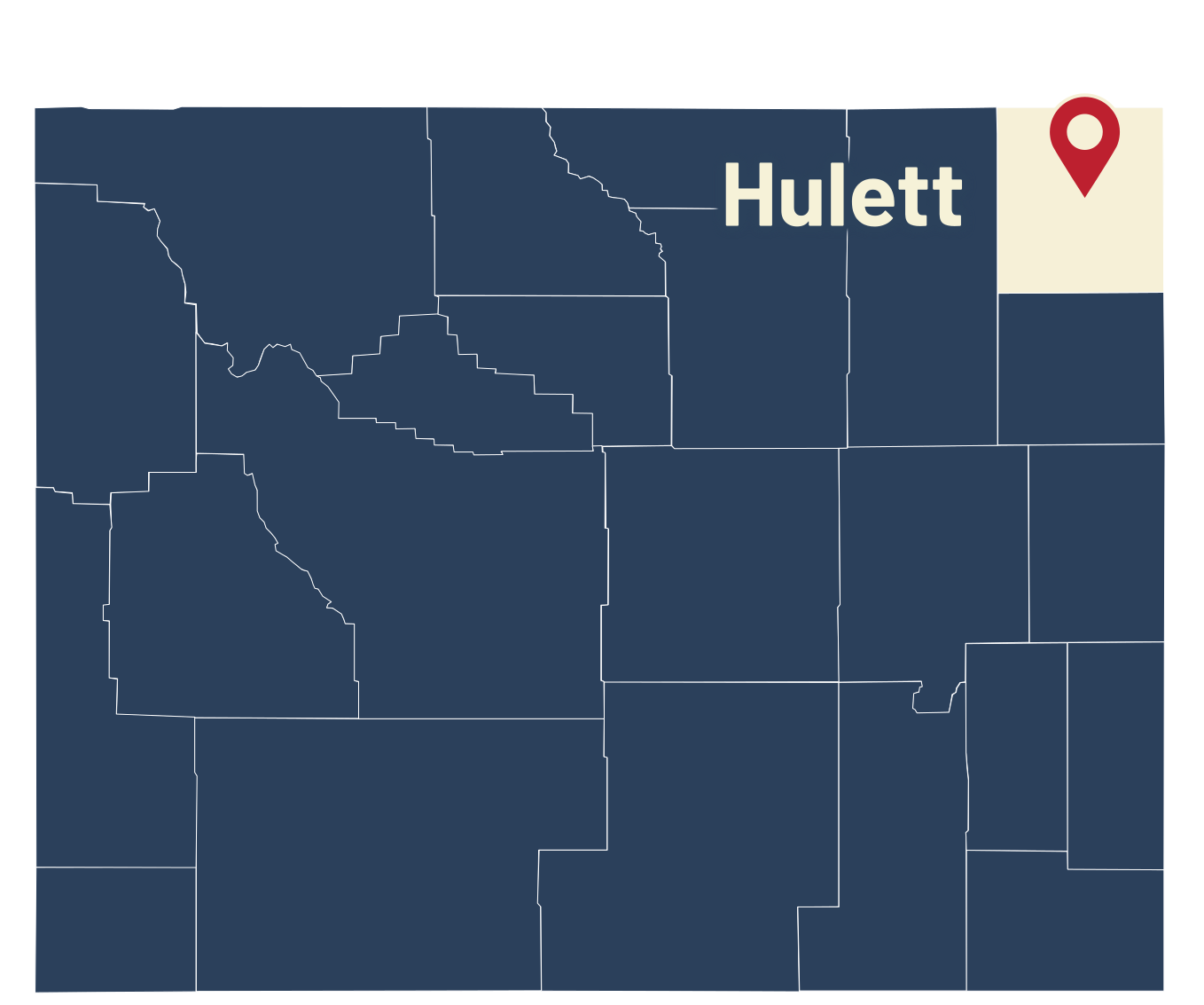
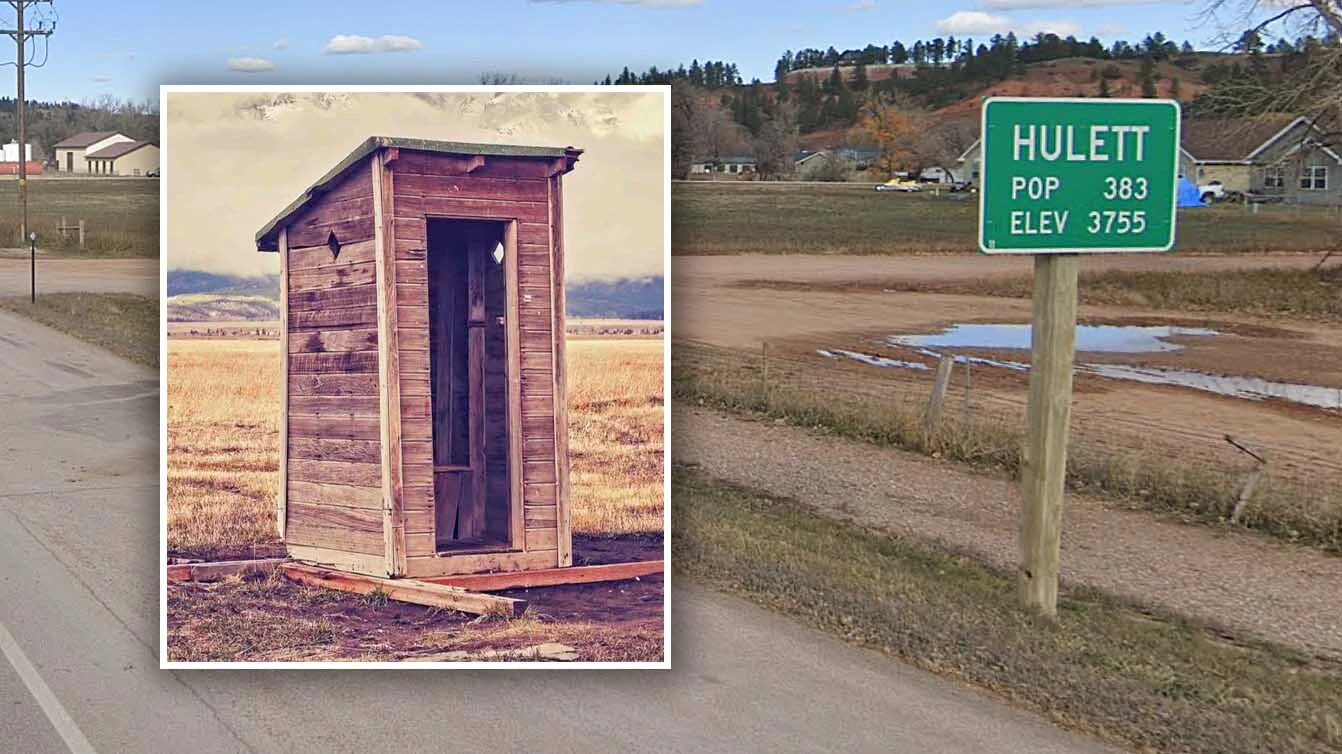
The dispute began in October 2024, when Crook County officials discovered several Amish property owners west of Hulett had built pit-style outhouses without the permits required under county wastewater regulations.
Peters said he became aware of the issue through satellite imaging.
Some outhouses were not sealed or properly vented, he told Cowboy State Daily.
“There was a compilation of a whole bunch of things,” he said, which led him to reach out to the property owners.
While he did not have an exact number, Peters said he guessed about 20 outhouses did not comply with county regulations.
County commissioner Bob Latham said county code requires human-waste receptacles to be portable, pumpable or connected to a septic system.
“You have to build them correctly and permit them,” Crook County commission chair Fred Devish said.
Upon learning about the codes and permitting regulations, all but two families complied, Peters said.
Those families were the Abe and Elizabeth Yoder and Rudy and Irene Borntreger, he said. An estate moving sale was held for both families earlier this month. The Yoders moved to Iowa, the Borntregers to Wisconsin.
Yoder told Cowboy State Daily he felt targeted and strong-armed.
Sovereignty And The Law
Yoder is sovereign, meaning he belongs to a group of self-governing people. He has no Social Security number and no birth certificate.
According to the Young Center for Amish Studies at Elizabethtown College in Pennsylvania, the Amish pay taxes. However, they do not pay Social Security taxes because they believe it is a form of insurance.
Yoder said his outhouses were built to code, including two that served an Amish schoolhouse on his land.
“I had researched to be sure I had everything up to specs,” he told Cowboy State Daily.
The only thing missing: A permit for each outhouse. Permits cost $200 each.
Yoder said he had lived on the land for 10 years without a permit.
“It was never a problem,” he said. “Now, they come out and pounce upon me.”
Yoder said he believed the push was largely about money. Sheridan rancher Pepper Fipps, who has done business with Yoder, agrees.
“It’s amazing how the government wants their money,” Fipps told Cowboy State Daily.
But Devish said $200 is “not a terrible amount.” The fee pays for the county’s time to inspect and process necessary paperwork.
“It’s not a money grab,” he said. “We’re not making millions of dollars on wastewater permitting.”
According to Yoder, the county was in clear violation of the 14th Amendment, which grants citizenship to all people born or naturalized in the United States. Under the 14th Amendment, the state is prohibited from depriving any person “life, liberty or property, without due process of law.”
“In my way of looking at it, they threatened my life by threatening to take my children away. They threatened to take my property by putting a lien against it. This is unconstitutional,” he told Cowboy State Daily.
Both Devish and Peters dismissed those claims.
“We don’t make laws without repercussions,” Devish said. “Whether you’re Amish or Mormon or Catholic or whoever the hell you want to be, there are rules.”
The issue largely boiled down to filling out paperwork, Devish added.
But it’s paperwork Yoder was not willing to sign.
Pomerenke told Cowboy State Daily that Yoder didn’t want to sign paperwork because under his sovereignty he didn’t need to.
He recounted a similar struggle that his own Amish grandfather experienced a half-century ago in Wisconsin. His grandfather was fined $75 a day for having non-conforming outhouses and ultimately landed in jail.
“He wouldn’t pay because he didn’t think it was a valid law,” Yoder said.
Finally, the county in Wisconsin ruled the grandfather was a simple farmer who wasn’t hurting anything and decided to leave him alone.
Letters
In Crook County, the lengthy dispute played out in a series of letters.
Devish said one person sent a letter to commissioners saying, “I don’t know why county commissioners are so interested in my feces.”
“I’m not particularly interested in yours,” he said he responded. “I’m interested in everybody’s and that it goes where it needs to go in a proper manner. It is a biohazard that needs to be disposed of properly.”
Yoder said he sent multiple letters to county commissioners asking why permits were needed.
Peters said the Yoders did not respond to the letters he sent detailing the problems and the necessary solutions.
“We had no way to talk to them,” he said.
Trespassing?
Yoder said eventually county officials asked him to sign a contract that would allow them to come onto his property anytime to inspect the outhouses for the schoolhouse.
Yoder did not sign it. But, he said, county officials showed up anyway.
“They trespassed,” he said. “They opened doors they had no permission to open.”
Peters sees it differently.
“If we know there’s a health and safety violation, we have to investigate it,” he said. “If we have suspicion of something there, we have the right to go in.”
Peters said his attempts to communicate with Yoder were fruitless. He sent multiple letters with no response, he said.
“If (Yoder) wants to call that trespassing, then I guess so,” Devish said. “I think we should have the ability to go and see what’s being done or not being done.”
Having a record of what takes place on the land is important for future landowners, he said.
“I don’t want to buy some place that has biohazards that I’ll have to take care of,” Devish added.
Seizing Children?
Yoder also said the county threatened to take his children if he didn’t comply with regulations.
He said officials leaned on a 2025 high-profile case in Massachusetts in which the children of Isael Rivera and Ruth Encarnacion were taken into custody by the state after a pediatrician reported the family for medical neglect because they refused to vaccinate their 9-month-old due to religious beliefs. Those children remain in the care of the Massachusetts DCF and the case is ongoing.
“They used that case to threaten us,” Yoder said.
Devish said to that claim, “I laugh out loud. That is ridiculous. No. No. There’s no taking children away. Good Lord.”
Peters likewise strongly disagreed.
“We indicated in all our letters that it is a safety violation that could cause harm to family and neighbors,” he said. “But it had nothing to do with anything about his kids.”
From Outhouses To Port-a-Potties
As it became clear the county would not allow outhouses without permits, Yoder said he decided to write a letter, informing county commissioners he would discontinue using his outhouses and instead install a port-a-potty for the schoolhouse.
Peters wrote back: The county would need to know the location of a permanent port-a-potty to be sure it complied with necessary setbacks.
“With a port-a-potty, you’ve got to have someone pump it out and dispose of the sewage properly,” Devish said.
He added that paperwork to properly abandon outhouses is required.
“If they’re no longer going to be used, we still need to know where they are,” he said.
County commissioner Bob Latham told Cowboy State Daily previously that the nonconforming outhouses threatened the groundwater.
“The possibility for groundwater contamination and disease is just something we can’t ignore,” Devish added.
Yoder disagreed, saying his outhouses were located far enough away from water sources that it was never a problem. All his outhouses were situated within concrete vaults, according to county code, he said.
Devish said the issue boils down to a failure to complete proper paperwork.
“We don’t go crawling around with a spyglass to see who’s not putting their crap in the right place,” he said.
From Wyoming To Iowa
Yoder said he moved to Wyoming in 2014 because of its remoteness and an opportunity to raise food for people.
“I really like the area,” he said. “I really like the people.”
Proximity to Gillette and Spearfish, South Dakota, allowed them to buy necessary groceries and supplies.
“We would have farmers markets, and we raised a lot of produce,” he said.
One of the people who Yoder gravitated to was Pomerenke. Yoder shoed his horses.
Pomerenke attended the estate sale several weeks ago.
He bought an antique double-tub wash basin full of flowers for his wife. He also bought one of Yoder’s ponies for his grandchildren.
“I sat next to Abe,” he told Cowboy State Daily, “I said, your story will not die here'.”
Yoder said he felt targeted.
“They thought if they could win me they could win the whole community,” he said. “They thought they needed to strong-arm me.”
Community Divided
For Yoder, the biggest disappointment is not that he felt strong-armed by the county. It’s that his own people backed down when county government came knocking.
“Had the community stood together, they could have easily won the whole thing,” he said. “We didn’t have enough unity to go to court.”
Pomerenke said Yoder didn’t have the support of his whole community because the Amish are peace-loving people.
“They go along to get along,” he said.
Yoder’s concern now, he said, is that because others relented and applied for permits, the county will ask for more of them.
“If we would know how to work together and stand against these things then we wouldn’t be in bondage,” he said.
Yoder said he is hopeful he can now live at peace while practicing his traditional ways, more than 700 miles from Hulett.
“The community I moved to had the same issue,” he said. “But they stood together. They went to court.”
Now, he said, it is a “community of solidarity that has morals, standards and values I grew up with.”
His wife has three brothers in the community.
Back in Crook County, Devish praised Peters for his work, calling him a good guy who is just trying to do his job.
“We’re not trying to drive the Amish away,” he said.
Kate Meadows can be reached at kate@cowboystatedaily.com.