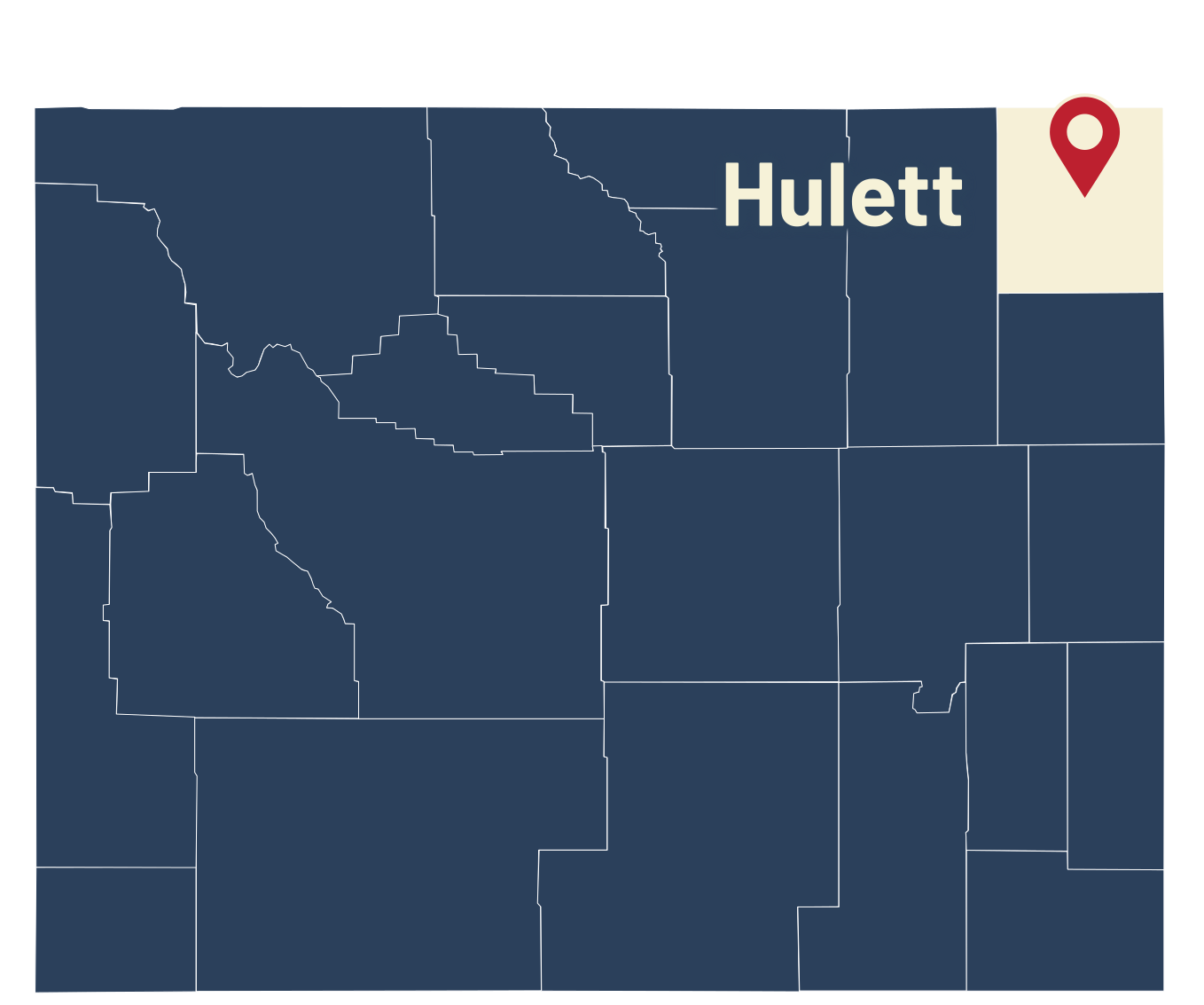
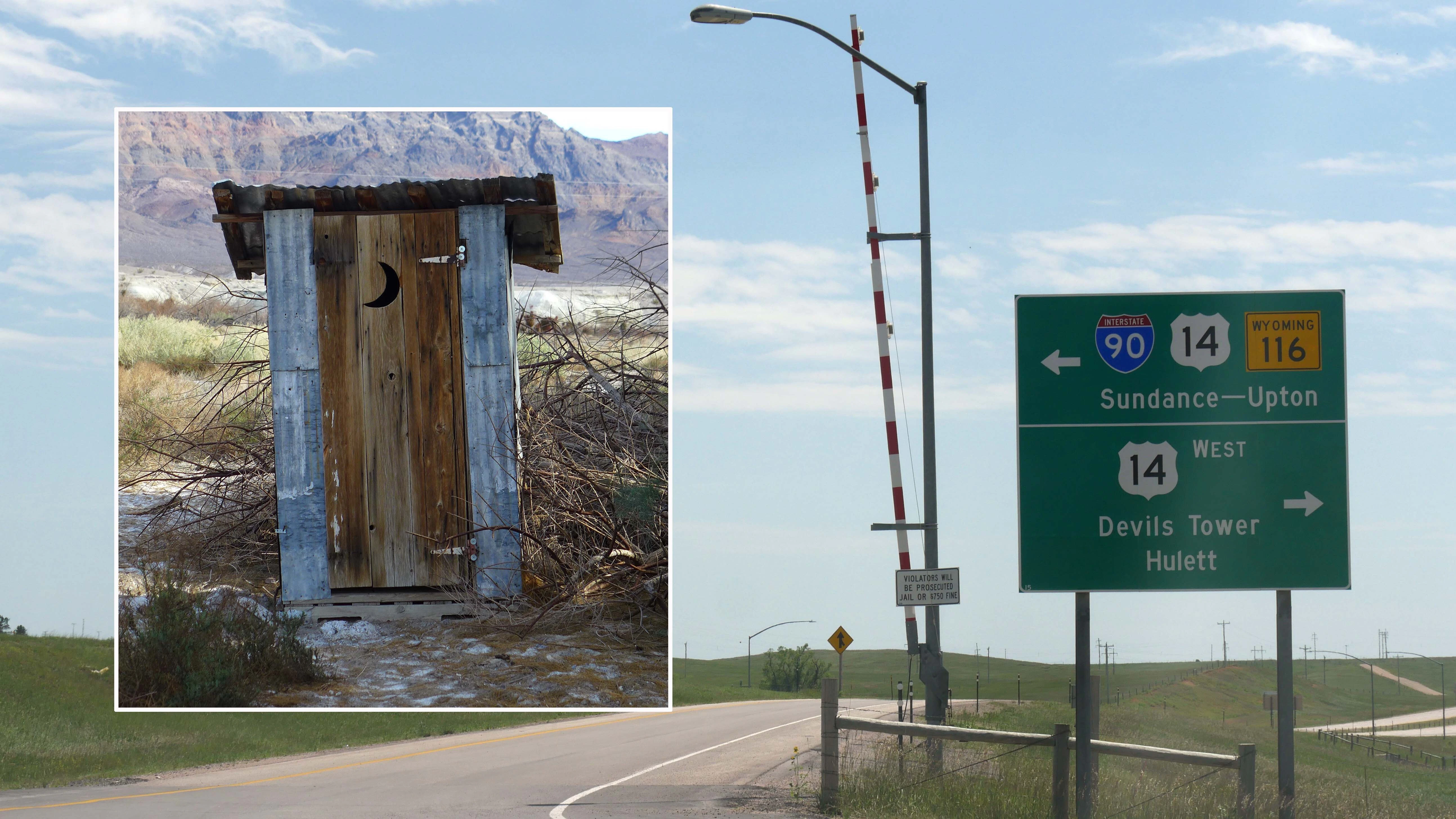
A dispute over primitive outhouses on Amish-owned property in Crook County has prompted claims that some families are leaving northeast Wyoming’s oldest Amish community, though county officials say the issue has been resolved and was never intended to drive anyone away.
Sheridan rancher Pepper Fipps said he believes county enforcement efforts over wastewater disposal in the Hulett area have discouraged Amish families from remaining in the community.
“They wind up starting a little bit of a war,” Fipps said of the commissioners. “The community is dwindling.”
Crook County Commission vice chairman Bob Latham disputes that.
“It’s all settled now. Everything is fixed,” Latham told Cowboy State Daily.
An estate moving sale earlier this month was held for two Amish families — Abe and Elizabeth Yoder and Rudy and Irene Borntreger. Records show Abe Yoder was among the landowners involved in the wastewater dispute.
About 40 Amish families live in the Hulett area, Fipps said. Founded in 2011, the Hulett Amish settlement is one of five in Wyoming.
Cowboy State Daily attempted to contact the families but did not receive responses before publication. Amish communities have traditionally relied on the U.S. mail for communication, and many members do not use cell phones or email.
Sanitation Concerns
The issue surfaced in October 2024, when Crook County officials learned some Amish landowners west of Hulett had dug pits to use as toilets without obtaining permits.
Crook County wastewater specialist Caleb Peters informed commissioners that Yoder had installed outhouses that did not comply with county regulations, according to reporting by the Sundance Times.
Latham said a hole in the ground used to collect human waste is considered an illegal outhouse because it poses a risk to groundwater.
Commissioners scheduled a hearing in January 2025, expecting Yoder to attend and discuss the matter, but he did not appear, according to the Times.
Peters and county planning director Tim Lyons determined conditions at some properties presented health concerns after observing graywater and blackwater drainage. The Times reported Peters found a chicken with its head inside blackwater drainage at one residence, along with what he described as an odor of rot. At another property, he reportedly discovered an abandoned outhouse occupied by animals.
Latham said county code requires human-waste receptacles to be portable, pumpable or connected to a septic system.
No Fines Levied
Fipps contends county officials threatened landowners with fines of up to $30,000 per day if they failed to comply with regulations.
He called the county’s rule about illegal outhouses “asinine, stupid."
“It is baffling to me because I haven’t ever seen an outhouse blow up,” he said, noting Amish families typically live on 160-acre parcels well away from town.
Latham said fines were never a part of the county’s solution.
“To my knowledge, we never imposed fines,” he said.
Due to the challenge of communicating with Amish residents, County Attorney Joe Baron mailed letters to the landowners, Latham said. Peters also visited properties in person several times, he added.
“Some didn't want to talk to him,” Latham said. “Some did and were very cordial. The ones who didn't found out we're not going to quit, because it's about health and safety. It's something we take very seriously.”
After being notified of the violations, some landowners installed vault toilets that comply with county requirements, he said.
He credited Peters’ persistence with resolving the issue.
“Caleb did a heck of a job of staying on it and getting things corrected,” Latham said. “Sometimes they feel like they can follow a different path. It was a lot of education and a lot of back-and-forth.”
Government Overreach Or Public Health?
Fipps said he believes the county's response amounted to government overreach.
Latham disagrees, saying Crook County is obligated to enforce regulations consistent with standards established by the Wyoming Department of Environmental Quality.
“Every time we have to knuckle down and say, 'This isn't right', we hear that,” he said. “We could have been a lot meaner about it. It was mainly getting an understanding of what the laws are.
“Our biggest thing with that deal is their health and safety.”
According to the Young Center at Elizabethtown College, Crook County is home to Wyoming's largest Amish settlement. The state's Amish population numbers roughly 500 people spread among five settlements.
Smaller settlements have since formed near Newcastle, Buffalo and Powell.
“I've known them my whole life,” Fipps said of the Hulett settlement. “I've traded horses with them and done business with them.”
Kate Meadows can be reached at kate@cowboystatedaily.com.