
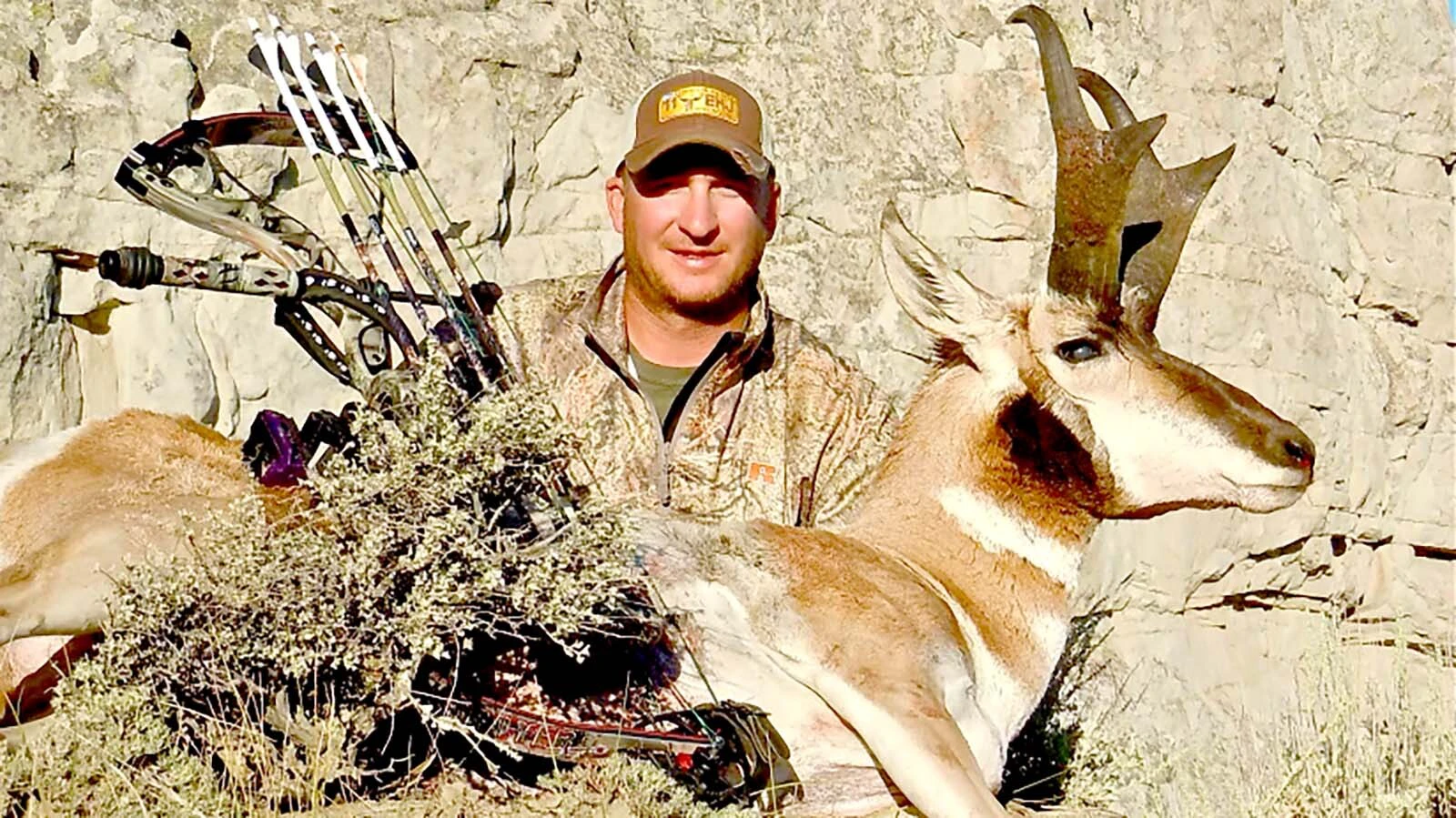
Wyoming is frequently called “the antelope capital of the world,” but with this year’s hunting tag results many hunters aren’t feeling it.
When the Wyoming Game and Fish Department announced draw results earlier this month, hunters’ social media forums started lighting up with comments like, “I struck out on antelope.”
For many resident hunters, the yearly ritual of entering the antelope draw once was essentially a formality. Hunters practically considered it a guarantee.
That’s changed, and possibly for good, some seasoned Wyoming antelope hunters said.
Guy Eastman of Cody put in for a tag in Hunt Area 61, near Wamsutter, and didn’t draw.
Granted, that’s always been a tough tag to get because it’s in highly coveted hunting territory, said Eastman, who represents the third generation of the famous outdoor multimedia family.
"That’s the heart of Carbon County. That’s the number one county in the country for big antelope,” he said.
However, it is his fourth year in a row of striking out, which he views as unusual.
And it seems to be the same story across the hunting community, Eastman said.
“I don’t know anybody who drew a good antelope tag in my network of people,” he said. "I didn’t draw anything. Nor antelope, no deer, no elk. Not a darn thing.”
Larry Hicks has hunted Wyoming antelope for decades. And as a state senator and conservationist, he’s been involved in wildlife policy issues.
This year, he applied for an antelope tag in Hunt Area 68, which he didn’t draw.
Area 68 is a highly desirable hunt area that runs from Jeffrey City to the north side of the Ferris Mountains.
Putting In For The Draw
Wyoming offers both limited quota and general hunting tags for deer and elk.
Antelope tags are limited quota only.
General tags may be purchased over-the-counter at any time.
Hunters must apply and pay for limited quota tags in advance, usually in May. Those who don’t draw tags have their money refunded, minus an application fee.
Resident antelope tags cost $37.
Non-resident tags cost $326 for the regular non-resident draw and $1,200 for the special first-round non-resident draw.
When applying for tags, hunters list their first-, second- and third-choice hunt areas.
The draw system is set up so residents “don’t compete” directly with non-residents for tags because non-resident tag allocations percentages are pre-set, Hicks said.
The pricey special non-resident draw has much better odds than the regular non-resident draw, but there’s still no guarantee of getting a tag, he said.
Winterkill And Drought
Many hunt areas in Fremont, Carbon, Sublette and Carbon counties are considered the best of the best, and were always difficult to draw tags, Hicks noted.
Even so, draw odds have dropped, mostly because herds in those areas are still recovering from devastating losses during the harsh winter of 2022-2023.
"We’re down tens of thousands of antelope, and a lot of those are in the premier areas across south-central Wyoming,” Hicks said.
And fewer antelope means Game and Fish will issue fewer tags.
“The drawing odds have gone to heck (in some hunt areas) because there are no tags,” Hicks said.
Some areas that might have had as many as 200 antelope tags a few years ago had only 25 resident tags this year, he said.
It could take up to eight years for antelope herds to recover from the devastating winterkill losses, “and we’re about three years in,” he said.
And current drought conditions could hamper the recovery, Hicks said.
“I worry about antelope fawn survival rates this summer in dry conditions,” he said. “If it gets too dry, the does will quit lactating in August, and the fawns will die.”
Demand Exceeds Availability
While numbers might be down in parts of Wyoming, the demand for tags isn’t.
Eastman noted that in years past, the number of first-choice applicants for Type 1 (any antelope) tags in Area 61 was about 500. This year, there were close to 600 applicants for 89 available Type 1 resident tags. And there were 183 second-choice and applicants and 106 third-choice applicants.
The situation was similar in other hunt areas, according to draw result numbers posted online by Game and Fish.
Hunt Area 53, in south Carbon County, had seven resident Type 1 Tags available. There were 169 first-choice applicants, 127 second-choice and 111 third-choice.
Area 72, in central Natrona County, had a comparatively generous supply of 616 Type 1 resident tags, which were first-choice for 955 applicants, along with 364 for second-choice and 140 third-choice applicants.
Willing To Pay The Price
Dax McCarty runs the Douglas-Based Wagonhound Outfitters. Most of his guided antelope hunts are in Area 30 near Douglas.
Herds in that part of Wyoming didn’t suffer as badly during the 2022-2023 winter.
“In the areas where we hunt, the population has stayed steady,” he told Cowboy State Daily.
His clients had good luck drawing tags this year, he said, even though the overall trend has been toward longer odds.
“The antelope draw has been getting a little bit tougher, but draws have been getting tougher for everything because of the increase in demand,” McCarty said.
The guided hunts he offers are mostly on private land and offer a good balance of abundant opportunity and high-quality trophy bucks, he said.
Non-resident clients can gain an edge in the draws by accumulating preference points.
He recommends that those with fewer preference points pay the extra money to put in for the special non-resident tag draw.
Because Wyoming has such a stellar reputation for antelope hunting, “they’re will to pay for that special draw,” McCarty said.
More Hunters Moving In
Eastman said he expects the competition to increase for hunting tags across the board.
Because of his presence in hunting media, “I talk to a lot of hunters from all over the country,” he said.
He’s found that increasingly, hunters are moving to Wyoming to gain resident status.
A person must live in Wyoming for a full calendar year to qualify for resident hunting tags.
On paper, Wyoming’s population growth seems small, but Eastman noted a high percentage of newcomers coming primarily because of the hunting and angling.
“More people have the opportunity to work remotely. And if they’re sick of putting in for the non-resident tag draws, they think, ‘If I’m going to work remote, I’m going to move to Wyoming and hunt as a resident',” he said.
“The holes that’s left in Wyoming’s population by people who die or move out is being filled by people who come here to recreate, hunt and fish,” Eastman said.
Even so, Wyoming will remain one of the best states for hunters, he added.
“It’s not all doom and gloom. There’s still good hunting in Wyoming,” he said.
“The good thing is, Wyoming has enough public and enough rough country” to keep hunters from crowding out each other, he said.
Mark Heinz can be reached at mark@cowboystatedaily.com.


