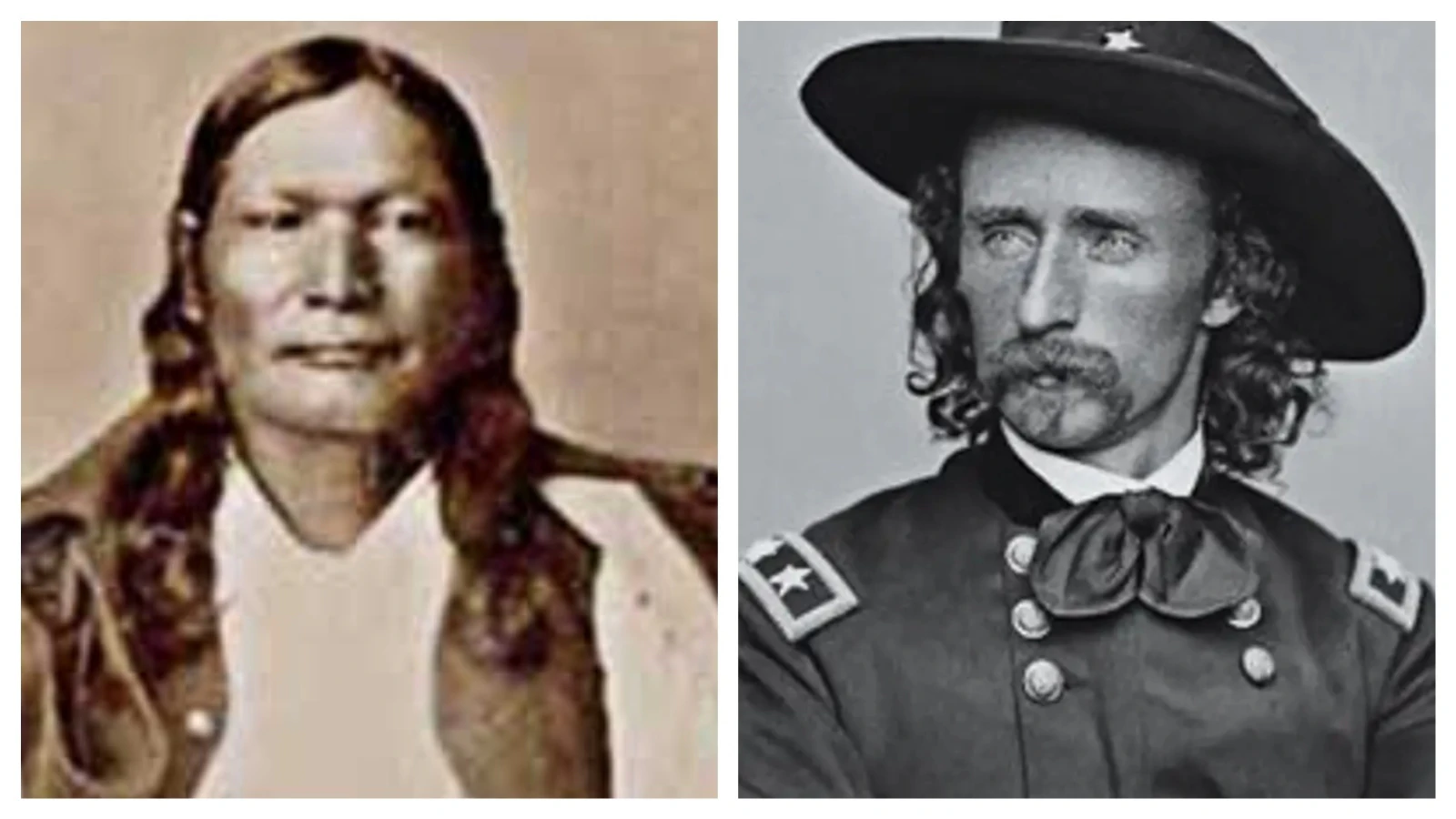
They have been dubbed by historians as the Arapaho Five, warriors who found themselves fighting against the cavalry in the Battle of the Little Bighorn 150 years ago this week. In the spring of 1876, these young bucks, as they called themselves, snuck off from the fort where their band was camping and became part of history.
Their names were Left Hand, Yellow Eagle, Yellow Fly, Water Man and Sage.
In 1919, Tim McCoy, actor and adopted member of the Arapaho tribe, was sitting in a powwow with several Arapaho friends on the Wind River Indian Reservation along the Little Wind River.
He later related the story to Darryl Ponicsan in a June 1977 article for the American Heritage magazine, “High Eagle The Many Lives Of Colonel Tim Mccoy.”
“They started telling me that Old Water Man was in that fight,” McCoy said. “I sort of scoffed at it because every Indian and his brother was in that fight. Practically all of them killed Custer.”
However, when McCoy began asking Water Man questions, the old Arapaho answered them all accurately. Determined to have the old men tell the stories themselves, McCoy arranged for separate interviews with Water Man and Left Hand in nearby Riverton by 1920.
The other three warriors had already gone to the “great mystery” according to Left Hand and Water Man. However, Sage, was still living near St. Stephens under the name of Sherman Sage. Only remnants of Sage's own story were ever recorded.
The two warriors McCoy knew about agreed their stories needed told.
“I had lived 22 snows at the time of the great battle on the Little Bighorn River,” Water Man told McCoy. “Soon Left Hand and I must go to the long sleep, and no one will be alive to tell the story, so I will tell you, whom the Arapahoes call their Soldier-Chief, everything just as I saw it, and nothing that is not the truth.”
Left Hand & Water Man
Left Hand began his story by stating that he was part Blackfeet and part Cheyenne but had always lived among the Arapaho. He was born in the Powder River Country and, in 1876, was camped with the Arapaho at Fort Robinson, Nebraska, drawing rations, when he left with a war party to fight the Shoshones.
“When we were young men, it was the custom of the young Indian to go on small war parties looking for Shoshones or other unfriendly tribes,” Water Man explained. “If our medicine was good, we sometimes returned to camp with a scalp or a number of ponies.”
The young bucks rode north into the buffalo country and, near the Little Bighorn River just south of what is now Crow Agency, Montana, met a small party of Sioux.
“They told us that the Sioux were going to have a sundance and said that we should come along with them to the Sioux village and have a good time,” Water Man said. “Afterward I learned that these Sioux thought we were scouts for the white soldiers.”
Unaware that they were being tricked, the five Arapaho rode with the Sioux. As they came near the village, a great many Sioux came out of the camp.
“They took all our guns away, and made us prisoners, saying that we were scouts of the white man, and that they were going to kill us,” Water Man said.
Young Two Moon, nephew of Cheyenne Chief Two Moon, said all the Sioux believed they were scouts from a camp of soldiers. He verified the Arapahos' claim of being held prisoner in a 1908 interview with George Bird Grinnell.
“Two men took their part — Black Wolf and Last Bull,” Young Two Moon said. “They said the people should wait and not act hastily.”
The Arapaho were taken into Two Moon’s lodge. The Sioux threatened to kill the five all night.
“In the morning, Two Moon, Chief of the Cheyenne, learned we were Arapahoes, so he went to the Sioux Chiefs and made them give us back our guns and set us free,” Water Man said.
The Arapaho were given back their guns but not allowed to leave camp. The young men saw the sun rise two times and the village grew to thousands of warriors, the most any had ever seen in one place.
It was on the third day, June 25, 1876, that the battle began.
The War Cries
All the Arapaho men had readied themselves for the battle. Water Man said he was dressed in beaded leggings, breechclout, a white shirt and a large war bonnet. Left Hand was dressed in a shirt and breechclout, and his medicine was a piece of buffalo hide made into a cross with two feathers in it, which he wore in his hair.
“My face was painted yellow and red and, around my neck, tied in a deer-skin medicine bag, was a certain root, which was my medicine,” Water Man said. “I still have that same medicine,”
Left Hand said the first attack, led by Major Marcus Reno, was at the south end of the village when the sun was at the position of about 9 a.m.
“The soldiers fired a few shots, but when we rushed toward them, they became frightened and started back across the river,” Left Hand said. “Many of them lost their horses and had to swim across."
He described how the soldiers climbed on a high ridge and built a barricade.
“There were many soldiers killed there,” Left Hand said. “The Sioux were all around them.”
When the sun was straight up, about noon, Left Hand heard shooting at the lower end of the village and knew it must be more soldiers.
“I went down through the village and crossed the river with a large party of Sioux and Cheyennes,” Left Hand said. “We Arapahoes had all gotten separated during the first fight.”
Meanwhile, Water Man had joined a group of warriors at the lower end of the village and fought off troops who were trying to cross the river and attack the camp. During the earlier part of the fight, Waterman was in a small gulch below the hill where the soldiers were stationed. He later moved up the hill and closed in on the enemy.
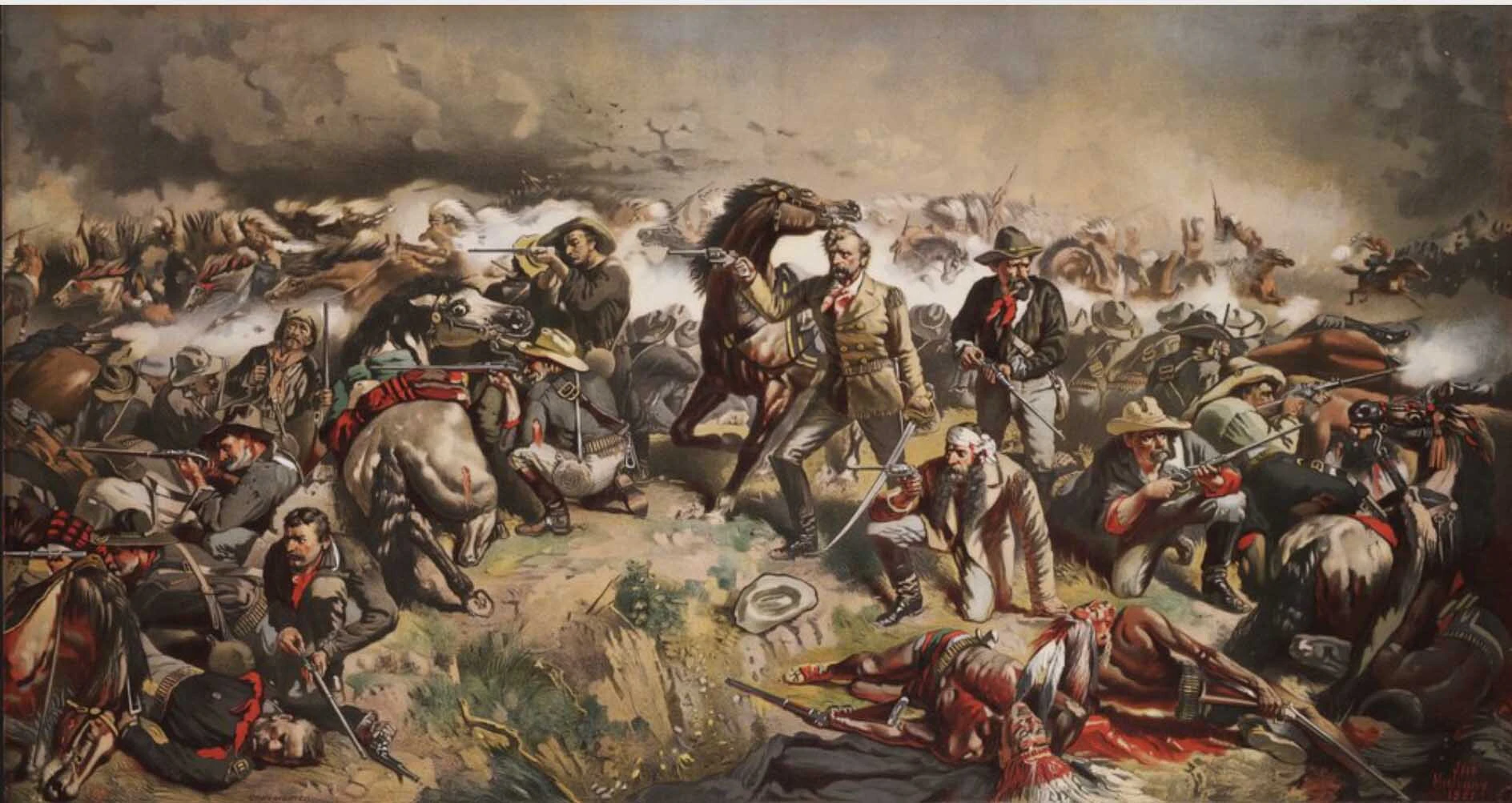
“There was a great deal of noise and confusion,” Water Man said. “The air was heavy with powder smoke, and the Indians were all yelling.”
Water Man said Crazy Horse, the Sioux Chief, was the bravest man he had ever seen.
“Crazy Horse rode closest to the soldiers, yelling to his warriors,” he said. “All the soldiers were shooting at him, but he was never hit.”
Water Man said he only knew of one soldier he personally killed. It was near the end of the fight when they rushed to the top of the hill and finished all that were still alive.
“I killed him with my gun, but did not scalp him because the Arapahoes do not scalp a man with short hair, only long hair,” Water Man said.
Killed A Sioux But Not White Soldier
Left Hand, who counted 13 coup during the battle, saw an Indian on foot who was wounded in the leg.
“Thinking he was one of the Crow or Arikara scouts with the soldiers, I rode at him, striking at him with a long lance which I carried,” Left Hand said. “The head of the lance was sharpened like an arrow. It struck him in the chest and went clear through him.”
The Indian fell over a pile of dead soldiers. Afterward. Left Hand discovered the man he killed was actually Sioux.
“The Sioux were going to kill me because I had killed their friend,” Left Hand said. “One Sioux tried to take my horse away from me, but I would not give him up.
“Everyone was excited. The hills were swarming with Indians, all yelling and shooting.”
Left Hand said that as he came up on the ridge, one soldier, who was on the ground, handed him his gun.
“I took the gun and did not kill him, but some Sioux who were behind me killed him,” Left Hand said. “I went back and took his belt, which had many cartridges in it.”
McCoy said the soldier was wounded and handed Left Hand his gun to surrender.
“They didn’t understand. You don’t surrender to an Indian — you either fight or you die,” McCoy said. “Left Hand took the gun, but he couldn’t use it because the shell jammed in the chamber.”
Custer’s Last Stand
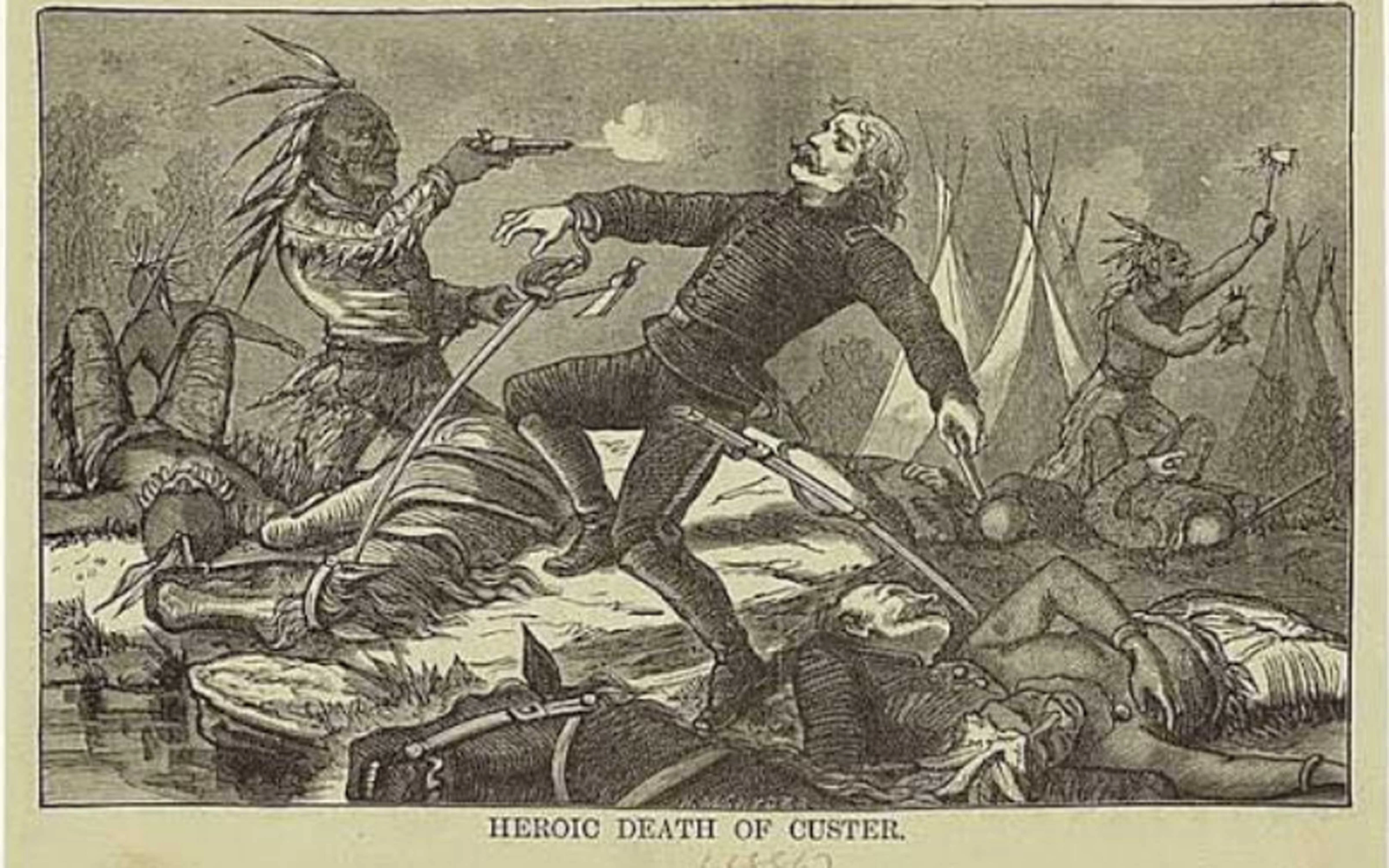
Both Water Man and Left Hand saw Custer near the end of the fight.
“He was dressed in buckskin and was standing up and had pistols in his hands shooting into the Indians,” Left Hand said. “I did not see him again until it was all over. I walked around and saw him lying there. He was dead.”
Water Man also reported that Custer was wearing buckskin. But by the time he saw him, Custer was on his hands and knees.
“He had been shot through the side and there was blood coming from his mouth,” Water Man said. “He seemed to be watching the Indians moving around him.”
Water Man described how four soldiers were sitting up around Custer, but they were all badly wounded. The next time he saw Custer, he was dead.
Snuck Away
After the squaws, as the old men called the women of the tribe, had cleared the battlefield, the Arapahoes knew they had to escape. The Sioux were angry at Left Hand for killing one of their own and were waiting to take revenge.
The next morning, the Sioux broke camp and started for the mountains. They had heard some soldiers were coming up the river, and the Indians were scared.
“That night after they had made camp and it was dark, we four Arapahoes crawled out to the pony herd and, each mounting a pony, slipped away,” Left Hand said. “We travelled as fast as we could back to Fort Robinson where the Arapahoes were.”
At the time they shared their stories with McCoy, the old men were living on the reservation and life was much different.
“The buffalo are all gone, and the Indians who once roamed these plains and were happy are now held on reservations as wards of the government,” Water Man said. “We are old men now, and soon we too must pass over to the great mystery. That is why I have told you this story.”
Left Hand also commented on how different times were during his 1920 interview.
“The white men used to trade us guns for buffalo robes, but now it is all changed,” Left Hand said. “The buffalo are all gone, the antelope are gone, and now we old men can only sit by the fire, sing our war songs and dream of the past.”
Jackie Dorothy can be reached at jackie@cowboystatedaily.com.