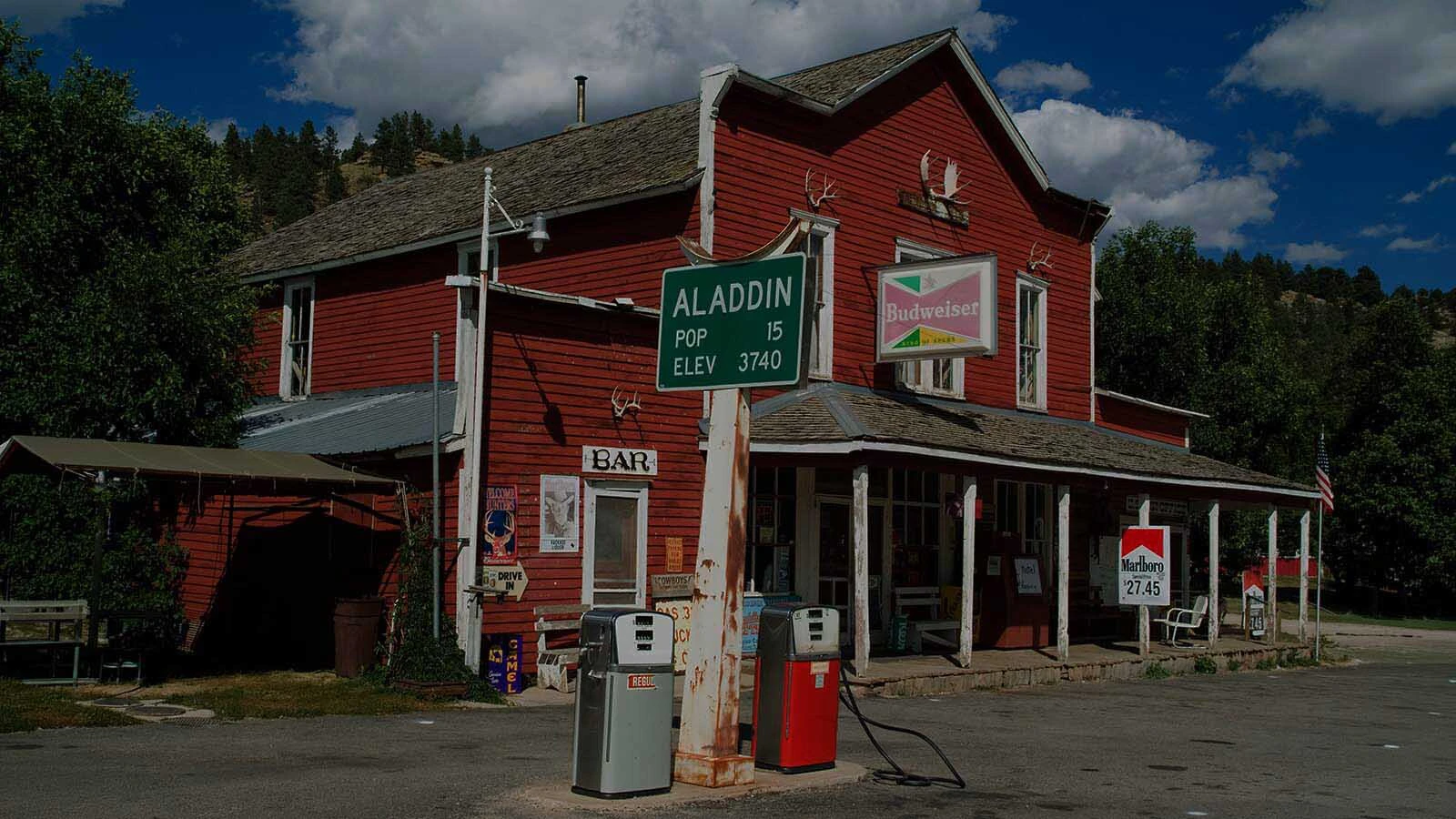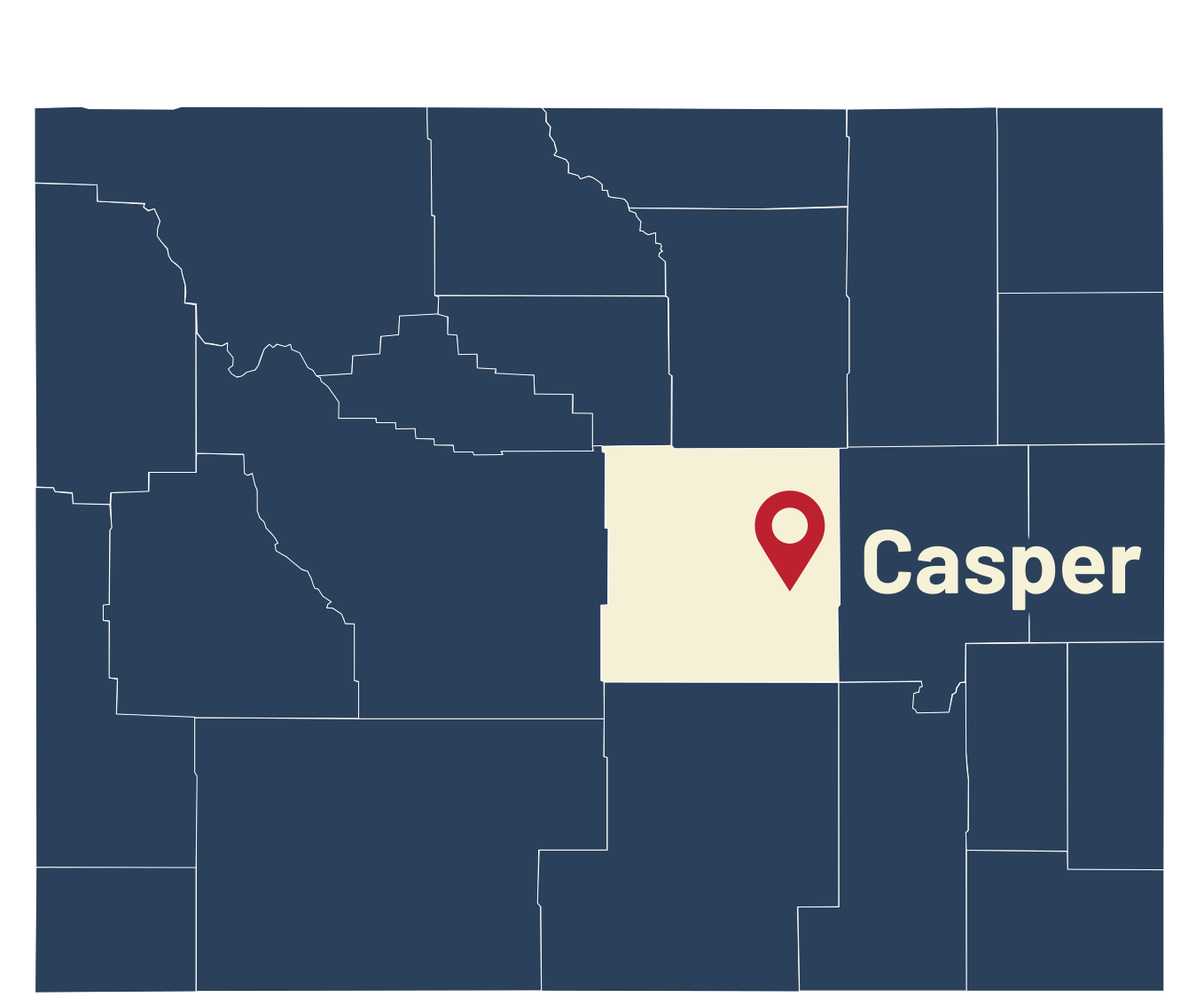
He drove a public bus in Casper in the 1920s and also took the wheel of trucks hauling contraband booze.
By the 1930s his two-bit criminal history in central Wyoming morphed into big-time felonies that made front-page headlines.
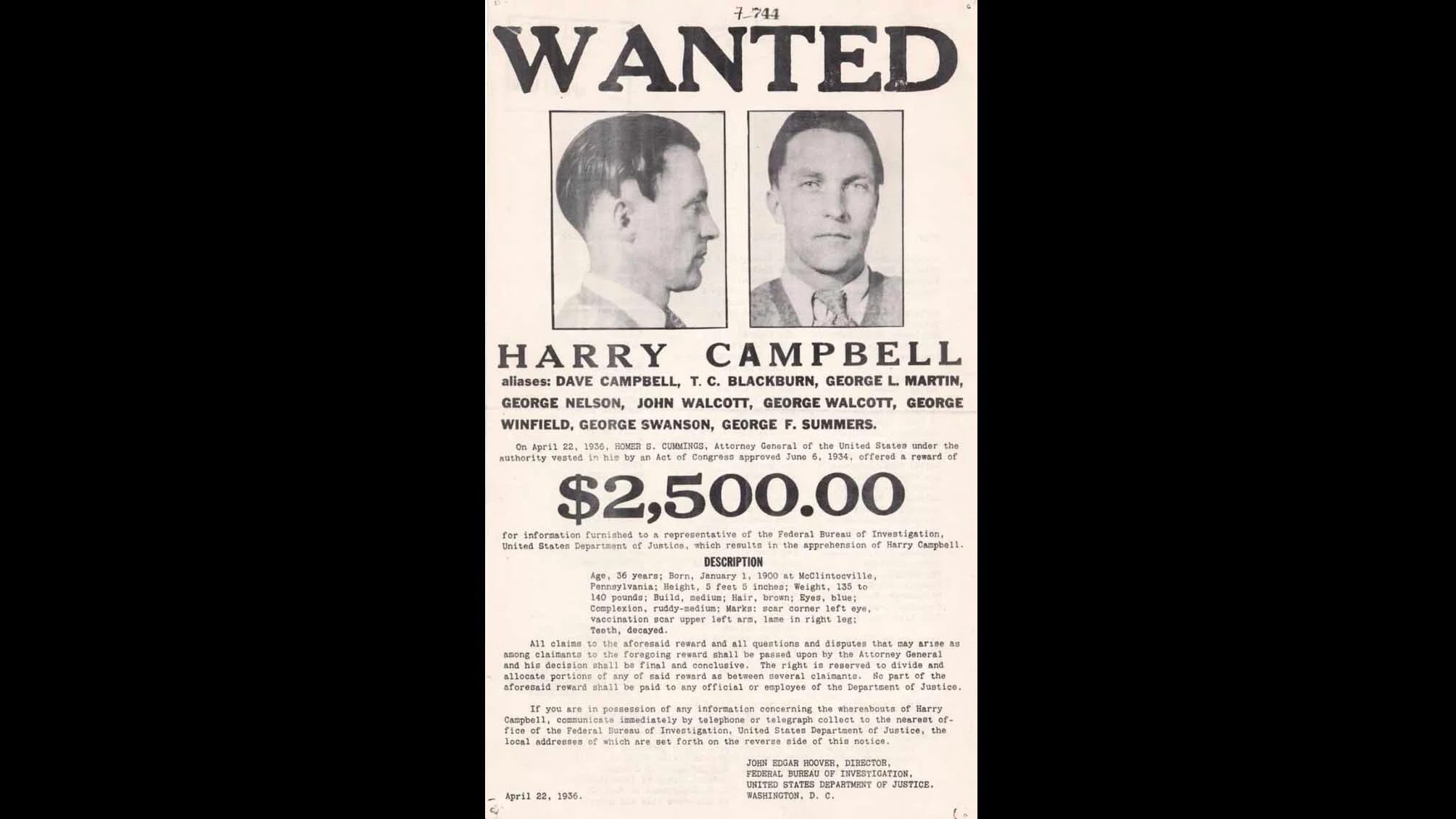
In 1936, Harry Campbell hit the FBI’s most-wanted list as “public enemy No. 2” just behind his friend and partner in crime Alvin Karpis, the leader of the Karpis-Barker gang.
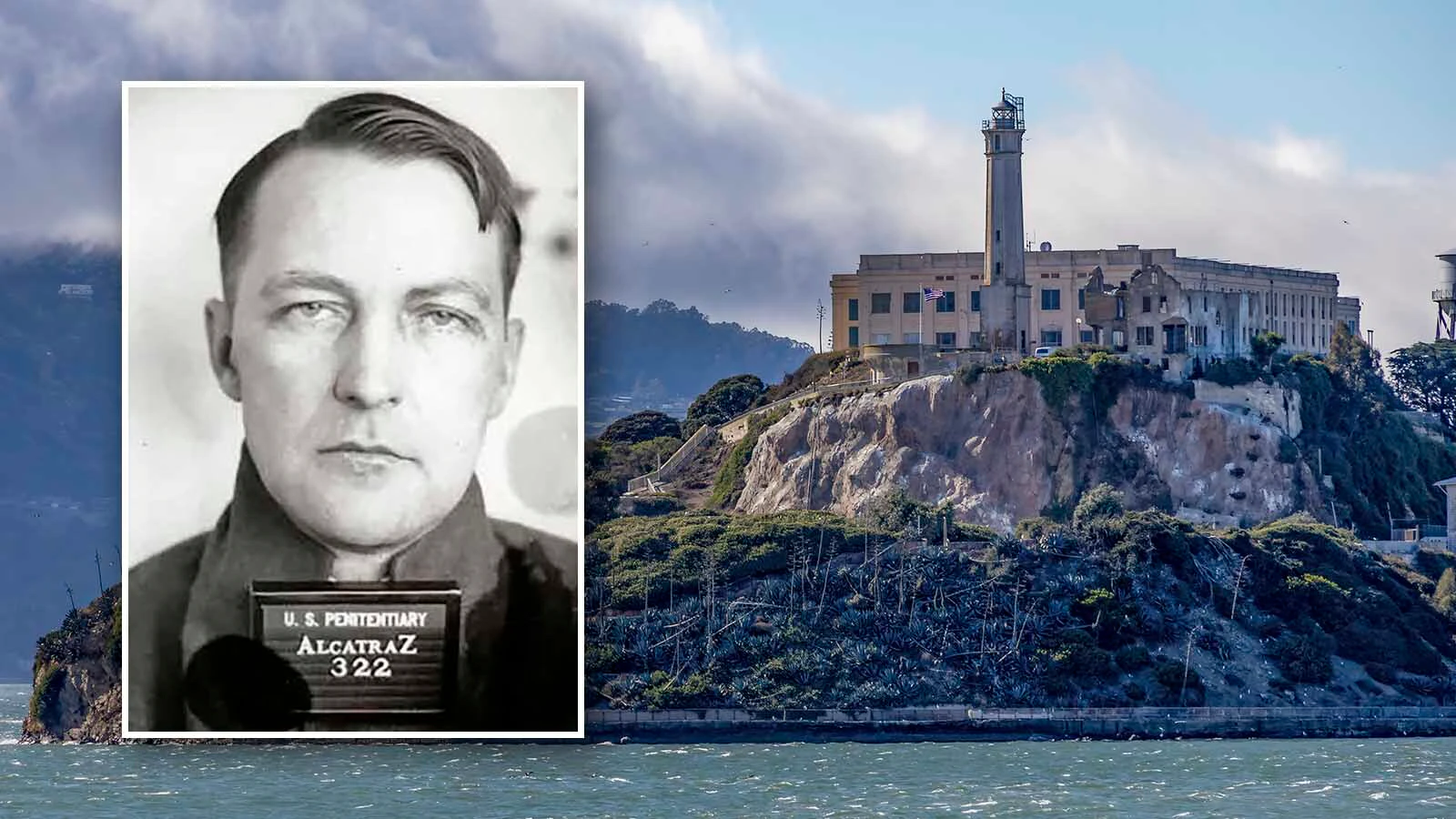
Campbell’s crime career ended with a life sentence at Alcatraz for his role in the kidnapping of a Minnesota brewery heir in 1934.
But before he arrived at “The Rock” he, with Karpis, successfully escaped an FBI arrest in a hail of machine-gun bullets.
When the FBI finally put Campbell in cuffs for his role in the kidnapping, the raid was led by storied Director J. Edgar Hoover.
The Casper Tribune-Herald reminded every one of Campbell’s ties to the region.
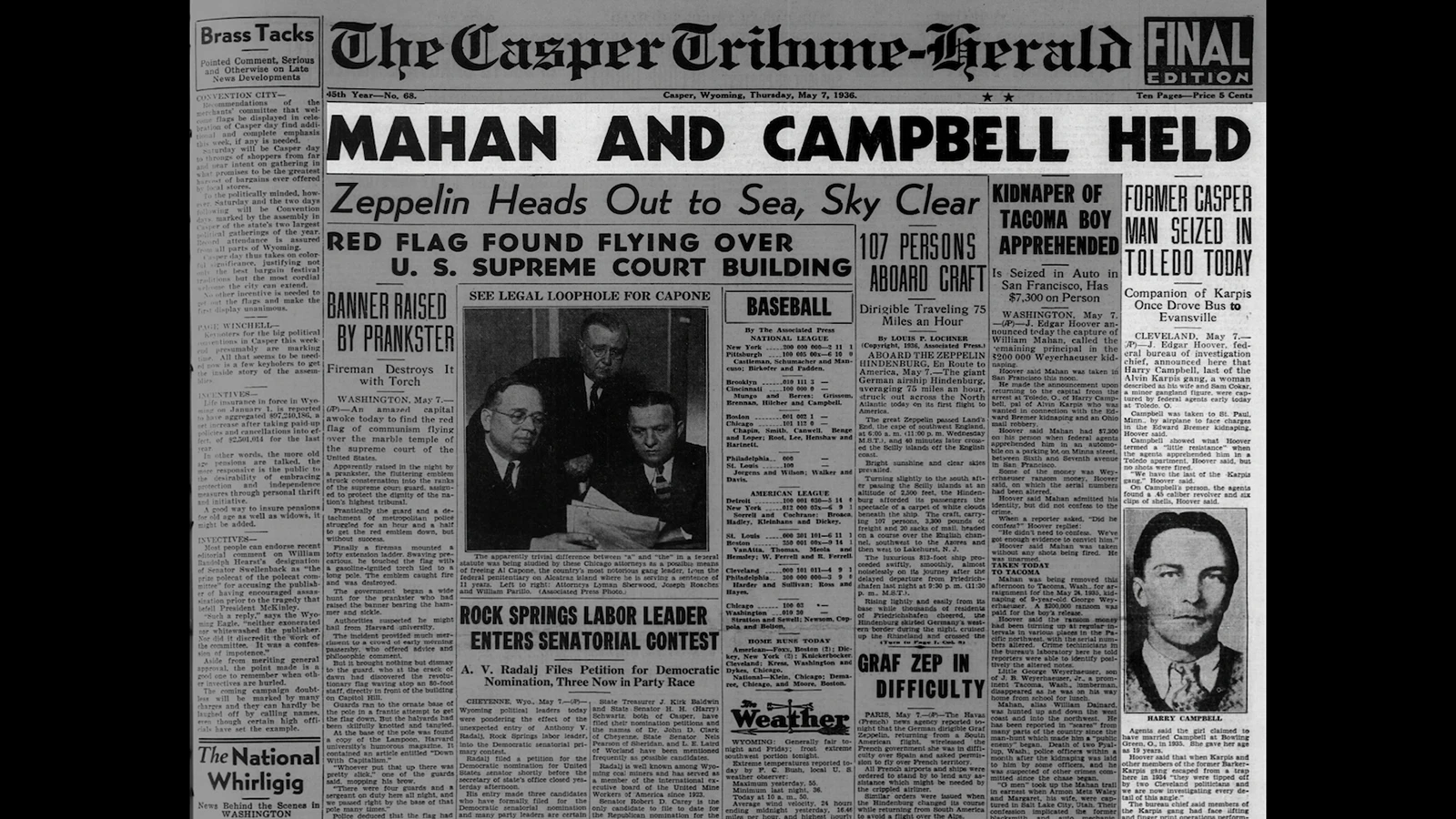
“Former Casper Man Seized In Toledo Today,” the paper reported on May 7, 1938. “Companion of Karpis Once Drove Bus to Evansville.”
Grew Up Knowing ‘Ma’ Barker
Harry Campbell began life as a New Year’s baby in a new century, on Jan. 1, 1900, in McClintocksville, Pennsylvania.
He was the fifth of seven children born to George and Melissa Campbell. By the second decade of his life, his family moved to Oklahoma, and it was in Tulsa where his bad seeds were initially sown.
FBI documents on the Barker gang state that Campbell grew up knowing the infamous brood and their mother, Kate “Ma” Barker.
“Many of the sons of Kate Barker became associates of these boys in their later lives,” states the file dated Nov. 19, 1936. “Harry Campbell and Volney Davis matured and grew up with the sons of Kate Barker, and in later years they collectively engaged in lives of crime.”
The file states that Campbell became a prominent member of the gang.
Reflecting on Campbell’s life of crime, The Tulsa World reported on May 8, 1936, that he was first arrested for vagrancy in the city on Dec. 25, 1920, and again on June 11, 1921, for bank robbery.
He was sent to prison, but a few months later was acquitted and released.
Within the next two years, Campbell moved to the Casper region, first working the Salt Creek oil fields and then from 1923-1924 driving a bus between Casper and Evansville.
Transporting Booze
The Casper Tribune-Herald reported on May 7, 1936, about how Campbell’s wayward nature continued to find opportunities in his new state.
“He gained a livelihood, police recall, from hauling truckloads of contraband liquor. Those were prohibition days, and on several occasions he ran afoul of the law because of his rum-running activities,” the newspaper reported. “He was arrested by Detective Miller in 1924 on a possession of whiskey charge.”
But Campbell’s criminal ways meant he was never long in one region.
In August 1932, Campbell and Fred Barker were being sought for the murder J. Earl Smith, a Tulsa lawyer who had represented both men.
Smith had told his wife that he was going to meet men to receive some money for his services.
Campbell made the appointment to see Smith and had a dispute with the attorney about charges for his representation on a burglary charge.
Smith’s body and bullet-riddled car were found outside Tulsa.
In August 1933, Campbell was sought in Oklahoma along with two others for the May 11 murder of a truck driver who tried to stop a safe robbery at a trucking firm.
In September 1933, FBI files state that Campbell was recruited by the Barker gang to St. Paul, Minnesota, and he brought along his second wife, Wynona Burdette, from Oklahoma.
From Minnesota, the gang drove to Reno, Nevada, to meet with others, gamble and drink.
By late December they returned to Minnesota, and late in the month decided to kidnap Edward George Bremer, a St. Paul bank president and son of the owner of the Schmidt beer brewery.
The plan was tentatively called off after two members left a kidnap planning session and shot and wounded a Northwest Airways employee who was wearing a uniform and mistaken for a cop.
The Kidnapping
By Jan. 17, 1934, plans were back on, and Campbell and Karpis were among five gang members watching for Bremer to drop off his daughter at school.
When his car pulled up at a stop sign a half-block away after depositing her, a gang member stepped up to Bremer’s door with a gun, told him to move over.
Asecond gang member opened the right-side door, struck him in the head several times and shoved him on the floor, FBI files state.
Bremer’s car, followed by the remaining kidnappers, took off. Hoover later claimed it was Karpis and Campbell who initially grabbed him.
The kidnapping resulted in a $200,000 ransom payment with the serial numbers of the cash recorded by the FBI and later shared with banks across the country.
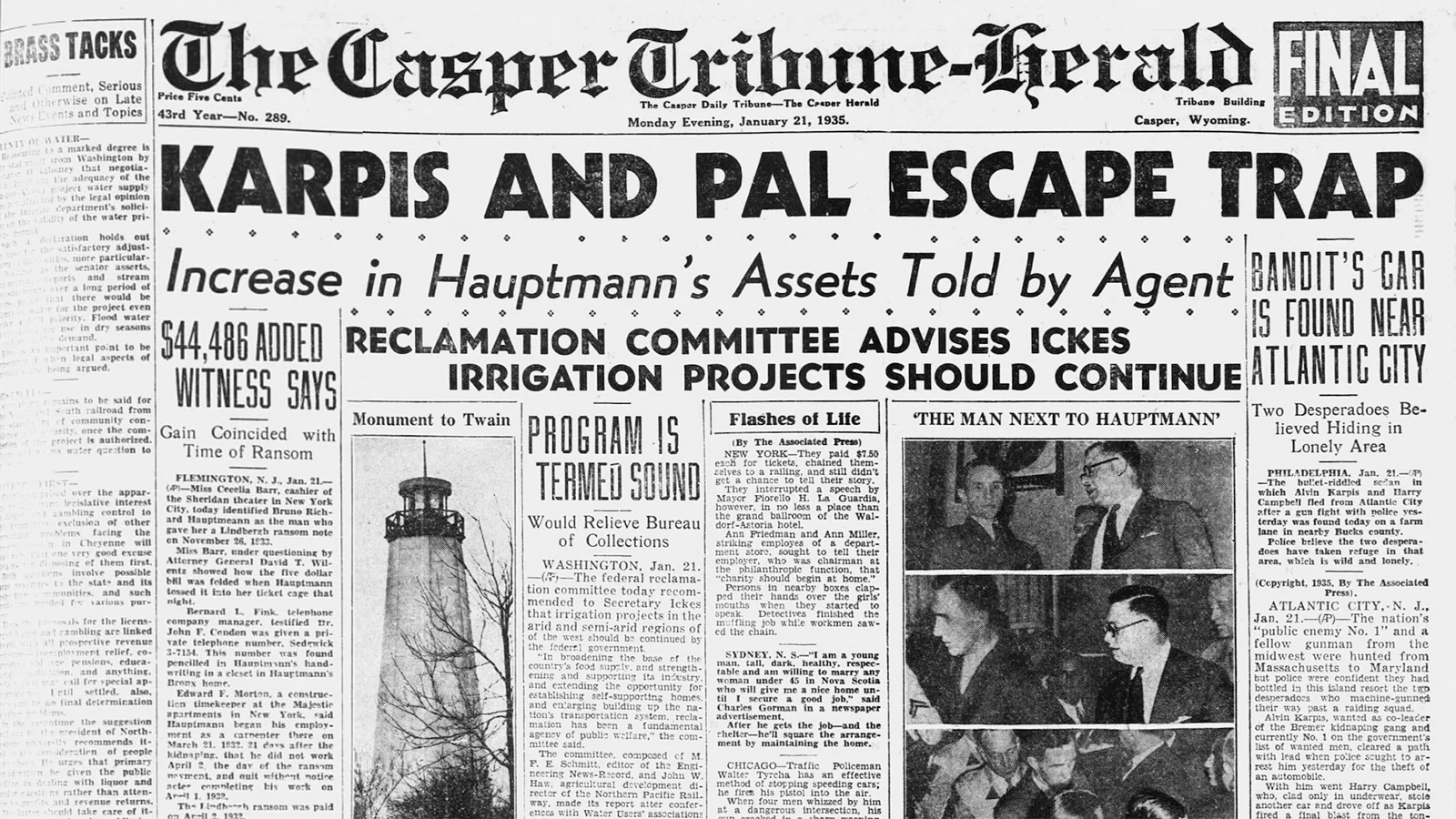
In its 1936 story, The Casper Herald-Tribune reported that Campbell and Karpis had visited Casper two years earlier in summer 1934 as the heat from law enforcement for the kidnapping made life harder elsewhere in the country.
The newspaper recounted how Campbell was seated at an “inconspicuous table” in a Casper night club and enjoying a drink and music trying to avoid attention.
A former girlfriend reportedly walked up, called him by name and asked, “Where have you been keeping yourself?”
Campbell exchanged pleasantries and quickly disappeared from the club, the newspaper reported.
“The ensuing hunt for him revealed he had a companion and that the companion was Alvin Karpis,” the newspaper reported.
After the kidnapping and subsequent manhunt, the Casper paper noted that local law enforcement had been watchful for any appearance of Campbell in the region.
“Vigilance had been especially keen in recent weeks as the dragnet closed in on him and Karpis,” the newspaper reported.
When Fred Barker and Kate Barker were killed in a shootout with the FBI in January 1935, Campbell and Karpis were tracked to a hotel in Atlantic City.
Campbell’s wife had been released by Oklahoma authorities with a promise from her brother that she would lead authorities to Campbell.
The Shootout
According to news reports, Campbell’s wife Burdette, aka Louise Campbell, and Karpis’ girlfriend traveled from Florida to join them.
Some news reports state they tipped off authorities as to who was in the room next door.
When federal agents surrounded the motel room and banged on the door, news stories declared that Karpis sent a stream of bullets through it.
Then Karpis, wearing trousers, slippers and overcoat, and Campbell with a pistol in his underwear, ran out the door as police returned fire.
The pair stole a car and then engaged in a running gun battle with police as they gave chase.
“The bandits jumped into a coupe owned by Mrs. Harold Brand, and with Karpis lying on the running board and pumping shots from his machine gun, they drove out Kentucky Avenue,” the Press of Atlantic City reported on Jan. 21, 1935.
“Store fronts and small hotels on Kentucky Avenue bore marks of the battle as the guns of the fleeing mobsters and police revolvers raked the entire section,” the story addded.
Karpis and Campbell escaped, ditched the car, kidnapped a man and stole his car, and then released him.
Karpis in his autobiography told a different story, writing that he and Campbell were in rooms individually with their women.
When the cops banged on the door, it was Campbell who opened up with the machine gun. No one was on the sideboard. He drove and Campbell fired at cops out of the back window.
The pair ended up in Toledo, Ohio, under assumed names.
They recruited a couple of other criminals to join them and robbed a mail truck in Warren, Ohio, of $72,000. Two other known criminals were arrested, charged, and convicted, the FBI file states.
But a continued investigation showed Karpis and Campbell were responsible.
Meanwhile, Campbell married a 19-year-old girl named Gertrude as he used the name Clarence C. Miller on May 29, 1935.
On Nov. 7, 1935, five armed men with two machine guns, a shotgun and automatic pistols robbed a train in Garrettsville, Ohio, as it went from Detroit to Pittsburgh.
Once again, Karpis and Campbell were leading the group, the FBI file states.
But the law was closing in on them.
They separated and Campbell stayed in Ohio under his assumed name and Karpis went south.
Karpis was finally arrested on May 1, 1936, in New Orleans, Louisiana, and Hoover made sure he was present.
The Arrest
Six days later, agents closed in on Campbell in Toledo.
The FBI file states that at daybreak on May 7, 1936, agents raided his apartment and arrested him. Under his pillow was a .45-caliber Colt automatic pistol.
Headlines across the nation proclaimed the arrest. Hoover had flown to Cleveland to be on hand to bring him in.
Oklahoma prosecutors conceded that Hoover had a stronger case linking Campbell to the Bremer kidnapping than they had linking him to the 1932 murder of the attorney Smith.
Federal agents flew Campbell to Minnesota to face charges.
Campbell’s mother told the Tulsa Tribune for its May 7, 1936, edition that her son “has been a heartbreak to us.”
His parents and other siblings were described as “law abiding” and “mighty nice people” by a local Tulsa police detective.
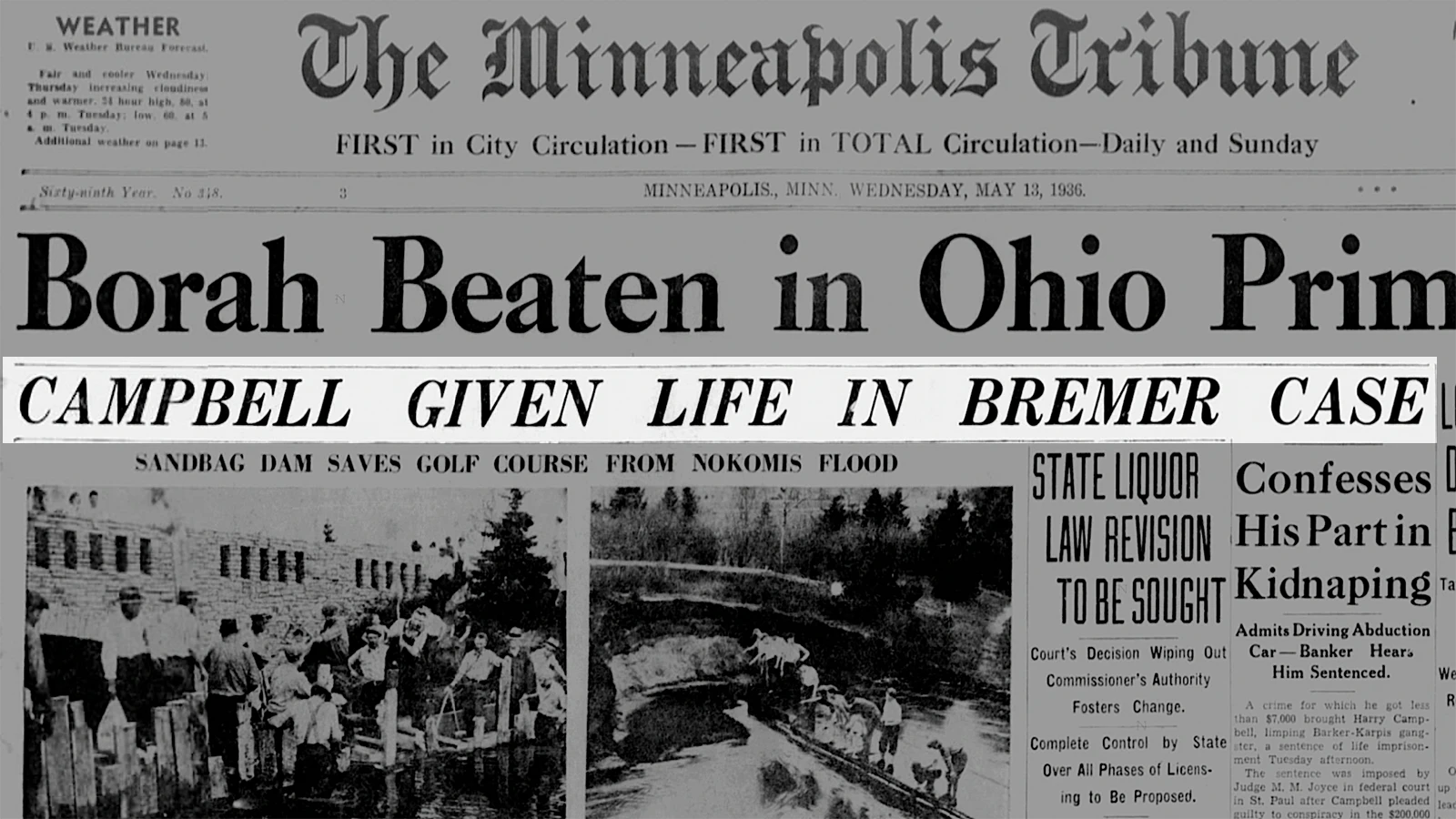
Once in court on May 12 in Minneapolis, Campbell pleaded guilty to driving the kidnap car that took Bremer to the hideout and for guarding him for 21 days and then taking him to the place where he was released.
The Minneapolis Star Tribune reported on May 13 that the federal prosecutor said Campbell’s split of the ransom money was only $6,000 to $7,000.
The judge asked him if there was any reason that he shouldn’t sentence him that day.
“No,” the paper reported Campbell stated.
He got a life sentence.
Alcatraz
The Winona Daily News reported on May 15, 1936, that he was shackled and taken secretly to Leavenworth by federal marshals and FBI agents.
“Campbell, federal authorities admitted, undoubtably will be taken to Alcatraz Prison in San Francisco Bay,” the newspaper reported.
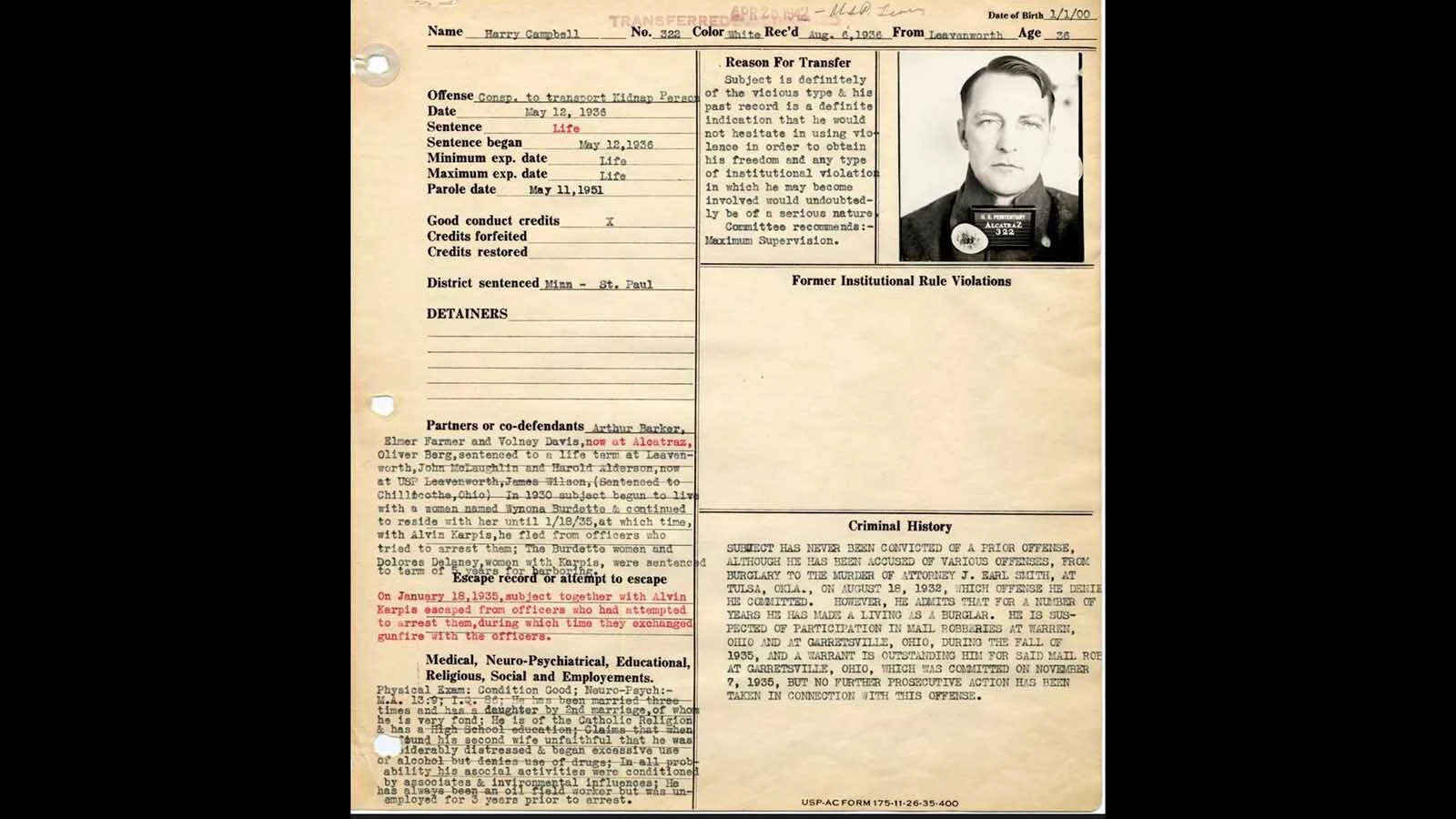
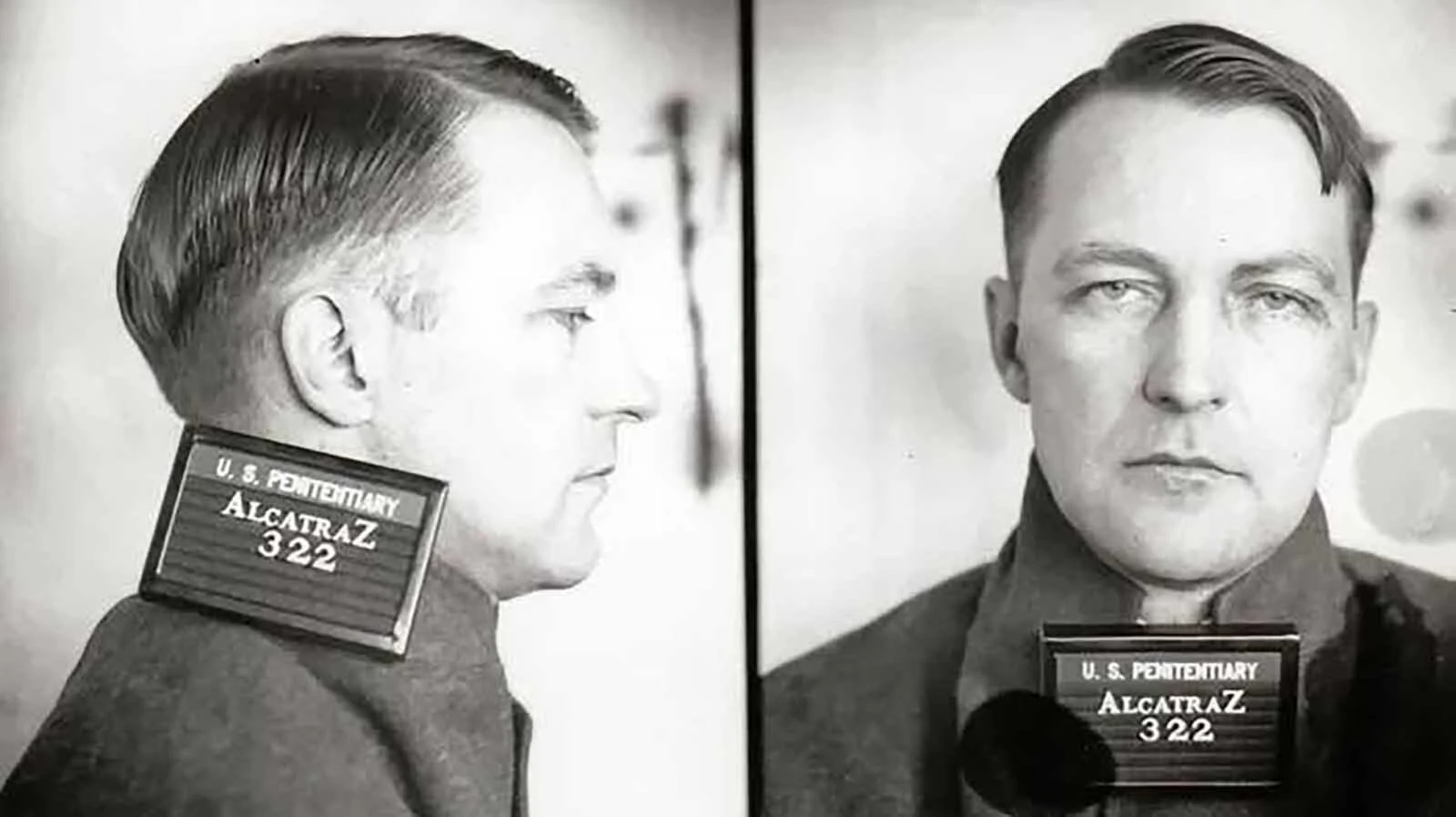
Online federal prison records for Alcatraz list him as prisoner No. 322 having been sent there from Leavenworth.
The record describes Campbell as “of the vicious type and his past record is a definite indication that would not hesitate from using violence in order to obtain his freedom … committee recommends maximum supervision.”
The federal prison record states that Campbell had a daughter with his second wife “of whom he is very fond.”
“In all probability his asocial activities were conditioned by associates and environmental influences,” his record states. “He has always been an oil field worker but was unemployed for three years prior to his arrest.”
Campbell’s potential parole date was May 11, 1951. Where and when he was released from prison is unknown.
A search for information about his life after prison was unsuccessful.
The website Find a Grave states that Campbell died in Amarillo, Texas, on Nov. 20, 1974. He was buried after a gravesite service in Rose Hill Memorial Park in Tulsa.
Dale Killingbeck can be reached at dale@cowboystatedaily.com.