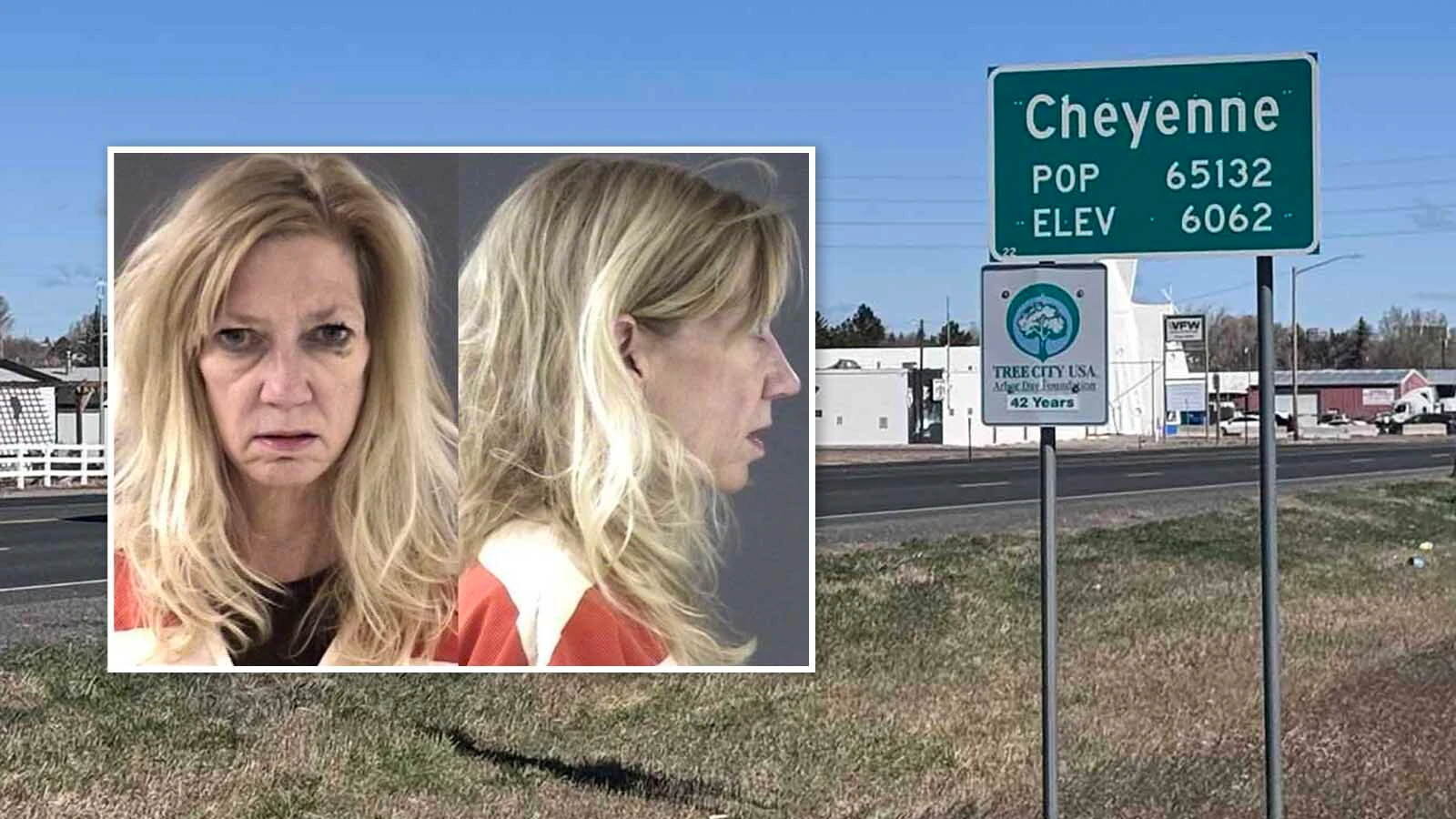
A 12-person Laramie County jury found former South Cheyenne Water and Sewer District General Manager Dena Hansen guilty Wednesday of stealing about $350,000 from the district over nearly a decade.
A Laramie County District Court clerk confirmed Hansen's conviction on a single felony theft count. The verdict form was not publicly available Wednesday afternoon.
The case centered on allegations that about $350,000 was diverted from the South Cheyenne Water and Sewer District between 2014 and 2024 while Hansen oversaw its finances.
For years, the amounts were small enough to disappear into a stack of utility bills.
A few hundred dollars one month. A little more the next.
Some was cash handed across a counter by customers paying water bills. Checks sometimes sat for days before clearing. Deposit slips appeared to tell different stories, depending on which copy investigators examined.
A Familiar Face
According to court records, Hansen worked for the district for more than 30 years.
Employees told investigators she was deeply involved in the district's day-to-day financial operations.
She handled deposits, interacted with customers, and maintained broad control over money moving through the office, says an affidavit of probable cause.
The district serves customers south of Cheyenne, collecting monthly payments from residents and businesses for water and sewer service.
Those payments arrived in different forms — checks, cash and money orders — and for years appeared to move through the office without raising significant alarms.
After concerns arose about district finances in 2024, the South Cheyenne Water and Sewer District hired forensic accounting firm Jacobson and Associates to review years of records.
That review ultimately identified what investigators alleged were hundreds of thousands of dollars in missing funds.
Two Deposit Slips
One of the recurring details in the affidavit involved deposit slips.
Investigators alleged Hansen prepared bank deposits using duplicate deposit forms.
The yellow copies retained by the district frequently showed larger amounts than the white copies submitted to the bank -- a discrepancy that became a focus of the investigation.
In one section of the affidavit, investigators wrote that deposit slips appeared to have been altered using correction fluid before being delivered to the bank.
The records described instances where the amount recorded on the district's copy did not match the amount ultimately deposited.
Investigators concluded cash had been removed from deposits before they reached district accounts.
The affidavit further alleged that checks were sometimes substituted for missing cash to make deposit totals appear balanced.
Employees told investigators the district did not begin accepting online payments until October 2021.
According to witness statements summarized in the affidavit, Hansen opposed implementing online payment options.
Several employees reportedly told investigators they never understood why online payments were resisted.
Customers Complaints
The investigation also uncovered complaints from customers who noticed something unusual.
Some customers contacted the district wondering why their checks had not cleared their bank accounts.
Investigators said those reports suggested certain checks were being held before being deposited, notes the affidavit.
The delays became one of many small pieces investigators later compared against deposit records and customer payments.
Employees interviewed during the investigation described Hansen as the person primarily responsible for deposits.
Several told investigators they did not routinely transport deposits to the bank themselves.
Others reported that Hansen sometimes took deposits home overnight.
The affidavit notes that employees said deposits occasionally left the office with Hansen.
Cash Trail
The affidavit details a review of personal banking records belonging to Hansen and her husband.
According to investigators, bank records showed approximately $242,573.88 in cash deposits into personal accounts between 2014 and 2024.
Most of those occurred during the same years investigators identified substantial shortages in district deposits.
The accounting review attempted to compare money missing from district accounts with cash appearing elsewhere.
Month after month, investigators charted shortages ranging from hundreds to thousands of dollars.
Some months showed no shortages at all.
Others showed significant discrepancies.
Over time, investigators alleged, the missing amounts accumulated.
Forensic accountants identified approximately $263,934.73 in missing funds between 2017 and 2024.
A review of earlier records, covering July 2014 through June 2017, identified an additional estimated $96,000 in missing deposits.
Combined, investigators concluded roughly $350,000 had disappeared from district accounts.
Trial Lasted More Than A Week
The investigation eventually grew into a criminal case supported by years of financial records, employee interviews, and forensic accounting analyses.
When prosecutors filed the felony theft charge, the resulting affidavit stretched across dozens of pages detailing deposit records, customer payments and banking activity dating to 2014.
A 12-person jury heard the case during a trial that began June 8.
A sentencing date had not been announced as of Wednesday afternoon. Under Wyoming law, felony theft is punishable by up to 10 years in prison, a fine of up to $10,000, or both.
Kolby Fedore can be reached at kolby@cowboystatedaily.com.