Dear Editor:
Secretary of State Chuck Gray’s recent letter to the Fremont County Commission misses the mark about our county’s five commissioner districts. I’m disappointed he didn’t take the time to come to our county, ask questions, and learn more about our unique situation here before he passed judgment from afar.
First, regarding the constitutional questions he raised. I am no lawyer and I’m sure the courts will weigh in, but I find it ludicrous that a case regarding a zig-zag congressional district in Louisiana about African American voters is applied in one-size-fits-all way to Tribal sovereign nations that have had their geographic homeland (the Wind River Reservation) guaranteed by the US government since the Fort Bridger Treaty of 1868 – long before Wyoming statehood, even.
In Fremont County, we have very different circumstances: two sovereign governments, different water and wildlife management codes, Tribal courts, road departments, law enforcement, and more. It’s complicated! Also, most of our Tribal citizens live in a fairly geographically compact (by Wyoming standards) area with the communities of Fort Washakie, Ethete and Arapahoe.
But the core question that Secretary Gray neglects is this: what governance system best serves the people of Fremont County? What system helps ensure our county commissioners effectively deliver services and be accountable to our county residents?
After having served as a commissioner under the current system – I would say that our 5-member districting ensures governance that is closest to the people, most accountable to our residents, and can deliver the best efficiency and programs for everyone. It’s not perfect, but it’s better than what we had before. So what is broke that Chuck Gray is fixing?
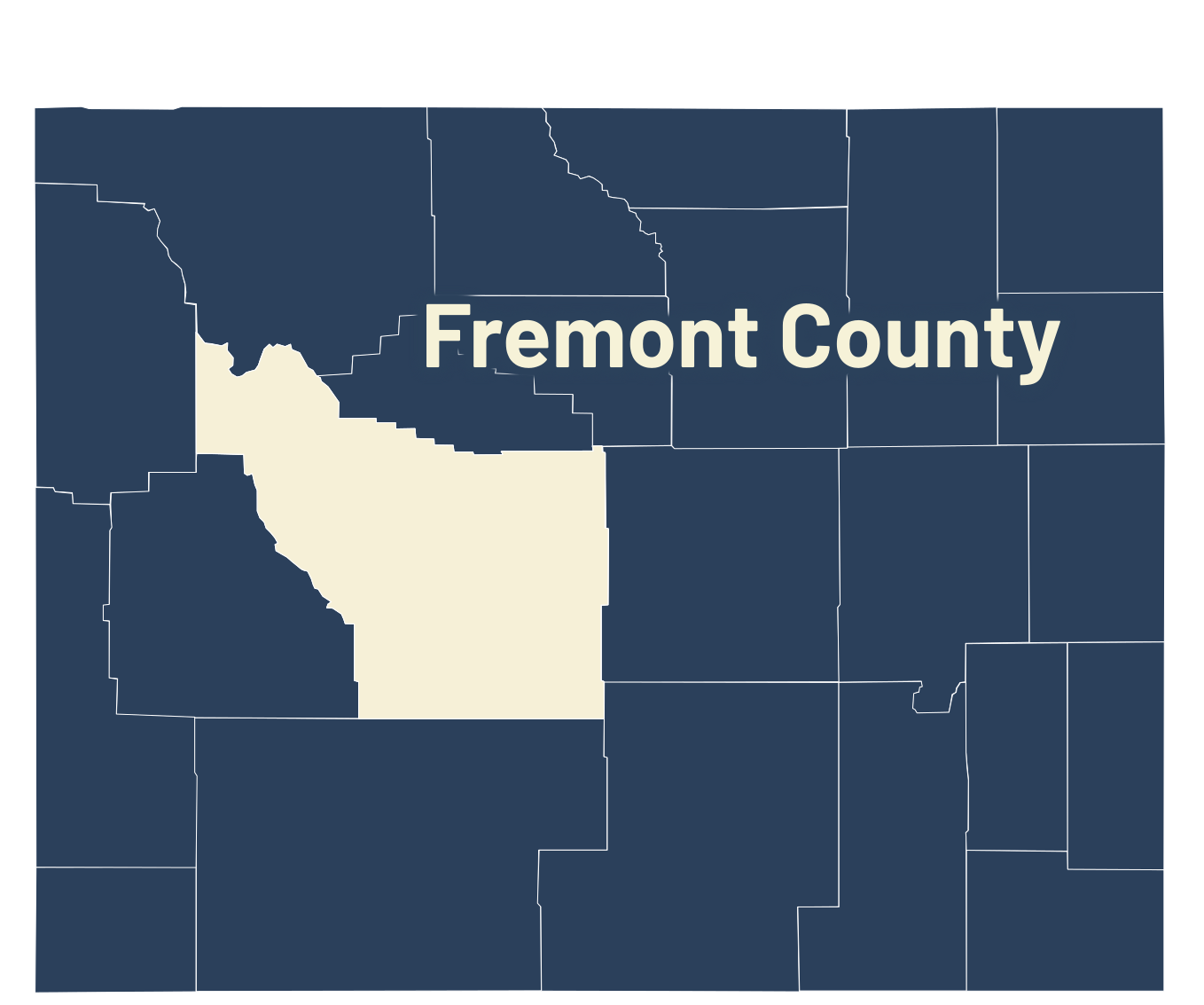
Fremont County is nearly 6 million acres in size, larger than 8 U.S. states, with spread out communities differing in demographics, economies and cultures along with large agricultural/rural areas. Include in that mix the 2-million acre Wind River Reservation, Tribal residents that represent over 20% of our population, and a maze of Tribal agencies and laws to interconnect with. We have 8 school districts that reflect these diverse geographies and cultures.
I was elected to represent the general Lander/Hudson area. People saw me around town, would corner me in the supermarket, and knew I had to be accountable to them. I knew far less about Riverton and was grateful for the insights of their area commissioner, as he knew that community best. Altogether, we worked for everyone in the county, while we sorted out our differing perspectives, and I think that mix made us better.
And one of the most important perspectives we needed at the commission table was that of our Tribal residents. I can’t count the number of times we turned to our Native commissioner and asked her for advice or guidance on topics related to the Reservation, or, we didn’t even know that we needed that advice! The Reservation voice helped us have more information and make better decisions.
In Fremont County, we know that we are interconnected with each other. Our health care and ambulance services are impacted by Indian Health Service funding as well as the distances to Dubois. Our law enforcement people have to figure out jurisdictions with both the BIA police and the FBI. Our watersheds, wildlife and emergencies such as fires will cross many agency and political boundaries, and we need these systems of communication and coordination.
Fremont County is covered by 4½ designated state representatives in the legislature – why shouldn’t we have similar coverage in the county for similar geography? Our unique circumstances are complicated, and different from any other county, so don’t judge us from afar, especially if you haven’t walked in our shoes. Let’s focus on fair and effective local governance, not nationally-driven, cookie-cutter political “fixes.”
Sincerely,
Steff Kessler, Fremont County