
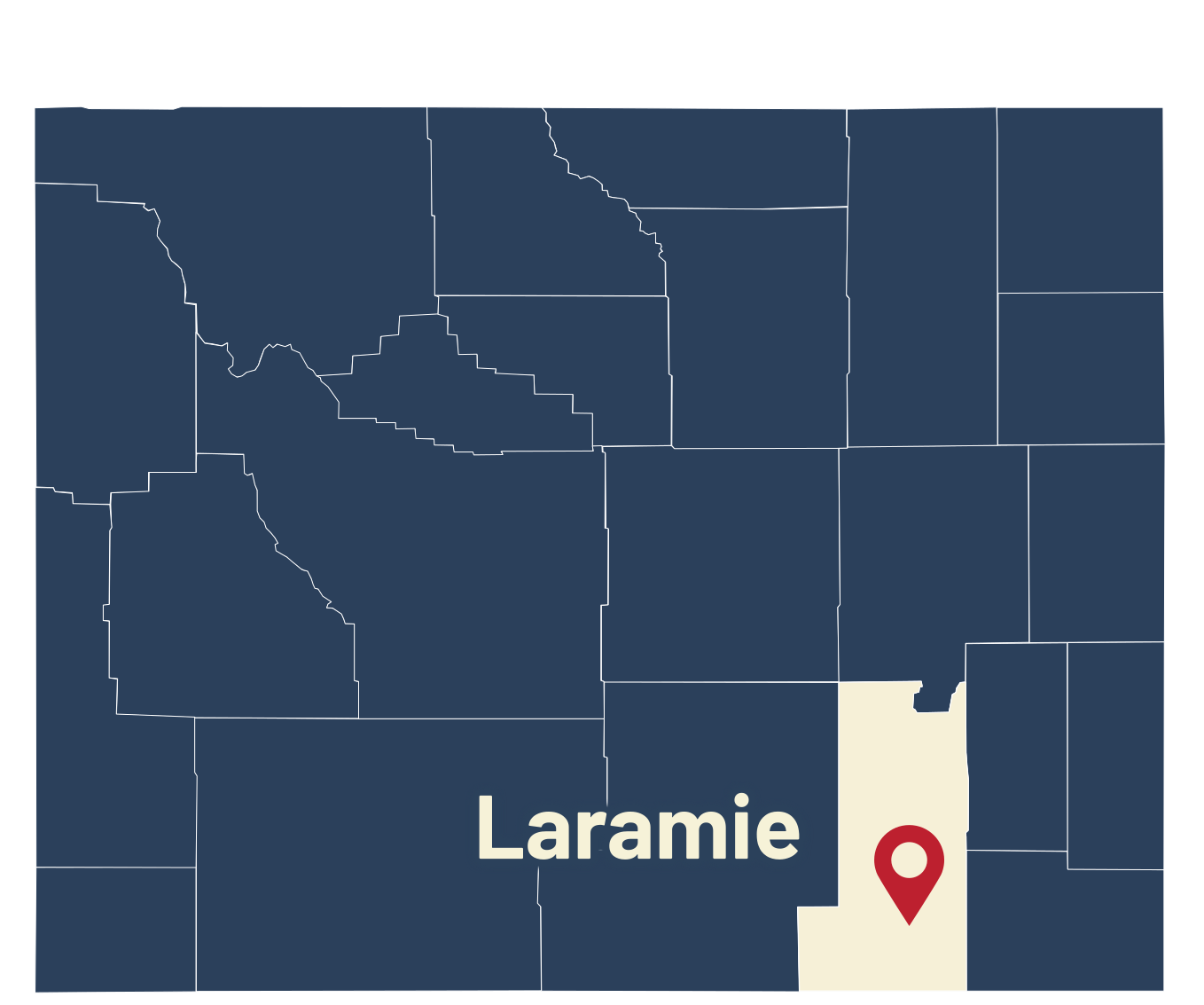
If you have of late felt a strong magnetic pull toward Laramie, Wyoming, it might not just be all in your head.
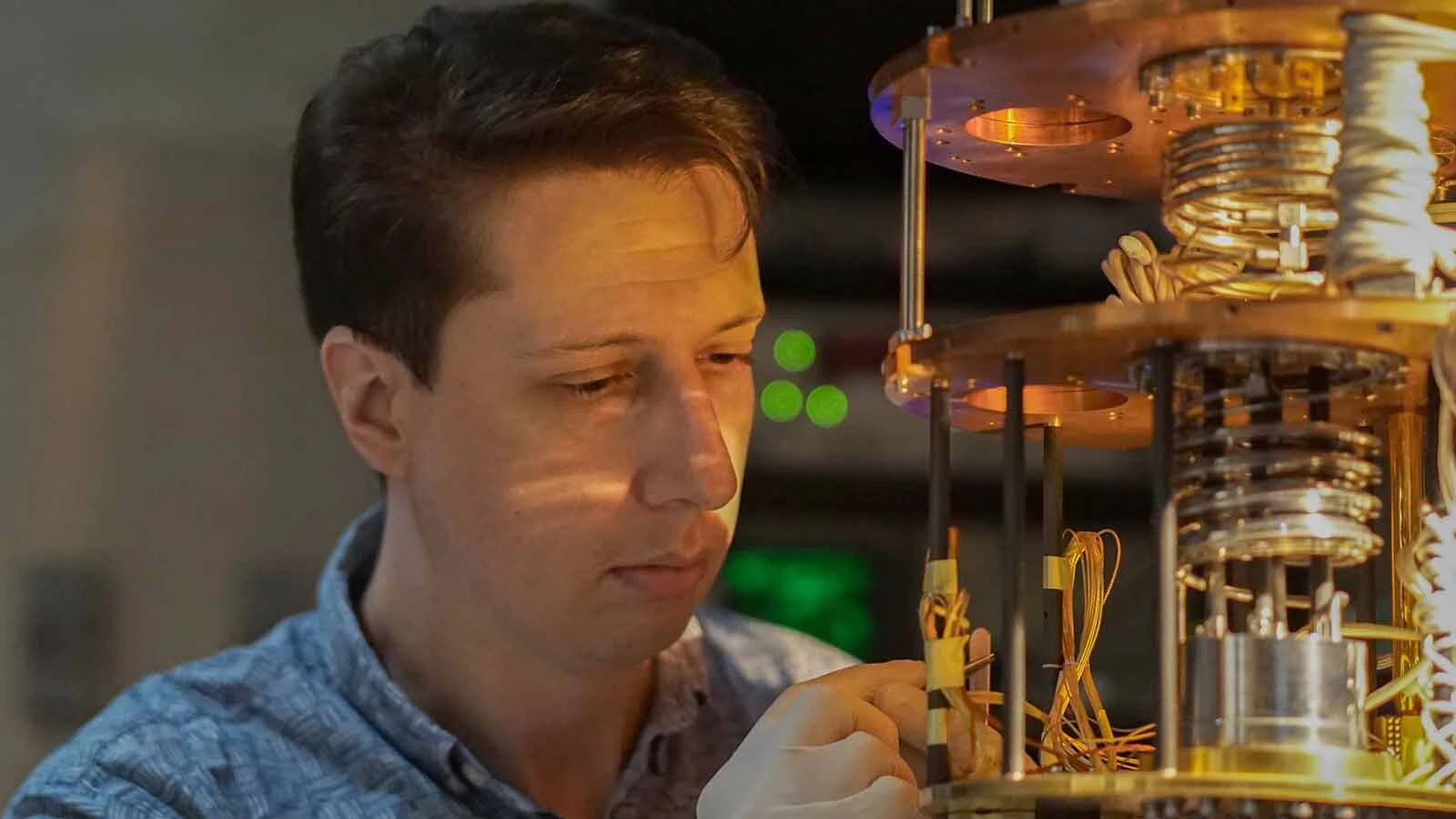
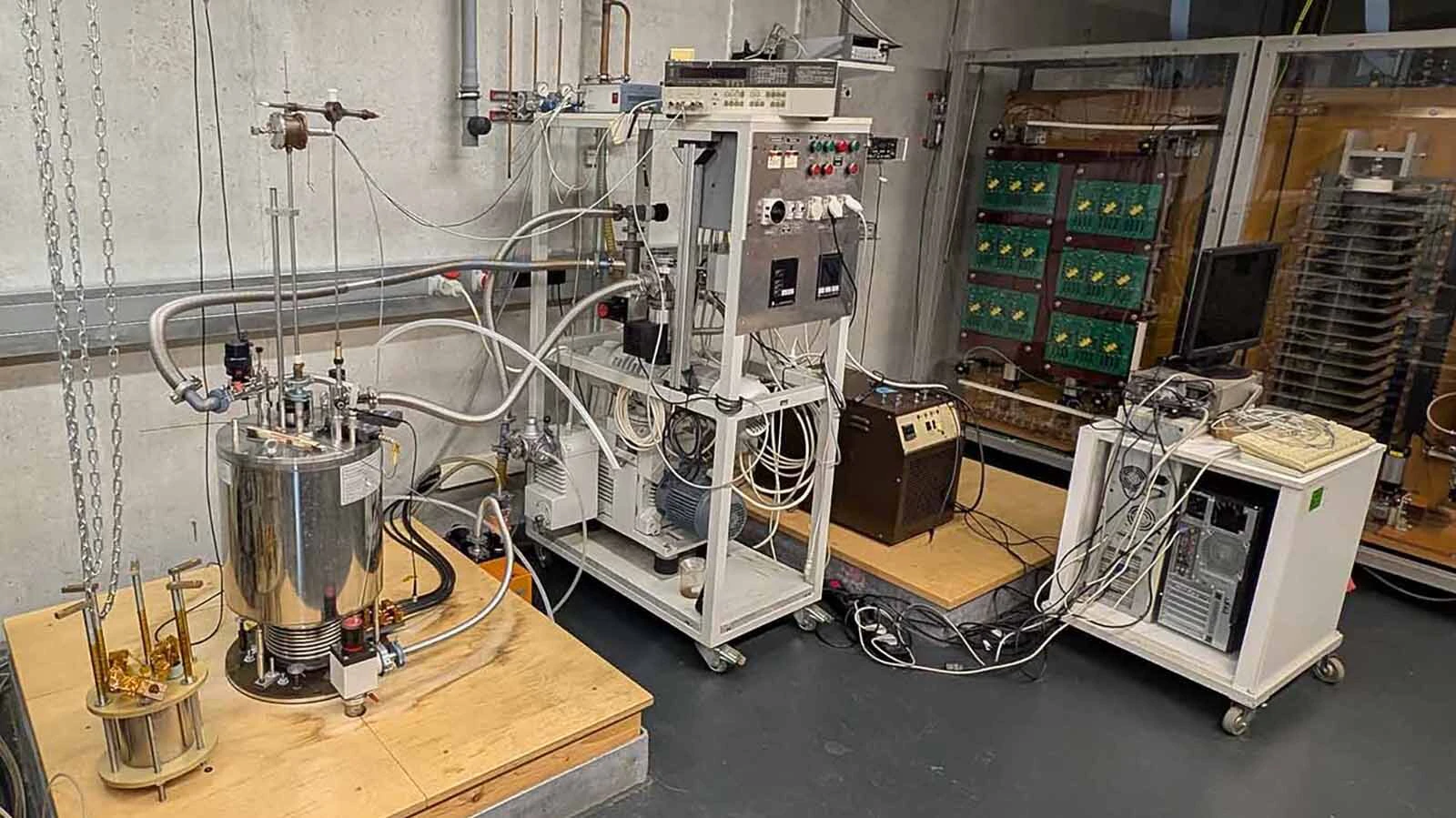
That’s because the University of Wyoming has landed one of only three super magnet devices of its kind in the United States — a room-sized contraption that can generate a magnetic field a million times stronger than Earth’s.
The others are housed at Los Alamos National Laboratory in New Mexico and at Clark University in Worcester, Massachusetts.
The device takes up an entire room and will live in the basement of the Department of Physics and Astronomy on the UW campus.
There, it will be given its own independent power supply that, for safety’s sake, must be completely disconnected from the rest of the university.
“It operates at 7,000 volts and releases an amount of energy roughly equivalent to that in a second World War grenade,” University of Wyoming Assistant Professor Alexander Petrovic told Cowboy State Daily.
Because of that force, the magnetic chamber, which is roughly 1-by-1-foot, is buried in a concrete pit lined with wood and wrapped in a 4-by-4-foot metal box that’s filled with liquid nitrogen when the device is in use.
The wood ensures that all shrapnel is captured in the event the magnet fails. The liquid nitrogen helps ensure the whole thing, which gets extremely hot, won’t melt down.
The device already has a new name, it’s being called WYPulse.
It’s a sort of superhero-ish name for a lab instrument, Petrovic admitted. But it’s justified given what the device can do and what it could mean for Wyoming’s rare earth and trona industries.
This is neither toy nor gizmo. It’s a high-tech testbed that can push matter to extremes that ordinary magnets can’t touch.
Ramping Up Rare Earths
“Wyoming is so special because it’s been blessed with such bountiful rare earth elements,” Petrovic said. “So, what we’re trying to do is develop new types of permanent magnetic material, based on Wyoming’s rare earths, that have superior performance in very rapidly changing magnetic fields.”
With WYPulse, researchers can put Wyoming’s rare earths through their magnetic paces in hopes of finding what is a kind of Holy Grail — a new superconductor that doesn’t die in a high magnetic field.
Most superconductors lose all their special properties when they hit a magnetic field, like Superman running into a wall of kryptonite.
Finding a material that’s immune to that has so far been elusive, but is highly desirable for things like advanced MRI scanners and magnetic confinement systems for fusion energy.
“We have a few candidates around the world,” Petrovic said. “But it’s very difficult to conclusively prove the resilience of superconductivity to the magnetic field.”
Quantum Computing
A better superconductor, though, is just the beginning of the transformative powers the WYPulse offers researchers.
Petrovic and his colleagues are also chasing exotic magnetic “excitations” called skyrmions, he said.
Those are nanoscale hurricanes a few atoms wide, composed of swirling electrons that spin in complicated patterns.
“Obviously, no one is going to want to put a quantum computer inside a 58 Tesla magnet,” Petrovic said. “But this magnet will help us to try and create these little excitations in materials in environments in which we previously had no experience at being able to create them.”
These instances may live for seconds, hours, or even days, he said. The longer-lived the better as far as quantum computing is concerned.
“We’re interested in trying to find materials in which we can create long-lived excitations, in which we can then encode and process quantum information,” Petrovic said. “That will create quantum computers with higher resilience to external noise in the future.”
UW and the University of Colorado-Boulder are already working on a proposed National Science Foundation quantum infrastructure grant with a vision toward creating a nationally recognized facility anchored by WYPulse in Wyoming and unique crystal-growth equipment in Colorado.
“That’s a fairly unique apparatus,” Petrovic said.
If and when University of Wyoming takes over the National Center for Atmospheric Research supercomputer in Cheyenne, it’s going to be an unbeatable combination of research capability, Petrovic said.
“That’s going to be a major incentive for us to be able to attract the best talent from America, and hopefully worldwide as well,” he said, adding that what Wyoming has to offer was already great when he decided University of Wyoming was the best of all his offers.
Better Batteries
The super magnet could also be used to boost development of sodium-ion battery technology, which uses soda ash from Wyoming’s trona industry as a key ingredient.
Sodium-ion batteries have emerged as a potentially lower-cost, more resilient alternative to lithium-ion batteries for grid-scale energy storage.
High magnetic fields have a critical role in better understanding of these batteries to improve them, Petrovic said.
WYPulse could be used to study defect formation and other problems with such batteries, as well as discovering compounds that boost the speed of sodium mobility.
The facility, once completed, likely sometime in December, will also be made available to other researchers from across America and around the world, Petrovic said.
“We can learn from them,” he said. “They will be potentially able to bring new techniques that will be experimental, methods that they can apply in the magnet.
"So, there’s a huge variety of potential experiments and work that can be done in the system.”
A Golden Arrow From Germany To Wyoming
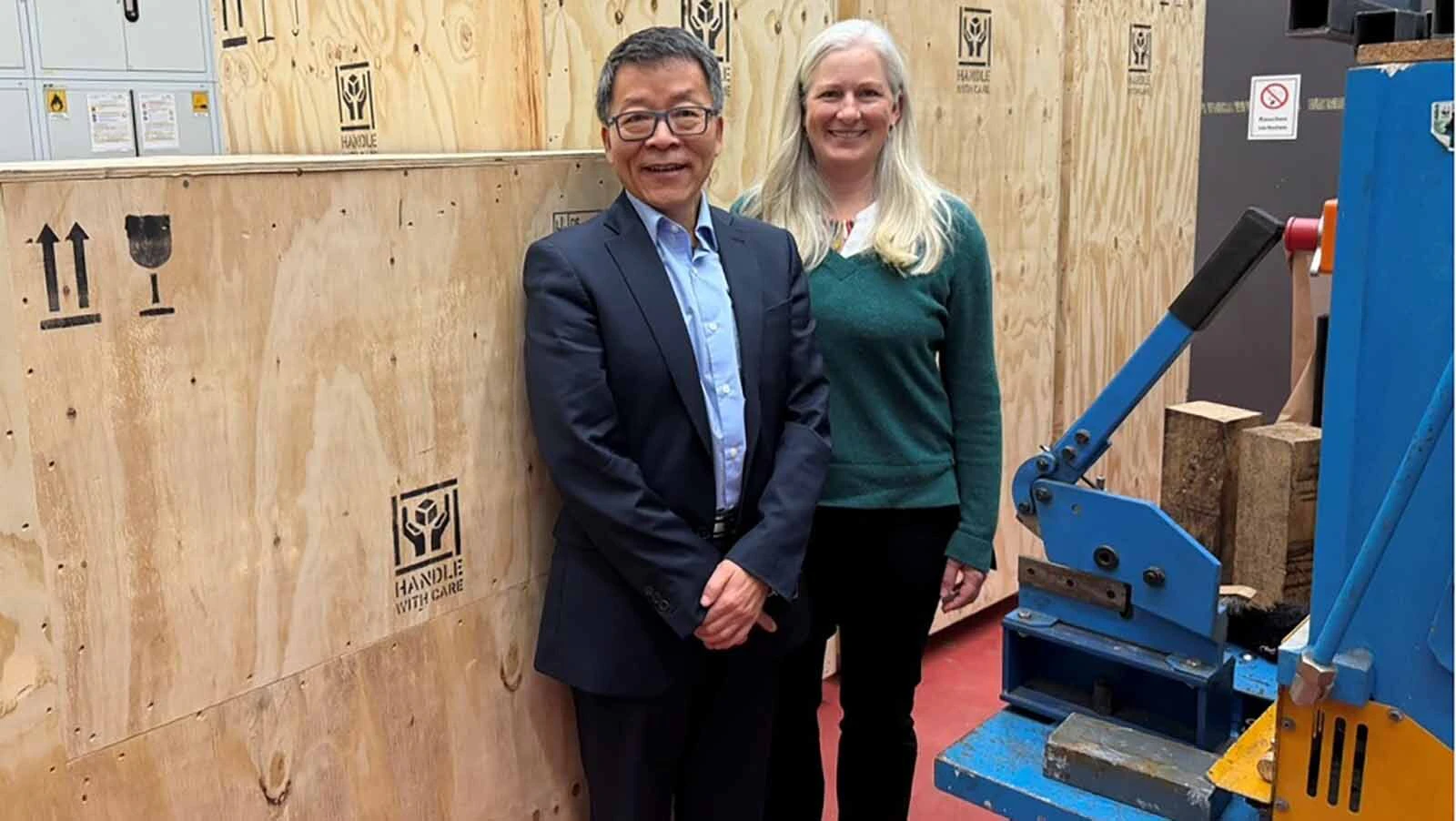
WYPulse is coming to Wyoming by way of a gift from Goethe University in Frankfurt, Germany, and is not something that can be bought off the shelf.
Back in the 1980s and 1990s, there were a couple of manufacturers that made these kinds of systems, but they are no more.
Today, any lab that wants one would typically have to start from scratch — an expensive, technical feat few institutions are willing to try.
Petrovic had a special connection that facilitated things.
A retiring professor in Frankfurt offered it to one of Petrovic’s colleagues in France. Since the retiring professor didn’t want to see the device scrapped for parts, the French scientist offered it to Petrovic instead.
“He wrote to me and said, ‘Alex, do you fancy a magnet?’” Petrovic recalled with a chuckle. “And it went on from there.”
Petrovic’s French colleague, meanwhile, has already offered to host Wyoming students in Toulouse, France, to teach them how to develop experimental infrastructure needed to operate in high magnetic fields.
“These kinds of pulsed magnetic facilities are quite difficult to operate, because they always have this risk of catastrophic failure,” Petrovic said. “So typically, that is why these systems are only found in national laboratories.”
Having expert training to go along with the gift of the magnetic device will help establish Wyoming not just as a national research venue, but an international one as well, he added.
In fact, even though Petrovic has not yet advertised the new research device at all, word-of-mouth has been traveling in the tightly knit magnetic science circles, and he’s already hearing from national and international colleagues who are interested.
“This is another arrow in Wyoming’s quiver,” he said.
It’s not just any arrow, he acknowledged.
It’s a golden arrow pointed straight at a future where Wyoming plants yet another footstep inside a national arena where the country’s economic and national security are taking shape.
Renée Jean can be reached at renee@cowboystatedaily.com.


