
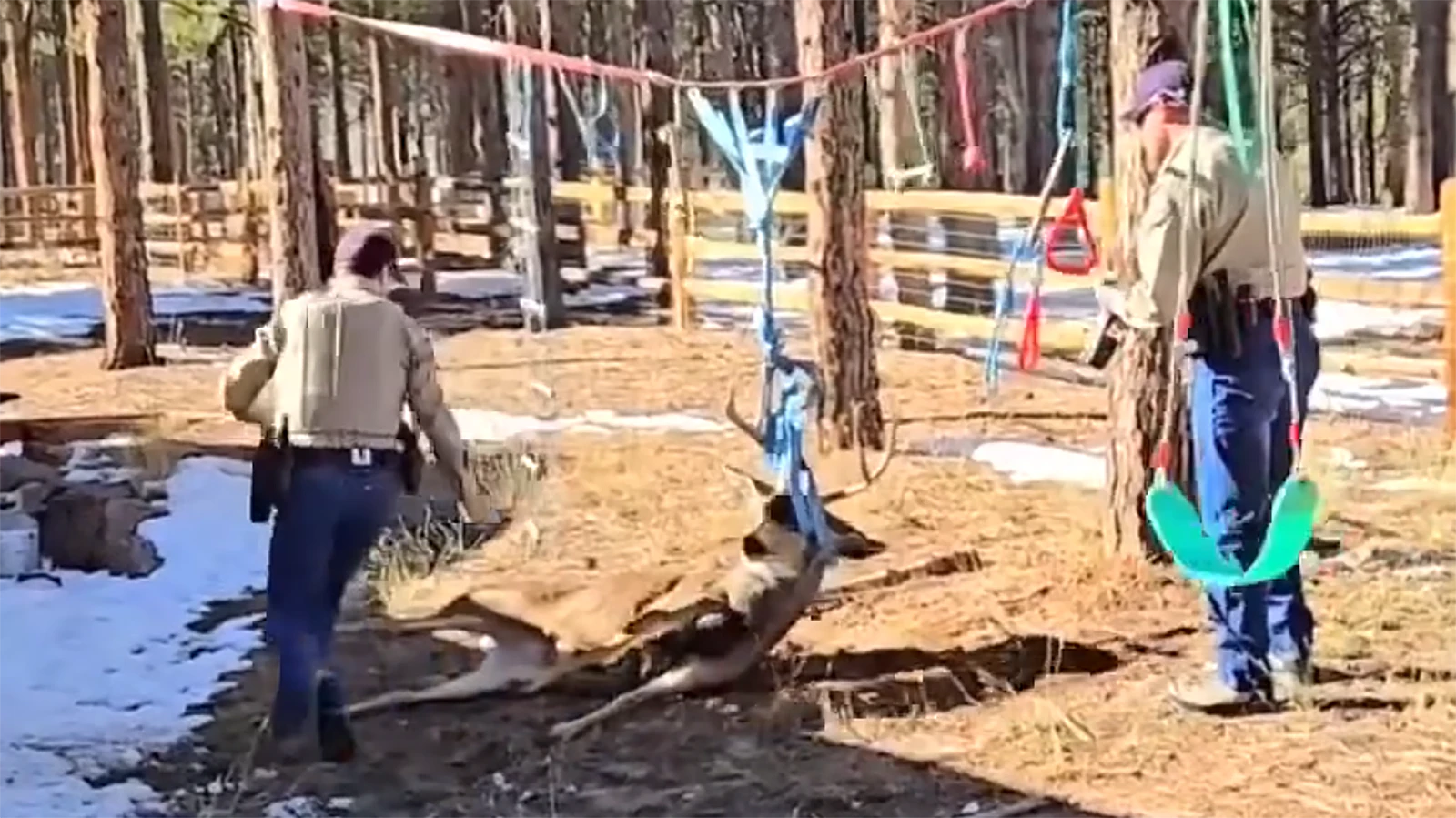
When wild animals are entrapped somewhere or stubbornly lurking where they’re not supposed to be, wildlife agents zap them with Tasers to get them under control.
It’s a highly effective way to lay out a deer or a moose entangled in netting or ropes long enough for game wardens to rush in and cut it free, Brian DeBolt told Cowboy State Daily.
And Tasers can also be used to convince critters to move along.
“We did that once with a black bear in Laramie that had taken up residence under a guy’s porch,” said DeBolt, the large carnivore conflict coordinator with the Wyoming Game and Fish Department.
After a quick tasing, the bear fled, and never returned, he said.
Not Stun Guns
Tasers aren’t to be confused with handheld self-defense devices commonly called stun guns, which are pressed directly against an attacker, DeBolt said.
Taser is a brand name for what is generically known as a conductive electrical weapon (CEW), he said.
They’re also used by law enforcement agents to subdue unruly suspects. Game and Fish uses them exclusively on wildlife.
A CEW is a pistol-like device that shoots out two wires with sharp probes at the ends. After the probes sink into the target’s skin, controlled pulses of electricity are sent down the wires.
That disrupts the person or animal’s neuromuscular system, usually causing them to immediately stiffen up and fall over.
Not Good Bear Defense For Hikers
Game and Fish hasn’t used tasers on grizzlies yet, but he’s sure they’d be effective for that too, he said.
Tasers have been used to haze grizzlies away from a fish farm in Alaska, Canadian bear safety expert Kim Titchener told Cowboy State Daily.
As far as Titchener knows, tasers aren’t used by Canadian wildlife agents, but she acknowledged that they can be effective in some situations.
Tasers are legal for American civilians, with some restrictions varying by state. However, those who think it might be a good idea to pack a Taser into the Wyoming backcountry to fend off a grizzly attack should think again, DeBolt and Titchener said.
Tasers are meant to be used against a stationary or nearly still target, DeBolt said.
Against a rapidly moving target like an angry grizzly, a Taser would be useless, he said. The odds of landing an effective hit with the probes would be astronomical.
Titchener agreed.
“No, absolutely do not” try to use a Taser for grizzly defense, she said. “It would get you mauled.”
State Trooper Started It All
Game and Fish started using tasers in 2019, and game agencies in several other states have taken up the practice, he said.
Wyoming game agents typically use tasers a few times a year on animals ranging from deer and moose to mountain lions, DeBolt said.
The Tasers-for-wildlife trend started somewhat by accident in Alaska, sometime around 2011, he said.
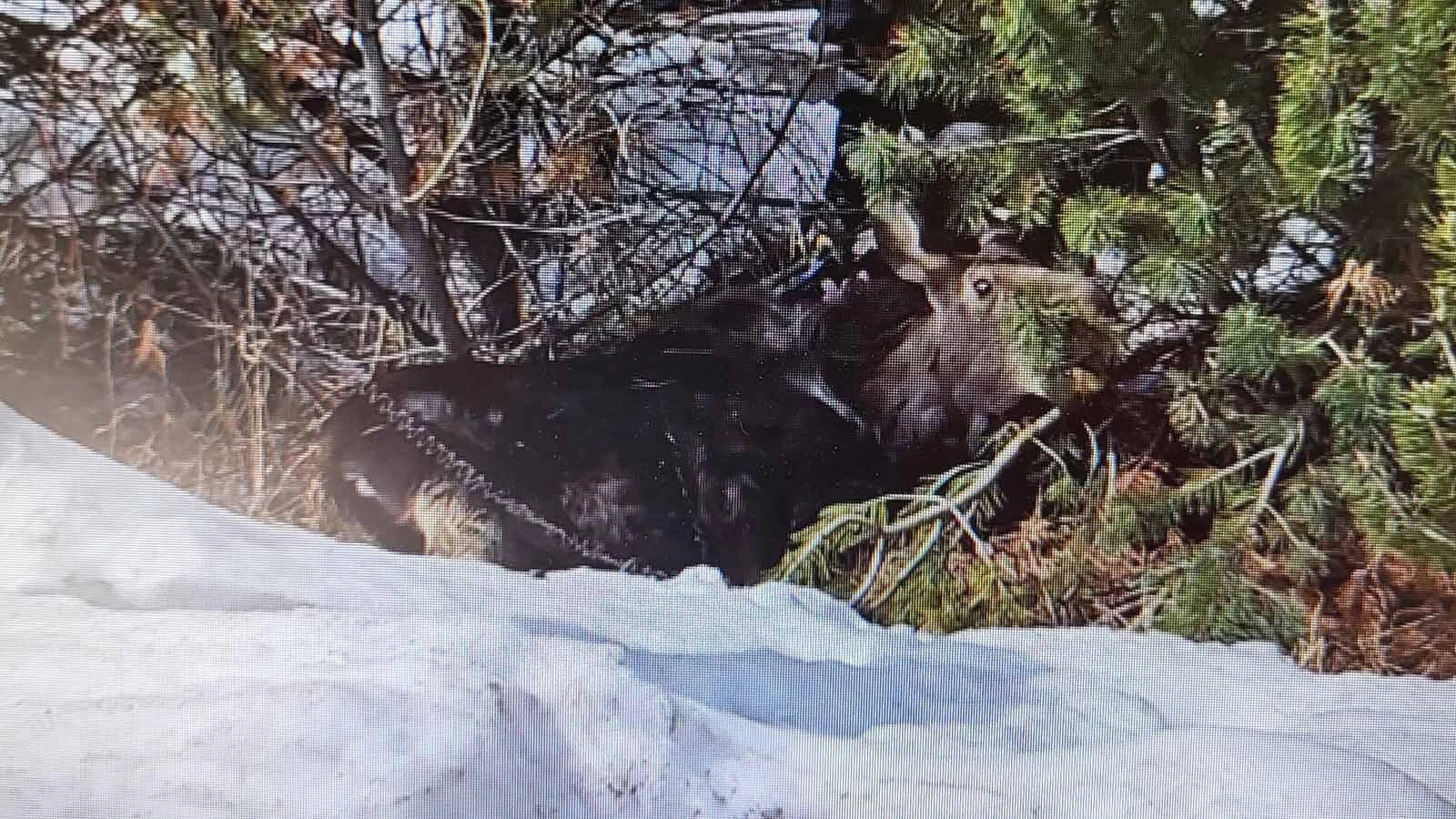
A game warden was called in to rescue a moose calf that had tumbled into the basement foundation of a house under construction, and couldn’t get out, he said.
The problem was, the moose mother, with her long legs, could step in and out of the foundation, and wouldn’t let the warden get near enough to rescue the calf, DeBolt said.
An Alaska State Trooper was also at the scene. The trooper and the game warden were baffled about what to do.
That was, until the trooper had a “lightbulb moment” and suggested using his Taser on the mother moose,” DeBolt said.
“He tased the cow moose and it worked. It gave the game warden enough time to jump into the foundation basement, grab the calf and heave it up onto the embankment,” he said.
As soon as the warden was safely clear, the trooper let off the electrical pulse and the cow recovered right away.
“The moose both ran away happy,” he said.
Taking A Tasing
As to whether tasing wild animals makes them resentful, and perhaps more apt to go after the next person they see to get some payback, that’s not the case, DeBolt said.
Research indicates that after they’ve been tased, wild animals, including predators, avoid people, because they associate humans with a nasty, shocking experience.
DeBolt knows just how they feel.
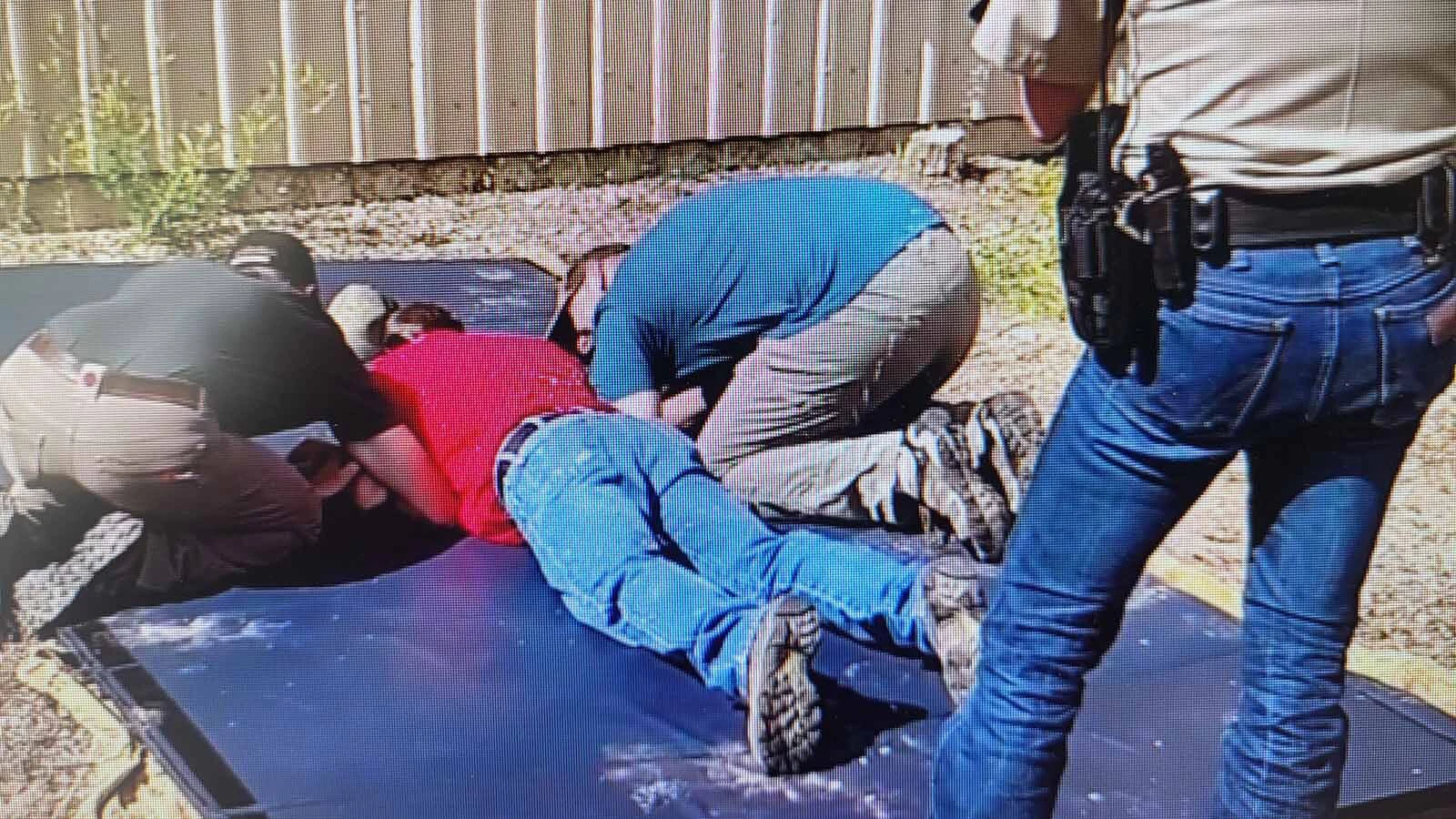
As part of his Taser training, he allowed himself to be tased, so he could clearly grasp the effects on any animals that he might have to tase.
“It was extremely unpleasant, but I was OK,” he said.
“After less than five minutes, I was fine,” he added.
While tasing is painful, it can also be the quickest, most humane option in some situations, he noted. It can take time for tranquilizers to take effect, and then a while for the animal to recover afterward.
And old-fashioned methods, like using a catch pole with a neck snare on the end, can lead to the animal or game agents getting injured, if the critter starts to panic and thrash as people are trying to help it, he said.
Mark Heinz can be reached at mark@cowboystatedaily.com.


