
A Wednesday U.S. Supreme Court ruling declaring Louisiana’s race-based congressional district unconstitutional could shake the political landscape in Wyoming, people familiar with election law told Cowboy State Daily.
The U.S. Supreme Court in Louisiana v. Callais ruled that a narrow horizontal zigzag-shaped congressional district comprising a majority concentration of black voters was a product of unconstitutional racial discrimination.
Ruling 6-3, the high court didn’t overturn the Voting Rights Act’s Section 2 or the framework earlier decisions have given to it, but the majority “updated” that framework in a way that makes it harder for a government to justify racial discrimination when drawing legislative districts.
On the other hand, governments face liability under Section 2 of the Voting Rights Act “only when the evidence supports a strong inference that the state intentionally drew its districts to afford minority voters less opportunity because of their race,” the case syllabus says.
Pointing to the nation’s recent strides away from racial discrimination, toward a full-blown two-party system and computer-drawn districting maps, the majority opinion by Justice Samuel Alito calls the court’s re-reading of the Voting Rights Act an “update.”
Writing the three-justice dissent, Justice Elena Kagan scoffed at that characterization, writing that without a change from Congress, "this Court has no right to cancel — sorry, ‘update’ — a duly enacted statute on the theory that it knows better.”
Welcome To Wyoming
The case could rattle some of Wyoming’s political structures.
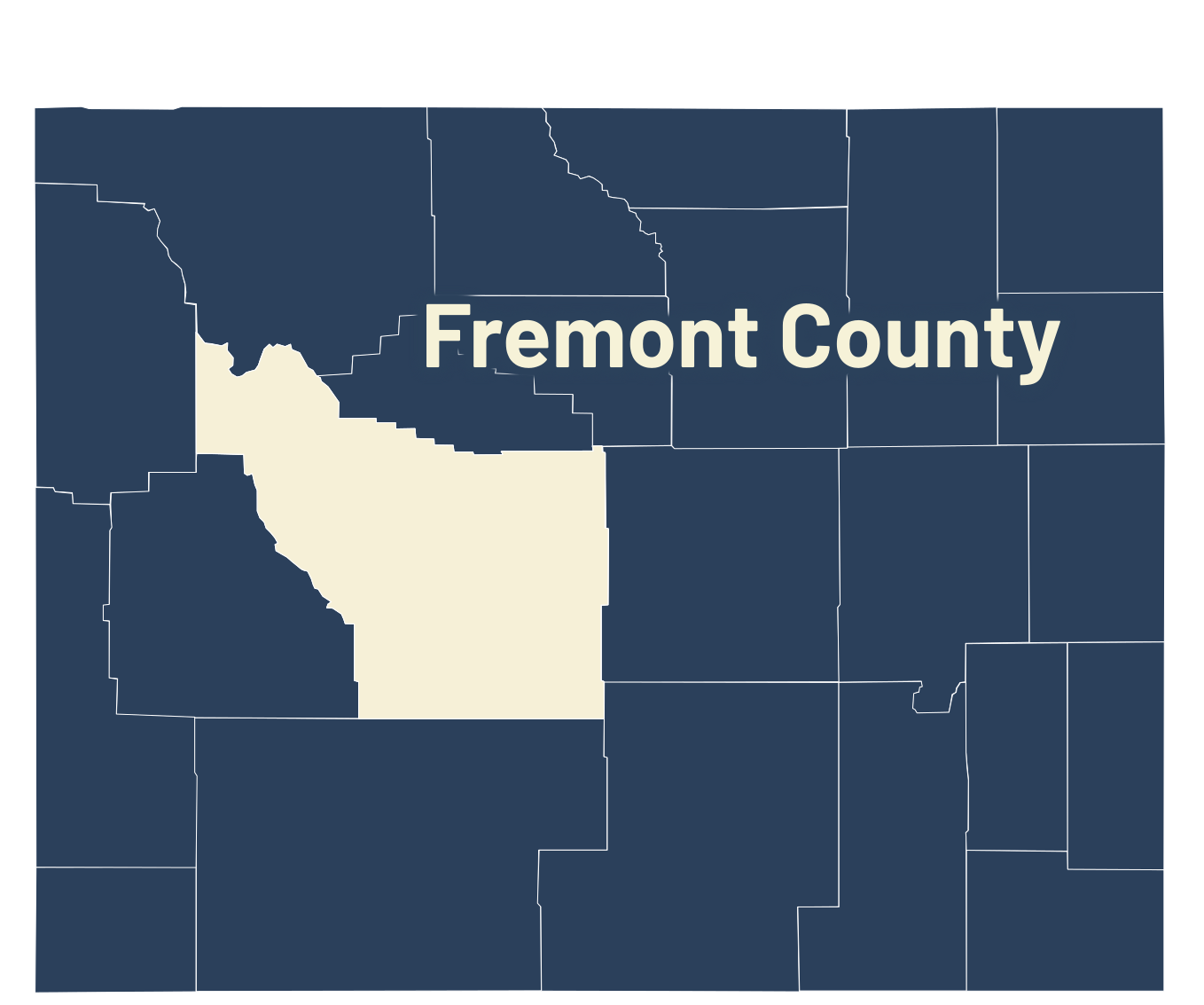
Every county commission in the state runs at-large elections, by which commissioners court the whole county when running for election. But the Fremont County Commission has instead five districts.
That’s because a group of Northern Arapaho and Eastern Shoshone tribal members in 2005 challenged the at-large system as a violation of the Voting Rights Act, and as “diluting the voting strength of Native Americans.”
They invoked Section 2 of the Voting Rights Act, which says states can’t apply any voting qualifications in a manner “which results in a denial or abridgement of the right of any citizen of the United States to vote on account of race or color.”
A later portion of that section adds a caveat that nothing in that section of law creates a right for members in a protected class to have proportionate representation in elected seats.
It took five years, but U.S. District Court Judge Alan B. Johnson ruled in favor of the tribal plaintiffs, and against Fremont County.
One of his key points contrasts with the Alito opinion of Wednesday.
“It cannot be overemphasized that plaintiffs are not required to prove — and indeed, here do not allege — that the at-large voting system at issue was adopted with an intent to discriminate,” wrote Johnson in 2010.
Alito’s Wednesday opinion says, conversely, that governments only fall liable to Section 2 of the Voting Rights Act when the evidence supports a strong inference that the state intentionally drew its districts to deprive minority voters of opportunity because of their race.
It cited the Fourteenth and Fifteenth Amendments to the U.S. Constitution, which bar racial discrimination.
“It’s nice to be vindicated,” William Perry Pendley, a former Mountain States Legal Foundation attorney who defended Fremont County’s at-large structure in the case, told Cowboy State Daily in a Thursday interview. "It's about time."
As to whether the Wednesday ruling could jeopardize the county’s districted commission system, said Pendley, “the answer is yes.”
Pendley pointed to a comment in Alito’s opinion where the justice said the 1986 Supreme Court that posed a softer test for race-based maps didn’t pay close attention to the wording of the law.
The majority in the 1986 case of Thornburg v. Gingles “jumped right to the Senate Judiciary Committee report” on the Voting Rights Act rather than analyzing its text against the U.S. Constitution, Alito wrote.
While Pendley and others were defending Fremont County from having its earlier at-large commission overturned, a Native American woman was elected to the Fremont County Commission - at large. That was Keja Whiteman, a well-known figure in Fremont County who won election in 2006.
Andy Baldwin, the attorney of record for the tribal plaintiffs, declined Thursday to comment, saying he’d not yet read the high court’s opinion.
Rep. Ken Chestek, D-Laramie, who is a retired law professor and served prior on the legislative Tribal Relations Committee, told Cowboy State Daily that yes, the high court's ruling imposes a more rigorous test for defending race-based maps. But he's not sure if it's enough for a new challenger to overturn Fremont County's districted commission system.
The test is rooted in the 1986 case of Thornburg v. Gingles. The majority's Wednesday decision added a requirement to that test and made it harder to survive.
That doesn't automatically invalidate Johnson's 2010 opinion, said Chestek, and nothing will change unless someone files a new challenge.
"Even then it's not clear ... and it's very possible to me the (tribal members) would win again," he said. "But I don’t think there’s a definitive answer we can come up with right now."
Meanwhile, The Legislature
One of Wyoming’s legislative districts, House District 33, was redrawn in 2021 for the purpose of keeping a majority of Native American voters in that one district, according to statements lawmakers made at the time.
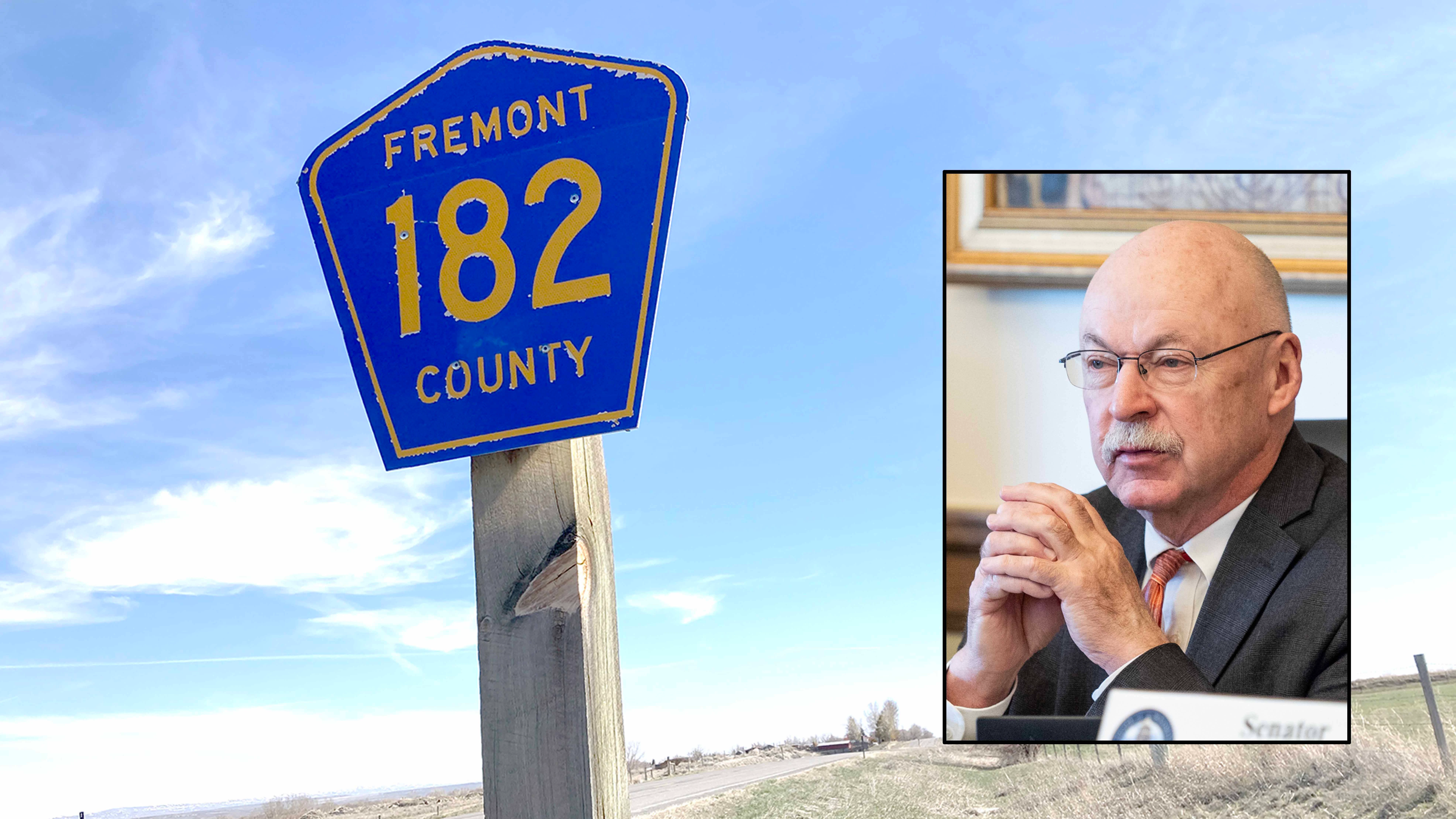
Sen. Cale Case, R-Lander, whose Senate district includes that House District as well as the town of Lander, was clear during the Legislature’s 2021 redistricting talks that race was a factor in drawing that district, since that’s what the reigning case law at the time seemed to require.
He acknowledged that again Thursday.
“That district was drawn to have the maximum number of Native American people, and as a result it includes parts of Riverton,” said Case. “We worked very hard (to honor the case law).”
That could invite legal action now, after the high court’s Wednesday ruling, said Case.
On the other hand, Wyoming’s tribal population shares other commonalities besides race.
Each tribe has its own government. The reservation is a distinct geographical region, and bears some cultural distinctions; while federal law governs the tribes with numerous, specific laws.
Case said it might be futile, with the next Wyoming legislative redistricting only five years away, for someone to challenge the structure.
“But it might mean for different considerations next time we draw the districts,” he said.
Alito in his opinion had related earlier courts' conclusions that multi-member districts can be racist. Case said history seems to have shown otherwise, and that when Wyoming had multi-member legislative districts, that system seemed to help rather than hinder candidates of racial minority. He said it's worth reconsidering that system now.
Currently represented by Rep. Ivan Posey, D-Fort Washakie, House District 33 is a swing district.
Opinion, Dissent
The majority opinion opens with the words, "Section 2 of the Voting Rights Act of 1965... was designed to enforce the Constitution— not collide with it. Unfortunately, lower courts have sometimes applied this Court’s §2 precedents in a way that forces States to engage in the very race-based discrimination that the Constitution forbids."
Kagan’s dissent criticizes the majority’s emphasis on the fact that partisan gerrymanders, districts drawn to advance a party’s interests, aren’t justiciable in federal court.
In the 2019 case that cemented that principle, the court condemned the practice of partisan gerrymandering as “incompatible with democratic principles” but concluded that federal courts lack the competence to deal with them.
“Today, though, the majority straight-facedly holds that the Voting Rights Act must be brought low to make the world safe for partisan gerrymanders,” wrote Kagan.
That’s because plaintiffs often disguise their challenges to partisan gerrymanders as challenges to racial gerrymanders, Alito had written.
Kagan asserted that by focusing on whether the government intentionally discriminated against a race in drawing its map, the majority’s ruling lets governments shield their actions from liability with excuses that they have “any race-neutral justification,” even including partisan gerrymandering.
“The consequences are likely to be far-reaching and grave,” wrote Kagan. “Today’s decision renders Section 2 (of the Voting Rights Act) all but a dead letter.”
Clair McFarland can be reached at clair@cowboystatedaily.com.


