
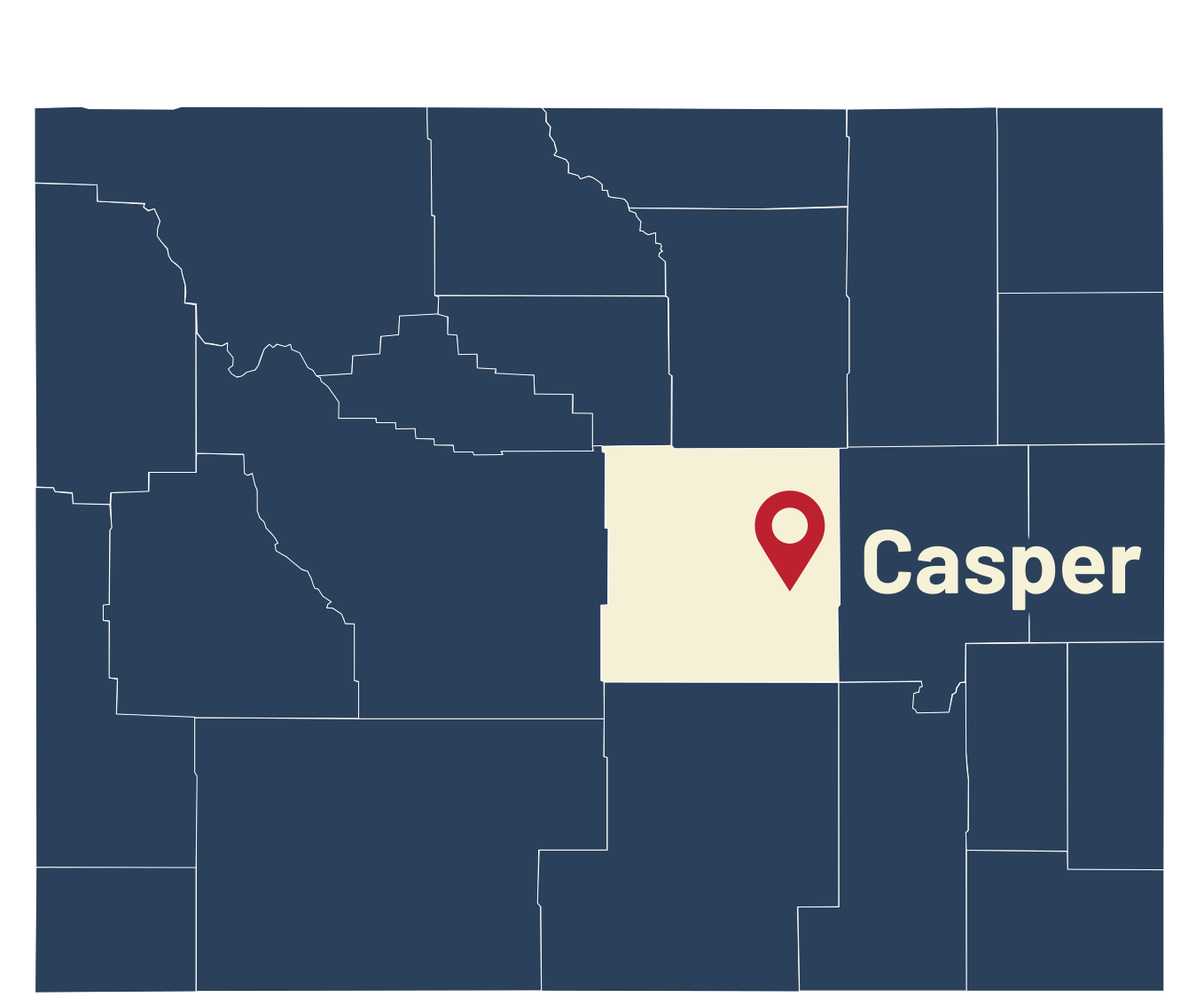
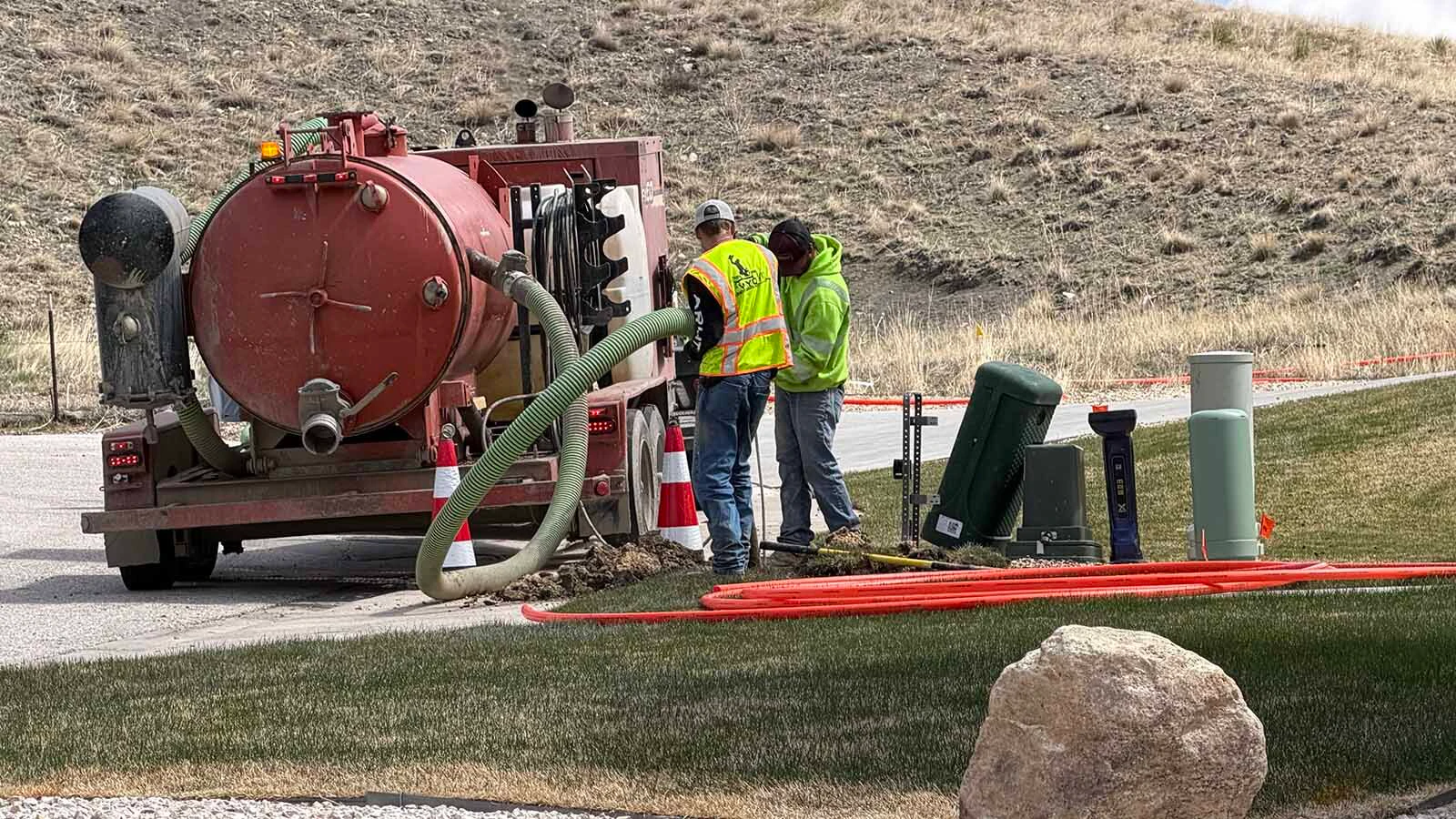
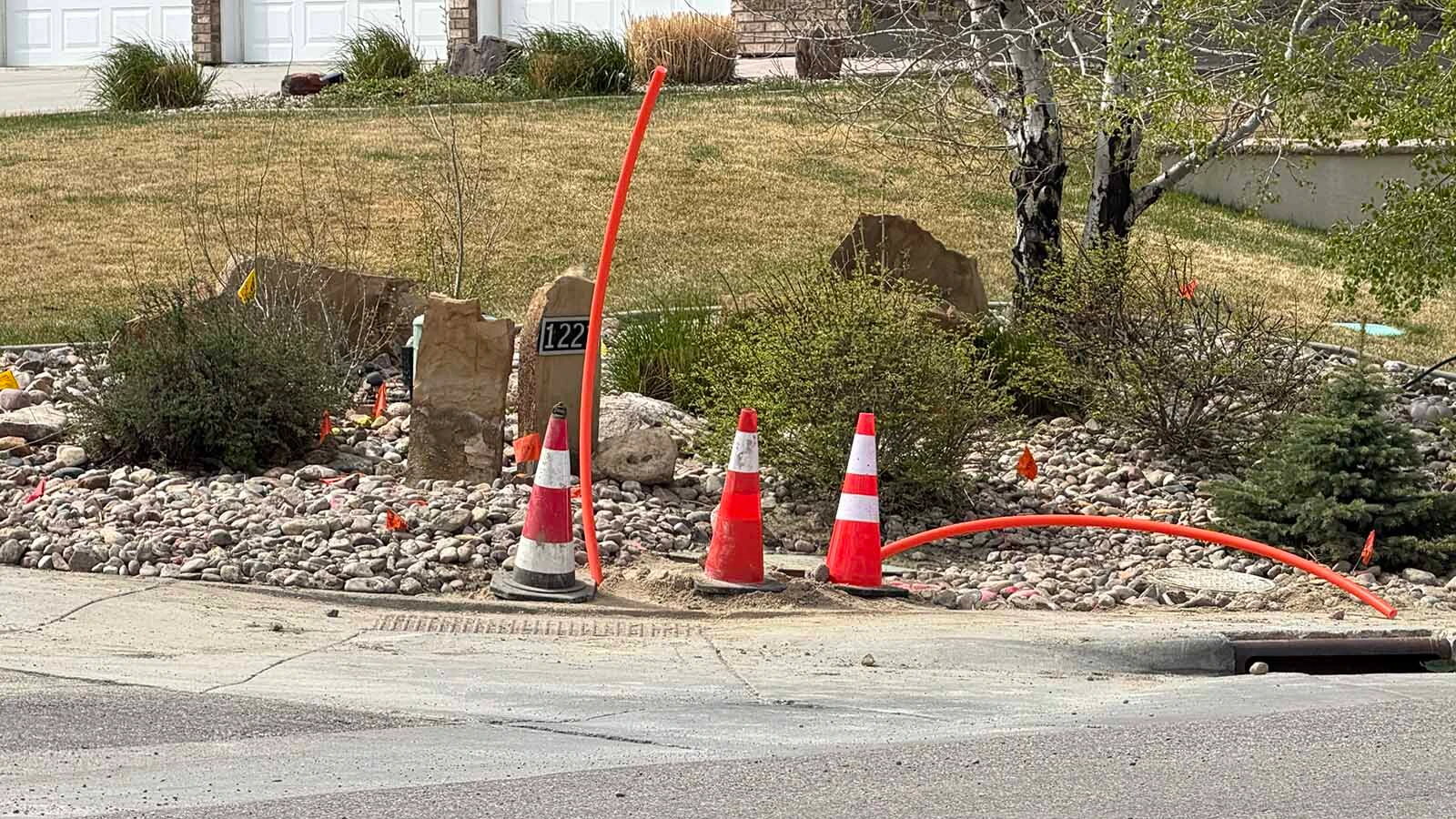
CASPER — Long stretches of bright orange hose snake across cul-de-sacs and driveways, cutting through the everyday flow of mail trucks, school buses, and daily commutes while cones and caution tape ring off garden beds and front yards in what’s become another rite of spring in communities across Wyoming.
It’s fiber-optic season.
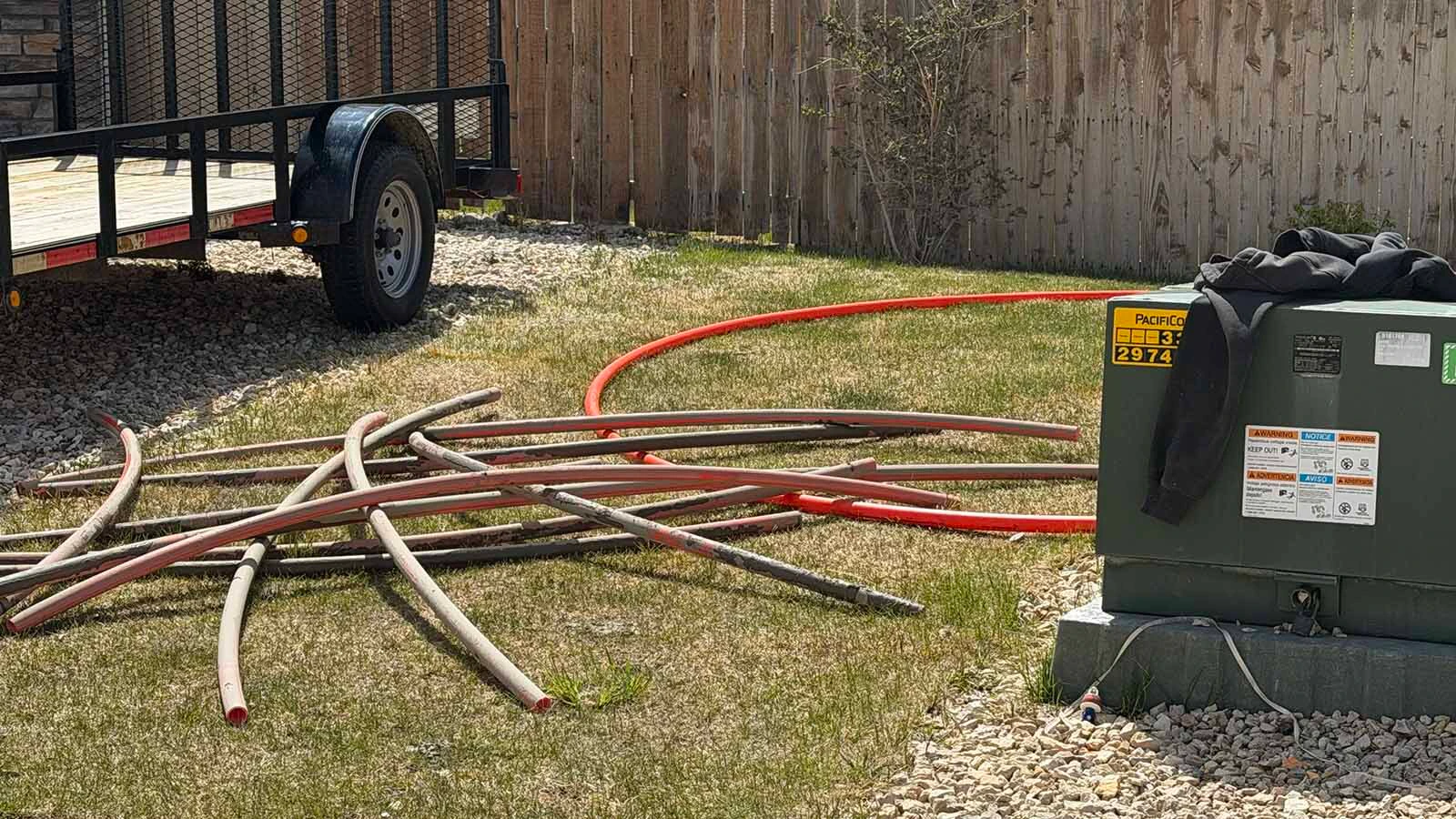
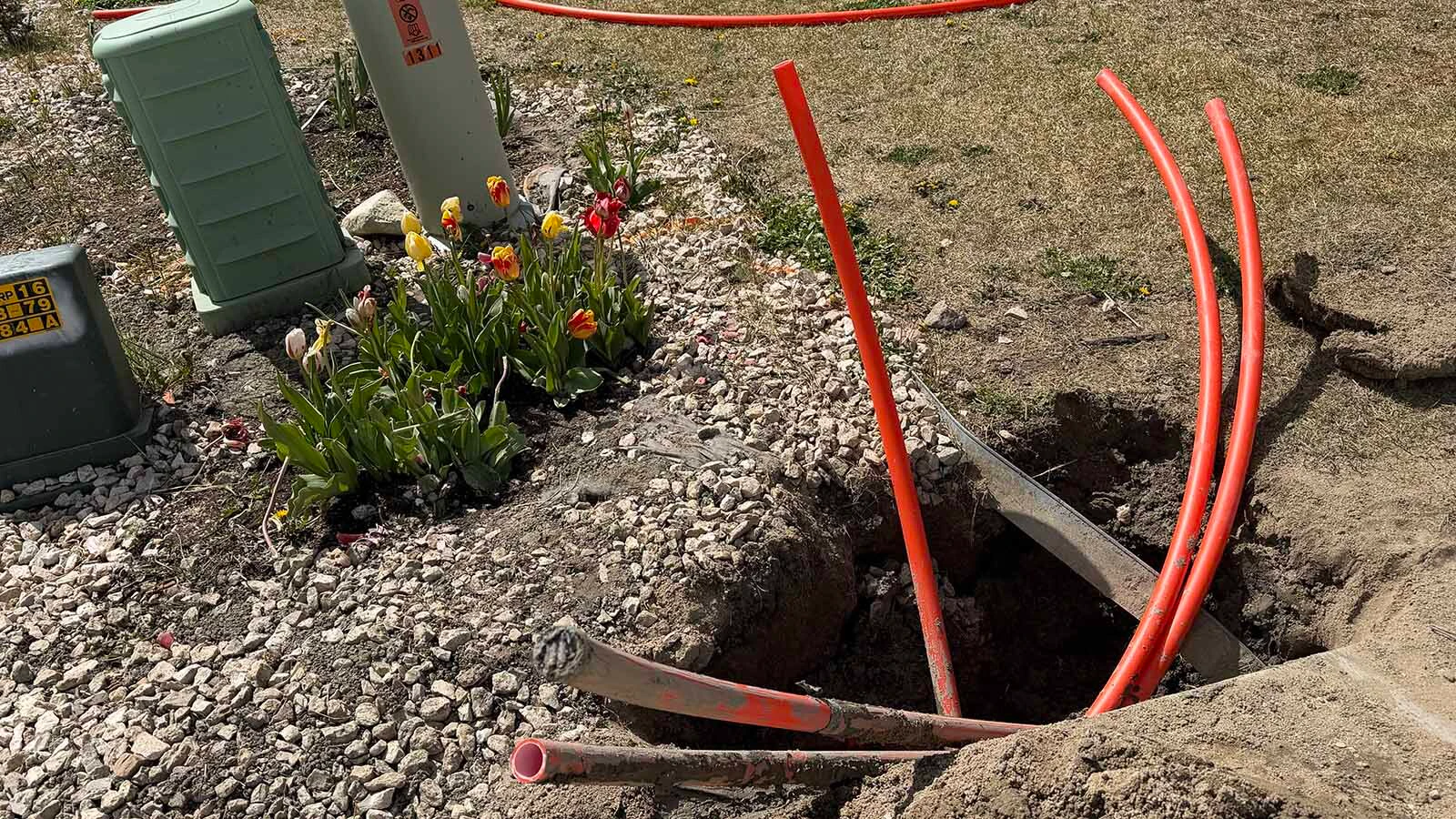
In some yards, what was once grass and landscaping is replaced by man-sized holes leaving open trenches where crews have cut down to buried lines, leaving mounds of dirt on sidewalks. Flower beds and landscaping can be collateral damage.
The steady, rhythmic pounding of machinery echoes for days at a time, and then there are the markings — spray-painted lines in neon pink, orange and blue that run across lawns and sidewalks, sometimes even tracing through carefully planted flower beds, where tulips and perennials are suddenly part of a grid mapped out for surgery.
Dust settles on porch steps as tire tracks press into softened lawns, and an uneasy feeling lingers that strangers are working just feet from living rooms under utility easements granted through municipal authority.
The reason? Fiber-optic companies are racing through cities to install high-speed underground networks to support streaming, remote work, and a growing digital demand.
How Is It Legal?
The process leaves some residents wondering how companies can dig into parts of their yards without permission from homeowners. The answer is simple — they have permission from cities, towns and counties.
Utility easements are controlled through a layered system of municipal oversight and utility access rights managed primarily through city engineering and public works departments alongside the companies that own and operate infrastructure beneath neighborhoods.
Casper’s City Engineering Division said it has entered into franchise agreements with multiple telecommunications providers to build and operate fiber-optic networks across public rights of way and existing easements, a rollout that began in 2022 and is expected to continue through 2026.
That list includes providers such as Bluepeak, Spectrum, Lumen, and Visionary Communications, all authorized to install high-speed data lines that increasingly are threading through residential neighborhoods.
While the city acts as the authority having jurisdiction, Casper officials emphasize that companies are responsible for the “means and methods” of construction — meaning they must locate and protect existing utilities, follow approved plans, and repair any damage to private or public property.
The Engineering Division reviews plans for compliance, issues permits for work in rights of way and easements, and enforces city codes, while requiring that disturbed areas be restored to a condition “comparable to or better than” what existed before construction began.
Even so, they said residents are told to expect temporary disruption, from traffic delays to torn-up lawns, as crews move through neighborhoods.
Contractors are required to provide advance notice, maintain safe access, restore impacted areas after completion, and keep personnel available around the clock to respond to issues and coordinate subcontracted work.
A request for comment from Casper City Attorney Eric Nelson on this story was not returned and his secretary told Cowboy State Daily she is not allowed to give out his email.
Nor was a request for comment from Casper Mayor Ray Pacheco returned by publication.
Where Things Get Messy
For some residents, the work represents faster internet and modernization.
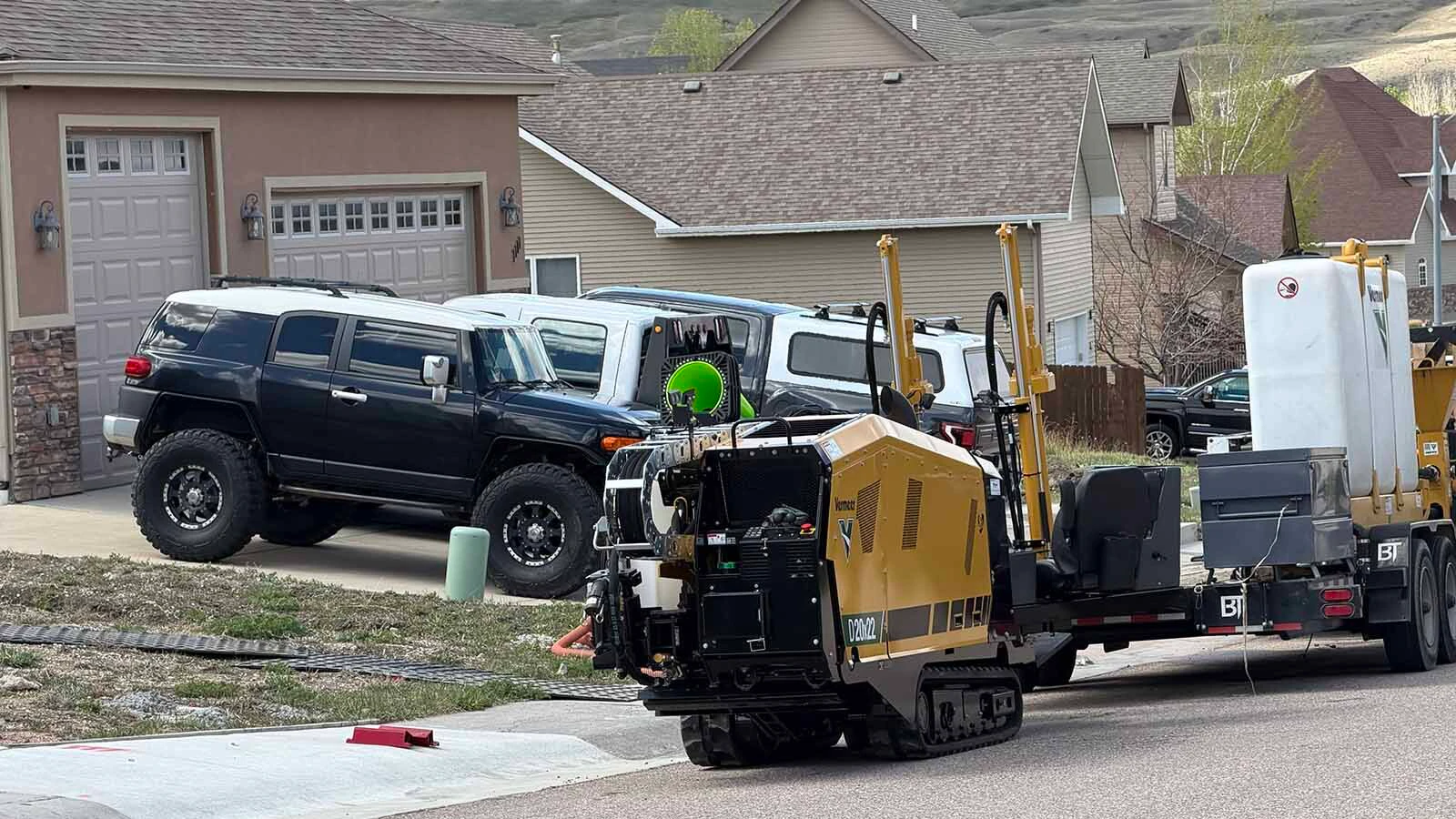
For others, it has meant muddy yards, blocked driveways, and confusion about why crews can dig through what appears to be private property in the first place.
A frustrated Casper resident said the construction has turned her neighborhood into an ongoing work zone with little clarity about who is responsible at any given moment.
“One day it’s one crew, the next day it’s another, and nobody really explains what’s going on,” Belinda Dorian said, describing trenches cutting through her lawn and markings sprayed across areas they’ve spent years maintaining.
“They just show up, put cones everywhere, and suddenly your yard is part of a construction site,” she said.
The Casper resident said the disruption has made it difficult to feel any sense of control over her own property, even if the work is technically allowed.
“I get that they say it’s legal, but it doesn’t feel like anyone asked how this affects the people actually living here,” she said.
Another Casper resident, Tim Carubie, said the experience of having fiber construction work done near his home left him frustrated and blindsided.
“They came in without a care in the world — no notice — dug up my front yard and left it looking horrible,” he said.
Who’s Doing What?
In neighborhoods where multiple broadband providers are working at once, one of the biggest challenges for residents is simply figuring out which company is responsible for a given crew on any particular day.
Bob Casados is an engineer for a fiber-optics internet provider called Bluepeak.
He says he’s been “taking a lot of heat” for work being done across the city, including projects that he says are not his company’s responsibility. Casados lives in Casper and said he has seen confusion grow as multiple fiber projects overlap in the same neighborhoods.
He says crews have even been contacted to repair lawns Bluepeak did not damage.
This year, he said, multiple fiber-optic companies have been working in the same areas back-to-back, making it difficult for residents to know who is responsible on any given day.
Casados said the Bluepeak crews residents see in neighborhoods are qualified third-party construction partners operating in marked Bluepeak vehicles.
“That’s not us,” he said, for clarity, pointing to a nearby truck labeled Wyoming Underground. “A lot of people see third-party construction partners working for other broadband companies and assume it’s Bluepeak, but it’s not.”
Wyoming Underground did not return a request for comment. A memo on the company's website says: “We take ownership of our actions and outcomes. We hold ourselves accountable for delivering results, meeting deadlines, and upholding our commitments.”
Who’s Responsible?
If a crew accidentally hits an underground utility line during construction, there’s a pretty standard process that kicks in through the “call before you dig” system run by services like Wyoming 811.
Work is supposed to stop right away, the area gets secured, and the damage is reported to both the utility and 811. If it’s something dangerous like a gas or electric line, emergency responders can get involved as well.
In most cases, the excavating contractor — not the homeowner or utility owner — ends up paying for the repairs and any emergency response, even when the work is being done for broadband companies like Bluepeak.
Who’s responsible usually comes down to whether proper procedures were followed. The agreements with the city say contractors are on the hook if they dig without accurate locates or outside the marked areas, but if markings were wrong or incomplete, responsibility can be shared and sometimes sorted out after an investigation.
For homeowners, Wyoming 811 basically boils it down to this: make sure nothing starts until utilities are properly marked and visible and take a quick walk of the property once they are.
If something looks off — like missing flags, unclear paint, or crews digging outside the lines — work should be stopped and clarified before it continues.
And if damage does happen, it should be reported right away through 811 and to the utility involved, since homeowners are typically protected from liability as long as the proper locate process was followed.
Kolby Fedore can be reached at kolby@cowboystatedaily.com.


