
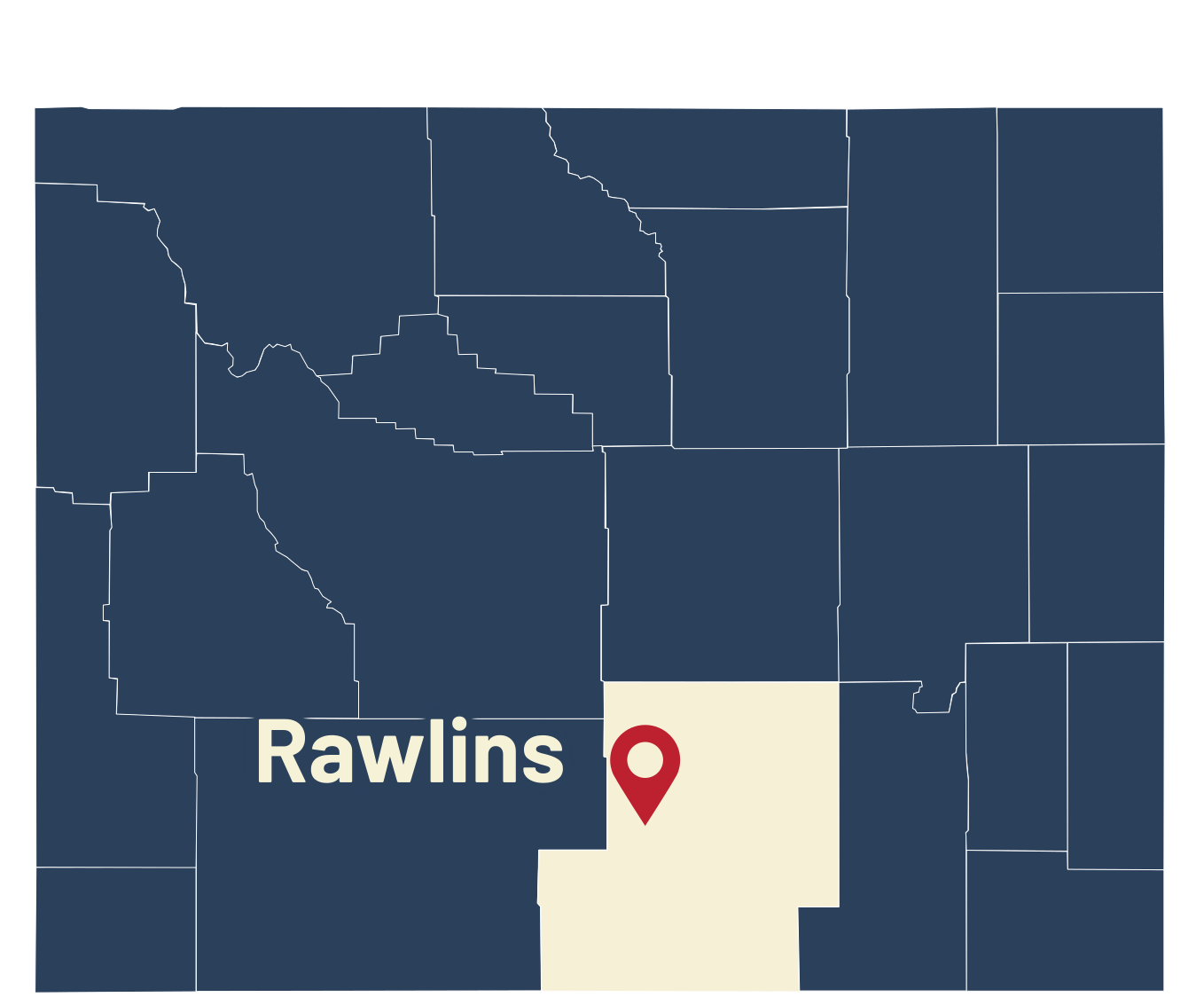
A more than a century-old and failing water system continues to leave Rawlins residents intermittently wihtout water as the city continues a yearslong effort to overhaul it.
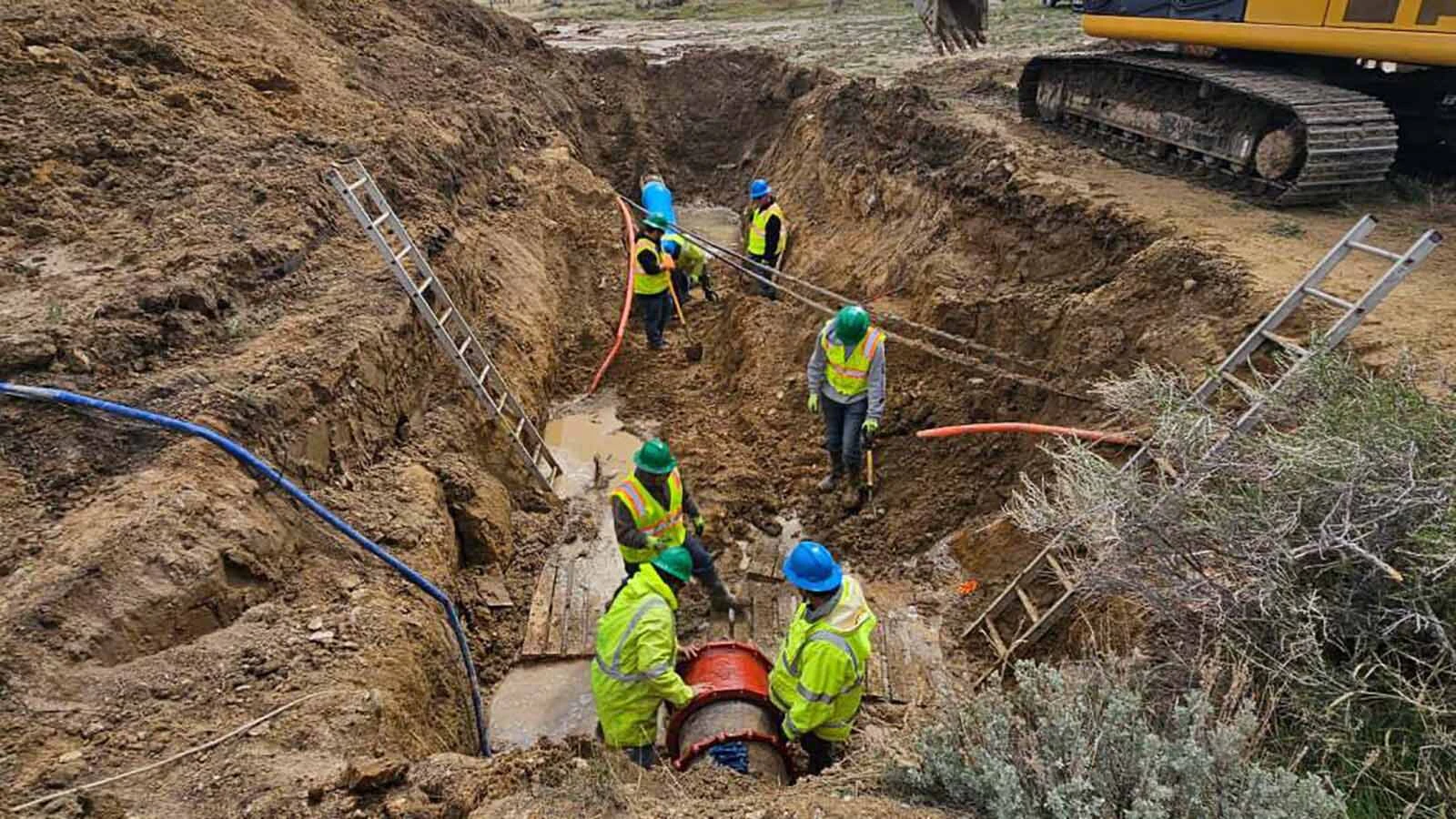
The latest failure happened Tuesday when at least half town’s residents were put on potential water conservation notice because of a 20-foot section broken pipe that impacted water tanks centeral to the city’s water supply.
Ten hours after the city posted the announcement on social media, the city reported that crews found three holes in the water line and were replacing an additional 50 feet of pipe immediately south of the previous breaks.
Although there has been a lot of public scrutiny on Rawlins’ water situation since catastrophic failure in 2022, Mayor Jacquelin Wells said water line breaks are common in communities.
But former mayor Terry Weickum, who was in office during implostion of the city's water system in 2022, told Cowboy State Daily that Rawlins breaks the mold of what’s typical infrastructure maintenance.
“We have water breaks more frequently than any place I’ve ever been,” he said.
The answer is to replace the whole century-old infrastructure, he said, adding that it’s not a simple fix.
In fact, it has been unattainable, with an estimate at the time of at least $20 million.
Where Does The Money Come From?
Water improvement in the town is largely paid for by enterprise funds, monies used by the state’s communities for business-type activities such as water, sewer and sanitation — services that are primarily paid for by user fees rather than taxes.
The funds are designed to ensure that user fees cover operating and capital costs without relying on a city or town's general fund.
“You have to be able to self-fund,” Wells told Cowboy State Daily about maintaining utilities. “What you bill for the water has to pay for the services.”
Rawlins has raised its water rates twice recently, Wells said. Still, those hikes haven’t been enough to cover all necessary repairs and upgrades.
Adding to the equation is that Rawlins’ population has decreased by almost 15% since 2010.
That means fewer water bills and less city revenue, said Wells.
The city has applied for grants to help supplement its ongoing infrastructure repair costs, and while it receives some grant money, that’s still short of what the town needs.
“What we’ve been told over the past several years of dealing with these issues is that we have to help ourselves,” Wells said. “The grant funders want to see that the communities are putting in just as much as what they’re asking for.”
Former mayor Weickum estimated a total infrastructure repair would cost much more than the 2022 $20 million figure, at between $50 million and $60 million.
That’s money that Rawlins simply doesn’t have, he said, adding that, “This is just a problem that we cannot solve ourselves."
A History Of Trouble
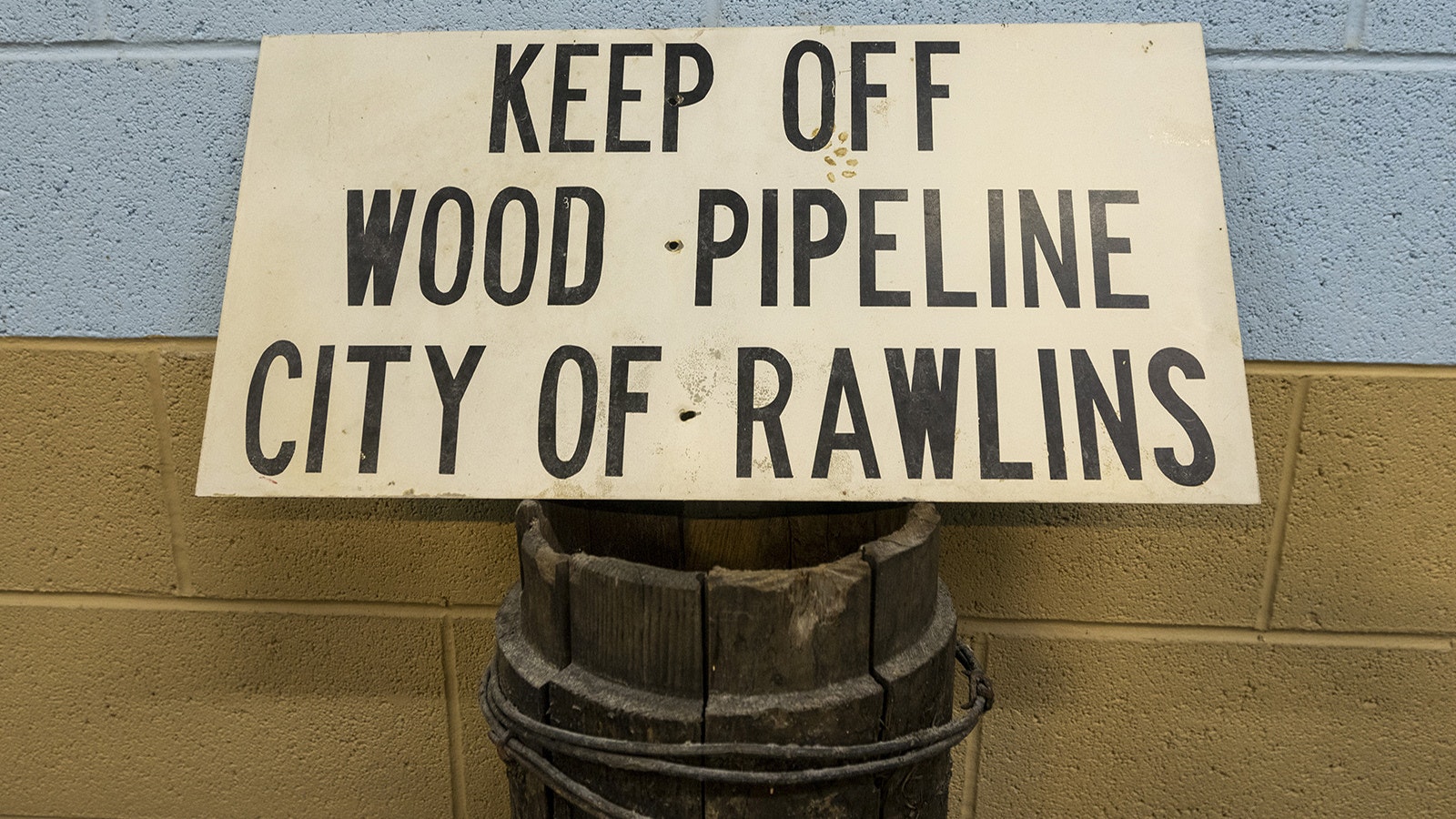
The crisis came to a head four years ago when Rawlins had been repairing a 32-mile spring water transmission line and replacing its freshwater collection system — made of 108-year-old wood pipes — with PVC.
Rawlins’ main water source is a series of underground springs about 30 miles south of town.
The repair process deprived the city’s water supply tanks of their usual freshwater influx to the point of “barely making enough water” to meet the needs of residents — a hazard that was prolonged by COVID-related supply shortages, according to a Rawlins water infrastructure report.
When the time finally came to turn the spring line back on, a water line in town suffered what the report calls a “full circle break” and allowed water to escape the system at three locations for more than seven hours, draining the freshwater tanks even more.
An integral part of the city’s water pumping system stopped working at the same time, leaving Rawlins and nearby Sinclair without potable water for nearly a week.
Yet despite catastrophic water failure and facing $20 million in critical infrastructure improvements, a $7 million request from the city of Rawlins was denied by the State Land and Investments Board later that year.
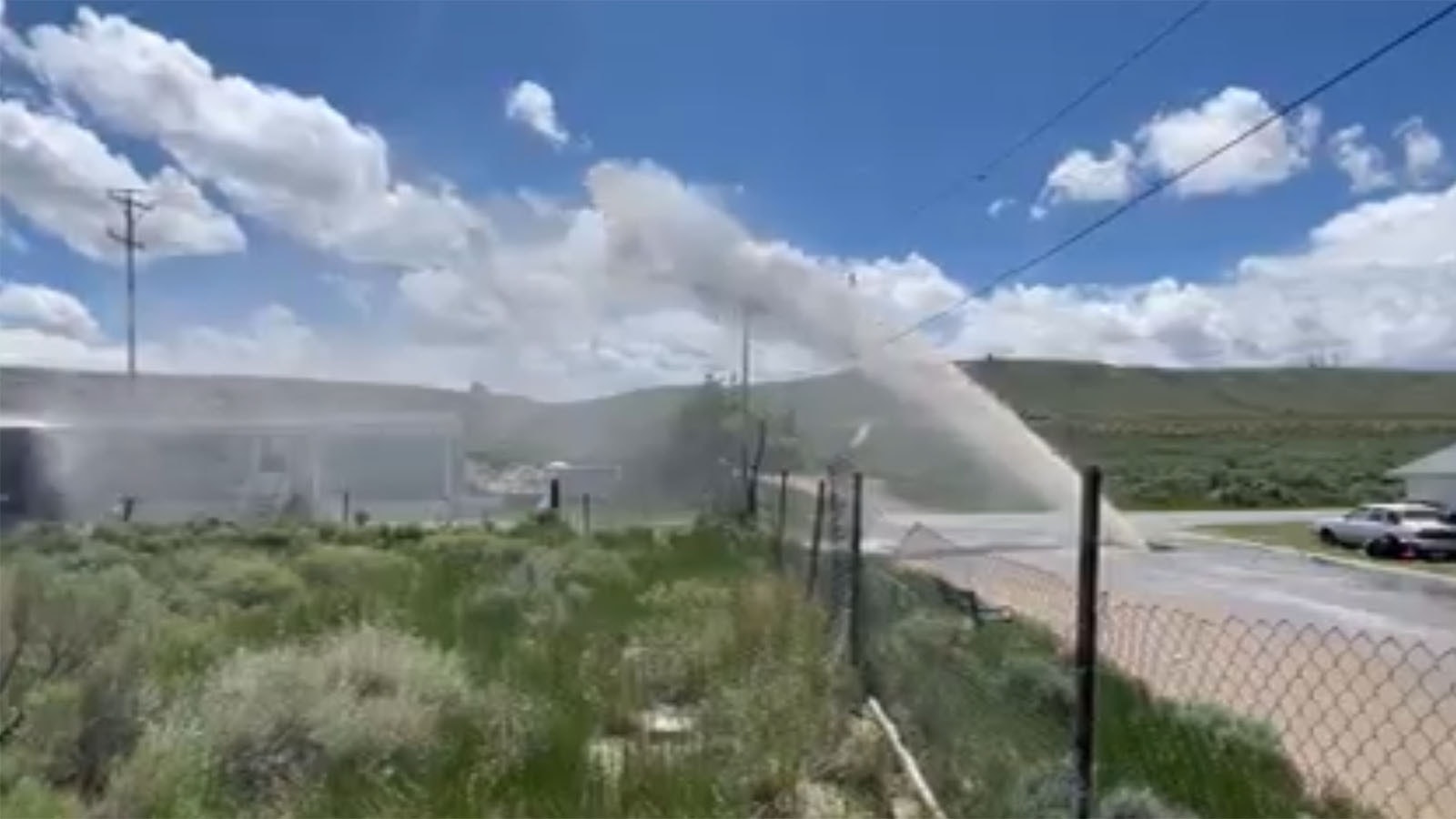
“We’ve had a lot of problems with our water structure over the years,” Wells said. “I kind of describe it as the cartoon where you have the barrel and you have one water spurt and as soon as you fix it 10 more come open.”
City Manager Matt Hall confirmed that the city has a lot of deteriorating pipes.
“We’ve been trying to do our best to address the needs for these things,” said Hall, who has been the city manager since February. Hall previously served as the mayor of Cody for eight years.
Residents Perplexed, Frustrated
Some residents expressed frustration over Tuesday’s water news. To some, it appears the city is turning a blind eye to its infrastructure.
For others, it’s become normal.
“It happens all the time,” said Casey Shinkle, who grew up in Rawlins.
Shinkle, who recently moved to Utah for his job, said the problem seems to be something the city doesn’t ever want to fix.
“How many times is this area going to have a break before the city finally caves and replaces the entire outdated line?” he asked in a social media post. “How much money is being spent on overtime wages to fix these breaks?
"At what point does it become cheaper to replace the line than it is to pay overtime?”
Resident Ryan Rowicki added that, “If Rawlins didn’t have water main breaks every week, there wouldn’t be any news.”
A 'Wyoming Problem'
Wells told Cowboy State Daily that upgrading the entire system at once is out of the question.
“We don’t have that level of money,” she said. “We’re trying. And we’re a lot closer than we were several years ago.”
Funding such projects has been a longtime problem for rural communities across Wyoming, Weickum said.
“Almost every rural community in Wyoming has this problem,” he told Cowboy State Daily. “And if they don’t, they will soon.”
Mark Pepper, executive director of Wyoming Association of Rural Water Systems, previously told Cowboy State Daily that community water systems must somehow be supplemented by additional money, which makes stockpiling money for a full replacement less than feasible.
“We’re not unique in Rawlins,” Wells said. “This is a Wyoming problem.”
Wells said the city is also feeling the pains of inflation. Some of these projects would have cost a third of what they cost now pre-COVID, she said.
Chipping Away
Little by little, Rawlins is making fixes to its water infrastructure while responding to emergency failures.
“We have a lot of projects in the hopper and we’re just chipping away at it,” Wells said, adding that the city worked on its water transmission lines last summer.
This summer, maintenance crews will strengthen the transmission line with a process called cathodic protection, an electrochemical technique used to prevent corrosion on metal structures. The cathodic project will protect the transmission line from eroding.
Four years after the catastrophic failure, leaks continue to spring on the transmission line between Rawlins and its main water source south of town, Hall said.
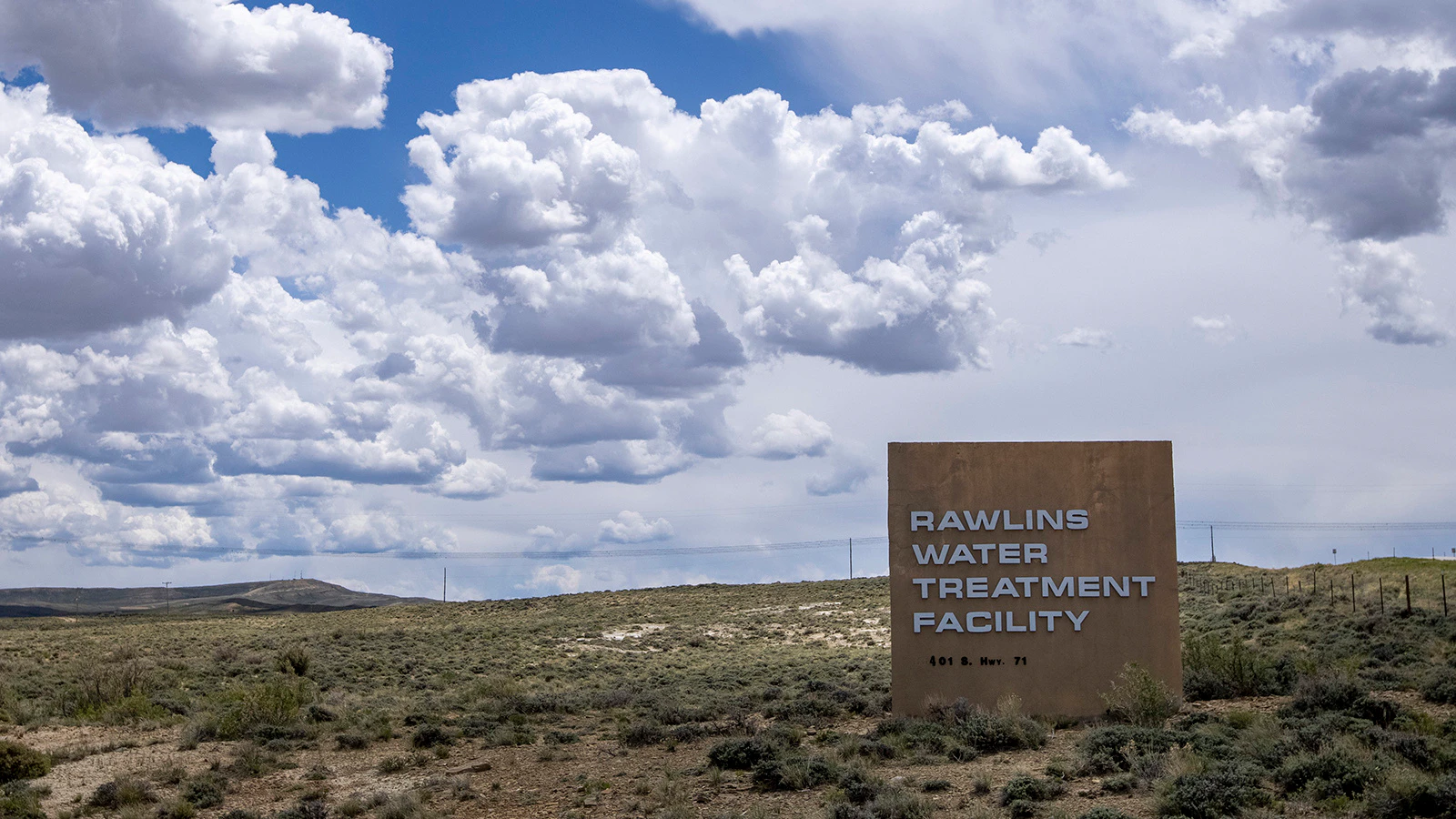
Fixing them will be another priority, because the more the town can rely on those springs, the less it has to rely on other water sources that require pre-treatment, such as the North Platte River.
The spring-fed water doesn’t need to be pre-treated, and Wells said that water is amazing.
“I think a lot of our water projects we’ve been trying to work on will be to address the long-range problems,” Hall said.
A Big Deal?
Tuesday’s water line break, on the heels of a smaller-scale break reported Monday, was par for the course in a rural Wyoming town, according to both Wells and Hall.
Water main breaks are especially common in the spring because of the frequent freezing and thawing that takes place, Hall said.
Also, infrastructure ages, he said.
“Water main breaks happen all the time, Wells said. “We’re just really good about letting our citizens know.”
Wells praised her city staff, an accolade with which Weickum agreed.
“Our maintenance guys are amazing,” Weickum said. “They’re probably the best pipeline fixers in the world.”
Kate Meadows can be reached at kate@cowboystatedaily.com.


