
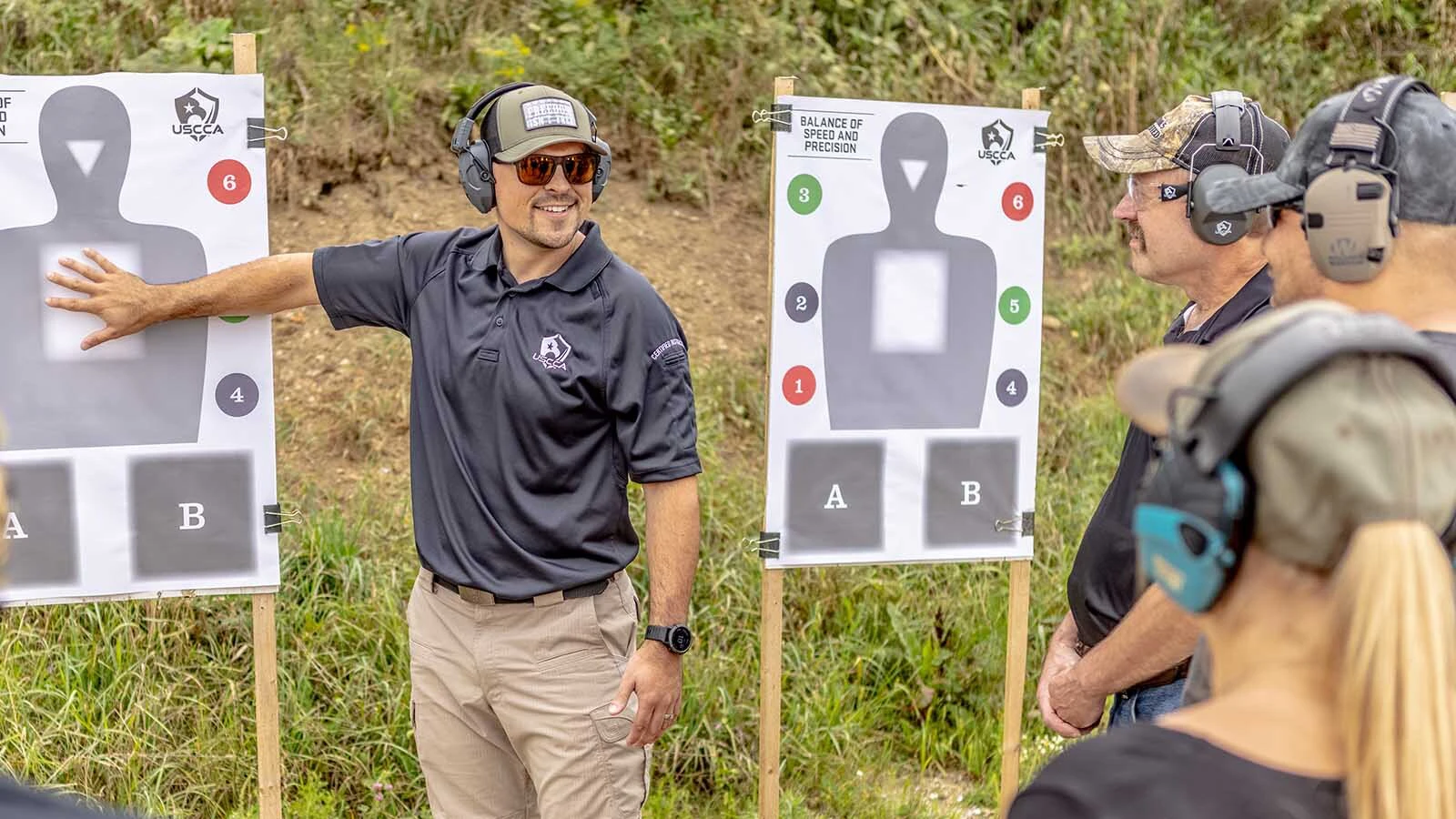
Wyomingites love their guns, and many have no qualms about keeping a firearm by their bedsides, in their vehicles and even on their persons, in case any hooligans want to try starting something.
However, experts warn that this isn’t the Wild West any longer. Even in the most justified cases of shooting in self-defense, the shooter will be investigated. And one wrong move or bad decision can land them in big legal trouble, or possibly prison.
And even if somebody who shot in self-defense is cleared of any criminal wrongdoing, they still might face civil actions that could ruin them financially.
In short, the decision to carry a firearm with the intent that you might someday have to use it to save your life or other innocent lives isn’t something to be taken lightly, Casper attorney Ryan Semerad told Cowboy State Daily.
“It’s going to cause an investigation, and the investigation needs to be completed because it’s a hugely consequential matter,” said Semerad, who has defended civilians and law enforcement officers in use of deadly-force cases. "You might have just killed or nearly killed somebody.”
There are also the psychological effects to consider, he added.
“Taking a life is huge. I’ve never met a person who has taken another person’s life who hasn’t been touched by that experience,” Semerad said.
“If you’re not ready for that, don’t put yourself in that situation,” he added.
When To Open Fire
Statutes governing the use of lethal force can vary by state, but there are overarching criteria that apply across the country, said J James Cullers of Casper, a certified trainer with the U.S. Concealed Carry Association (USCCA) and National Rifle Association (NRA).
“You can’t initiate the scenario, you can’t escalate that scenario,” he told Cowboy State Daily.
USCCA lays out four basic rules for legitimate self-defense in most states:
• A reasonable and immediate fear of death or serious bodily harm to yourself or another person.
• The shooter must be an innocent party.
• No lesser use of force is sufficient or available to stop the threat.
• There is no reasonable means of retreat or escape.
Inside people’s homes, Wyoming’s strong “castle doctrine” standard favors residents claiming self-defense, Semerad said.
Wyoming’s justified use of force statute errs on the side of residents assuming that somebody trying to cross their threshold without their blessing means harm.
“A person who unlawfully and by force enters or attempts to enter another's home or habitation is presumed to be doing so with the intent to commit an unlawful act involving force or violence,” according to the statute.
Even so, blasting away at somebody who is trying to run out your door with your television set would likely not be regarded as justified, Semerad said.
“You’ve got to let them go,” he said.
Outside of the home, matters get more complicated.
Wyoming statute makes it clear that the person who draws and fires can’t have been the initial aggressor in the situation, was where they had a legal right to be, and wasn’t engaged in illegal activity.
Semerad cited a case of a “weed dealer” who had another person threaten to kill him and fired in what he thought was legitimate self-defense.
However, since the dealer was engaged in illegal activity at the time of the shooting, he ended up going to prison, Semerad said.
Likewise, somebody who was trespassing and got into a deadly confrontation wouldn’t be able to claim legitimate self-defense, because they didn’t have a legal right to be where they were when the confrontation occurred, he added.
Situations To Avoid
One rule of concealed carry is to do everything reasonably possible to avoid sketchy places or situations, Cullers said.
“Don’t go down that dark alley (even when armed). If it takes you a little bit longer to walk around the block to your car, then walk around the block and don’t go down the dark alley,” Cullers said.
People who choose to carry firearms should be alert, he added.
“Don’t be walking down the street with your head in your cellphone,” Cullers said
Semerad said people who have had “even one drink” shouldn’t carry their firearms, because that could lead to poor decisions.
Likewise, firearms shouldn’t be present in emotionally fraught situations, he said.
Most assaults and murders don’t result from random law-abiding citizens being attacked by violent strangers, Semerad said.
Rather, they take place between people who know each other well and get into situations where emotions spiraled out of control, such as quarrels over money or romantic jealousy, he said.
Bringing A Knife To A Gunfight
Another common misconception is that it’s not justified or fair to shoot somebody who has only a knife or a club, or perhaps isn’t even armed, Cullers said.
The legal justification for self-defense shootings often hinges upon a disparity of force, he said.
So, for instance, a petite woman might be justified in using a gun if she’s attacked by a huge, strong man, even if he’s unarmed, Cullers said.
And just because somebody has a knife doesn’t mean that they aren’t a deadly threat to somebody with a gun, he said.
Law enforcement data indicates that somebody 21 feet away, or perhaps even 30 feet away, with a knife can be swift and deadly, Cullers said.
It’s commonly known as the “Tueller Drill,” and is a law enforcement training tool, not a legal rule or absolute law.
“Someone with a knife can cover 21 feet in a second and a half. Most people could not draw a weapon and fire to protect themselves in the time it takes the attacker to cover that 21 feet,” he said.
Get Training, Legal Protection
The Wyoming Legislature this year passed a law allowing 18-year-olds to apply for concealed carry permits.
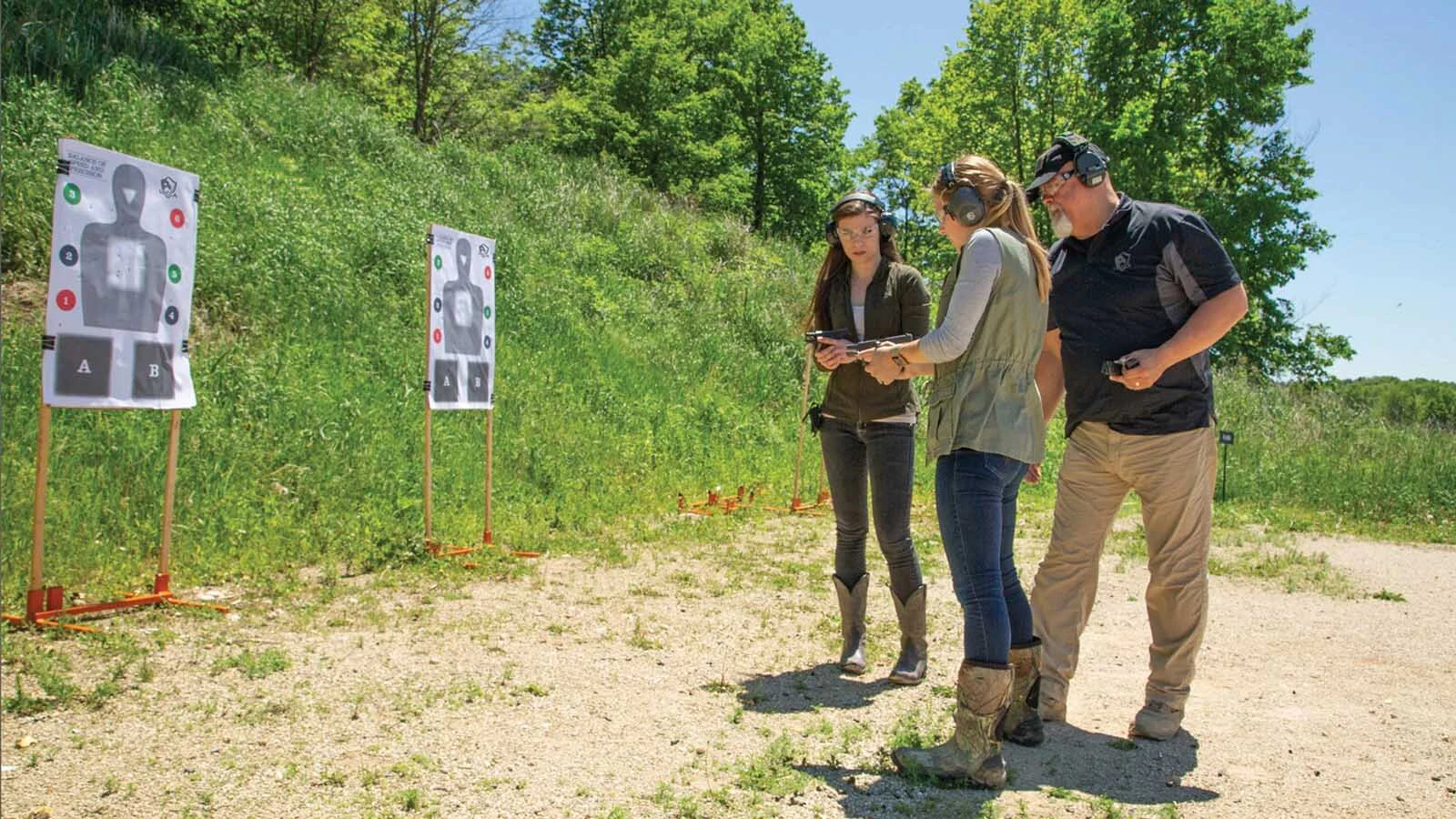
Cullers said that while he’s glad to see more people getting that right, he also stressed the need for proper knowledge and training.
And that should be two-pronged, he said. First, having a clear knowledge of the legal parameters of the use of deadly force. Second, training how to properly carry, draw and accurately fire a sidearm.
Cullers and Semerad said that a firearm should be a tool of last resort. People who wish to defend themselves should consider “less-lethal” options to use first, such as pepper spray, tasers or guns that shoot pepper balls instead of bullets.
“If you can carry a firearm, you can carry pepper spray. And if pepper spray will do the trick, then carry pepper spray,” Semerad said.
Those who choose to carry a firearm for self-defense should be prepared to have a legal defense, if they ever have to use deadly force, Cullers and Semerad said.
Cullers said that USCCA and other organizations, as well as some private law firms, offer self-defense legal insurance for concealed carry permit holders.
That can be particularly handy for people who are cleared of any criminal law violations in a self-defense shooting, but then get slapped with a civil lawsuit, he said.
Semerad said his clients, civilians and law enforcement officers alike, paid a traditional retainer fee.
“Personally, nobody has ever hired me through an insurance company, I don’t know if I would accept that arrangement,” he said.
Mark Heinz can be reached at mark@cowboystatedaily.com.


