
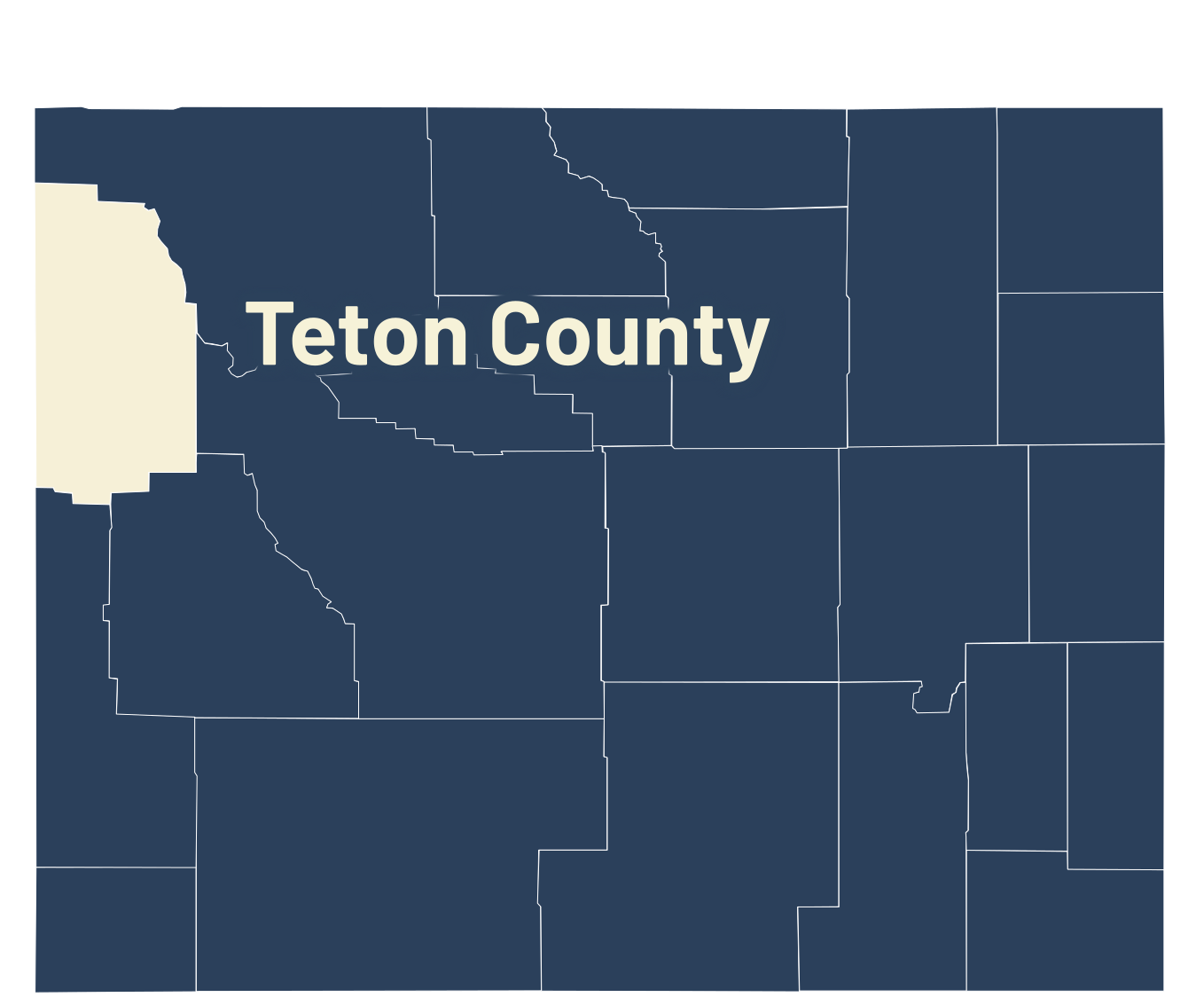
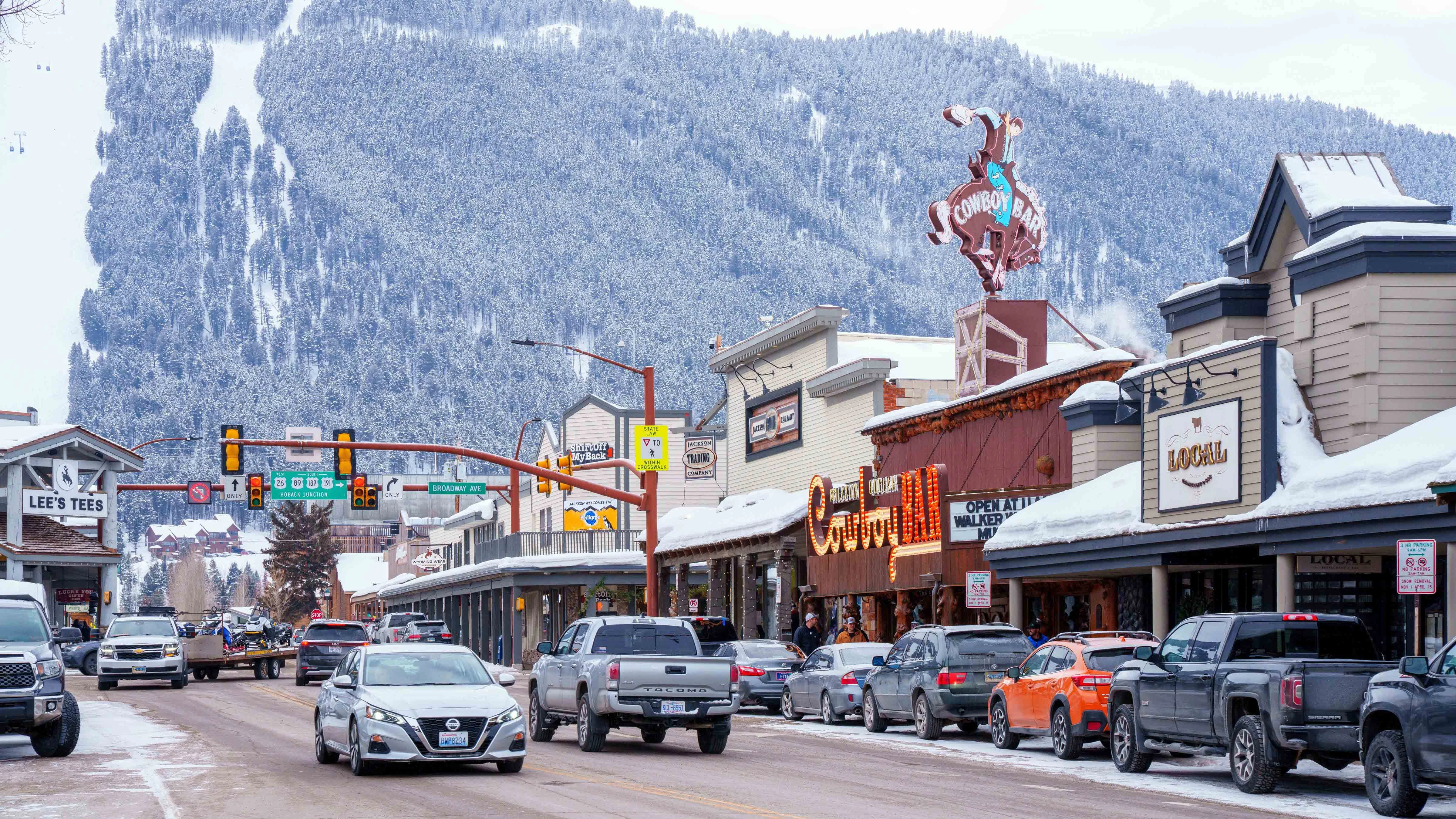
Should first responders receive priority when it comes to taxpayer money spent on housing in Teton County, or should those dollars be directed toward the broader community housing crisis?
That’s the question at the center of an ongoing discussion between Teton County Sheriff Matt Carr and county commissioners.
Working as a public servant in the nation’s richest county illustrates a complex problem: How does a first responder who earns a starting salary of $70,000 live in a town where the median home price is $3 million?
The Problem
“We’ve been trying to do something for years,” Carr told Cowboy State Daily. “We obviously have a huge, huge problem in Teton County.”
Only two of the department’s 30 deputies who respond to calls for service live in Teton County.
One of them is in an affordable housing situation and the other is in a caregiver situation. Carr himself, who is required to live within Teton County, lives in subsidized housing.
“Nobody lives here,” the sheriff said. “Most of the men and women who wear the uniform live over an hour away.”
Teton County Sheriff’s deputies own homes in neighboring Lincoln County and in Teton County, Idaho.
Teton Pass — often formidable in the winter — sits between Teton County, Idaho, and Jackson. The Snake River Canyon stretches from near Hoback Junction south of Jackson to Alpine in Lincoln County.
Closures of Teton Pass and the Snake River Canyon happen, often due to winter weather.
With those closures, “our normal staff can’t get here who live far away,” Carr said.
“Only having access to two employees that show up on our worst day is very, very concerning,” Carr told the commissioners.
Speaking to Cowboy State Daily, Carr said his main concern going into the summer is the county’s high wildfire risk, in which law enforcement plays a significant support role.
Sheriff’s deputies are now allowed to take their vehicles home, even if they live in neighboring counties, so that if the need arises for them to respond to an emergency during otherwise off-duty time, they can respond directly.
Monumental Task
But confronting the housing problem in the richest county in the nation is “a really monumental task.”
“It’s a huge lift to try to figure this out,” Carr said. “I’m just trying to be a little creative.”
Carr and Hank McKinnell, a Teton County resident and the former CEO and chairman of pharmaceutical giant Pfizer, were at a county commission meeting earlier this month to propose something of a solution.
Carr asked commissioners to consider a “readiness allowance” of $198,000 in county funds, which would provide $2,750 a month for up to six deputies to use toward local housing costs.
By living in Teton County rather than an hour or more away, the deputies would be better prepared to answer to law enforcement calls that require an immediate response.
McKinnell, a vocal supporter of local law enforcement, told commissioners that the allowance would help the sheriff’s department recruit and retain deputies.
Recruiting new employees is one of the department’s biggest challenges, Carr said.
County Housing Solutions Not Working
County commissioners focus on a variety of housing options and ongoing projects in Teton County. While those efforts are noticed, Carr said the solutions don’t work for sheriff’s deputies.
The Jackson and Teton County Affordable Housing Department works to create housing solutions to allow the local workforce to live locally.
The gap between the need and supply for affordable homes is still quite large, according to the Affordable Housing Department’s website. The department facilitates rentals and sales of affordable homes and workforce homes.
Once someone fills out an interest application, they receive notifications whenever a new home becomes available for which they qualify. They are invited to enter a weighted drawing for that home.
One adult in the household must be able to verify at least one year of full-time employment at a local business immediately prior to entering the weighted drawing.
Carr said the list to get a home is incredibly long and what the county is building “is not attractive to anyone who wants to be here long-term.”
Many of the structures are not family-friendly, he said. Instead, he said, “They’re building these box-like structures they can cram a lot of people into.”
In his proposal, Carr asked that first responders be allowed to jump the line and move in to available units without winning the lottery.
Doing so would require county commissioners and Jackson town councilors to change housing rules and regulations.
What County Commissioners Say
Teton County Commissioner chairman Mark Newcomb told Cowboy State Daily he is aware that Teton County residents are concerned about creating an affordable housing solution for sheriff’s deputies and other first responders.
“There is a debate in the community,” Newcomb said. “If we are spending taxpayer dollars on housing for the community, should we give priority to our first responders? Or should that money go toward housing for the broader community?”
So far, Carr said, his proposal has not received a lot of traction from Teton County Commissioners.
The hesitation, he said, is the fear that, if the commissioners give affordable housing priority to first responders, other groups will ask for priority, too.
Newcomb confirmed, “There’s a discussion around who should be prioritized.”
First responders are an incredible value to the community. So are critical service providers, medical staff, bus drivers.
“People are even arguing that tow truck drivers are of critical service,” Newcomb said.
However, Newcomb said the commissioners supported the sheriff’s requests for funds and directed him to work with the county administrator and housing staff to come up with details of a policy.
“The community is proud of our officers and supportive of them,” Newcomb said. “They have a hard job and we want to do all we can to support them.”
A final decision on the proposal is expected this summer, when the commissioners vote on their budget for fiscal year 2026-2027.
Newcomb said he is supportive of the sheriff and has been working hard behind the scenes with McKinnell.
“We need to buy and build as much housing as we can of a variety that interests the deputies that includes places where they can raise a family,” Newcomb said.
He added, “I think in the long run it’s going to have to be a hybrid system.”
Commissioners will continue to debate the county budget through the spring.
Teton County was named earlier this year as the richest county in the nation, with a per capita income of $532,903.
Not only is it six times greater than the national average of $73,204, it beats the second-highest county by more than $250,000.
Kate Meadows can be reached at kate@cowboystatedaily.com.


