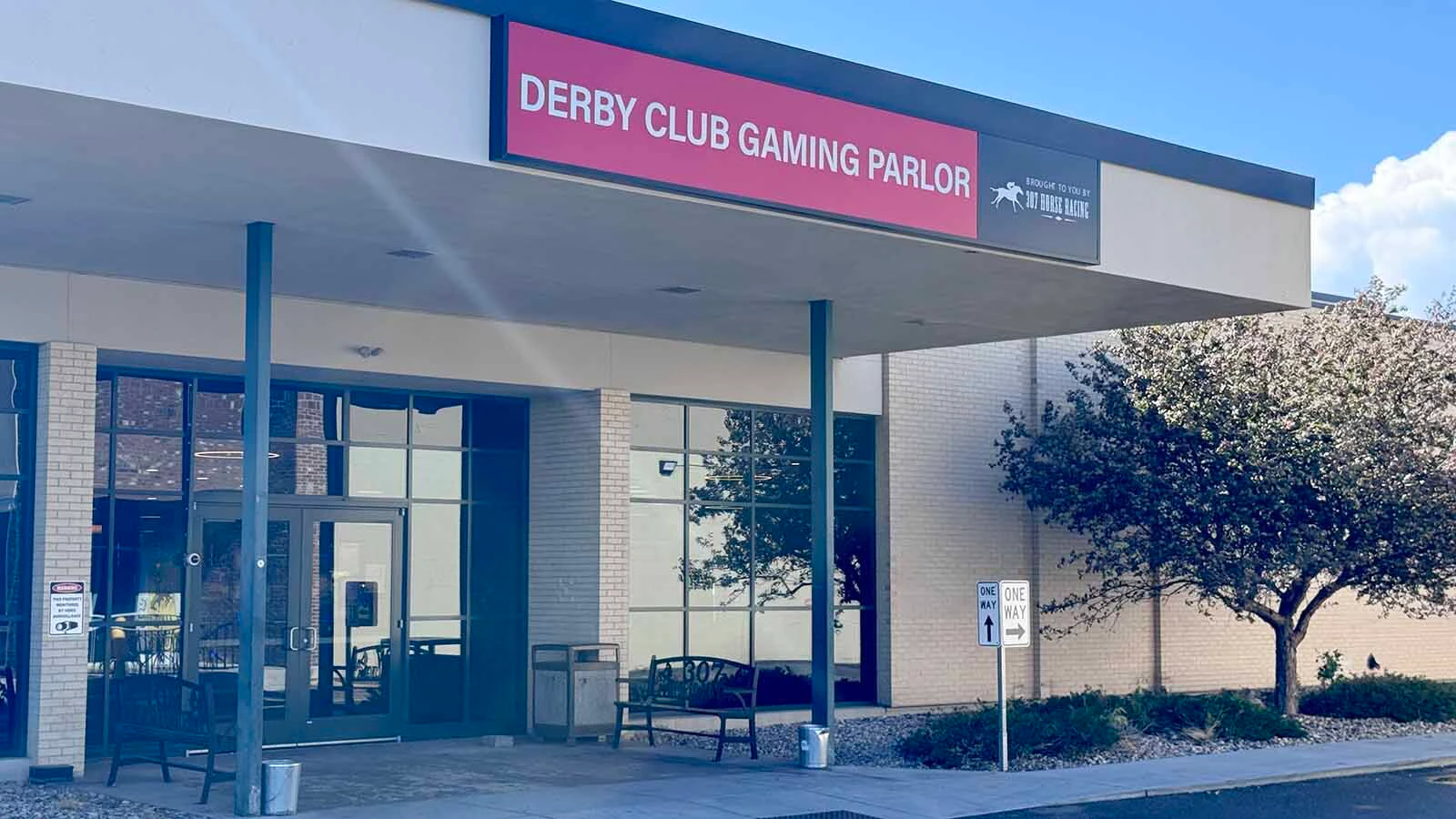
Cheyenne’s Public Service Committee has advanced a measure that could put two multimillion-dollar Derby Club locations out of compliance with city rules.
Two committee members, meanwhile, signaled unease with the idea and said they want to revisit the matter latter.
At issue is a proposed regulation that would prohibit gaming centers like historic horse racing from locating within a 500-foot radius of schools, churches, parks, and licensed child care centers.
The measure follows in the wake of legislation approved earlier this year that gave cities and towns more authority over where historic horse racing terminals are located.
Senate File 45 gave cities and towns local authority to deny simulcasting permits.
Prior to that, municipalities had little say over where facilities could be as their locations were permitted through the relevant county commission.
Cheyenne has 10 historic horse racing facilities that have been permitted under that old procedure. Two of those 10 are located within 500 feet of a licensed child care facility.
Drawing A New Map For Historic Horse Racing
Planning staff had originally crafted the 500-foot buffer to apply only to standalone child care centers operating in their own buildings.
That provision was broadened during a May 18 Planning Commission meeting to include any licensed child care center, even if tucked inside a larger, multi-tenant commercial building.
Cheyenne Planning and Development Director Charles Bloom told the Public Service Committee on Monday afternoon that the change, if allowed to stand, would have a dramatic impact for two Derby Club facilities, making them ineligible to come back for reapprovals under a new special-use process.
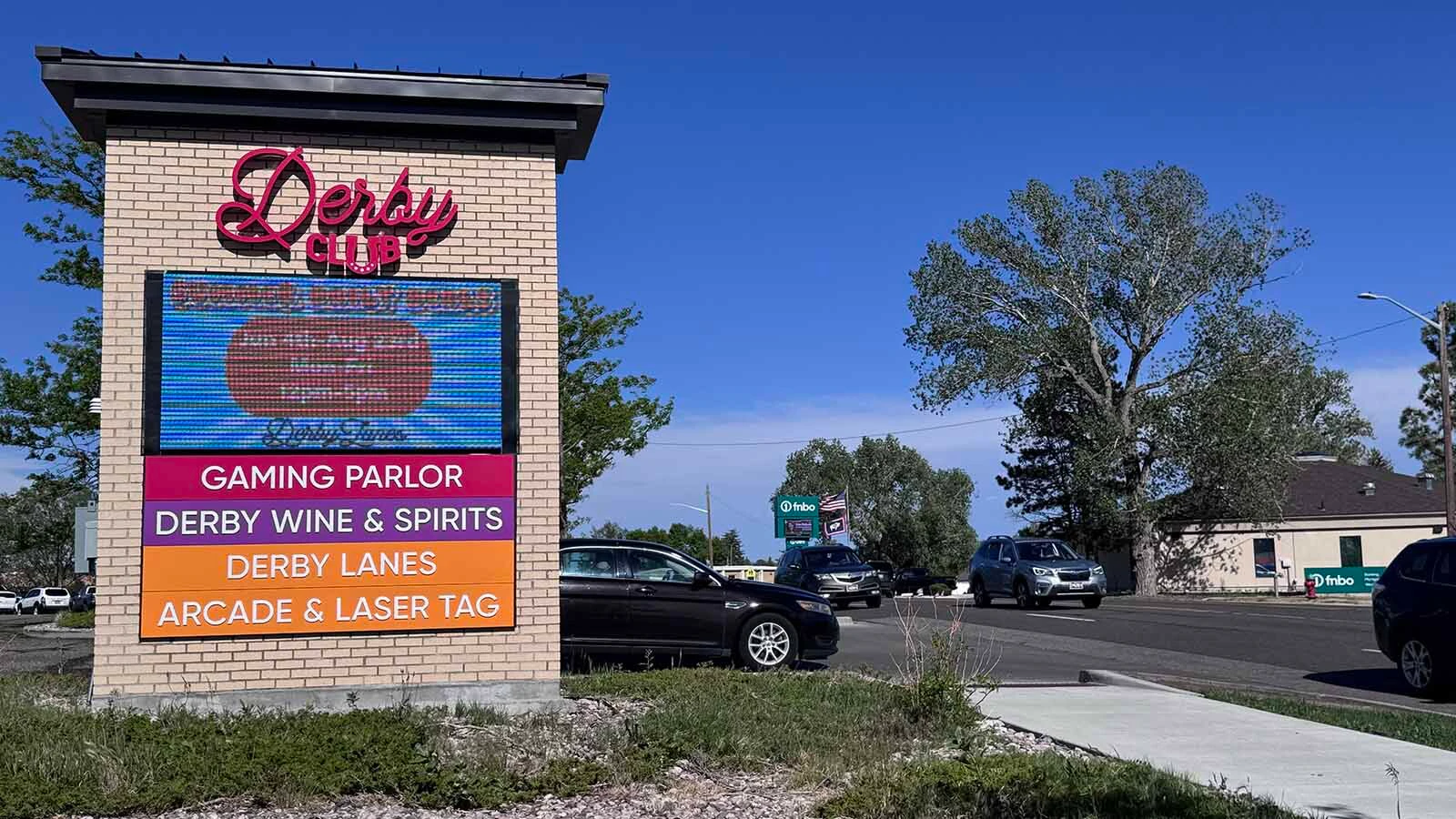
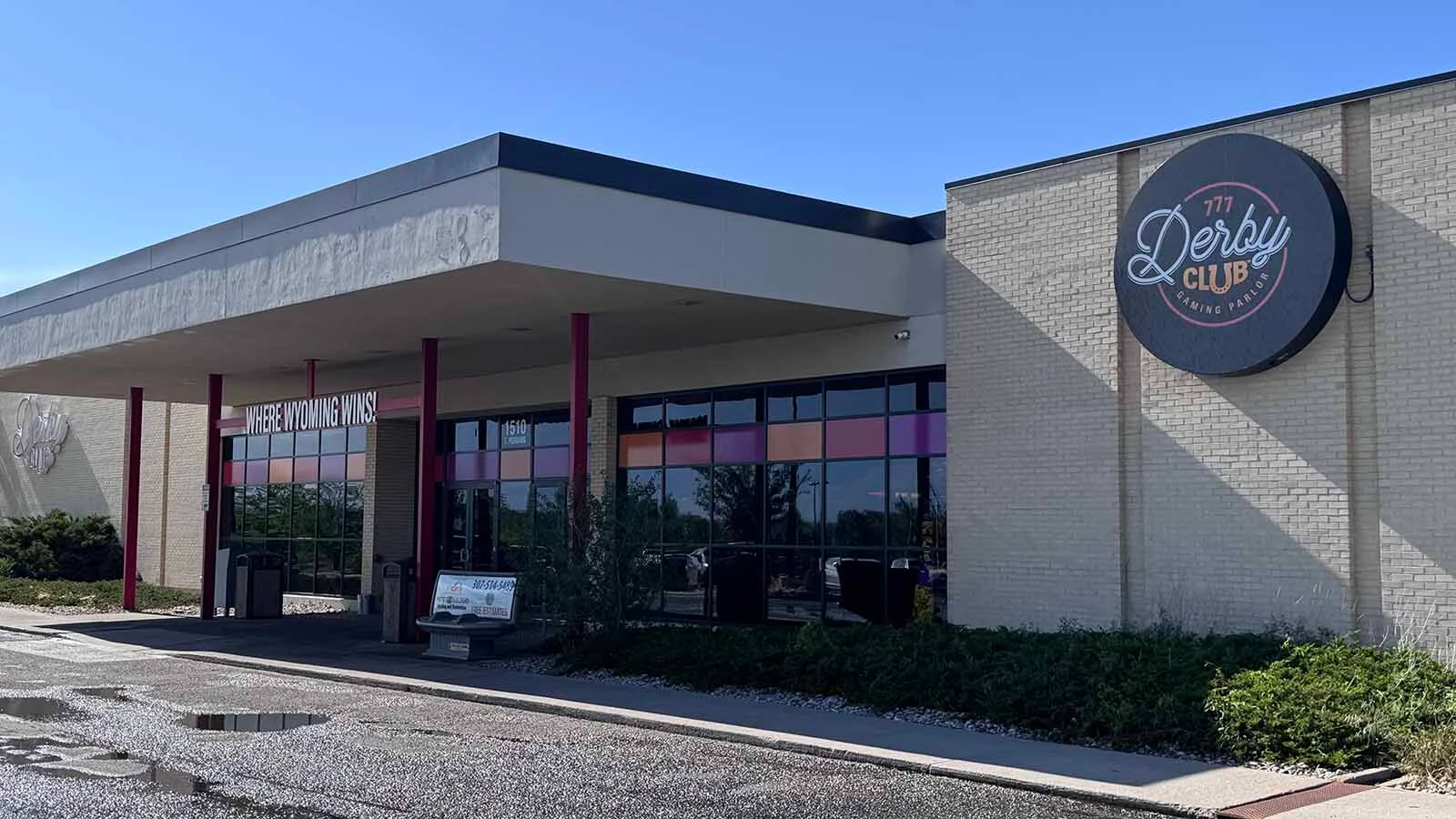
One is the flagship Derby Club on Pershing Boulevard, which is within 500 feet of a child care facility located in Gold’s Gym.
The other is the Derby Club at Ridge Road and Pershing, where there’s a child care center in a storefront near the Albertsons shopping center.
Under the city’s proposed ordinance, existing facilities that don’t meet the city’s new standards must come back to the city for special use approval by Dec. 31, 2027.
The intent of that is to “mirror” sunset provisions in the state statute for existing county-approved licenses for historic horse racing facilities, Bloom said, and “require all of those uses essentially to come back to the city for approval this time in front of the governing body instead of the Board of Adjustment.”
The only exceptions to that would be those who are in an overlay district that the city is also creating.
Called a regional entertainment overlay district, these would include the 15th Street Railcar Experience between Capitol and Reed avenues, as well as the West Lincoln Corridor, the Hitching Post area on the south side of Lincolnway, and areas out west toward Little America and the High Plains Road Interchange.
Every existing facility could reapply for their permits, Bloom said, except those falling within the 500-feet buffer.
“The way this is set up is it requires any use that would not be allowed to reapply,” Bloom said. “Then we would have to review them, subject to the development standards, including that buffer. That would not give two of the facilities … the ability to reapply.”
'We Already Played By The Rules'
Traci Lacock, general counsel for Wyoming Downs and 307 Horse Racing, told the Public Service Committee that her clients support the zoning overhaul, but asked the committee to consider reverting back to how the ordinance was presented prior to the May 18 Planning Commission changes, which make two Derby Club locations non-compliant.
“Both our facilities went through the conditional use process that’s currently in place, and was approved,” she said. “The city has already considered the location of these existing businesses and approved them to operate.”
The investment in the two facilities has not been insignificant, she added.
“Pershing facility, we invested about $20 million to make that facility what it is,” she said. “It’s pretty impressive. And the Ridge Road location, we just spent a little over $4 million to date.”
The Pershing facility renovated the old Montgomery Ward facility, which was empty, adding to it a bowling alley, an arcade, a children’s play area, laser tag, and escape rooms.
The activities are meant for all ages, Lacock added, but without the off-track betting (OTB) facility, those amenities would not be possible.
“Our OTB in our simulcasting facility is completely separated, and only 21 and older is allowed in that,” she said. “And we do monitor it very closely. We’ve had no issues with that.”
Lacock said the facility has worked hard to maintain a good working relationship with the Cheyenne Police Department and said that, so far, any issues at either facility have been “fairly insignificant.”
“I think it’s important to note the Ridge location operated as a bar for many, many years, and then we took it over,” she said. “And the Office Bar and Grill, which has a smoking and cigar lounge in the back, operates even closer to that child care center that’s at issue in Gold’s Gym.”
Wyoming Downs and 307 Horse Racing President Kyle Ridgeway told Cowboy State Daily that the company was required by the city to put more than $2 million into parking, landscaping, and access improvements to obtain its conditional use permits with the city.
Blocking the businesses from renewing their approvals under the city’s new framework would raise questions about grandfathering, he suggested, even as he reaffirmed the company’s overall support for Cheyenne’s efforts to clarify where historic horse racing facilities can operate.
Sponsor Would Prefer To Lose Broader Language
Councilman Mark Moody, who sponsored the measure imposing a 500-foot buffer between gaming parlors and schools or day cares, also spoke during the hearing, telling the Public Service Committee he would prefer it reverted to its original form.
Councilman Larry Wolfe suggested that the measure might best be tackled in a work session.
“Just sitting here listening to this — and I’m not a sponsor of this — I haven’t heard really anything about this,” he said. “It strikes me that this is a very important and complicated issue.
"You’re going to have to educate some other people on the council about it, me included.”
A work session would offer both councilmen and the public to have a chance to provide their input into “these really significant decisions,” he added.
“I guess my point is, we’re going to need to hear a lot about this,” he said. “These designations of these restricted areas alone have obvious consequences for these companies, and maybe other companies. We’ve heard no discussion about that at all.”
Balancing Child Safety With Fairness
Public Service Committee members signaled that they do see problems with the buffer as it stands in the ordinance, saying it's still a work in progress.
Councilman Mark Rinnie talked about the rationale for the buffer zone before it was put to a vote.
“At the time, there were seven historic horse racing venues in Cheyenne, nine in the county, and of those seven only six were zoned properly,” he said. “The other six had gone through our processes and received a conditional use permit from the Board of Adjustments, which is an appointed board. They’re not elected like we are.”
Rinnie said he and other council members received a significant number of emails asking why Cheyenne was allowing “all these” gaming facilities.
“At the time, state statute did not give us control over where these went,” he said. “Senate File 45, which was approved during the budget session, does allow municipalities to have some input into the decision.”
The other problem with how it was done in the past, Rinnie added, is that the matter never came before the City Council at all.
“A couple other parts to this is that these are going to be handled just like liquor permits,” Rinnie said. “They will be reviewed periodically. That review is based on the state Gaming Commission, which allows their approvals to last up to three years.
"So our ordinance kind of mirrors that as well. So that’s the rationale behind the ordinance. It does bring the control a little more to the city.”
With the overlay area for selected entertainment districts, it’s also encouraging the development to locate in particular areas where the facilities are more encouraged than in others.
Rinnie said he supports reverting back to the original form of the measure and not incorporating the Planning Commission’s May 18 recommendations, but called for voting on the measure, so that it continues to move ahead in a timely fashion.
Councilwoman Kathy Emmons, meanwhile, pressed Bloom on whether the ordinance would grandfather existing businesses and also asked for a rationale as to why licensed child care centers should have special separation from gaming centers but not bars or liquor stores.
Bloom said applying the same buffer to bars or liquor stores might be a logical extension, but that fell outside the scope of what his office had been asked to do.
Emmons, like Rinnie, said she would vote for the measure but said she wants to revisit the child care issue.
“I’m not prepared to do that today, but I do want to bring that back,” she said. “At least give it some more attention, and make sure that either we are giving them 500 feet or we’re figuring out what to do about those people who are already in play.”
The Road Ahead
The committee unanimously approved a motion recommending the measure to the Cheyenne City Council.
From there, the measure heads to the June 8 City Council meeting for a second reading, after which it returns to the Public Service Committee on June 15 for detailed review and potential amendments.
After that, it will return for a projected third and final reading on June 22.
Amendments to the measure can be introduced at any of those stages.
For now, the two Derby Clubs remain in compliance.
But under the ordinance as written, both would be barred from renewing their permits once state sunset deadlines hit — despite millions of dollars already invested.
Renée Jean can be reached at renee@cowboystatedaily.com.