
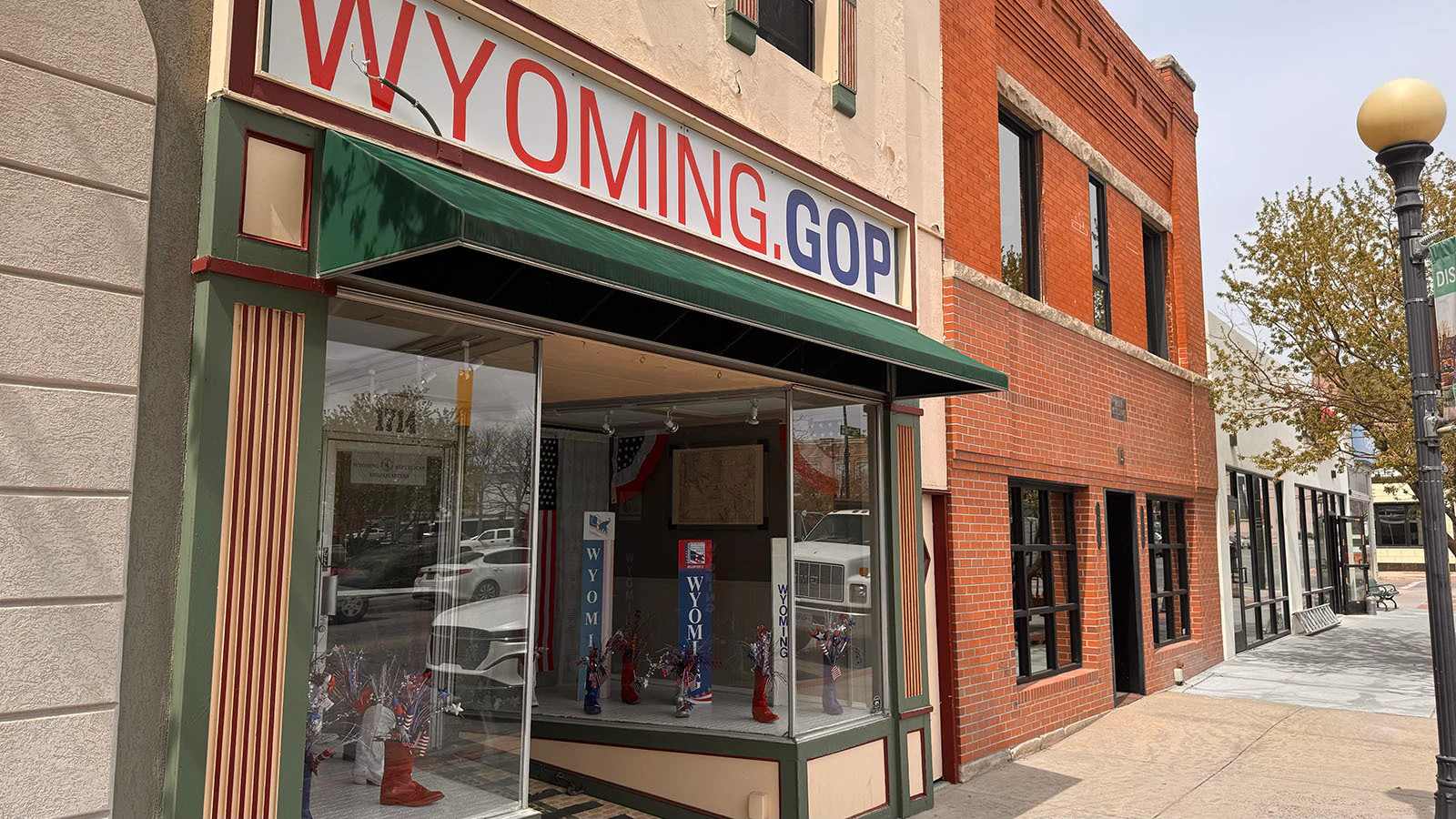
Some county Republican parties are asking the Wyoming Republican Party to throw off the state election laws that govern it, establish loyalty tests for political candidates seeking its nomination or endorsement, and tighten the party’s dispute resolution process.
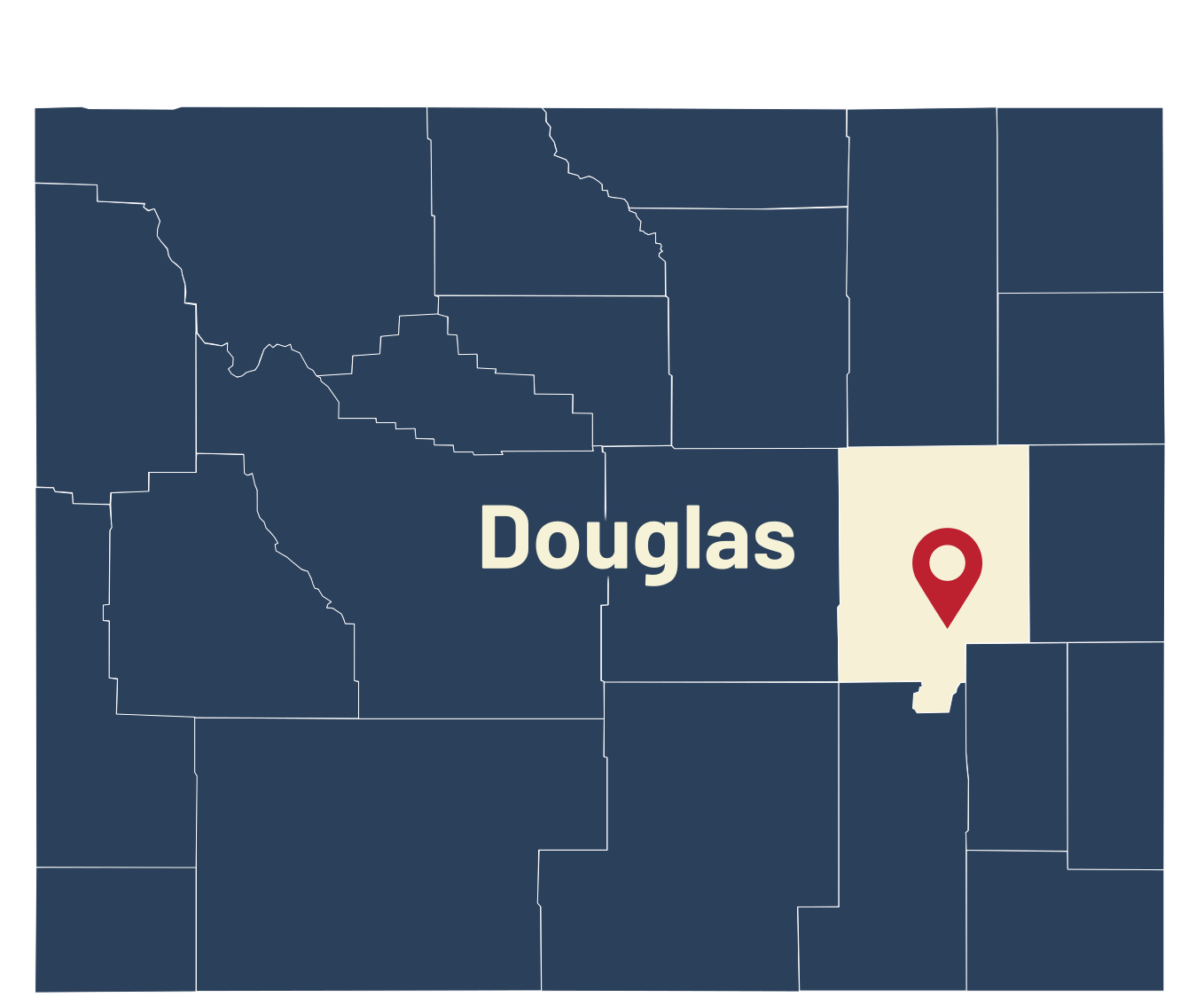
Slated for its statewide convention Thursday in Douglas, the Wyoming Republican Party is set to review more than 100 proposed changes to its bylaws.
Many of those say that the state GOP has the autonomy rights of a private group, and doesn’t have to follow state laws dictating its processes and membership.
That’s based on the assertion that, under the First Amendment associational right and prior court cases, the Wyoming Republican Party can function how it wishes.
It’s a question recently posed in an ongoing Wyoming court case, where Hot Springs County Republican Party members who say they were wrongly ousted from leadership positions are using state law to challenge the state party.
Crook County GOP Chair Mark Koep, whose party is bringing to the convention language pronouncing the state’s major parties laws void, told Cowboy State Daily that his entity’s goal isn’t to launch litigation against Wyoming.
“Title 22 (election law) has provisions in it that have already been found to be unconstitutional by the (U.S.) Supreme Court,” said Koep. "They’re technically null and void.
“The reality is it’s already kind of known — it’s just nobody’s doing anything about it.”
Already In Court ...
The Wyoming Supreme Court issued a ruling in 2023 that subjected the Uinta County Republican Party to state law, but the court declined at that time to consider whether the party has a fundamental right that transcends state law.
That’s because the Wyoming attorney general, at the time Bridget Hill, wasn’t invited to answer that challenge.
Koep pointed to the 1989 case of E.U. vs. the San Francisco Democratic Central Committee, in which the U.S. Supreme Court overturned a slate of California laws restricting the party.
A significant case in which a court upheld a private sorority’s right to dictate the terms of its own membership unfolded in Wyoming’s federal court district.
U.S. District Court Judge Alan B. Johnson in 2023 declined to define the word “woman” for a sorority so that a group of plaintiffs could exclude a transgender member from its ranks.
The state GOP argued in an Oct. 27 court hearing that it should have that same associational right to determine its membership.
Uinta County District Court Judge James Kaste didn’t go for the argument.
He said he would “probably” uphold state law in the case, and he indicated that the party’s dispute resolution committee may also have broken arbitration law.
In that same case, the plaintiffs’ attorney Clark Stith — who has withdrawn from the case to become a judge — argued that the party can’t have absolute autonomy like other private groups, because it plays a civic role in Wyoming governance.
When county and, with some exceptions, statewide elected officials resign or are unable to serve, the outgoing candidate’s party leadership entity nominates three people to replace him. Then another governing body, like the governor or county commission, picks one appointee from those three.
Jackson-based attorney Kate Mead has taken on the plaintiffs’ case for Stith.
These Big Changes
Cowboy State Daily has obtained the more than 100 proposed changes to the Wyoming GOP’s bylaws, set for consideration at the convention this week.
“The Party possesses the absolute and exclusive right to determine its own leadership, define its own organizational structure, select its standard-bearers, and articulate its own message,” says a proposed bylaw change by the Crook County GOP.
The Weston County GOP also urges that change, in the draft bylaws.
State law requires that major parties’ county leadership groups consist of men and women elected every two years, at the primary election.
A Weston County proposal could upend that, if passed. It would call for county and state party leaders to be selected “in such a manner, as the Party shall determine in these bylaws,” free from “any state statutory formula.”
If that language passed and survived the courts system, the party could adopt bylaws ending the grassroots election of its leaders at the ballot box.
Koep said he doesn’t foresee that.
“I can tell you that that’s not our vision for this at all,” said Koep. “The goal is not to destroy the Republican party. The goal is to strengthen the Republican party (and determine) how do we do that in a way that’s good for Wyoming Republicans.”
Whether To Bankroll One Republican Over Another
Wyoming law restricts major parties in several other ways.
For example, the party can’t spend money “directly or indirectly” to promote one candidate vying for its nomination over another, during the primary election.
That curbs the party’s influence from swaying contests between two or more Republicans.
A Weston County proposal would attempt to trump that law.
“The Wyoming Republican Party … reserves the absolute First Amendment right to endorse, support, oppose, and provide financial assistance to candidates of its choosing at any point in the election cycle,” says the proposed language. Any state law preventing that “is hereby declared unconstitutional and void,” says the language.
If it’s correct for the party to have that authority to trump state law then so be it, said Natrona County GOP committeewoman Marcia Neumiller in her own interview.
But it’ll make a wild West landscape that could pit more “traditional Republican” led county parties against what Neumiller called the more Freedom Caucus aligned state GOP.
The Wyoming Freedom Caucus is a group of state House of Representatives members that pushes for budget cuts and laws governing social issues in a conservative fashion.
Its proponents say it’s the true voice of the political right in Wyoming, while its detractors say it foments hardline ideologies that overlook practical remedies to issues.
“I am not in support of our state party supporting Freedom Caucus candidates,” said Neumiller. “Sorry, I’m not.”
Neumiller said the state party is in a spiral of defining conservativism for others.
She said the state party crafts the GOP platform, then Republican activists and candidates judge their peers who don’t conform to the platform, which in turn elevates only Republicans who are in lockstep with the platform that they or their political allies created.
“There are things that are in the Wyoming state Republican platform that do not align with a traditional Republican value,” said Neumiller. “It’s gone to the extreme right.”
So, said Neumiller, if the party gains the authority to bankroll GOP candidates against other GOP candidates, she said, it could dwarf the influence of county parties that may disagree, and create a contest of wills and money.
State Republican Party Chairman Bryan Miller did not respond by publication to a voicemail request for comment on the proposed changes.
Keep It Internal
Multiple county parties seek to revise the state party’s dispute resolution committee processes.
The 2024 bylaws say that if GOP leaders clash in a dispute, they should negotiate directly.
Failing that, they should submit their dispute to the state Dispute Resolution Committee, comprised of five to nine state party delegates from different counties.
The state chair appoints those members and a majority of the State Central Committee (which in turn consists of three delegates from each county party), ratifies those choices.
If the committee can’t mediate the issue, it shall conduct an arbitration, which is confidential.
People can bring an attorney or counsel to the arbitration, but that counsel must be a member of the State Central Committee.
But, if anyone who should, under the bylaws, be following the dispute resolution process chooses to take the issue to court instead, that person is liable to his adversary for costs and attorney fees, the bylaws say.
The party under its existing language asserts a right to resolve internal disputes “without interference from any court or state or federal government.”
The Uinta County GOP seeks to add an appeals process, by which the State Central Committee can review and change the Dispute Resolution Committee’s ruling.
That party would also tighten the language so that, rather than having permission to consult with any attorney, the Dispute Resolution Committee could only consult with the state party’s attorney and parliamentarians on legal issues.
The Joey Correnti Incident
The Carbon County GOP is asking for clarifying language, saying that when party delegates send proxies to state meetings, the proxy holder can exercise all the privileges of the absent delegate he represents — except for going to private executive sessions or disciplinary proceedings.
Carbon County GOP Vice-Chair Joey Correnti brought a proposed resolution to the state central committee meeting in February calling for the resignation of legislators embroiled in a check-passing controversy that Capitol insiders have named “CheckGate.”
Though he was not an official delegate, Correnti was representing one, as a proxy.
Miller ruled that Correnti was ineligible to speak on behalf of the motion.
The Uinta County GOP is also venturing a proposed change on this topic similar to the Carbon County party’s offer.
Correnti told Cowboy State Daily on Wednesday that he wasn’t involved with the proposed bylaws changes regarding proxies.
The Orthodoxy Call
The Crook County Republican Party is bringing a change so that, rather than requesting GOP political candidates read and agree with at least 10 of the state party’s 23 platform items — they should agree with 80%.
“The County or State Chairman shall also request that each non-judicial candidate read the entire Platform and indicate at least … 80% of line items from the Platform that the candidate strongly supports,” says the language.
How candidates respond to that inquiry “shall be collected and recorded,” and published on the state or county party’s website before the primary election, the bylaws say.
The Crook County party is also proposing a change calling for the state party to establish objective criteria for vetting Republican political candidates seeking the party’s nomination or endorsement – and how well they adhere to the party platform, demonstrate “loyalty to the Party’s principles, and legal eligibility to hold office.”
Crook County’s party leaders also offer language for disciplining candidates who violate “the Party’s criteria,” and other language describing processes for endorsing candidates.
Koep said Crook County brought so many of the proposed changes because it prefers to save them all for the convention, which has more attendees, than submit them to state central committee meetings. It's a grassroots maneuver, said Koep.
Clair McFarland can be reached at clair@cowboystatedaily.com.


