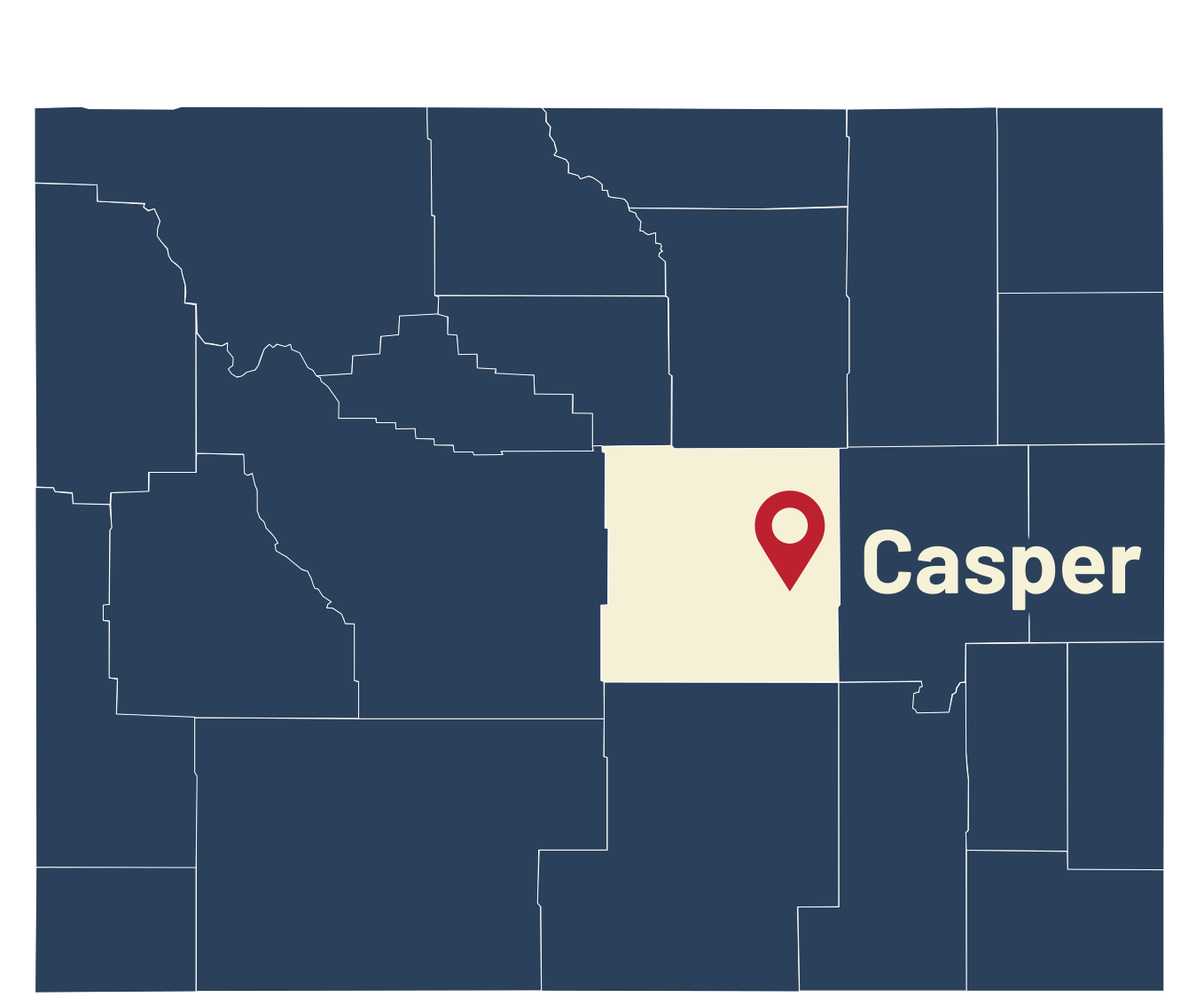
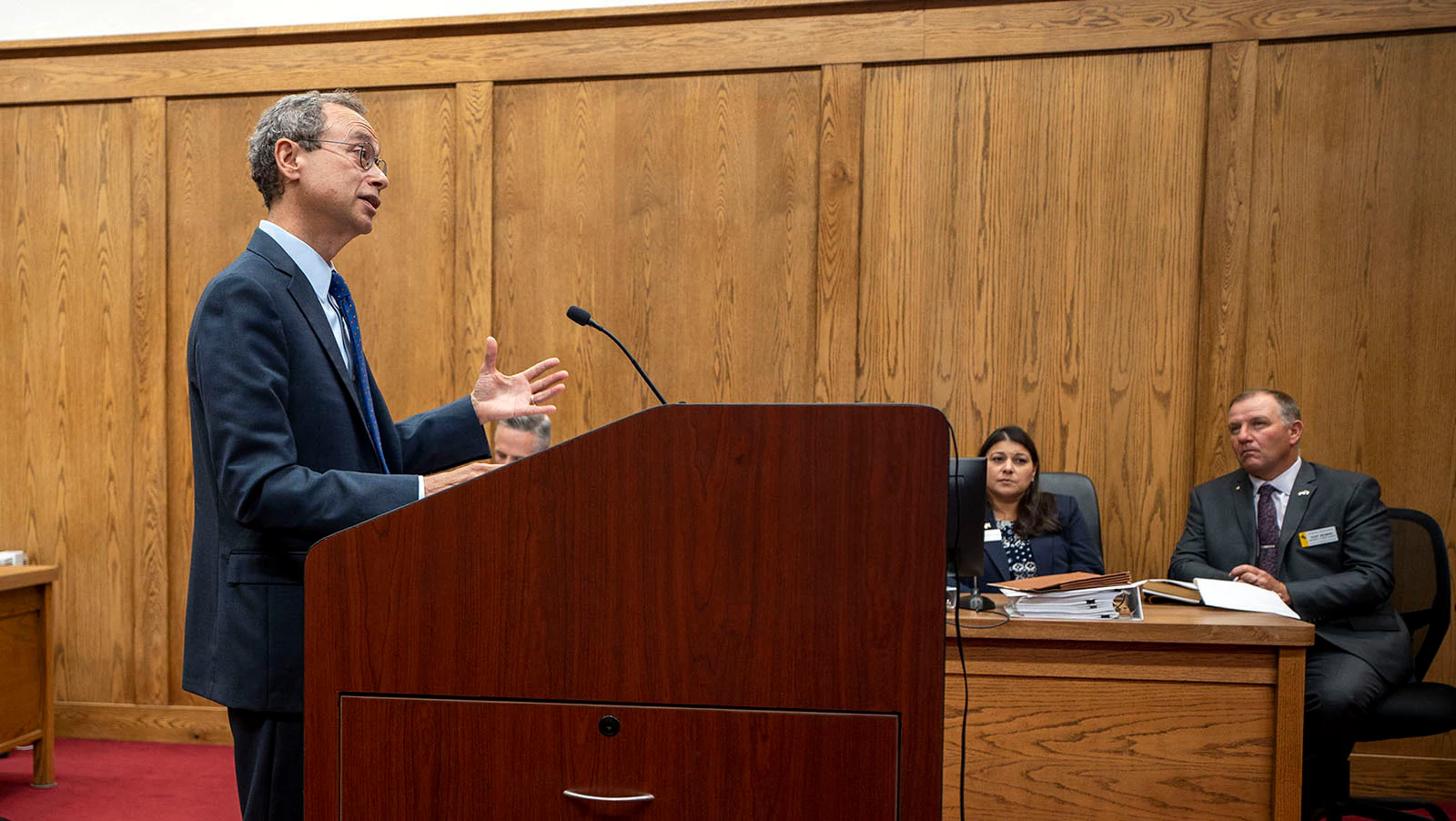
A Natrona County District Court judge Wednesday listened to nearly two hours of arguments on whether he should issue an injunction stopping enforcement of Wyoming’s 2026 Heartbeat Abortion Ban.
Judge Daniel Forgey told Wyoming Attorney General Keith Kautz representing the state and attorney Peter Modlin arguing for the plaintiffs that he appreciated the “quality” of the arguments.
“I will take them under advisement,” he said.
Forgey gave no indication of a timeline for his decision.
Wednesday’s court action follows nearly four years of abortion litigation — a battle which Wyoming and pro-choice plaintiffs have waged since the 2022 overturn of Roe v. Wade.
The Wyoming Supreme Court ruled Jan. 6 that abortion is health care, and that accessing abortion is a fundamental right.
To restrict that fundamental right, the state has to show it has a compelling interest, and that its restrictions are narrowly tailored to achieve that interest.
Forgey gave both Modlin and Kautz one hour each to make their cases on their respective sides.
During his time before the judge, Modlin emphasized his clients’ view that the new law is “unconstitutionally vague,” does not meet the Wyoming Supreme Court’s standard that it be “narrowly tailored” and the law does not meet legal standards proving the state’s “compelling interest” in restricting abortions.
“The state can claim interest but it must substantiate its claim,” Modlin argued.
The Heartbeat Abortion Ban shows that “something magical happens at 6 weeks” when a heartbeat is detected, Modlin said.
He said that, “last year its argument was it had compelling interest at conception.”
Kautz argued that the legislation speaks to a defining moment of life, but that the state’s role is to protect all life. The heartbeat law sets down the evidence of it.
“That’s when we know there is a life to protect,” he said.
The Ask
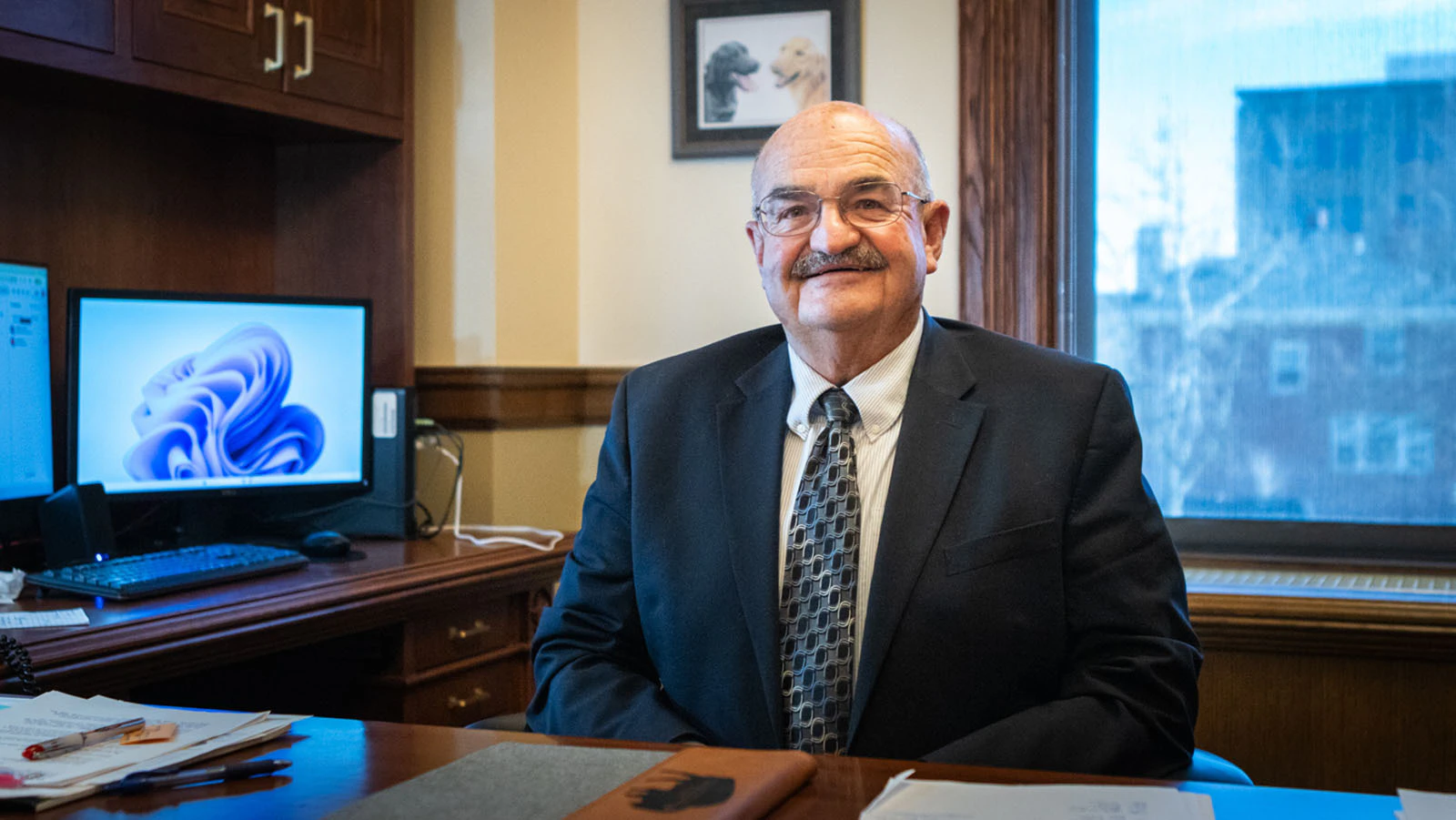
In late March, a pro-choice coalition containing two doctors, one abortion funding nonprofit group, one clinic and a birthing-age woman filed a motion asking Forgey to block the Human Heartbeat Act from being enforced in Wyoming.
The law had gone into effect March 9 after Gov. Mark Gordon signed it.
The pro-choice group argued that the law is unconstitutionally vague, as it calls for a near-total ban on abortions after the point at which a human heartbeat can be detected; and it exempts people who perform abortions in response to medical emergencies.
The group also asserts that the law violates the Wyoming Constitution’s promise of health care autonomy for each competent adult.
“If the temporary restraining order is not granted, plaintiffs will continue to suffer irreparable harm,” says the group’s March 31 petition. “Harms that will be endured by (Wyoming authorities) from issuance of the injunction — if any — are far outweighed by the irreparable harms plaintiffs will continue to suffer under the 2026 abortion ban.”
The law’s language lacks medical meaning and confuses doctors as to when they may be committing the crime of abortion, an attached memorandum claims.
For example, said the pro-choice group, “the embryo does not yet have a fully developed heart” at the stage during which an ultrasound technician may develop electrical impulses “within a cluster of developing cardiac cells.”
The group’s memorandum questions whether this is a proper concrete starting point for the ban.
It also says that the prevailing way doctors detect that heartbeat is with a transvaginal ultrasound which, especially in the case of rape victims, could bring trauma through a state-mandated procedure.
Nope, Says State
The state’s response rebuts the claim that its new law is vague.
The detection of a heartbeat and the exemption for medical emergencies are well established and straightforward, says the state’s response.
Consistent judicial opinions have contoured these criteria, and where the law doesn’t define terms, ordinary definitions will do, it adds.
“Accordingly, the definition of detectable fetal heartbeat is not unconstitutionally vague because a person of ordinary intelligence can read the statute and understand when abortions are prohibited,” says the response.
In the case of Planned Parenthood v. Casey — a former beacon of pro-choice jurisprudence — the court approved of nearly identical medical emergency exceptions, and that approval persisted for more than 30 years, the document says.
As for whether the heartbeat law violates women’s right of health care autonomy, the state’s argument emphasizes that, though the Wyoming Supreme Court called abortion access a fundamental right, it left open a difficult avenue to restrict it.
Abortion restrictions are held to the “strict scrutiny” standard in Wyoming, after the high court’s Jan. 6 ruling striking down two prior abortion bans.
That means the state can only restrict abortion if it shows it has a compelling interest, and it tailors its restrictions narrowly to achieve that interest.
Wyoming’s response asserted that the Wyoming Legislature has done that. The high court’s complaint Jan. 6 was that the state hadn’t proven its case.
Now the state seeks to prove its compelling interest, its response indicates.
“First, the State’s interest in protecting human life is compelling as a matter of law and as a matter of fact,” says the response. “The Wyoming Constitution explicitly states ‘all members of the human race’ have an equal and ‘inherent right to life, liberty, and the pursuit of happiness.’”
Clair McFarland can be reached at clair@cowboystatedaily.com and Dale Killingbeck can be reached at dale@cowboystatedaily.com.