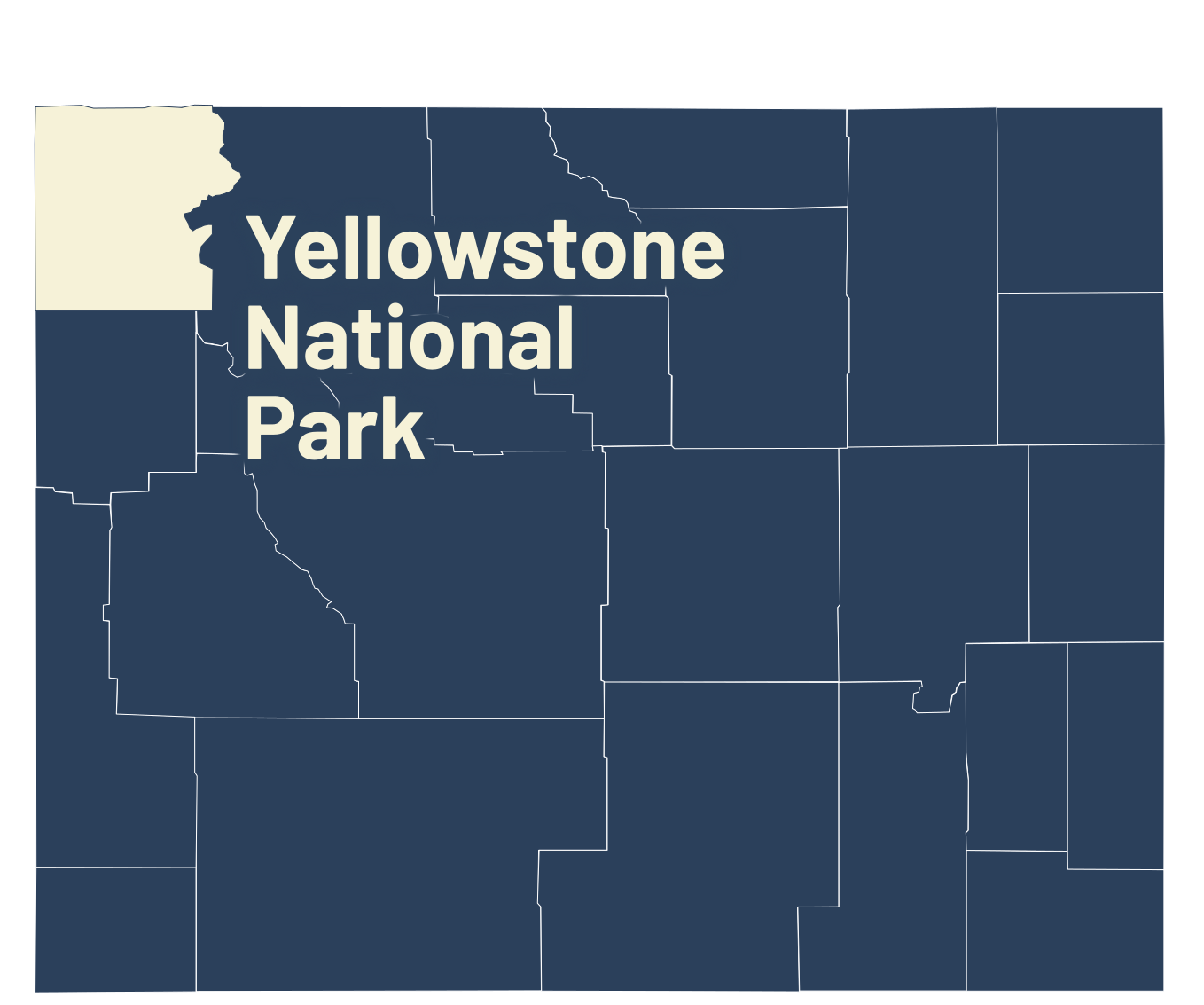
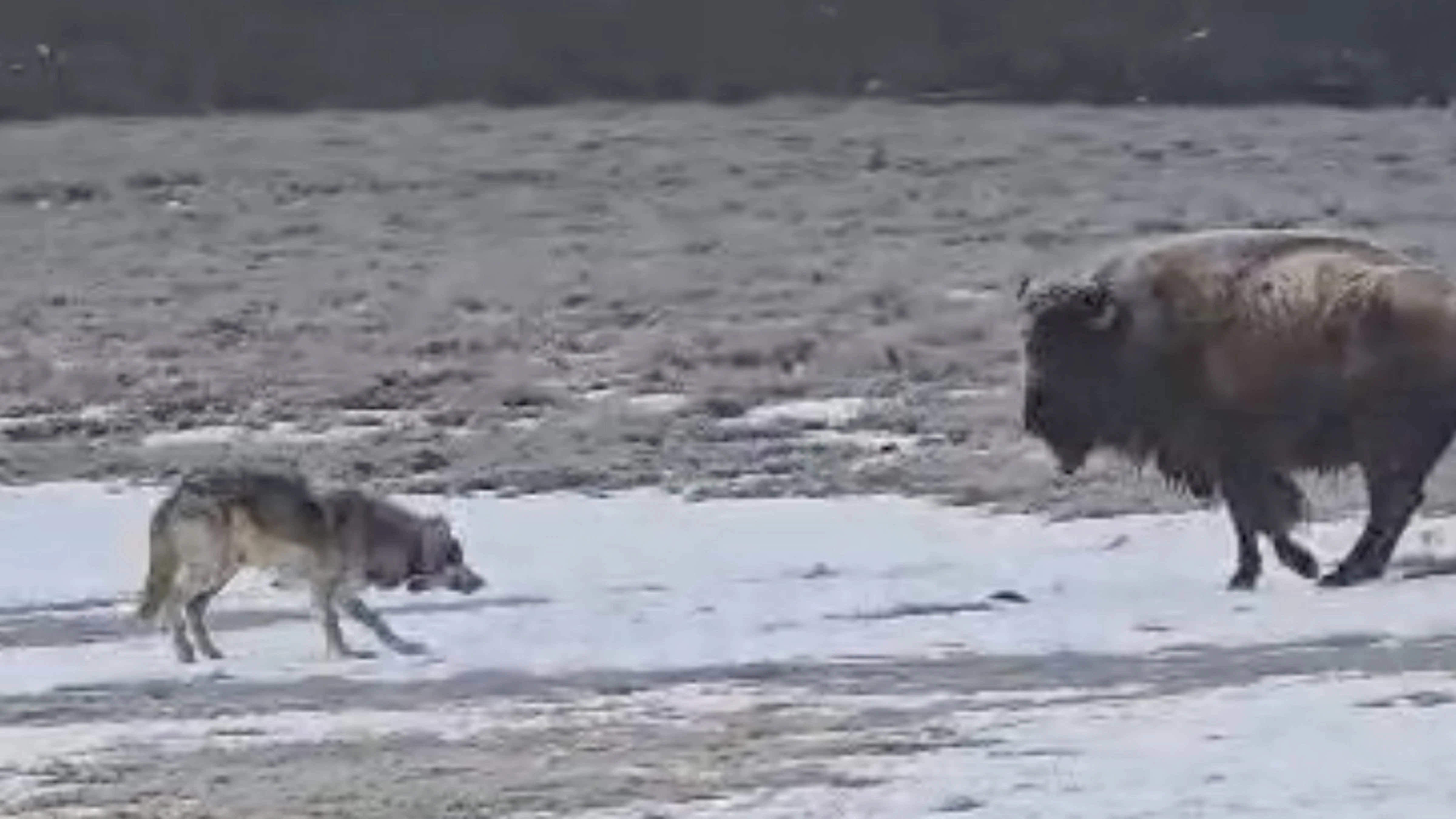
Yellowstone National Park visitors had a front-row seat to the stark reality of the contest between predator and prey early Sunday, when nine members of Wapiti wolf pack went after a herd of bison, wounding two.
Observers say the wolves left empty-handed later that day, and the injured bison were still up and moving.
However, that might not be the end of the story. Wolves, and coyotes, sometimes wound large, dangerous prey animals and then leave.
They’ll come back later and finish off the animals that have been weakened by blood loss, tendon damage and the like.
‘All Of The Sudden, We See The Wolves'
April Holm and her husband, Patrick, frequently visit Yellowstone and Grand Teton national parks, getting material for their Holm On The Range wildlife photography and video business.
She told Cowboy State Daily that they were in their pickup right about sunrise on Sunday when they spotted bison, apparently running from something.
“The bison were running down the road at us and I couldn’t make sense of what was happening. And all of the sudden we see the wolves, hot on their tails, and they ran right past our truck,” she said.
April Holm saw the wolves attack two animals, one that appeared to be a yearling calf, and another that appeared to be a young cow, or female bison.
Wolves Wound Bison
The calf got the worst of it, she said.
“It had visible wounds in the rump and hip area. There was hanging flesh and bison hide. It had bloody marks by its shoulders and bite marks on the inside of its thighs, blood on its tail,” she said.
The larger animal apparently suffered some bite marks around its hind quarters and side.
The couple and their children later saw the calf with its mother.
It has visible wounds in the rump and hip area. There’s hanging flesh and bison hide.
“The mother was just licking and licking” at the wounds, April said.
It was a rare opportunity to watch wolves hunting up close, she said.
“It was insane. I was shaking, could just not believe it,” she said.
The wolves lingered about, and even took a nap. April said the wolves left the area at about 6 p.m.
One Bold Wolf
Wildlife photographer Tammy Neufeld also witnessed the show. Her story was similar to the Holms’ depiction.
“The Wapitis had a small group of bison on a run, testing for a weak or injured one; I think it was a small nursery herd of primarily cows and older calves, no new calves yet in the group,” she told Cowboy State Daily.
After the main hunt was over, she saw one bold wolf still pressing its luck, but to no avail, Neufeld said.
“Three wolves chased and nipped at the bison across a river and road, then most of the wolves disappeared into the trees but one wolf kept toying with the bison, almost playfully. The bison weren't having it; they'll defend themselves and calves aggressively,” she said.
A wise old cow bison eventually led the herd away, Neufeld said.
“Eventually the wolves all went into the trees and the lead cow of the bison group waited, and then led the herd miles down the road. Most bison hunts by wolves are unsuccessful, as this one was, they're fairly careful of bison and the injuries they can cause,” she said.
Risk Now, Reward Later
At one point, the Holms captured dramatic video of two wolves attacking the larger bison, each on one side of their intended prey.
The wolves can be seen biting at the bison’s hindquarters and sides.
That tracks with the typical tactics wolves use while hunting large animals, biologist Robert Crabtree, told Cowboy State Daily.
Wolves take a risk every time they attack a large animal, he said.
“Elk can kick wolves and kill them,” said Crabtree, the founder, chief scientist and president of the Yellowstone Ecological Research Center.
Some wolves in Yellowstone have trended toward hunting bison more frequently. Because bison are so huge and powerful, Crabtree said, wolves might not try to kill them in one go.
They might run at a herd, and try to separate out young animals, or any adults that show signs of weakness.
Jumping and biting at the hindquarters, like the wolves in the video were doing, can further weaken them.
“If they can get bites and not get hit, they’ll try it. And if they get a hit on a tendon, it’ll stiffen up in a couple of days,” Crabtree said.
“If they can’t get it down right away, then they come back later, because the tendons are stiffening up and the bison can’t run,” he said.
Wild canine biologist Jon Way told Cowboy State Daily that the Wapiti wolves might not be finished with the bison.
The wolves hadn’t shown back up as of early Monday afternoon, but that doesn’t mean they left for good said Way, the founder and wildlife biologist for Eastern Coyote/Coywolf Research.
“Without a doubt, they could be working that herd,” he said.
“They could, over a period of hours, or even day, come back and check that area. They definitely won’t forget about it,” Way added.
Coyotes Use Similar Tactics
Crabtree said he knows of at least one case of coyotes taking a bison down in Yellowstone, using similar tactics.
The coyotes apparently cornered the bison “and chewed on it,” then came back to finish the bison off after it was severely weakened from blood loss, he said.
Mark Heinz can be reached at mark@cowboystatedaily.com.