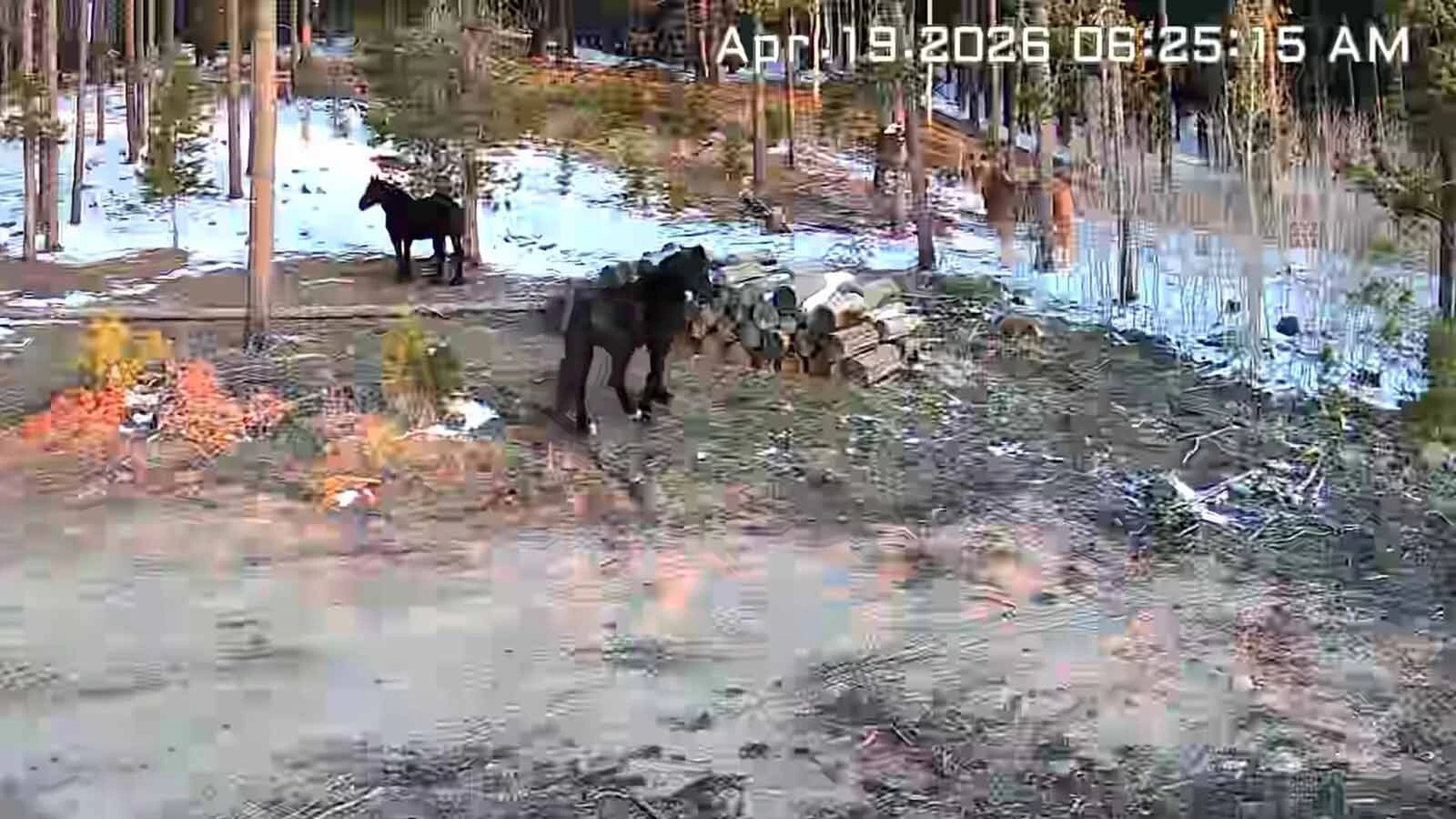
Nobody was more surprised Sunday to see the post offering a group of at least three “abandoned horses, free to good home” than Morris Carter.
That’s because the horses belong to him, and they’re not abandoned, he told Cowboy State Daily on Monday.
“Just tell them to go home and they’ll start heading back,” Carter said, adding that his horses are on a longstanding grazing arrangement on the mountain tied to land his family has worked for generations.
“Where my horses run used to belong to my grandmother and my mother and aunts and uncles and they have since sold that off, but all the landowners work with me on those horses up there,” Carter said.
Carter said he leases pastures in the area and has maintained informal working relationships with surrounding landowners for years. He also said the horses had recently moved slightly out of their usual area because of weather and wildlife pressure.
Also, the horses had shifted locations to avoid a mountain lion that had been active in the area.
When they showed up on Mark Husman’s property, he took to a local Casper Mountain Facebook group, offering the horses to whoever wanted to come get them.
“Abandoned Horses, Free to good home! No visible brands, you haul …” Husman wrote.
It Was Sarcasm
After the flurry of responses that ranged from wondering if he was joking to calling him a horse thief, Husman clarified he was just trying to rectify a recurring problem.
“I just want to clarify that my earlier comment was sarcasm born out of frustration, not a serious attempt to give away horses that aren't mine,” he told Cowboy State Daily.
“This has happened more than once over the last couple of months, and my only real concern is for the safety and well-being of the horses,” he added.
Husman said the horses have appeared on his property multiple times in recent months and that his concern stemmed from repeated incidents rather than a single event.
He said his frustration was directed at the ongoing situation rather than any intent to misrepresent ownership of the animals.
Carter said he has never had issues like this with his before and believes the situation escalated because he was briefly unable to reach the area during a storm.
“They [the horses] seldom go out, and I'm up there all the time,” he said. “I’ve got water tanks, salt blocks, and I check on them all the time.
“Just through the last storm I wasn't able to get up there, but they just barely were across the road from where they normally were.”
Carter said he attempted to contact Husman after seeing the Facebook post but was unable to reach him directly. He said he was able to retrieve the horses shortly after becoming aware of the situation.
“He’s Just Not Being Neighborly”
"He's just not being neighborly," Casper Mountain landowner Brion Peterson told Cowboy State Daily. "I've dealt with Morris and his horses for years.”
Peterson acknowledged that mountain lions and bears are on the mountain, but says attacks on horses are a rarity.
"He's just taking advantage of the situation and looking for free grass," he said. "The mountain has changed over the last generations.
"I have 40 acres with over 1,000 feet of elevation gain on my property, and I don't want it closed to wildlife," he continued in reference to the rules for keeping livestock from entering his property.
Wyoming is a fence-out state for cattle, meaning landowners are responsible for building their own fences to prevent livestock like horses from entering their property.
“It’s sad to see all of these idiots moving on the mountain,” Linda Siek wrote on the original post, adding that the horses would be welcome on her property for their “good fertilizer!”
Another commenter, Brandon McNamara, referenced Wyoming livestock tradition, writing: “Can’t just do that. … Horse Theft is still a Hanging Offense in the Books.”
Lost In Translation
The episode highlights a familiar tension in rural and mountain-adjacent communities, where livestock can cross property boundaries and expectations about communication vary widely between neighbors.
While some residents emphasized direct communication and local knowledge, others pointed to legal and liability concerns surrounding livestock ownership and property damage.
Though the immediate situation appears to have been resolved, the reaction brings to light broader cultural and practical tensions that often emerge in Wyoming’s rural-urban interface — particularly in areas like Casper Mountain, where long-established grazing practices intersect with increasing residential development.
On one side, some emphasize traditional norms of neighbor-to-neighbor communication and informal livestock management, suggesting the situation could have been resolved with a phone call or message to the owner.
On the other, people raised concerns about responsibility, property damage, and the legal implications of offering animals that do not belong to the property owner.
The conversation also reflects longstanding Western themes around livestock ownership, fencing expectations, and the responsibilities of landowners when animals cross property lines — issues that continue to evolve as more non-agricultural residents move into rural areas.
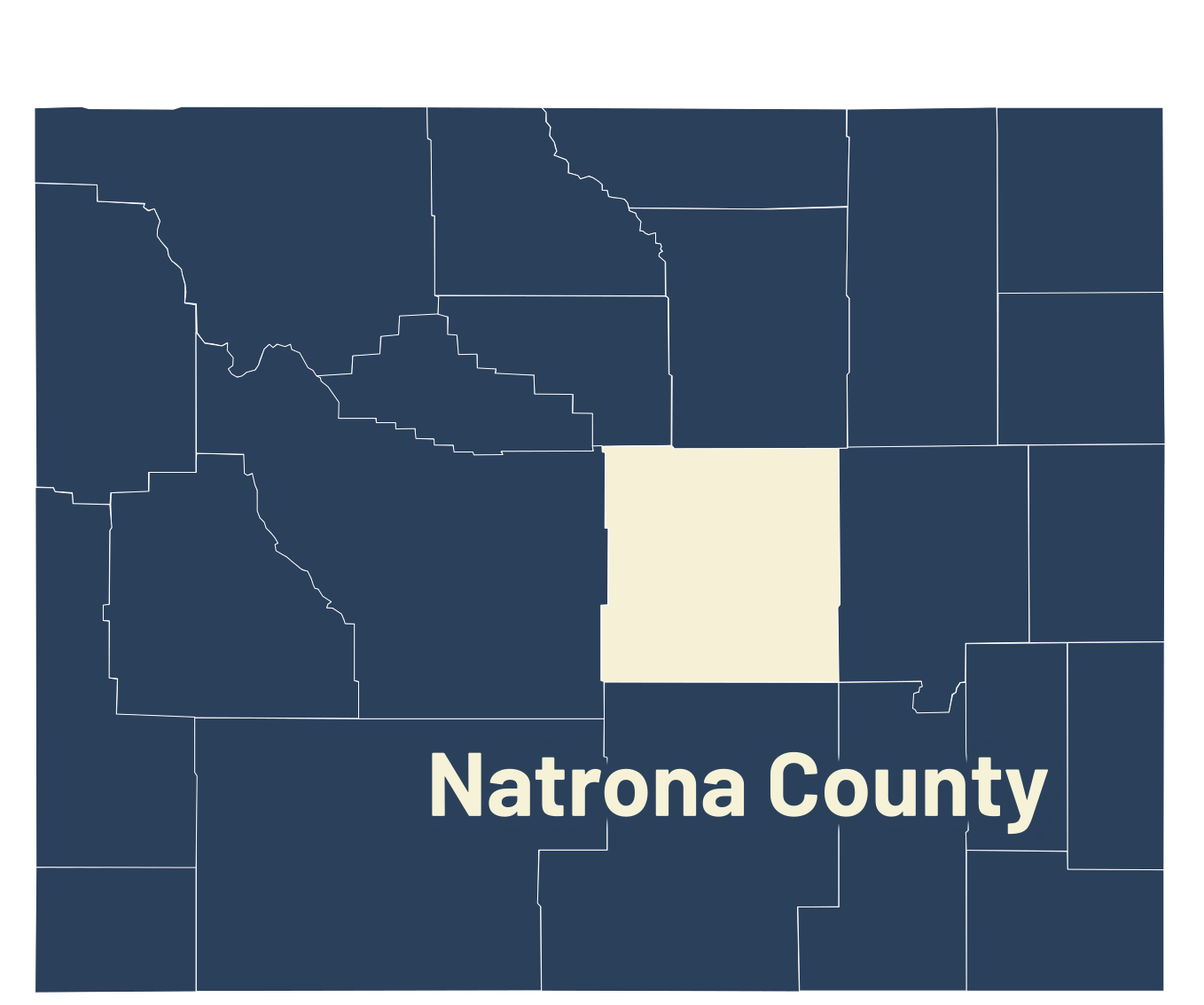
Natrona County Sheriff's Office Public Information Officer Kiera Hett told Cowboy State Daily the agency did not receive any calls related to the Casper Mountain horses.
She pointed to Wyoming law governing livestock and property disputes, specifically referencing Wyoming Statute Title 11, which outlines regulations related to agriculture, livestock ownership, and estray animals.
Wyoming law allows for structured processes when livestock is found on private property, typically involving notification procedures and coordination with owners or brand inspectors rather than informal redistribution or public rehoming.
For Carter, the resolution was ultimately simple: retrieve the horses and move forward.
For Husman, the incident became a reminder of how quickly local frustrations can escalate once they enter the online sphere, and how easily intent can be lost in translation.
“My only real concern is for the safety and well-being of the horses,” he told Cowboy State Daily.
Kolby Fedore can be reached at kolby@cowboystatedaily.com.