When new Fort Caspar Museum Supervisor Steve Gainer saw what was sitting at the edge of the museum’s land he knew he had to act.
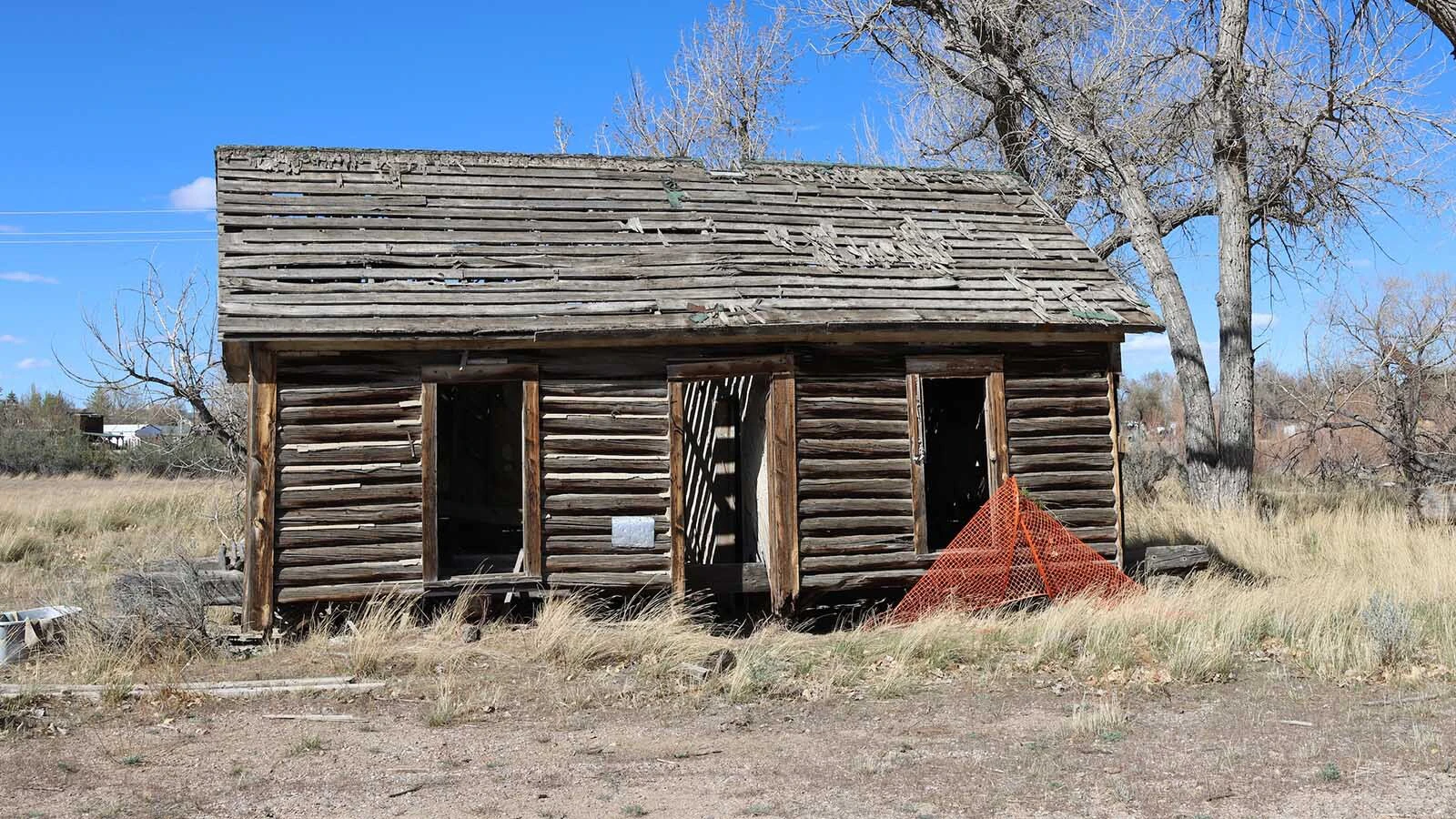
The 138-year-old cabin remains intact, its wooden frame, still perched on large timbers used to move it to its location 57 years ago.
It’s in poor shape and may struggle to survive another more serious Wyoming winter than the historically mild one just completed.
But it’s more than just another old cabin.
“It is the oldest residence in Casper,” Gainer said. “It originally sat at Midwest and Elm, and it was built for the railroad construction boss as the Fremont, Elkorn and Missouri Valley Railroad was extended to this point for its Wyoming Territory terminus.”
A Casper Star-Tribune story published Sunday, June 28, 1964, includes a photo of the cabin sitting at its original location with a white picket fence around it.
The cutline underneath the photo says it was “hoped that this little log cabin can be moved to the fairgrounds beside the first church, as pioneer buildings of historical interest.”
Another article in the newspaper five years later on Sunday, April 13, 1969, shows it at the Fort Caspar location and about to be lowered onto the spot where it now sits.
The story also says that the cabin’s owner at the time was happy to donate it to the “Fort Caspar Commission, which has land and funds available for locating the cabin and restoring it.”
That restoration never happened.
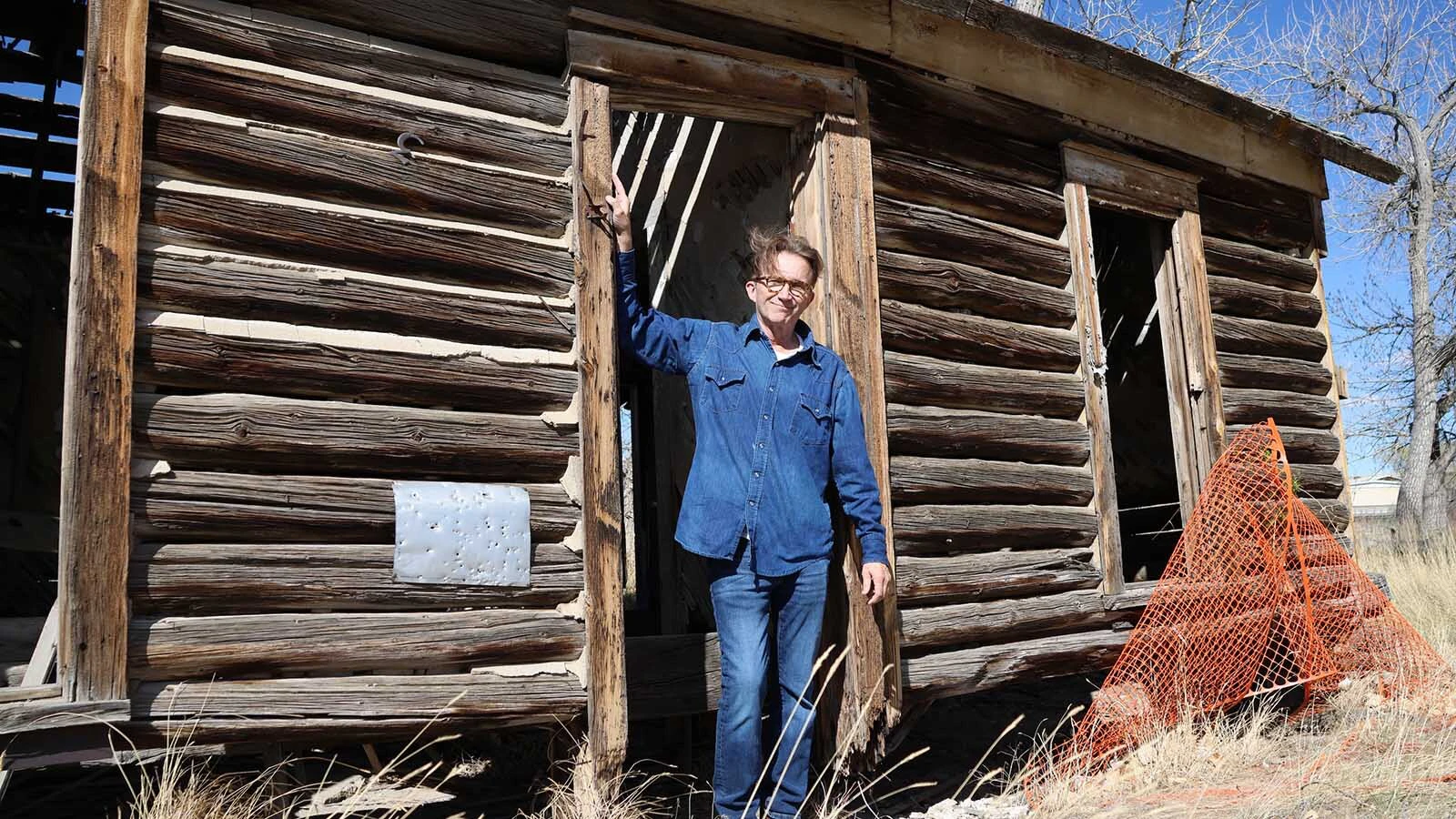
Fort Caspar Supervisor Steve Gainer said the cabin was almost “calling” to him to be renovated. (Dale Killingbeck, Cowboy State Daily) 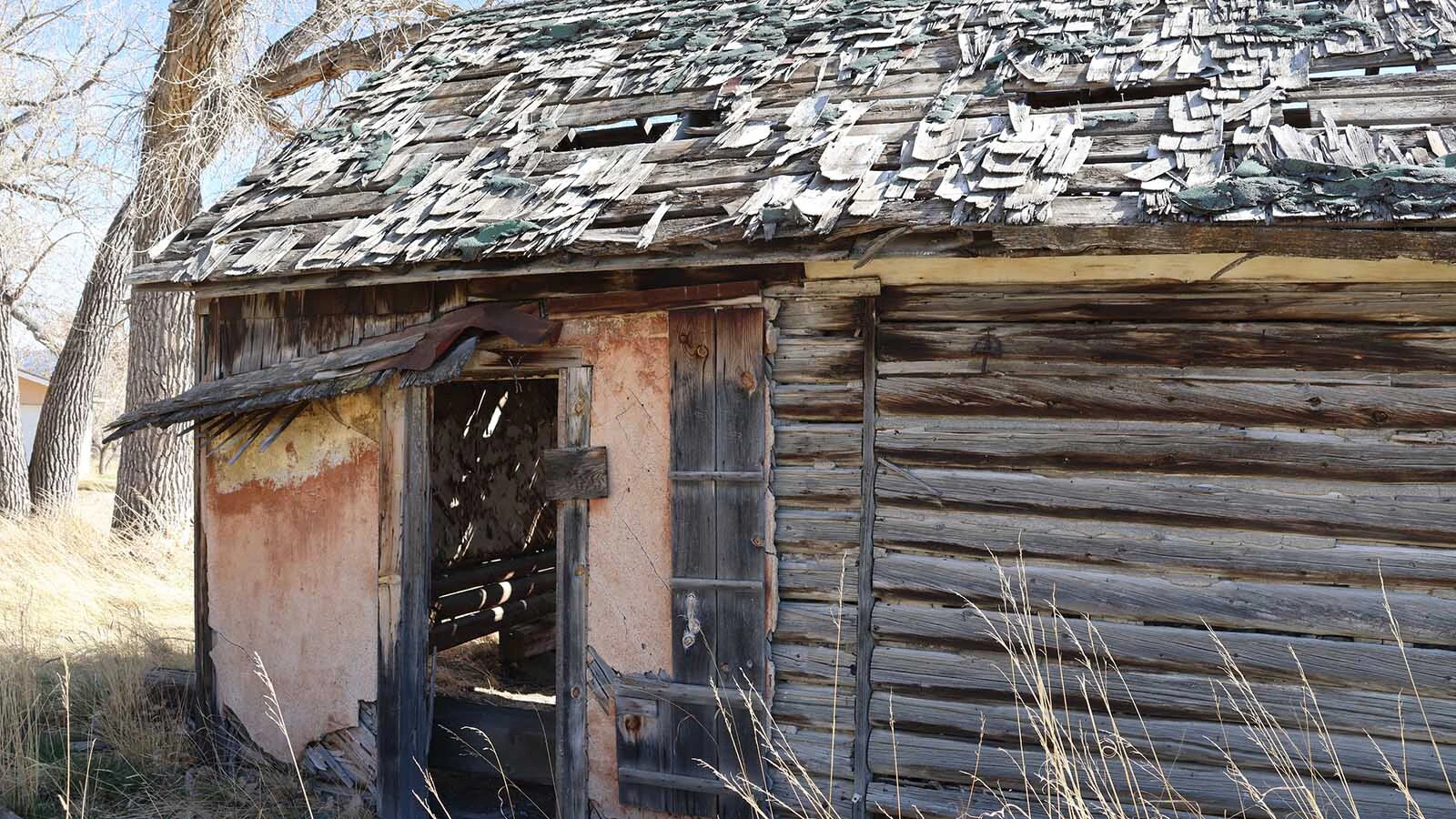
The 1888 cabin had a lean-to attached to it at its former location in downtown Casper. (Dale Killingbeck, Cowboy State Daily) 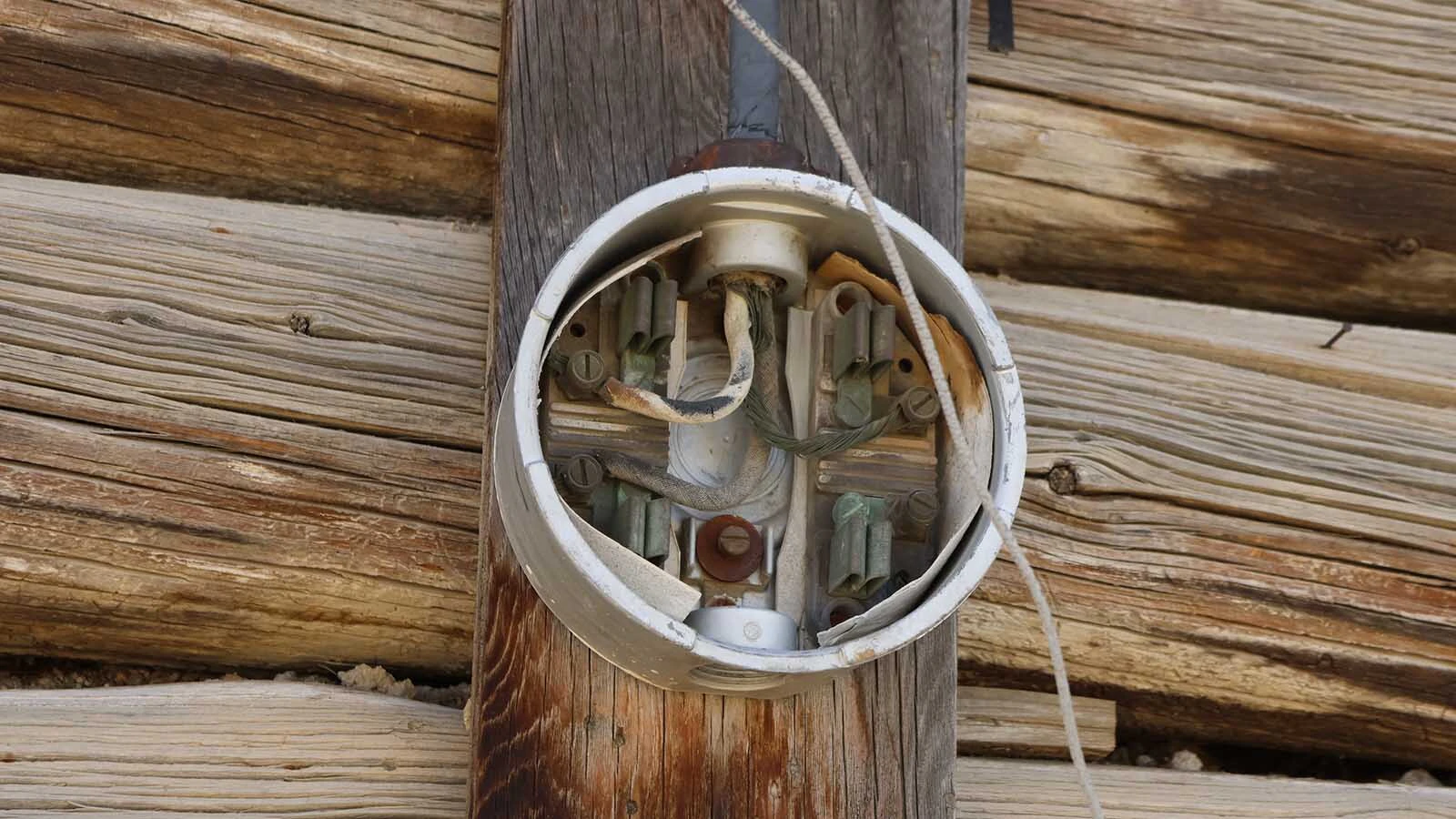
The electrical connection to the 1888 cabin when it was upgraded for electricity back in the early decades of the past century. (Dale Killingbeck, Cowboy State Daily) 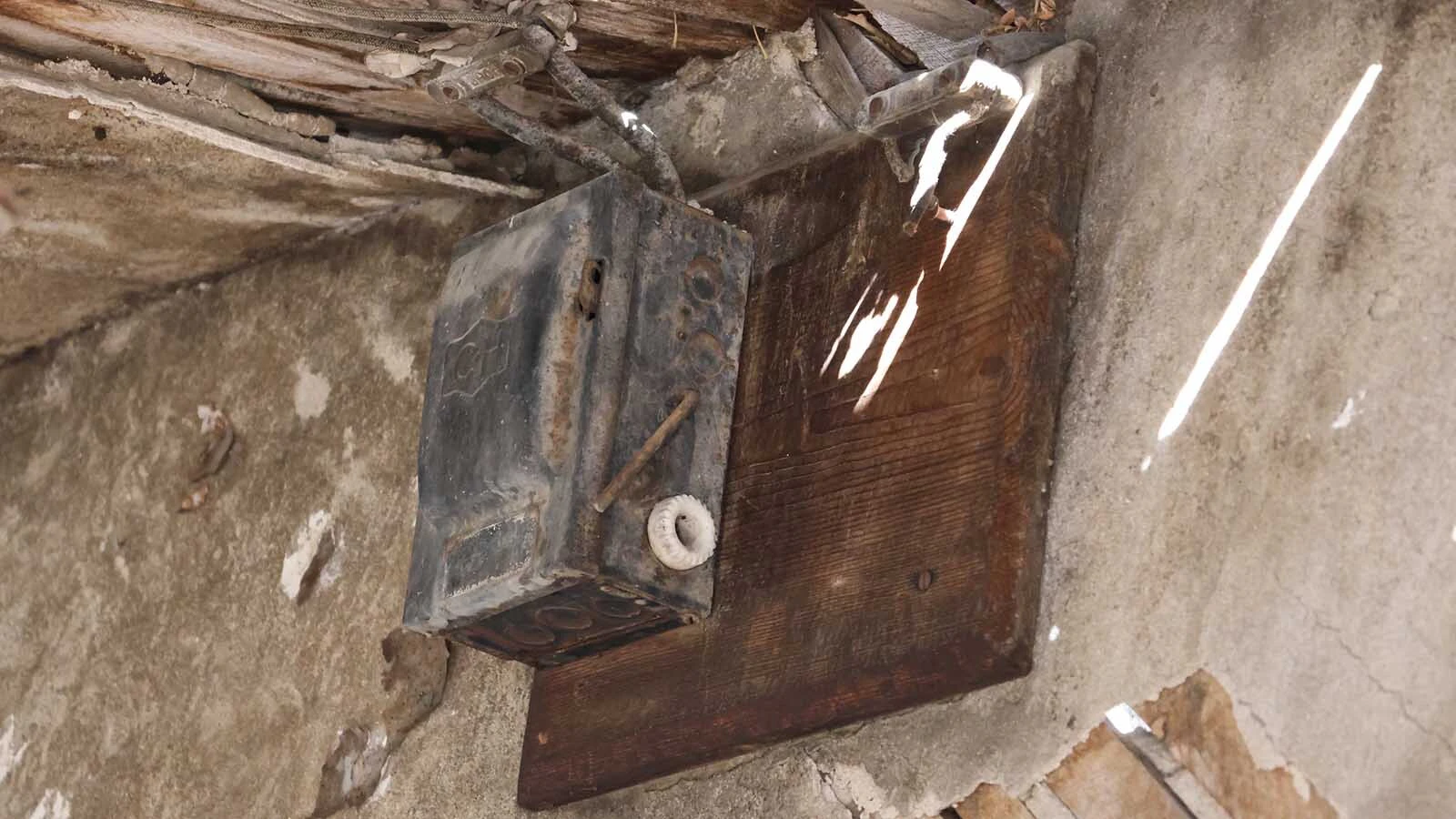
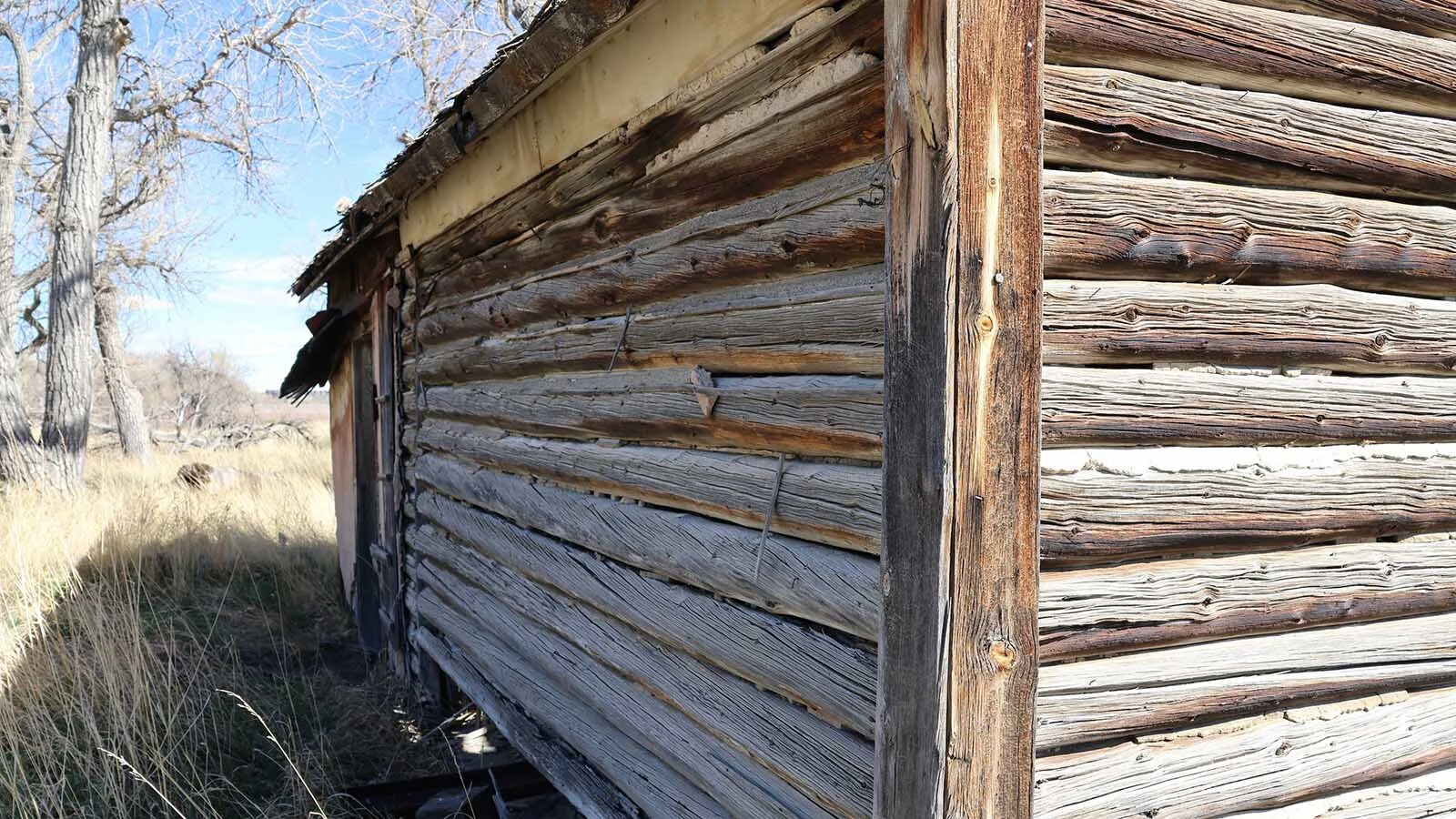
The electrical box inside the cabin and original wiring are still there. (Dale Killingbeck, Cowboy State Daily)
‘I Have To Do Something'
Three months into his job, Gainer does not know why it’s been 57 years since without restoring the historic home, but he hopes he can see it happen.
After arriving from California to assume his new role, the cabin drew Gainer’s attention and he “knew” he had to act.
He believes it has great value as an educational piece of history for the region’s students and just for the fact it was the city’s first residence.
“As a historian, an archivist, and a person who values historical items greatly, seeing it sit back there, the first thing that came to mind was, ‘I have to do something about it,’” he said.
New Location Needed
The two-room structure that once boasted a chimney and a lean-to next to it sat over a basement at its original location in Casper.
It now has deteriorated greatly, but not beyond repair, Gainer said.
His vision is to the see the structure restored and sitting at a downtown location.
The right way to move the structure would be to dismantle it and number the beams and wooden boards that make up the cabin, then put it back together and restore it at the new location, Gainer said.
“It’s still there. It’s not in a state where it can’t be helped,” Gainer said. “I can see the value of it going to a location where it can be restored.
"There is enough here to get it back into a tourist attraction, at the very least for school children to see it.”
Gainer believes the building would be a great way for area students and others to see how life was like in 1888 when the structure was erected without indoor plumbing, but a step up from living in a tent or covered wagon.
The logs and beams that make up the structure likely came from the Casper Mountain region and the cement or filler between the logs is almost gone now.
A photo of the building from 1969 in the Casper Star-Tribune shows a sturdy structure with roof intact and painted trim on the doorway.
As it sits now, the cabin’s roof is nearly gone and much of the wood collapsed inside. An old electrical box from the early decades of the past century sits near the top of one wall.
The chimney is gone.
Casper’s first cabin was made of logs likely cut from trees near Casper Mountain or on the mountain. (Dale Killingbeck, Cowboy State Daily) 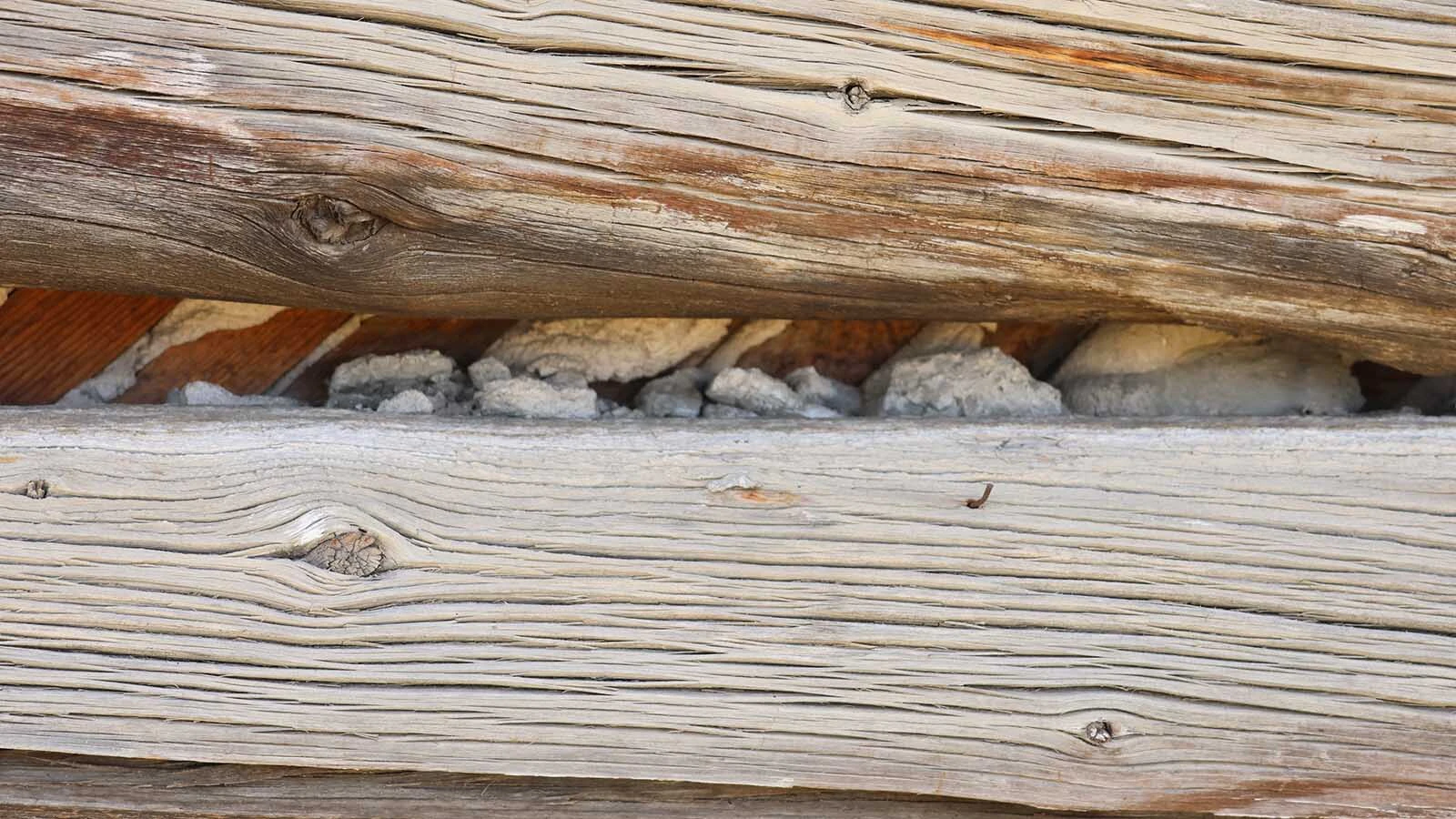
The filler used to seal the logs is mostly gone of the cabin now. (Dale Killingbeck, Cowboy State Daily) 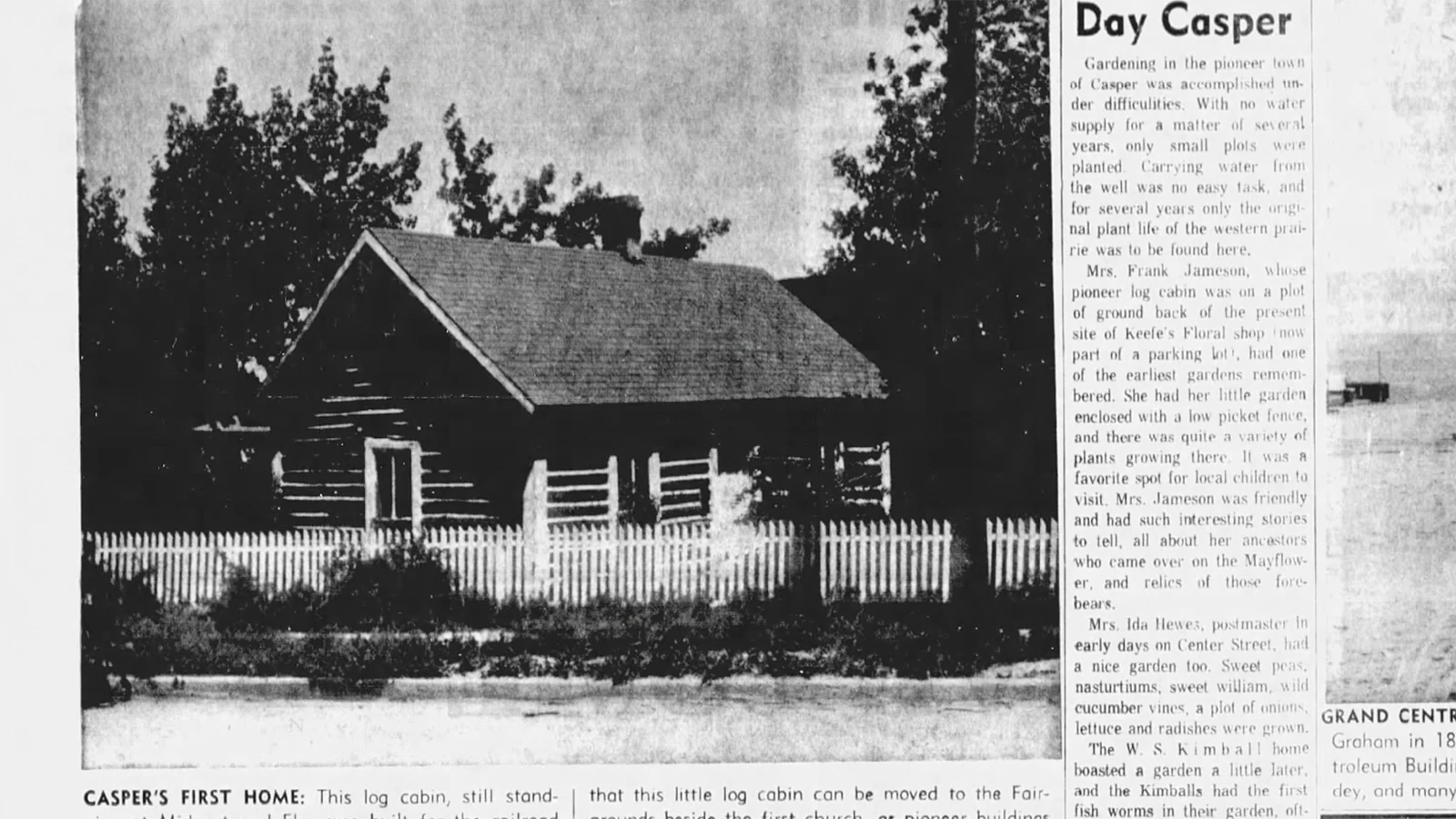
The 1888 cabin is shown as its original location with a white picket fence around it in 1964. (Dale Killingbeck, Cowboy State Daily) 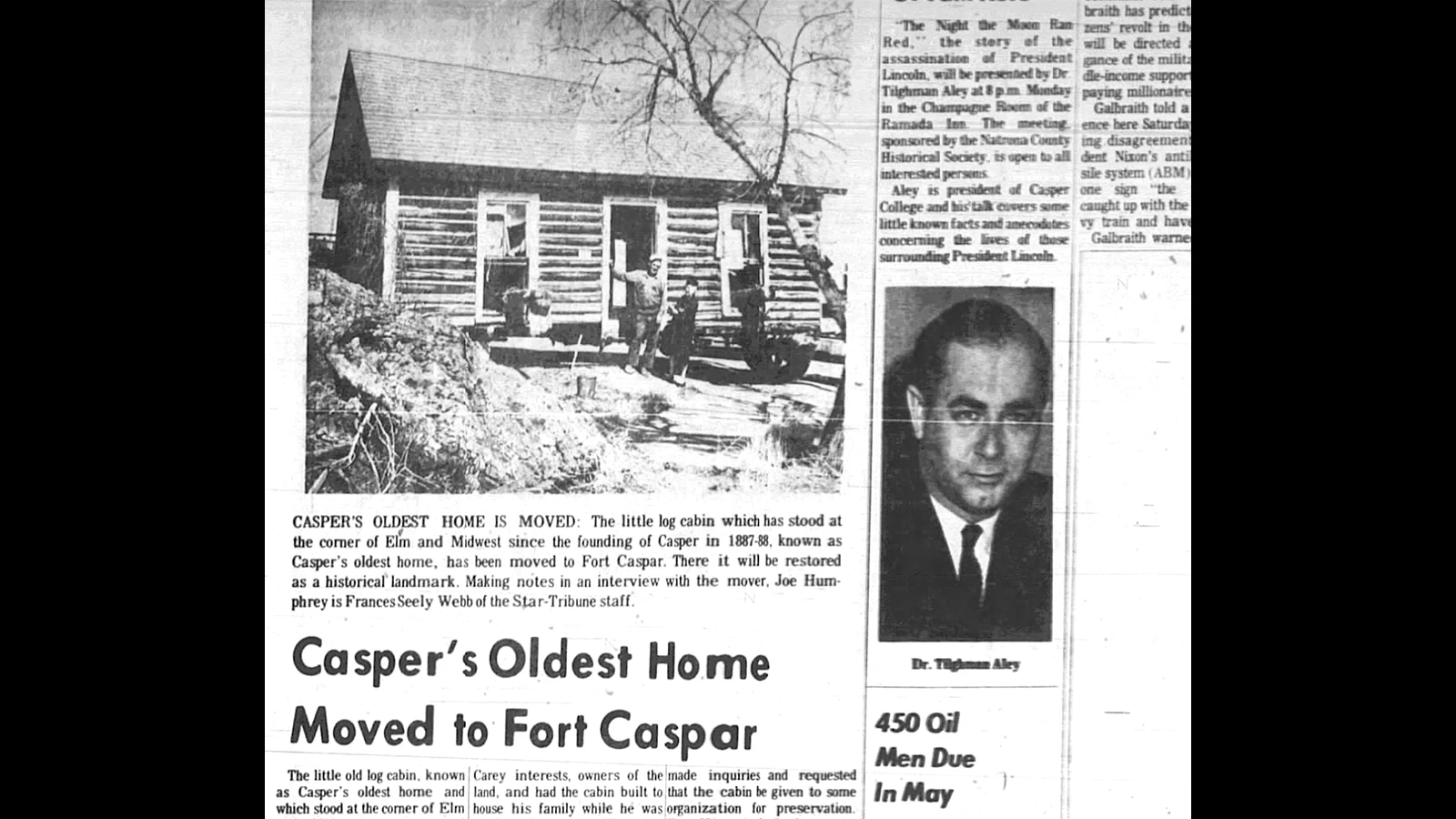
The 1888 cabin was moved to Fort Caspar in 1969 with plans for refurbishing. (Dale Killingbeck, Cowboy State Daily) 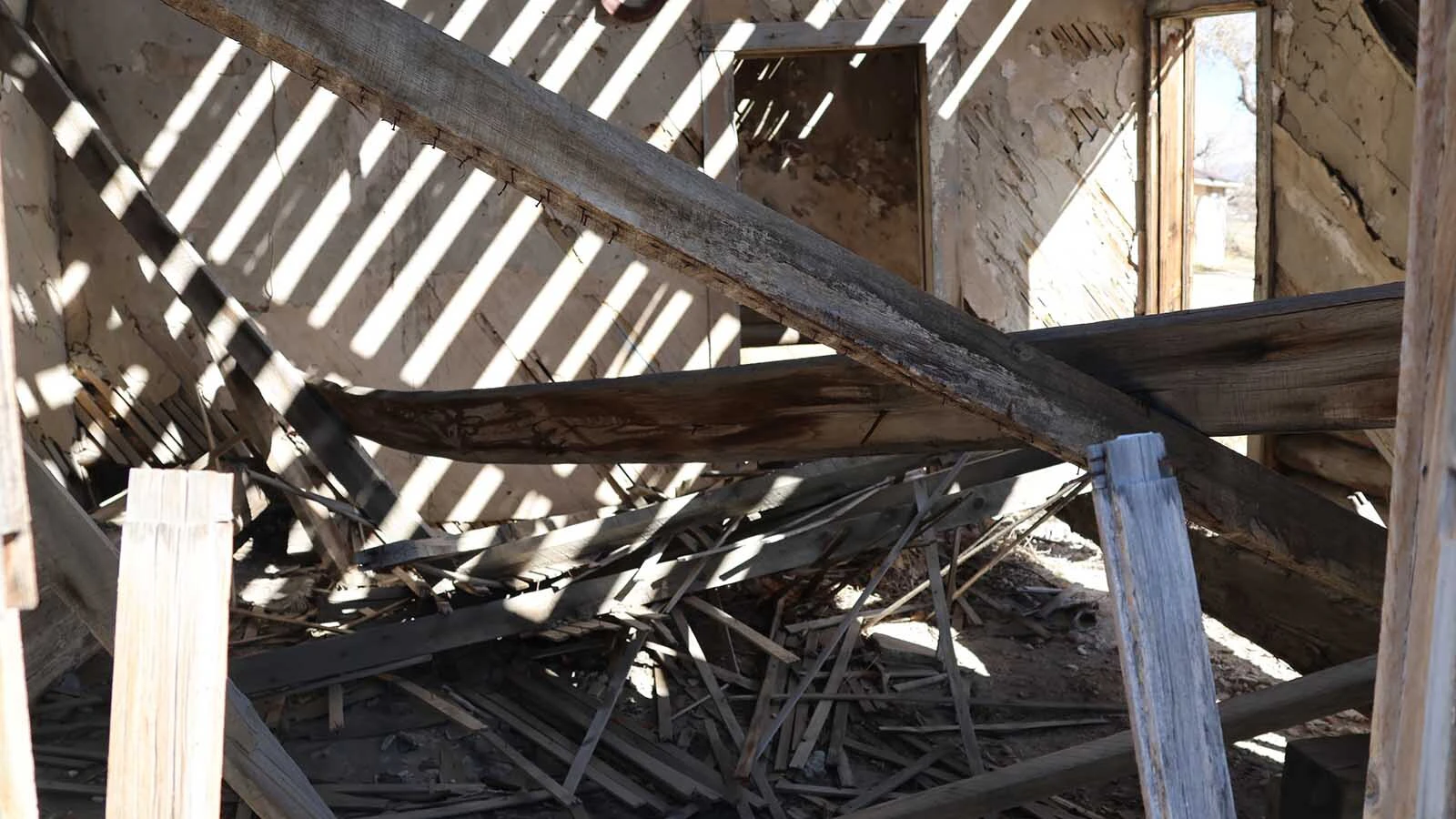
Inside the cabin the wood is falling the ceiling and from the walls. (Dale Killingbeck, Cowboy State Daily)
Builder And Owner
News reports about its original owner and builder Henry Sproull depict a man who became well known in Casper.
Apparently after his railroad job, he started a freight business using horses and wagons to haul supplies across the region.
Sproull and his wife arrived in Casper from Douglas and then around 1901 moved to Thermopolis, where he bought a ranch.
“Henry Sproull, an old-time resident of Casper, but who now owns a ranch near Thermopolis, was in Casper this week, having brought in a load of wool from Lost Cabin,” the Natrona County Tribune reported on June 4, 1903.
“Mr. Sproull says that he and his wife intend to make their Casper friends a visit as soon as they can conveniently leave their ranch for a month or six weeks,” the report says.
Sproull died of a heart attack in July 1908 and was buried in Casper after a ceremony at the Masonic Lodge.
A history of the home published in the Casper Star-Tribune on Aug. 8, 1977, by local historian Frances Seely Webb states that Sproull bought the property for the cabin from Edward T. David, who was the agent for the Carey brothers, pioneer ranchers and businessmen.
The cabin had many owners, including Frank H. Sawyer, a county clerk; James Kidd, brother of pioneer rancher David Kidd; and in its later years someone named Fleta Crum, who arrived from Nebraska via covered wagon.
In her second marriage, she had a son named Colin Potts, and when she died, her daughter Fleta Crum Fisher inherited the property.
But Potts lived in it until his death in 1967.
“For some time organizations in Casper had been interested in acquiring the log cabin as a historical landmark and made inquiries and requested that the cabin be given to some organization for preservation,” the Casper Star-Tribune reported on April 12, 1969. “The Historical Society, the Pioneer Association and Fort Caspar Commission were all interested in this project, as well as many citizens.”
Prior to the cabin’s move to Fort Caspar, old furniture and a piano were sold or given away.
Under the structure in the cellar, those involved in the move found a composition book from Fleta Crum dated 1907.
‘Calling Out’
Now 57 years after the move, Gainer hopes to see the project across the finish line.
“It was almost like it was calling out to me to be saved,” he said.
Once a new location for the building can be established, a fundraiser for the restoration effort could be put together, Gainer said.
His goal is to have the building off the museum’s property and at a final location for restoration by the end of the summer.
Gainer is confident that once others learn about the project it will not be difficult to find enough people to step up and help see the historic structure standing again on a new foundation.
“I can’t believe it survived and I attribute it to God and to the little cabin’s will that it survived and made it all these years,” he said. “It’s still sitting there waiting to be rescued.”
Dale Killingbeck can be reached at dale@cowboystatedaily.com.