A hardworking 13-year-old coal miner recalled hearing a voice as he shoveled coal alongside his dad into a car deep in Red Canyon Mine No. 5 outside Almy, Wyoming.
It was March 20, 1895.
The voice didn’t come from his father. Quitting time was approaching, and although their coal car was not yet full, the message seemed urgent.
“I heard a voice say, ‘Go home,’” William Moroni Purdy wrote later in life about surviving one of the deadliest coal mine disasters in Wyoming history.
“I stopped shoveling and looked around to see who had spoken,” he wrote. "No one was there but Father, and he was busy shoveling, and I knew he had not heard the voice.
"I began to think I was imagining things and started again to shovel coal. Then a feeling of heavy depression settled upon me.”
What he did next would save both his and his father’s lives. After they got out, an explosion killed 62 of their coworkers.
Meanwhile, mine foreman James Bruce stood outside the entrance with a couple of other men wrapping up the day shift and watched a dog fight.
His own 13-year-old son was in a wagon headed from their home to pick him up.
Underground, the night shift had made their descent and some of the day shift crew were still getting in cars to take the ride out of the darkness, looking forward to supper.
Digging coal for the Rocky Mountain Coal & Iron Co. in the Bear River Valley north of Evanston was the main means of making a living for the 4,000 or so people who lived there.
In addition to Red Canyon Mine No. 5, there were several other mines in the rich coal seams under the mountains north of Evanston.
There were also known dangers.
Previous Incidents
Almy had already experienced a blast in mine No. 2 in 1881 that killed 38. Another in 1886 claimed 13 lives.
Even so, Mine No. 5 had a good safety record and had been engineered with ventilation shafts and a huge ventilation fan to try and mitigate issues posed by methane gas and coal dust.
But moments after a young Purdy walked out of the mine and toward the community, he wrote that the heaviness he felt inside exploded into reality.
Newspapers blared it in huge banner headlines.
“Instant Death Came, Red Canyon Miners Were Destroyed in a Moment’s Time,” The Cheyenne Daily Leader reported on March 22, 1895.
The Salt Lake Herald was even more dramatic.
“Horrors Pile Up. One Woe Doth Tread Upon Another,” the newspaper reported on its front page on March 22, 1895. “Sixty Dead In A Wyoming Mine, Nearly All Of The Dead Leave Large Families.”
The final tally of the dead was 62. There were fathers and sons, brothers, and in-laws — all gone.
‘Suddenly Had A Feeling’
Purdy in his account of the disaster wrote that for several years, he was “reluctant” to share his version of what happened because it “was of a supernatural nature and to me seems too sacred to expose to the ridicule of thoughtless people.”
His account is that he told his father, John, after hearing the voice that they needed to leave the mine.
His father responded that they had just gotten a new car to fill with coal and the one they were working on was not yet full. Then, his father agreed to go.
“He later told me that he suddenly had a feeling to listen to me and do as I asked,” Purdy wrote.
As soon as they walked out of the entrance, his father headed toward the blacksmith shop and Purdy headed home.
Then the ground below shook and young Purdy struggled to stay on his feet as he looked back at the mine opening about 250 feet away.
“A bluish flame shot out of the shaft, reaching hundreds of feet into the air,” he wrote. “It was accompanied by a terrific blast which seemed to shake the very earth.”
Purdy wrote that timbers and debris blew out through the air, a log pierced a railroad car and another hit a boy he knew in the neck, killing him.
“Screaming women and children came running from their homes toward me, for I was directly in their path as they rushed to the mine,” Purdy wrote. “I was on my back when my sister Millicent arrived on the scene and made her way through the women to me.
"She was overjoyed to see me but in despair that father was not with me. … We found him safe at the mine.”
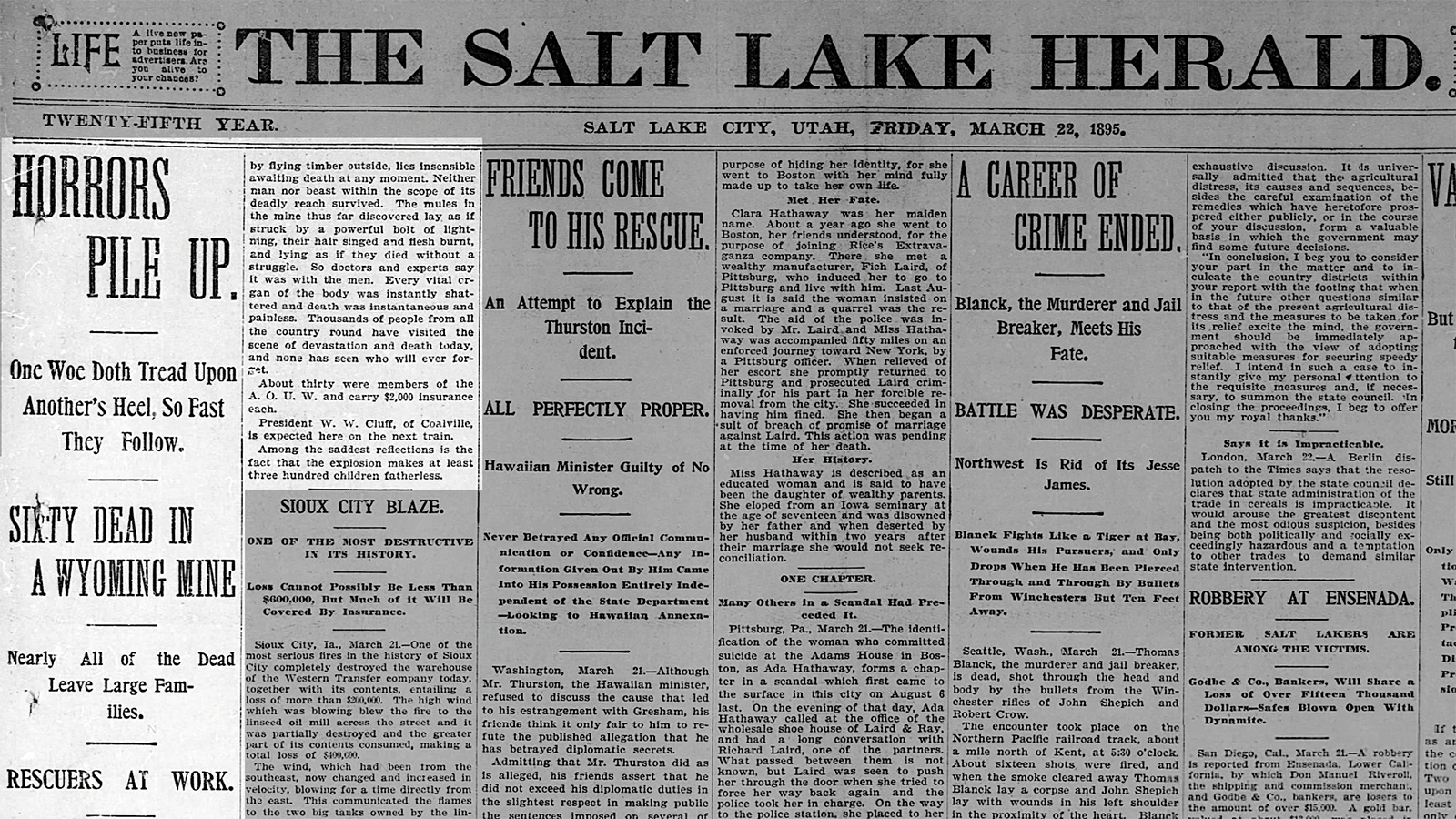
The Salt Lake Herald ran a big headline about the disaster. More than 30 of the men killed in the mine were Mormons. (Courtesy Newspapers.org) 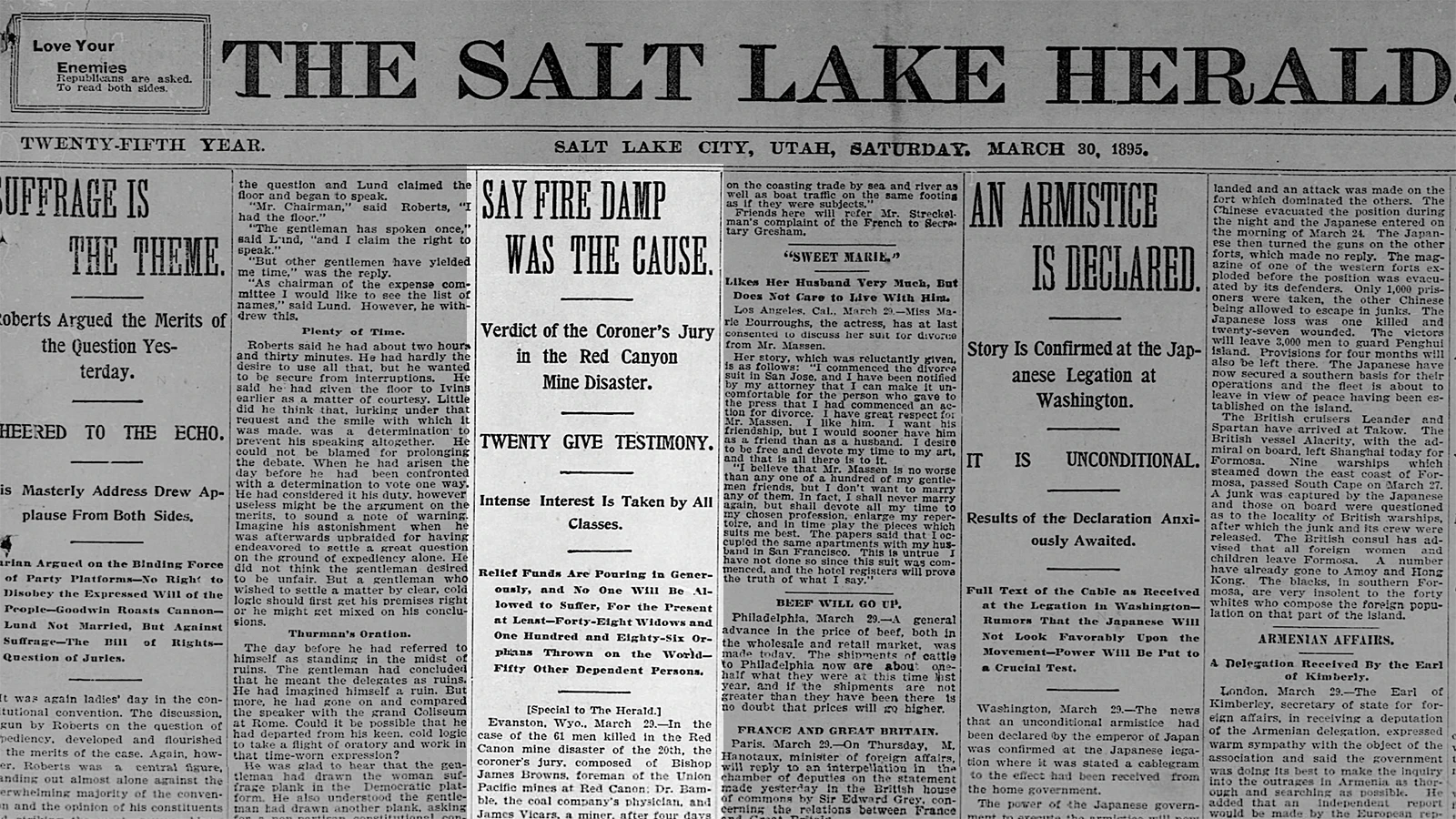
The Salt Lake Tribune reported on the coroner’s jury findings about the cause of the blast on March 30, 1895. (Courtesy Newspapers.com) 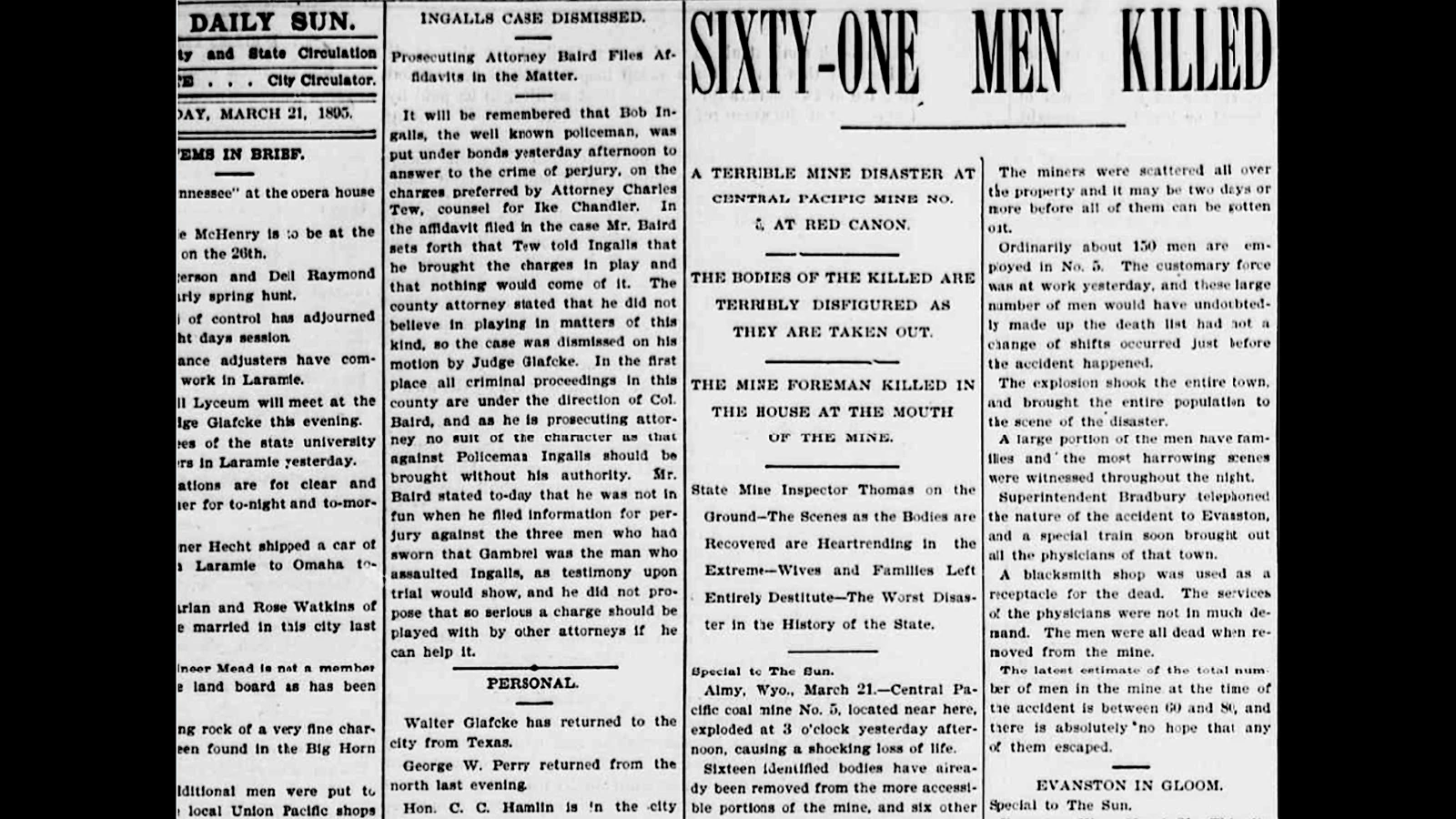
The Cheyenne Daily Sun on March 21 was among the first state papers to carry the mine disaster story. (Courtesy Wyomingnewspapers.org)
Search Efforts
The Cheyenne Daily Leader on March 21, 1895, reported that state mine inspector David G. Thomas and Morgan Griffith, a Union Pacific inspector, arrived in Green River on their way to the mine.
The wire to the newspaper stated that 60 men were in the mine, “possibly more,” and that search and rescue efforts had already begun.
“The exploring party report from the seventh level that 15 dead men are being brought out. It is now very doubtful if any will be found alive as the levels extend to No. 13,” the paper reported. “Thomas reports mine foreman James Bruce among the dead. He was one of the most capable men in the state of Wyoming.”
Thomas told reporters that the mine was considered the safest and best ventilated in the state.
He speculated the blast was caused by a miner using a large charge of black powder to throw down a large amount of coal. He said a heavy charge could set fire to dust and cause a dust explosion.
Utah newspapers reported on the number of Mormon miners with large families that were claimed in the destruction.
Another 13-Year-Old
The family of Bruce, the foreman, was one of them.
Bruce was born in Scotland, served as a Uinta County commissioner, and was well respected in the community. He was a father of 12.
The blast sent timbers flying and destroyed structures outside the mine, including the powerhouse, fan house and other outside buildings.
A family history of his youngest son, Marshall Lorenzo Bruce on familysearch.org, says that he was 13 years old when he was going to pick up his father at the mine with a horse and buggy as the mine exploded.
His father had been outside the mine watching a dog fight, the history written by Colleen Cook Bruce states.
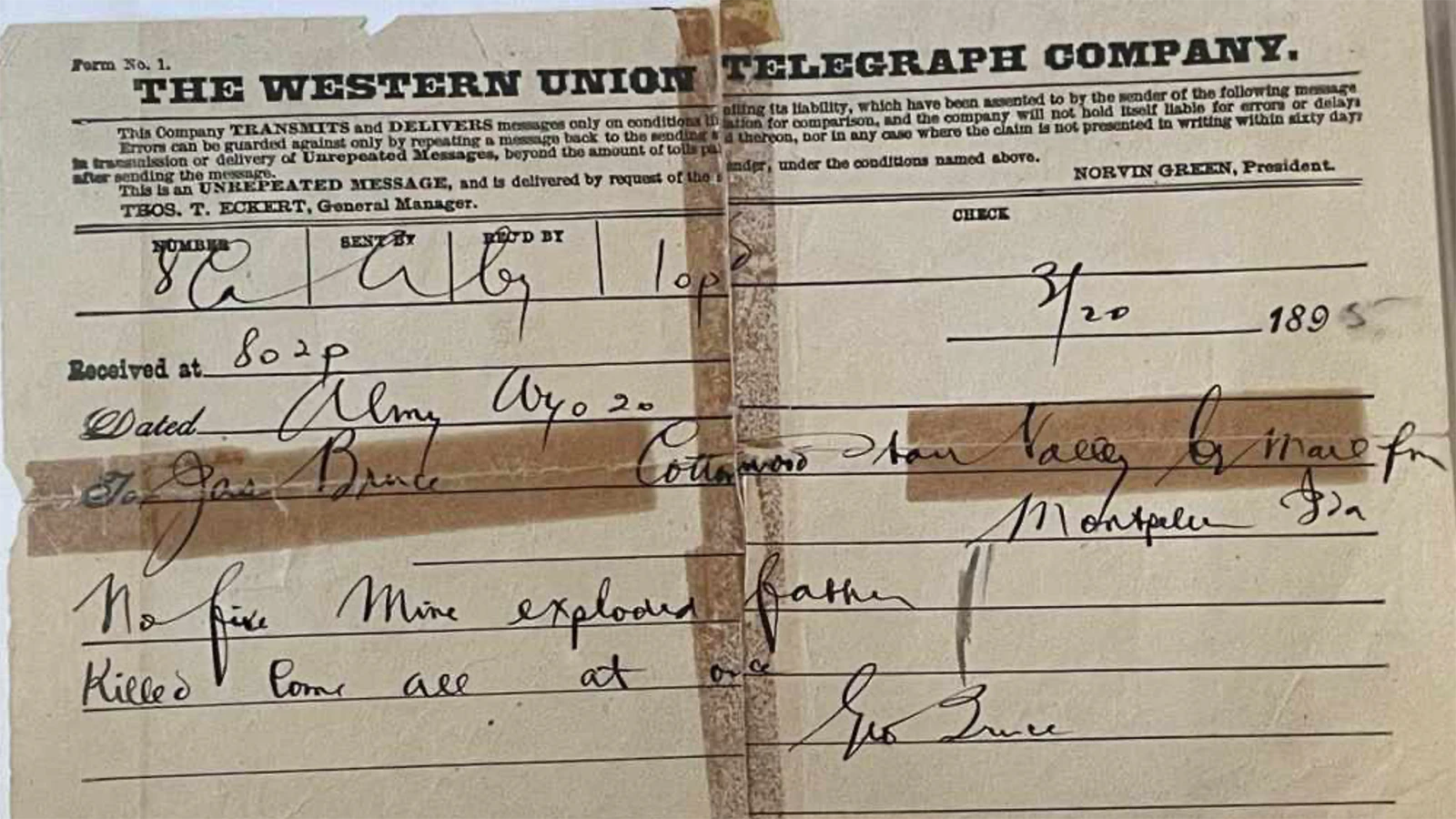
A Western Union telegram without any punctuation from one of Bruce’s sons, George Bruce, to another member of the family was likely repeated many times over for the 61 others who lost their lives.
“Mine explosion father killed come at once,” the telegram reads.
The Cheyenne Daily Leader on Sept. 6, 1892, reported that Bruce was named a trustee of the Mammoth Co., a mining company that had capital stock of $2,300.
It reported the company was formed to work a mining claim in Rich County, Utah, and that the principal place of business was Almy, Wyoming.
According to another family biography about Bruce and his wife, Isabelle, by great-grnddaughter Verna Bruce, Isabelle also spent time in the mines during her life leading mules in and out hauling loads of coal.
James Bruce arrived in Almy in 1871 from Scotland with his brothers and dug a cave to live in before building a cabin. He brought his family to the United States a few years later.
Head Missing
An account of the blast in the Deseret News on March 22 wrote that in addition to Bruce, the head carpenter, head engineer, and two others outside the mine were dead.
One body’s head had been ripped off; another had a portion of his head gone.
Recovery of remains inside the mine took several days because of its crumbling infrastructure inside and gas that lingered in the mine.
The Salt Lake Herald reported on March 22 that not enough coffins were available in Evanston to handle the number of the dead and an order was sent to Salt Lake City, where 16 were shipped out.
On March 23, Wyoming Gov. William Richards made a plea to the state’s residents to donate money to help destitute families who no longer had a bread winner in the family.
“No calamity of such an appalling character has ever before befallen the people of this state,” he said. “Those engaged in the mines where it occurred were industrious and deserving citizens.
"The winter has been hard and long, and their work has not been steady or remunerative.”
Funeral services for the miners killed in the explosion were conducted on March 24. There were 32 victims who were Mormons.
In addition to the local bishop, the Salt Lake City church sent the church’s historian, one of its 12 Apostles, and two of its seven presidents to conduct the service.
There was not enough room in the faith’s Evanston church for all the coffins and mourners.
The same day services were conducted in Almy at the No. 4 schoolhouse for the Finnish Presbyterians, as well as other services in other venues for the Methodists, Catholics, and Episcopalians, The Salt Lake Herald reported on March 25, 1895.
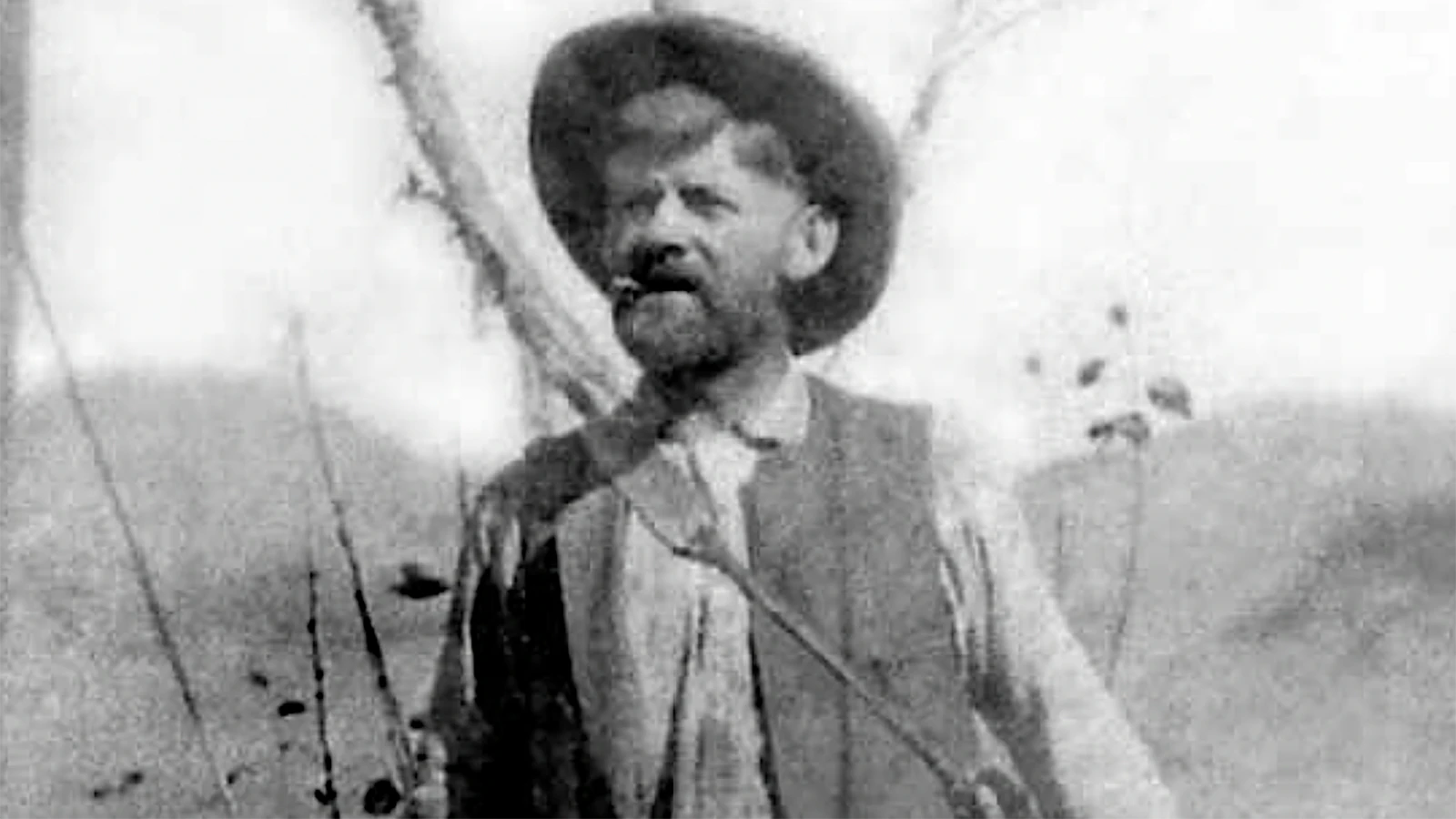
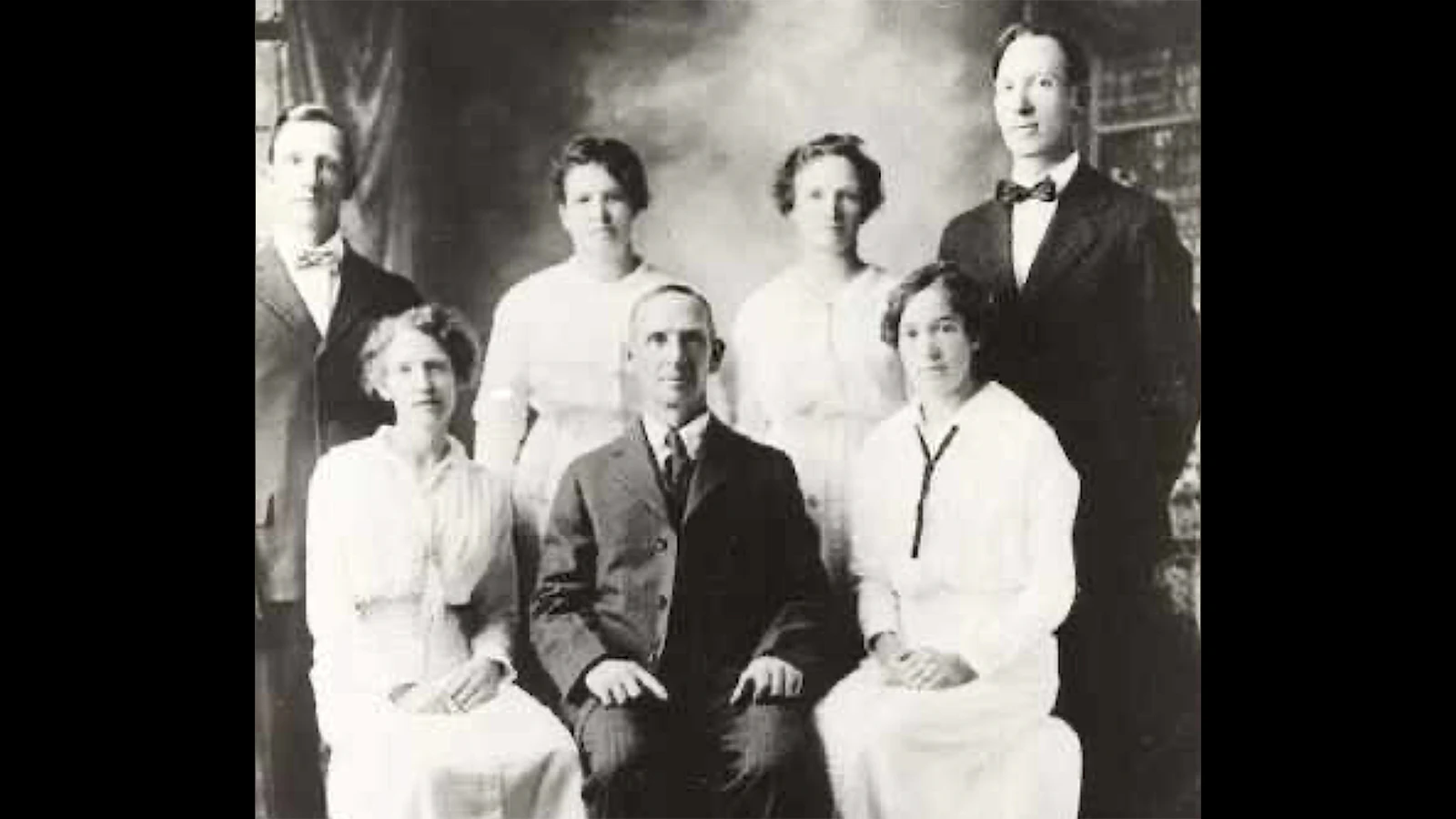
James Bruce was the foreman at Red Canyon Mine No. 5 and lost his life in the blast. (Courtesy FamilySearch.org) 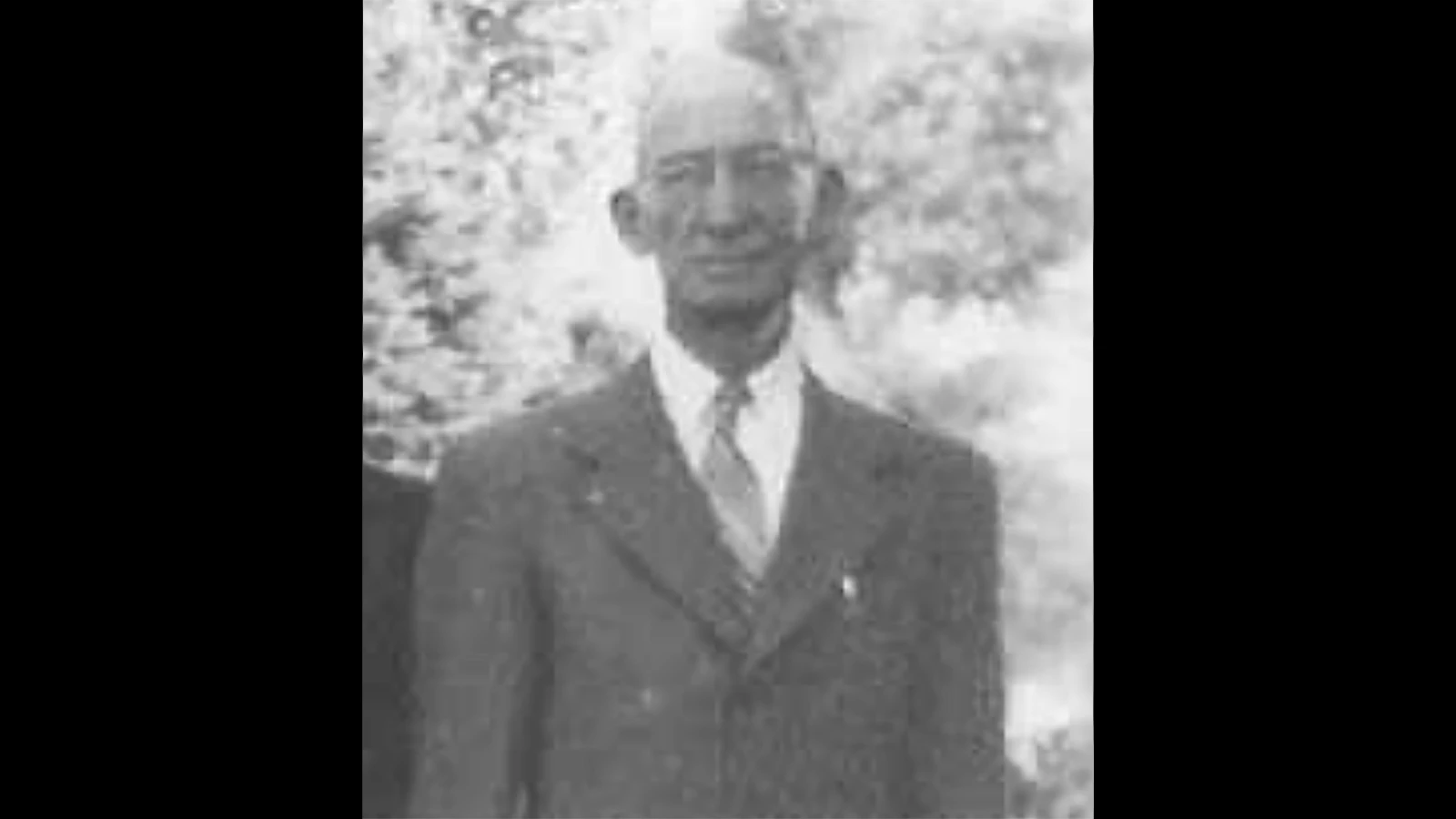
As a young man working in the coal mine heard a voice telling him to “go home.” He did not write about it until later in his life. (Courtesy FamilySearch.org) 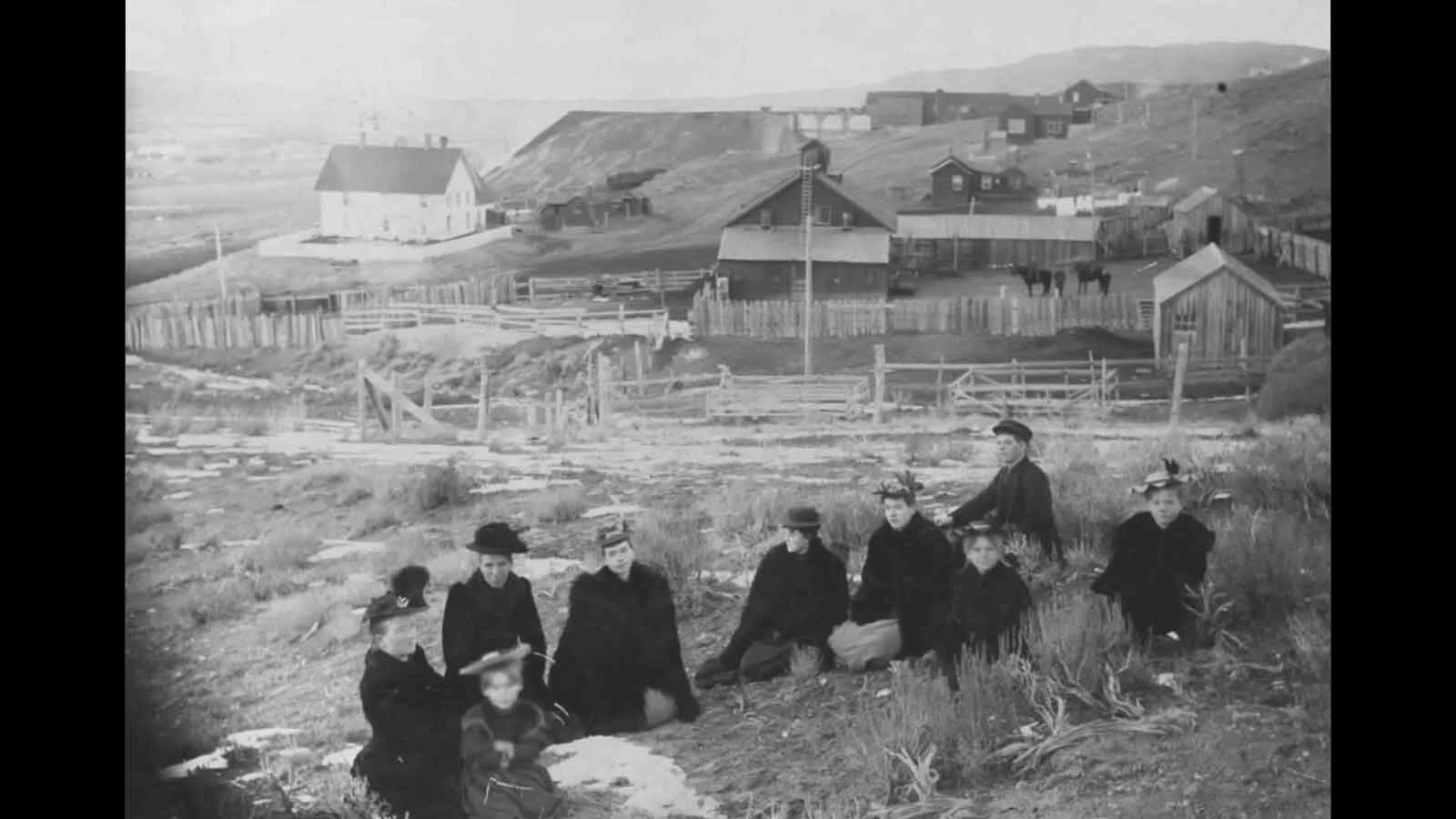
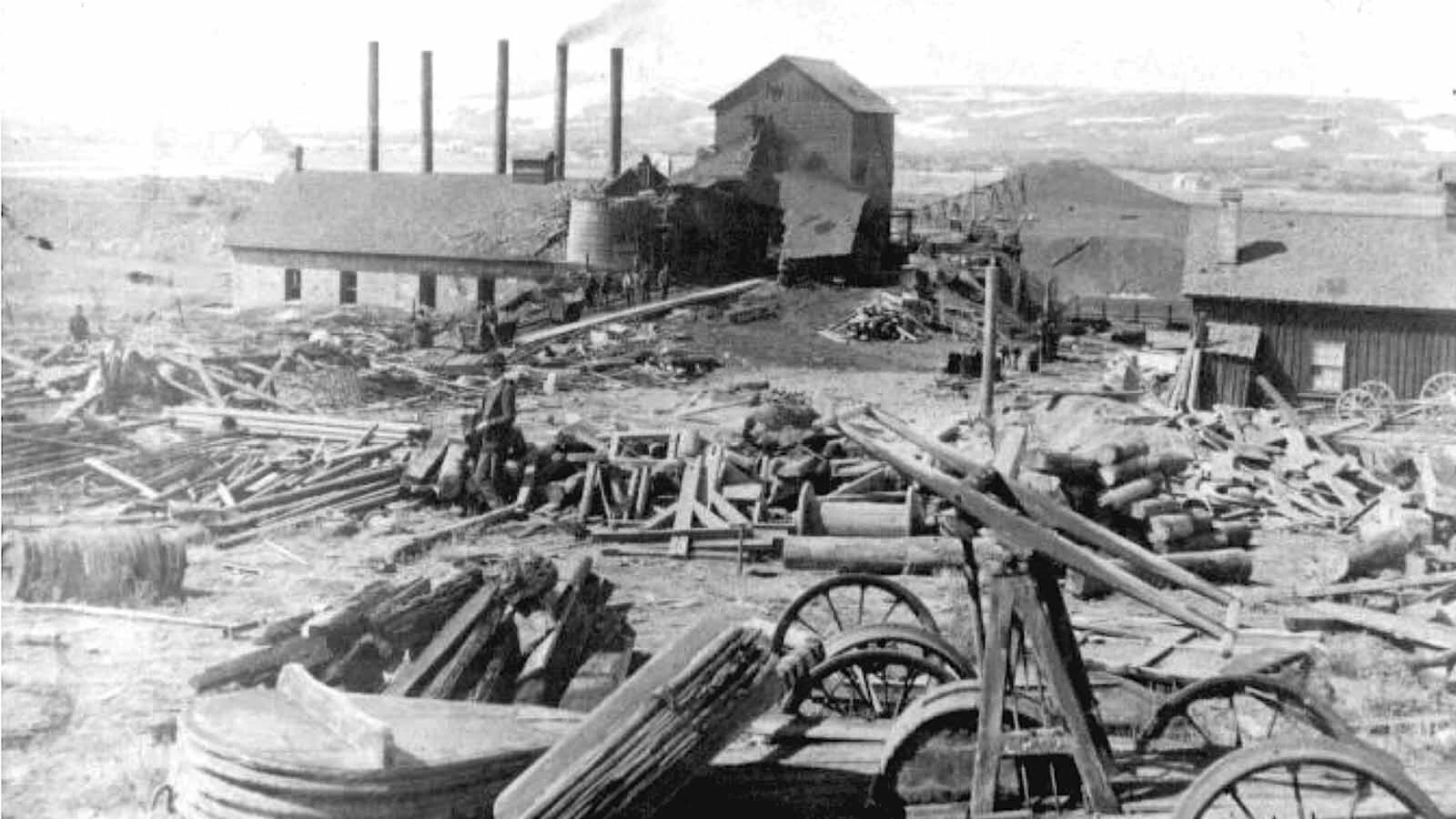
A scene from the Red Canyon Mine No. 5 area before the mine explosion. Women rushed to the mine after the blast. (Courtesy Uinta County Museum)
Coroner’s Jury
On March 29, the coroner’s jury that included James Brown, foreman of the Union Pacific mines at Red Canyon; a Dr. Bamble, the coal company’s physician; and James Vicars, a miner; found that the explosion apparently originated from “fire damp and possibly augmented by coal dust.”
The jury interviewed more than 20 people as part of its investigation.
William Graham, the foreman of the No. 6 mine, lost his second-oldest son William in the blast.
He led initial efforts to rescue men from the mine.
He then resigned his position with speculation that he would sue the company for the death of his son, The Salt Lake Herald reported on March 30, 1895.
The paper reported that the blast left 48 widows, 186 orphans, and 50 others who depended on the miners.
“Beeman & Company, the storekeepers at Red Canyon, have allowed additional credit to the bereaved families, amounting in all to $830,” The Coalville Times of Coalville, Utah, reported on April 5, 1895. “Contributions are coming in and the destitute are being cared for.”
Both Purdy and his father went to back to work in another mine after being forced to re-enter Mine No. 5 to retrieve the tools they left behind.
Bruce’s youngest son, Marshall, who witnessed the blast, also later in life headed into the mines to work.
The last of the Almy mines closed in 1945.
Dale Killingbeck can be reached at dale@cowboystatedaily.com.