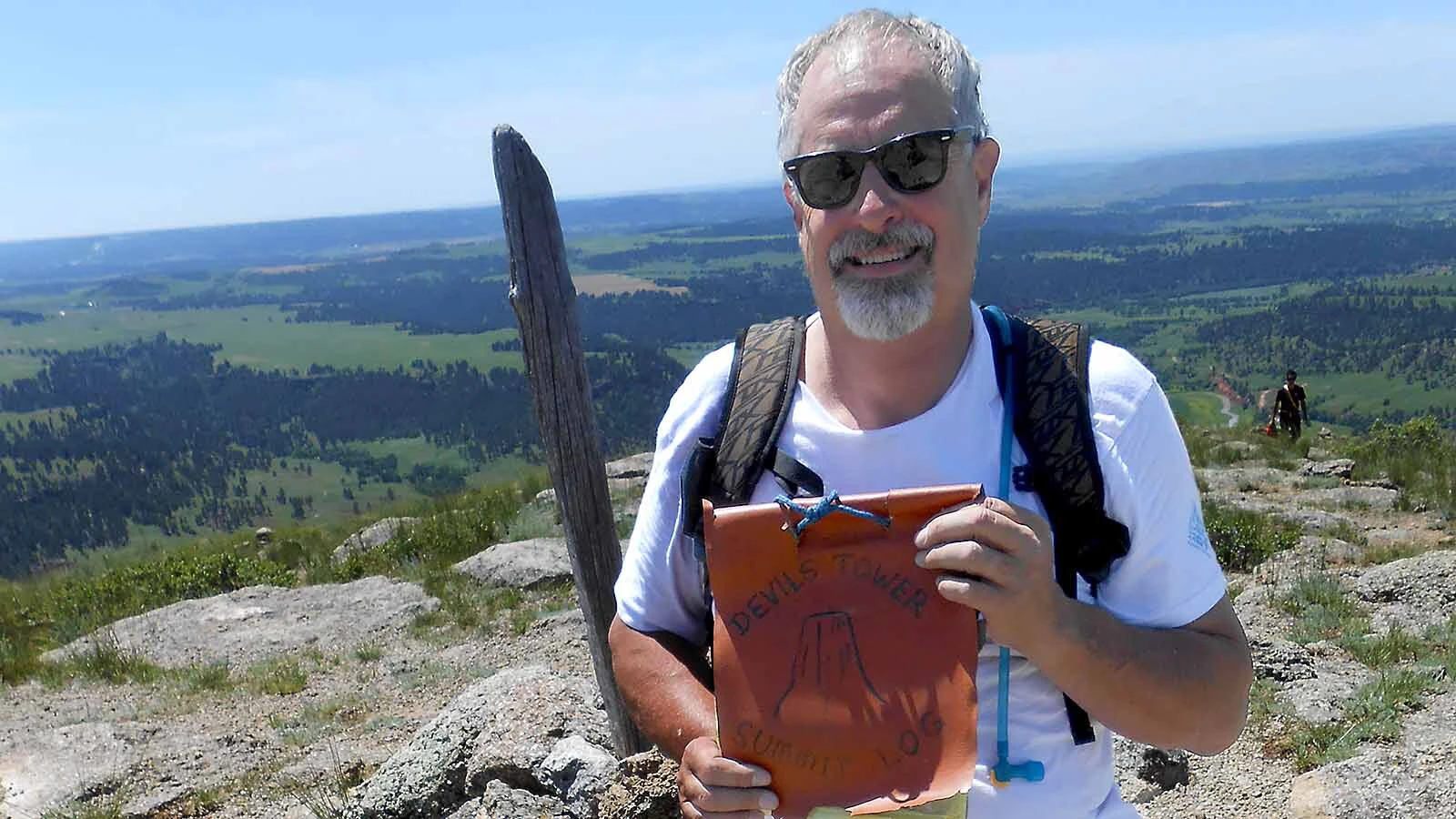
By appearances, Bruce Brown’s life was going strong.
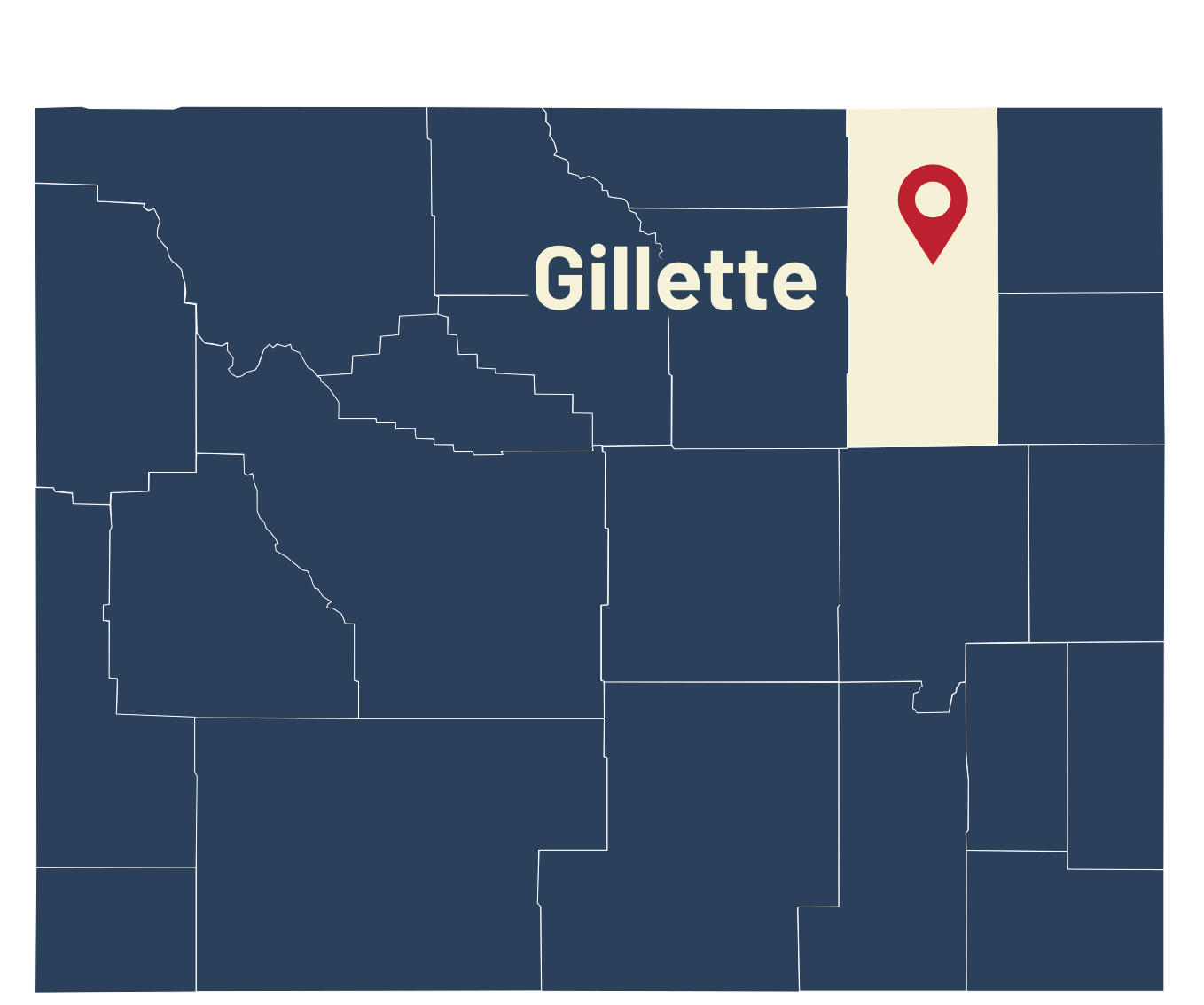
He had a successful accounting practice, an adoring family, and a close-knit group of friends at the Lakeside Lounge in Gillette, which he co-owns.
Yet he was quietly crumbling from unmanaged depression and losing his will to live.
During especially dark moments in the 2010s, he’d find himself idling on the shoulder of the highway on the commute to his home in Hulett so emotionally distraught he couldn’t drive.
“There's times when I'd be so down that I just start crying, and I'd have to pull to the side of the road,” he told Cowboy State Daily. “Anxiety and depression starts building and building, and after so long, you’re thinking, 'How much more of this can I take?'”
There’d been no catastrophe, no decisive loss. His distress, rather, had simply accumulated slowly over time, as though he’d been walking through a decade-long fog before looking down to realize he was already soaked.
“I thought, 'Man, I’ve got a great life, great career. I’ve got wonderful daughters. My wife is wonderful. Why should I feel like this?'” he said.
That perceived lack of an “excuse” made him feel even more helpless; he was stigmatizing himself.
Before long, he wondered if relief might only come by way of the .40-caliber Ruger he kept in the cab of his truck.
Then he heard a voice that saved him.

Voice From The Void
It was the voice of then-state Rep. Tom Lubnau, R-Gillette, who piped through the car stereo with a public service announcement encouraging Wyomingites struggling with mental health to seek support.
That voice and message made Brown reconsider the unthinkable thing he had been considering using his gun to do.
“That's what helped me the most,” he said. “When Tom did that ad, the stigma kind of went away for me. I realized there's help out there, I just had to try to get it.’"
Later that week, for the first time in his life at the age of 56, he sat down with a mental health counselor.
What followed was a new willingness to speak honestly about his desperate feelings of helplessness, first in private, then in public.
His struggle is now being shared beyond the counselor’s office as Brown seeks to represent House District 31.
He’s running on a platform that puts mental health — and his personal battle — front and center as he aims to help others recognize the warning signs he once ignored.
The campaign may serve as a bellwether for attitudes toward mental health at a time when the stigma surrounding diseases like clinical depression remain widespread, research suggests, and it may be especially pronounced in politics, where perceptions of composure shape public opinion.
His experience offers insight into Wyoming’s most intractable mental health challenges, which are among the causes for the state’s stubbornly high rates of death by suicide, currently third highest in the nation, with recent data indicating numbers getting worse.
These days, Brown is looking backward to better understand the forces that led to poor mental health, and certain early memories have been rendered with new clarity, including his first major encounter with despair, which happened long before he had language for it: his mother’s attempt to end her life.
Silence After Trauma
Brown grew up in Torrington, the only child in a household shaped by expectations of hard work.
His parents were teachers, steady and respected. From the outside, there was no reason to anticipate the family would one night be drawn into an emergency room.
He was 12 years old the night his father rousted him after midnight to say that his mother had taken some pills and the ambulance had come.
He remembers waiting outside the hospital room hearing the atrocious sounds carrying through the door.
“I remember very vividly sitting outside the room, and I could hear them pump her stomach,” Brown said. “It was a wretched sound, just really ugly.”
Brown didn’t understand what he was hearing, but he knew something was wrong.
His mother survived, but his family never again spoke of the incident — not then, not later. It wasn’t long after that Brown fell from the school honor role.
“I was embarrassed to say anything. I didn’t have anyone to talk to about it, so I just held it all in,” he said.
‘Rub Some Dirt In It And Walk It off’
In Torrington, that silence fit with a cultural ethic that valued self‑reliance and physical toughness over emotional quotient.
He learned what it meant to be tough by hefting grain at Z&W Mill, as well as on the football field and in rodeo arenas.
After high school, he played a season of football at Black Hills State before transferring to Eastern Wyoming College, where friends talked the big former offensive tackle into bulldogging.
He later moved on to the University of Wyoming and put his energy into rodeo.
It was in the UW rodeo scene where he met his wife, Teresa, a breakaway roper from Thermopolis who witnessed Brown’s hide-the-pain ethos after he’d blown out a knee in the arena.
“He wanted to bulldog so bad, he cut his cast off (prematurely),” Teresa said. “He has the persona of a cowboy tough, that rub-some-dirt-in-it-and-walk-it-off-type mentality.”

‘Something Had To Give’
A career in public accounting took the pair to Arizona, but all the while hoping to get back to the Cowboy State. At last, after more than a decade away, he was offered a position with a sawmill in Hulett.
He took the job, and then he took on a whole lot more.
He became a partner at the Lakeside Liquor and Lounge in Gillette. He served on the board of a regional economic development coalition. He coached junior high football.
“I had a hard time saying no, so I just kept saying yes,” he said.
During the tax season, he worked late and slept at the office. He was clinging to an instinct for pushing through pain and not asking for help.
He drank to relieve anxiety.
Booze helped in the moment, but Brown shivers at the memory of the mental and physical anguish he experienced while muscling through Excel spreadsheets in a state of deep hangover.
He was hemmed in by commitments and the empty space in his days disappeared. He felt as tight as a bull in the chute.
“I was running midnight oil trying to make it all work, and I drove myself into the ground. Something had to give, and it was my mental health,” he said.
Few people saw the cracks, but even cracks are monumental for a man like Brown.
“When I found out he was pulling over to the side of the road crying — because the toughest man I know, he doesn’t cry — that’s when I thought, ‘Shit, do we need to take you to the fifth floor in Gillette. What’s going on?’” his wife said.
Brown recoiled at the phrase “fifth floor,” the local shorthand for a mental‑health unit at Campbell County Memorial Hospital in Gillette.
It carries a negative connotation, underscoring the stigma he was up against, and it reaches far beyond Campbell County.
Behind The Curve
Mental health stigma is a nationwide phenomenon.
However, “in Wyoming, we are behind the curve compared to other states in terms of addressing that stigma,” said Donna Birkholz, board chair of the American Foundation for Suicide Prevention’s Wyoming chapter.
“There’s more social pressure (in Wyoming) to be tough: Don’t complain, don’t make people uncomfortable, and don’t let anybody know you’re struggling,” she said.
It took a powerful, trusted voice to get Brown to talk about his struggle.
“I think Tom doing that public announcement saved (Bruce’s) life,” said Teresa. “He was going through so much anxiety and it triggered depression, and for a lot of people it is so hard to be tough enough to say, ‘I need help.’”
While Bruce sought help, many others didn’t.
How Bad Is Mental Health In Wyoming?
That same year, 2012, Wyoming had the highest in the nation suicide rate, according to data from Centers for Disease Control and Prevention.
The figures have climbed since.
In the 10-year period ending in 2024, Wyoming saw a 35% increase in death by suicide, the largest 10-year increase of all states, according to health policy organization KFF.
Wyoming lies at the crossroads of nearly every major driver of suicide, including stark stigma, easy access to lethal means and sparse mental health services, said Birkholz.
Frontier Geography
Wyoming’s suicide crisis is inseparable from its geography, Birkholz said, because vast distances and limited health care providers compound risk for people in distress.
Some residents must travel hours for care or struggle to get a reliable internet connection for telehealth, she explained.
“There’s something like three Wyoming residents per square mile,” she said, which implicates quality of treatment, because if a person doesn’t feel comfortable with one of the few local counselors, “they have to travel even farther for somebody who’s a good fit.”

Promises Out, Safety Plans In
“One of the interventions that people thought worked for a really long time was to have someone who was suicidal make a promise that they wouldn’t hurt themselves, but research went on to show us that actually doesn’t work at all,” she said.
“What works is when a health care provider sits down with the person to put together a ‘safety plan’ that determines how they’ll know when they’re in a bad place, and what to do when they get to that spot,” Birkholz added.
Safety plans might include contingencies like relinquishing car keys, calling the 988 hotline, or hitting speed dial for a specific friend.
For Brown, the safety plan required one of the hardest things a Wyomingite can imagine — turning over his guns.
‘Get All The Guns Out Of Your House’
During a particularly rough period in 2021, his counselor told him bluntly to “get all the guns out of your house.”
He dismissed the idea. Then the warning was echoed by a former employee who’d watched her own mother spiral.
He dismissed the prompt again.
Finally, Brown was talking with Sam Saunders, president of First National Bank in Gillette, where he did business for the bar. Saunders didn’t mince words and told Brown to heed his counselor.
He dismissed the idea a third time, but then he doubled back.
“If three people are telling you to get the guns out of your house, you have to listen,” Brown said. “So I called Sam back and said, ‘Sam, how in the world am I going to take a pistol through the bank?’”
Saunders and a loan officer met Brown in the alley behind his office.
He handed them that .40-caliber Rueger he came so close to using at the side of the road when that PSA cut through the desperation.
Brown later asked his friend, state Sen. Ogden Driskill, R-Devils Tower, to take in and lock up the remaining 10 rifles he’d had at home.
“I’ll tell you what, that’s one hard phone call to make, when you’re calling a buddy to say, ‘Hey man, I’m not doing well … there’s something wrong with me,'” he said, adding that it's helped him learn one of the most important aspects of mental health hygiene.
“Sometimes you just need somebody to talk to,” he added. "You do not want them to fix the problem for you, you just want somebody to listen to you.”
‘You Don’t Know Who You’re Gonna Touch'
By making his personal struggle central to his campaign in the race for House District 31, Brown is taking a bold political gamble that the community is ready to look past the stigma of mental health, while simultaneously offering a model for how they can.
“I tell my story a lot because I figure if I’ve got to go through this stuff, I’m gonna help somebody else get through it,” he said.
As Lubnau’s voice once helped him, Brown’s voice is now helping others.
“I write about my experience, bad or good, on Facebook, and you don’t know who you’re gonna touch — a complete stranger, someone’s husband — but you might help save somebody’s life.” he said. “I’ve had people contact me privately and say, ‘You helped me, and you might have saved my husband’s life.’
“I just took an honest responsibility to help remove the stigma. That’s what I want to get rid of.”
Zakary Sonntag can be reached at zakary@cowboystatedaily.com.