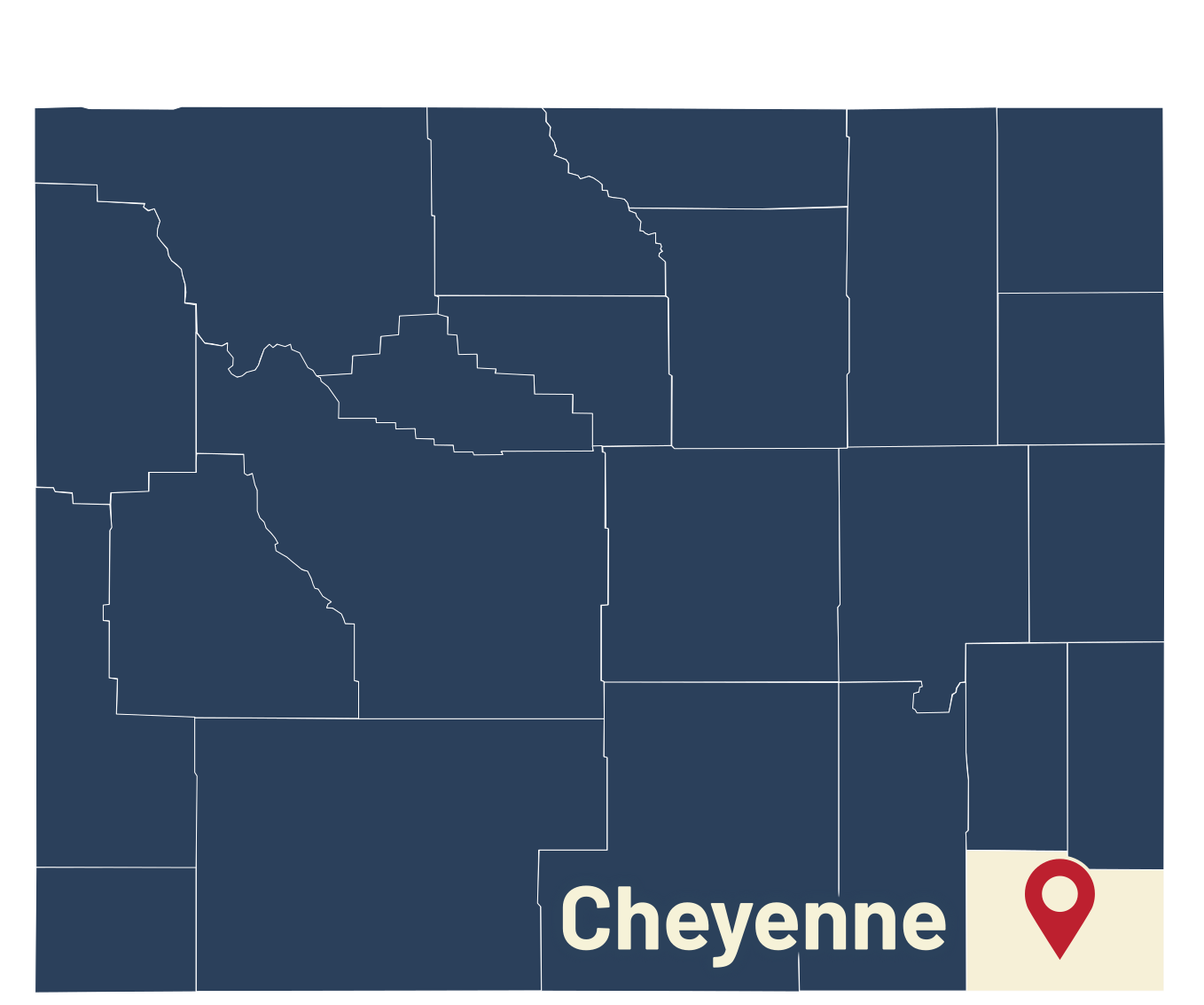
A young Cheyenne couple expecting their first child, newsreel filmmakers, a Washington, D.C., socialite, and a prominent heart surgeon were among the 16 passengers who flew out of Cheyenne on Sunday, Oct. 17, 1937.
The couple was headed to San Francisco to have their first baby, the filmmakers to Los Angeles to complete an air safety film, the socialite to see Amelia Earhart’s husband, and the surgeon to lecture.
The luxurious DC-3A Mainliner, introduced to cross-country airline passengers that year, was equipped with a “barograph” device in its tail that recorded the plane’s flight. It was the precursor to today’s flight data recorders.
At the controls was pilot Earl Woodgerd, 38, a United Air Lines veteran who had trained and flown during World War I.
He had 11,000 hours of flight experience, eight years with the company, and three years on the Cheyenne to Salt Lake City route.
His copilot, John Adams, also a U.S. Army Air Corps vet, had been with airline for four years and had 3,500 hours of airtime with the airline.
Hosting the passengers was stewardess Leah Derr, 26, who had just transferred to Salt Lake City from California. She was a Salt Lake City native and in her second week of work on the Cheyenne to Salt Lake City 2 1/2-hour flight.
At 145 mph, the plane was about to enter an unpredicted early onslaught of winter weather as it neared the state’s southwestern boundary.
As with so many planes and pilots in the previous 15 years flying the air corridor linking the nation’s East and West, the fierce winds, ice and snow combined to overcome technology. Headlines again carried the message across the country.
“Airliner Crashes on Utah Mountain; 19 Believed Dead,” The New York Times reported on Oct. 19, 1937. “Wreckage of Crack New ‘Mainliner’ Is Sighted From the Air.”
The wreck became the worst airplane disaster in the nation’s history to that point. An earlier airplane crash on Jan. 14, 1936, had killed 17 in Goodwin, Arkansas.
The only deadlier air disasters to that point in the United States involved huge zeppelin airships.
The nation was still reeling months removed from the spectacular May 6, 1937, fiery crash of the Hindenburg airship, which killed 36 people.
It was about 4 1/2 years after the deadliest air event overall to that point, the April 4, 1933, crash of the helium-filled airship USS Akron. Overall, 73 of the 76 people on board the zeppelin died when it went down during a thunderstorm.
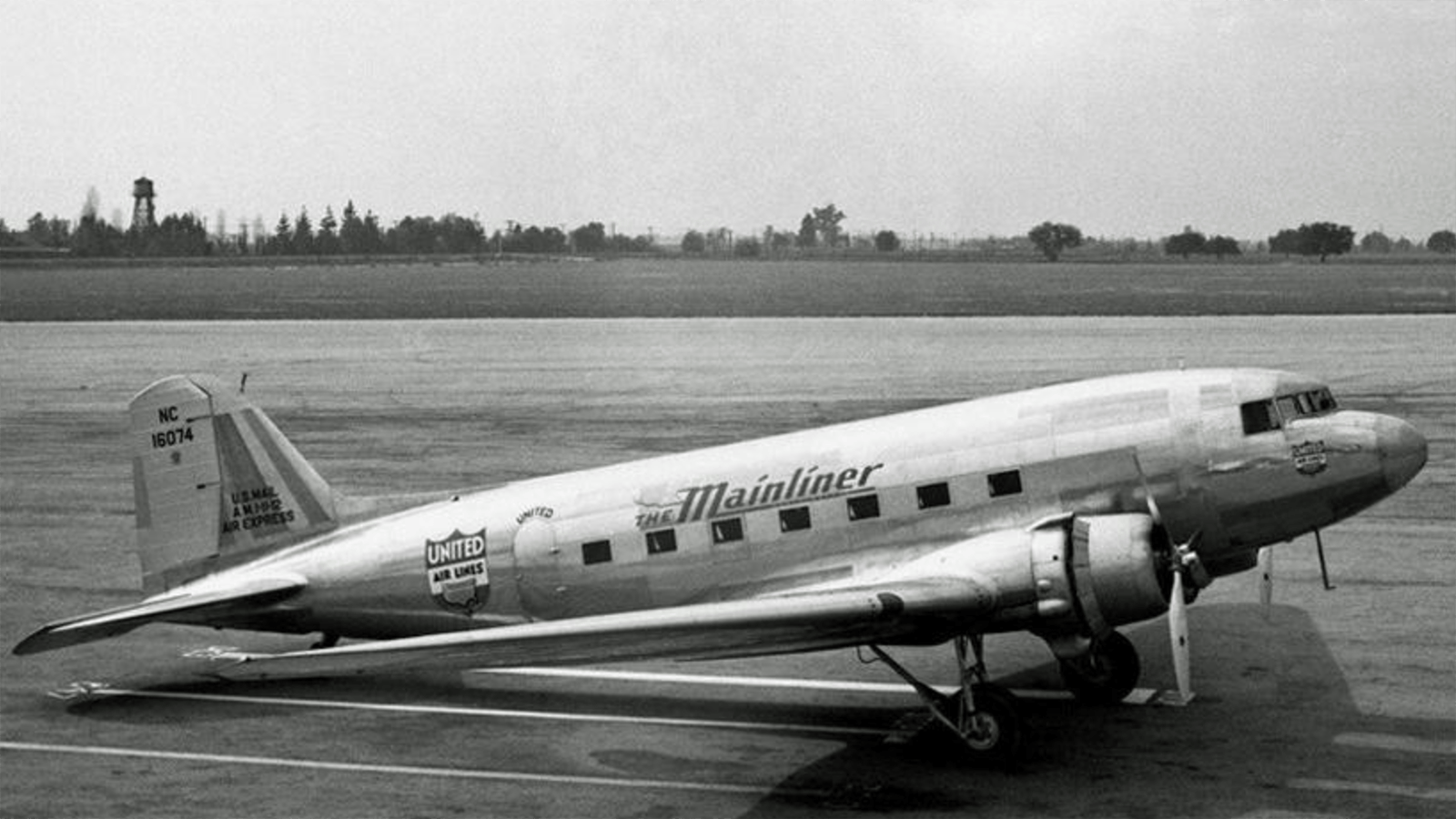
New Mainliner
Woodgerd, his crew, and his passengers had taken off at 6:26 p.m. in a Mainliner with the tail number NC-16074.
The new plane had been licensed on Dec. 8, 1936. The plane had been in Cheyenne for 15 hours and undergone servicing.
The actual flight with a different plane originated in Newark, New Jersey, with stops in Chicago, Omaha, Cheyenne, Salt Lake City and a final destination of Oakland, California.
Weather for route across Wyoming and into Utah showed nothing concerning.
Conditions were clear in Cheyenne with scattered clouds. Light rain was forecast for Knight, Wyoming with Coalville and Salt Lake City experiencing light rain, overcast conditions and 15-mile visibility.
Woodgerd’s flight plan was filed indicating he would do visual flying and intermittent instruments between Rock Springs and Salt Lake. A United Air Lines dispatcher entered 10,000 feet as the plan for his altitude.
The flight across two-thirds of Wyoming was uneventful.
At 8:16 p.m., Woodgerd radioed he was over Rock Springs and that conditions were “slightly rough, all OK,” according to an official report by the Bureau of Air Commerce issued on Nov. 16, 1937.
A Salt Lake City dispatcher at 8:18 p.m. told the cockpit that the city was experiencing heavy rain and a ceiling of 6,000 feet. The dispatcher informed them that a Western Air Express Flight had picked up ice at 10,500 feet and that wind had shifted to the north.
The cockpit acknowledged the information. That was the last the flight designated as “Trip One” was heard from.
When the plane failed to acknowledge radio transmissions at 9:05 p.m. and 9:11 p.m. from Salt Lake and repeated attempts from Salt Lake, Rock Springs, and Cheyenne at 9:15 p.m. and following, emergency plans were implemented.
The first search airplane was sent out at 1:30 a.m. on Monday, Oct. 18.
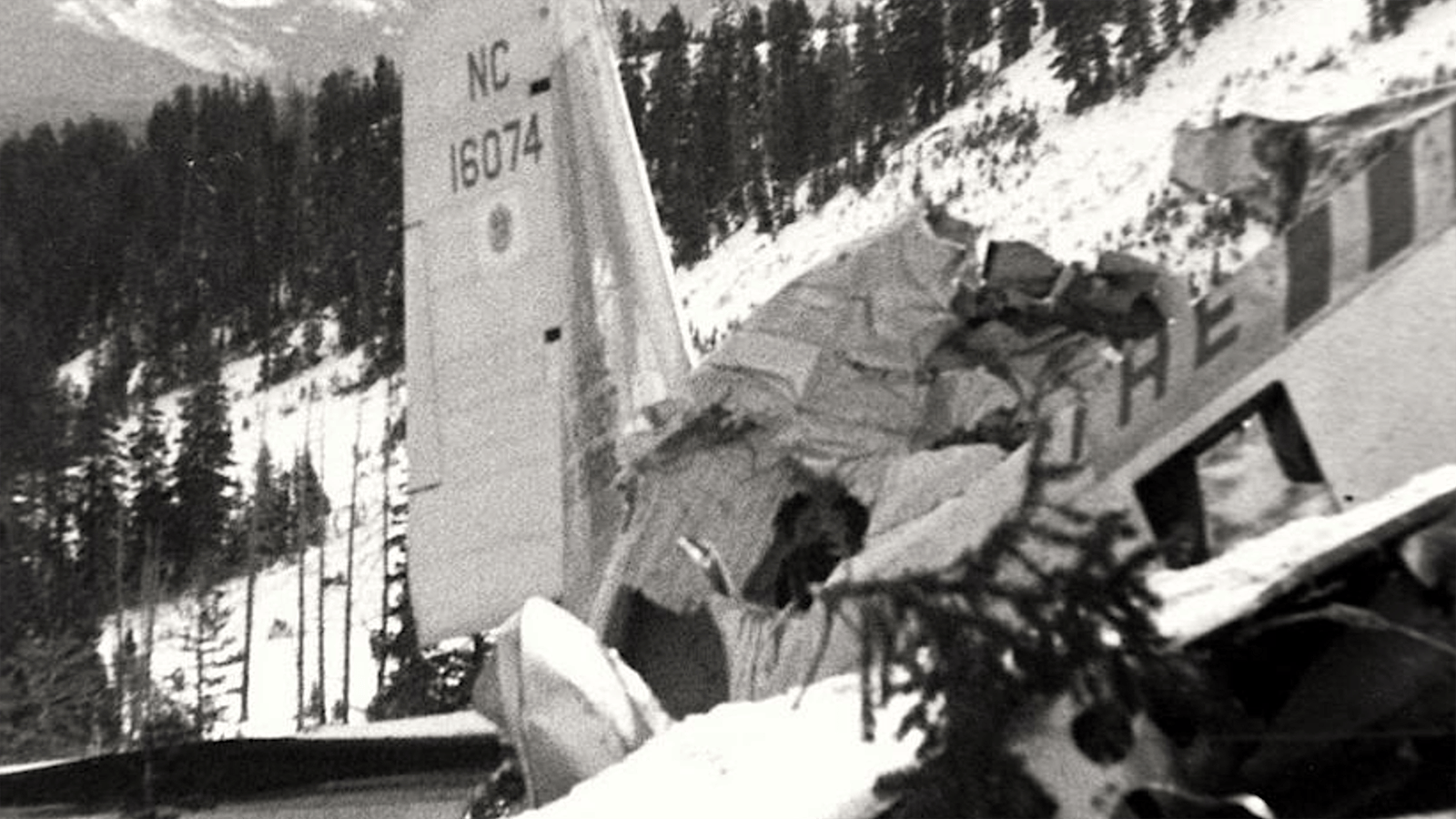
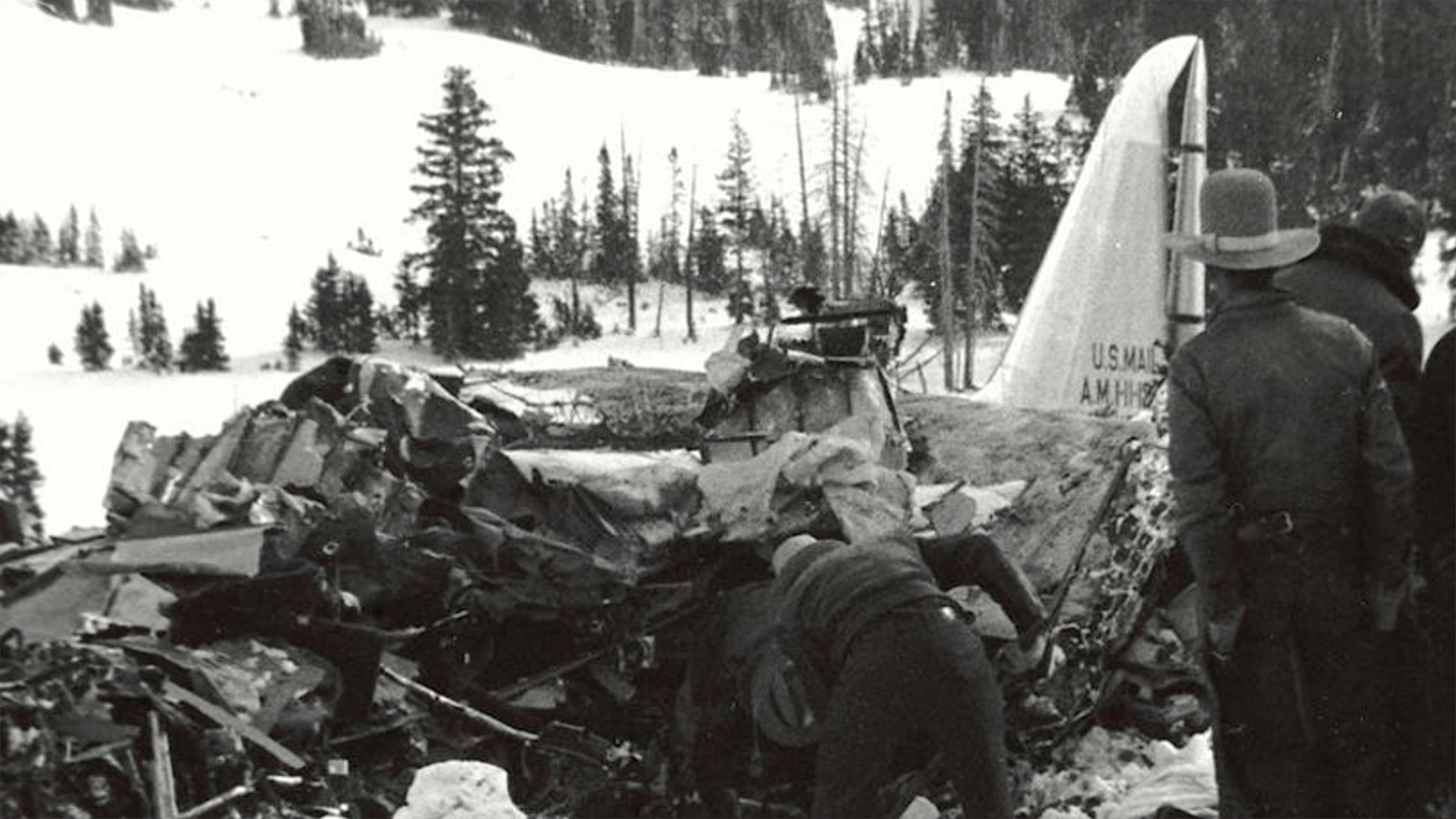
Another view of the tail section of the DC3-A at the crash site. (Courtesy Bureau of Aircraft Accidents Archives) 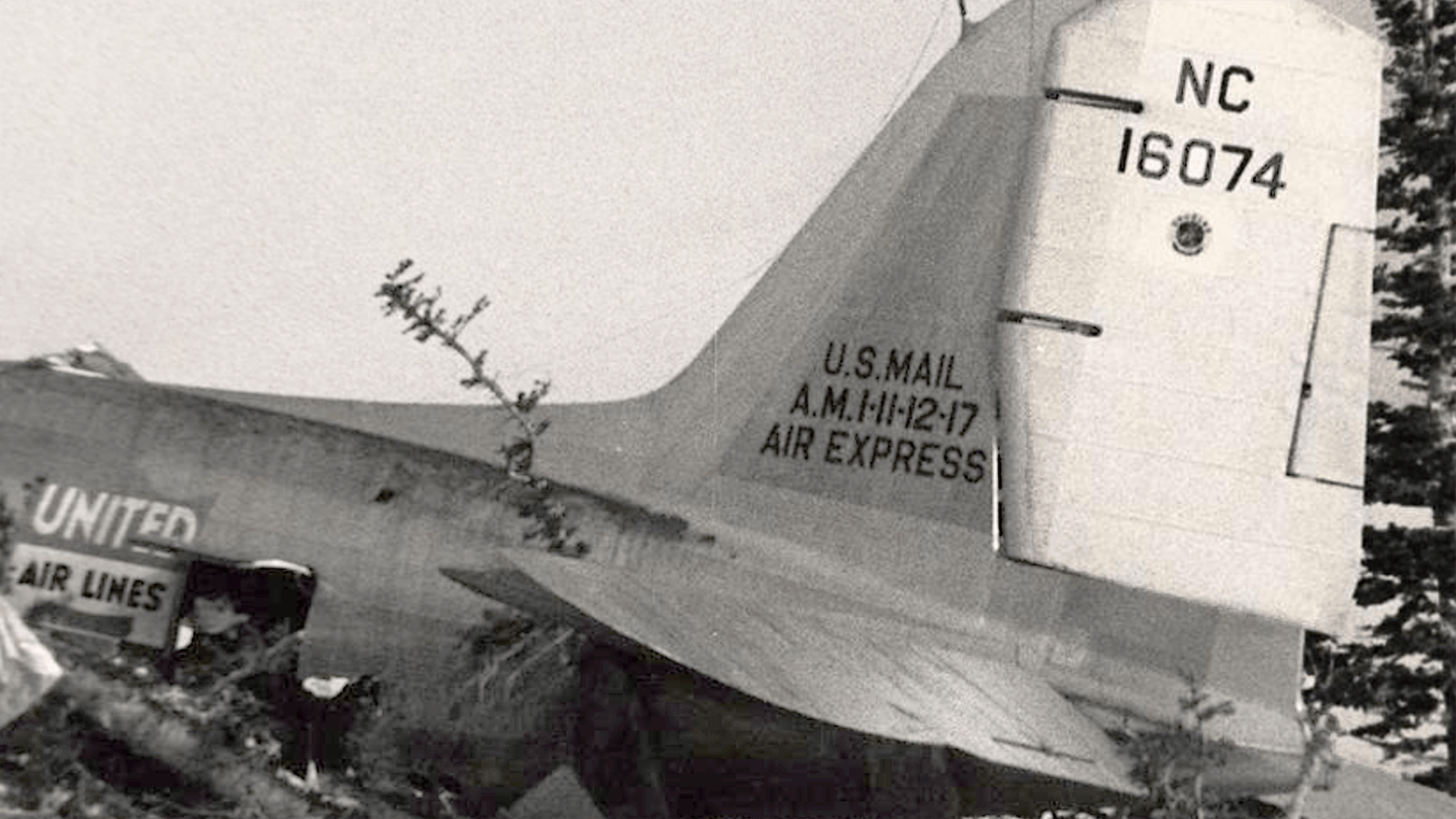
The tail of the crashed airplane as it rested in the Uinta Mountains. (Courtesy Bureau of Aircraft Accidents Archives) 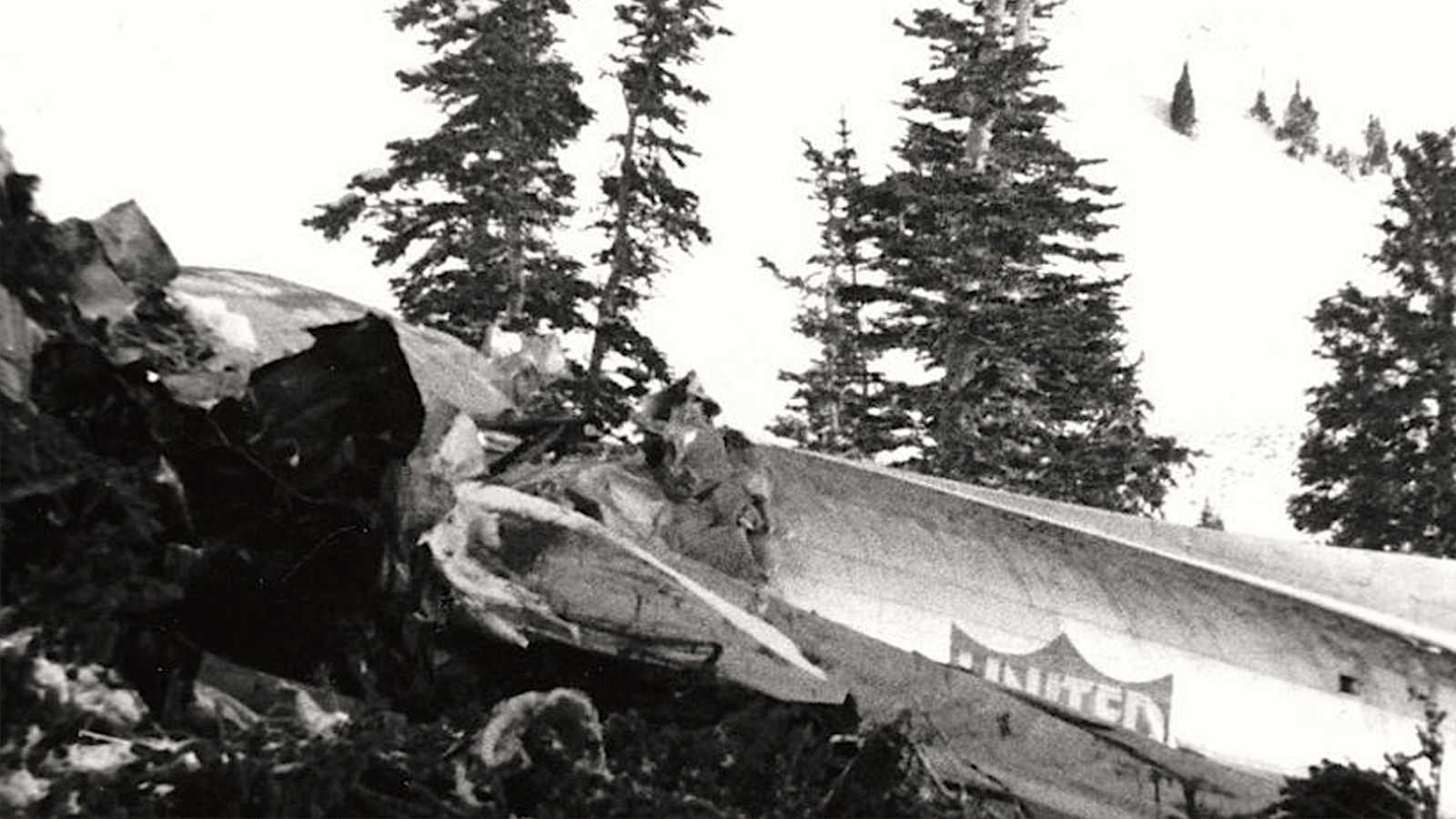
The fuselage of the crashed airplane as it rested in the Uinta Mountains. (Courtesy Bureau of Aircraft Accidents Archives)
A Doctor’s Quest
When news of the missing plane reached loved ones on Monday, an Alameda, California, doctor quickly prepared to fly to Rock Springs.
His niece, Phyllis Ferreira and her husband, George Ferreira, a United Air Lines mechanic, were on the flight and headed to Alameda to have their child with him as their doctor.
Dr. M. Richard Boe’s wife told United Press International that her husband would do all he could to save the baby’s life.
“If there is the faintest spark of life left in my niece, my husband will perform a cesarean operation to save the baby, if possible,” she said.
The first searchers to find the plane early Monday morning from the air were United Air Lines pilot Robert Bergensen and an observer who located it just across the Wyoming line in the Uinta Mountains at a spot designated “Humpy Ridge.”
He landed at an emergency field in Knight, Wyoming, southeast of Evanston to try and mobilize horses and wagons to get to the site.
Later that afternoon with Salt Lake Tribune reporters on board, Ray Peck of Thompson Flying Service headed to the crash site and found the Mainliner’s wings were torn off, the engines about 100 feet up the slope from the fuselage and the cabin caved in.
“We could see at a single glance that there was no possibility anyone could have survived,” he said for a story in the Oct. 19, 1937 paper.
United Air Lines officials and a trio of local ranchers reached the site Monday evening and camped overnight.
Trucks were able to go within four miles of the crash site, after that they had to go on horses and mules. Snow depths, wind, and cold made the work difficult.
A Salt Lake Tribune reporter on the mountain with 100 men chosen for their ability to work in the cold and the 10,000-foot altitude said recovery of victims involved digging through snow and metal debris.
All of the victims except the pilot were found fairly quickly, the reporter wrote. Nearly all the bodies were outside the plane, many in pieces, and most of them had their shoes torn off.
“Searchers hunted for hours, however, before they found the body of Earl D. Woodgerd,” the reporter wrote. “Still strapped to his seat in the cockpit, the pilot was found beneath the entire wreckage, and rescue workers were forced to dig his mangled body from the tangled mass.”
The bodies of co-pilot Adams and the stewardess reportedly were found near one another outside the wreck. The two mortuaries in Evanston temporarily housed the bodies.
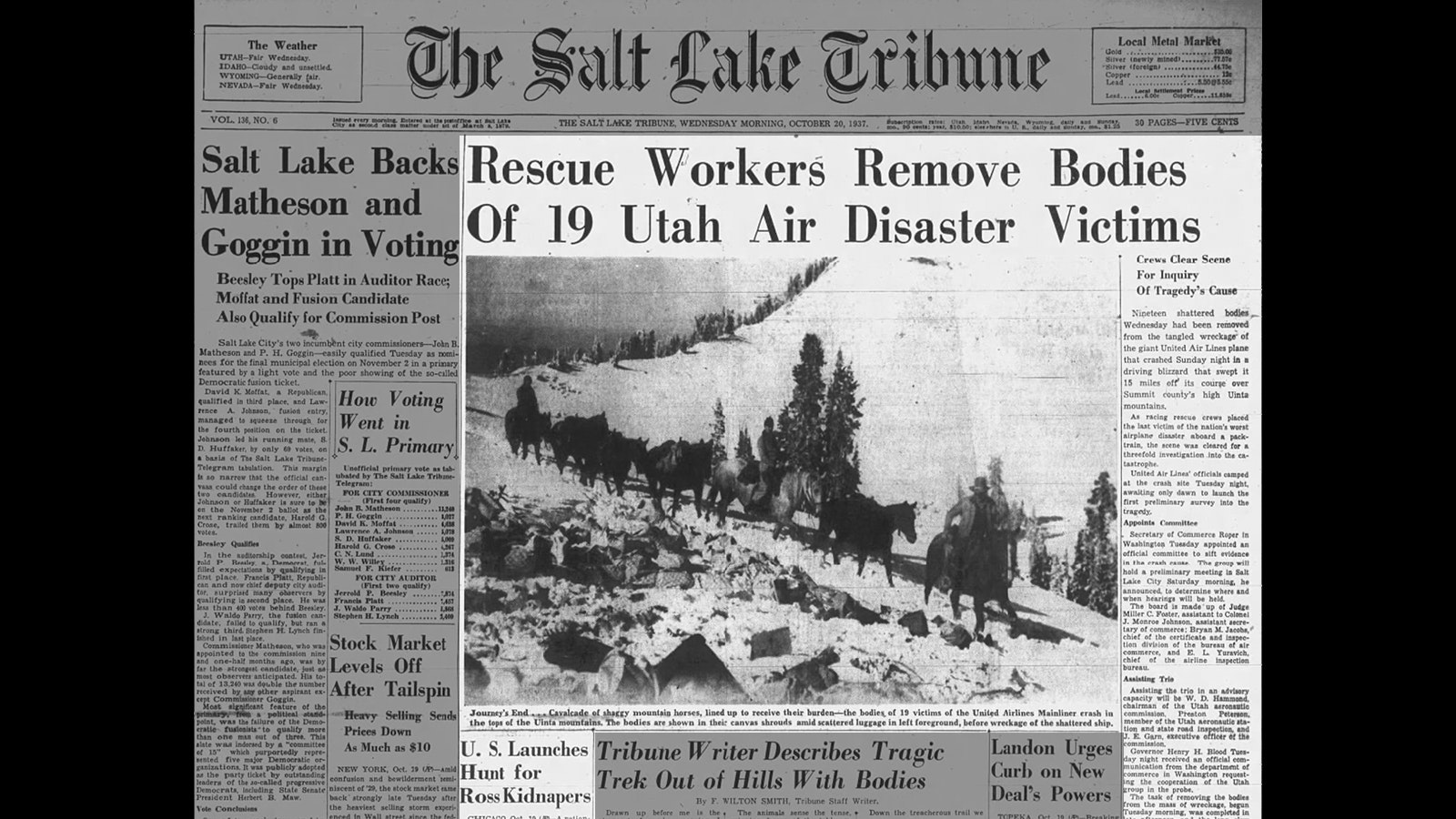
The Salt Lake Tribune sent a reporter and photographer to cover the removal of the bodies from the mountain. (Courtesy Newspapers.com) 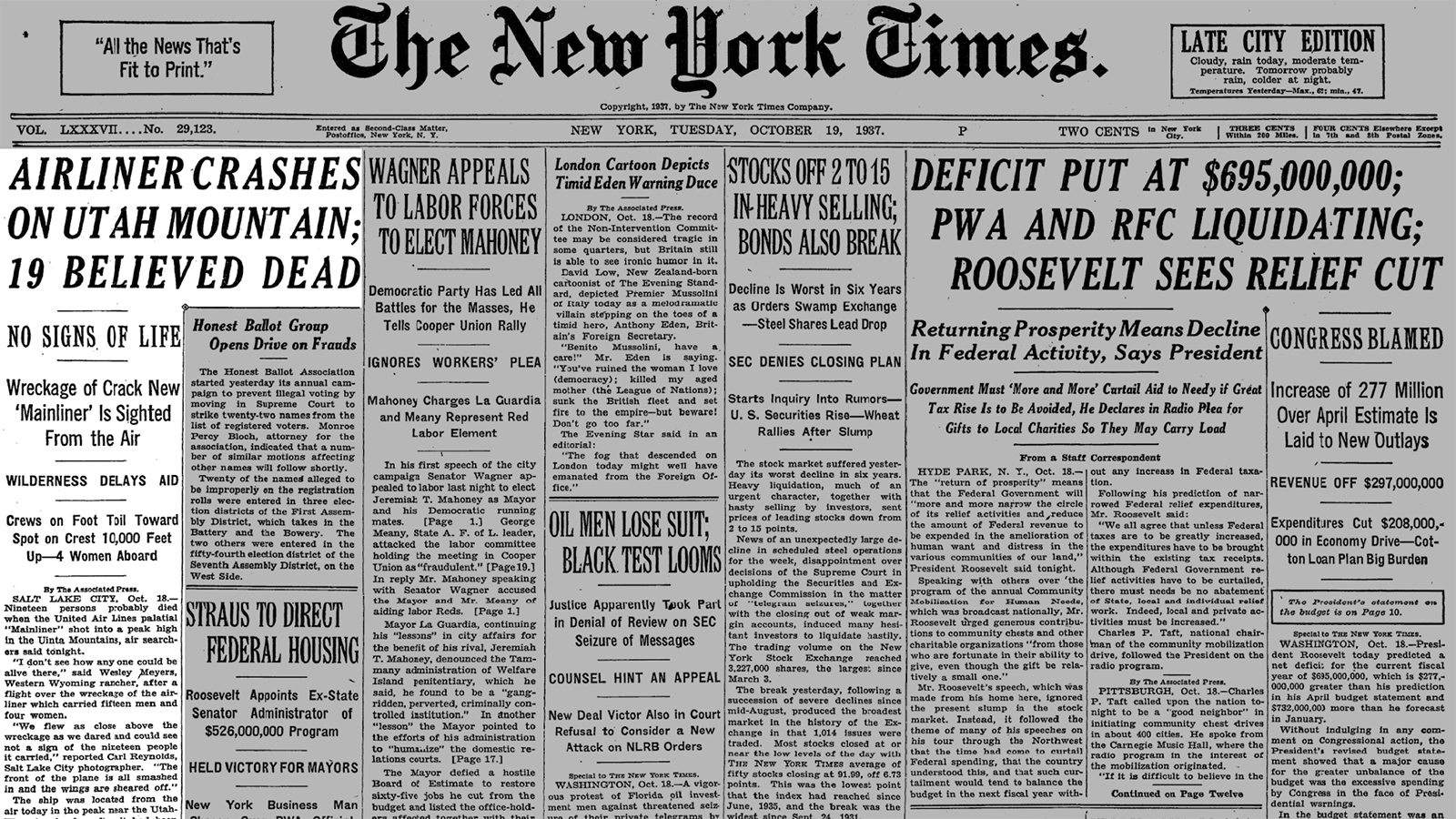
Newspapers across the country covered the crash of the DC3-A just across the Wyoming border. It was the worst crash in aviation history to that date. (Courtesy New York Times) 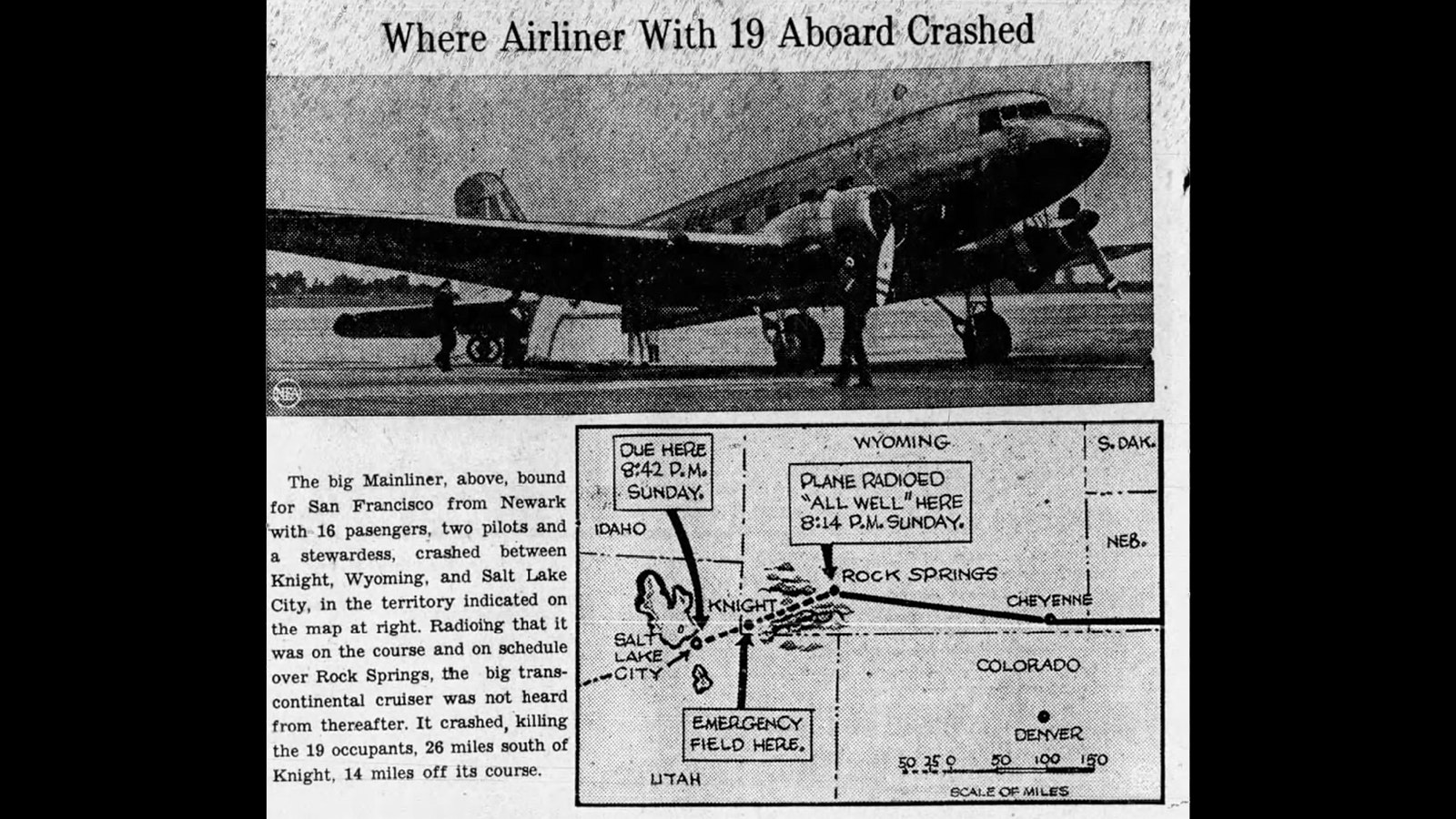
A graphic in the Newcastle Newsletter Journal on Oct. 21, 1937, showing the path of the plane. (Courtesy Newspapers.com)
Mourning For Victims
Communities of the victims mourned their losses.
Divorcee Natalie Campbell Pritchett had been a popular member of Washington, D.C., society and frequently made those pages in the city’s newspapers.
She was also a some-time columnist for the Washington Star. The Associated Press reported on Oct. 20 that waiting for her in Los Angeles was a chauffeured car from George Palmer Putnam, the husband of Amelia Earhart.
Earhart had just been reported missing three months earlier on July 2.
“Putnam said Pritchett was a family friend of long standing,” the news service reported.
The Washington Daily News reported that there had been rumors of Pritchett’s engagement to several different men, including Eugene Vidal, the former director of Air Commerce which would investigate the crash. Her afternoon teas were described as “small, smart, and amusing.”
New York-based newsreel journalists William Pitt, 31, news editor for Pathe News, and cameraman James Pergola, also were headed to Los Angeles to complete a project on the history of air transportation and the evolution of processes and devices that made transcontinental flights possible and safe.
“Whether they had taken motion pictures during the ill-fated flight of the plane was not known,” The New York Times reported on Oct. 19. “The Pathe offices said last night that this was possible.”
Pathe representatives from Washington, D.C., and Los Angeles flew to Evanston to claim the bodies.
Dr. Louis Gross, 40, also of New York, was a heart pathologist who had lectured in Cincinnati and was flying to California for a lecture as well as hoping to get licensed in the state, according to news reports.
He allegedly told a physician friend after being dropped at the airport in Cincinnati that the “most dangerous part of my trip is over” because an “automobile is more dangerous than a plane.”
The expectant couple, George and Helen Ferreira’s bodies were claimed by Helen Ferreira’s uncle, the physician who had flown to Rock Springs.
The couple were buried together in a double crypt at Mountain View Mausoleum in Alameda, California, the San Francisco Chronicle reported on Oct. 23, 1937.
In addition to recovering the passenger bodies, which also included other off-duty airline employees and a noted Salt Lake City attorney, United Air Lines and Bureau of Air officials searched for the barograph to provide clues about the incident.
“Officials said that eventually they hope that the research division will perfect a recording gadget which will show readings on the pilot’s instrument board during the flight,” a United Press International story from Washington, D.C., reported in the Oct. 20 Salt Lake Tribune. “Such information would be invaluable in attempting to reconstruct the cause of the accident.”
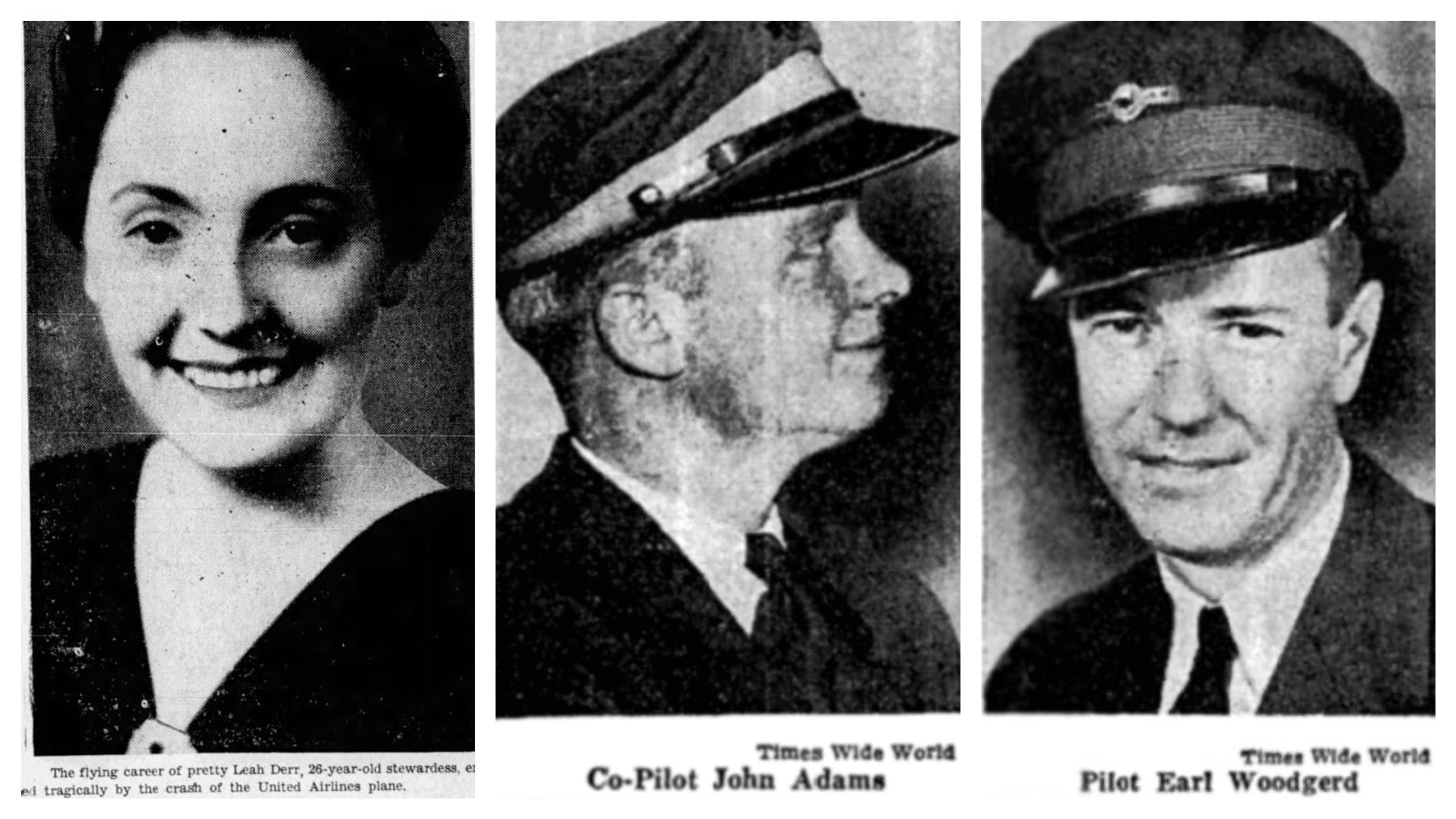
Left, the stewardess on the plane in a photo published in the Newcastle Newsletter Journal on Oct. 21, 1937. Center, co-pilot John Adams. Right, Earl Woodgerd, the captain on the airliner. 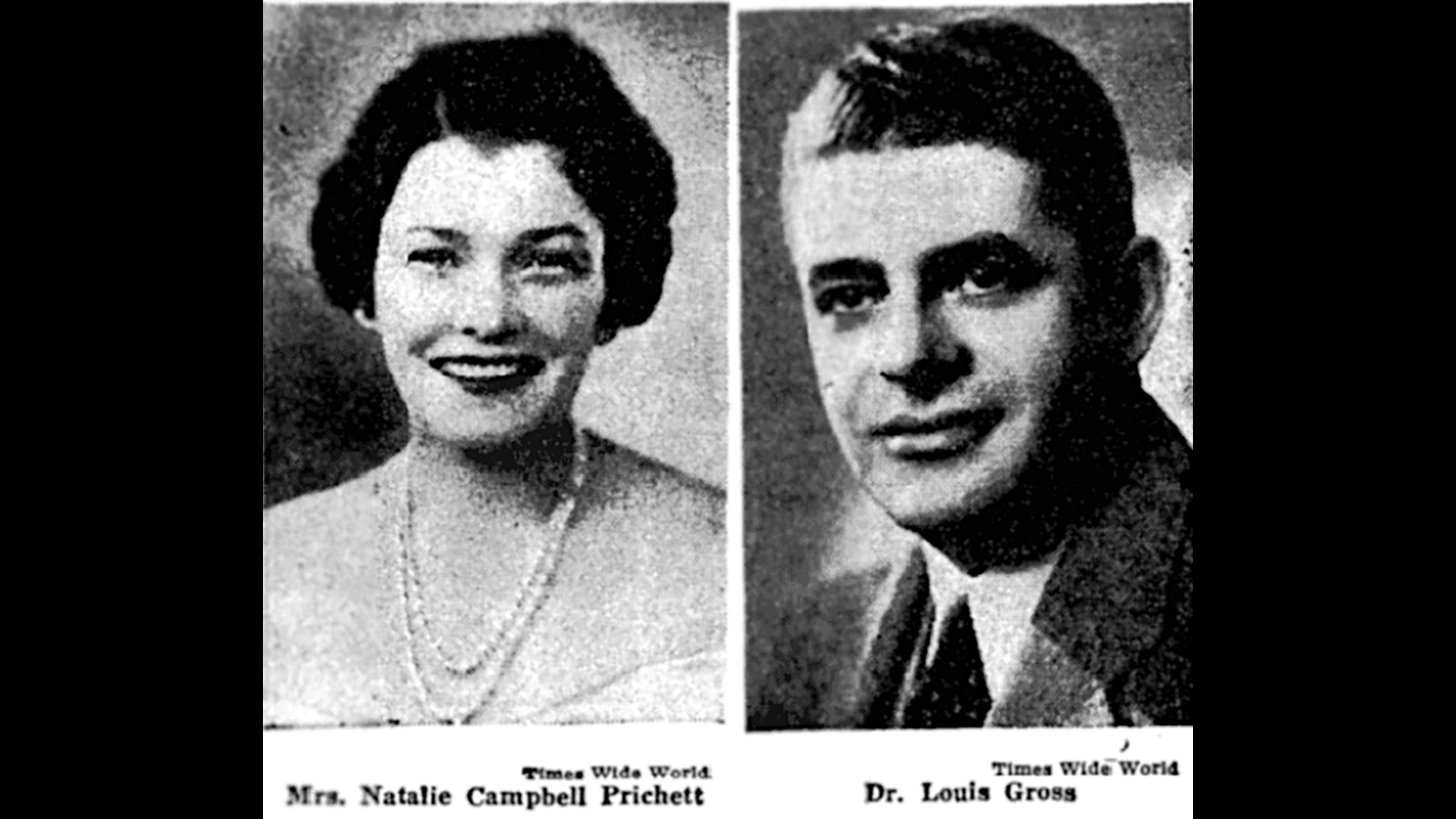
Two of the passengers who were on the aircraft included socialite Natalie Campbell Pritchett, and Dr. Louis Gross. (Courtesy New York Times)
The Inquiry
In the end, they did find the device and a crash inquiry started on Oct. 26 in Salt Lake City with representatives from the nation’s secretary of commerce, Bureau of Air Commerce and Utah State Aeronautics Commission.
The inquiry focused on the aircraft, crew and their physical condition, weather, navigational aids along the 400-mile airway at the time of the incident, and communications.
Testimony showed the airway had radio “beams” for navigation along the corridor that were 360-feet in width and if the radio was working, the pilot would know whether he was “off” the radio beam.
Data from the barograph showed that the plane after taking off at 6:30 p.m. was at 10,000 feet and the recording stopped at 8:59 p.m. on Oct. 17.
The instrument showed that the radio’s transmitter was used at least six times including the last between 8:17 and 8:21 p.m.
Testimony from a United instrument department foreman indicated blotches on the graph made it unclear if another transmission occurred, the Salt Lake Tribune reported on Oct. 29, 1937.
Also giving testimony were ranchers from the area who said their radios were useless that night due to static and two timber men camping on the mountain who spoke of extremely high winds. A communications supervisor for the Bureau of Air Commerce district stated the radio beams were working.
However, he also noted that there were several interruptions in teletype service along the route between 6 p.m. and 9 p.m., the Salt Lake Tribune reported.
Weather conditions on the crash night deteriorated quickly out of Salt Lake City.
A Western Air Express pilot told investigators on Thursday, Oct. 28, that as he took off and toward Butte, Montana ice formed on his wings, his radio capabilities were “fouled” and 70 mph winds pushed his aircraft east toward the mountains, The Salt Lake Telegram reported on Oct. 28.
Pilot A. S. Mooney told investigators he radioed the storm information at 7:21 p.m. to his Western Air dispatcher who relayed it to the United Air Lines dispatcher and to the weather bureau. After landing at 7:48 p.m. his airline dispatcher also informed United Air Lines of the weather issues, he said.
Other testimony at the hearing by a Bureau of Air Commerce expert said that the storm hit Knight and Rock Springs about 7:26 p.m. and garbled radio traffic.
At 8:41 p.m. it was so intense that teletype service out of Rock Springs was interrupted and the weather report scheduled for that time was not broadcast until 8:55 p.m., the Salt Lake Telegram reported.
United Air Lines pilots who testified before the board said their colleague, Woodgerd, always flew his course slightly to the right, that he was an expert in navigation, and was never known to drift as far south as “Humpy Ridge.”
The Findings
At the end of the days-long inquiry, the plane was determined to be facing 60 mph winds from the northwest that pushed it 15 miles off course while the pilot was only compensating for the 35 mph winds that were forecast.
“This drift evidently was not and could not have been recognized by him due to his inability to receive intelligible radio range signals or see anything on the ground by which to locate himself,” the investigating board concluded.
As a result of the crash, United Air Lines raised altitude requirements on the route to 13,000 to 14,000 feet.
Dale Killingbeck can be reached at dale@cowboystatedaily.com.