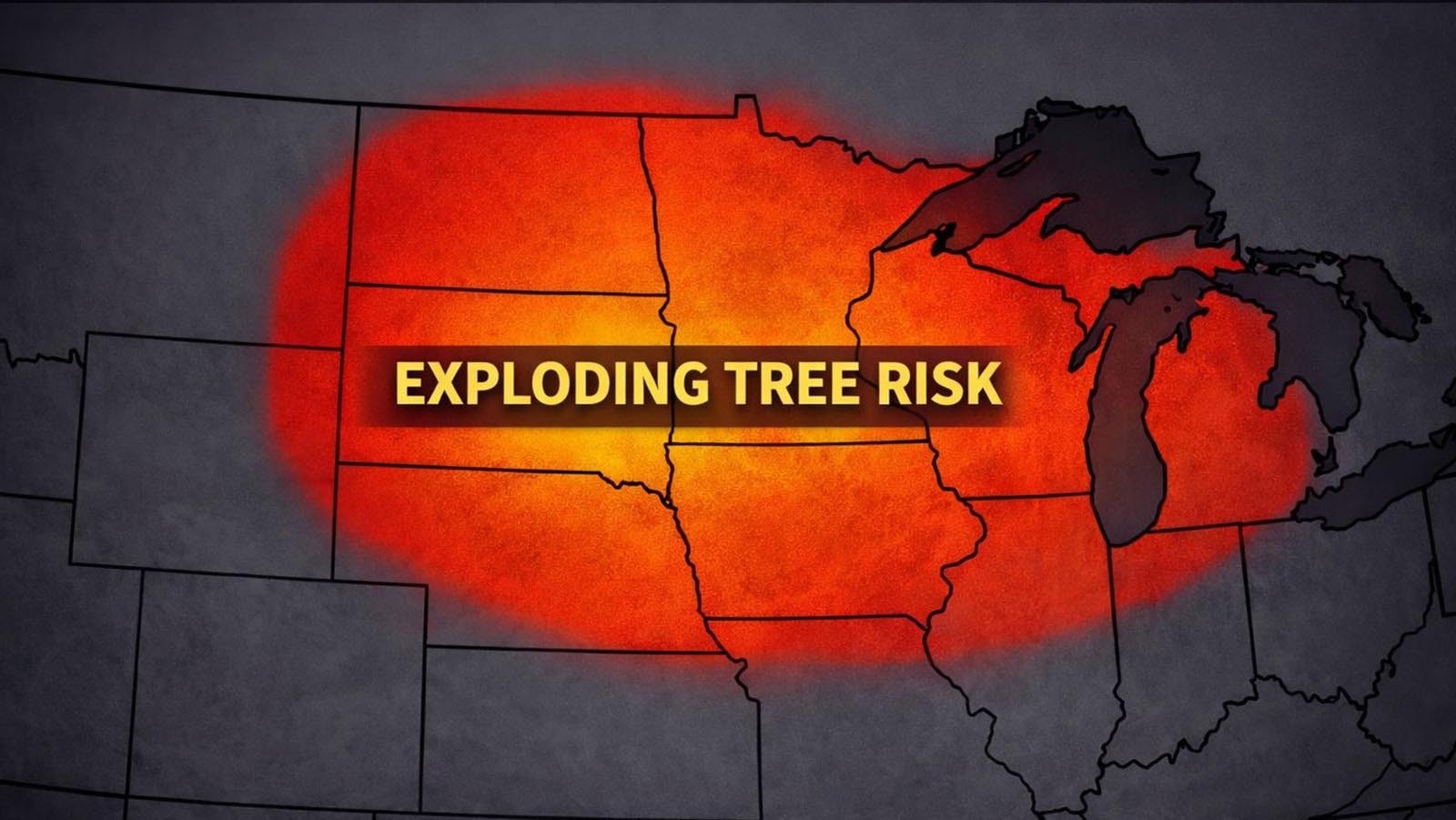
A subzero snap of winter temperatures is expected to hammer the Midwest and reach into northeast Wyoming starting Friday. That’s led to a surge of warnings for people to watch out for “exploding trees.”
That’s not something someone just made up, even if it’s a bit of an exaggeration. Extreme cold can cause trees to explode, and it’s likely to take many people by surprise when it happens.
“It can make you jump if you’re not expecting it,” said Shane Smith, former director of the Cheyenne Botanic Gardens. “It's pretty rare, but it does happen and could happen across a lot of the country as this Arctic front moves in.”
‘Exploding' Trees
The concept of an exploding tree conjures images of a tall tree spontaneously bursting with a massive cloud of wood chips and debris.
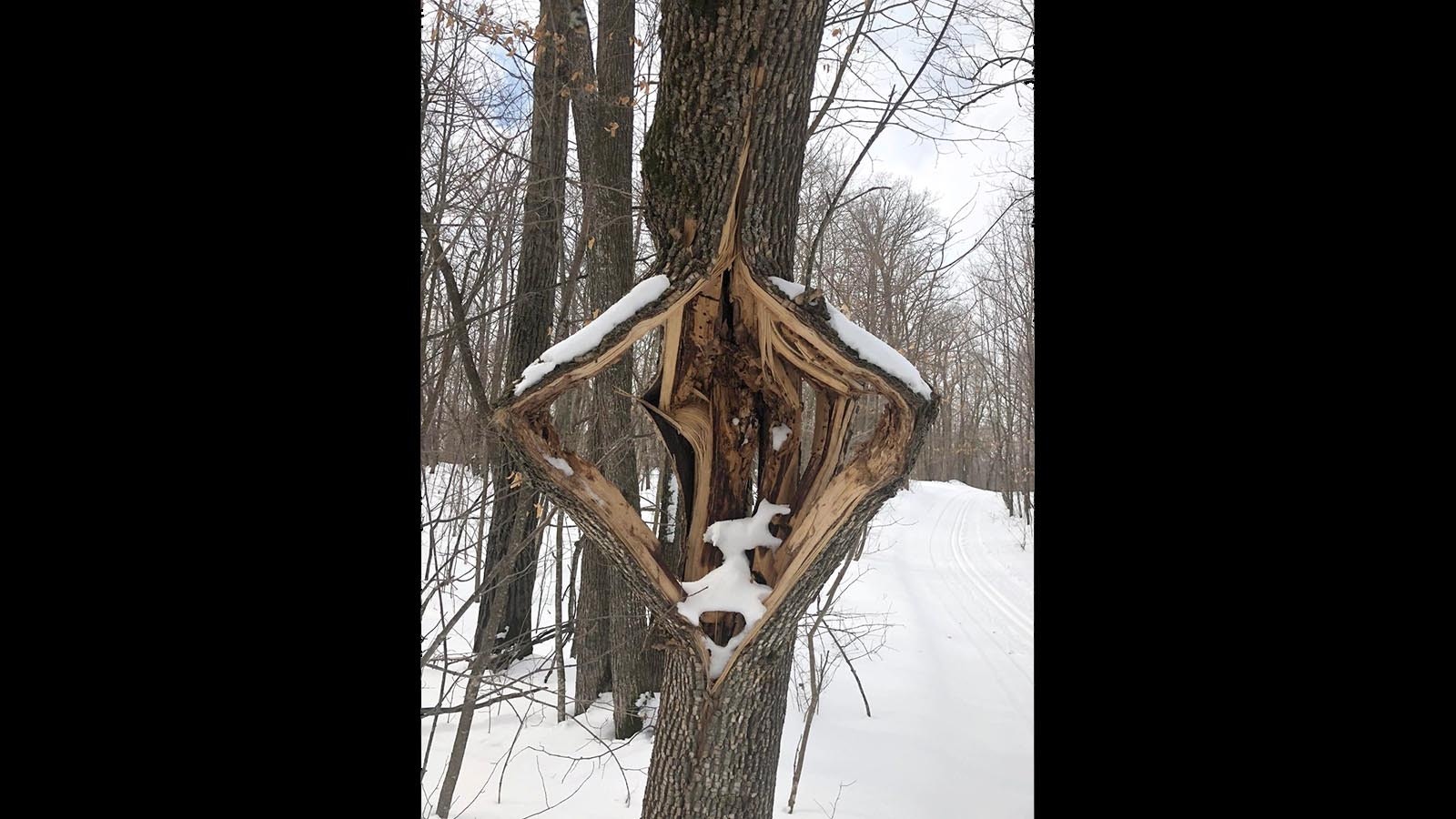
The real phenomenon, called “frost cracking,” isn’t that dramatic, but has impressive results.
When temperatures drop rapidly, the outer part of a tree trunk will shrink faster than the inner part. That buildup of stress can lead to a sudden, explosive release of energy, resulting in an explosion.
Smith added that trees or parts of trees can “explode” when the water and sap contained inside their cells rapidly freeze and expand. That can split the wood and bark with a “loud pop” reminiscent of a gunshot, he said.
"It's a function of how much water a tree carries in its vascular system,” he said. “Freezing water can form spontaneous cracks, just like it does when water’s frozen in a glass.”
The sun can also trigger exploding trees.
Even on days with high temperatures below zero, a tree’s bark can reach temperatures of 70 degrees if it’s in direct sunlight.
“We know how fast the temperature drops once the sun sets,” Smith said. “If you're in for an unusually cold or maybe even a normally cold night, that can cause a tree to crack.”
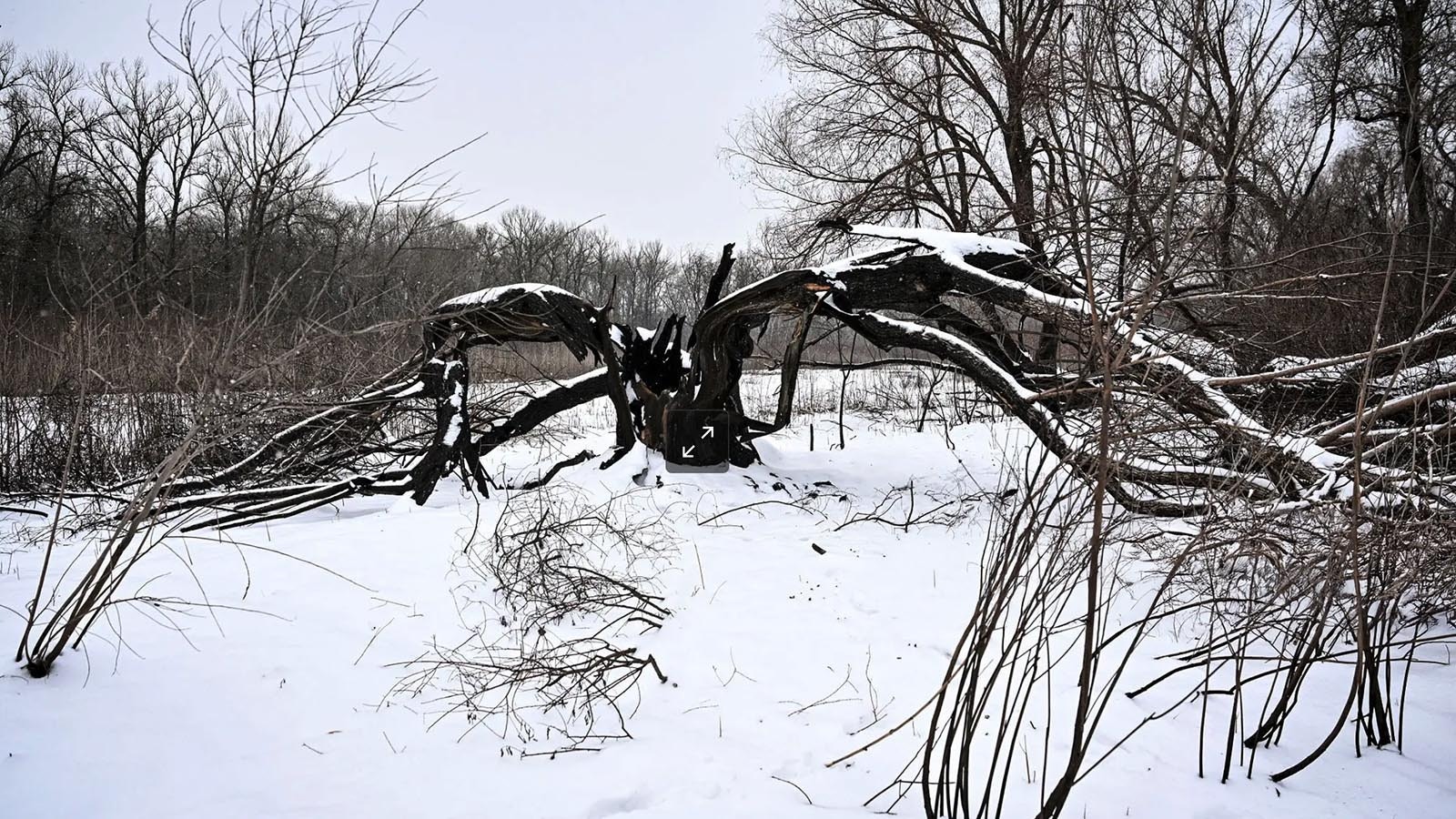
It’s rare for a tree, especially a large one, to completely explode under these circumstances. It’s more likely to happen to a branch, although Smith said that can be dangerous enough.
“It’s not going to turn a branch into a flying projectile, but a large branch could still drop onto a person, home, or vehicle,” he said.
Risk Factors
Certain trees are more susceptible to exploding than others.
It’s a tree-by-tree basis, but Smith said eastern Wyoming arbor enthusiasts don’t need to worry about all their trees, just certain types.
“It won’t be the native evergreens or more drought-resistant trees, but most deciduous trees could be susceptible,” he said. “If you live in an area that’s had a lot of moisture, that’ll make them more susceptible.”
That’s one area where Wyoming’s unusually dry winter might have some benefit.
Snow water equivalents across eastern Wyoming are still very low, between 6% and 70%, so the deciduous trees will have less water in them to explode.
Smith added that smaller trees, planted within one to five years, are particularly vulnerable to explosions.
Anyone who wants to protect a tree of concern is encouraged to wrap its trunk between the roots and the lowest branch.
“That’ll shed water away and block direct sunlight,” he said. “It can be a bit of a chore, but it’s worthwhile if you want to protect it from explosions.”
An explosion might not kill the tree, but subsequent bacterial and fungal infections could. Anyone who wants to save an exploded tree will need to employ the rudimentary skills of a tree surgeon.
“If something like that happens, you want to clean up and smooth down the wounds so there aren't a bunch of splinters hanging out,” he said.
Whatever you do, don’t get and apply any “tree wound treatment” products available at most nurseries, Smith said.
As far as he's concerned, that's useless.
“Pretty much all arbor researchers have found that it’s worthless,” he said. “It doesn't heal the wounds and can actually be counterproductive, sealing in infections and causing quicker troubles.”
Great Expectations
Most arborists and meteorologists will say the threat of exploding trees is low. Smith has seen trees literally explode, but not because of winter temperatures.
“The one thing that can cause a tree to explode is when it gets hit by lightning,” he said. “I've seen it firsthand. They explode with a loud boom and send debris flying up, down, and across the street.”
Furthermore, many trees damaged by frost cracking will be perfectly capable of healing themselves when warmer temperatures return in spring. They won’t be piecing themselves together from sawdust and toothpicks, it’s just not that kind of explosion.
The best thing people can do during the upcoming cold snap is focus on staying safe and warm.
If there is a particularly large tree with overhanging branches in your neighborhood, it wouldn’t hurt to stay away from it, or find a different parking spot, at least.
Wyoming doesn’t have huge forests of deciduous trees to worry about, so the risk isn’t as potent as it could be further east. Still, there could be a few unexpected explosions when temperatures drop.
“Tree explosions can happen, but it’s pretty rare,” Smith said. “But when it does, that'll scare the bejeebers out of you.”
Andrew Rossi can be reached at arossi@cowboystatedaily.com.