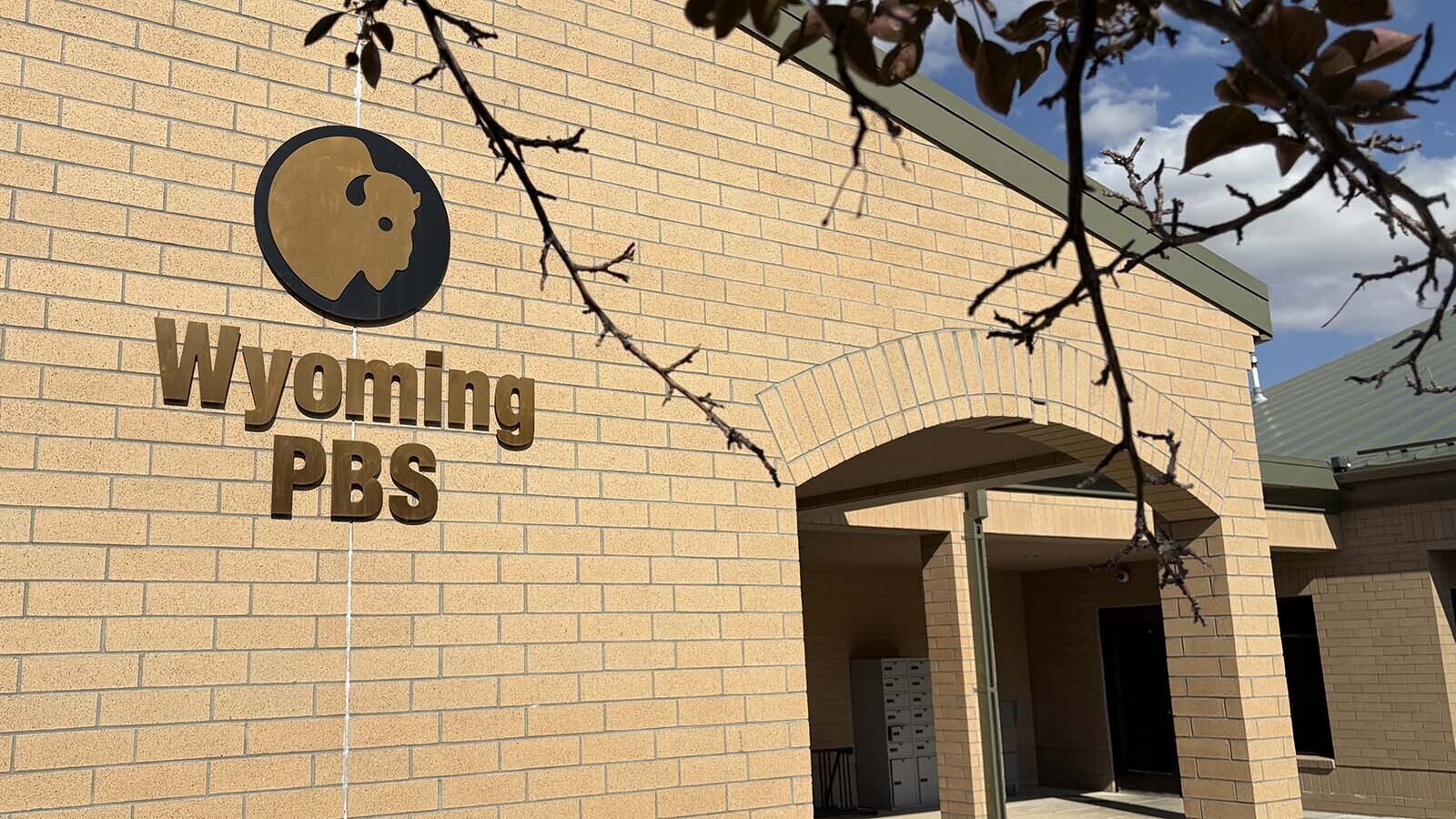
After the federal government said it’s not going to give Wyoming Public Television — also known as PBS — $6.6 million to continue its normal operations and upgrade the tower network it’s required to keep, the state also has declined to make up the difference.
The denials, advanced last week in the legislative Joint Appropriations Committee’s budget-planning meetings in Cheyenne, are not final. All 93 members of the Wyoming Legislature are scheduled to debate them after the lawmaking session opens Feb. 9 at the state Capitol.
Without the money, the outlet is facing cuts of staff, programming or both, Wyoming Public Television CEO Joanna Kail told Cowboy State Daily on Monday.
Those denials also cut into money the outlet spends to stream legislative committee meetings that happen at off-Capitol sites, she said.
Kail said, however, it’s not as bad as it could have been.
Wyoming Public Media is facing a tentative defunding in the state budget, for example.
“Given what other agencies are going through right now, we were thankful at least that our level funding was intact,” Kail said in a Monday phone interview. “We have a lot of work ahead of us. I think the team at Wyoming PBS realizes that’s the case. I’m ready for it.”
Pulled Back Grant, Too
As Congress tilted last year and prior toward defunding the Corporation for Public Broadcasting, which was Wyoming PBS’s federal money conduit, the local outlet kept from cutting positions by not replacing retirees and other employees who quit, said Kail.
If the denial of money for Wyoming PBS survives, there’s a “high likelihood, yes, that Wyoming PBS would have to look at reductions in many places,” she said.
“Possibly staff, programming — you know, things we have to maintain in terms of our emergency alert systems across Wyoming; our towers and our broadcasts,” Kail added.
She said Wyoming Public Television's staff has shrunk from 22 fulltime positions to 17 over the past four or five years.
Congress defunded the federal Corporation for Public Broadcasting last summer.
Wyoming Public Television was anticipating $3 million from that entity over the next two-year budget cycle.
Kail asked the Wyoming Legislature to fill the void.
Wyoming Public Television had also won a $3.6 million grant to upgrade its federally-mandated system of 50 towers, which serve as emergency communications backup for the U.S. Federal Emergency Management Agency.
But the federal government rescinded that grant after the entity won it.
The committee denied that money. It also denied a request by Rep. Trey Sherwood, D-Laramie, to increase the outlet’s state-backed investment fund.
But it kept intact PBS’s general operating budget of $3.5 million in state money.
Ninety percent of that money goes toward staffing, Kail said.
That has left her in doubt about how Wyoming PBS will continue to fund its tower system and whether it can keep streaming legislative committee meetings held outside the Capitol for the public, as it generally does.
Well Then, Feds
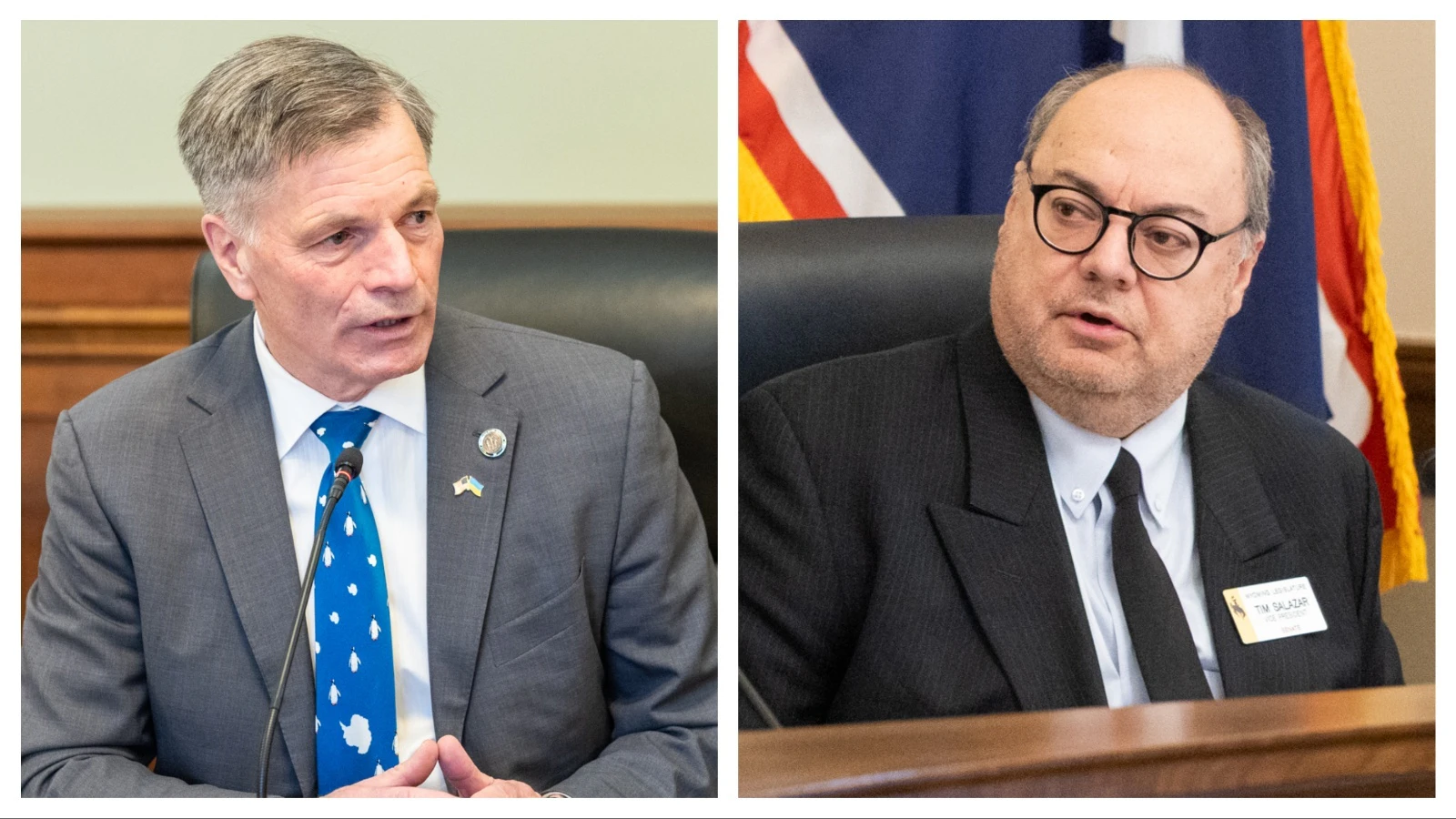
House Appropriations Chair John Bear, R-Gillette, told Cowboy State Daily on Monday that it’s been a pattern for the state’s appropriators to reject taking on the federal government’s prior burdens.
One exception to that, he noted, was the Appropriations Committee agreeing to take on a greater cost for administrating the Supplemental Nutrition Assistance Program (SNAP).
“If the federal government has decided not to fund something, we don’t think it’s our responsibility,” said Bear, speaking for the majority of the committee he chairs.
As for the towers, the same concepts prevails.
“This was a fed mandate for the emergency broadcasting system, so the feds need to pick that up,” he said. “I think (the system is) outdated. Most people, they’re not turning on the TV to get emergency data; they’re looking at their phones.”
Rep. Abby Angelos, R-Gillette, who advanced the denials to PBS, did not immediately respond to a voicemail request for comment.
The Towers
Required by the U.S. Federal Communications Commission as an emergency alerts system, the Wyoming PBS towers cost nearly $700,000 per year, or $1.4 million a biennium, to keep online and operative.
That’s the routine operating cost, separate from the proposed upgrades, said Kail.
“I would hope it’s important to everyone in Wyoming, for people to get lifesaving alerts over broadcast,” she said. “That’s one of the things I tried to stress to the Joint Appropriations Committee, and I’ll continue to try and stress, that that’s important funding for the people of Wyoming.”
Streaming Meetings
For streaming legislative committee meetings, said Kail, PBS can bill the state up to $50,000 a year, but has only billed it $85,000 in addition to its normal funding since it started doing that service in 2018.
The outlet is reimbursed for mileage and hotel, she added.
“We were never offered extra staff for that,” she added. “We took Emmy-award-winning producers offline for us to go and stream those committee meetings.”
Within the Capitol, the Legislative Service Office (LSO) streams the meetings itself, she noted.
Bear said the Management Council, which is a panel comprising the highest-ranking legislators from each chamber, accounted for this in November when it drafted the Legislature’s own budget.
Lawmakers call their budget the “feed bill.”
They added two part-time positions to LSO, and extra money to cover streaming, said Bear.
Odds And Ends
Kail said the local outlet’s national PBS dues also have come from the federal $3 million in the past, in the amount of about $700,000 a year or $1.4 million per biennium.
“I don’t know how we’re going to cover that, a lot of us,” she said. “(There’s) not a great alternative for us, content distribution outside of PBS. Hopefully that could change."
Clair McFarland can be reached at clair@cowboystatedaily.com.