

Dear editor:
It has come to my attention that questions have been raised about the use of Wyoming taxpayer dollars to support emergency responses across the Montana state line, immediately adjacent to the Tongue River Fire Protection District.
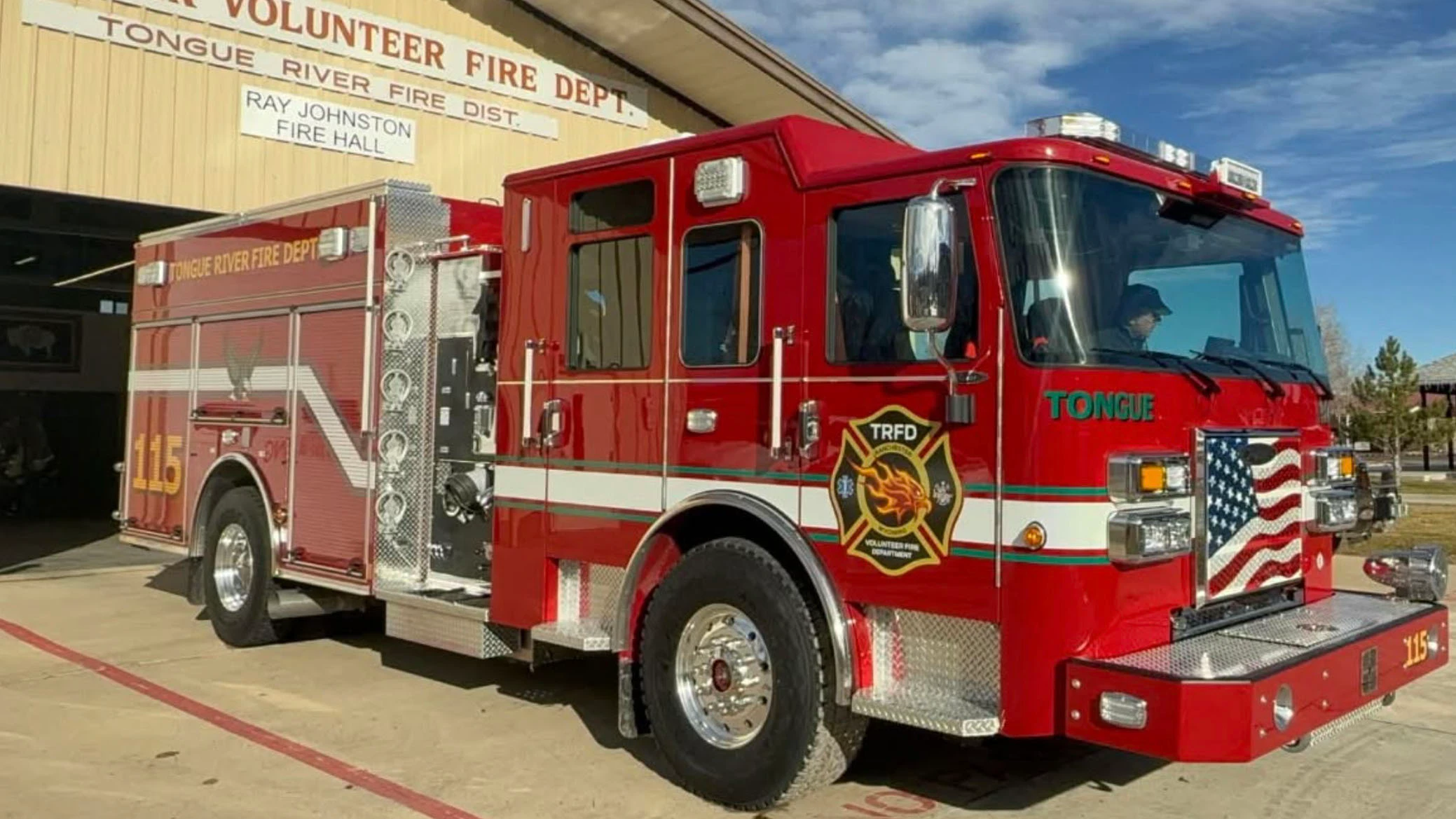
As Fire Chief, I believe our taxpayers deserve an explanation of why we cross that line, what it costs, and, more importantly, what it means for the safety of the people we serve.
The answer is straightforward: Emergencies do not recognize state boundaries, and neither does our responsibility to protect our neighbors and our own communities.
Our volunteer firefighters respond to both medical emergencies and fires across the Montana border for several important reasons.
First, consider Interstate 90. This highway is the primary route to Billings for many Sheridan County residents traveling for medical appointments, shopping, business, and family activities.
When a serious vehicle accident occurs just across the Montana line, the people involved may very well be Wyoming residents, our neighbors, or members of our own families.
The nearest Montana-based ambulance and emergency medical service responding from Hardin can be 45 minutes to an hour away from incidents that our volunteers can reach in approximately 20 minutes.
Our department is also the closest fire department equipped with vehicle extrication equipment capable of supporting Sheridan Regional EMS in rescuing people trapped in wrecked vehicles.
When someone is seriously injured and trapped in a vehicle, those 25 to 40 minutes can make the difference between life and death.
Are we really prepared to tell a Wyoming family that our firefighters stood down because their accident happened a few miles on the wrong side of an imaginary line?
Second, we cross the line to protect Wyoming itself.
Wildfires do not stop at state boundaries.
A fire that starts in Montana can quickly spread south into Wyoming, threatening homes, ranches, livestock, agricultural operations, and public lands. Our district sits directly in the path of that potential threat.
We are not going to stand at the state line and watch a fire grow larger simply because it has not yet crossed into Wyoming.
Attacking a fire while it is smaller, more manageable, and still in Montana is often the most effective and economical way to protect Wyoming property and taxpayers.
There is also an important connection between the landowners on both sides of the border.
Wyoming taxpayers and ranching operations own or lease substantial property in Montana. These include Sunlight Ranch, Padlock Ranch, Shawn Ankney, Dewey Carlton, Paula Leuschen, and Larry and Vicki Hanft, among others.
These are people and operations with economic interests on both sides of the state line.
They contribute to our regional economy, maintain agricultural operations, and have a reasonable expectation that emergency services will work together to protect lives and property. The benefits of that protection do not end at the border.
I also want to address the question of accountability.
The Tongue River Fire Protection District is an independent fire district, separate from Sheridan County government.
We recognize the importance of establishing formal agreements governing emergency responses across state lines. To that end, our district is independently working toward a memorandum of understanding with the State of Montana.
That process takes time, particularly when the administrative work, just like our emergency response, is carried out by volunteers. We are working toward a formal arrangement that recognizes the realities of protecting a community situated directly along a state boundary.
Finally, there is the question of cost.
Our firefighters are volunteers. They do not receive salaries for responding to these emergencies. The direct incremental costs to our district are largely limited to fuel and wear and tear on our equipment.
Those costs are real, and we take our responsibility to Wyoming taxpayers seriously.
But they must be weighed against the potential consequences of doing nothing: a life lost because help was delayed, a wildfire that grows beyond control, or Wyoming homes and ranches destroyed by a fire we could have helped contain before it reached our state.
To suggest that we should stop at the state line to save a few dollars is akin to tripping over a $100 bill to pick up a penny.
I understand and respect the expectation that taxpayer dollars be spent responsibly.
As Fire Chief, I share that expectation. But responsible stewardship means more than simply minimizing expenses. It means making sound decisions that protect the people, property, and communities those dollars are intended to serve.
Our volunteers leave their families, jobs, and personal obligations when the call comes. They do not ask whether the person trapped in a vehicle pays taxes in Wyoming or Montana. They ask where the emergency is, whether they can help, and how quickly they can get there.
We cross the line because it makes sense operationally, financially, and morally. We cross the line because protecting Wyoming sometimes means acting before a threat reaches Wyoming.
And we cross the line because, when someone's life is on the line, the location of a state boundary should not be the deciding factor in whether help is provided.
The state line may define our jurisdiction, but it should never define the limits of our common sense or our commitment to saving lives.
Sincerely,
Chief Jeff Barron
Tongue River Fire Protection District
Ranchester, Wyoming


