

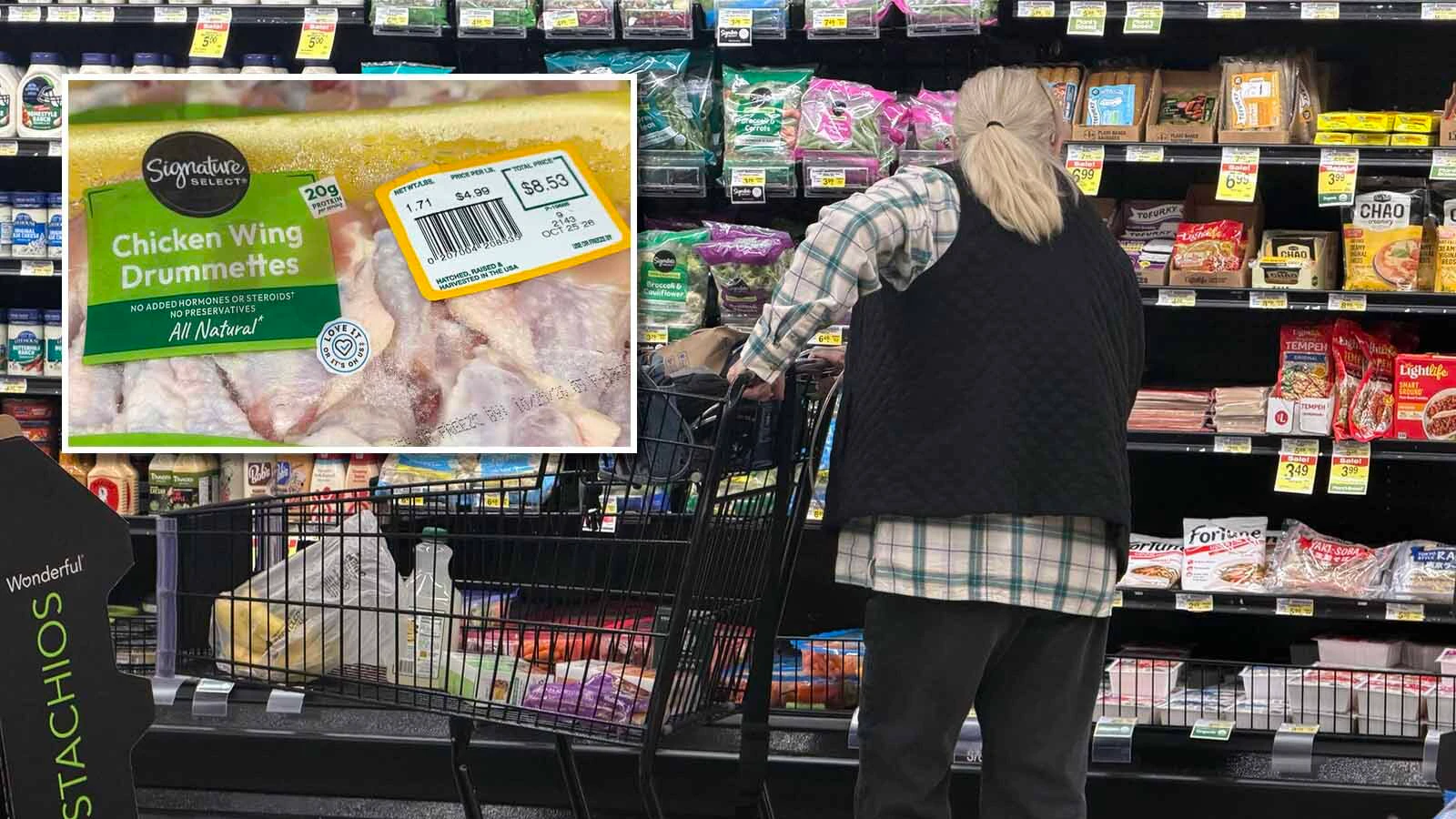
Count Jaime Ramirez as someone who’s religious about checking the “use by” and “sell by” dates at the grocery store.
If it’s anywhere close — or past — that day’s date, “That’s a hard pass for me, man,” Ramirez said Tuesday while pushing a cart full of groceries out of the Walmart store on Del Range Boulevard in Cheyenne.
“I got sick once on some bad meat,” he said. “I got home, cooked it up, and then spent the next two days puking and in the bathroom. After that, I check everything.”
Although food is typically still edible on or a little past the “use by” and “sell by” dates, Ramirez said he isn’t taking any chances.
“I don’t care. Even if it’s close, I won’t go near it,” he said.
Close To The Edge
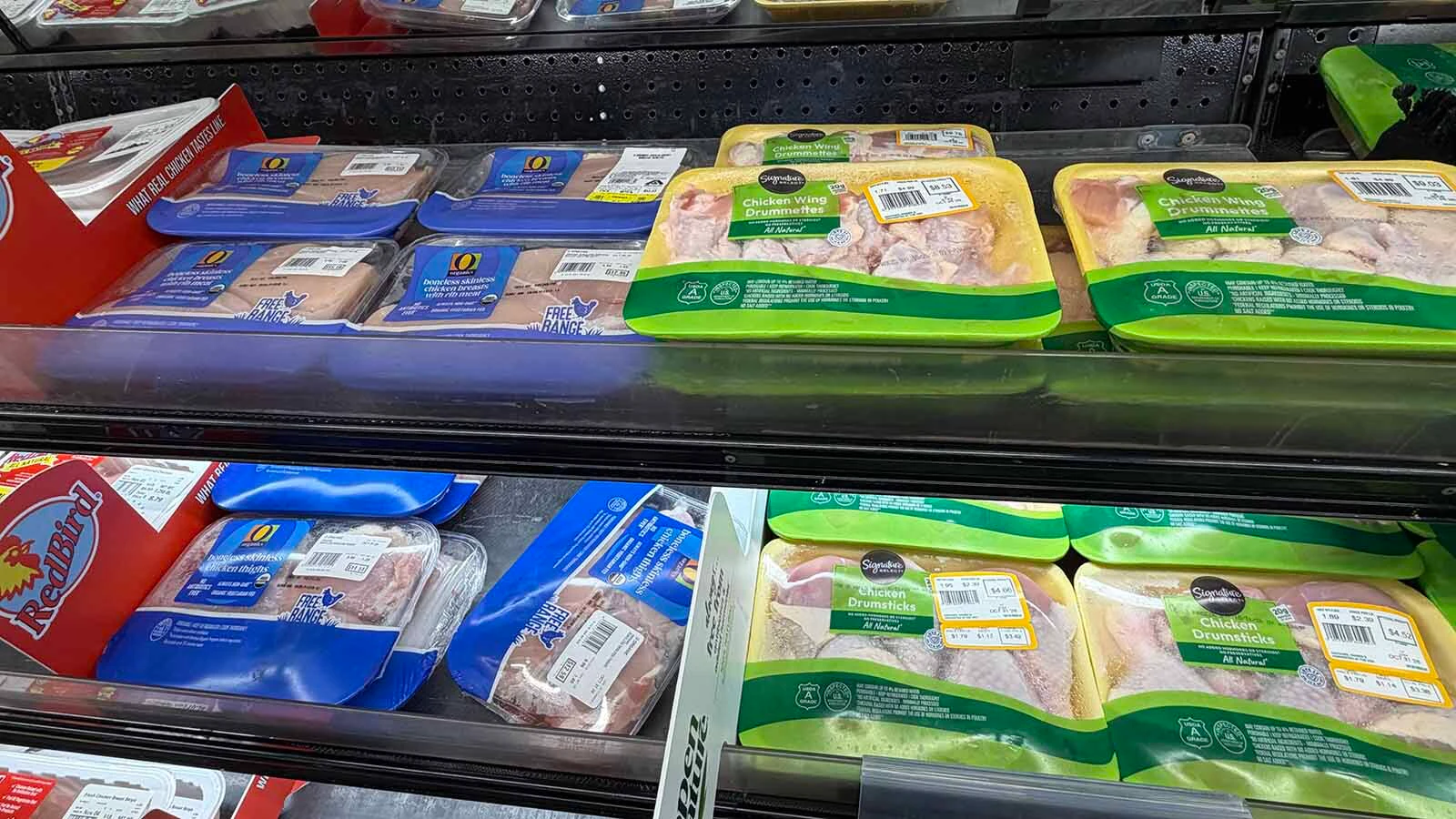
Ramirez would’ve been one to check, then steer clear of the package of Signature Select chicken wing drummettes in the refrigerated meat section of the Casper Albertsons store on Tuesday, Oct. 27 with a “use or freeze by” date of Oct. 25.
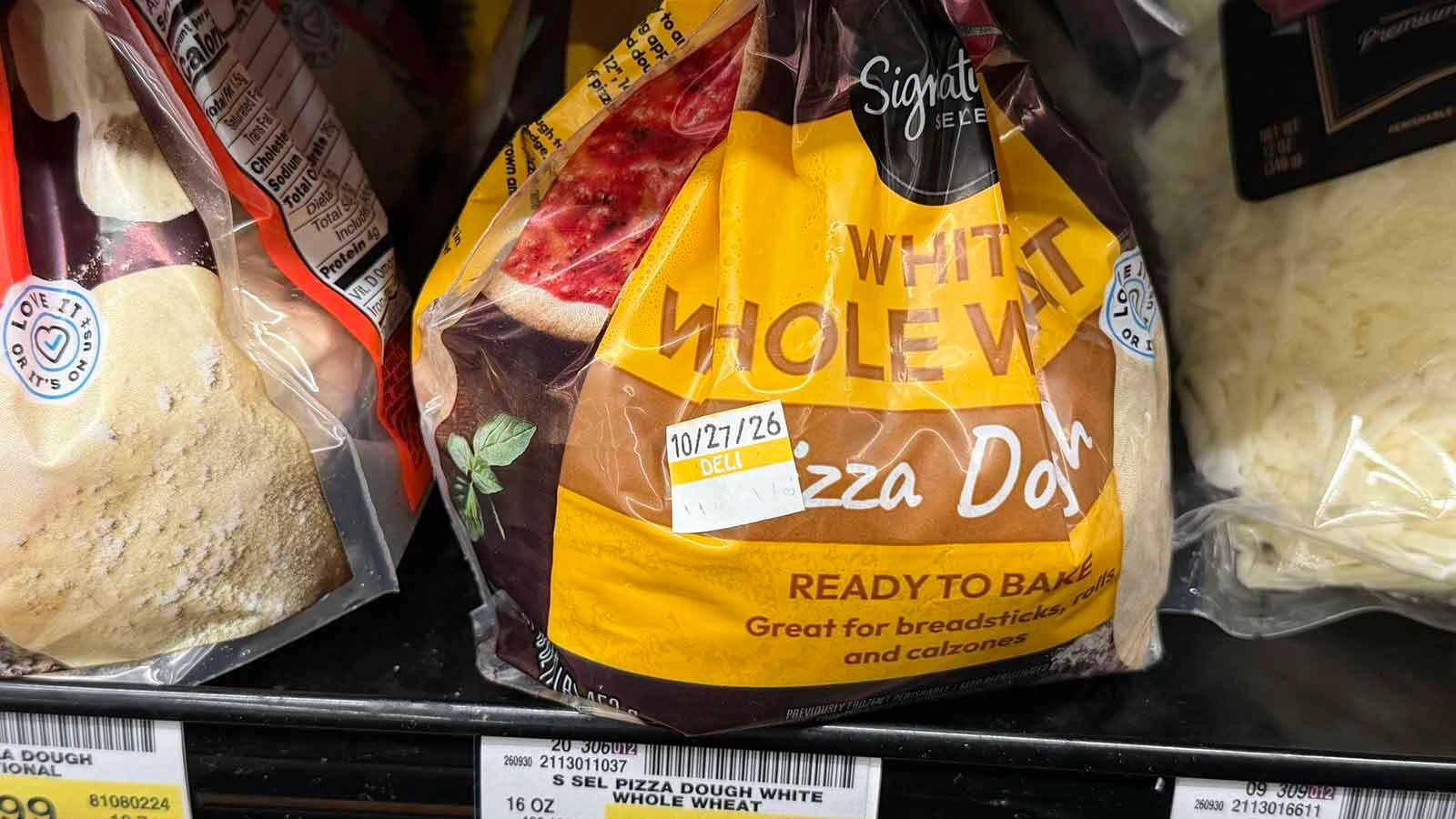
Nearby, seasoned chicken carried an Oct. 27 sell-through date. A package of refrigerated pizza dough was dated Oct. 27.
In the pet food aisle, a container of perishable Sheba brand cat food was marked “Best By 03/21/26” — more than seven months past its date — and was sitting beneath a bright red clearance tag.
Other products were perfectly current.
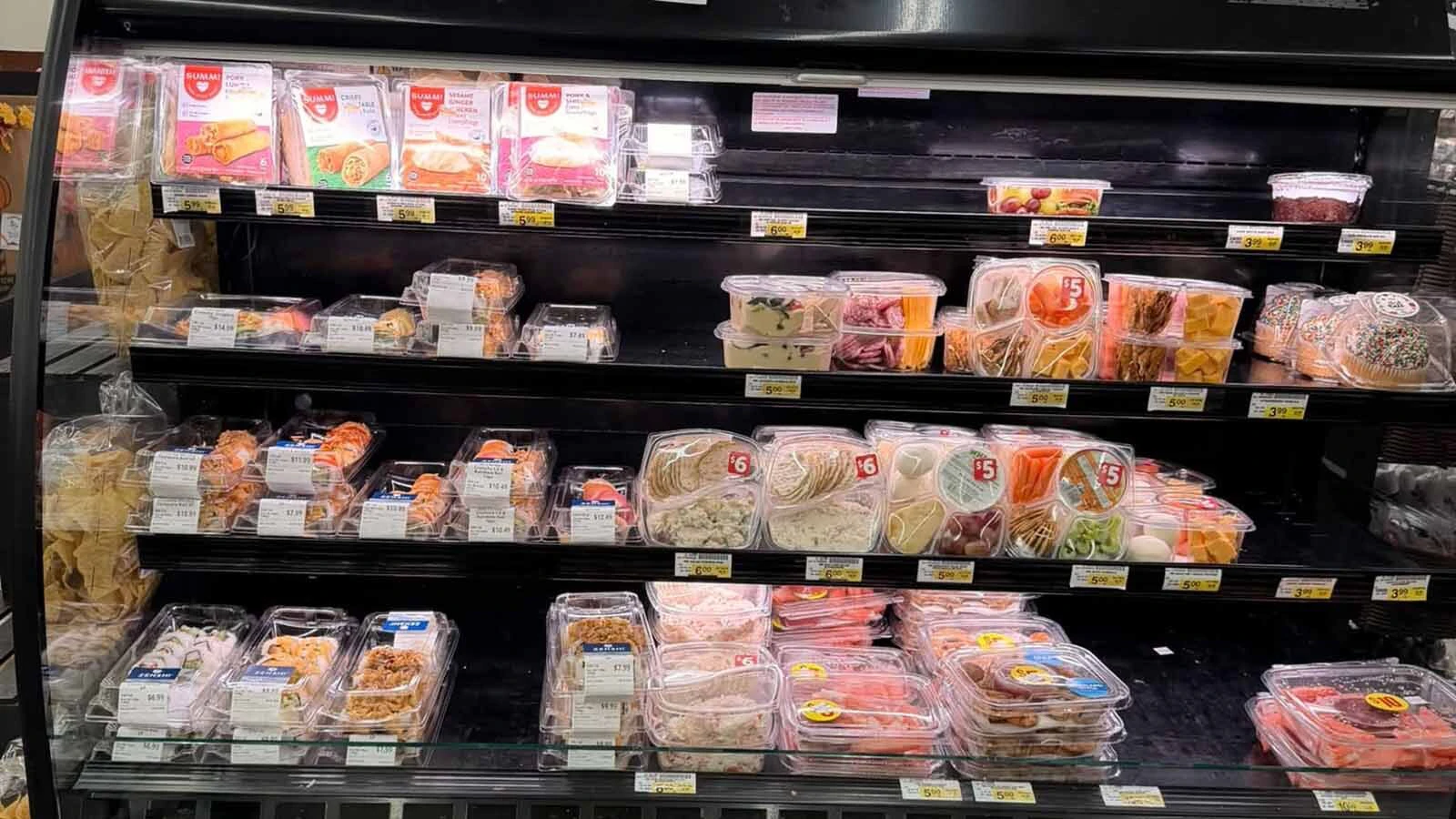
Salmon was dated Oct. 28. Chicken salad had an Oct. 29 sell-through date. Another ready-to-eat meat-and-cheese tray had reached its Oct. 27 sell-through date.
A section of the Albertsons frozen-food cases that normally holds frozen entrées was stripped bare, leaving rows of black shelves and price tags behind.
Cowboy State Daily could not determine why the section was empty.
Across town at Smith's on CY Avenue, the race against the date is easy to spot by the bright markdown stickers trying to move food before the dates caught up with them.
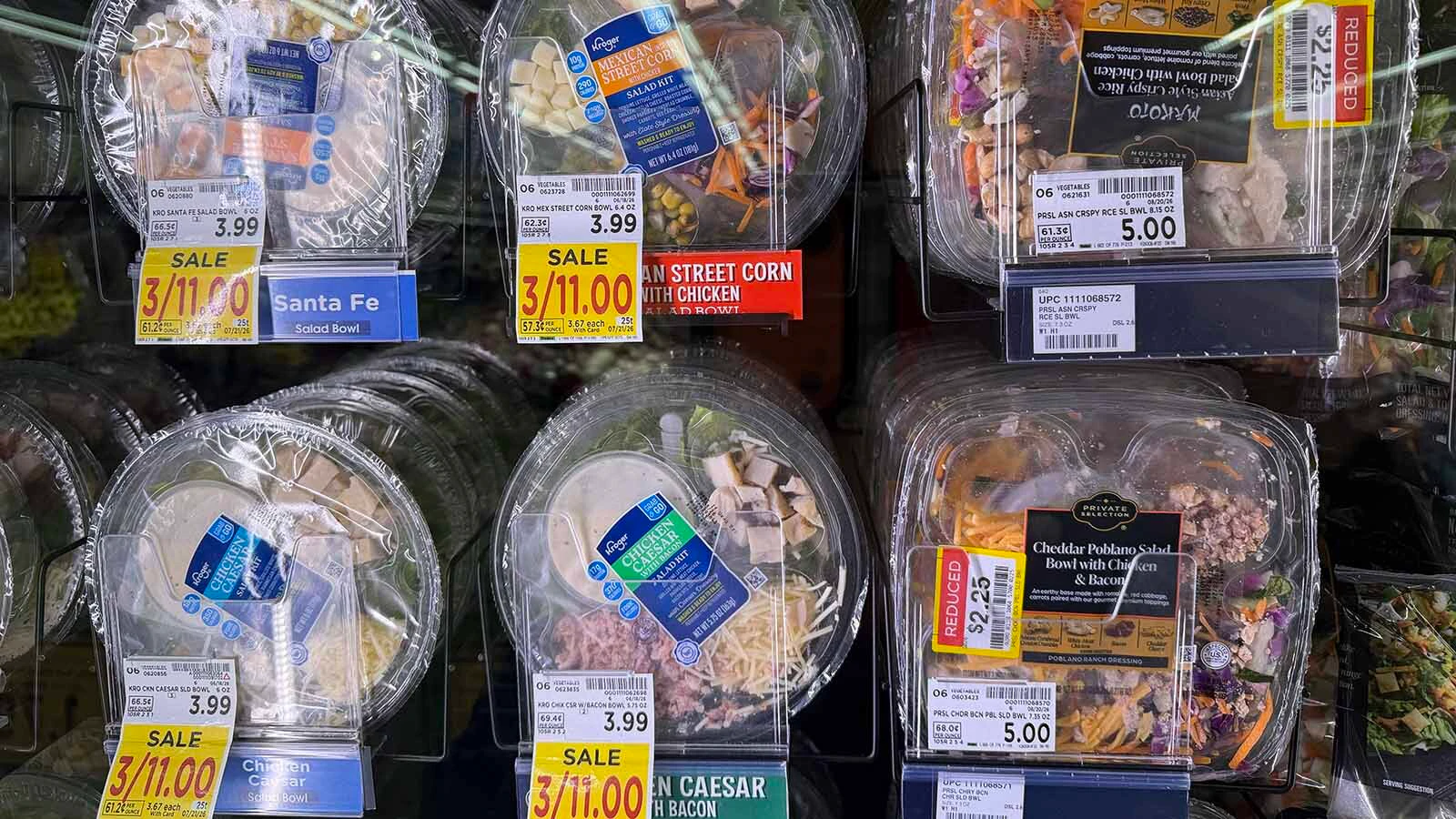
An organic kale Caesar salad kit marked “Best If Used By Oct. 29" was on sale for $1.40. Butternut squash noodles with an Oct. 29 sell-by date had been slashed to $3.45.
Even those close-to-the-edge products would be too old for Jayshree Patel, who said she’s very particular about always checking the dates on the food she buys.
“She’s very careful, checks everything,” said her husband, Piyush, as they were grocery shopping in Cheyenne on Tuesday. “She won’t buy anything that’s less than a week out from the date.”
Not Illegal
In Wyoming, and most of the country, selling food simply because it has passed the date printed on the package isn't illegal.
Federal law generally treats most package dates as measures of quality rather than food safety.
Albertsons itself has acknowledged that the dates stamped on food can be confusing. Suzanne Long, the company's chief sustainability and transformation officer, said in a 2024 interview that most code dates are indicators of freshness and quality rather than food safety.
LeAnn Miller sees the date issue from the retailer's side.
She runs Eat Wyoming in Casper, and said that customers aren't particularly interested in debating the finer points of what “sell by” means.
“If there’s an expired date, I can tell you right now none of my shoppers will buy it,” Miller said. “They’ll say, ‘Hey, you know that this has expired?’ Hand it to me, and then I have to take it off the shelf did because they won’t buy it.”
For Miller, that makes the technical distinction between “expired” and “best by” somewhat irrelevant. The food may be perfectly good, but if nobody buys it, the store eats the loss.
And people notice.
Taylor Hunter is a Cheyenne DoorDasher who ranted Monday in a local Facebook group about seeing expired food still on the shelves at a local grocery store.
“While door-dashing today, I noticed all of this food by the deli @ Albertsons on East Pershing is either very close to the expiration date, or weeks past,” Hunter wrote, along with posting a photo of the deli case.
“I noticed some items that expired on 10/17,” Hunter added, along with a green-faced sick emoji.
'Sell-By'
The U.S. Department of Agriculture says phrases including “Best if Used By,” “Sell-By,” “Use-By” and “Freeze-By” are generally used to describe food quality, with the major exception of infant formula. Federal law doesn't require those dates as indicators of food safety.
The Food and Drug Administration acknowledges the system is confusing. There isn't even a universally accepted vocabulary for food dates in the United States, and manufacturers use a variety of phrases.
The agency supports “Best if Used By” as a standard phrase for telling consumers when something should have its best flavor and quality — not when it suddenly becomes dangerous.
It also matters because Americans throw away an enormous amount of food over those little numbers.
FDA estimates confusion over date labels accounts for about 20% of consumer food waste.
ReFED, a national nonprofit that tracks food waste, found concerns about date labels account for nearly 46% of retailers’ surplus food nationwide.
In Wyoming alone, they estimate the retail sector generated about 8,660 tons of surplus food in 2024, the most recent year available. That's more than 17.3 million pounds of food in a year — roughly 47,000 pounds every day.
The nonprofit noted that not all of it goes in the garbage. Some will be donated, composted, or otherwise diverted.
How Does It Get There?
Miller said there isn't much mystery behind how old products survive on a shelf.
“Usually it’s not paying close enough attention to your inventory that you have expired products,” she said.
Grocery inventory is constantly moving. New cases arrive. Old stock is supposed to move forward. Products get faced and rearranged. Customers pick something up, change their minds and put it somewhere else. Shoppers reach behind the first item looking for a newer one.
Miller said the modern expectation that grocery shelves should always look abundant can compound the problem.
A full shelf looks good to a shopper. It also means more inventory is sitting there waiting for someone to buy it — and when nobody does, “That’s a huge financial loss,” Miller said.
She also doesn't love the way consumers use the word “expired” for every date on every package.
“I’ve eaten things that have expired, and they’re perfectly fine," Miller said.
Still, she isn't advocating blindly eating old food. She said the type of food, how it was stored and the condition of the packaging all matter. If anything looks or smells suspicious, her advice is simple: Don't eat it.
Best If Used By
Jennifer Escobedo, director of Environmental Health for Cheyenne-Laramie County Public Health, said dates printed on commercially packaged foods are usually telling shoppers something about quality, not marking the moment the food becomes unsafe.
“In most cases the date labels are indicating best quality date parameters rather than date marking for food safety,” Escobedo told Cowboy State Daily.
The “best if used by” date on a frozen bag of shrimp is not the same thing as a discard date on potato salad prepared in the deli.
There are exceptions. Food prepared at the store must be date marked and used within seven days, Escobedo said.
That includes food a grocery store cooks, properly cools and then puts back out for sale under refrigeration. Day 1 is the day it was prepared.
“If it is a product that falls within the seven-day holding window, we do require that product be discarded and it is a violation,” Escobedo said.
Inspectors pay close attention to what food-safety people call TCS foods — “time and temperature controlled for safety.” Think eggs, dairy, meat, cut lettuce and cut tomatoes rather than a dusty box of crackers lurking in the back of a pantry.
“Prepared foods that are TCS … must be date marked to prevent foodborne illness,” Escobedo said. “These are the priority foods during an inspection.”
Her inspectors do find problems. “In most cases, date marking was missing on fresh food. In a few cases, food is expired and must be disposed," she said.
Baby food and infant formula are another matter. Escobedo said inspectors who find those products for sale beyond the package date cite it as a violation because the products can lose nutritional value.
For ordinary commercially packaged food, however, stores generally have another incentive to get it off the shelf before the date arrives: Nobody wants to buy it, she said.
Doc Says: Look
Dr. R. Larry Meuli remembers inspecting food establishments during his years in Wyoming public health, and finding expired grocery products wasn't the thing that kept inspectors busiest.
“Restaurants were more of a concern to me than grocery stores,” Meuli said.
Food safety inspections are much broader than hunting for old dates. Inspectors are looking at refrigeration, temperatures, sanitation, food handling and contamination — the sorts of failures that can make a lot of people sick.
Meuli knows that part firsthand.
Years ago, he said, he got food poisoning from potato salad served at Cheyenne's old Hitching Post.
“When you’re one of the victims who gets sick from that, it is pretty meaningful,” he said.
His advice to grocery shoppers is straight forward: Look.
Check dates, but also look at the package itself. Bulging cans, cracked containers or food that plainly looks wrong deserve attention regardless of what date is printed on them.
That’s something Shaun and George Carroll say they do all the time when shopping for groceries, especially perishables.
They tend to avoid things that have either that day’s date or one that’s within a few days.
“Yeah, I mean, you kind of have to go home and eat it right away if it has that day’s date on it,” said Shaun. “At least, you should, right?”
“Who wants to chance it?” added George.
Kolby Fedore can be reached at kolby@cowboystatedaily.com and Greg Johnson can be reached at greg@cowboystatedaily.com.


