

Fragments of the past in an old family scrapbook captured Jay Harman’s attention one day and an obsession was born.
Staring back at him from the scrapbook in a sepia-toned photograph was a man of mystery: His great-uncle, Aaron Slothower. The mustached man was well-groomed and dressed in a suit, with young, earnest eyes fixed straight ahead.
The man seemed about to speak, and Harman could not help but wonder about the stories his great-uncle could tell.
But nothing besides the photo could tell him anything at all.
Finally, one day Harman ran across a 1903 newspaper clipping with a photo he recognized. It was his great-uncle staring back at him again, but this time there were words.
His great-uncle was speaking to him, an echo from the past.
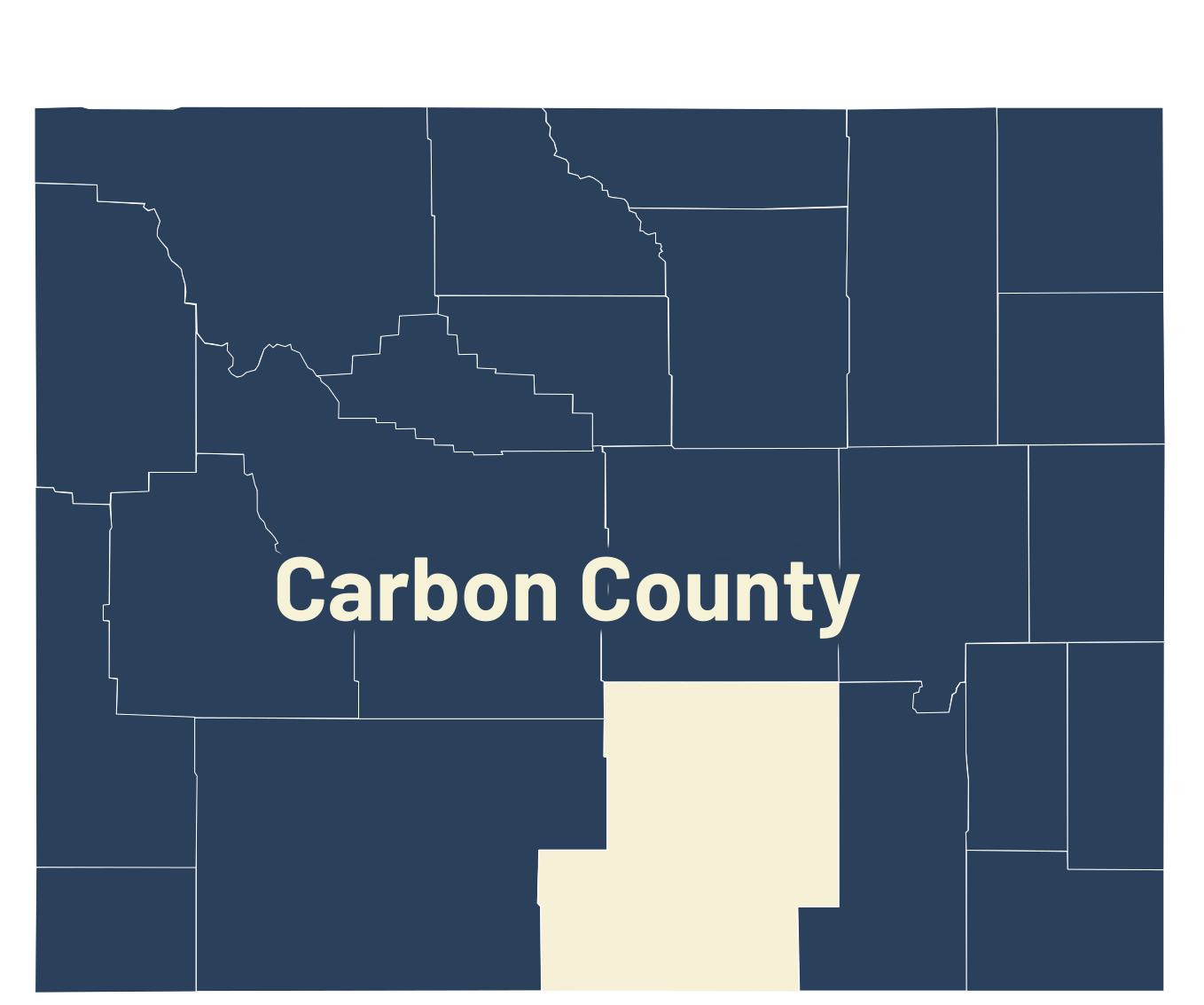
Slothower, it seemed, had helped establish a mining town called Rambler near Battle Lake in Carbon County. That’s a ghost town today, all but forgotten.
But it was the oldest mining settlement in the Encampment district, where copper boom towns sprang up.
It was the George Doane strike that started Rambler and would ultimately draw Ed Haggarty to the area. Haggarty later made a major copper discovery and helped establish the famous Ferris-Haggarty mine, alongside investors that included George Ferris.
Everyone remembers the Ferris-Haggerty mine, but Rambler, which started it all, has been forgotten.

Love At 10,000 Feet
In perusing old newspaper clippings in Wyoming archives, Harman learned his ancestor was the primary promoter and treasurer for Doane’s Rambler mine.
“By 1903, there were 175 people living in the little town, and my great-uncle — it seems like he had his fingers in all kinds of stuff there,” Harman said. “All the way from being a promoter for George Doane, the original guy who made the strike, to being postmaster for a while.”
He also was associated with Rambler’s stage stop and store, and held mining claims with his partner, Leslie Niece.
Slothower also found love while he was in Rambler. In December 1902, he and Niece married sisters in a double-wedding ceremony the day before Christmas — Rambler’s first wedding.
“The ceremony was performed at the residence of the brides’ parents,” a Dec. 26 article in the Grand Encampment Herald says. “About 25 guests were present and partook of the wedding supper, after which adjournment was made for the hall across the street and dancing filled up the remaining part of the night.”
The grooms, the article added, were two of the “most solid and enterprising of Rambler’s citizens, each holding offices in the Rambler Mining Company.”

No Sun Until March 6
Harman’s imagination was caught now. Who were these people getting married and chasing copper at 9,000 feet of elevation?
“I’ve been over to eastern Oregon a bunch for elk hunting, deer hunting, and I’ve also hiked way up high into the Cascades up around Mount Hood and the Pacific Crest Trail,” he said. “I’ve camped in snow before and I know it’s tough. These people lived up there. And they were taking a pick and using rock drills. They were trying to tunnel into the sides of rocky faces on the slope of a mountain. So I’m thinking, man, these people were really something.”
He had to know more. So he kept searching through old newspaper archives. He found what he was looking for in an 1899 article in the Saratoga Sun.
“Mr. Doane had been at the mine all winter alone,” the article said. “He says he did not see the sun from the 11th day of December until the 6th day of March, it having stormed continually during the entire period.”
In the article, Doane estimated the snow was 12 feet high around the mine. It ranged from 25 to 40 feet deep where it had blown into drifts. The entire country was “one level expanse of snow, hollows and canyons being drifted even full.”
“Mr. Doane said that the place from which he secured water was 120 feet from his cabin door,” the article went on. “He undertook to keep the path open while he remained there.”
That resolve didn’t last.
“It stormed so continually, and the wind blew so fiercely that he was finally compelled to abandon the undertaking,” the article said.
Doane told the newspaper it snowed almost constantly for three months straight.

Not Just A Mining Town
While Doane was snowed in, a man named “Finkey” was gadding about the area, pretending he was the “down and out” owner of Doane’s mine.
His act convinced an unfortunate investor named Price to pay him $1,000 for a mining claim that wasn’t his to sell.
Ultimately, Price lost all of his money. Doane, the real owner, refused to give him any interest at all in his mine.
But Rambler was more than just a mining town. By 1903, it had 15 school-age children, and the community raised $150 to provide them a school.
Slothower was the town’s longest continuous inhabitant. He arrived in 1897 from Albany County when there was no town at all.
Eventually, he would own a large general merchandise store with S. H. Porter, stocked with $5,000 worth of goods to supply Rambler, according to a newspaper account from the time period.
The store was managed by M.F. Cannon. A photo taken inside Slothower’s shop shows a place bulging with goods in every possible nook and cranny. Some even hung from the ceiling.
The shelves were so full, they appeared to be slightly bowed in the center.
Porter was also the postmaster. He received mail every day except Sunday and stages traveling between Dillon and Grand Encampment stopped every day at noon.
Slothower would take over as postmaster in 1904. Just four years later, the copper market slumped and fires at the smelter helped bring Rambler’s boom years to an end.

Finding Rambler Today
Photographs and newspaper accounts gave Harman a town he could picture in his mind. Now he wanted to find it. He wanted to match his photos to a real place in the world.
This past summer, he finally got the chance. Little Snake River Museum Director Lela Emmons arranged permission for a visit and brought along a guide familiar with the area.
“Because I had these old photos and everything, I could look over to one side and say, ‘You see that bench over there? That’s where this and this and this building used to sit,’” Harman said. “And I’d show them on the little photo and so we could figure things out.”
One “dished-out” spot behind the bench turned out to be full of old, mostly broken bottles.
“Because of the different colors of the old bottles we could get an idea as to how far back they were from,” Harman said. “And the local guy, he said, ‘Oh this one, that’s a pale purple. That one goes way back to the copper boom for sure.’”
The bottles turned out to be right behind where Harman’s photos suggested the Rambler Saloon used to be.
“They must have just thrown the bottles out after the patrons had their whiskey and beer,” Harman said. “They just threw the bottles out the back end.”
The Search Continues
There aren’t many buildings left from the copper boom days, Harman said.
There was one small log cabin and there was another spot with buried broken glass.
“We figured out that it was by where the old Seamens (House) hotel used to be,” Harman said. “We put the clues together by looking at some old photos.”
Some of the photos Harman used for the trip came from the Lora Webb Nichols collection, he added.
“Those are a wonderful resource,” he said. “I got a number of photos from the batch of photos that University of Wyoming and the American Heritage Center have.”
The photographs have helped flesh out the town of Rambler, but Harman is still missing some faces, including George Doane’s.
For all the newspaper accounts Harman has found about the prospector, he has yet to turn up a photograph of the man himself. Pictures of the mine are scarce, too.
“It’s such a fascinating story,” he said. “And I really respect what they did back then. I think it’s just incredible, super interesting. There’s really something special up there, and a lot of people don’t even know about this place.”
Somewhere, another scrapbook may hold a clue.
Harman is still looking.
Renée Jean can be reached at renee@cowboystatedaily.com.


