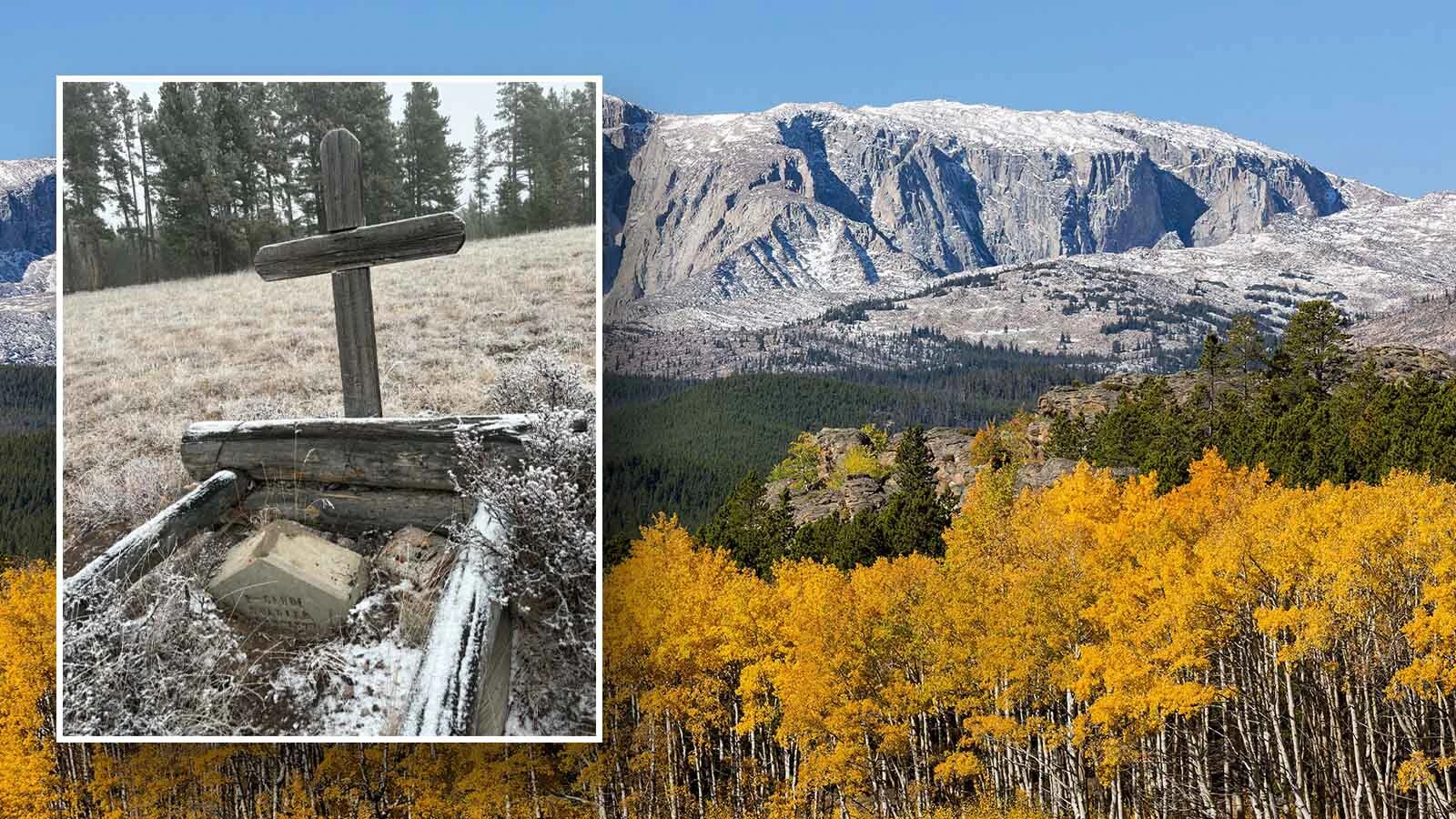
Matthew Garrison said he didn't see a single elk during his recent hunting trip into the Bighorn Mountains, but at least he discovered some fascinating old gravesites.
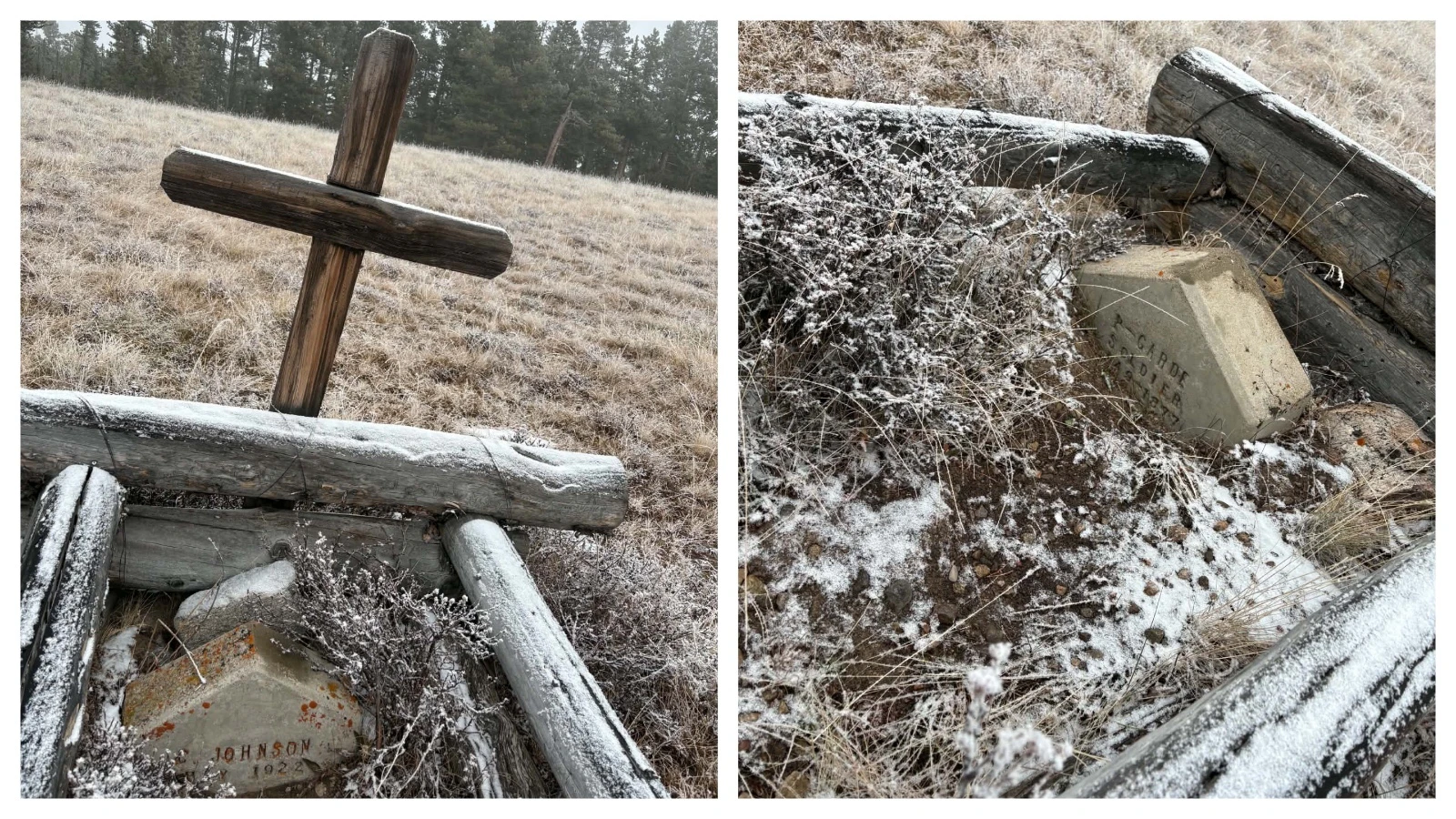
Garrison, who lives in Gillette, took some photos of the site, which indicate two men buried next to each other 45 years apart.
Peter Garde, 1849-1877, was apparently a soldier who accidentally shot himself while trying to clean his rifle.
Carl Johnson, birthdate unlisted, was a railroad tie hack who reportedly died of a heart attack somewhere in the general area in 1922 and ended up buried just a few feet away from Garde’s final resting place.
Garrison’s photos and brief account of what he saw at the gravesites caught the attention of Michelle Nelson. She’s a taxidermist in Rochester, Washington, who also happens to have a passion for amateur gravesite research.
Two Deaths, 45 Years Apart
Garde’s gravesite makes sense, Nelson told Cowboy State Daily. The Army was active in the area at the time. Back then, there wasn’t time for niceties when people died in the middle of nowhere.
“They didn’t transport bodies for a week, bloating on the back of a mule. You were basically buried where you died,” she said.
Johnson’s gravesite is baffling, Nelson said. As near as she can tell, there wasn’t an active rail line within miles of the site.
So, she wonders whether he succumbed to a heart attack during a foray up into the mountains to cut timber for rail ties.
Other accounts say he died while returning from a trip, most likely a hike, to lakes several miles away.
It might have been just sheer chance that he died near where Garde was buried. And there are reports that a ranger fixed up Garde’s grave in the 1890s, Nelson said.
So, Johnson’s companions might have decided it was a fitting place to lay him to rest because one already well-kept grave was there, she said.
“It makes me wonder if there aren’t other gravesites up there,” she said.
Out of respect for the peace of the location, Garrison declined to describe in detail where it is, saying only that it’s well off the beaten path.
Nelson said the site is obscure, but not undiscovered or entirely unknown. She provides information for the website Find A Grave, which offers information about little-known or undocumented burial sites.
Gravesites Get A Caring Hand
Garde was of French descent and listed as a surveyor. He might have been working for the Army as a civilian contractor, Nelson said. Not much is known about Johnson’s background.
Garrison said he was especially impressed by the headstones that mark each grave bearing the men’s names.
“I can’t imagine packing those all the way up in there,” he said.
He noted that the only other structure he saw in the area was a “makeshift lean-to” that might have been put in sometime after the graves.
Nelson said it’s unlikely the graves are in their original state.
Particularly when Garde was buried, he might have gotten a makeshift cross, at best.
According to her research, a ranger took the time to build a “wooden structure” around his site, probably in 1890, she said.
It isn’t known if that same ranger also made the improvements to Johnson’s grave, but the work appears to be “similar,” Nelson said.
She said she hadn’t found out yet when the headstones were packed in or by whom.
Nelson said she’d like to check into the ranger’s genealogy and see if he still has relatives living in Wyoming. Perhaps there are still family stories of “their great-great grandfather caring for these graves,” she said.
Standing In Appreciation
Garrison said happening upon the gravesites made up for not seeing an elk after hiking for miles in the mountains.
“It makes you appreciate that you’re not the first person to be in here, that there were people in this very same place before,” he said.
He was also thankful to Nelson for providing him with information about the site and the men buried there.
Nelson said she’s grateful to Garrison for sharing his photos and observations.
Hunters are vital to her gravesite research, she said, because they leave well-trodden trails and venture cross-country, finding things that few others see.
Nelson said she loves the mystery and “putting together the pieces” of the history behind obscure gravesites. And she’s glad that curious hunters like Garrison are out there.
“Most people, when they run across this kind of stuff, they don’t know much about it. So, any bit of information I can dig up is really cool to them,” she said.
Mark Heinz can be reached at mark@cowboystatedaily.com.