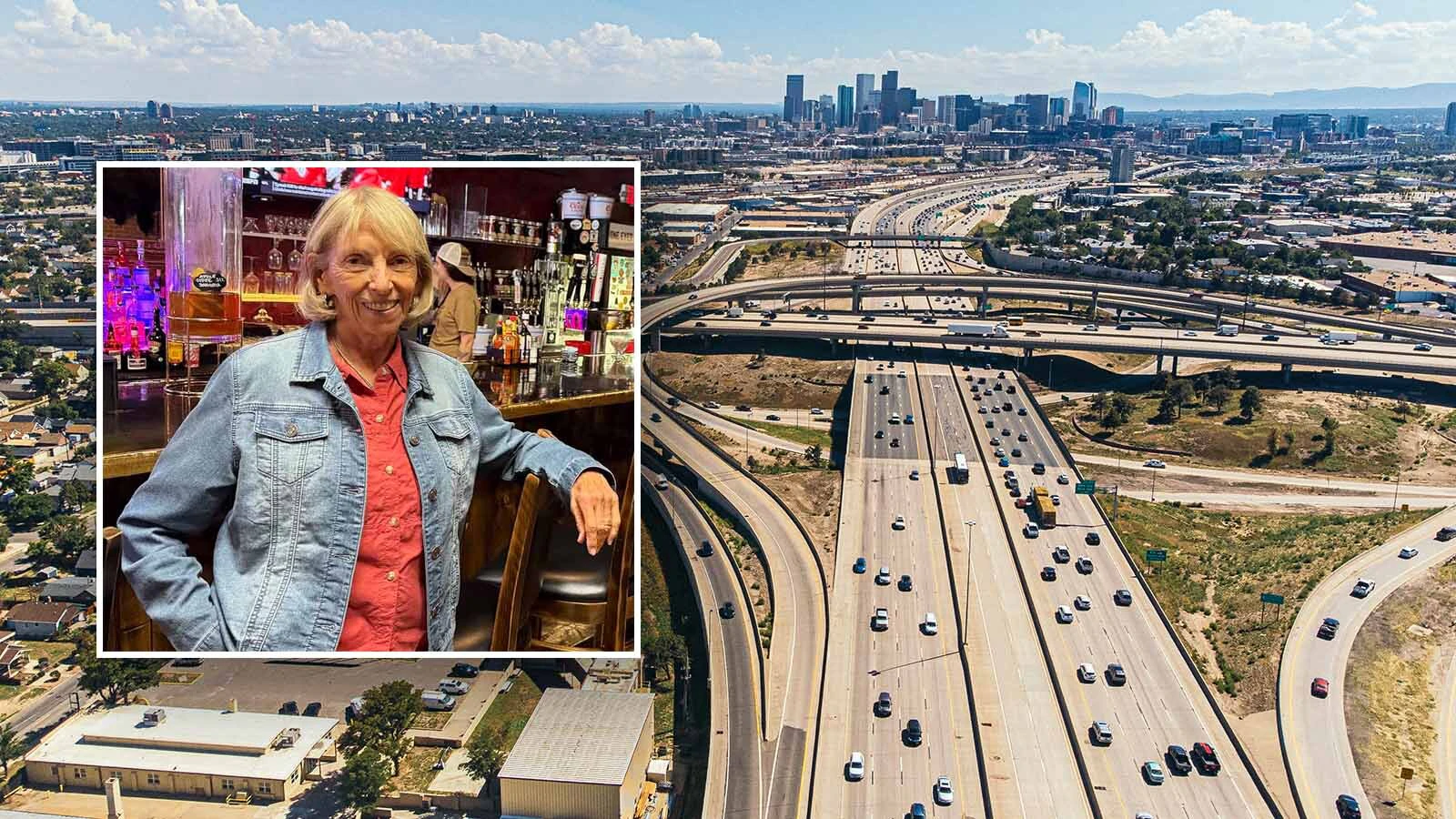
The 11 miles of Interstate 25 that stretch across Denver once belonged to thousands of residents who lost their homes, churches and businesses as the highway route was built over a span of 10 years.
The government acquired or condemned entire neighborhoods through eminent domain. Residents had no recourse but to take the amounts offered and move.
The Denver Library archives document that in 1941 the Colorado Legislature enacted the "Freeway Law," which allowed for this condemnation of property for highways. A north-south highway across Colorado through Denver was one of the recommended routes. In all, according to documents, about 15,000 Denver residents were displaced.
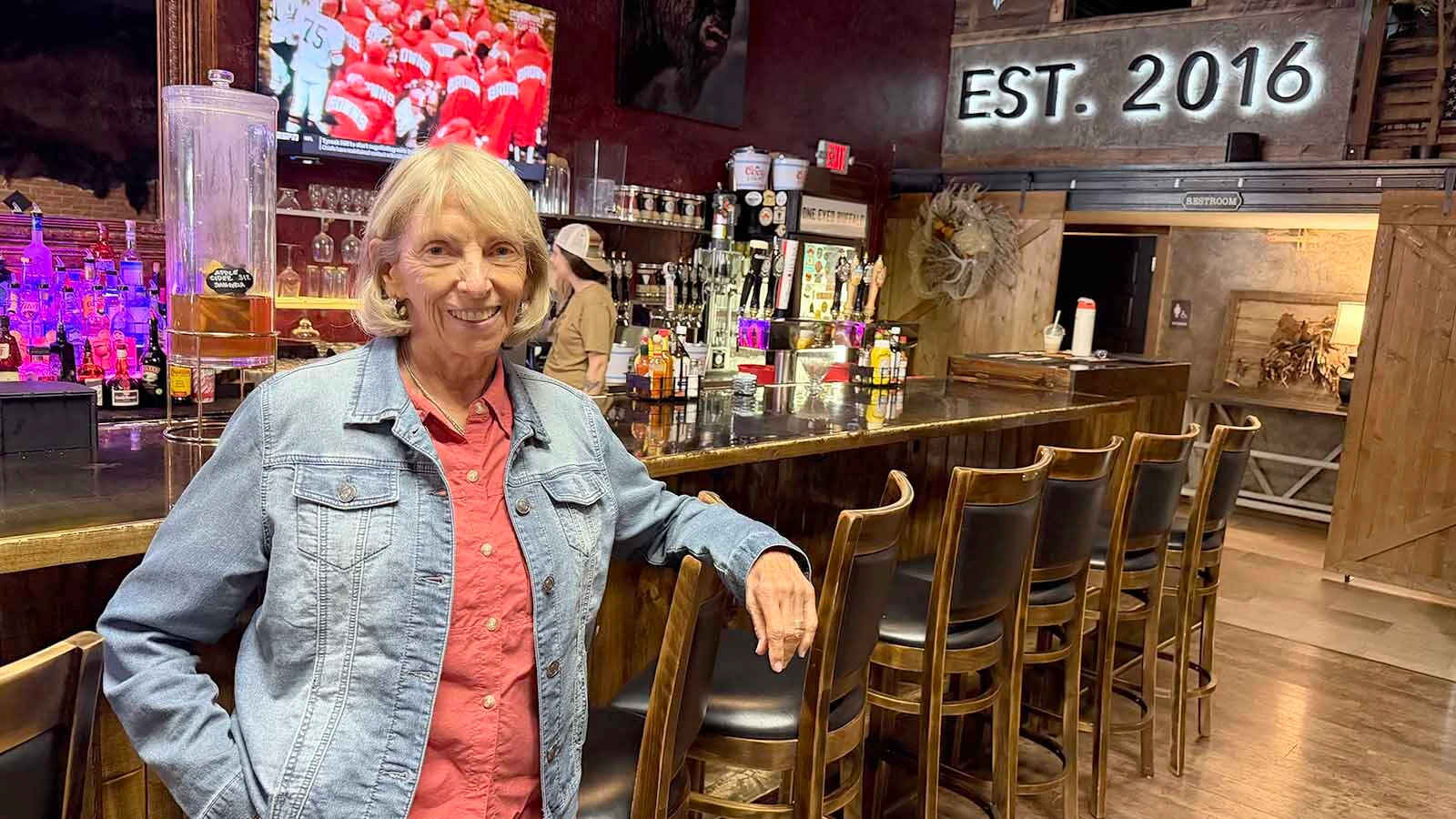
Before moving to Thermopolis, Cozette Medill-Matthews grew up on a quiet street in Denver. When she was 9 years old, that was all changed when Interstate 25, then known as “Valley Highway” was built literally in her backyard. (Jackie Dorothy, Cowboy State Daily) 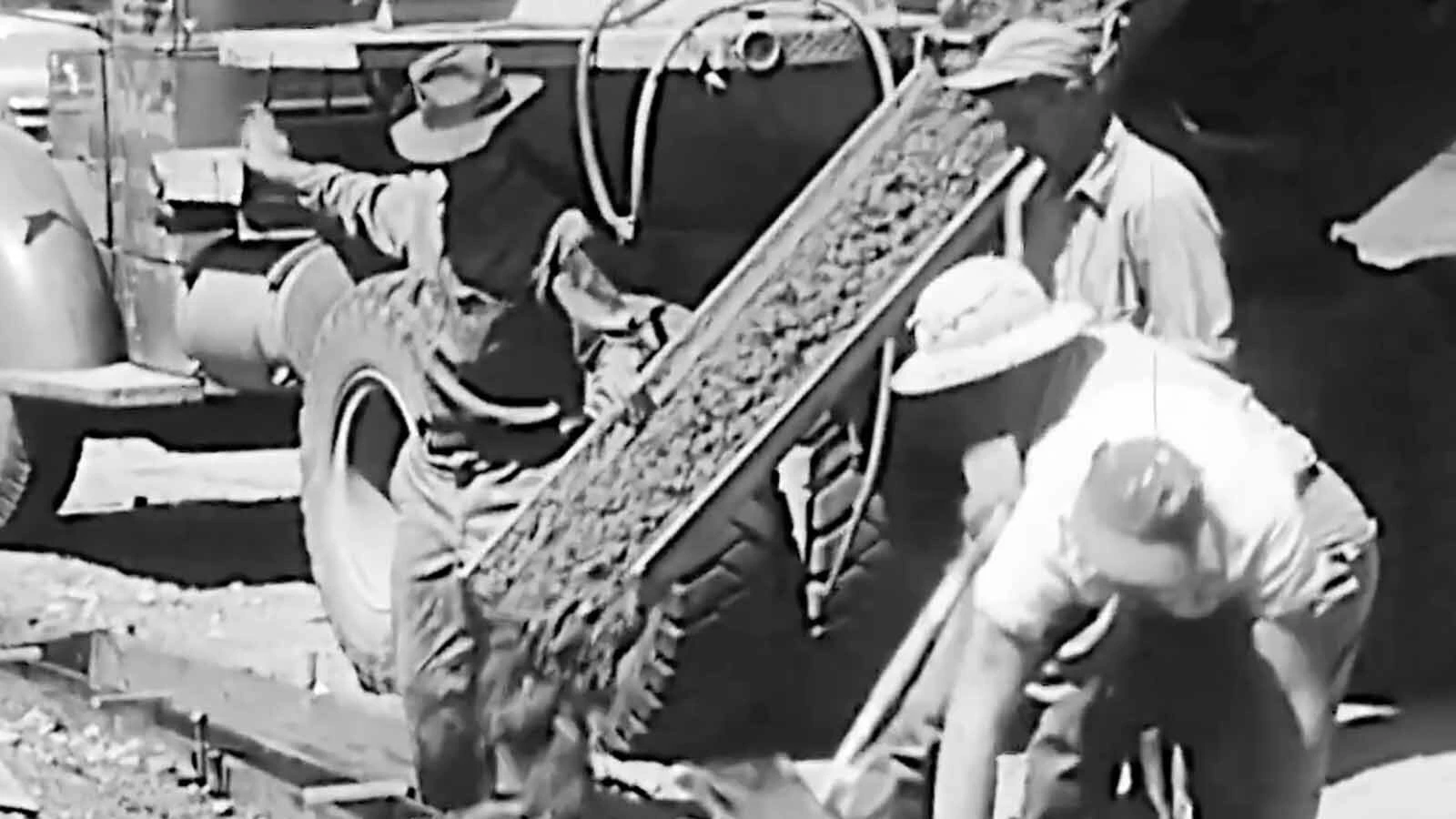
Thermopolis resident Cozette Medill-Matthews’ childhood home lay along this route.
“It was so strange having our whole neighborhood ripped out with big machinery,” Medill-Matthews recalled. “When our neighbors lost their homes, they were gone. We never saw them again.”
Construction began in 1948 and was not finished until 1958. Entire neighborhoods and business districts were demolished in that decade and their lives were irrevocably changed. Lifelong neighbors were separated by the freeway.
The busy interstate was originally known as “Valley Highway,” a name History Colorado traces to a celery farm.
A Quiet Neighborhood
Medill-Mattews grew up near downtown Denver in the era of poodle skirts and sock hops. She would bike to Washington Park and rode the streetcar to the F.W. Woolworth department store. She was born in 1945, when Denver was still often characterized as a cow town, and brought home to Downing Street, where her parents owned a brick Tudor-style home they had purchased the previous year for $6,000.
It was a time of the milkman and incinerators in the alleys rather than dump trucks.
“We loved our neighborhood,” Medill-Matthews said. “We had one telephone on the wall, and I remember my phone number. Spruce 79398.”
As a girl, Medill-Matthews said she was allowed to roam the neighborhood and would come home at dark, her parents never worrying about her. Their modest home had two bedrooms upstairs, a family room, a little dining room and a kitchen.
However, the government deemed her neighborhood expendable.
A Neighborhood Disappears
Medill-Matthews said it was about 1954 when the highway construction reached them. She was 9 years old when there was a knock on the door that was about to disrupt their quiet life.
“I remember these two men coming in and saying, 'We want to take away your house and put in this highway through Denver,'” Medill-Matthews said. “I remember sitting in the front room with my parents thinking about this.”
Ultimately, the Medill house was spared.
“They left our house and one house across the street, south of us,” Medill-Matthews said. “They took out a whole city block on each side of the street and put in the Valley Highway.”
The other house spared was owned by her parents’ best friends, Margaret and John Hunter. They had a son named Duke who was the same age as Medill-Matthews’ older sister, Sandra. The three children watched as the rest of their neighborhood to the south disappeared.
“You can imagine how wide the highway is now, a seven-lane highway,” Medill-Matthews said. “They took that amount of land all the way through the city of Denver and condemned thousands of houses all the way through the city.”
On the other side of that street, only Duke’s house was left, and the rest of the block was taken away. Medill-Matthews said only two other homes were spared to the south of them, and she remembers how a block and a half of houses were taken out.
As a youngster though, she learned to take advantage of the changes.
“I remember as a kid when they started digging this deep, deep hole, we went down there and there was a big flood,” Medill-Matthews said. “It filled up with water, and the water was about 30ft deep so we took rafts down there and floated around.”
Best Friend Loses Home
Her best friend wasn’t so fortunate.
“I found out later her house was taken away,” Medill-Matthews said. “She was not too far from us and her house was condemned. The city gave them very little money to go find another house.”
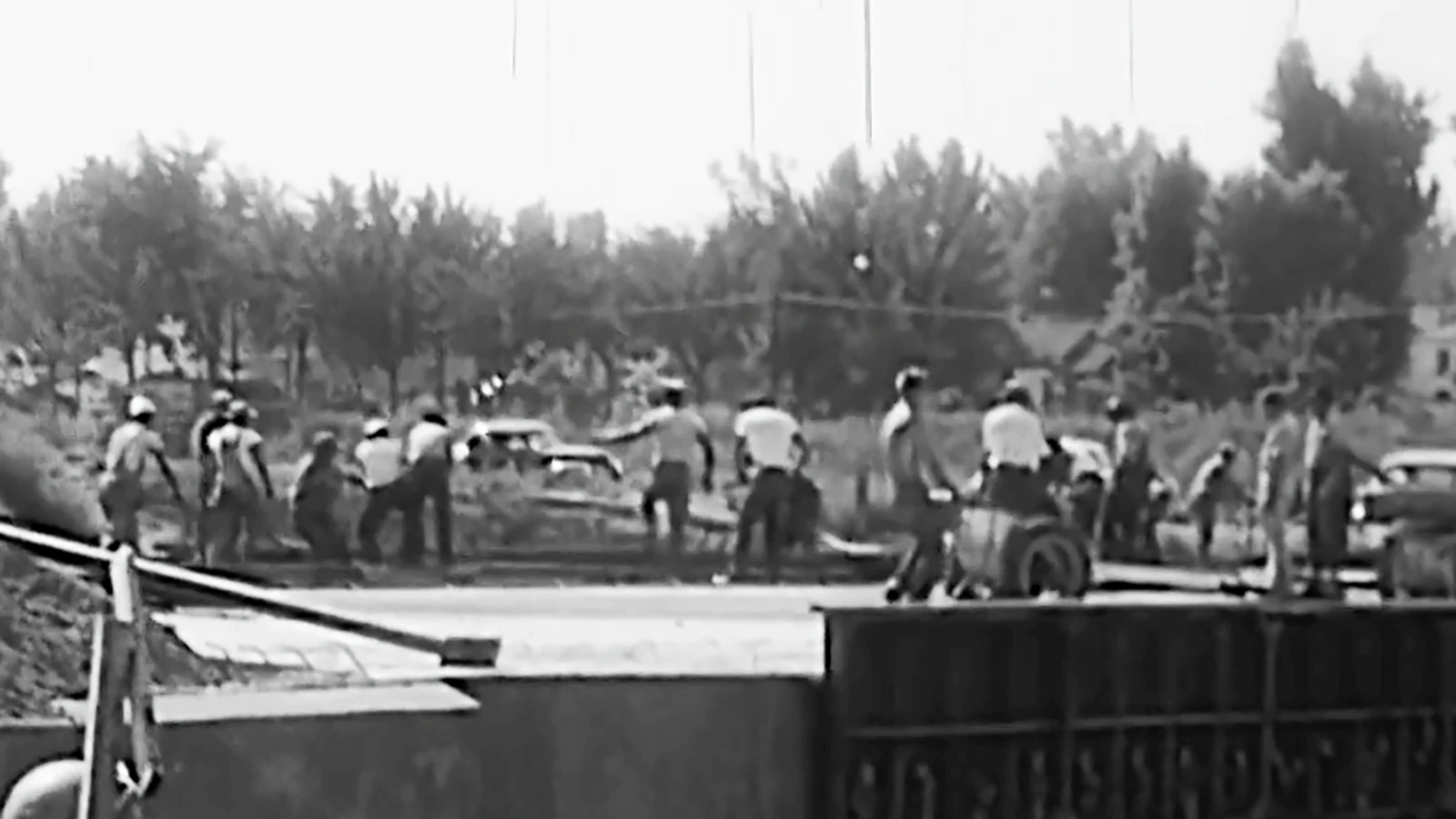
A film in the Denver library recorded workers demolishing houses, tearing down roofs, walls, and windows. The highway isolated longtime residents from their families, friends, churches, and access to Denver’s downtown, according to researcher Maggie McNulty in her article, “Concrete Memories: Constructing Denver’s Valley Highway.”
The footage showed grocery stores and local businesses displaying moving signs in their windows. Laborers mixed and laid down concrete for the construction of highway lanes, creating road signs, and putting up streetlights.
Progress had come to Denver and it was no longer the quiet cow town of Medill-Matthews’ childhood.
Medill-Matthews said that on Downing Street she would sit with her older sister on their front sidewalk and count the cars that went by.
“One car went by every five minutes,” Medill-Matthews said. “Hardly any traffic, and we knew all the cars because there were only four cars in those days like the Ford and Plymouth. We could always name them all.”
Their home was on a northern corner and the street just to the south became the major thoroughfare.
“People would get off the Valley Highway and go past our house,” she said. “It changed our neighborhood because it became a very busy street right next to our house.”
Building Interstate 25
As early as 1938, the Denver Library's historical account says “far-sighted” citizens of Denver envisioned a north-south highway through the city. In 1942 and 1943, George Cranmer, the manager of Improvements and Parks from 1935 to 1947, met with a group called the Upper Platte Valley Regional Planning Commission to discuss the possibility of constructing such a highway.
The Federal-Aid Highway Act of 1956 authorized post-war federal funding to be used for development of the national interstate system. A portion of the money was set aside for urban highway development.
Whenever the traffic density exceeded 3,000 vehicles in peak hours, four-lane highways with no cross traffic were recommended. The north-south Valley Highway across Colorado through Denver, now known as Interstate 25, was one of the recommended routes.
Clerks, appraisers and negotiators were hired by and reported to the city, beginning the process of acquiring the land and right-of-ways for the highway.
Portions of the highway were opened as they were completed. In some places, the channel of the South Platte River was also moved to the west to allow for the highway.
In 1956, the federal interstate highway program began, which led to the Valley Highway becoming I-25. All 11.2 miles of the route, from West 52nd Avenue to East Evans Avenue, opened for traffic on November 23, 1958.
Construction of I-25 through Colorado was completed in 1969, connecting the Wyoming and New Mexico borders.
For Medill-Matthews, the highway represents progress that bulldozed itself right through her quiet childhood.
Jackie Dorothy can be reached at jackie@cowboystatedaily.com.