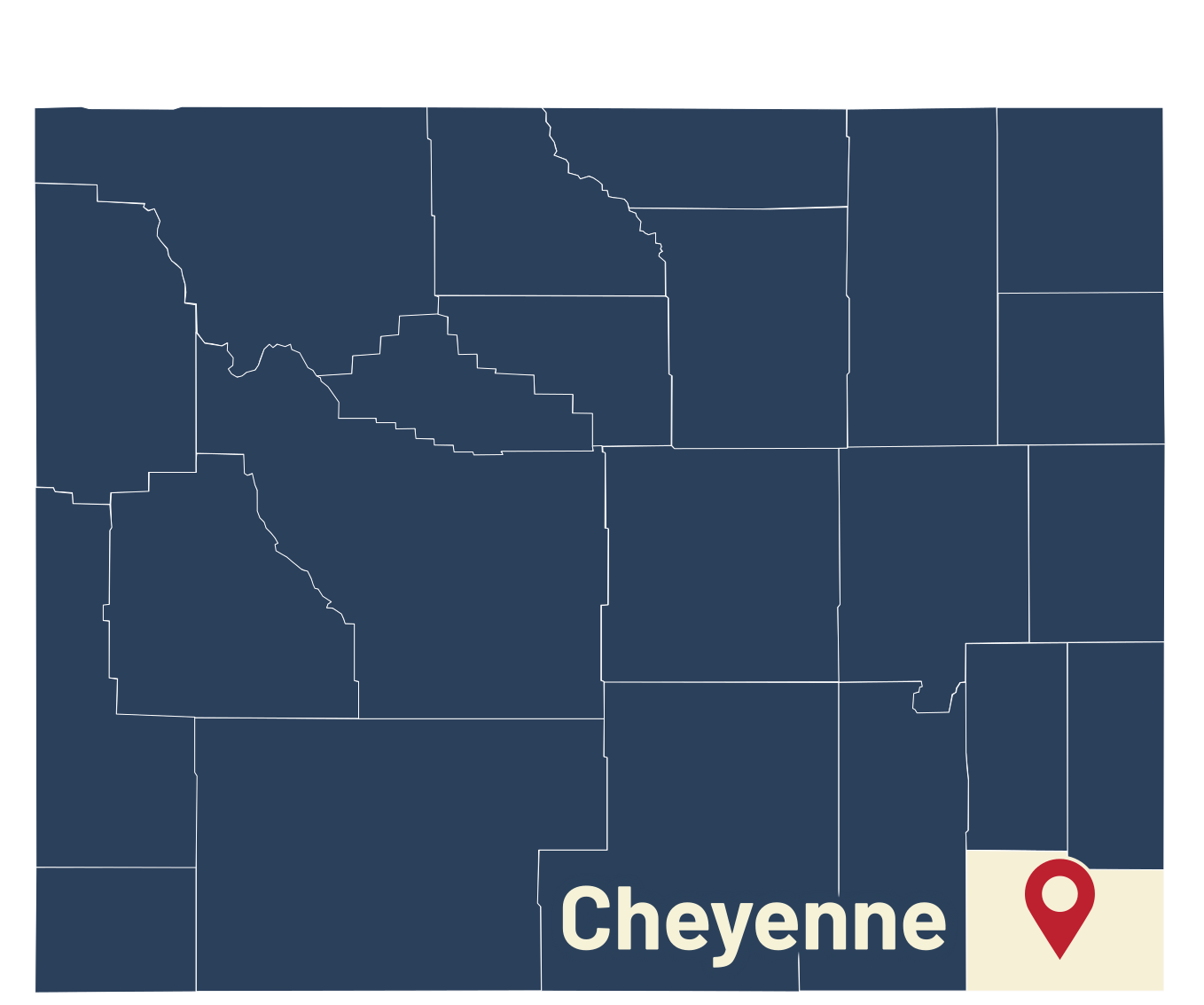
A development-stage company called American Fertilizer is moving forward with plans to build a nitrogen production plant in the Cheyenne region, with the aim of insulating western agricultural producers from volatile international markets,
Cheyenne already has a nitrogen plant operated by Dyno Nobel, but American Fertilizer claims that its proposed facility would be the first world-scale nitrogen fertilizer plant in the region. It would produce urea, UAN and diesel exhaust fluid.
American Fertilizer, based in Windsor, Colorado, has been raising private money since at least mid-June, according to its filings with the U.S. Securities and Exchange Commission.
A Sept. 2 notice reported $3.76 million sold toward a $4.76 million goal, with four investors in the offering and a $250,000 minimum for outsiders.
Cheyenne Mayor Patrick Collins first met with the company in July and has more meetings planned over the next couple of weeks.
Collins told Cowboy State Daily the project’s financial scale is expected to dwarf the figures in those filings.
“From what they told me, it’s a multi-billion-dollar facility,” Collins said.
‘Exciting Opportunity’
While a specific site has not been pinpointed, Collins said American Fertilizer is eyeing the Swan Ranch Business Park, an industrial park a few miles southwest of the city, near where Interstates 25 and 80 meet.
“They need rail access to bring in supplies and send products out,” Collins said. “Our Swan Ranch Business Park has that rail access.”
While the project is in its early stages, Collins said he has confirmed with the U.S. Department of Agriculture that the agency is aware of American Fertilizer’s plans.
“It’s an exciting opportunity,” Collins said. “We’ll see what happens.”
Collins said the USDA is looking at the project through the lens of national security.
“The thing that leads me to believe this has potential is that we import so much of the product they’re going to make from Ukraine and Russia,” Collins said. “From a national security point of view, these nitrogen-based fertilizers are pretty critical to our operation.”
As of 2025, net imports accounted for about 13% of U.S. nitrogen fertilizer consumption, according to an analysis of U.S. Geological Survey data by the University of Illinois. Still, with fertilizer markets as volatile as they have been this year, Collins said it makes sense to him to bring more production home.
National Security
Federal officials have framed the issue the same way. After the closure of the Strait of Hormuz in the Middle East in late February, urea prices climbed more than 28% in three weeks, and Washington has since moved to expand domestic supply.
The Department of Agriculture has launched a $500 million fund to boost domestic production of nitrogen and other crop nutrients, and in May the Senate Agriculture Committee held its first hearing dedicated to the fertilizer industry, where Chairman John Boozman, a Republican from Arkansas, called shortages a national-security issue.
On its website, American Fertilizer says the planned facility would have an annual production capacity of 2.5 million metric tons. By making fertilizer closer to western farms, the company claims the plant would lower costs for Wyoming ranchers by cutting out the long-haul transport from the Gulf Coast, Canada or Pacific Coast ports.
“American Fertilizer is helping rebuild domestic production capacity and strengthen the nation’s food security from the American West,” the website states.
American Fertilizer did not respond to Cowboy State Daily by publication.
Cheyenne City Council member Lawrence Wolfe told Cowboy State Daily that the war with Iran has undeniably driven up fertilizer costs, but he said the way a project like this is framed also shapes how it is received.
“There’s a national security bent on this, that we’ve got to make sure we’re not dependent on others for essential fertilizers,” Wolfe said. “I think it’s part of the sales job.”
Water Usage
If the plant does move forward at the Swan Ranch Business Park site, Wolfe said he thinks that would be an “incredibly inappropriate” location.
“If they’re placing it at the gateway of the city, that’s the first thing you’re going to see other than the Horse Palace and the oil and gas yards,” Wolfe said.
American Fertilizer has several industry and business events coming up, including a networking dinner for project partners, a spotlight hosted by the Greater Cheyenne Chamber of Commerce and the Wyoming Governor’s Business Forum, where it is a sponsor.
Wolfe said he plans to attend and press the company on where it intends to build and how much water the plant would use, which he called a crucial consideration.
“There’s a question about water availability,” Wolfe said. “They are a huge water user.”
Cheyenne City Council member Michelle Aldrich also told Cowboy State Daily that water is a big consideration for her, particularly whether the plant would be supplied by the city’s system or draw from the county aquifer.
“I don’t want to give anyone access to our aquifer,” Aldrich said. “If they’re able to dip into our aquifer with their own well, we don’t have any way to meter it or monitor it successfully.”
‘Not All Jobs are Equal’
Aldrich said water is just one piece of the puzzle in deciding whether the project fits Cheyenne. She said the City Council will also look at whether it would bring jobs that are right for the community rather than just any jobs.
“Not all jobs are created equal,” Aldrich said. “It should be bringing good-paying jobs with benefits so that individuals can not only make a living in Wyoming but make a life in Cheyenne.”
Aldrich pointed to Dyno Nobel as a good example of the type of employment opportunity she would like to see.
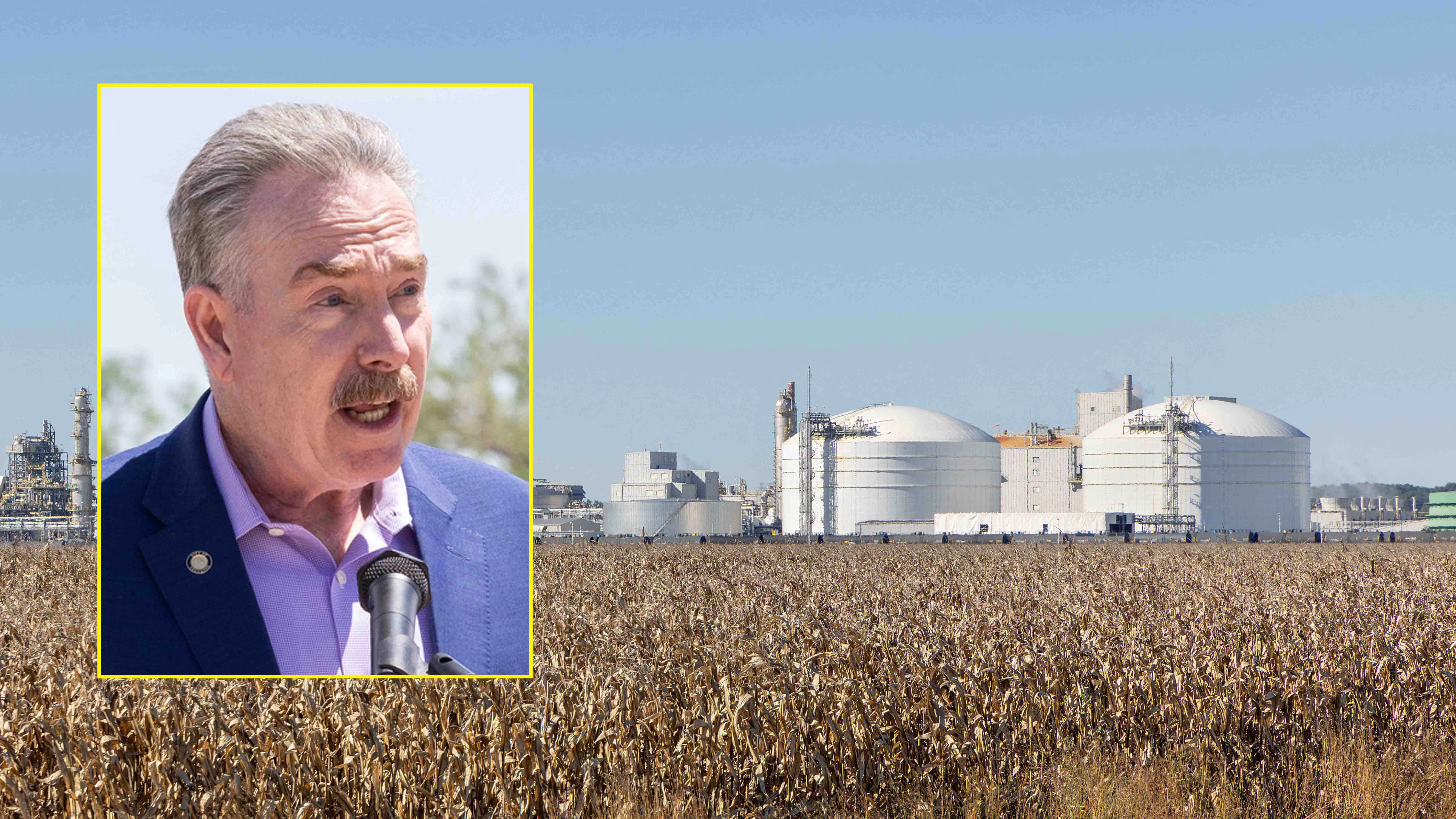
The company’s Cheyenne plant dates to the mid-1960s, when it was built after a previously untapped source of natural gas was identified in the area. Dyno Nobel bought it in 2008, and the plant turns natural gas into ammonia, which it uses to produce urea, nitric acid and ammonium nitrate, a compound used in both fertilizer and mining explosives.
It employed more than 200 people as of 2024.
“Dyno Nobel has been a community partner for many years,” Aldrich said. “It’s gone through many mergers over the years but it is a major employer in our community and they produce chemicals that are important to produce food items and crops.”
The plant has also had its share of controversy. In April 2023, a railcar carrying 30 tons of ammonium nitrate fertilizer left the Dyno Nobel facility bound for California and was found empty when it reached a rail stop in Saltdale.
The company said the car’s seals were intact on arrival and that its initial assessment was that a leak through the bottom gate might have developed in transit.
In March 2024, the U.S. Environmental Protection Agency fined the company $394,906 for Clean Air Act violations tied to how the Cheyenne plant managed ammonia and chlorine, though the agency said the penalty had no relationship to the lost fertilizer.
Dyno Nobel said it contested parts of the assessment and that the issues did not affect the community or its employees, and the EPA said the company has corrected all deficiencies.
Business has been uneven as well. Filings from the plant’s parent company showed sales to the coal industry fell 19% in a six-month period in 2024, mainly because power plants were switching from coal to natural gas.
Wolfe also pointed to the footprint, noting that Dyno Nobel’s plant sits on roughly 100 acres.
“It takes up an enormous amount of space,” Wolfe said. “The plant used to be the biggest polluter in the state because they inject all their liquid waste way underground.”
He said the city has a lot of questions to ask before potentially taking on another massive project that could bring problems of its own.
Emma Jane Jackson can be reached at emma@cowboystatedaily.com.