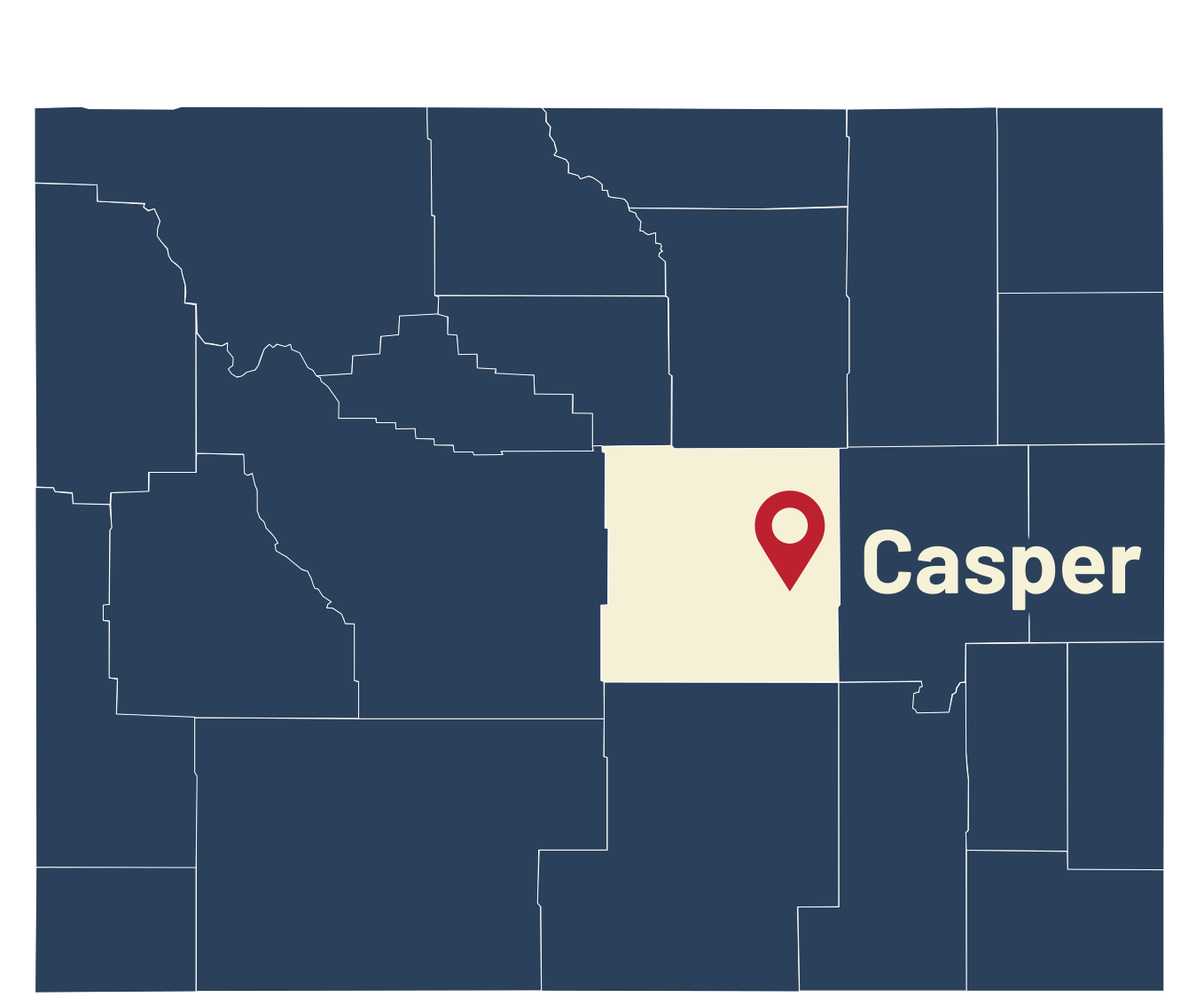
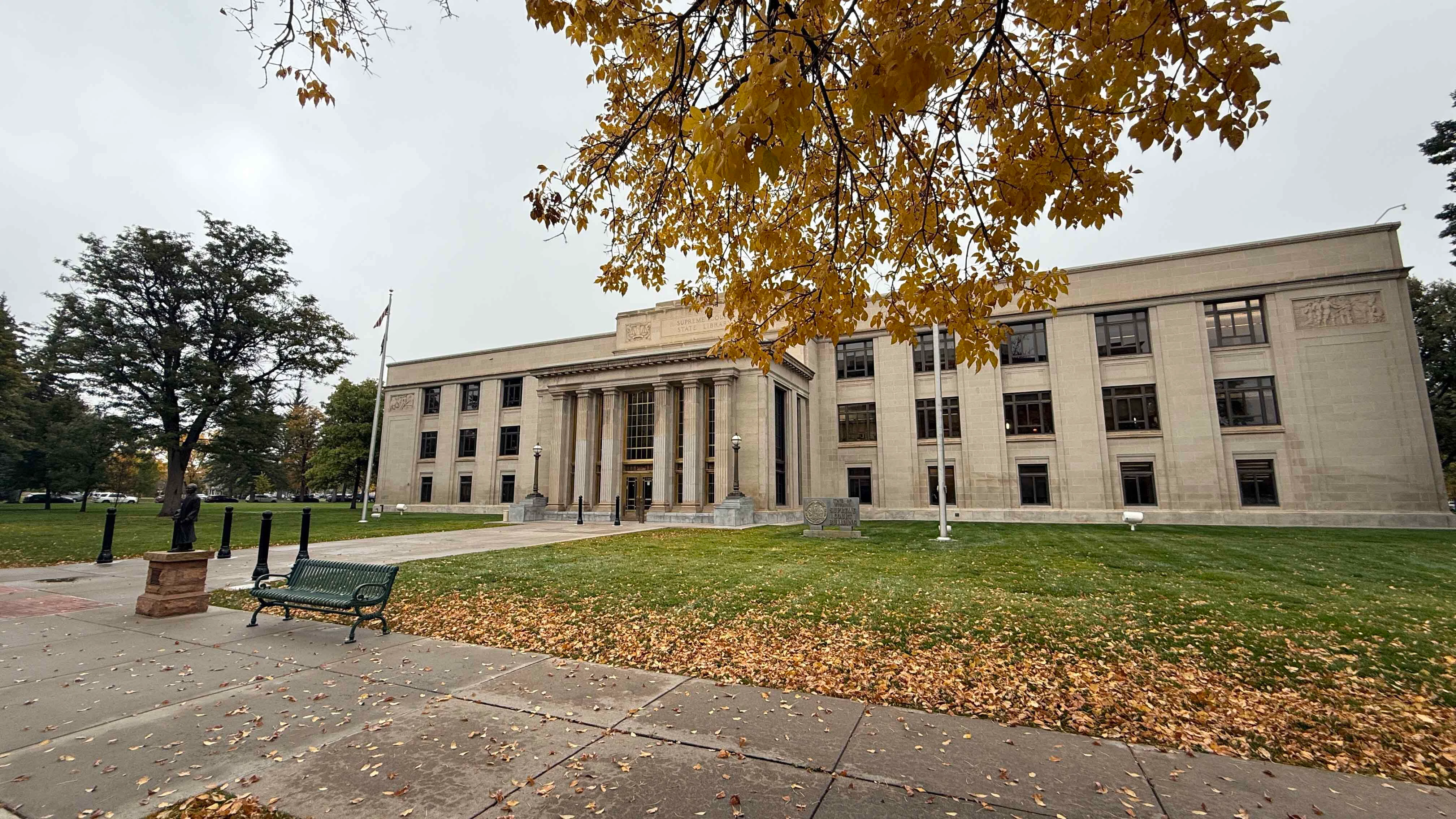
The Natrona County Board of Commissioners' efforts to keep gravel mining off the base of Casper Mountain went to the Wyoming Supreme Court on Wednesday.
Justices heard arguments from attorneys representing the county board and gravel mining firm Prism Logistics over the county’s authority to zone gravel operations on state lands.
The issue arrived before the court after the county appealed a Jan. 6, 2026, ruling by Natrona County District Court Judge Joshua Eames that the county did not have authority to regulate uses on state land. Eames ruled that Prism’s “mineral leases” were governed by mining statutes that exempted the operation from county zoning regulations.
Jackson-based attorney William Schwartz, arguing for the county, told the justices the sole issue is the county’s ability to regulate a commercial enterprise through zoning.
Schwartz cited case law arguing that gravel is not a mineral in the context of Prism’s proposed operation. He said it should fall under commercial/industrial laws that govern the Wyoming Board of Land Commissioners' actions, not laws pertaining to mining and other minerals.
“The only issue under review here is ultimately not about the land board's legal authority to issue the leases to Prism,” he said. “But simply whether Natrona County can impose its zoning regulations on specific land uses authorized by the Prism leases.”
Justice Kari Gray pushed back, pointing out that the Board of Land Commissioners defined gravel as a mineral in its own regulations. If gravel is classified as a mineral under those regulations, she suggested, the county would have no authority to regulate it. So, Gray said, the real issue had to be the land board's authority.
Schwartz said the land board's authority was a related issue and the question before the court involved the county’s “statutory authority” to regulate a gravel-mining use.
Chief Justice Lynne Boomgaarden told Schwartz the only way his argument was going to prevail is if he could persuade the court the county gets to decide whether gravel is a mineral. She cited case law stating that minerals can mean different things in different contexts.
“This is state land. They decided what is mineral and not mineral and they decided sand and gravel is mineral,” she said.
'Commercial And Industrial' Argument
Schwartz agreed and said even though the Board of Land Commissioners had classified gravel as a mineral the state Legislature wants “commercial and industrial leases” to comply with county zoning regulations.
“But not mineral leases,” Boomgaarden said. “That language is not in the mineral-lease statute.”
The discussion then turned to Schwarz's contention that Prism’s proposed operation should not fall under the Legislature’s mining laws, but rather under the statutes governing commercial and industrial operations.
“We have two cases from the Supreme Court in different contexts saying gravel is not a mineral,” Schwartz said, arguing that “mineral” is a technical word.
Schwartz told the court the county should be able to regulate the Casper Mountain area, calling it the “crown jewel” of the region and noted the concerns about water, truck traffic, and other issues raised. He told the justices that residents had collected 20,000 signatures opposing the project.
Prism attorney Deborah Roden countered that the Wyoming Constitution gives the land board the authority to manage state lands. She told the court that overturning the district court’s ruling would mean ignoring the land board’s authority and moving gravel from the mining statues to the commercial and industrial use statutes.
She also argued that case law cited by Schwartz did not apply to state lands.
“Natrona County wants to you to take the definition of mineral in other contexts and push that up to the statutes that they think should be changed,” she said. “The Legislature left it to the state (land) board to define minerals.”
Roden argued that if the justices decided that gravel is not a mineral, it would impact counties, entities, and individuals who have or are applying for gravel leases across the state.
“There are 84 active solid mineral-lease gravel leases currently before the state land board or active with the state land board,” she said. “So this impact is far and wide.”
Clarity Sought
Roden said Prism’s goal is to get clarity and to “know the framework that it must operate within and expectations.”
Prism Logistics Manager Kyle True attended the hearing and said he is “hopeful the Supreme Court will affirm the district court.”
“I would not presume to interpret their intent simply from their questions to counsel,” he said. “I think the county overstepped and inserted itself illegally into this, and yet we are glad that we can go to the judicial system and ask for clarification, and whatever the Supreme Court rules we are going to follow that.”
Casper Mountain Preservation Alliance spokesperson Carolyn Griffith attended the hearing and thought Schwartz presented a “good case” for the county to have an opportunity to be heard on the gravel-mining issue.
“From our standpoint, regardless of how the court rules in this case or the state’s case that was heard a few weeks ago, I think that Prism is working to find their way around the rules to make this gravel operation happen,” she said. “It doesn’t necessarily mean it is the right place for it or the right thing for the community.”
Griffith said residents continue to live at the base of the mountain with concerns about their water, air quality, and ability to recreate should gravel mining occur.
The high court’s decision would have implications for other communities across the state because counties that have zoning regulations should be able to have input on gravel mining near residential areas, Griffith said.
“If the court rules that they don’t right now, I think that’s something that the Legislature needs to take up,” she said. “Until now, they haven’t had to.”
Natrona County Commission Chairman Jim Milne did not attend the hearing and said he had not yet had an opportunity to listen to the arguments. He planned to listen to them in the evening.
Commissioner Peter Nicolaysen said he had another county meeting this morning and wasn’t able to listen. Attempts to contact the other three county commissioners were not immediately returned.
Case Background
Prism Logistics initially obtained eight “rock and assorted mineral leases” from the land board in June and October 2023. The leases covered about 3,000 acres at the base of the mountain, initially in a zoning area that allowed “extractive industries” with a conditional-use permit issued by the county.
The county board revised its zoning ordinance in September 2024 to eliminate the “extractive industry” use in the mountain zone.
The state land board also declined to renew its two-year leases to Prism, which sued wanting clarification from the courts on whether the land board followed its own procedures in denying the renewals.
Dale Killingbeck can be reached at dale@cowboystatedaily.com.