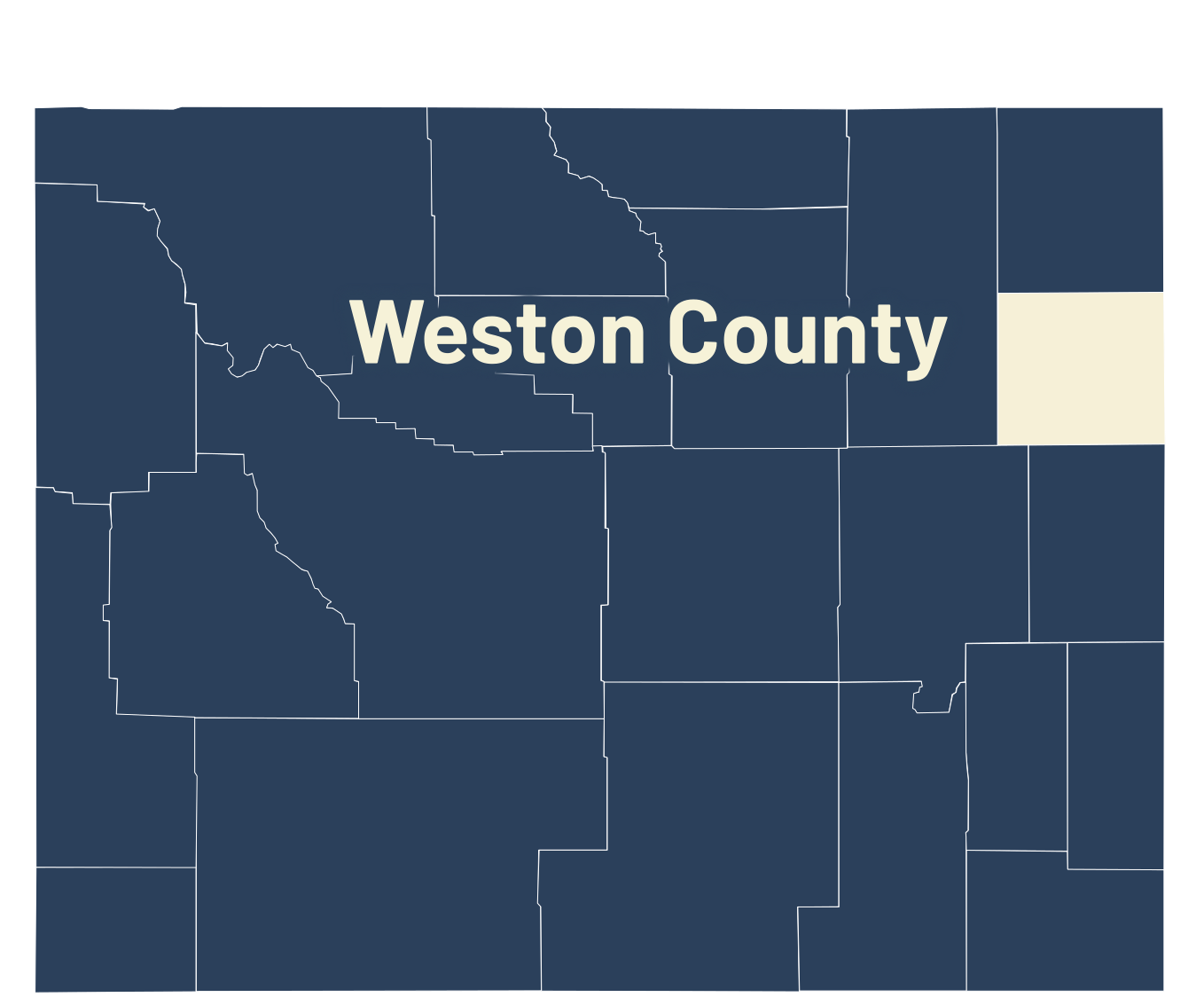
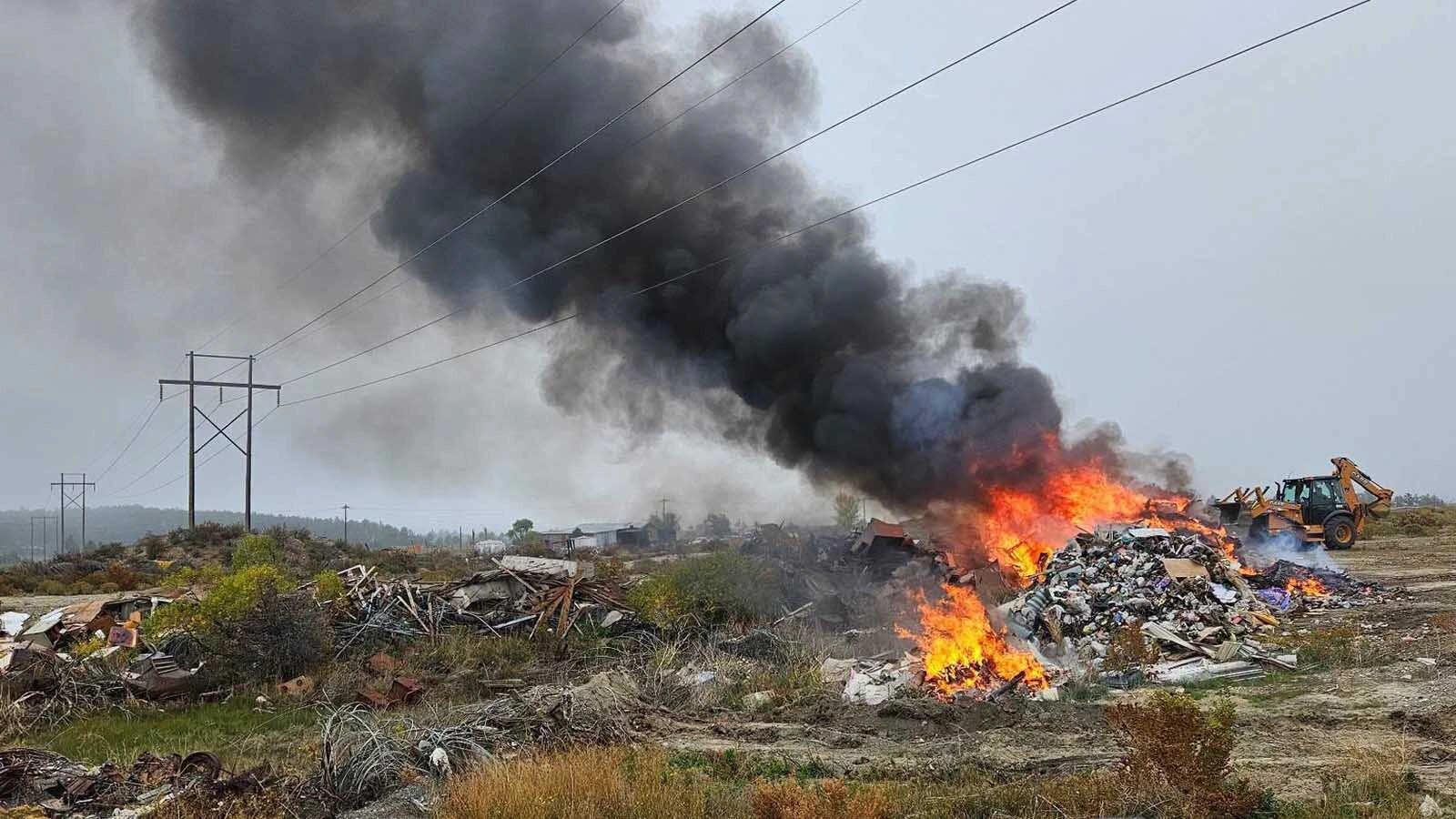
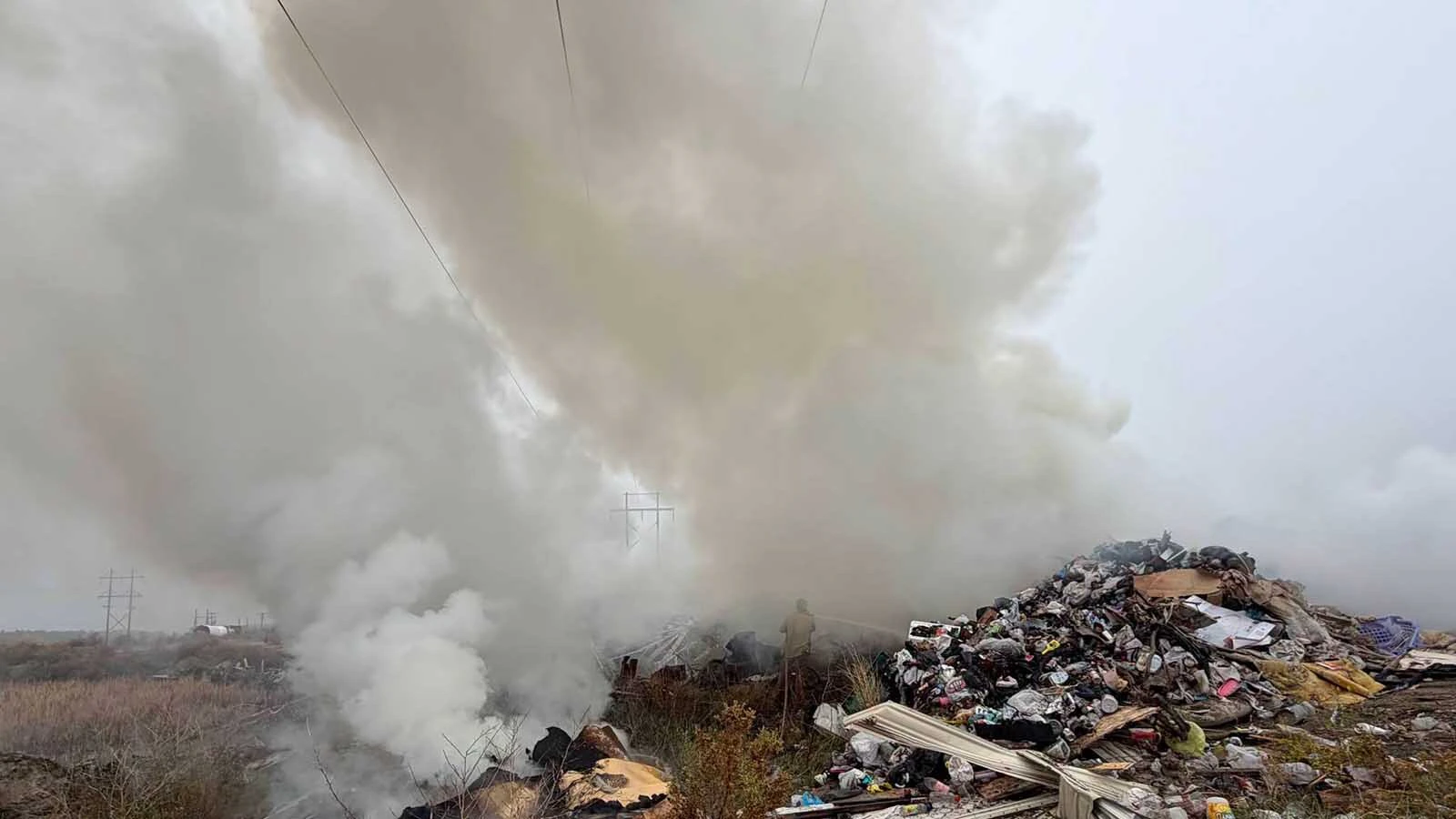
An unauthorized debris burn directly beneath a high-voltage power line in Weston County on Tuesday took firefighters more than eight hours to extinguish and raised concerns about electrocution, costly infrastructure damage and widespread power outages.
The fire involved a large pile of household trash, old construction materials and other junk, Weston County Fire Protection District Warden Daniel Tysdal told Cowboy State Daily.
While firefighters managed to contain the blaze to approximately half an acre, the location of the burning debris presented a potentially dangerous situation.
The pile was directly beneath a 69-kilovolt transmission line connecting Osage and Moorcroft.
Intense heat from the fire could have caused the power line to sag or even melt, potentially resulting in expensive repairs and outages, Tysdal said.
But the danger wasn't limited to the electrical infrastructure.
“Heavy smoke, flames and hot gases can also create a conductive path to the ground where electricity can arc or jump from the lines to the ground or nearby people/firefighters, creating an electrocution hazard,” Tysdal said.
The fire occurred in a wildland-urban interface area, where homes and other development meet undeveloped land, with multiple residences nearby.
There was no immediate threat to nearby homes or animals, Tysdal said.
Still, the incident required an extensive response from multiple agencies and serves as another reminder of the persistent fire danger across Wyoming after an exceptionally dry spring and summer.
“Anymore, we have a year-round fire season,” Tysdal said.
Eight Hours To Put Out
The Weston County Fire Protection District received multiple calls about the fire shortly before noon Tuesday.
One came from the landowner who started the fire, Weston County Sheriff’s Deputy Dan Fields told Cowboy State Daily.
Fields said the landowner called to report he had lit a fire for a controlled burn, only to learn the county’s burn ban was still in effect.
“He said he had already lit it and it was pretty large for him to put it out on his own,” Fields said.
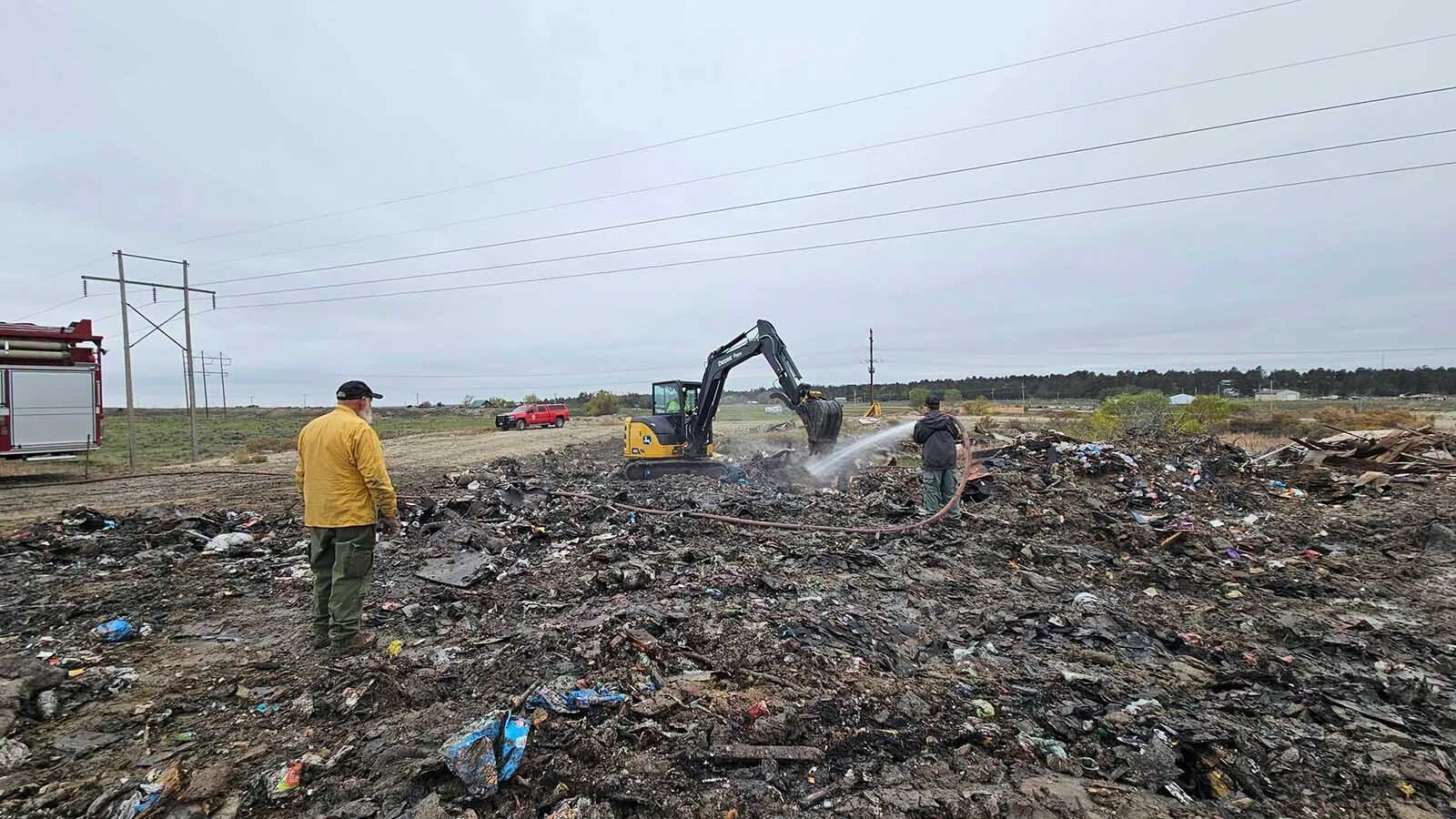
When firefighters arrived, they encountered a large pile of burning debris that required more than simply dousing the flames with water.
The size of the pile and the amount of burning material made the fire especially challenging to completely extinguish, Tysdal said.
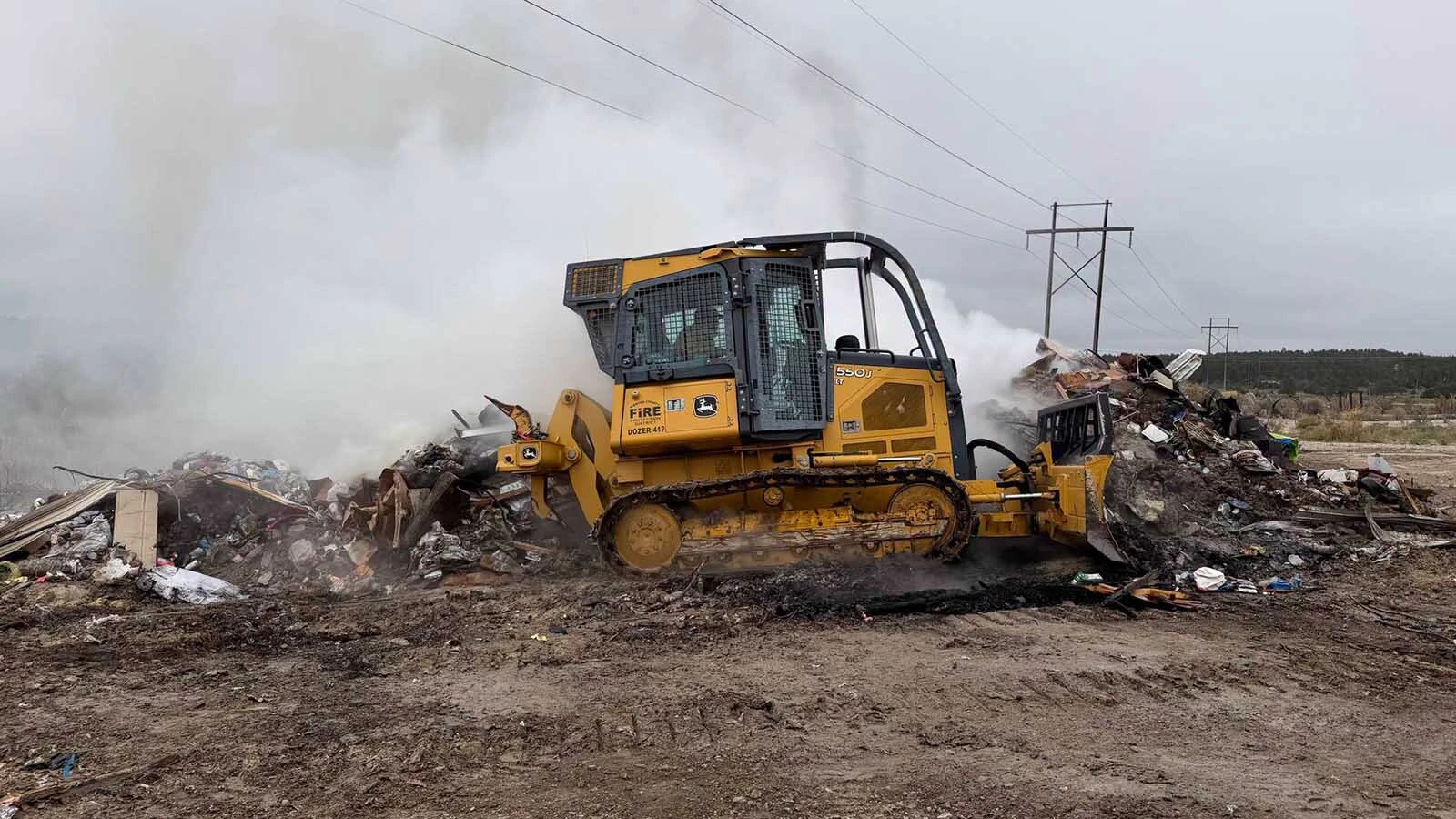
“It needed to be spread out and completely mopped up and stirred,” he said.
Three fire engines, two water tenders, a bulldozer and a command unit responded, along with a Weston County sheriff's deputy, a contracted mini-excavator from Farnsworth Services and crews from Powder River Energy.
From the initial response through suppression and equipment rehabilitation, the operation took more than eight hours.
For a fire district staffed primarily by volunteers, that meant firefighters had to leave their jobs and other responsibilities to respond to a fire that shouldn't have been burning at all.
Burn restrictions have been in effect throughout Weston County since March 24.
That date is unusually early, Tysdal said, adding, “We’ve had a terrible dry spring and summer.”
During a normal, non-drought year, burn restrictions wouldn’t go into place until late June to mid-July, he said.
Power Line Danger
Powder River Energy crews were called to the scene to inspect the overhead transmission line and ensure it was safe.
Tim Velder, a spokesman for the electric cooperative, said smoke was still billowing into the line when utility crews arrived.
Crews spent about an hour inspecting the line and determined there was no visible damage.
The conductor is relatively large and designed to withstand harsh conditions, Velder said, but burning combustible materials directly beneath electrical infrastructure is dangerous.
“We discourage the placement of any materials under a power line,” Velder said, including combustible materials such as hay, wood or trash.
Tysdal said ensuring the line wasn't damaged and that firefighters could work safely around it was a major priority.
In Tuesday's incident, the transmission line escaped visible damage and firefighters were able to keep the blaze from spreading beyond the debris pile and the immediate suppression area.
The total area affected was approximately half an acre, Tysdal said.
No Citation Issued
Despite the extensive response and the potential danger, no citations were issued.
Tysdal said fire district personnel informed the landowner of the countywide restrictions and explained that open fires were prohibited.
Fields said the Weston County Sheriff’s Office determines whether to prosecute illegal burn reports on a case-by-case basis. Because the landowner was not known to have ever caused property destruction, Fields said the responding deputy used the incident as an educational opportunity.
“If this was a continuing problem there would be citations issued,” Fields said. “Most people probably didn’t realize the burn ban was still in effect with it turning to fall.”
Under Wyoming law, violations of applicable fire restrictions can carry penalties of up to 30 days in jail, a fine of up to $100, or both.
Depending on the circumstances, those responsible for illegal burns could also be held financially responsible for suppression costs or other damages.
“It probably would have been a better bet to wait until there was some snow on the ground,” Fields said. “We’d prefer that he called dispatch prior to lighting (the fire).”
He added that people commonly plan controlled burns this time of year as the weather cools off.
Fire Season Started In March
Weston County's burn restrictions have been in effect for nearly seven months, an unusually long stretch reflecting the severity of this year's dry conditions.
During a more typical year, restrictions wouldn't be imposed until late June or mid-July, Tysdal said.
A winter marked by unusually little snow, followed by prolonged dry conditions, has created a challenging wildfire season across Wyoming.
More than 21 Wyoming counties have enacted Stage 1 or Stage 2 fire restrictions during the 2026 season, with some restrictions beginning as early as March, Wyoming Public Media reported.
The Black Hills National Forest has also implemented Stage 2 restrictions in its Bearlodge and Hell Canyon ranger districts, with an order extending through Dec. 15.
For fire managers, the prolonged restrictions illustrate how difficult it has become to predict when wildfire season will begin and end.
Even as temperatures cool, dry grass, brush and other vegetation can remain susceptible to ignition until substantial moisture arrives.
Waiting For Moisture
Despite a few recent showers and cooler temperatures this week, Tysdal said Weston County remains too dry to lift its restrictions.
Normally, officials wait for what he describes as a season-ending weather event — significant snow or rainfall that provides lasting moisture.
A brief shower isn't enough.
And while temperatures have cooled this week, warmer and breezier conditions are expected to return, keeping restrictions in place for the foreseeable future.
Tuesday's fire illustrates how quickly a seemingly routine debris burn can become a major undertaking, even when firefighters successfully prevent it from spreading.
Until significant, lasting moisture arrives, Tysdal said, the danger remains.
Kate Meadows can be reached at kate@cowboystatedaily.com.