
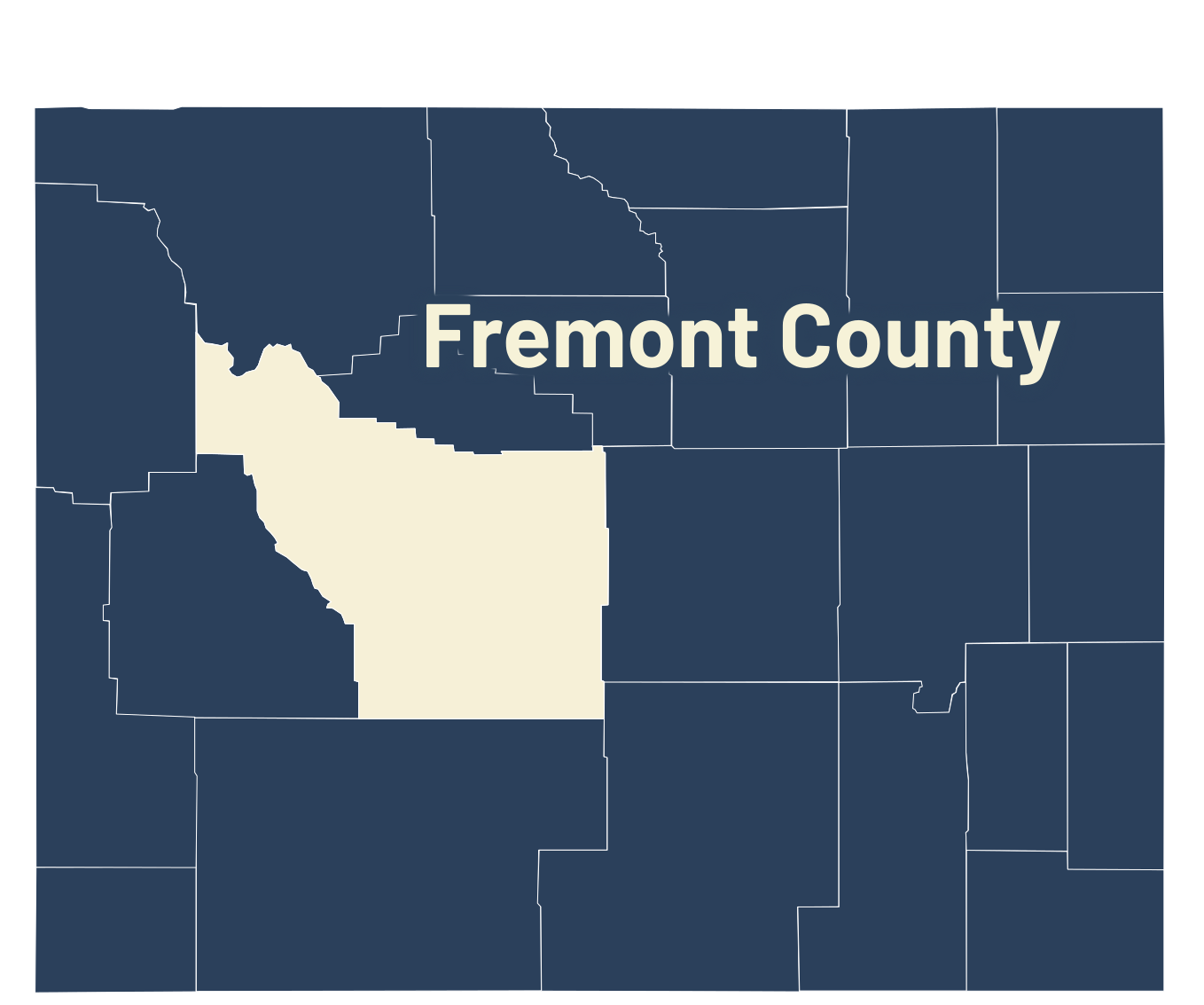
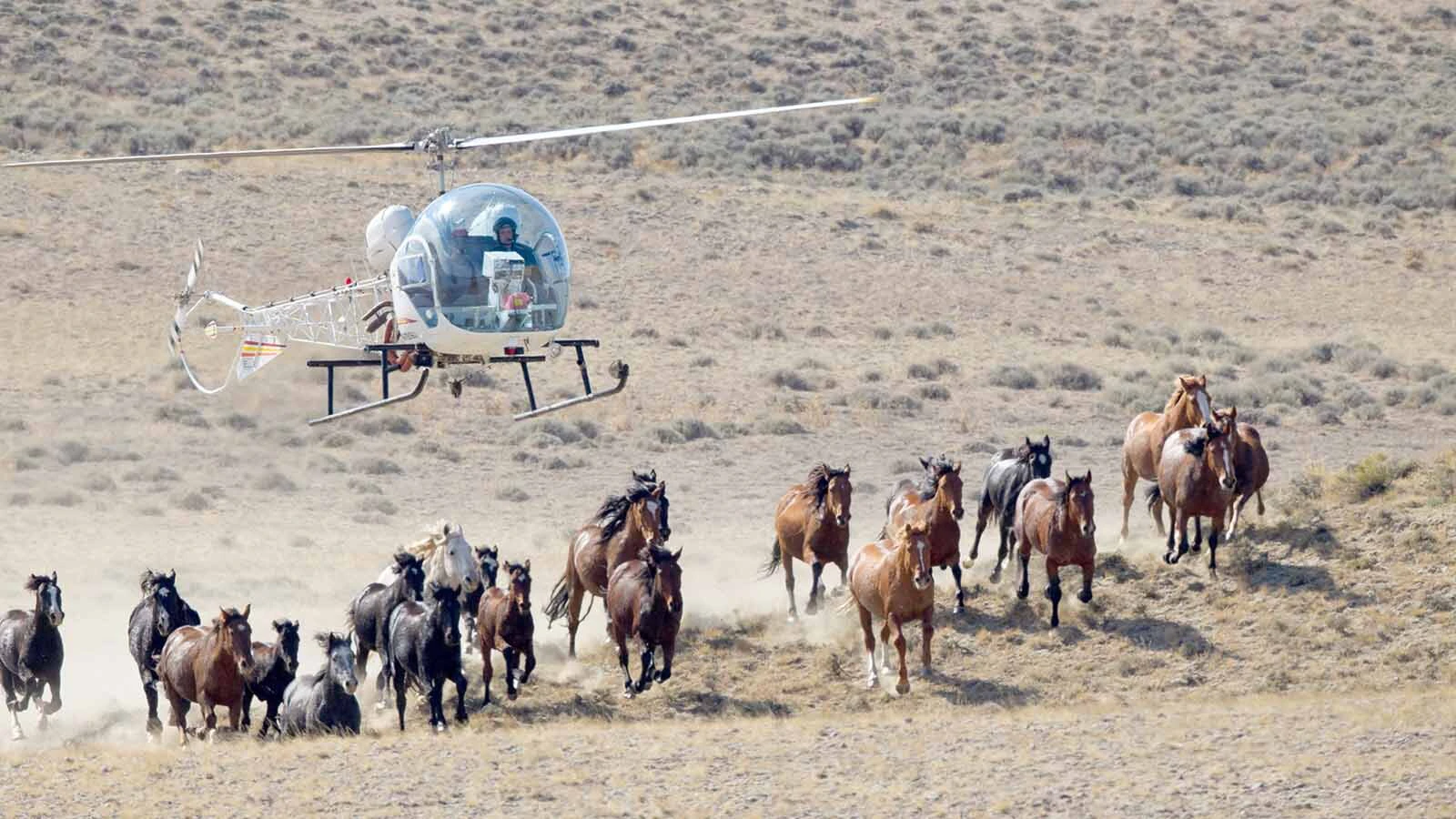
The Bureau of Land Management plans on Thursday to launch a weeks-long roundup of roughly 1,800 mustangs across the vast Red Desert Complex, weather permitting.
Wild-horse advocate Carol Walker told Cowboy State Daily she was shocked when the BLM initially announced the public could view only the first four days of the operation, Thursday through Sunday, per a statement on the agency’s website.
However, that was a miscommunication, and the public is welcome to watch the entirety of the roundups, weather and safety conditions permitting, BLM spokeswoman Allegra Keenoo told Cowboy State Daily on Tuesday.
Keeping An Eye On BLM
Walker later told Cowboy State Daily she’d also gotten a call from Keenoo, saying that she was welcome to observe for the duration.
Walker is among numerous horse advocates who like to keep an eye on the roundups, claiming it helps keep the BLM in line.
“The (roundup) contractors always take better care of the horses when there are members of the public there. There’s no question about that,” she said. “If a foal (young horse) is left alone, or horses are about to be run into a barbed wire fence, we can call the BLM out on it.”
Helicopters are the primary means of rounding up the horses — which are regarded as wild, or feral, depending upon whom you ask.
Horse advocates say using low-flying choppers to stampede horses into corrals is cruel and unnecessary. The BLM and others argue that helicopter roundups are more efficient and safer for horses and humans than older methods, such as mounted wranglers or vehicles chasing the mustangs.
Controversy over roundups cuts to the heart of the debate over how many mustangs on the open range is too many. Walker and other advocates claim that the range can support far more than what the BLM has set for its Appropriate Management Levels (ALMs).
Another popular herd, the McCullough Peaks mustangs between Powell and Cody, was last subjected to roundups in 2024. Then, about 50 horses were permanently removed from the herd.
The BLM also plans to use fertility control to keep that herd at its ALM, roughly 180 horses. That program involves mares being shot with darts containing a fertility control drugs.
Huge Cuts to the Desert Population
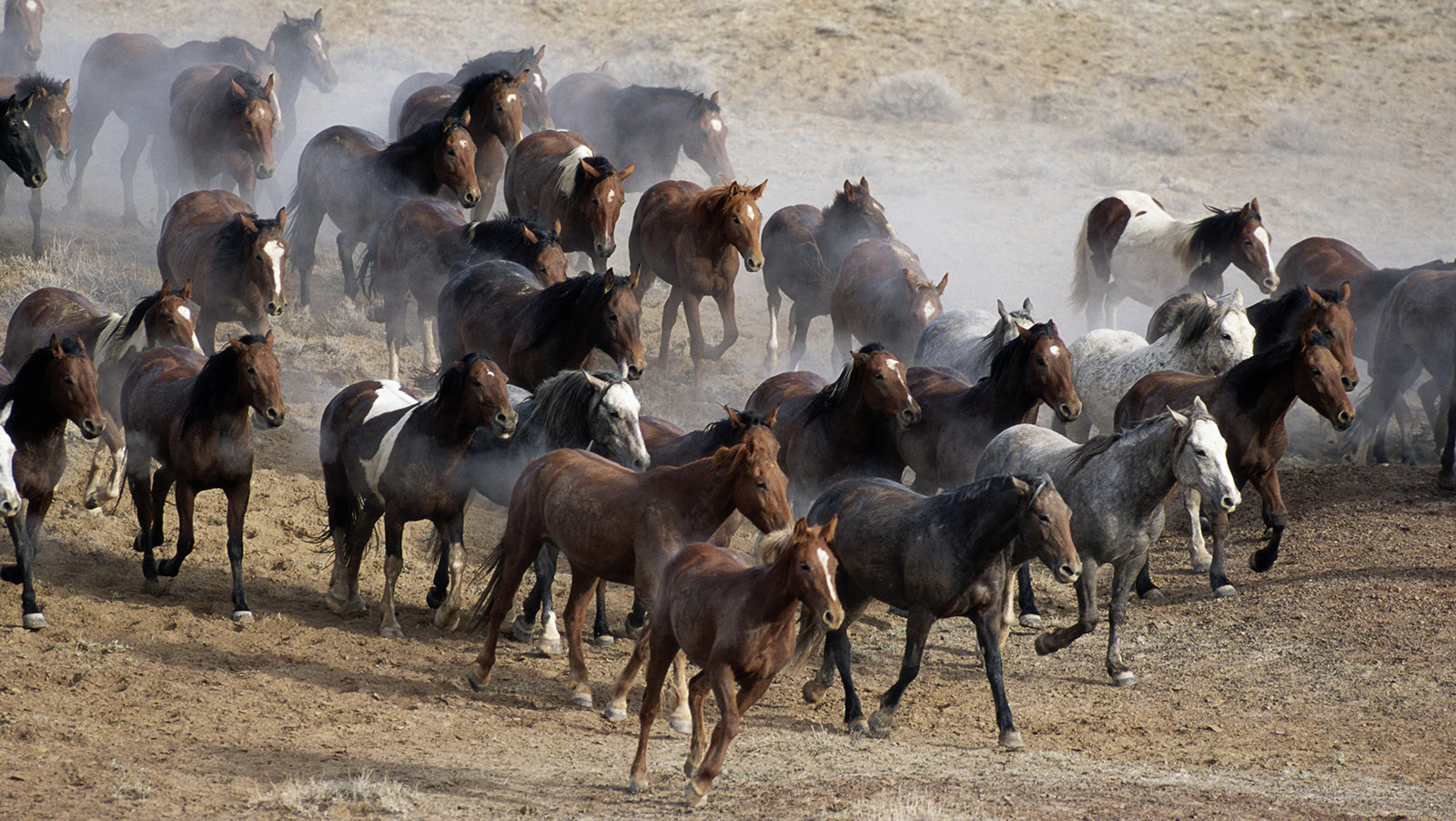
The Red Desert Complex includes 752,694 acres encompassing several horse management areas (HMAs) in some of Wyoming’s most remote regions.
Most of the land is under the BLM’s management. Some private parcels are dispersed throughout the area, according to the BLM.
The agency aims to make huge cuts to the number of horses roaming free there.
“The BLM plans to gather approximately 1,035 horses from the Stewart Creek and Green Mountain herd management areas during this fall’s operations,” according to the agency.
That represents the bulk “of approximately 1,800 horses planned to be gathered across the Red Desert Complex to help return herd sizes to sustainable levels,” BLM stated.
The goal is to whittle the herds to 480 to 720 horses across the entire Red Desert Complex.
Gathered horses will be taken by BLM holding corrals just outside of Rock Springs.
“Upon arrival at the facility, they will be checked by a veterinarian and readied for the agency’s wild horse adoption and sale program,” according to the BLM.
Concerns have recently been raised that some of the horses end up in the hands of dealers who funnel them to slaughterhouses in Canada and Mexico.
The BLMS says it doesn’t endorse sending horses to slaughter, and any such actions would violate the agency’s protocols.
What’s the reason for it?
The Red Desert herds need to be diminished because of the pressure they’re putting on the landscape, according to BLM.
Left unchecked, “wild horse herds can double in size every four to five years,” according to the agency.
Persistent drought has strained water supply and forage quality in the region, which encompasses lands managed out of both the Rock Springs and Lander BLM offices, Keenoo said.
The horses might not be starving yet, but BLM worries that if the free-ranging population isn’t cut back now it could reach that point, she said.
Walker has long argued the BLM’s claim that horses could face starvation is hyperbole, and she said Tuesday she maintains that position.
She said she recently visited, and “there’s plenty of water there.”
Moreover, horses, cattle, and wildlife such as pronghorn all appear to be thriving, Walker said.
Horse advocates argue that mustangs are scapegoated for damage to the range done by cattle and sheep.
Ranchers dispute that, saying the horses hog forage they lease to graze their livestock.
And some wildlife conservationists say the horses bully and outcompete such species as mule deer.
Mark Heinz can be reached at mark@cowboystatedaily.com.


