Cemeteries are places where people and their histories rest.
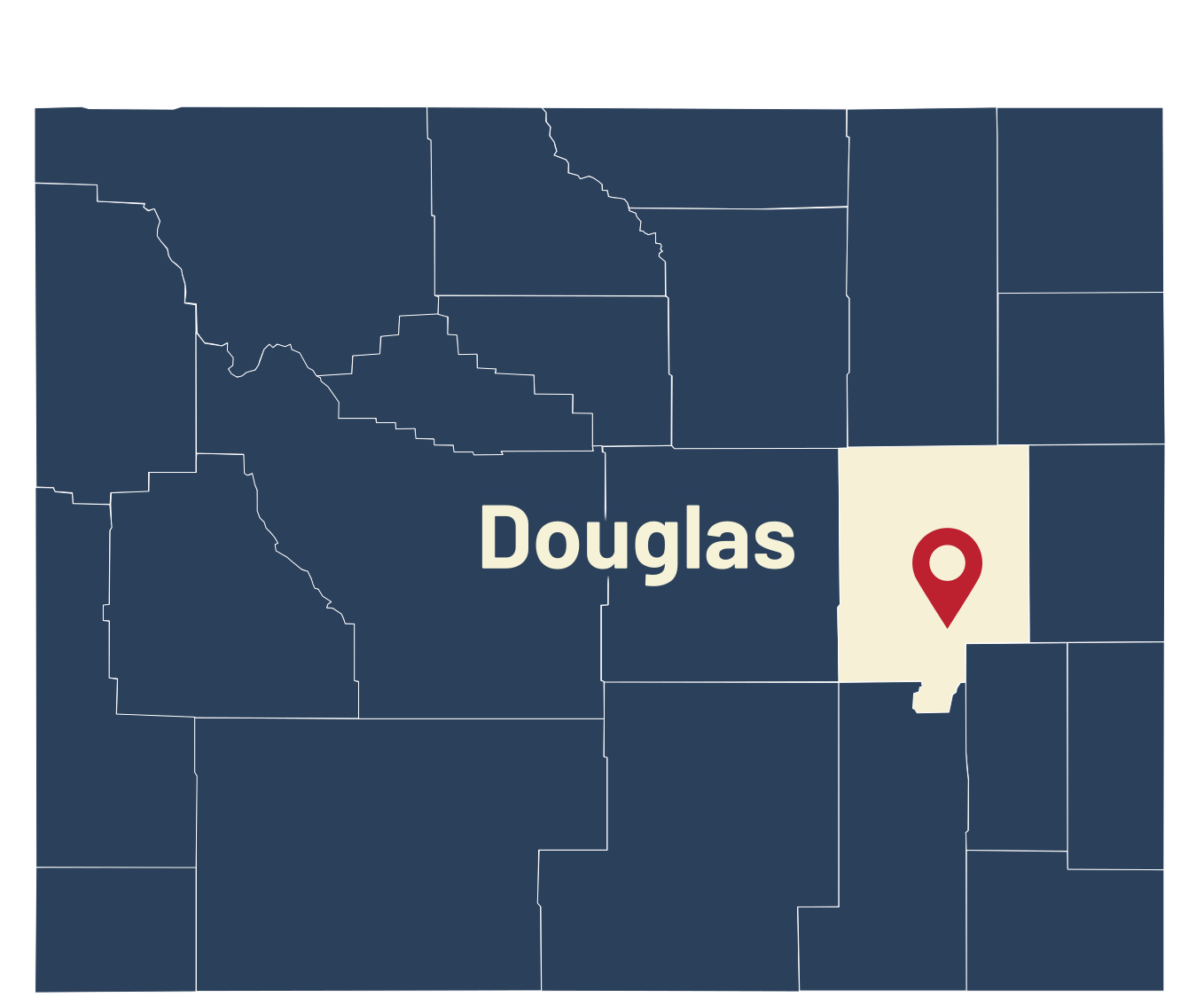
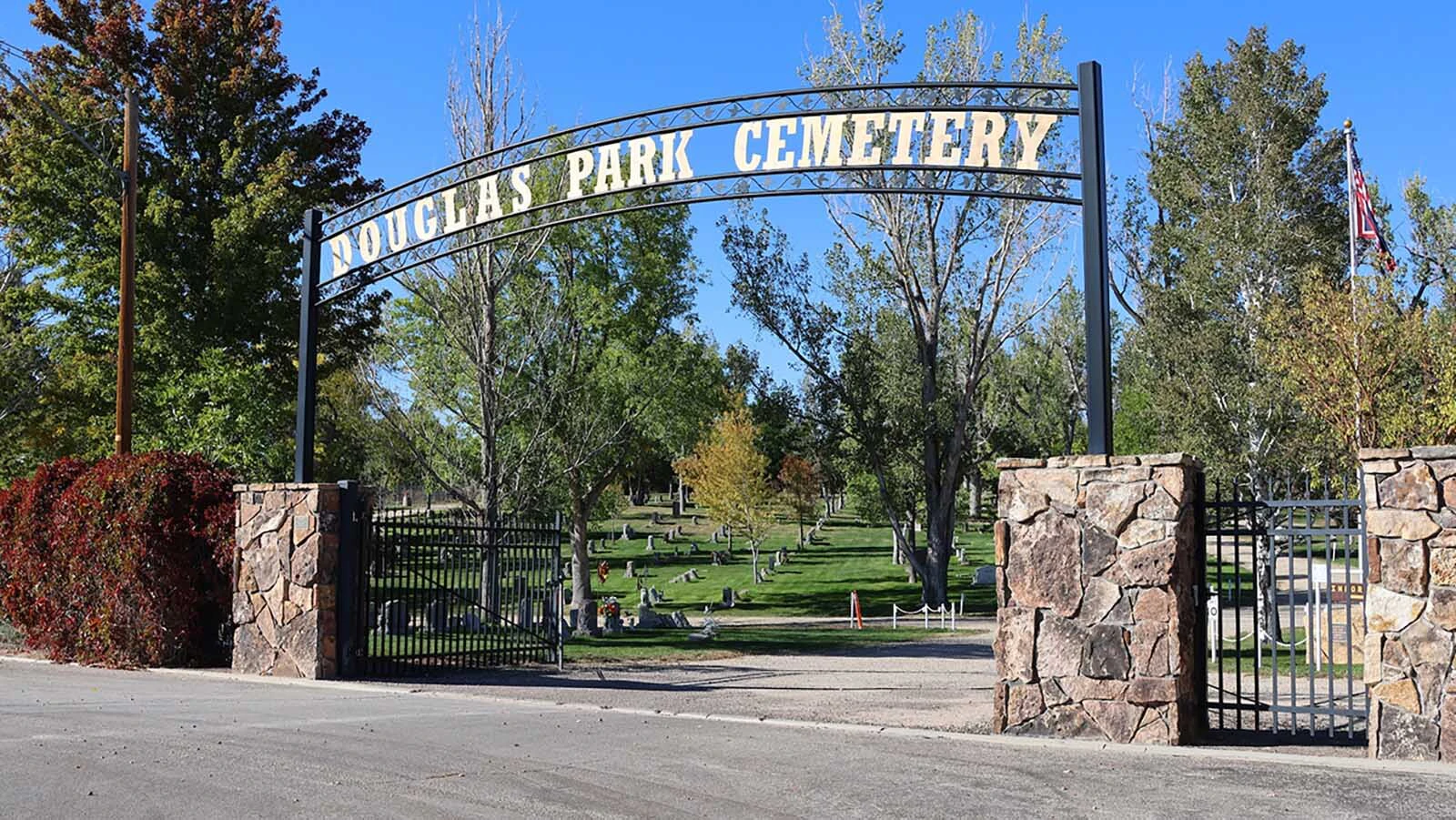
Douglas Park Cemetery in Douglas has been the designated destination for more than 5,200 souls since 1902.
Those include pioneers, outlaws, lawmen, cowboys and cowgirls, ranchers and businesspeople, the noble and those of ill repute, accident victims, and just plain citizens who lived and died as part of the community.
In the season when some seek spooks and ghosts, Cowboy State Daily offers a tour of the graves of a handful of Converse County people as a means to bring their acquaintances, accomplishments, and for one, tragedy, to a new generation.
Let’s take a walk under the century-old trees and be introduced to.
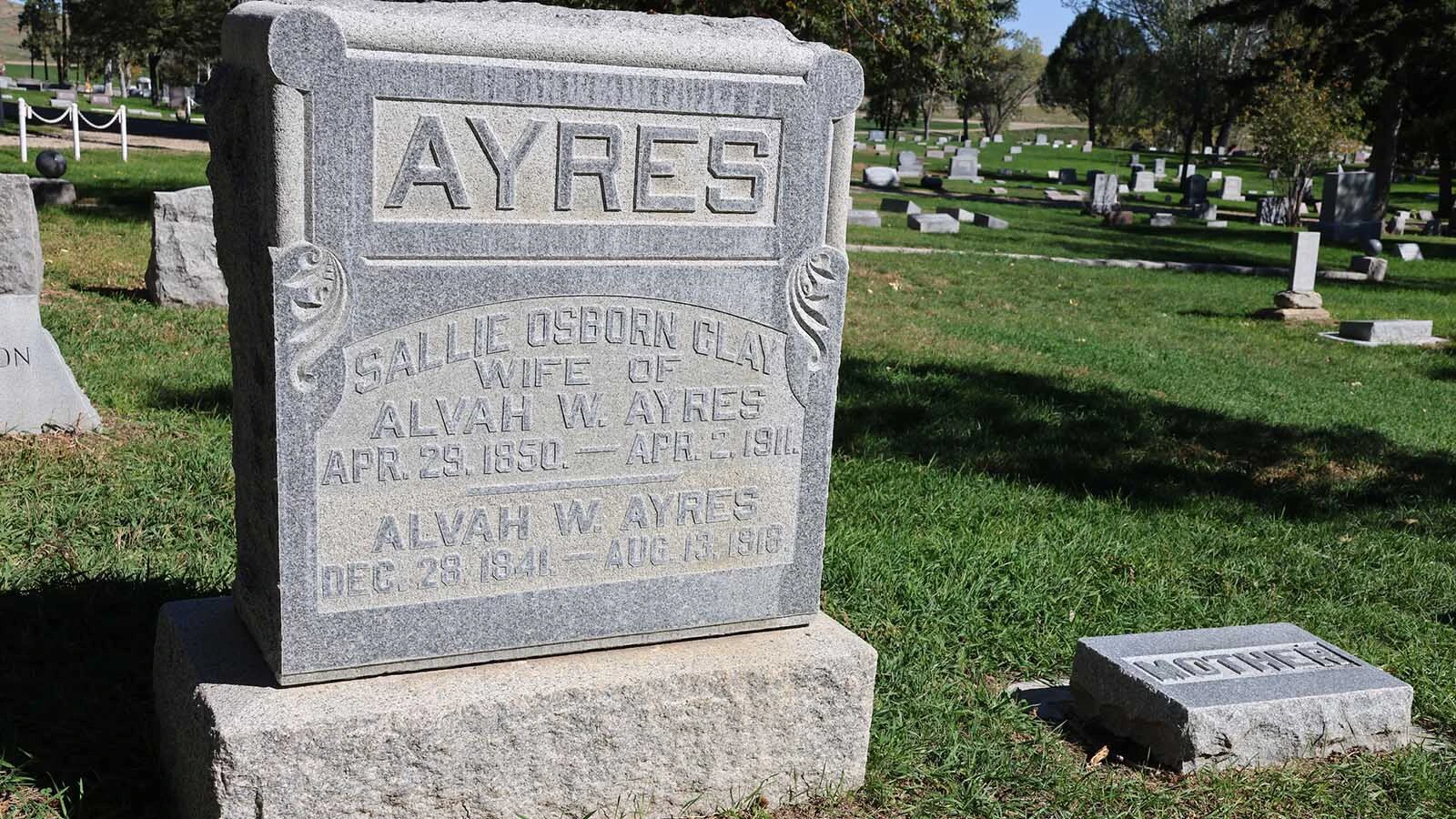
Alvah Ayres original ranch west of Douglas contained the natural bridge that was named after him. The bridge land deed was turned over to the county in 1920. (Dale Killingbeck, Cowboy State Daily) 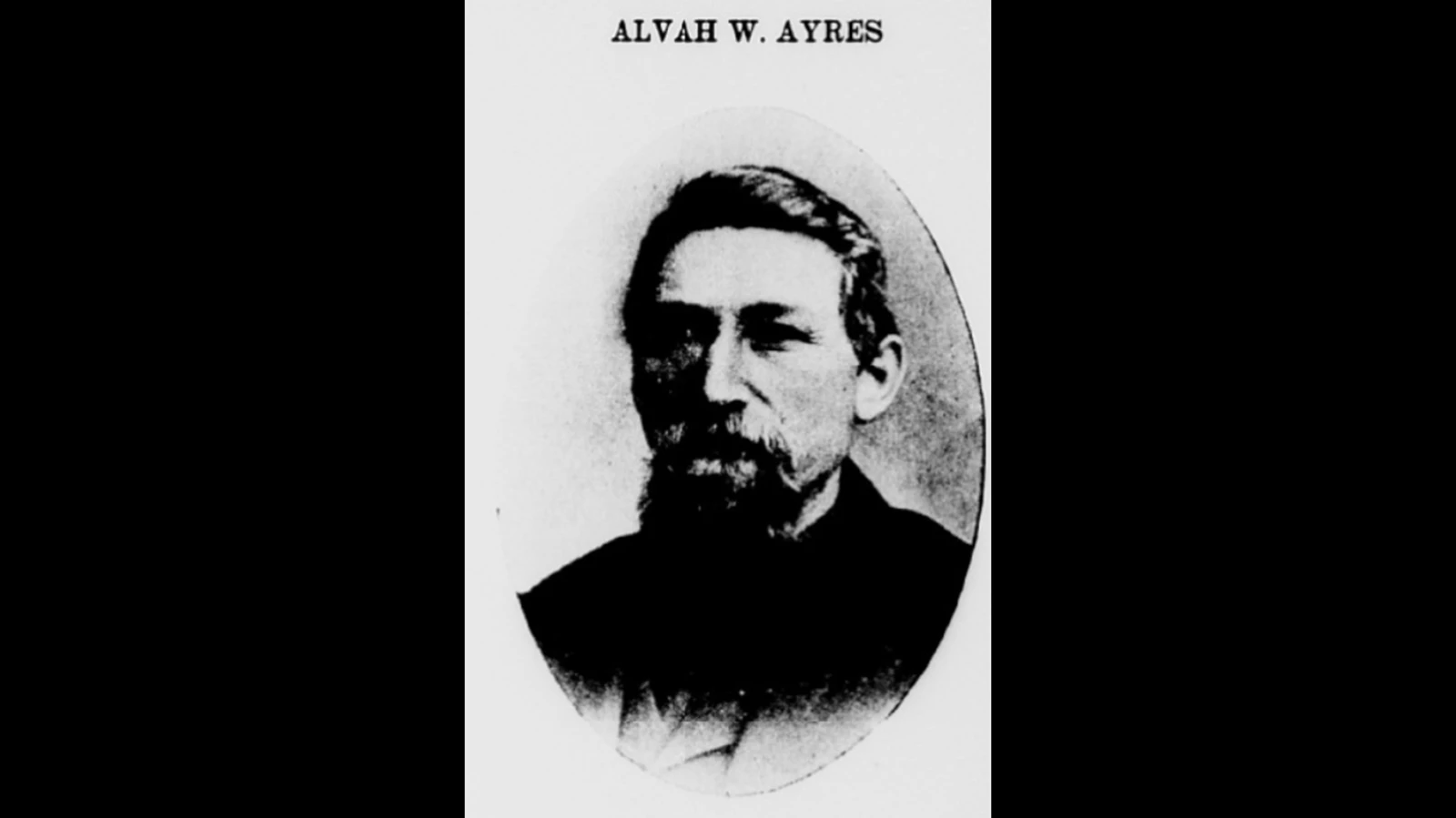
Alvah Ayres original ranch west of Douglas contained the natural bridge that was named after him. The bridge land deed was turned over to the county in 1920. (Wyoming Newspapers.com)
Alvah Ayres
The name Ayres is familiar to everyone traveling I-25 between Douglas and Casper due to the signs pointing out the exit for the Ayres Natural Bridge Park. The landmark once hosted pioneers on the Oregon Trail.
Alvah Ayres was born in Pennsylvania, and spent time in a few states as his parents and family migrated west before leaving his Beatrice, Nebraska, home for Colorado, where he worked as a teamster.
The Wyoming Pioneer Association publication “Pages from Converse County’s Past” states that he arrived in Wyoming in 1865 at Fort Laramie and in 1867 traveled to Fort Fetterman, outside present-day Douglas.
Some of his trips involved close calls with Indians.
On a trip to Deadwood, South Dakota, he was reported to have leveled a rifle on a man who had just killed another member of the group and was about to take a horse and escape.
The killer was taken into town, tried, and hanged.
In 1882, Ayres established his ranch on LaPrele Creek that included the natural bridge that would bear his name, irrigated the land from the creek, and raised cattle and horses.
He married Sallie (Clay) Button on April 6, 1890. She had a previous marriage and a young son, Andrew. He was adopted by Ayres.
When she came west, Sallie brought with her a treasured letter from her Virginia family heritage penned and signed by Thomas Jefferson.
Bill Barlow’s Budget newspaper on Jan. 1, 1907, noted that the Ayres family was among the first settlers in the region to build irrigation ditches, had 300 acres that were watered, built a fine home, and that Ayres had served in the state Legislature.
Ayres at that point had offered the natural bridge to the public if a commission were appointed to look after it.
However, it was not until May 1920, after Ayres' death in 1918, that Andrew Ayres deeded the natural bridge land to Converse County.
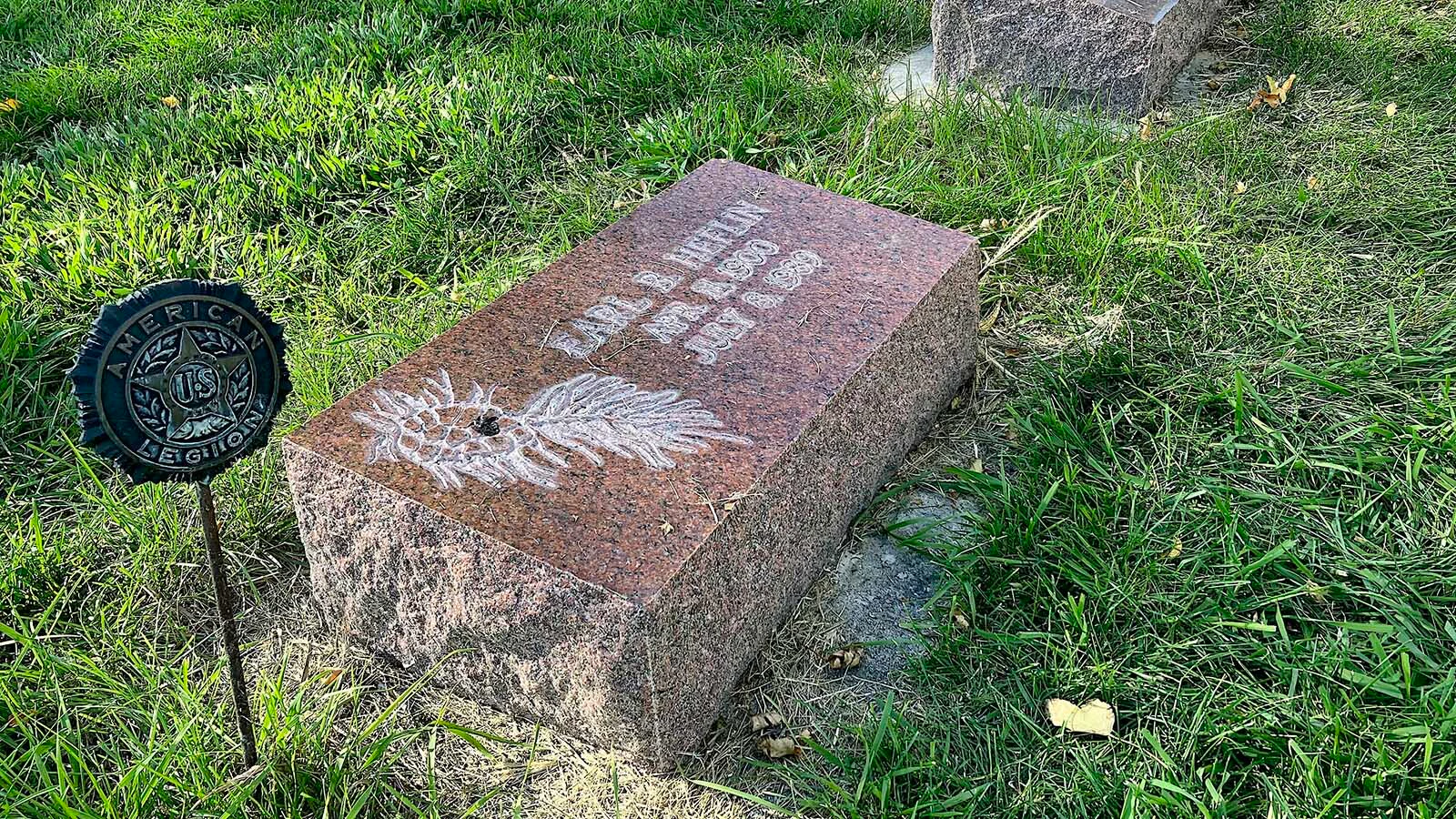
Earl Heflin made headlines when he nabbed serial killer Charles Starkweather and his girlfriend in 1958. (Dale Killingbeck, Cowboy State Daily) 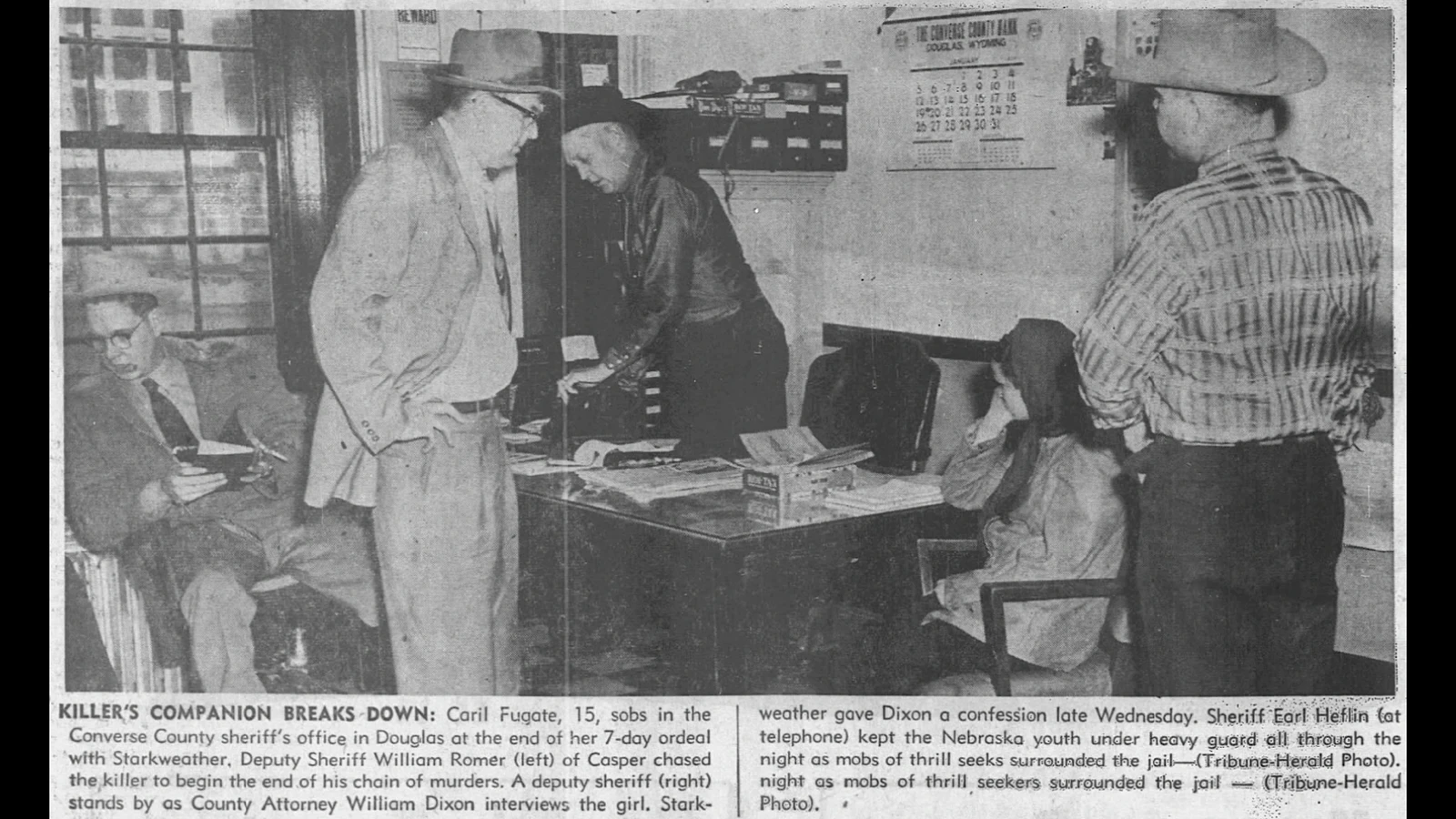
Earl Heflin made headlines when he nabbed serial killer Charles Starkweather and his girlfriend in 1958. (Newspapers.com)
Earl Heflin
Earl Heflin made headlines across the country in 1958 when he and a Douglas police officer stopped a young mass murderer after a high-speed chase and brought his, and his young girlfriend’s, crime spree to a halt.
Heflin was born in Missouri on April 11, 1900, and lived in Red Cloud, Nebraska, before moving to Wyoming in 1928.
He married Mable May Marlow in 1925. From 1942 to 1945 he served in the U.S. Navy, where newspaper accounts show he was stationed for a time in Idaho.
Back in the Douglas area, Heflin joined the Converse County Sheriff’s Department and took the role as undersheriff from 1950 to 1954, sheriff from 1955 to 1958, and then became brand inspector from 1958 to 1962.
On Jan. 29, 1958, Heflin received a radio call from Casper that a Natrona County deputy had encountered Charles Starkweather, 19, near the Ayres Natural Bridge.
Starkweather had been wrestling with man in the middle of the road over a rifle. He then jumped into a 1956 Packard and headed toward Douglas.
A Montana man was shot and killed by Starkweather at the scene.
Starkweather and Caril Fugate, 14, were wanted across the country for the cold-blooded murders of nine people in Nebraska, including members of Fugate’s family.
Heflin and Douglas Police Chief Bob Ainsley set up a roadblock outside Douglas and Starkweather drove through it. A chase through the streets of Douglas and out onto the highway east of the city ended when Heflin sent two shots through the Packard’s window.
Starkweather stopped as flying glass nicked his ear.
“It was his own blood that got him,” Heflin told reporters in an Associated Press story printed on page one of the Kearney Hub in Kearney, Nebraska, on Jan. 30. “He thought he was deader’n hell when he saw that blood.”
After Starkweather’s arrest, he provided Heflin with a written confession of his crimes.
The next day officers transported the pair back to Nebraska after Wyoming officials decided they would allow the neighboring state to prosecute. Heflin and his wife escorted Caril Fugate to Lincoln.
Heflin did not seek another term as sheriff and instead took the brand inspector role.
The former sheriff caused headlines again when he turned up missing after leaving Esterbrook on July 8, 1989. His body was discovered on July 21 after an intensive search.
Authorities believed his vehicle became stuck and he tried to walk out and had a heart attack.
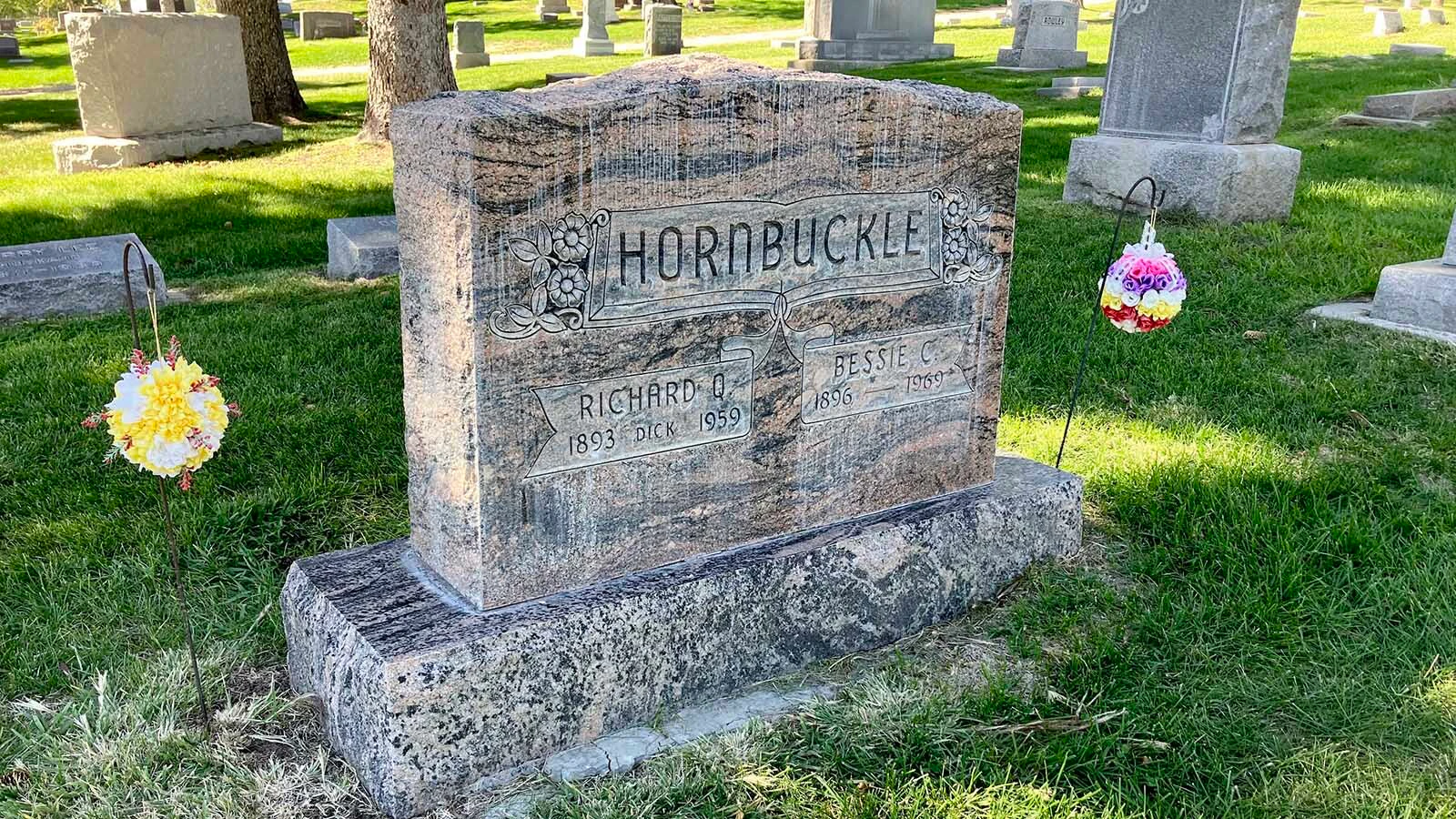
Converse County rancher and bronc buster Dick Hornbuckle had a good ride through life that include a stint with the Buffalo Bill Wild West Show and championship buckles from rodeos across the country. (Dale Killingbeck, Cowboy State Daily) 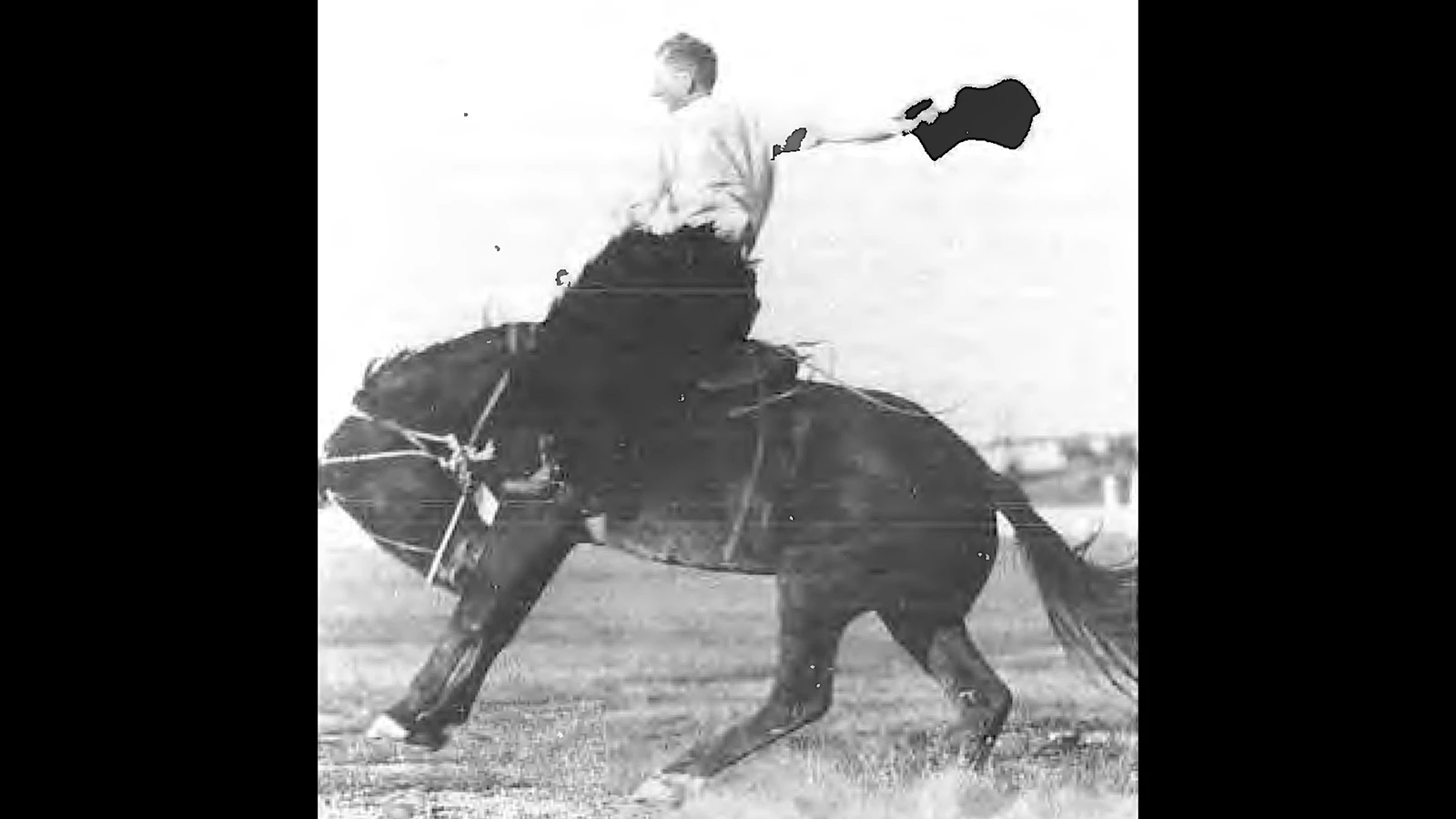
Converse County rancher and bronc buster Dick Hornbuckle had a good ride through life that include a stint with the Buffalo Bill Wild West Show and championship buckles from rodeos across the country. (Pages From Converse County’s Past)
Richard 'Dick' Hornbuckle
The grave of Richard “Dick” Hornbuckle carries no inkling of his membership in the Wyoming Cowboy Hall of Fame.
The Hall of Fame website states that he arrived in the state when he was 12 or 13 and got a job “breaking remounts for the U.S. Cavalry.”
A few years later he was in central Wyoming working for several different ranches and making a name as a bronc rider. His skills led to bronc riding titles at the Wyoming State Fair in 1911, and 1914-16.
Bill Barlow’s Budget on Oct. 29, 1914, told readers that the cowboy had broken his leg and was on crutches. But two years later, on July 27, 1916, the paper noted he was back in the saddle.
“Dick Hornbuckle went to Cheyenne Tuesday and will ride some of the bad ones at the Frontier Days’ celebration,” the newspaper reported.
Later that year Hornbuckle was in New York City competing at The Stampede rodeo when he made headlines again.
“Dick Hornbuckle, conceded by contestants to be the virtual winner of the bucking horse riding contest sustained a broken leg yesterday,” the Brooklyn Eagle reported on Aug. 13, 1916. “The accident puts him out of the contest, costs him the world championship, and the $1,000 prize.
"In order that he might not be in want, for it is said he came East with just enough money to get him back to his cow-punching job in the West, the cowgirls went through the immense grandstands and the half-mile of bleachers and collected hats full of dollar bills, not to mention a large amount of silver.”
The New York Tribune reported the fundraiser netted $824 and that Teddy Roosevelt Jr. was in the stands.
Newspaper articles as well as his obituary state that Hornbuckle rode with Buffalo Bill’s Wild West Show early in his life, as well as with Pawnee Bill, and in the “Teddy Roosevelt Wild West Show.”
Humorist Will Rogers and cowboy actor Tim McCoy were among Hornbuckle’s friends.
In addition to his rodeo fame, Hornbuckle also was a successful Converse County rancher. He married Bessie Turner in Audubon, Iowa, on Jan. 1, 1927.
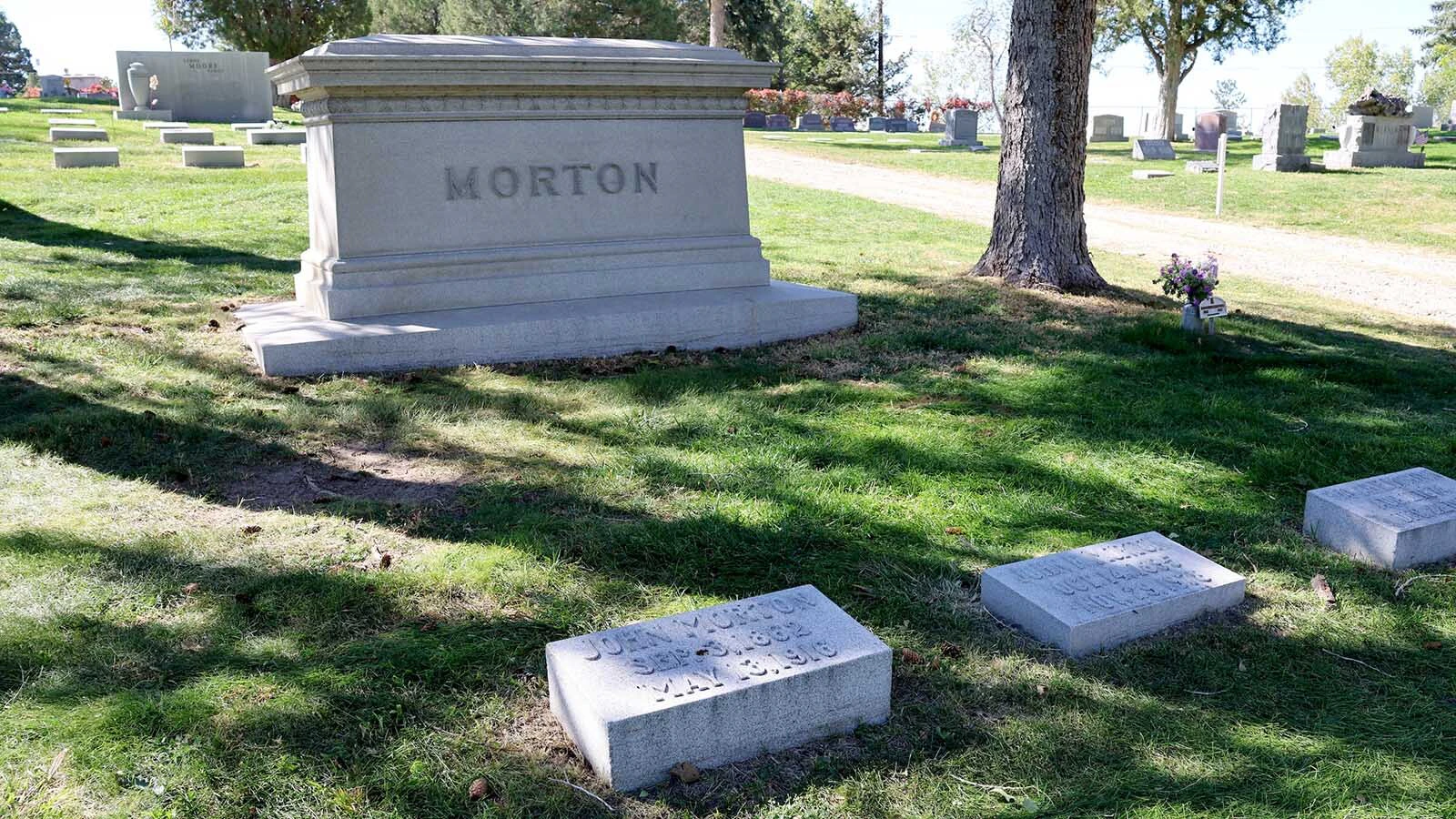
John Morton arrived in Wyoming penniless but made himself into a successful sheep rancher and businessman by the time he died in 1916. (Dale Killingbeck, Cowboy State Daily) 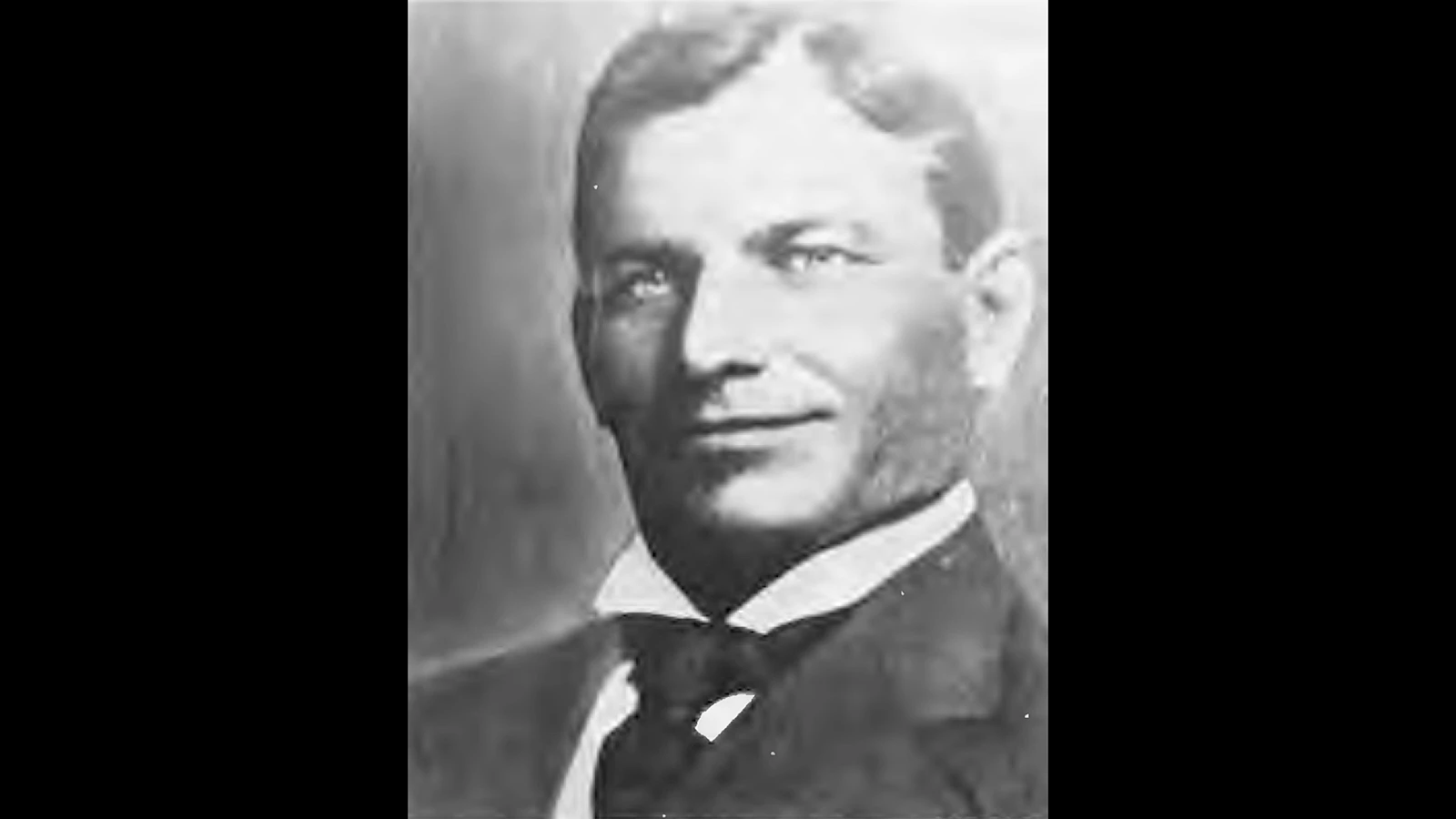
John Morton arrived in Wyoming penniless but made himself into a successful sheep rancher and businessman by the time he died in 1916. (Pages From Converse County’s Past)
John Morton
John Morton was one of Converse County’s successful sheep ranchers and businessmen.
He arrived in the Rawlins area around 1880.
An account of his life told in “Pages From Converse County’s Past” states that he was born in Germany and came to the U.S. when he was 3 years old. After growing up in Illinois and Missouri he ran off to join the U.S. Army at Fort Leavenworth, Kansas.
After the military he went to Cripple Creek, Colorado, and tried to become a miner but did not have $3 to join the union. When he arrived in Converse County in 1891, he brought a band of sheep with him. His previous 10 years in Wyoming had served him well.
The publisher of the Rawlins Republican, looking back on Morton’s life in June 1916, wrote that Morton’s honesty and character as a young man were enough for a successful sheepman to sell him a band of 1,500 ewes using a note for 90% of the purchase price.
“Those ewes were carefully herded in summer and protected in winter,” the publisher wrote. “In storm and shine, nothing was overlooked that would make them wax fat and multiply. Details were not left to hired men but were looked after by the owner.”
The Newcastle News-Journal reported on Aug. 19, 1892, reported that Morton had struggled during his first years in the new region.
“Mr. John Morton, who ranged his sheep on Black Thunder a year ago, lost $3,500 by the scab getting into his flock last spring,” the newspaper reported. “But he got right back up and went at it again, and is running 15,000 head this summer, south of Douglas.”
Morton married Sarah McDermott in 1894 and the couple proceeded to segue their sheep-raising success into other businesses and opportunities.
The Natrona County Tribune reported on Nov. 28, 1906, that when Morton sold his Box and Dry Creek sheep operation the buyers paid $100,000 and received 10,000 sheep, 2,500 acres of deeded land and a lot of equipment.
That payment would be worth $3.2 million in 2026 dollars.
The Mortons purchased a large mansion-like home in Douglas and continued to buy ranch land. In 1912 after a bad winter blizzard, the couple purchased a ranch on LaPrele Creek and one one Sand Creek to expand their holdings.
At his death on May 13, 1916, Morton was president of the First National Bank, president of the Douglas Electric Light Company, president of the Douglas Mercantile Company, and owned an irrigated 4,000-acre ranch outside of Douglas.
The Douglas Enterprise editorialized that the city lost its “most prominent citizen and many in central Wyoming loses his best friend.”
The newspaper said despite Morton’s wealth, his “true-blue” character had not changed from the days when his pockets were empty.
“The place of this strong character cannot be filled and it will be many a day before his fellow townsmen will recover from the shock of his untimely death,” the editor wrote.
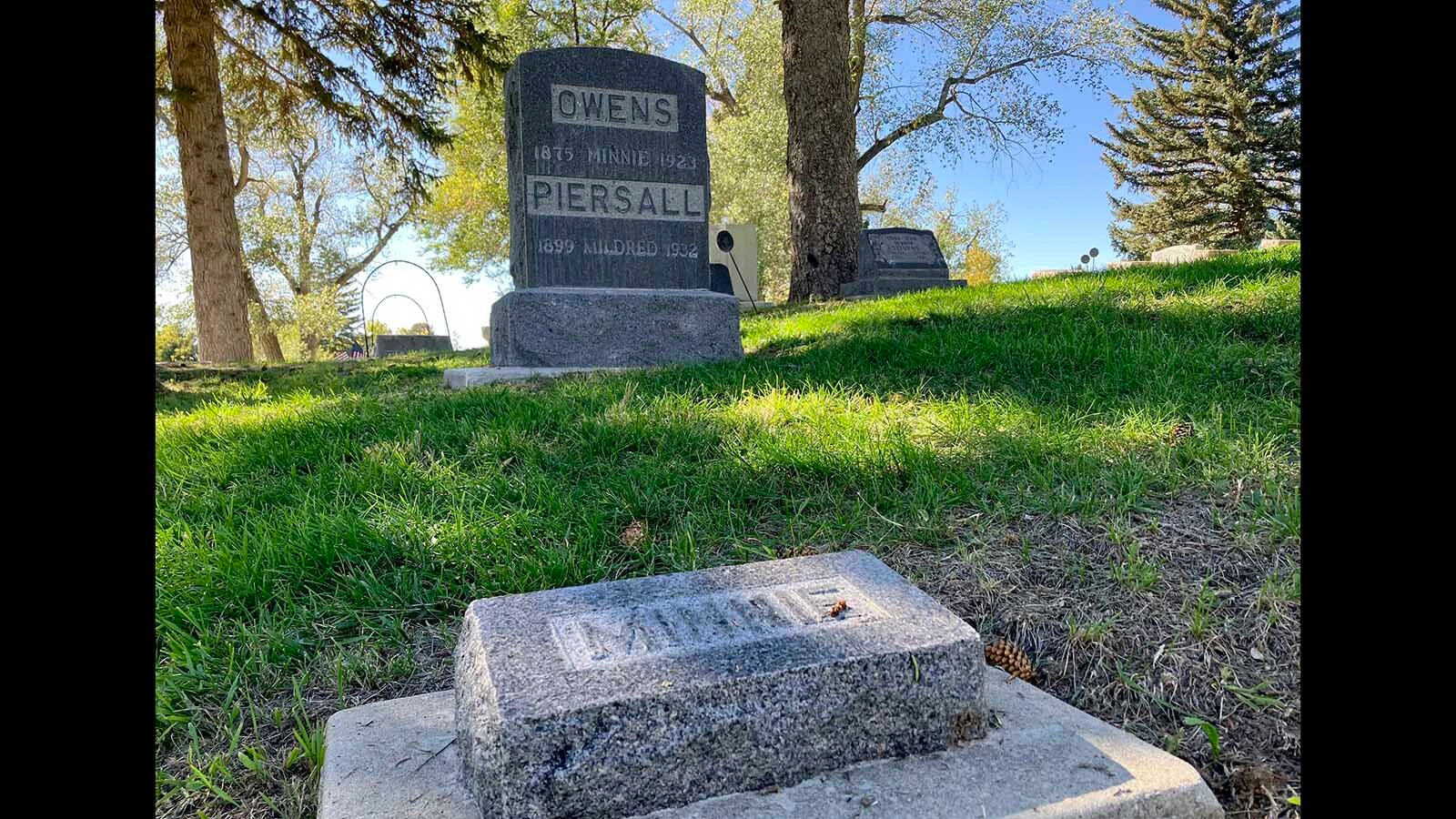
Minnie Owens
Minnie Owens resided in Douglas for many years but by September 1923 had been living for a few years in Casper and running a busy rooming house.
Historian Con Trumbull’s book, “Steam, Steel and Silence” chronicling the Cole Creek Train Wreck lists the 48-year-old as one of the passengers on the Chicago, Burlington and Quincy Railroad’s train No. 30.
Owens and another passenger, Salt Creek boilermaker Jay Griswold, 11 years her junior, were headed to Denver to get married. Trumbull wrote that Owens and Griswold were seated in a chair car on the train when the train collapsed into Cole Creek just after 9 p.m. on a rainy Thursday, Sept. 27, 1923.
The Glenrock Gazette reported on Oct. 4, 1927, that her body had been recovered.
“The body of a woman was found some 20 miles down the river from the wreck, in an old irrigation ditch,” the newspaper stated. “In this, the body was discovered with the face and one arm out of the mud. It was brought to Glenrock about 4 o’clock Wednesday and the mud washed from it and a little later identified as that of Mrs. Minnie Owens of Casper.”
The paper reported her body was not bruised and that “$191 in cash was found in a handkerchief inside the lady’s corsage.”
Two months later, the Cody Enterprise on Dec. 12, 1923, reported that the railroad had agreed to pay her heirs, two daughters and a son $5,000, the equivalent of $97,000 in 2026.
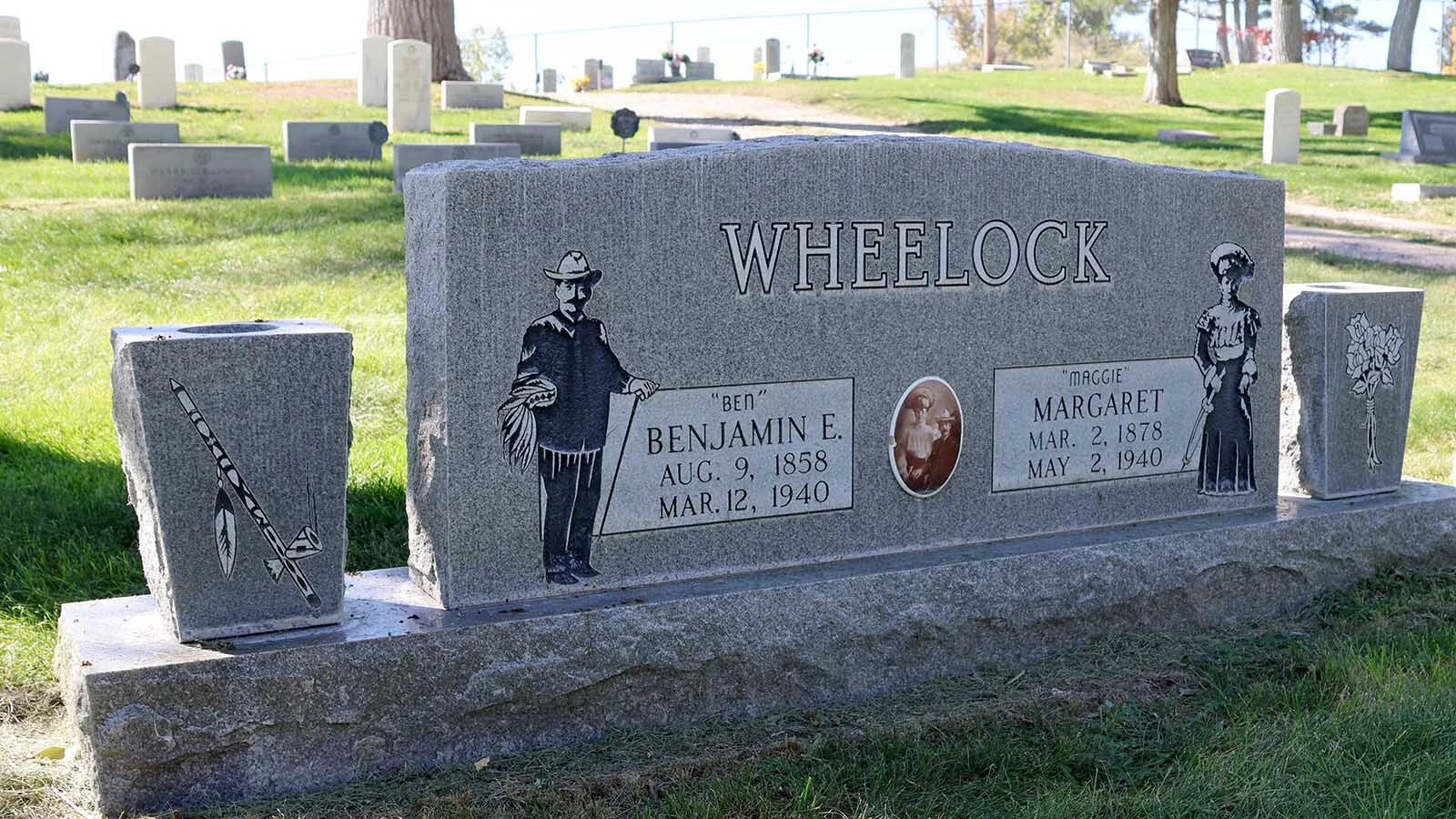
Ben And Maggie Wheelock
The headstone of Ben and Maggie Wheelock is among the few in the cemetery that carry a photo. He was 20 years older than his wife, whom he married in 1913. The couple were well known in Douglas. He was a rancher and carpenter and she ran a successful house of ill repute.
Both of their names are found often in the local newspaper through the years. Maggie bought $500 worth of war bonds during World War I, paid out for two lamp posts when the city installed streetlights, and was known for her generosity and willingness to help the poor and those in the community with needs.
Ben, who arrived in Wyoming as a teen, learned a few Indian languages and at 17 was sent to Montana to help with a haying contract. Ruth Grant, who supplied a biography of the couple for the “Pages in Converse County’s Past” publication, wrote that while in Montana he was called on to assist with the burial of the remains of Custer’s men at the Little Bighorn Battlefield.
Maggie’s first appearance in Douglas came in the late 1890s after being lured to the state by a man who promised to bring her West and marry her. Instead, he set her up as a “madam” and for the the next few decades she plied her trade overseeing the recruitment of young women to her establishment.
According to Grant’s history, Douglas citizens all knew Maggie and her business but “just chose to pretend that such a business did not exist.”
She was characterized as an “excellent businesswoman” who made sure the women in her house had checkups with the local doctor once a month.
One story recounted in Grant’s biography is that Maggie was confronted by local church women on one occasion who told her the community would be better off without her business.
“Maggie calmly said, ‘If you ladies would keep your husbands home at night then I would have no business, and I would be forced to close,’” Grant wrote.
Dale Killingbeck can be reached at dale@cowboystatedaily.com.