
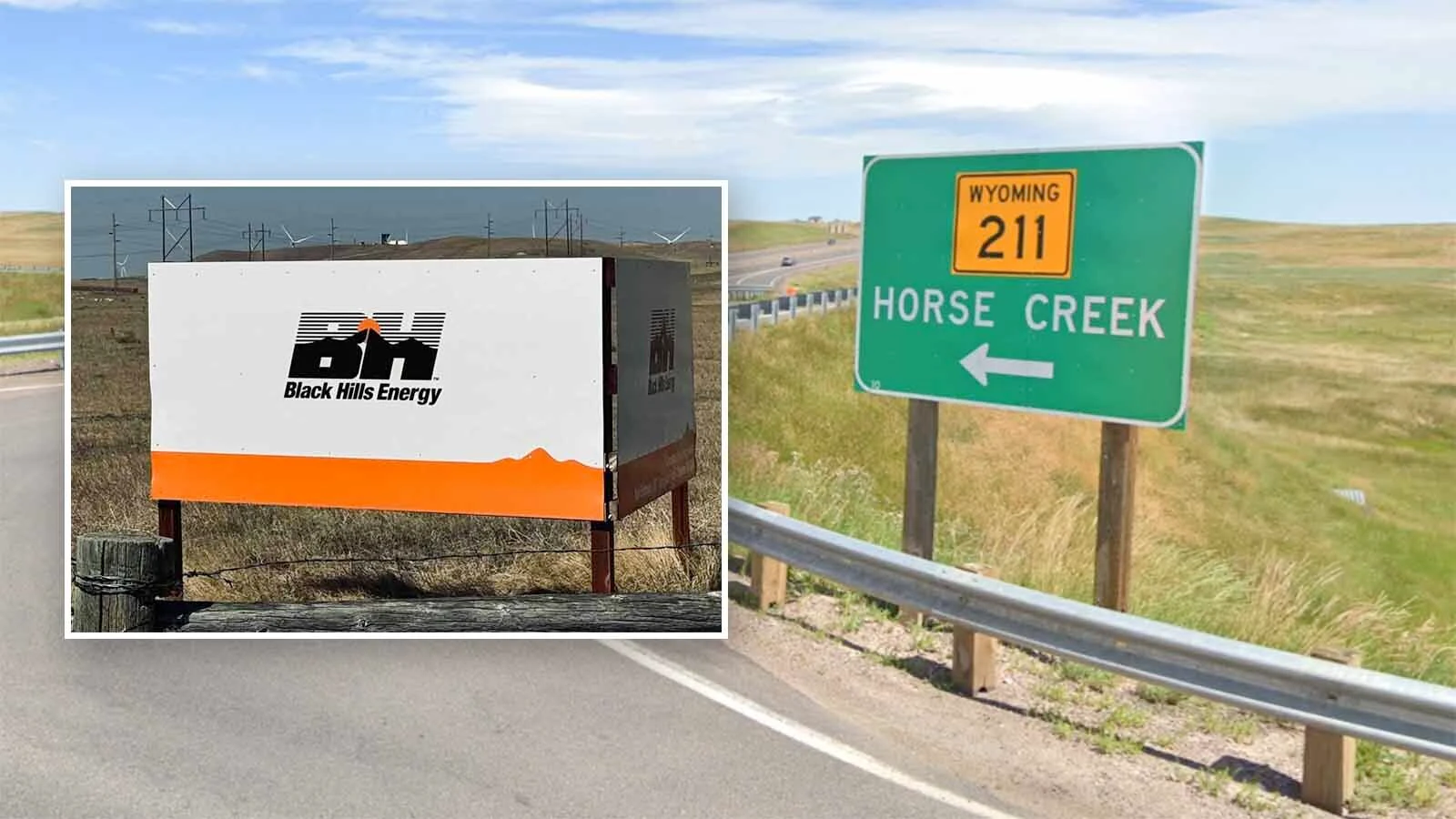
Neighbors call it the Horse Creek project, but a Black Hills Energy spokesperson told Cowboy State Daily the natural gas and battery storage plant planned north of Cheyenne is informally known as the Prairie West Energy Complex.
The confusion over its name is just the beginning of the many ways the utility and local residents don't see eye to eye.
Black Hills Energy bought a 935-acre tract on Horse Creek Road earlier this year for a natural gas power plant with onsite battery storage.
The project is still in the early planning stages, and neighbors say they don't know how big it will be, where its water will come from or what it means for their rural subdivisions.
It must clear a multi-year state review before construction, which isn't expected to begin until about 2028.
But those living near the planned power plant aren't waiting years, they don't like the prospect of what the plant represents to them — something that will destroy the rural atmosphere they moved to the Horse Creek area for.
‘Living Out Of Town’
For Jon Diurba, having a gas-fired power plant across the dirt road from his rural property near Horse Creek Road would defeat the purpose of moving there three years ago.
“Just living out of town, away from industrialized areas, in the middle of a field, seeing the stars at night,” Diurba said. “The whole reason you buy a property out here, as opposed to next to the oil refinery or the power plants or the windmills south of town, is to not have that stuff.”
He fears the plant's lights would wash out the night sky, its hum would break the quiet, and its wells could draw down the aquifer on which his household depends.
His neighborhood, Rocking Star Ranch, is made up of 5-acre lots, with pronghorn crossing the grasslands and no industry for miles in any direction, Diurba said. Not only is there no industrial development, he said there’s no infrastructure that would be necessary to support new industrial development.
So he fears the power plant itself is only the beginning.
“They're going to have to bring in transmission lines, natural gas,” Diurba said. “So the question is, why not do it near undesirable land by I-25? Why not do it where there's already all the infrastructure?”
Unanswered Questions
That question, among others, has not been answered by Black Hills Energy.
“Black Hills want to say as little as they can publicly,” Diurba said. “That way, by the time people have the option to be publicly outraged, they've missed their window of opportunity. At least that's my perspective.”
His perspective also includes a suspicion he shares with other residents: That a data center could eventually follow the power plant.
“You wouldn't build it the way that you're building it on the preliminary plans that they have unless you are preparing for a future data center or some other thing like that,” Diurba said. “That’s the way that I'm interpreting it.”
The preliminary site plan shows the generation site, battery storage and a stormwater pond taking up only a portion of the tract, with the rest left blank apart from temporary construction areas. Diurba estimates that leaves about 600 acres open.
Diurba also sent mailers to 968 nearby households, and 51 people responded in the first 24 hours. Of those who responded, 67% mentioned water as a primary concern with the gas plant project, he said.
Cowboy State Daily sent Black Hills a list of specific questions, including why it chose this site, how much water the plant will use and where it will come from, and whether the power is meant for a data center.
The company declined to answer specific questions and responded with the same statement it gave in June, which says it is committed to transparency and will share more as plans develop.
“We are committed to being a good neighbor and have held preliminary meetings with landowners directly adjacent to our property,” the statement says.
‘Getting Organized’
The company's last meeting with neighbors was a closed-door session in June for adjacent landowners only.
Robert Kissel, who has lived on Horse Creek Road for almost seven years, was one of about 40 landowners in attendance. None of those 40 people were in favor of the project, he said.
“It’s just very disturbing,” Kissel told Cowboy State Daily. “And we’ve got a real active group here getting organized.”
Kissel said Diurba has been a driving force in organizing neighbors. Diurba and two other residents built a website, horsecreekproject.org, that collects the project's documents, maps and updates in one place.
Beyond the mailers, Diurba has gathered more than 100 signatures on a community petition and invited all the neighbors to a meeting on his property Oct. 13.
“It’ll be real interesting next Tuesday evening to see how many people show up there,” Kissel said.
Everything Kissel loves about his 40-acre property will be lost, he now fears. The quiet country nights and the herds of pronghorn that cross his land won't survive the onset of construction, he said.
“There’s just nothing good about it,” Kissel said of the project.
Once the power plant is operational, he expects round-the-clock noise and bright lights right outside his back door, alongside a growing worry over what it might do to his water supply.
“Power plants use hundreds of thousands of gallons of water every year,” Kissel said. “So that’s very concerning about all the water wells.”
Kissel feels stuck. He doesn't want to live next to a gas plant, but he said selling his $1.2 million property to move isn't much of an option because nobody else will want to move in, either.
“I wouldn’t be able to sell the house, probably, unless I really lowballed it,” Kissel said. “I’ve thought about it an awful lot and it’s just like what are you going to do in this situation?”
‘Bleed Us Dry’
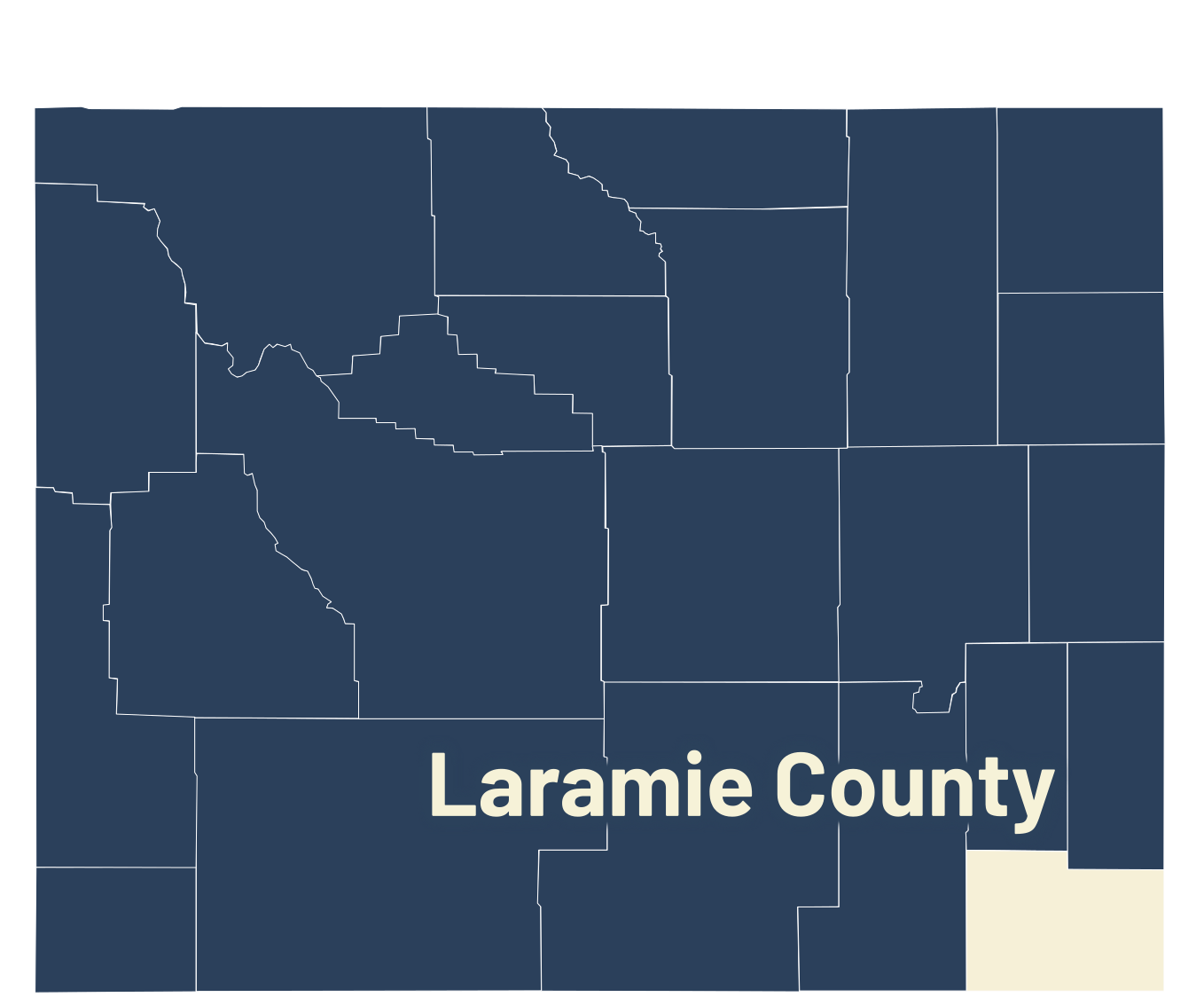
Laramie County has limited say over whether the plant gets built.
In an April 24 letter to Black Hills, Laramie County's planning office said essential service utilities are allowed on any unincorporated land in the county, which means a project like this effectively wouldn't need approval from the county commissioners. Black Hills would still have to submit a commercial site plan and get standard county permits for access, building and floodplain development.
The letter also said the company intends to apply through the state's Industrial Siting Division, and that the county reserves the right to join that application as a party.
Residents are weighing legal action, but Diurba said they likely can't afford it. Any lawsuit would be paid for by the homeowners themselves, he said, and they would be up against a utility with a team of attorneys already on staff.
"They would bleed us dry," Diurba said.
Emma Jane Jackson can be reached at emma@cowboystatedaily.com.


