
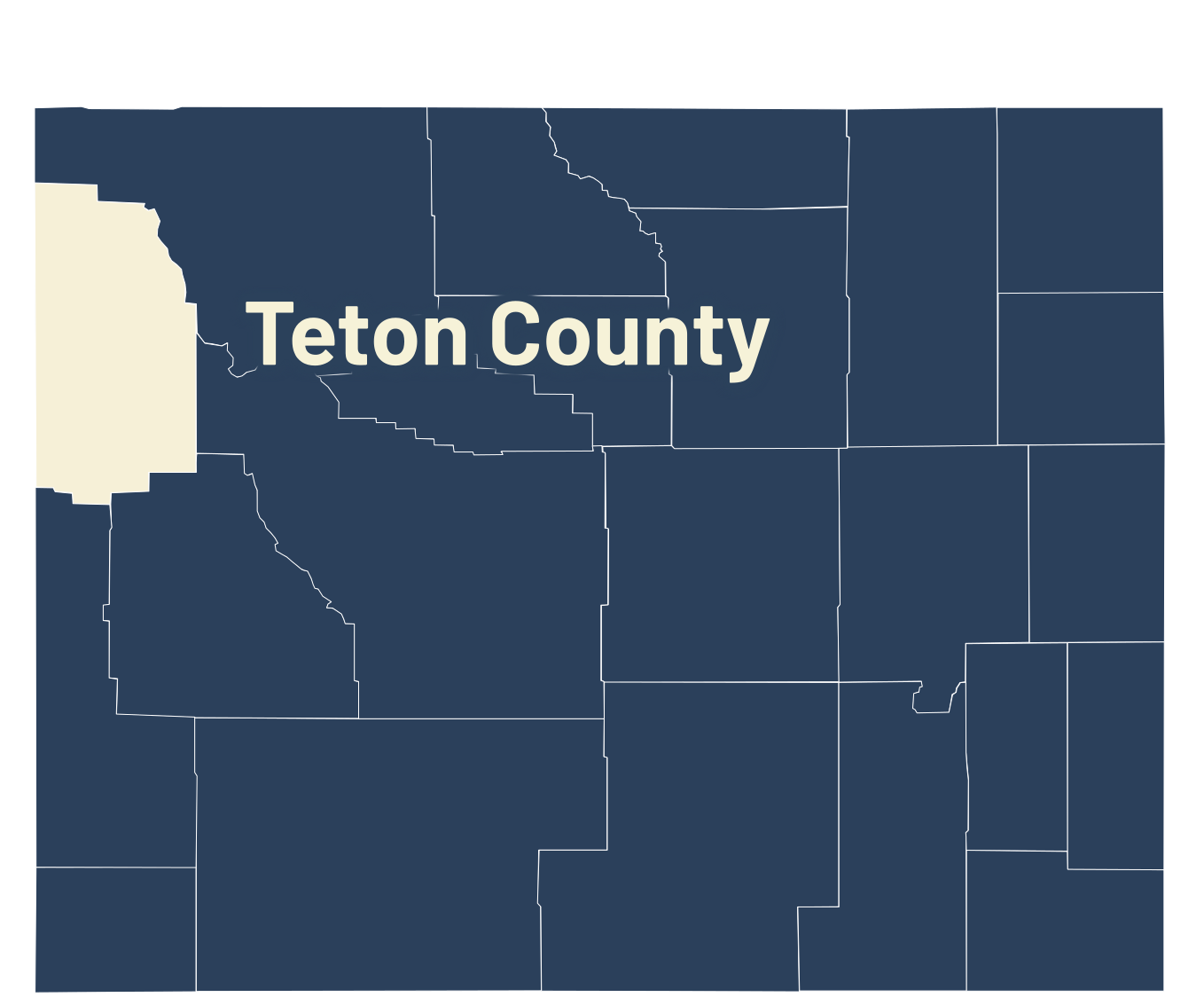
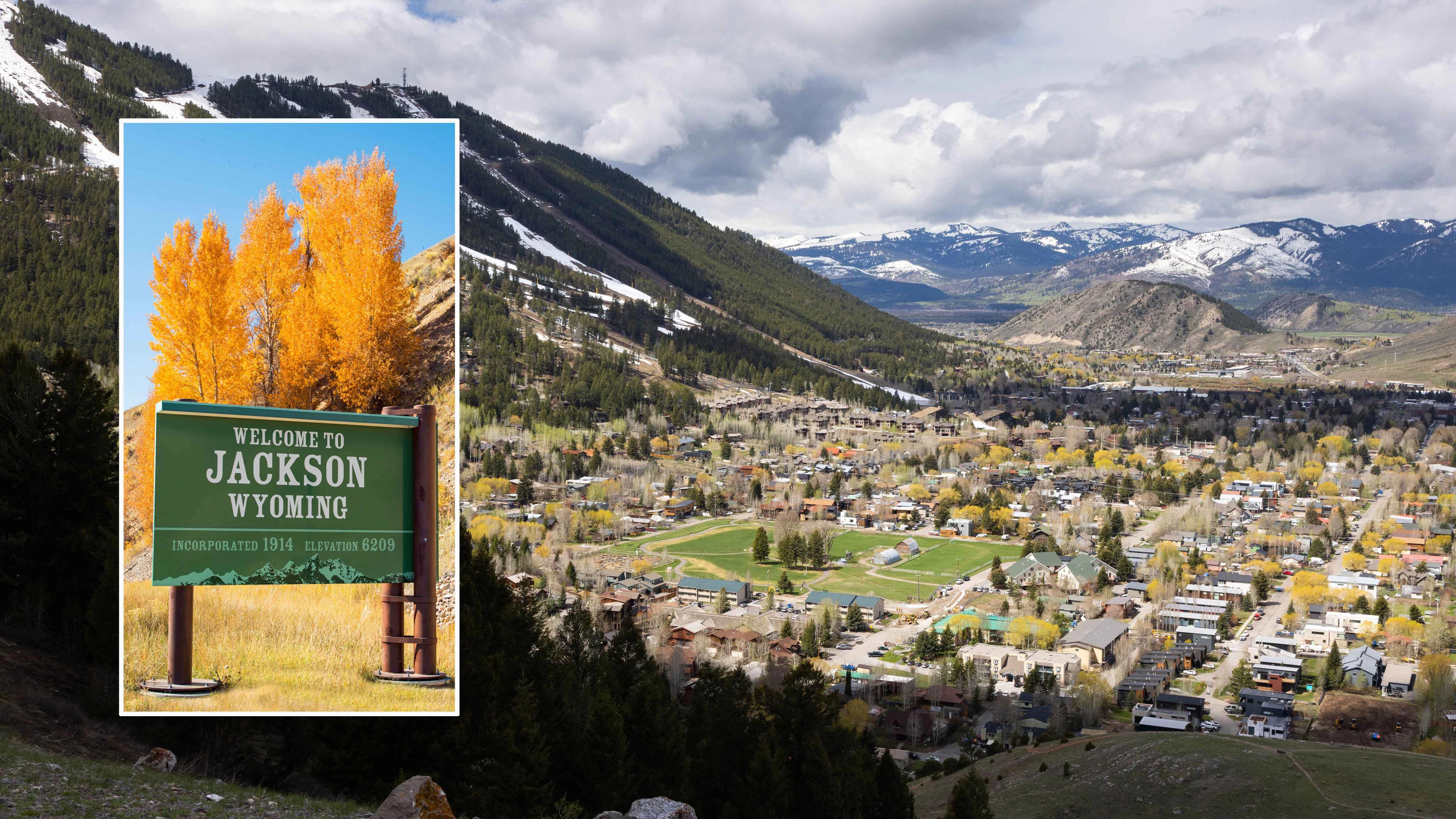
At first, the longtime Teton County family and two nonprofit groups trying to build a new neighborhood south of Jackson objected to being told to give $3.5 million to construction upgrades outside the building site in exchange for the county’s authorization.
The Gill family seeking to develop Northern South Park Area 1 just south of Jackson questioned the requirement as “unprecedented” in a July 27 letter to the county. The commingling of private and government projects was bound to cause disputes, the letter asserted.
And project attorney Amberley Baker told the Teton County Commission at a Sept. 15 meeting that requiring $3.5 million for traffic mitigation up front would render the project “unviable.”
On the other hand, county planners said that money is linked to the 10%-to-12% increase in traffic they expect the project to bring to the nearby High School and South Park Loop Roads.
The county didn’t vote on the development plan Sept. 15, but set it for next week, Oct. 6.
On Monday, however, the developers offered a compromise to county planners.
It still involves developers paying $3.5 million to public construction works, but it tethers the payout to deliveries on the county’s end.
Six Years Later
The proposal says the Gills will pay $1.33 million toward traffic mitigation to account for the free-market homes, in cash, when the county closes out their first grading and erosion control permit.
And the Housing Trust and Habitat for Humanity will split the remaining $2.175 million, each paying 10 equal installments as the county grants them building permits.
Baker said the compromise is a product of negotiation.
“We agreed to the traffic mitigation fees because staff worked with us to remove unworkable terms, and tie payments to the actual development benchmarks,” said Baker in a Monday statement to Cowboy State Daily. “That gave us an acceptable path to move the neighborhood forward.”
Chris Neubecker, director of Teton County Planning and Building Services, confirmed Monday that the county received the developers’ letter and have been working closely with them to mirror the traffic mitigation fee to the project’s actual impacts on traffic.
“We look forward to presenting this proposal to the Board of County Commissioners on Oct. 6,” said Neubecker.
If successful, this could be the first major non-luxury housing development in the county in 30 years.
The region’s housing shortage has reached extremes as the average home price rocketed to more than $8 million in 2023.
Many daily-grind workers like nurses, teachers, and tradesmen commute daily rather than buy or rent homes in Teton County where they work.
The Northern South Park Area 1 neighborhood abutting Jackson’s southern border has been a target for development in housing-desperate Jackson for decades.
The Gill Family started official planning in 2020 to build a neighborhood on the 74-acre parcel sitting east of South Park Loop Road, south of High School Road and west of a ranch.
Six years passed.
Regulatory negotiations and approvals unfolded, but the project still lacks the major development plan approval that is set for a vote next week.
In half that same, six-year timeframe, national, state and local authorities approved a nuclear plant project in Kemmerer.
Taxing Philanthropy
The Gills have agreed to build 30% (166) of the 553 homes as “free-market” units that can be sold in line with market prices, according to staff testimony.
For the other 70%, they’ve agreed to convey both land and infrastructure to the nonprofit groups Jackson Hole Community Housing Trust and Habitat for Humanity of the Greater Teton Area, which are then expected to build those 387 homes as price-capped, affordable housing.
Baker told commissioners last month that every new fee the county raises as part of its approval process gouges the nonprofit groups’ donation streams.
“The not-for-profit developers building … affordable homes, they rely heavily on philanthropy,” said Baker. “Whether that is a donor giving $15 or $15 million, every additional cost imposed on this project does cut into those dollars.”
Wayne Hughes, who told the commission he lives “within shouting distance” of the planned neighborhood and has pledged $15 million to it, criticized the earlier $3.5 million fee at the Sept. 15 meeting as a tactic of deception and delay.
(Editor’s note. Hughes is majority owner of Cowboy State Daily.)
“It’s my understanding that our county leadership is insisting on taxing development and philanthropic dollars in an amount over $3 million if the project is to move forward. Why?” asked Hughes. “Well, it’s because you can. But at the root of it, you’re not leading in the right direction.
“I’ve watched this,” added Hughes, “Deflect, delay and deceive. It’s one of the oldest plays in the political strategy.”
Hughes indicated that some county leaders simply do not like the project and are hiding behind the call for traffic mitigation.
Hughes referenced the Jackson/Teton County Housing Authority’s 5-acre purchase of an RV park three years ago, and now-stalled hopes of building more than 200 homes.
The taxpayers gave $28 million toward that project, and yet the Northern South Park Area 1 project is conveying 14 times that amount of land at zero cost, noted Hughes.
“Rather than denigrate the family that’s trying to help solve the problem, rather than taxing the foundation that is giving the money to build affordable housing, I would ask you to thoughtfully pivot to being part of the solution,” Hughes said.
“Let philanthropy do the good work with its money without government making less of it,” he added. “When you see a Gill, say, ‘Thank you.’”
The Gills’ legacy surfaced multiple times in the meeting.
Landowner Nikki Gill told commissioners that institutional memory in the region is winnowing. Her family gave land for a hospital, a town square and a new high school, she said.
Gill also read from a news story about her great-grandmother’s death in a 1956 edition of the Jackson Hole News and Guide, which had called the late “Mrs. Bruce Porter” a tireless philanthropist to the community and its schools.
The Reference …
Hughes said in a later interview that the community needs this project.
"And I'm a supporter of the community," he said, adding that he also supports the Gills and their efforts for the community.
"It's their land," he added. "And I'm a big believer that if it's your land, within reason you ought to be able to do what you want to do."
He confirmed to Cowboy State Daily his defenses of the Gill family referenced the publicly-voiced doubts of Commissioner Luther Propst.
Propst has voted no on multiple approvals for the project and has cast doubts on whether the Gills will live up to their promises with respect to affordable housing.
When he was the lone no-vote on the master site plan in May 2025, Propst told the Jackson Hole News and Guide that, while the Gills had pledged to convey 45 acres for affordable housing, he suspected based on a county staffer’s calculations that required exactions for roads, parks and schools would winnow that allotment.
Propst told Cowboy State Daily that he doesn’t outright oppose the project, but wants to get maximum public benefit out of it.
He also said he’s not sure how he’ll vote Oct. 6.
“Despite my votes of the past, I don’t know how I’m going to come down on this one,” said Propst.
The clock is ticking.
Two of the commissioners who have helped to advance the project — Chair Mark Newcomb and Wes Gardner — were unseated in the Aug. 18 primary election by commission newcomers who have said publicly that they would have opposed this development’s master site plan.
Those are Ali Dunford and Karyn Chin. A PAC organized by Propst’s wife, state Rep. Liz Storer, backed Propst, Dunford and Chin as a slate in August.
If they win election Nov. 3, they’ll be sworn into county commission service in January.
Propst said the county needs to address traffic influx from the project.
He said impact fees aren’t unheard-of: a developer agreed to pay $1,000 per lot for offsite development in the mid-1990s.
“The reason this one seems larger is because this development is unprecedented,” said Propst. “An unprecedented development should expect to see an unprecedented highway mitigation fee.”
The U.S. Supreme Court has set a standard for such fees, saying they must be essentially connected and roughly proportionate to the actual impacts.
‘A Narrative Out There’
Gardner told Cowboy State Daily that the $3.5 million is a “healthy” public benefit and well above offerings from other developers.
The project plan would dedicate half of the affordable homes to people earning between 50% and 80% of the average median income, and the other half to people earning 80% to 120% of the average median income.
Nearly two-thirds of those are expected to be two-bedroom homes, and a third are expected to be three-bedroom homes, planners said at the September meeting.
By steering away from public subsidies and one-bedroom units, as well as by conveying most of the project for “like, truly affordable” housing, the developers have outshone others recently looking to build in the area, said Gardner.
“I feel like there’s a narrative out there that the Gills are only doing this to make a lot of money,” said Gardner. “I’m sure they’re going to make money on it.
"But I gotta tell you, I think the folks who are focused on that are really missing … the benefit the community’s going to derive from all these deeply deed-restricted units that are, frankly, exactly what the community is asking for.”
Another Neighbor
Kathy Tompkins, another neighbor, told the commission last month that the proposed roundabouts are a bad idea because children younger than 12 have shown difficulty navigating them; the roads have already borne recent construction and she doesn’t trust the Gill project will absorb well into traffic.
“A perfect storm of simultaneous construction is coming,” said Tompkins, referencing two upcoming expansions at Jackson Hole High School.
She said opponents to the development are “not afraid of change,” but want safety in the area.
The county’s construction priorities are:
- A roundabout intersection at South Park Loop Road and High School Road;
- Frontage and corridor improvements near other, existing homes in the area, plus bike and pedestrian connections, crosswalks, signage, and vehicles lanes and medians;
- A continuous multi-use pathway on the south side of High School Road.
Clair McFarland can be reached at clair@cowboystatedaily.com.


