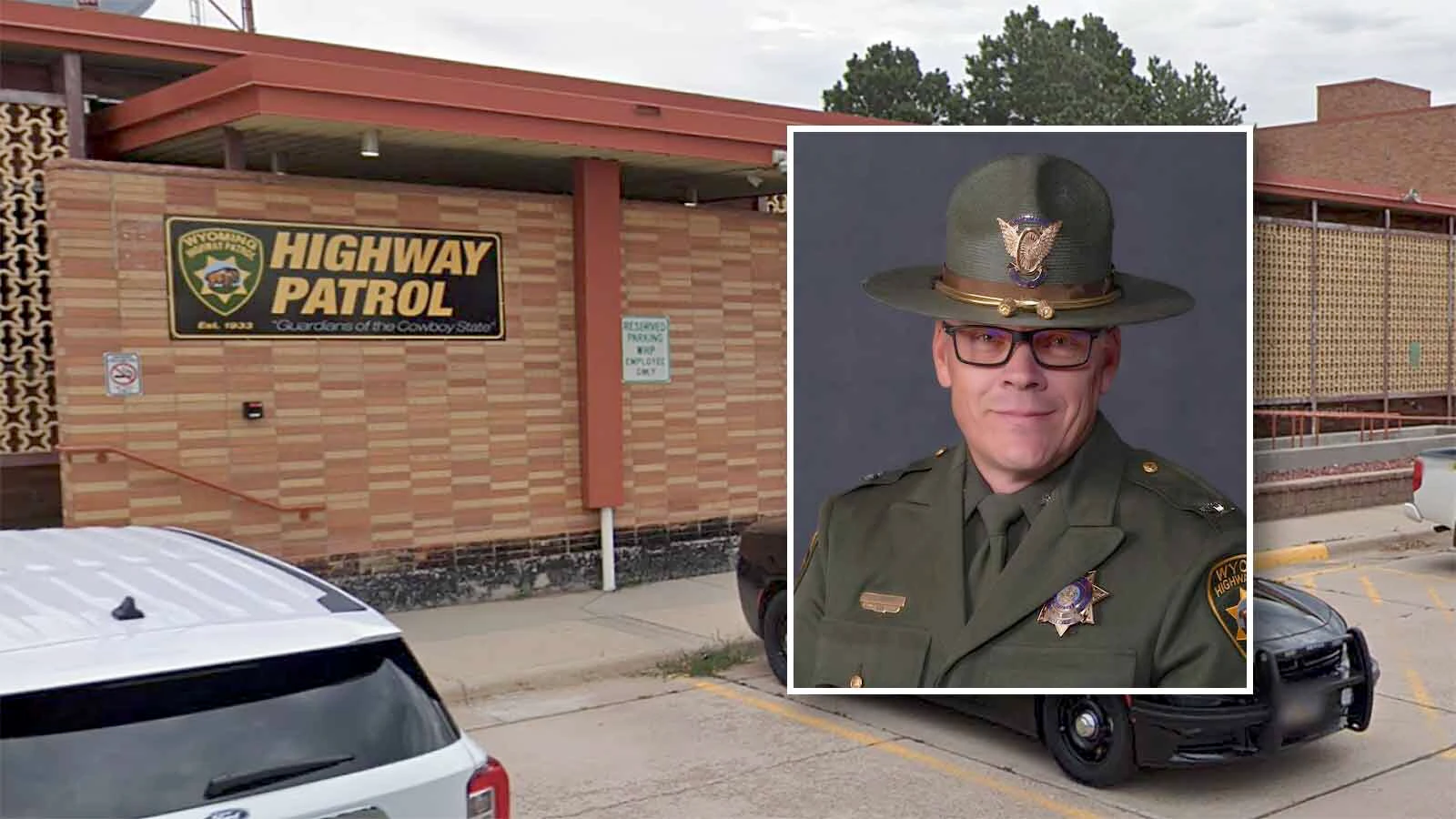
The Wyoming Highway Patrol has 47 empty trooper positions, a dispatch center approaching a critical staffing shortage, and a new colonel who wants to get the agency back to basics.
For Col. KC Ramsey, that starts with filling the jobs the patrol already has, rebuilding morale and making sure supervisors know how much money they can spend.
“My main priority is to get to 208,” Ramsey told Cowboy State Daily, referring to the agency’s authorized trooper force.
Then, he said, the patrol can assess whether that is enough to cover Wyoming’s sprawling highway system.
Ramsey took over as acting colonel and administrator this past Thursday. His permanent appointment becomes official next Thursday.
His arrival coincides with a financial reset as the patrol enters a new two-year budget cycle.
In what he described as his first official interview, Ramsey laid out a plan to Cowboy State Daily centered on recruitment, retention, highway safety and rebuilding the agency from within.
First, Fill The Seats
The biggest trooper shortages are in Casper and Gillette in District 2, and Rock Springs and Evanston in District 3, Ramsey said.
The staffing problem reaches well beyond patrol vehicles.
The dispatch center has 17 vacancies out of 43 positions, leaving nearly 40% of its authorized workforce missing. Ports of entry have another 16 vacancies out of 95 positions, and professional staff have three.
“We’re almost critical there,” Ramsey said of dispatch, “and we’re really working hard on the recruitment in that area, too.”
Across the division’s 377 authorized positions, he put the vacancy rate at about 22%.
Asked whether the authorized force of 208 troopers is enough, Ramsey said filling those positions comes first.
Once the patrol gets there, he said, “then we can have those discussions of whether or not we have enough personnel” to patrol the state highway system appropriately.
‘Where Are They?’
In Cowboy State Daily’s May reporting, recently retired dispatcher Missy Moellenberg described the anxiety of fielding repeated calls from people waiting for a trooper.
“They’re not here yet. Where are they? When are they gonna get here?” she recalled callers asking.
Moellenberg, who spent nearly 40 years behind the console, said local agencies were an essential part of filling gaps.
“We’ve absolutely had to rely on them,” she said at the time. “They are gracious enough to help cover us when they have the manpower.”
“I really appreciate what the local agencies have been doing for us and helping us,” Ramsey said.
He said the patrol is working to staff those areas appropriately to reduce the need for that help.
Asked whether Wyoming motorists can count on enough troopers being on the road when needed, Ramsey said his command staff has reviewed schedules with lieutenants across the state.
“This is something that my command staff and I take very seriously,” he said, referring to response times and staffing. “We’re working on that, and we’ll continue to work on that.”
Paycheck And A Place To Stay
Ramsey said the recruiting challenge extends beyond Wyoming.
Private employers can offer higher pay and more flexible hours, while fewer people are interested in law-enforcement careers, he said.
The patrol’s lengthy application and background-screening process creates another hurdle. Some applicants find other jobs before it is finished.
Ramsey said screening is necessary to ensure qualified people are hired. His emphasis is on making the patrol a place people want to join — and remain.
“My focus right now is just building the culture within the Wyoming Patrol back where it was,” he said.
He wants to emphasize why the agency is a good place to work and Wyoming is a good place to live. There has already been movement on pay.
The patrol’s official recruitment lists starting wages effective July 1 of $32.99 an hour for a Trooper I and $39.30 an hour for a Trooper II, including for qualifying experienced officers hired at that level.
The agency also advertises a $2,000 hiring incentive for troopers, dispatchers and port-of-entry employees.
The increases follow a legislative session in which employee compensation became a major budget fight. Cowboy State Daily reported in March that lawmakers approved raises intended to bring state employees toward 2024 market pay levels.
The final budget law included $111.79 million in general funds for employee salary adjustments across multiple agencies and institutions, along with authority for comparable increases from other funding sources where available.
Guardrails
Was the overtime crisis a management problem or a staffing problem? Ramsey’s answer was direct.
“Definitely managerial, but it was also cultural,” he said.
The agency restricted overtime after spending outpaced its budget. A Dec. 11, 2025, special order, included in documents submitted to lawmakers, showed the patrol had spent nearly $4.9 million on overtime by Dec. 9 against a roughly $3.2 million allocation for the entire 2025–26 biennium.
Ramsey said captains and sergeants are being educated about the budget and its limits, “So they understand the why behind when we say no,” he said. “We don’t have the money for that.”
A new overtime policy will establish more specific parameters, he added.
“I use guardrails a lot, but that’s what they needed,” Ramsey said. “That’s what we didn’t have in the past.”
Since restricting overtime to rein in spending, the patrol has relied on time off to compensate troopers for extra hours worked — an approach that can leave fewer troopers available later.
“If a trooper winds up working over their shift to cover a crash or an arrest, that time has to be flexed out later,” Lt. Matt Arnell, president of the Wyoming Highway Patrol Association, told Cowboy State Daily in May.
Those restrictions remain in place, Ramsey said, but paid overtime will be available again when the new budget cycle begins Oct. 1, subject to tighter spending rules.
'Getting Back To Our Basics'
Ramsey said overtime funding will be available when the new budget cycle begins Oct. 1, but the new policy will govern its use.
WYDOT’s budget documents confirm that its 2027–28 biennium runs from Oct. 1, 2026, through Sept. 30, 2028. The department follows the federal fiscal calendar to align its operations and accounting.
Ramsey also said he has prioritized federal grant funding for work associated with special events, including Jubilee Days, Cheyenne Frontier Days and the Sturgis motorcycle rally.
“I have a hard time looking at additional funding right now because I want to make sure that we stay within what we’ve already been allotted,” he said.
Then, he said, the patrol can identify where funding remains insufficient.
Ramsey’s plans extend beyond getting more people into patrol cars.
He wants the agency focused on its core responsibilities: highway safety, enforcing state laws and commercial vehicle regulations, and protecting the governor and other officials as required.
“That’s getting back to our basics,” he said.
He also identified succession planning as a weakness and said he wants a strong mentorship program to prepare future leaders.
“I want to make sure that the culture is where it needs to be, and the morale is where it needs to be, and that we’re taking care of our folks.”
Kolby Fedore can be reached at kolby@cowboystatedaily.com.