
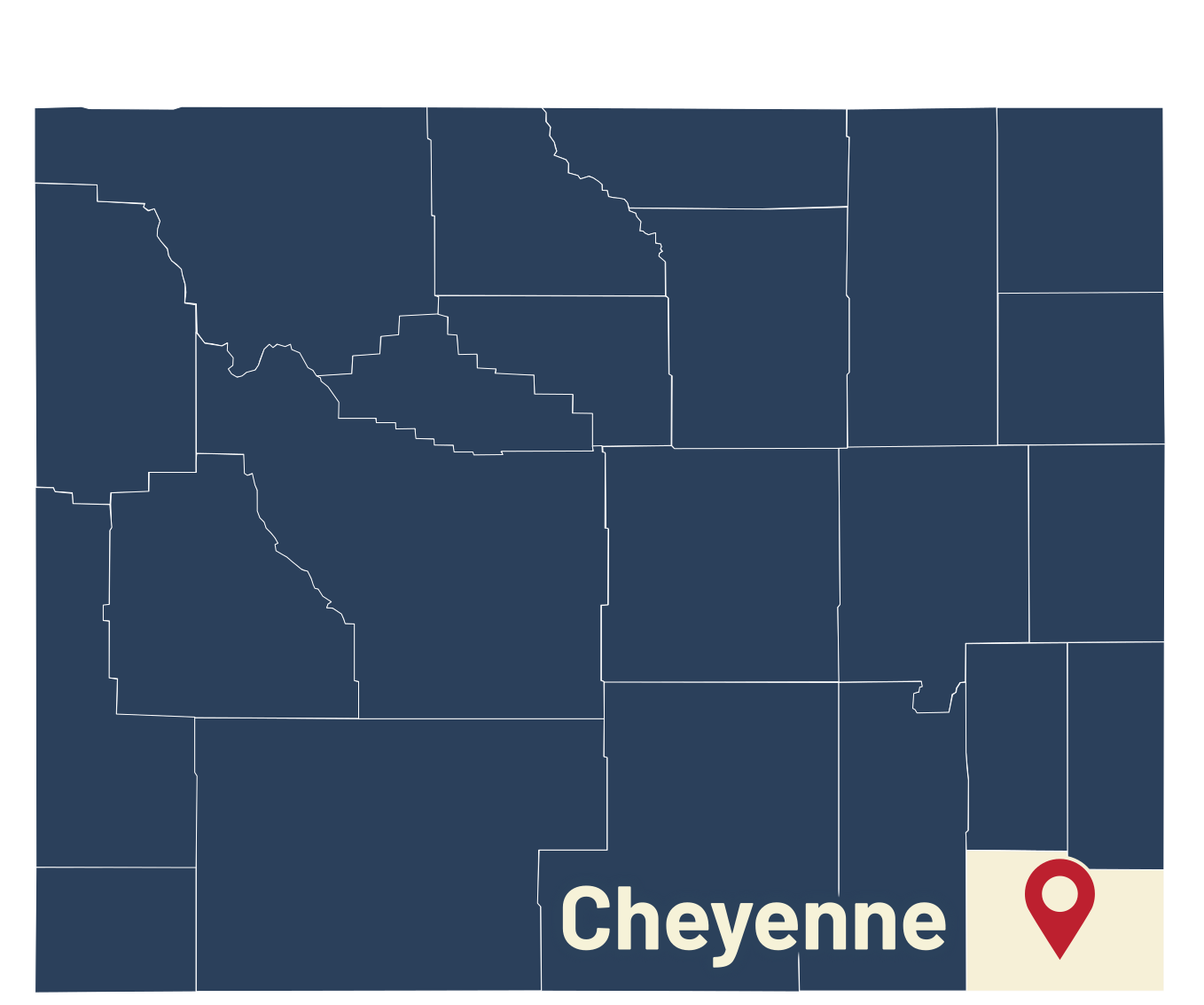
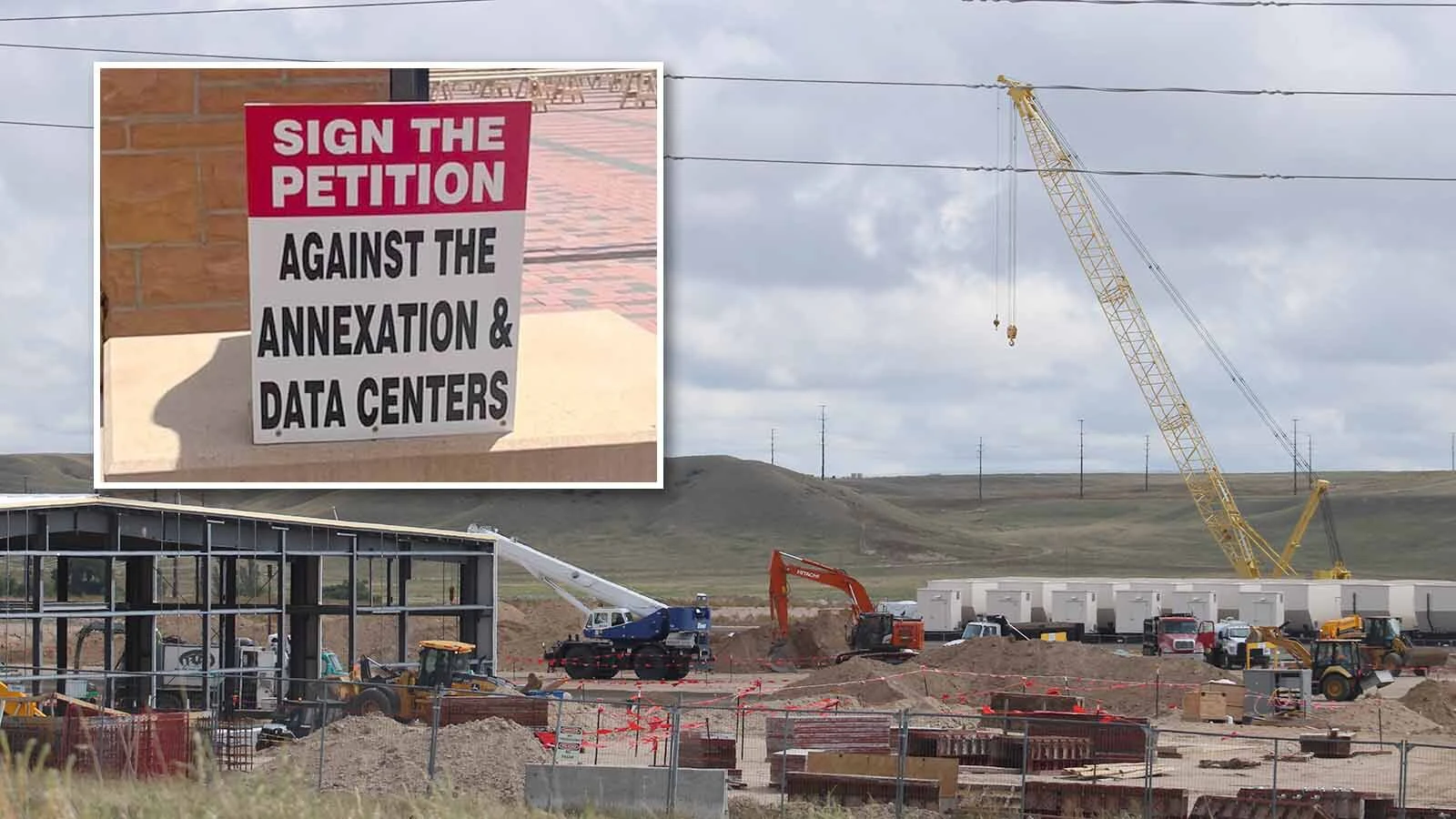
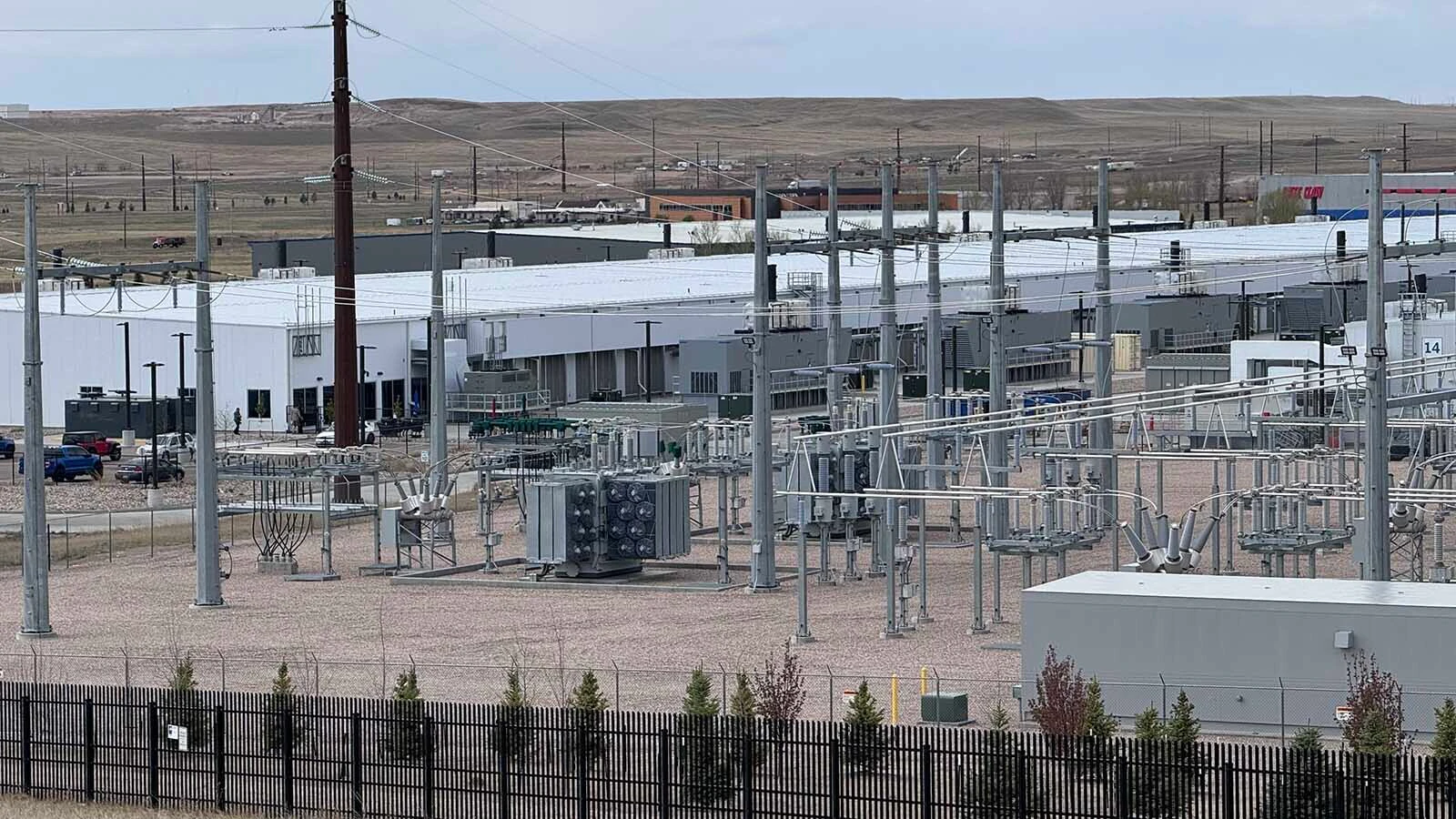
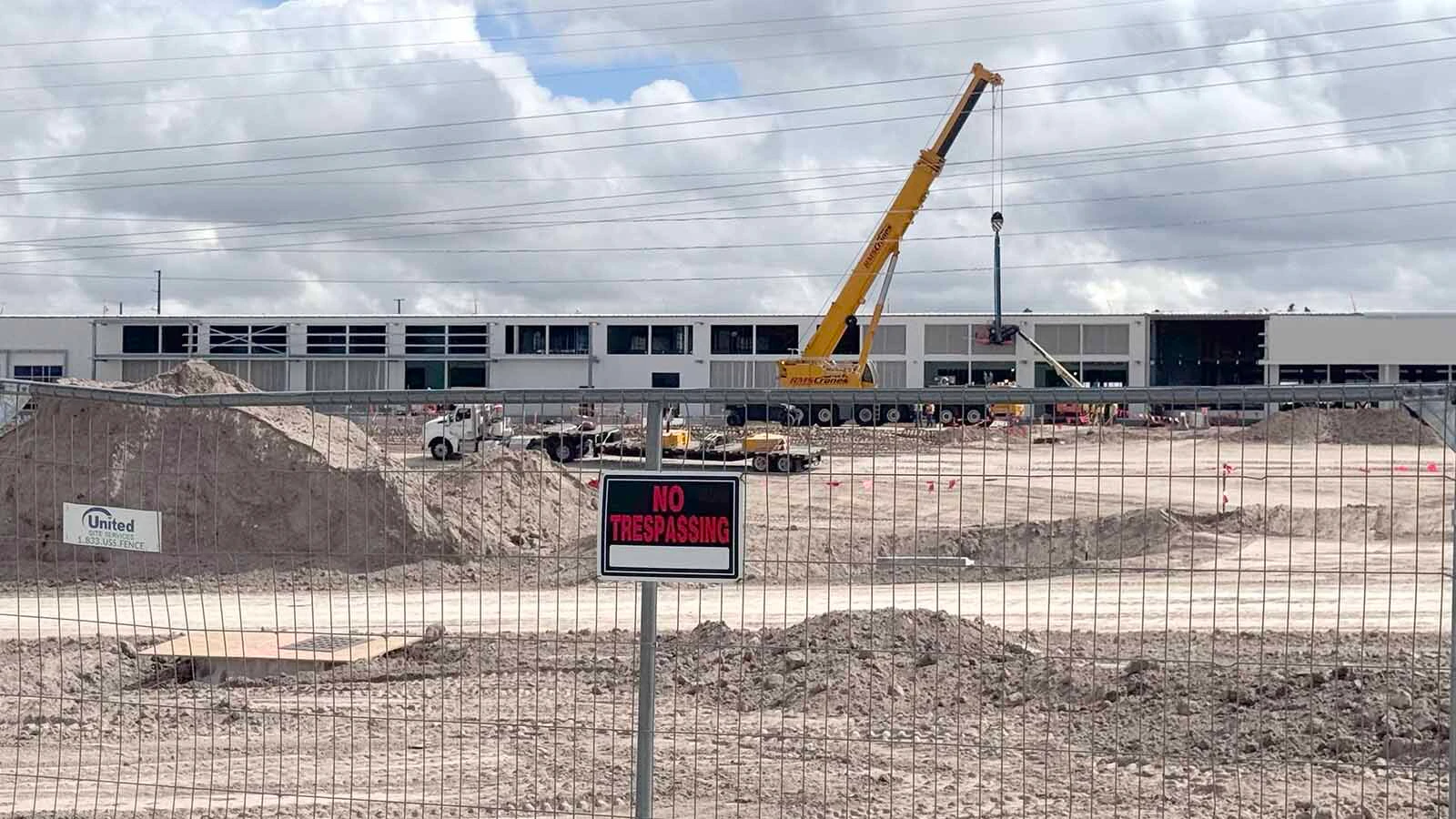
A Cheyenne woman who spent months fighting data center plans at the City Council podium has taken the fight to court, filing two petitions that accuse the city of illegally approving a 3,500-acre annexation to make way for a massive expansion of Microsoft’s data center footprint.
Her petitions filed earlier this month in Laramie County District Court claim the wrong landowner is listed on the annexation paperwork and that city officials took a unannounced vote on a petition to overturn the approval.
Heather Madrid Donis, a Laramie County homeowner, told Cowboy State Daily on Friday that both of the alleged violations stem from Microsoft's proposed 2.7-gigawatt Highlands data center campus just south of Cheyenne.
The city approved the annexation of roughly 3,460 acres for the project in July, increasing the city’s area by 20%.
Matthew Murphy, communications director for the city of Cheyenne, told Cowboy State Daily that the city declines to comment on ongoing litigation.
Taking The City To Court
One of the two petitions Donis filed alleges that the Cheyenne City Council violated the Open Meetings Act on Aug. 10.
Weeks earlier, she had helped gather petition signatures for a referendum seeking to put the July annexation on the ballot.
“Let the people decide,” Donis said. “If the people decide that we want that in the city, then so be it.”
Under Wyoming law, a referendum qualifies if it is signed by 10% of registered city voters — roughly 2,700 in Cheyenne — within 20 days of the ordinance's publication, at which point the ordinance is suspended and the council must either repeal it or send it to voters.
Donis said petitioners collected more than 3,000 signatures before the deadline, but the council never put it on its agenda. Instead, she said the council went into what she claims was an improper executive session, closing the door to public input.
When the council members came out of executive session, they voted 8-1 in favor of authorizing the city attorney to seek a court ruling on whether an annexation can be challenged through a referendum, or whether state law limits residents to district court appeals.
The city said the clerk's office would keep verifying signatures while the question is pending.
Donis claims the council's vote after the executive session, on an item that was not listed on the public agenda, violated Wyoming's law requiring government bodies to conduct business in public and give notice of what they plan to act on.
“I think the Open Meetings Act violation, in my non-lawyer opinion, is pretty clear,” Donis said.
In her filing, Donis asks the court to declare the council’s Aug. 10 vote null and void. If a judge rules in her favor, the referendum would not automatically go to voters, but the council's request for a court ruling on it would be undone.
‘Unacceptable'
Her second petition, Donis said, might be a heavier lift.
That petition, filed Sept. 3, asks the court to void the July 13 annexation itself.
"I don't have legal standing is the argument I think they’d make, and that might be fair,” Donis said about how the court might respond. “I guess the injured party would probably be the property owners, not me.”
But Donis said the implications of data center development go beyond who owns the plot beneath a new campus.
“I feel like the entire city has legal standing to challenge,” Donis said. “Because, if our emergency services are spread too thin, what happens when my house catches on fire but they're out at the data center. That’s unacceptable.”
‘A Constant Low Roar'
Brian Childers, who owns land about 4 miles away from the Microsoft data center annexation, feels the same way.
“I live in the county, so I don't have any say at the city council meetings,” Childers told Cowboy State Daily in a text message. “But from what I've seen and heard, those city council members don't give a rat’s ass what the people want.”
Childers said he helped Donis with the referendum petition and was dismayed, but not surprised, by the response from City Council.
He said watching the council members “play games on their phones while people are trying to talk to them” doesn’t leave him with much confidence in their governance.
Meanwhile on his property, Childers said he’s already living with the impacts of an existing Microsoft data center south of Cheyenne.
“I personally have noticed that there are hardly any birds staying at my place anymore,” Childers said. “Used to have a bunch of them.
“And there’s a constant low roar, like a semi truck is coming up the road, but there's no truck.”
In his view, the city should have stood up for residents before the data centers were built, and he fears that things will only get worse from here.
“I've seen in some other towns the data centers screw up the water, excessive electricity bills,” Childers said. “Cities try to sue them and there's no way they can, because the data centers have so much money.”
Disappointed in local leadership, Childers said he supports Donis pushing back.
“Heather seems to be a very smart person," he said. "She's been all over this data center thing and knows what she's talking about.”

City Weighs In
Cheyenne Mayor Patrick Collins told Cowboy State Daily that the executive session was on the council’s Aug. 10 agenda, and that the council was trying to clear up conflicting statutes. Collins said one state statute on annexations points residents to district court as the specific remedy for an appeal, while another allows a petition.
“Our governing body wants to understand what’s the right way for somebody to object,” Collins said. “That was the thing we’re trying to clear up.”
Collins said the council will proceed with whatever method applies. In the meantime, he said they are continuing to process the referendum and spend two to three hours a day counting signatures.
“We haven’t stopped counting the petitions,” Collins said, adding that process is about 60% done. “We’re doing it as if it is the legal way to go. But we’re trying to understand what is the right way to go.”
Collins also disputed the claim that the council isn't listening, saying members heard hours of testimony on the annexation but ultimately decided it was the best outcome for the city.
“We could tell you all the people’s names, what their arguments were and why they were opposed,” Collins said. “I think the fact that the governing body doesn’t do what they wanted doesn’t mean they weren’t heard.”
Collins said the council's listening shows in its actions, not just his opinion. He said the city now meets with data center developers and requires written agreements to address neighbors' concerns about issues such as water, noise and lighting, as it did with the Cox Ranch annexation.
“We’re not getting any credit for it but that’s OK,” Collins said. “We’re changing our rules and our requirements as we learn. I think we have one of the more transparent processes now and I think it’s a good one.”
Collins said mitigation is part of the deal, pointing to a planned conservation easement of more than 100 acres near the Sweetgrass neighborhood and a landscaped buffer and replacement well at Orchard Hills that came out of neighbor feedback.
Room For Improvement
But council member Pete Laybourn told Cowboy State Daily there is room for improvement about how the council communicates with the public.
“This entire data center gold rush is moving so fast,” Laybourn said. “It’s not going to slow down. We can’t declare a moratorium, but we sure could understand it and communicate it better to people who are interested."
As a councilman, Laybourn said he’s heard several Cheyenne residents say that the council doesn’t listen to their concerns. While he said that isn’t quite true, he understands why the sentiment is common.
“Everyone has a chance to come up and speak to us and we have to listen, like the other night we went until 1 a.m.,” Laybourn said. “But I think it is the response that is lacking here.”
In his view, the issue is less about whether council members hear residents out and more about whether they can answer the specific concerns raised, such as noise levels, air quality and infrastructure gaps in South Cheyenne amid the rapid development.
“I think that it’s very important that we be able to move at the pace that the data centers are moving at and explain what our catch-up actions are,” Laybourn said.
One idea Laybourn is working on to streamline communication is to create a joint powers board and unify the planning commissions for the county and the city into one entity.
“I’d like to see better coordination and understanding for the benefit of the council, the commissioners and the people,” Laybourn said. “Information is not all in one place.”
The council is trying, Laybourn said, but the pace of development is beyond anything Cheyenne has experienced, and this is uncharted territory for council members as well.
“In defense of my colleagues, this is overwhelming,” Laybourn said. “This isn’t what the council does. We do residential subdivision, we do a commercial district. We don’t do $17 billion projects.”
Laybourn said he is now inundated with emails and information about data centers from around the country.
“Then you get into the whole idea that we’re competing with the Chinese,” Laybourn said. “I know nothing about that, and I wouldn’t pretend that I could. But I know South Cheyenne. That’s next to my ward.”
He said those neighborhoods, which sit closest to the projects, are his priority and need more attention and investment from both the city and the county.
“It’s a gold rush and we’re moving too fast,” Laybourn said. “But it’s underway so let’s manage it.”
Other Cheyenne council members didn’t immediately respond to Friday afternoon messages.
‘Had To Do It'
Donis is representing herself, and she said it has been a lot to take on.
"It's daunting for sure," Donis said. "I'm not a lawyer. I have a full-time job. I have a family. I have a life outside of all of this, and so taking this on was a lot.”
Each petition cost $165 to file and another $35 to serve on the city, she said.
After she posted about the petitions on Facebook, people offered to help pay for an attorney, and she said she might pursue crowdfunding to get legal representation.
But there was a deadline to file, so she had to move ahead alone.
"I had to do it whether I had a lawyer or not," Donis said.
Donis said her fight is less about data centers themselves than about how the city approves them.
While she personally distrusts Microsoft and big tech as a whole, she believes that proper studies and process would likely ensure responsible development of data centers in Cheyenne.
"Not that there wouldn't be any,” Donis added. “But I feel like they probably wouldn't be in our backyards, and they would probably be in appropriate locations.”
With the petitions served on the City Council earlier this week, Donis isn’t sure when her cases will proceed. But she said the strain of rapid development is already taking a toll on the city’s roads and resources.
Emma Jane Jackson can be reached at emma@cowboystatedaily.com.


