

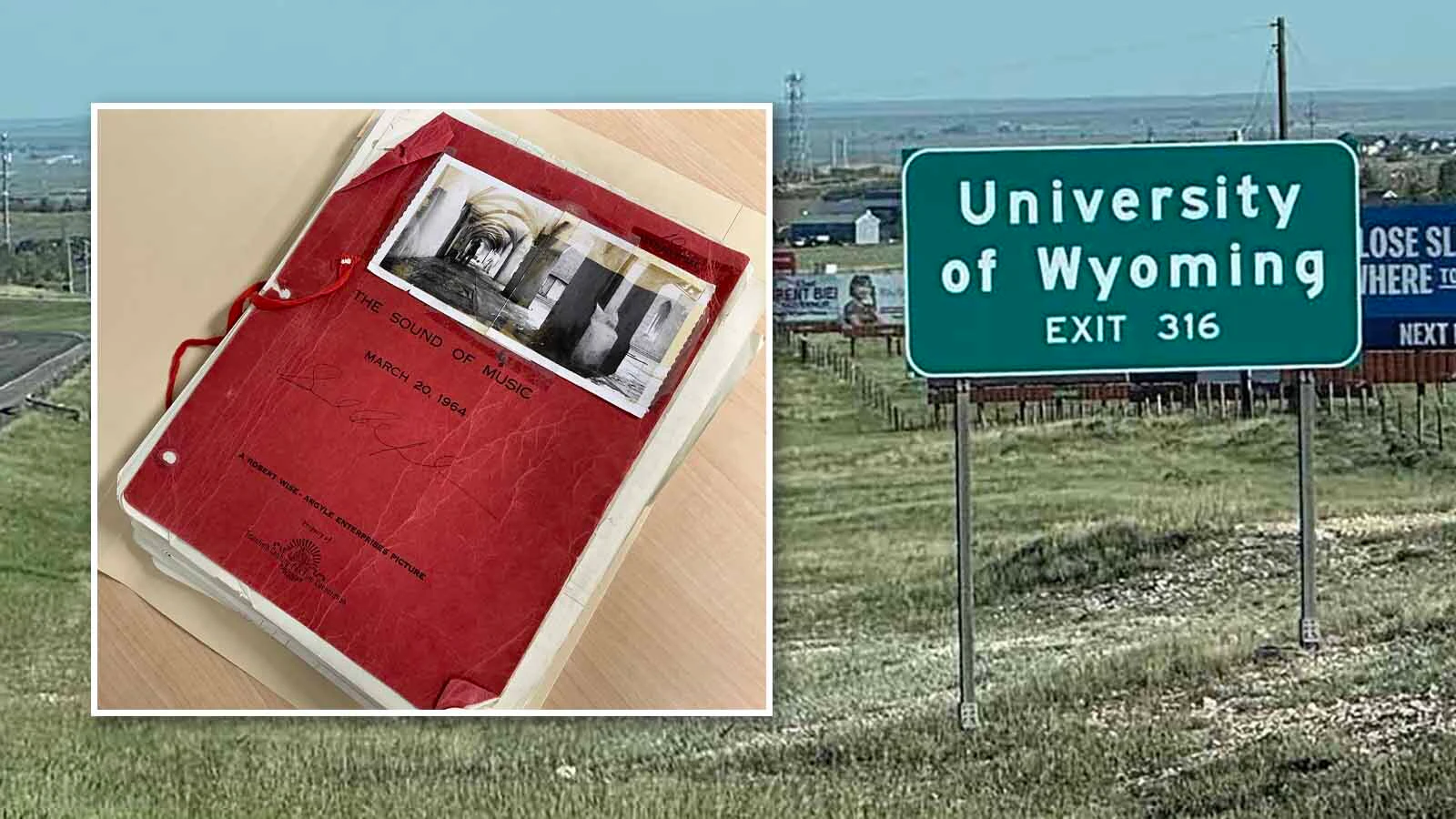
LARAMIE — Polaroid shots of actors Julie Andrews, Christopher Plummer and their young “Sound of Music” co-stars have not faded in associate producer Saul Chaplin's personal scripts of the award-winning movie musical.
They have sat in a file at the University of Wyoming’s American Heritage Center for five decades.
Chaplin, a member of the Songwriters Hall of Fame and multiple Academy Award winner, left his papers and professional files to the university after a former director of the American Heritage Center pursued Hollywood material starting in the 1960s.
Chaplin was a songwriter, arranger, orchestrator, music director, and self-taught pianist.
University of Southern California lecturer Jon Burlingame, who has written extensively about music for films and television, calls Chaplin “one of the most important people in the history of the movie musical in Hollywood.”
“He worked on over 60 movies throughout his career, and he came to Hollywood in 1940,” he said. “He joined what we would call the ‘A-level’ movie musical production unit at MGM, which was Arthur Freed’s unit.
"Arthur Freed produced all the great musicals at MGM between 1939 and the end of the 1950s.”
In addition to “The Sound of Music,” Chaplin’s name is associated with other noted musicals and music scores, including “An American in Paris,” “Kiss Me, Kate,” “Seven Brides for Seven Brothers,” and others.
American Heritage Center Curator Mary Elizabeth Brown said former director Gene Gressley, who arrived at the American Heritage Center in 1956, aggressively went after the entertainment and popular culture world and succeeded in making connections to people in Hollywood.
Gressley used those connections to network and expand the center’s reach.
“It was very much like a big web of people that he would contact and one of the people he corresponded with was Saul Chaplin,” she said. “And he was the associate producer of 'The Sound of Music.'”
Brown said Gressley helped launch the university’s profile and collections to the point today that it and the Harry Ransom Center at the University of Texas are among the most significant archives of Hollywood and entertainment artifacts in the nation.
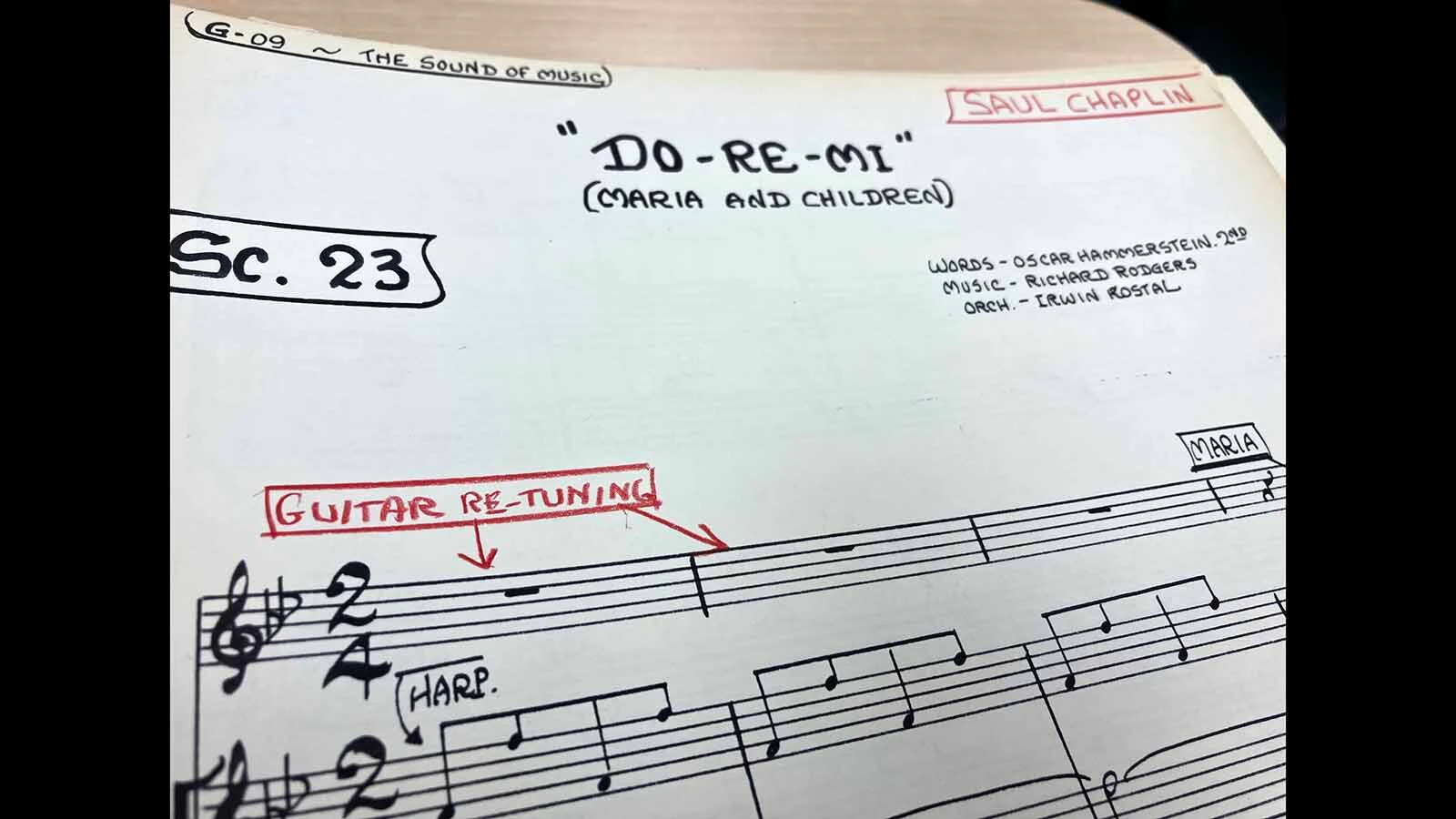
Saul Chaplin’s conductor score for the “Do-Re-Mi” song includes a note for “guitar re-tuning.” (Dale Killingbeck, Cowboy State Daily via American Heritage Center) 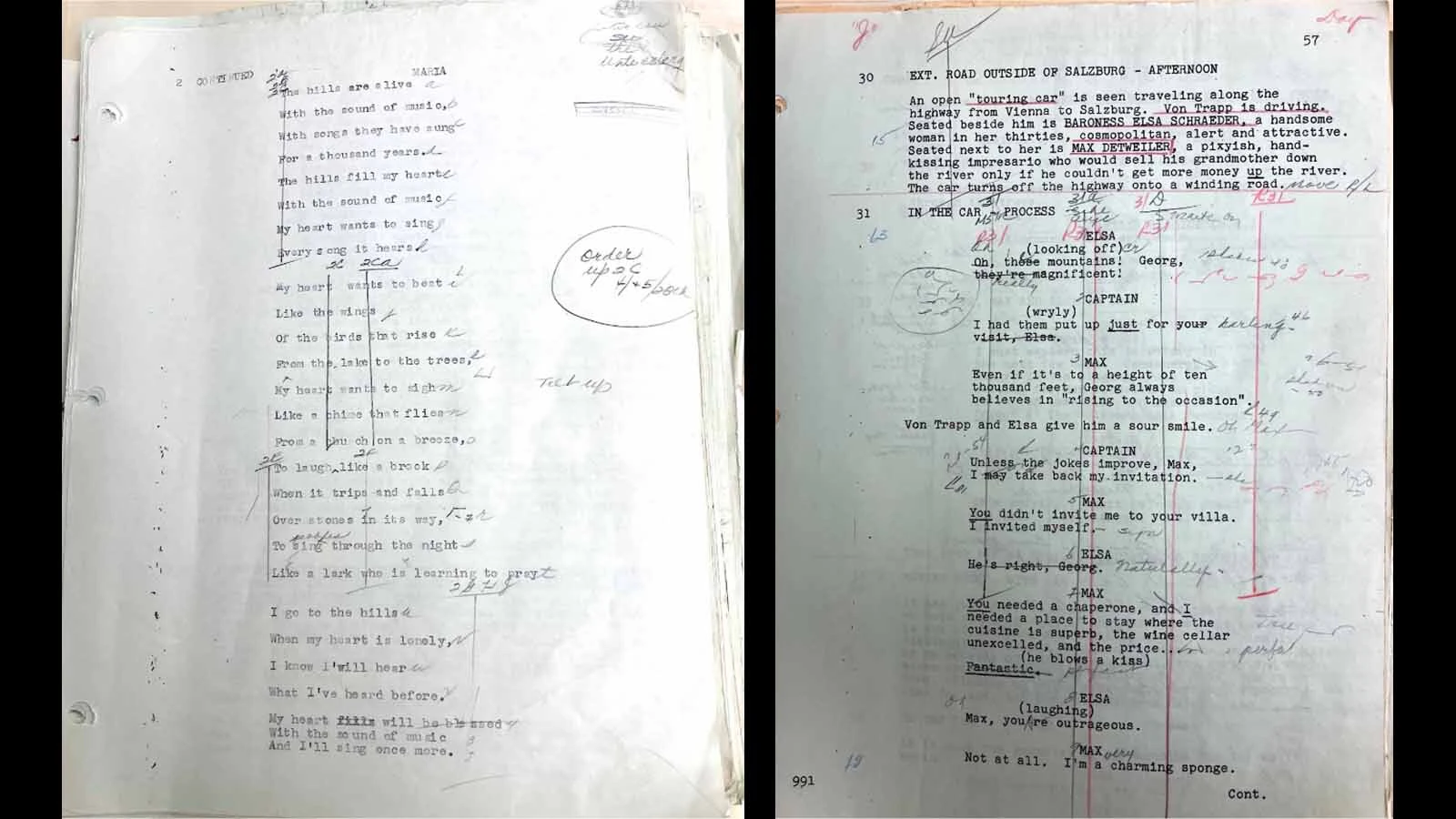
Left, from Saul Chaplin’s personal script for “The Sound of Music.” Right, Chaplin’s script shows changes to the road touring car scene. (Dale Killingbeck, Cowboy State Daily via American Heritage Center) 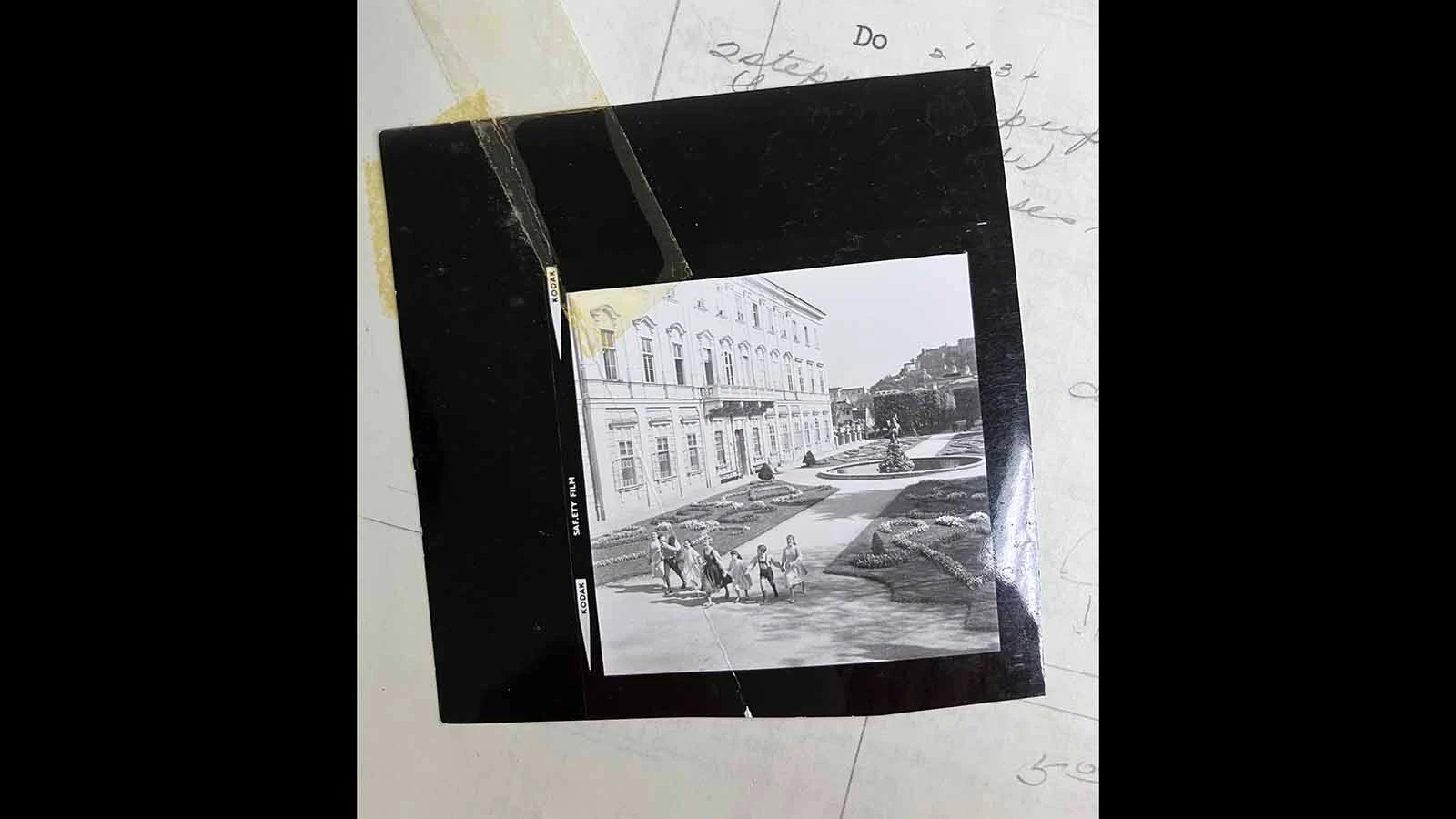
A photo in Saul Chaplin’s script where Julie Andrews and the children are singing the “Doe a Deer” song. (Dale Killingbeck, Cowboy State Daily via American Heritage Center) 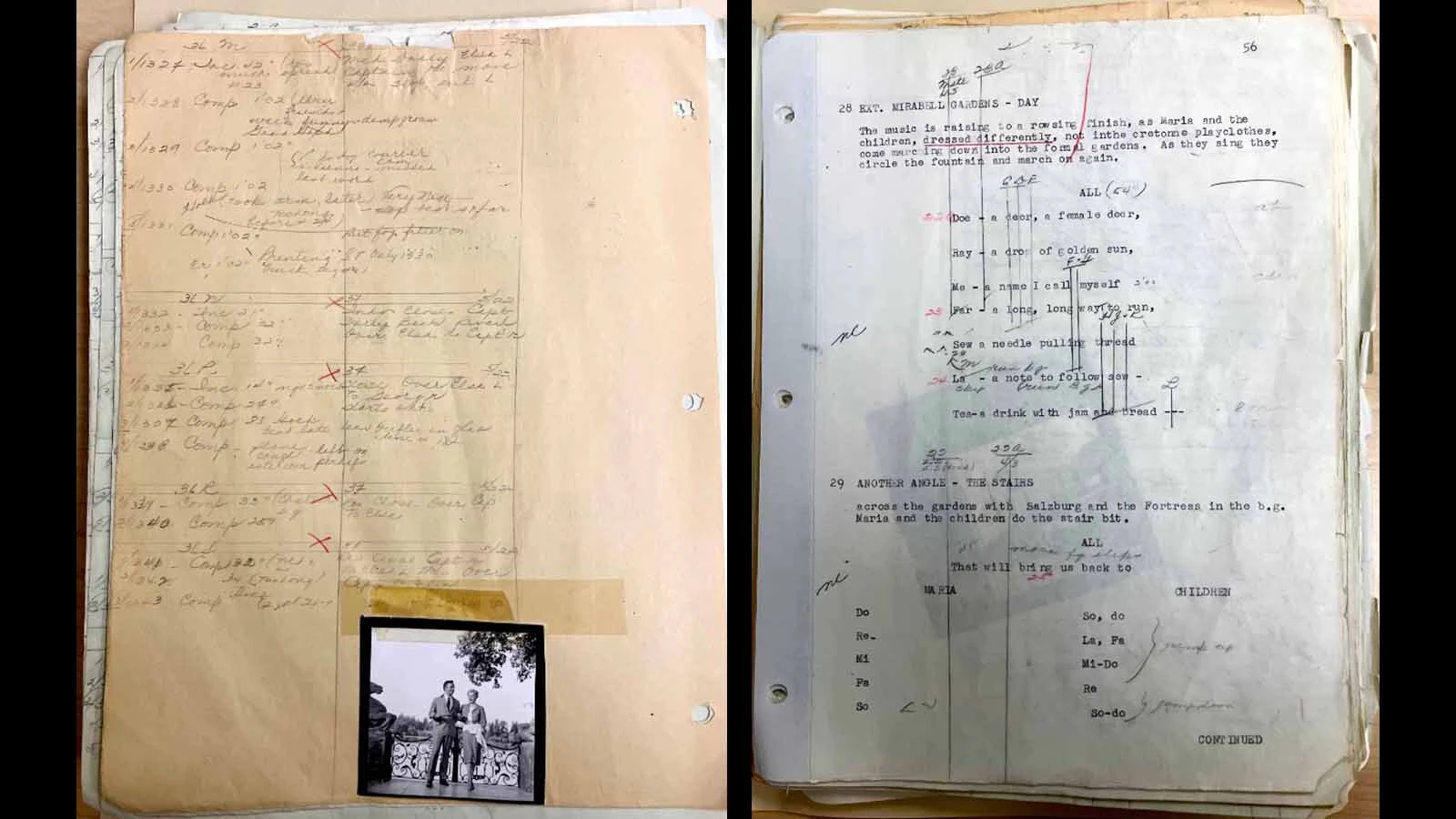
Left, Saul Chaplin notes on a scene in “The Sound of Music.” Right, Chaplin’s script shows his process for ensuring the singing and soundtrack match the shooting of the “Doe a Deer” scene. (Dale Killingbeck, Cowboy State Daily via American Heritage Center)
Most Requested Score
In 1982, Gressley told interviewer Jean Mead for the book “Wyoming in Profile” that the most copied and requested music score at the time was for the “Sound of Music.”
Brown said she personally was not aware of any requests for the score recently, and Cowboy State Daily’s request to see Chaplin’s “Sound of Music” file was the first she has had in her five years at the library.
Chaplin donated the files to the university in 1972, Brown said.
Chaplin was born Saul Kaplan, and wrote songs for theater, vaudeville and Tin Pan Alley with partner Sammy Cahn. In the 1940s he did musical scores for movies. With singer Al Jolson he composed a million-selling hit, “The Anniversary Song.”
He received Academy Awards for his work on “Seven Brides for Seven Brothers” and “An American in Paris,” where he was an arranger, and “West Side Story,” where he was associate producer.
Chaplin became an associate producer in Hollywood in the early 1960s and worked on “The Sound of Music” in that role.
“I can’t think of many other musical people from the music department who actually make it to be a producer,” said Miles Eady, a London-based expert on Hollywood musicals. “Let alone on something which is as huge a project as ‘The Sound of Music.’”
Eady characterizes Chaplin as someone who was “incredibly talented” with a reputation of being a “nice guy.”
He worked through the years on movies and projects with Cole Porter, Leonard Bernstein, Frank Sinatra, Judy Garland, and Gene Kelly. Most important, for his “Sound of Music” gig he worked with “West Side Story” director Robert Wise in the music department for that movie.
Wise was selected to direct “The Sound of Music” and “really trusted Chaplin’s opinion, his musical opinion and they worked incredibly well together,” Eady said.
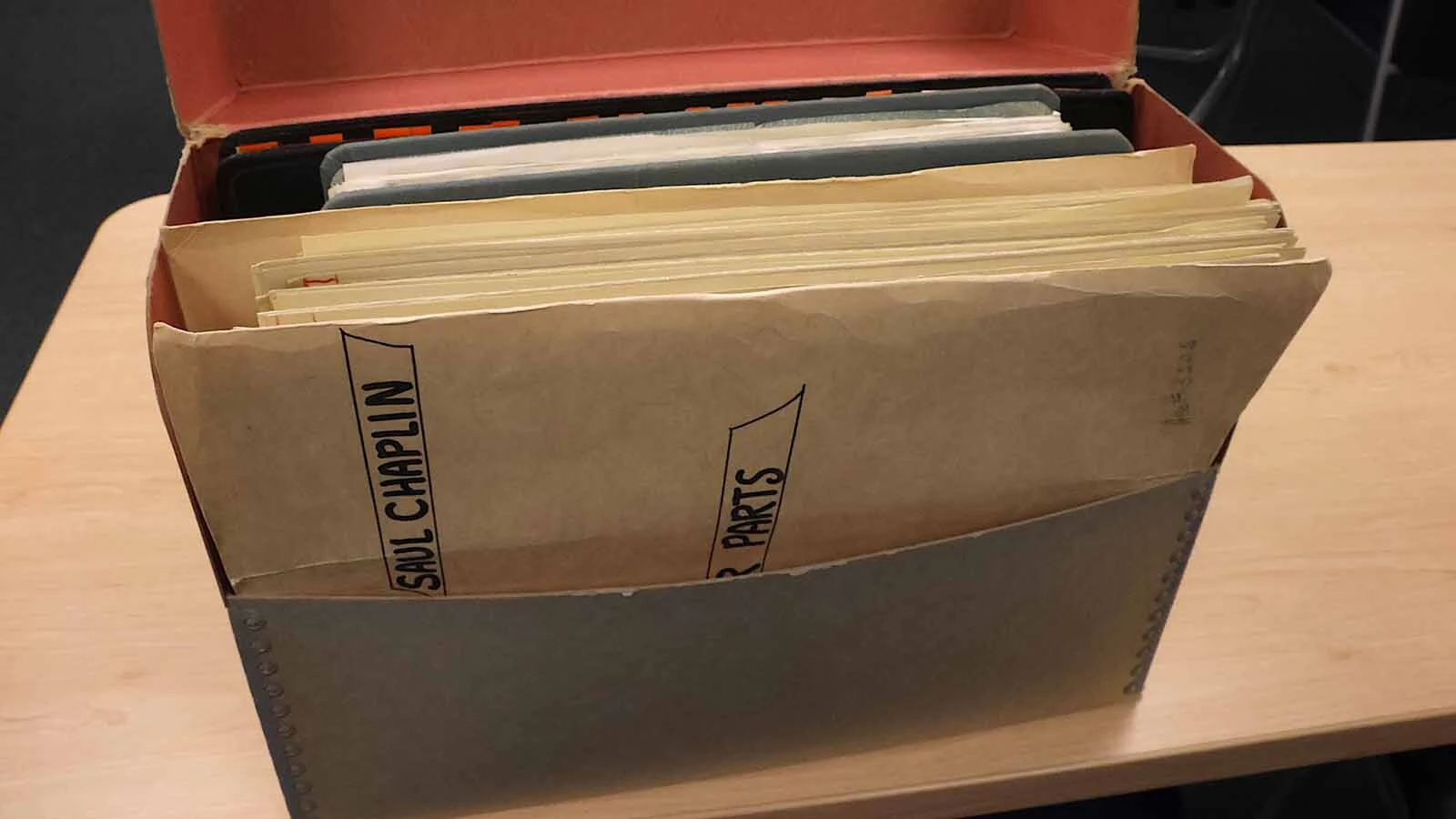
Part of Saul Chaplin’s “Sound of Music” files at the American Heritage Center. (Dale Killingbeck, Cowboy State Daily via American Heritage Center) 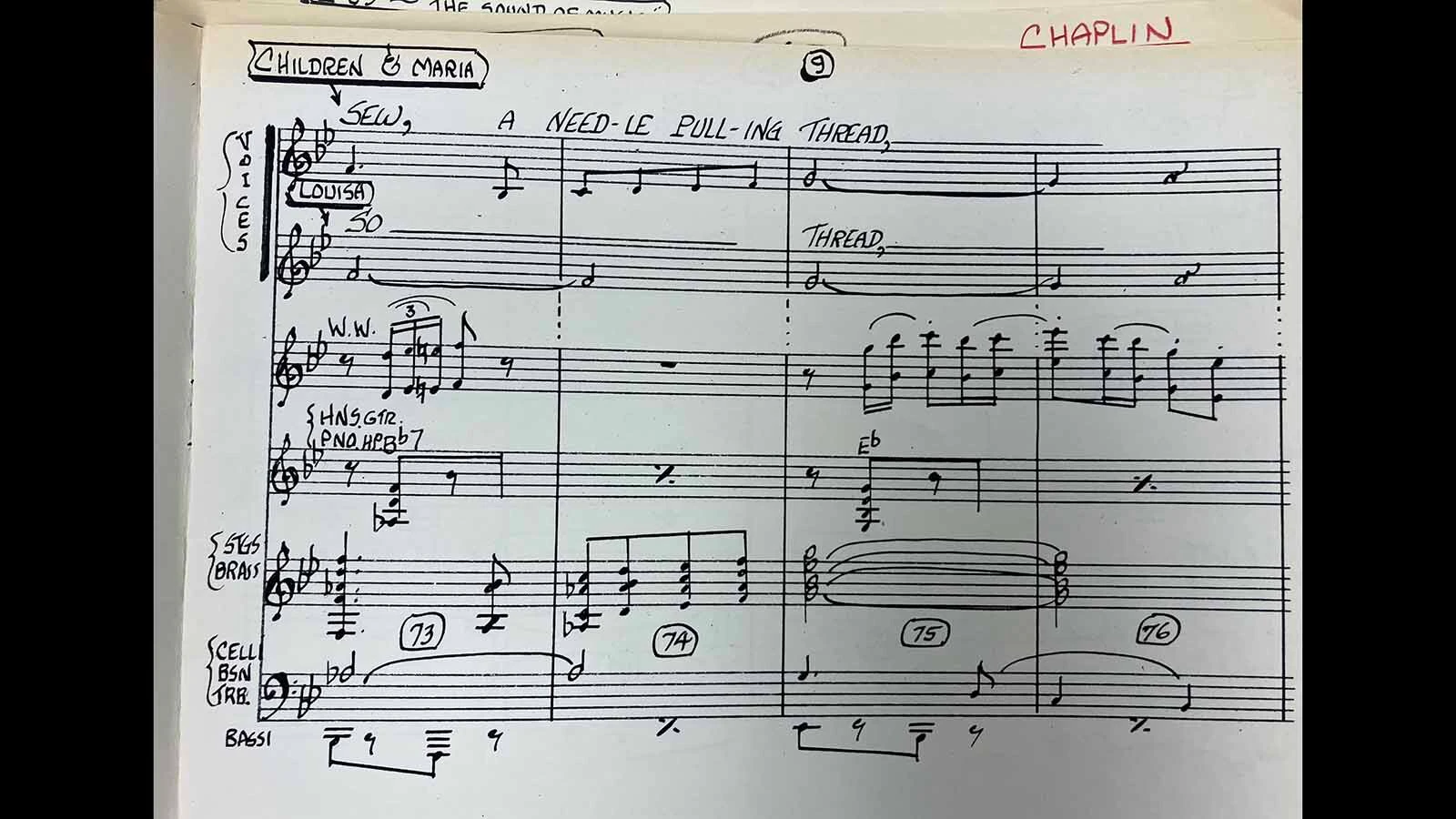
Saul Chaplin’s conductor’s sheet for the song “Do-Re-Mi.” (Dale Killingbeck, Cowboy State Daily via American Heritage Center) 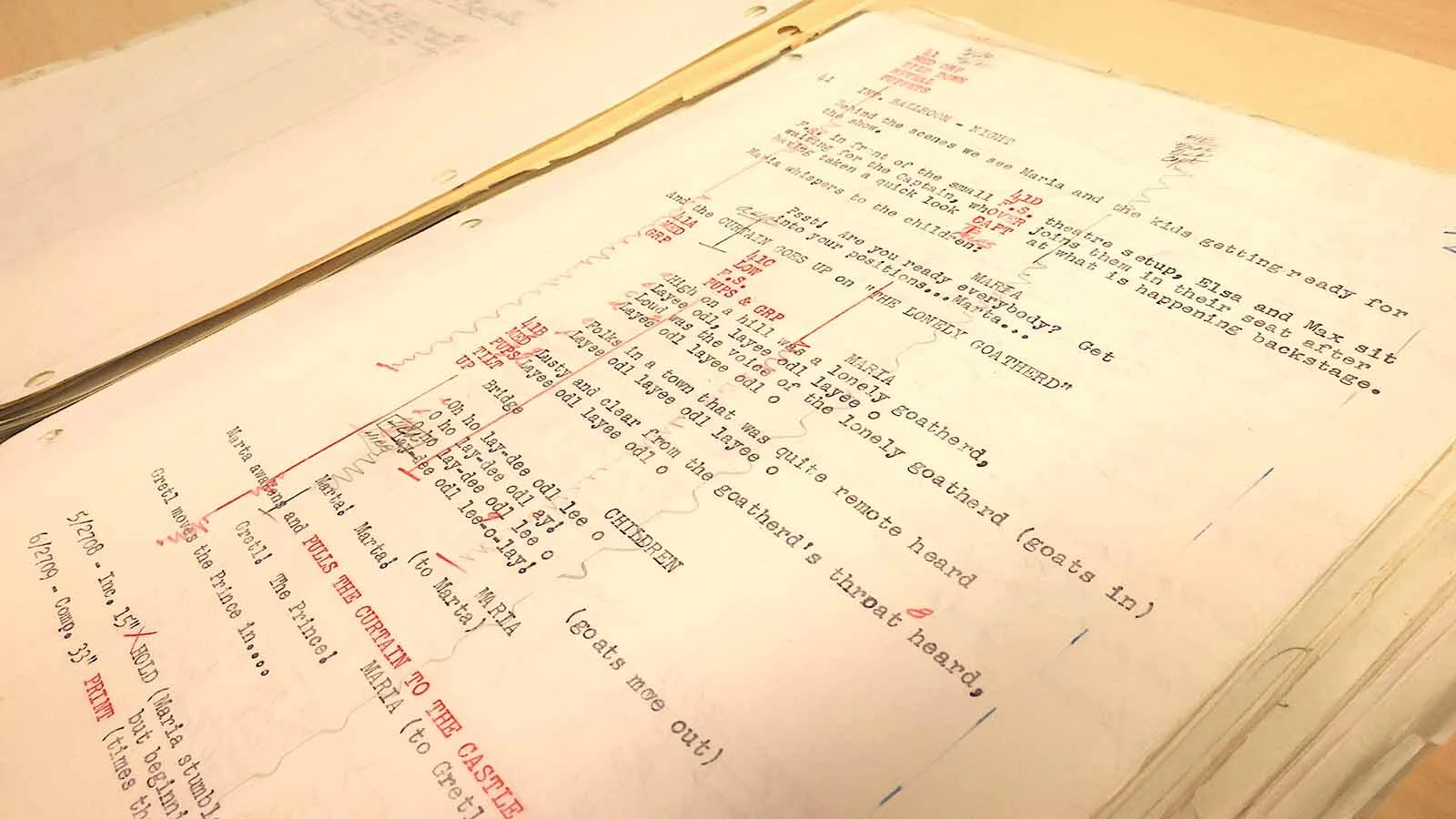
Saul Chaplin’s script page of the puppet show scene in “The Sound of Music.” (Dale Killingbeck, Cowboy State Daily via American Heritage Center) 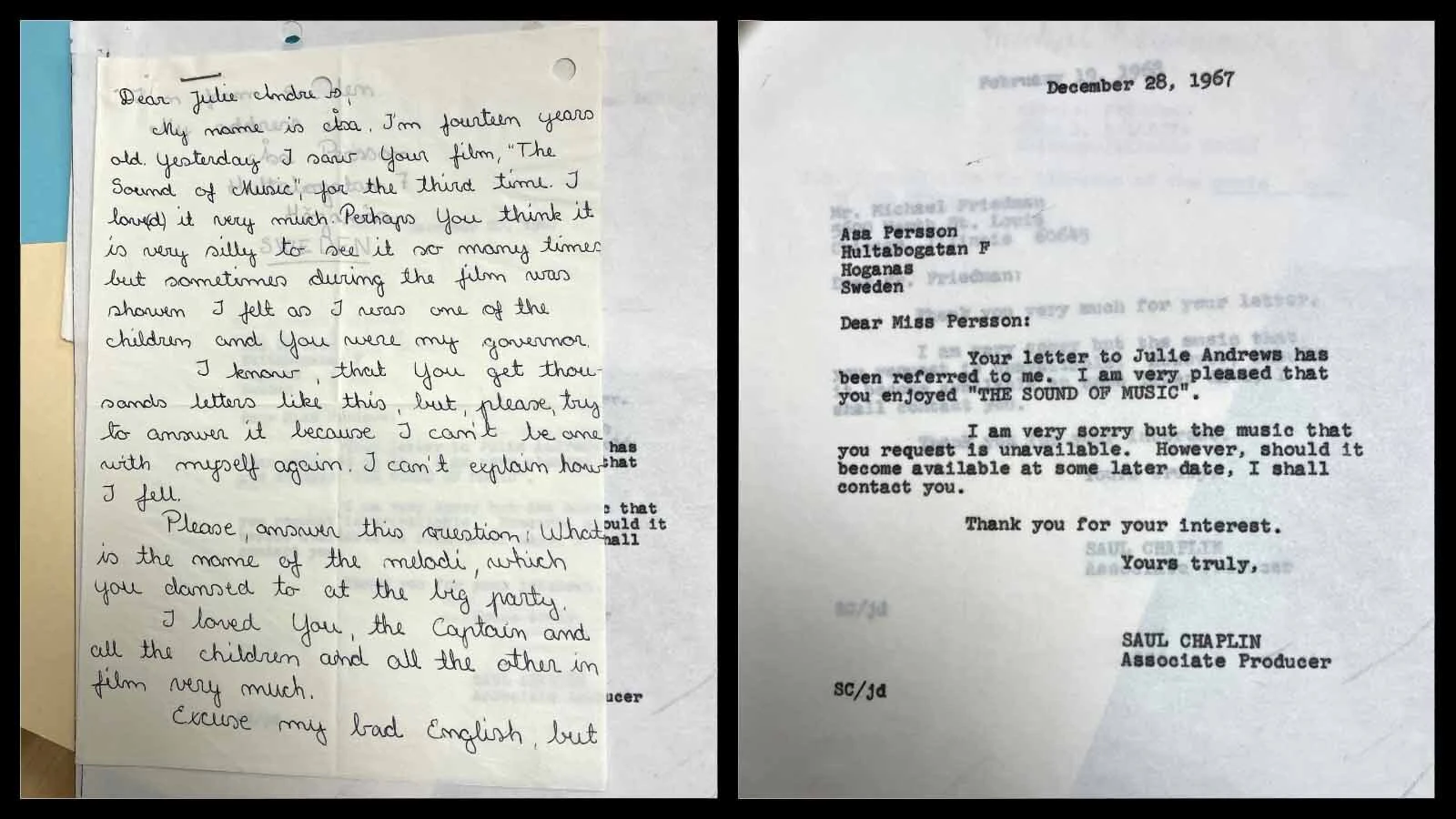
A letter from a fan to Julie Andrews was part of the Saul Chaplin’s file, left, and Chaplion's response. (Dale Killingbeck, Cowboy State Daily via American Heritage Center) 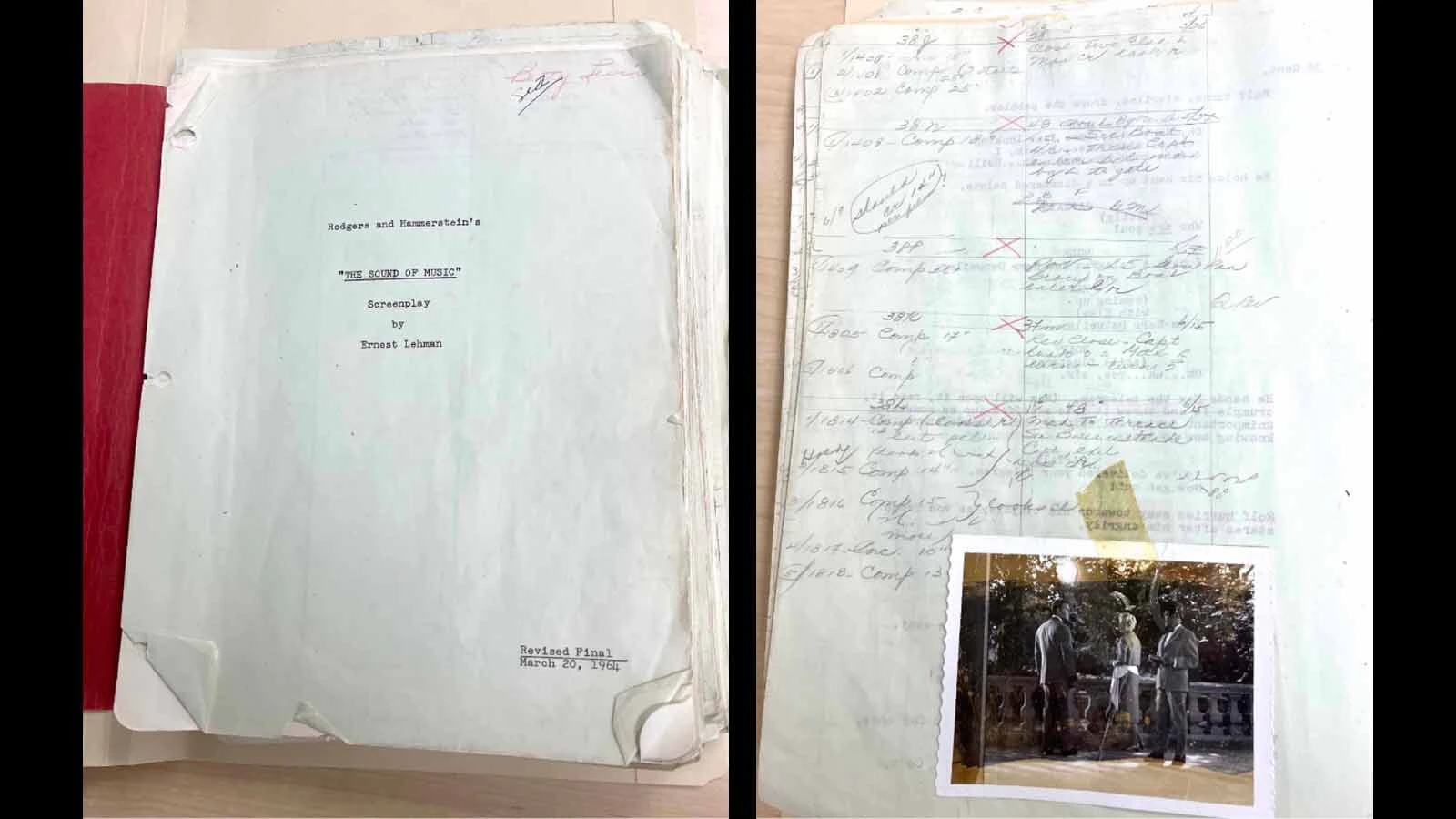
The title page to Saul Chaplin’s “Sound of Music” script, left. Right, Chaplin’s notes on the back of a script page along with a shot from the movie. (Dale Killingbeck, Cowboy State Daily via American Heritage Center)
Chaplin The Fixer
Eady said Chaplin’s sought-after skill was his ability to fix music scores and soundtracks, such as when a couple of notes were missed by a performer or a score needed a slight instrument tweak.
“He would be the person who went, ‘Well, I know how to fix this.’ And there’s a lot of technology involved in that,” Eady said. “He would know to ask the technicians to raise this channel and put this channel down and he would call in someone like Marni Nixon, who would come in and record those couple of notes.”
Nixon was known as a “ghost singer” for filling in for voices of actresses.
Chaplin’s files at the American Heritage Center for “The Sound of Music,” shot in 1964 in Los Angeles and Salzburg, Austria, include his annotated script of the movie, his conductor’s score, and a timed script used with the musical score along with a stack of fan letters for the film.
The movie was released in 1965.
Chaplin’s typewritten script includes a lot of penciled notations about various scenes. In one scene involving Plummer as the “captain,” his love interest Eleanor Parker as the “baroness” and Richard Haydn as their tag-along friend, “Max,” Chaplin included a photo with notes on the direction each actor was looking.
Another photo dated May 21, 1964, has Plummer and Parker by the sea. In notes of various camera shots, he penciled a question “too long?”
Page 56 of the script has banter between Andrews as Maria and the children as they sing “Do-Re-Mi.” Chaplin penciled in notes about how the children are to jump back when they sing “La-So” and run up the steps when they sing “Ti.”
There are vertical lines between words in pencil with “G, D, E” at the top.
Burlingame said it would have been Wise’s call on what the children were doing in the scene, but Chaplin would have been involved in all the pre-recording of the songs. Part of his role would have been working to ensure their lip-synching would work with the pre-recorded material.
A photo depicting the scene of Andrews and the kids is taped to the script page 56-A.
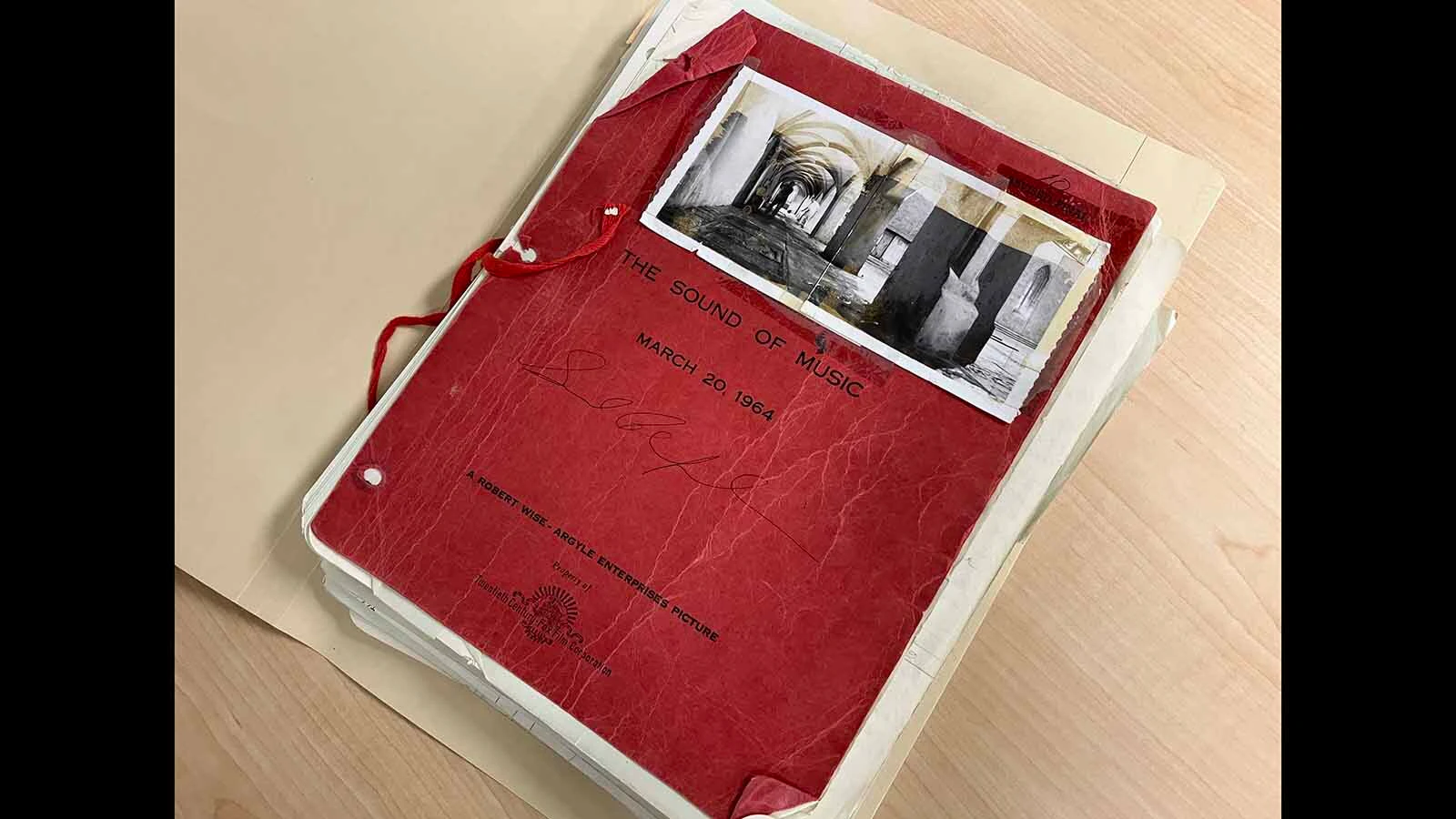
Saul Chaplin’s personal script for “The Sound of Music.” (Dale Killingbeck, Cowboy State Daily via American Heritage Center) 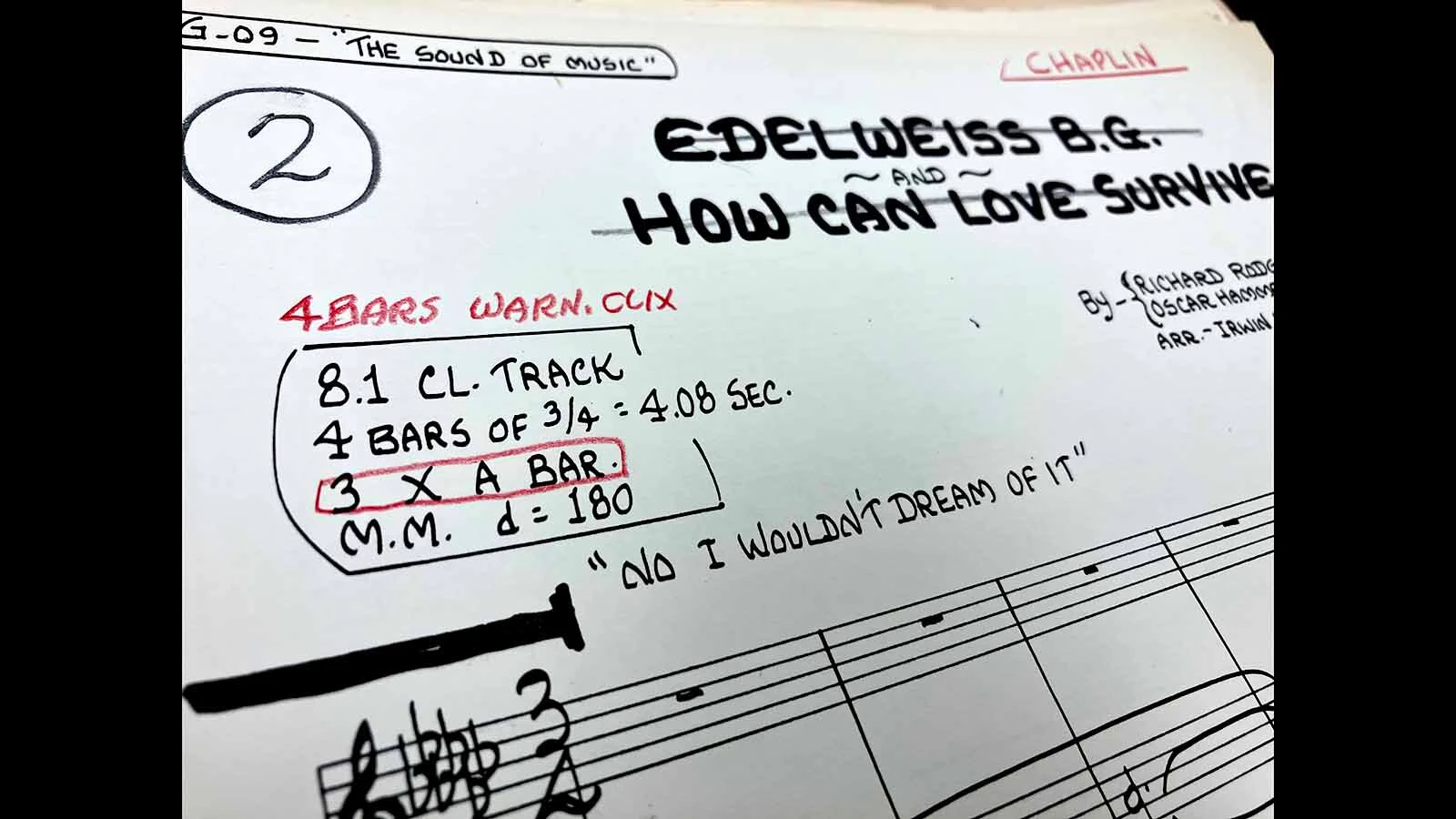
Saul Chaplin’s notes on “Edelweiss” on his conductor’s score. (Dale Killingbeck, Cowboy State Daily via American Heritage Center) 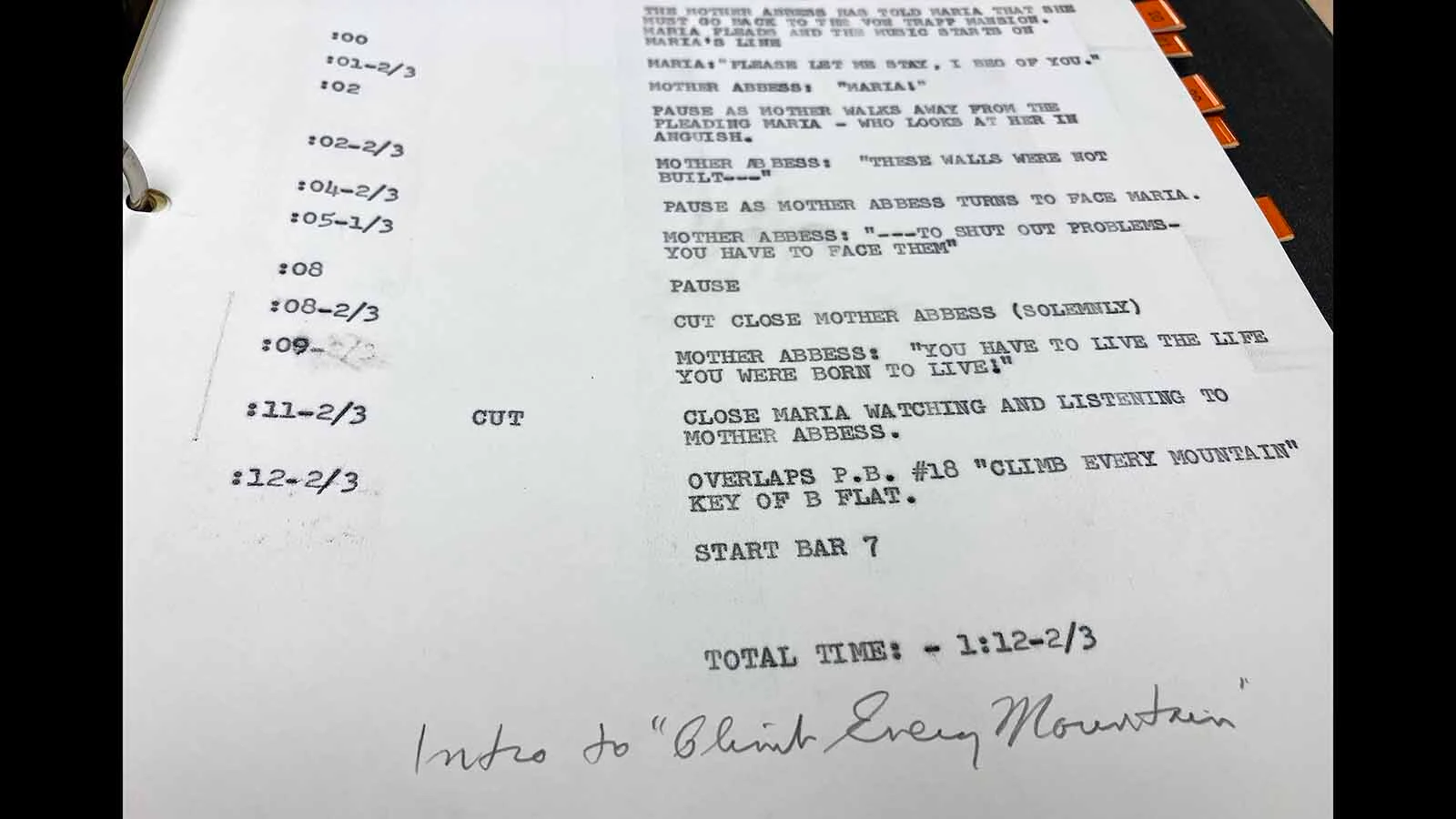
This page shows the lead-in to the song "Climb Every Mountain." (Dale Killingbeck, Cowboy State Daily via American Heritage Center) 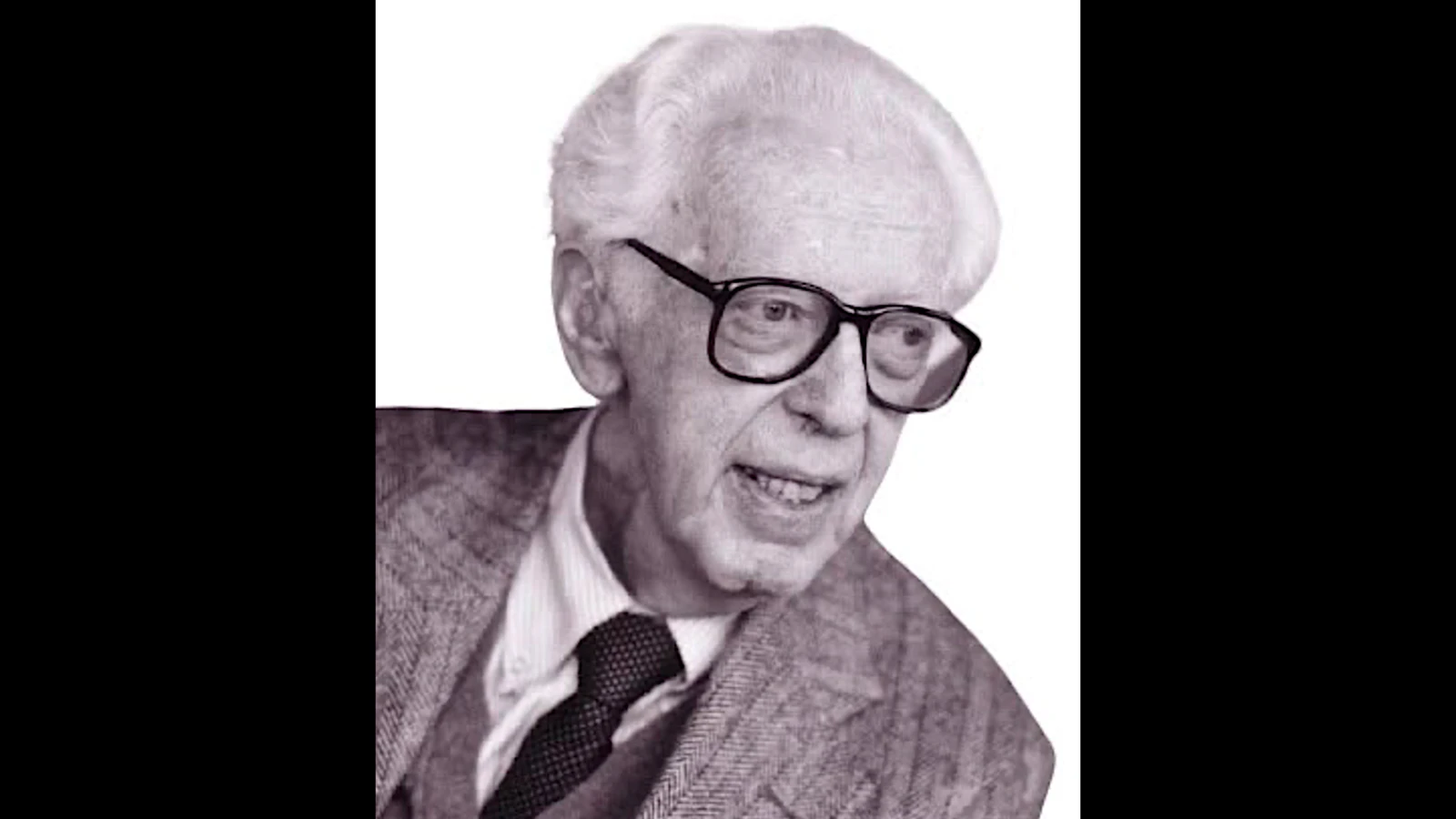
Saul Chaplin, musician, composer, arranger for Hollywood musicals donated his files to the American Heritage Center in 1972.
Script Changes
On Page 57 of the script is a description of the scene of the captain, Plummer, on the road with his two passengers.
“Von Trapp is driving. Seated beside him is BARONESS ELSA SCHRAEDER, a handsome woman in her thirties, cosmopolitan, alert and attractive. Seated next to her is MAX DETWEILER, a pixyish, hand-kissing impresario who would sell his grandmother down the river only if he couldn’t get more money up the river.”
Changes are penciled into the script. Instead of calling the baroness by name in one line, Plummer is supposed to call her “darling” instead.
Max has a line changed from “I’m a charming sponge” to one with the adjective “very” penciled in before the words “charming sponge.”
Chaplin’s role also was apparently to deal with fan mail from the movie. His file has several letters, including one from a 14-year-old girl in Sweden who wrote to Andrews and explained that she had seen the film for the third time.
“I felt as I was one of the children and you were my governor,” she wrote. “I know you get thousands of letters like this, but please try to answer it because I can’t be one with myself again. I can’t explain how I feel.”
The response attached to the letter from Chaplin informed the girl her letter had been referred to him and that the music she requested was unavailable. The girl had not requested any music in her letter.
Chaplin’s songbook in the file also has a few notes. The song “Maria” has a note about a “4 bar vamp.”
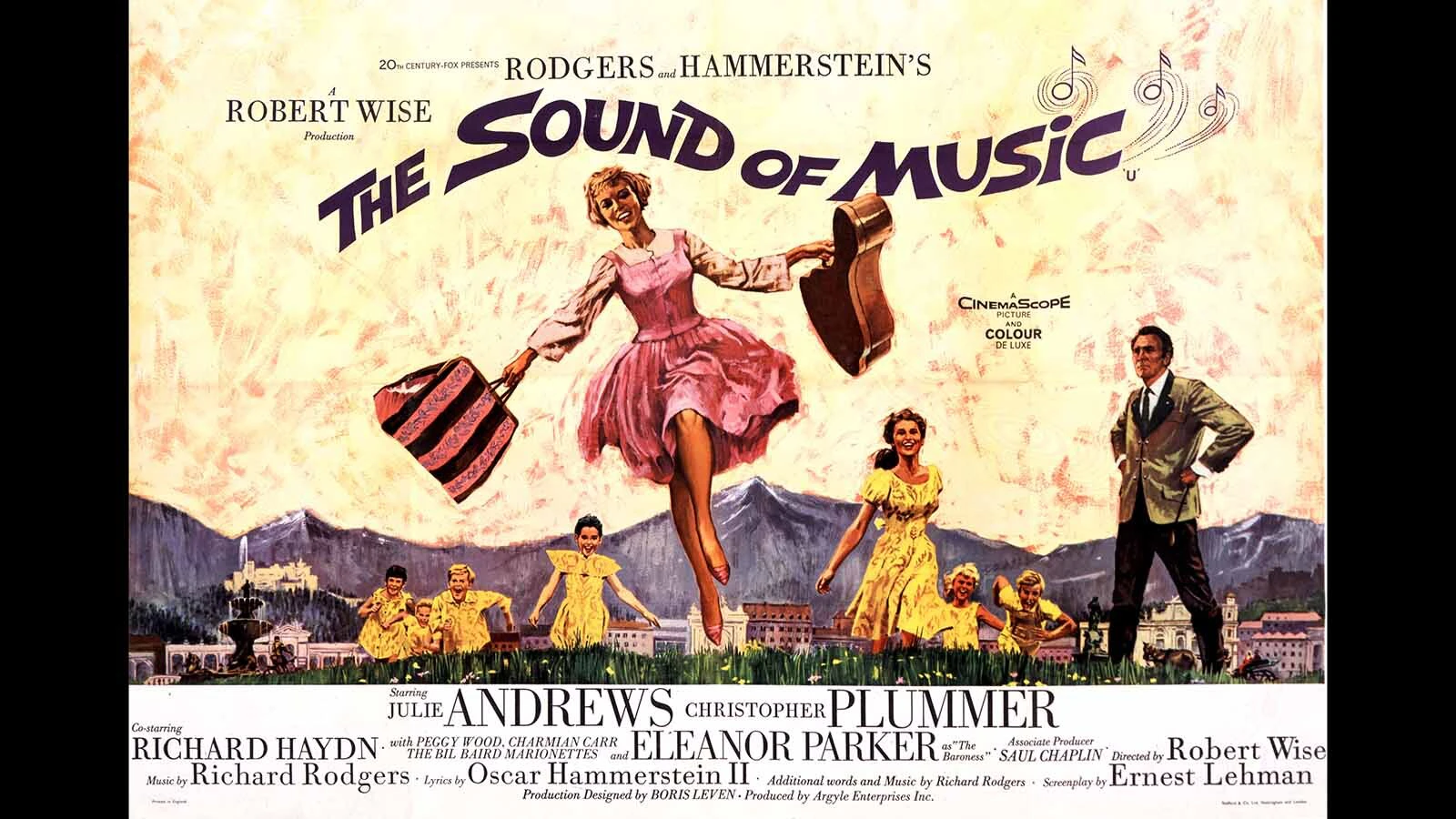
The original script and music score for the 1965 classic “The Sound Of Music” are part of the American Heritage Center’s collection at the University of Wyoming. UW has one of the largest and most significant archives of Hollywood history in the U.S. (Pictoral Press via Alamy) 
The original script and music score for the 1965 classic “The Sound Of Music” are part of the American Heritage Center’s collection at the University of Wyoming. UW has one of the largest and most significant archives of Hollywood history in the U.S. (Pictoral Press via Alamy)
'Invaluable'
Burlingame said Chaplin was valuable to the Hollywood studios, 20th Century-Fox in the case of “Sound of Music,” for his ability to take music written for a 25-piece Broadway pit band and expand it to a 60- or 70-piece orchestra for movies.
“Wise brought Saul Chaplin on board to have somebody right next to him who he knew would know what to do musically to expand something from a Broadway vehicle into a motion-picture vehicle,” he said.
Both Burlingame and Eady characterize Chaplin’s script and other material at the university as “invaluable.”
Eady said Chaplin’s notes on the script, and the letter system he used, depict a process that is lost today.
“It opens up an understanding not only of Chaplin’s working processes and methods at the time, but also the wider film production processes that we simply don’t know about now,” he said. “At the time people thought they were pretty work-a-day and unimportant, and now those of us who prize this stuff go, ‘Well actually how did you make that? How did you achieve the ‘Sound of Music,’ this cultural icon which is 60 years old now?”
Brown said Chaplin’s files are only one of many composers' and actors' collections available for research.
There are several ways to access material such as the score to the musical. People can pay for scans, visit the center, or do a remote research, access, and discovery session that involves examining the material on Zoom.
Dale Killingbeck can be reached at dale@cowboystatedaily.com.


