
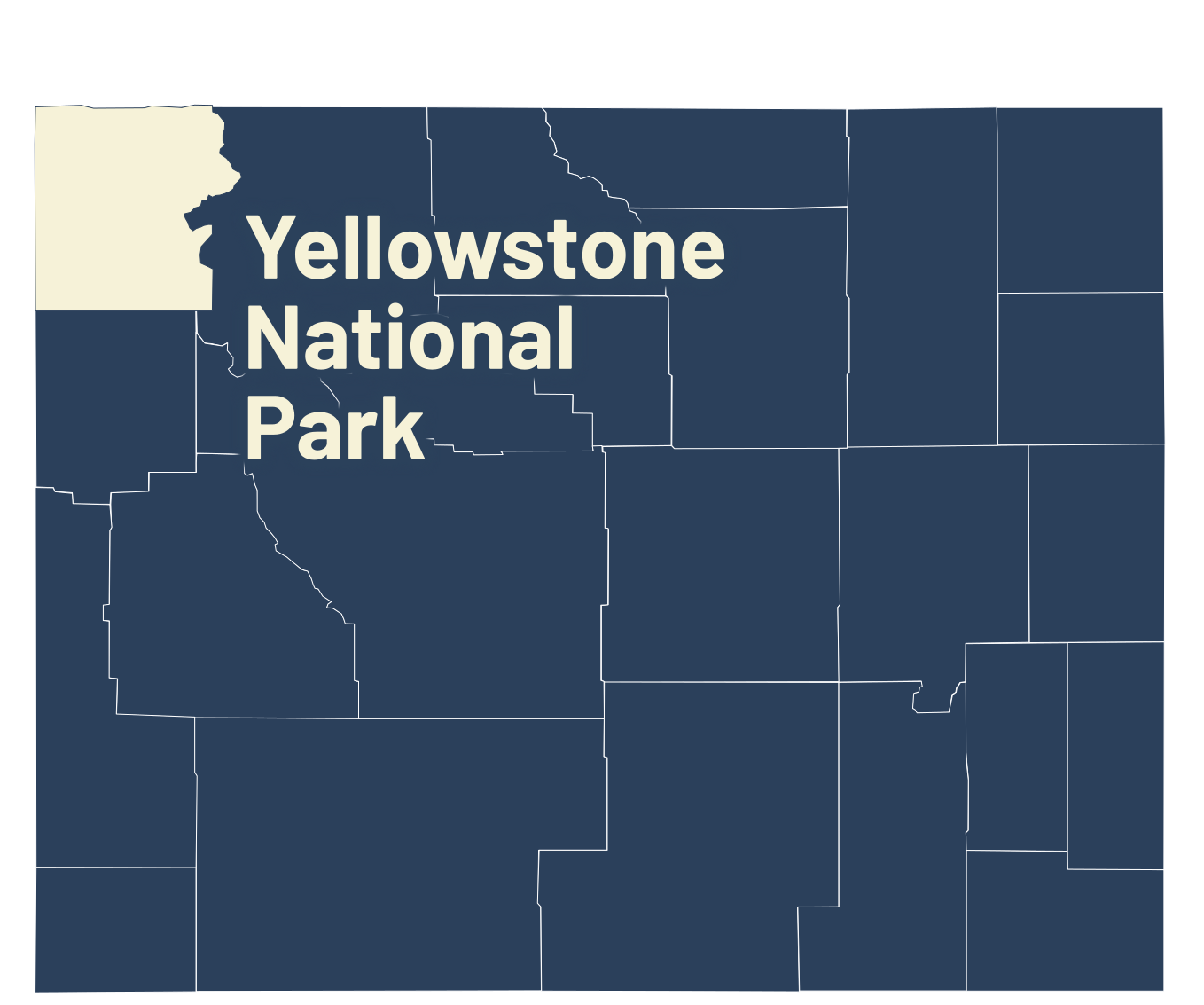
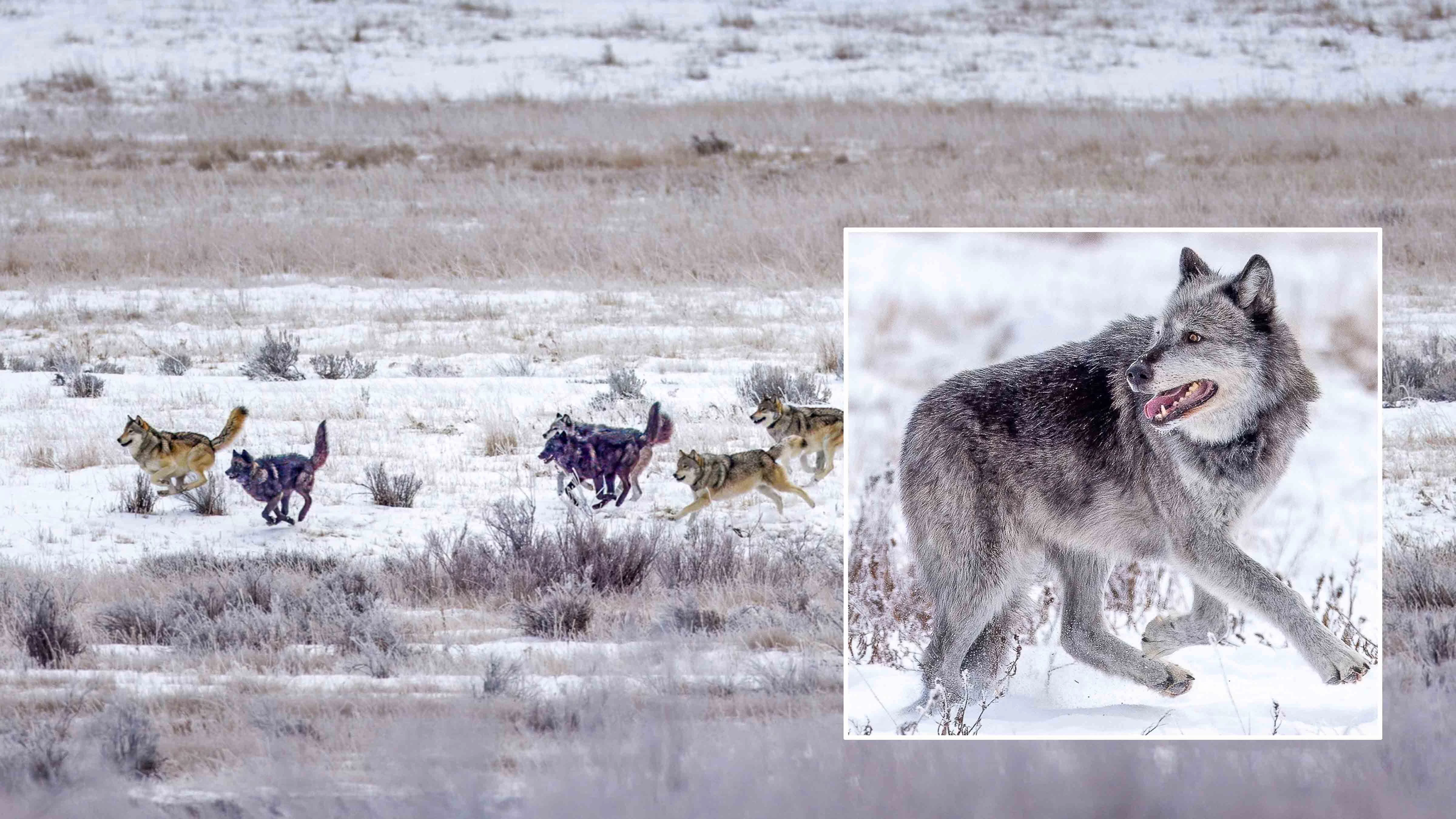
After a storm of controversy leading up to Tuesday’s opening of the Wyoming wolf hunting season, the famous pack at the center of it all, the Mollie's, apparently is safely back in Yellowstone National Park.
That wasn’t perfectly timed intuition on their part. They’re just doing what wolves normally do this time of year: Moving around because their pups are old enough to do so, a prominent wolf biologist says.
“The transition goes from the den to moving around close to the den, then to a bigger area,” Robert Crabtree, founder, chief scientist and president of the Yellowstone Ecological Research Center, told Cowboy State Daily. "Then they move to a rendezvous site.”
Even so, hunters are hopeful, and wolf advocates are fearful, that the Mollie's will stray back out of the park sometime before the hunting season closes in December or the wolf kill quota is met in that area.
So, it’s still possible that members of the Mollie's, including its 12-year-old matriarch, Wolf 1090F, could get shot. She’s thought to be the oldest living wolf in the Yellowstone area and the second-oldest ever in the park.
Wolf advocate Samantha Miller told Cowboy State Daily the Mollie's should get special protection from hunters because of the pack’s scientific value and its value to the wolf tourism industry.
Wolves “don’t know the invisible boundaries of the park,” said Miller, the senior carnivore campaigner with the Center for Biological Diversity.
Outdoorsman Olin Machen of Cody took a different view.
“As far as the Mollie’s pack, my only thoughts are pretty simple: If they are out of the park boundary, they are fair game,” he told Cowboy State Daily.
Pups Old Enough To Move
The Mollie's are the oldest pack in Yellowstone. They’re one of the park’s most visible and frequently photographed packs, which has earned them a worldwide fanbase.
The pack was established when wolves were restored into Yellowstone in 1995 and originally called the Crystal Creek Pack.
In 2000, the pack was renamed the Mollie’s in honor of the late Mollie Beattie, who accompanied the first wolves into the park as the first woman director of the U.S. Fish and Wildlife Service.
Controversy kicked off late last year, when the Mollie's decided to raise pups outside of Yellowstone for the first time.
The pack denned on the Shoshone National Forest east of the park boundary. The site is also in the Wyoming Game and Fish Department’s Wolf Hunt Area 1.
For the 2026 wolf season, there is a four-wolf kill quota for hunt areas 1 and 2. That means that once a total of four wolves have been killed in either or both of those areas the hunt will shut down, regardless of how many hunters are left holding unfilled tags.
There was recent chatter that at least some of the Mollie’s had moved back into Yellowstone. It’s not unusual for packs to vacate den sites this time of year. A roughly 6-month-old pup is old enough to move with adults.
Biologist Doug Smith, who led the wolf program in Yellowstone National Park for nearly three decades, confirmed to Cowboy State Daily on Tuesday that the Mollie’s had apparently re-entered Yellowstone, and the pups being old enough to move was probably the reason.
‘Territories Can Shift’
Crabtree explained that the Mollie's are right on schedule for becoming highly mobile.
Most wolf packs include a breeding pair, and mating occurs in February. Pups are usually born in early April, he told Cowboy State Daily.
While the pubs are young, the pack’s life centers on the den, but that changes as the offspring grow.
The final stage is moving beyond the aforementioned rendezvous site “more across their entire territorial area,” Crabtree said.
That’s probably the stage the Mollie's are in, he said.
The pack’s historical range is all inside the park. But that might have changed, Crabtree said.
“Territories shift,” and the primary driver is the availability of a prey base, such as elk, he said.
And it’s not just the sheer number of prey animals, he added. Prevailing snow conditions can also dictate where packs choose to live and hunt.
Wolves have a distinct advantage over prey in deep snow. Their large paws allow them to run across the surface if it’s crusted, whereas prey animals' hooves punch through the snow.
“If wolves can sense that deer and elk are post-holing (sinking their legs into the snow), there’s going to be multiple kills that night,” he said.
Willing To Take Risks
As most packs would, the Mollie’s will probably hang tight together while the pups are still young enough to rely on adults to provide food, Crabtree said.
“The pack is going to be very cohesive until next spring and fall, until the pups are old enough to start dispersing,” he said.
Meanwhile, even if the Mollie's become aware that hunters are after them in certain areas, they’ll go where the best food opportunities are, he said.
“Wolves are willing to risk getting shot by hunters to feed their rapidly growing pups,” Crabtree said.
‘There’s Still Wolves Around’
Cody-area sportsman Ed Epperson was out hunting pronghorn Tuesday when he took a call from Cowboy State Daily.
Despite missing the opening day of wolf season, he said he plans to try filling a wolf tag.
Even if the Mollie’s pack has cleared out, there will be an opportunity, he said.
"There are still wolves around. We’ve been hearing them,” he said.
Leading up to the hunting season, Austin, Texas-based wolf advocate Jonas Black and others put up a 10,000 reward for information leading to the identity of hunters who shot 1090F or other members of the Mollie’s.
They later withdrew the offer and took down social media posts referencing the reward.
Even so, the reward offer prompted some hunters, or at least those claiming to be hunters, to post vows on social media to kill 1090F.
Epperson thinks the reward offer backfired and essentially “put a bounty” on the Mollie’s.
If the Mollie's move back into a hunt area, they could be easy for hunters to identify because they’ve been photographed so frequently.
He wryly noted that hunters determined to find Mollie’s wolves could buy posters of them “so they’d know which wolves to shoot.”
Machen said he’d also like to fill a wolf tag if he gets a chance.
"I am not planning on hunting wolves alone (specifically). I generally just always have a tag and am more opportunistic,” he said.
“You have to have horses to really get after them,” he added.
Pressuring Game And Fish
Wolf advocates have tried pressuring the Wyoming Game and Fish Commission to make an exception for the Mollie’s, perhaps suspending hunting in Area 1.
The commission thus far has refused. Some commissioners previously told Cowboy State Daily they trust the recommendations of the Game and Fish department biologist and wildlife managers in setting the wolf hunting seasons and quotas.
Miller said advocates aren't ready to give up. She and others plan to attend the commission’s next meeting, scheduled for Sept. 21-22 in Evanston.
Mark Heinz can be reached at mark@cowboystatedaily.com.


