
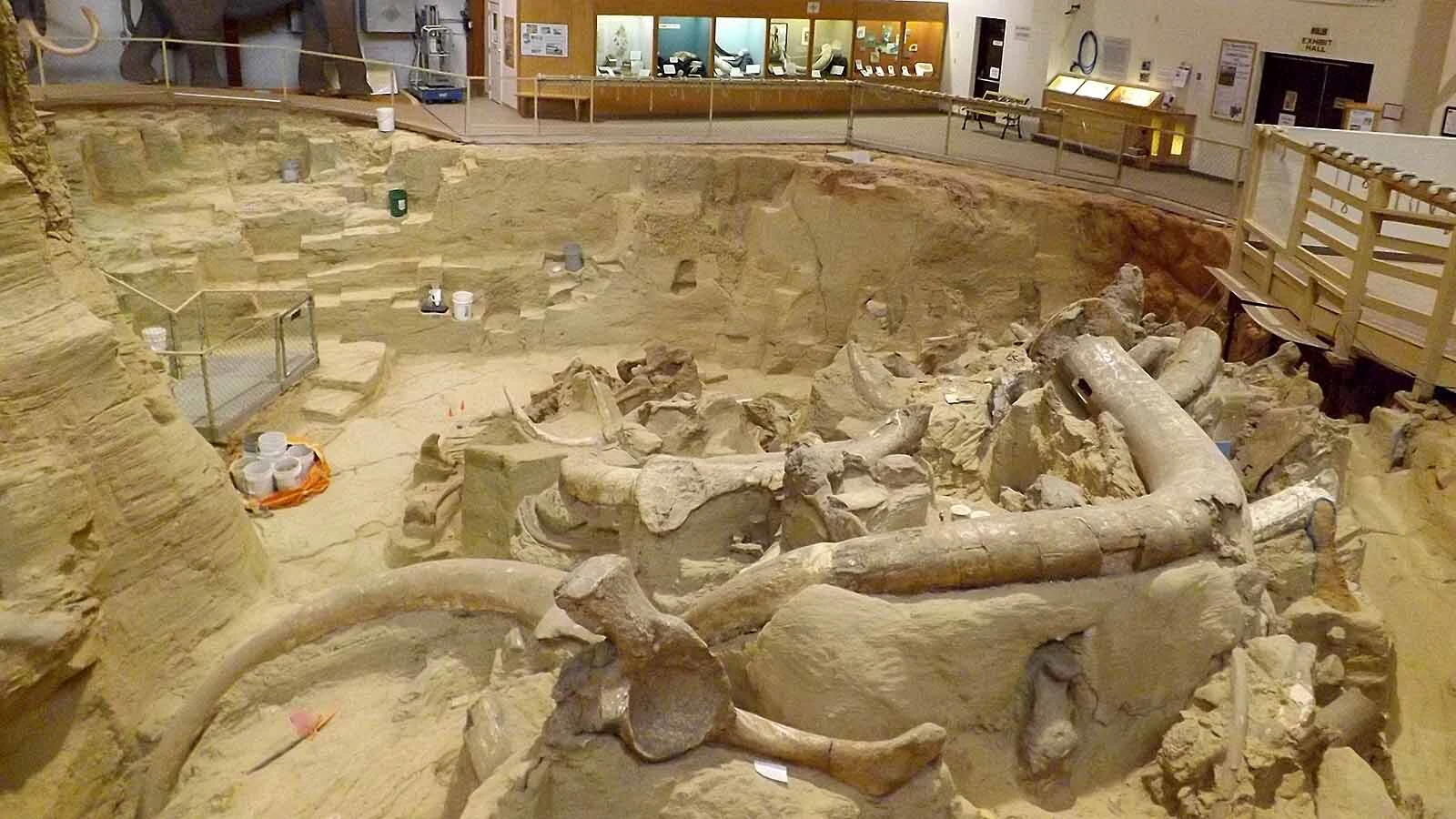
The world-famous Mammoth Site of Hot Springs, South Dakota, is older than scientists believed.
A lot older.
A new study published in the journal Quaternary Research revealed that the ancient sinkhole, containing dozens of intact mammoth skeletons, is between 160,000 and 232,000 years old.
That’s 100,000 years older than paleontologists thought. This raises more questions than it answers, which is typically a sign of a great paleontological discovery.
“The new ages open the door to revisit many of our previous interpretations about the site,” said Christoper Jass, curator of Quaternary paleontology at the Royal Alberta Museum and lead researcher at The Mammoth Site. “It’s reinvigorating research on the Mammoth Site bonebed.”
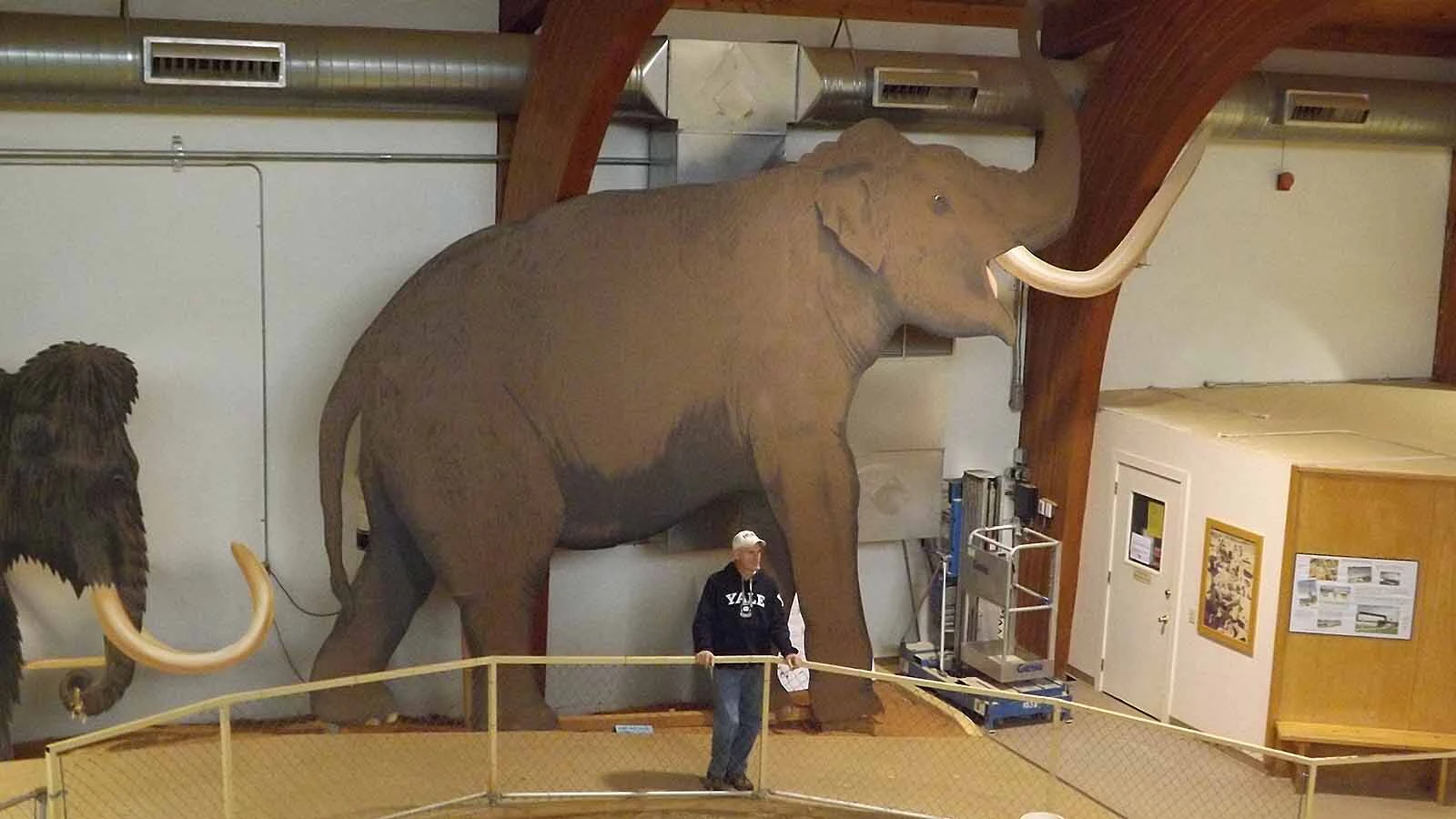
The Older Dating Scene
The Mammoth Site is both a museum and an active paleontological excavation. Since the first bones were uncovered there in 1974, more than 61 mammoth skeletons have been discovered in what’s believed to have been an Ice Age sinkhole.
Other Ice Age animals found at the site include giant short-faced bears, camels, shrub oxen, llamas, and other long-extinct mammals along with ancestors of North America’s modern wolves, ferrets, and prairie dogs.
Jass, one of the authors of the new study, used infrared-stimulated luminescence (IRSL) to determine an approximate age of the sediments at the Mammoth Site.
“Simply put, it’s a method for determining the last time buried sediments were exposed to sunlight,” he told Cowboy State Daily. “More specifically, it measures the energy of trapped electrons in mineral grains, like feldspar, that are released when exposed to light. From that, an estimate of time can be calculated.”
The age of the Mammoth Site has been an open question for 50 years.
It was originally estimated to be around 20,000 years old. As new technologies became available, such as radiocarbon and thermoluminescence dating, the site's age kept getting older.
The last study from 2016 used optically stimulated luminescence (OSL) to get an approximate age of nearly 129,000 years by sampling the sediment surrounding some of the mammoth skeletons.
The IRSL used by Jass's team revealed that the oldest sediments, and the mammoths buried in them, were even older than that.
“At a minimum, it suggests that the site was filling in with sediment, and possibly trapping mammoths, over a much longer time span than we previously hypothesized,” Jass said.
Teenage Dirtbags
While this much older age is an earth-shaking discovery, one challenge it raises is determining how it fits into the well-known story of the Mammoth Site.
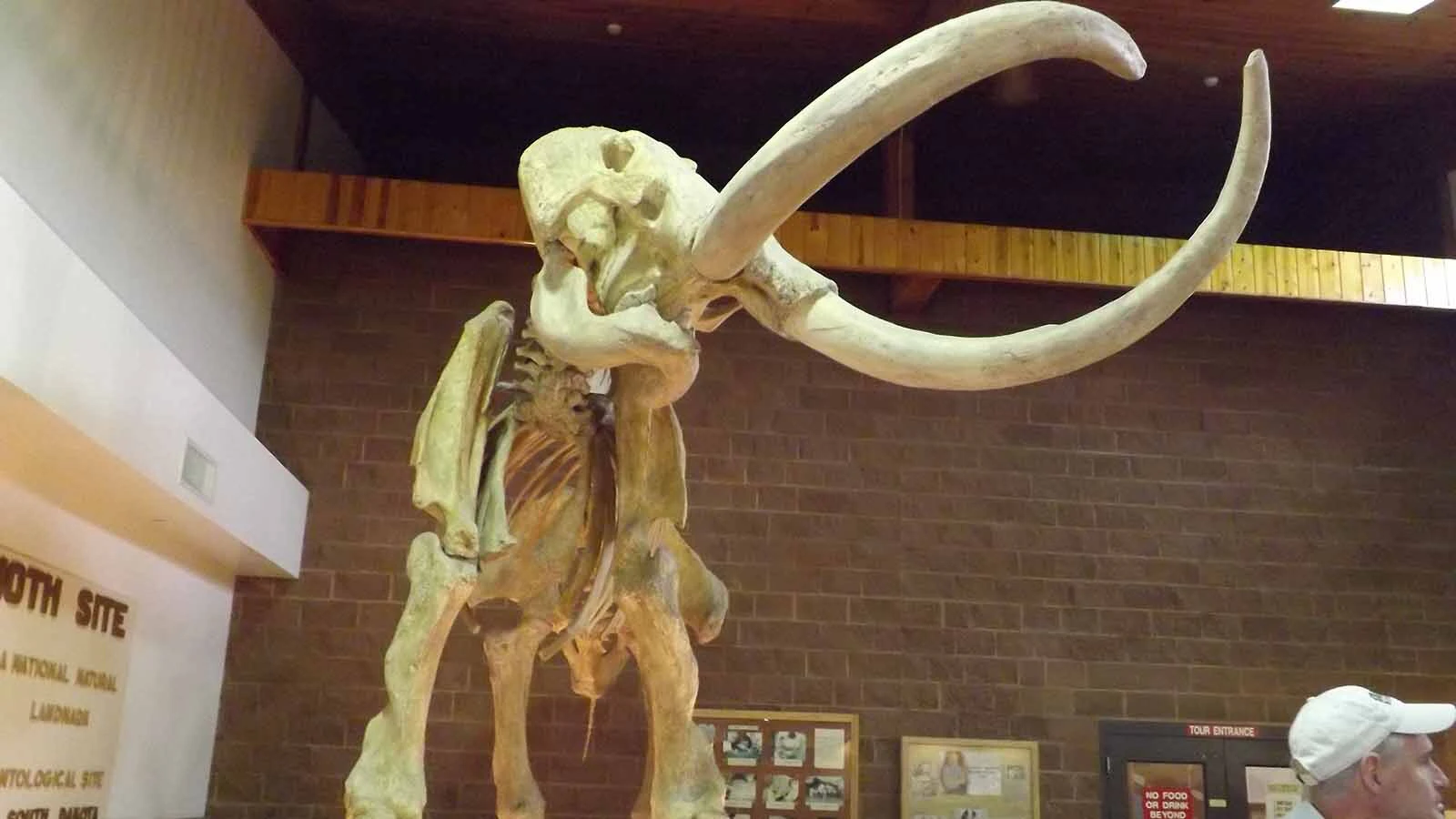
So far, the skeletons of 58 Columbian mammoths and three Woolly mammoths have been discovered at the site. Columbian mammoths were larger and less hairy than woolly mammoths and are the most common type of mammoth found in South Dakota and sites like Natural Trap Cave in Wyoming.
Based on their skeletal anatomy, nearly all of them are young male mammoths.
Geologic assessments indicate that the sinkhole was formed by the collapse of a limestone cavern. The hole, over 65 feet deep and up to 150 feet wide, filled with thermal water from the nearby hot springs.
When mammoths and other animals entered the sinkhole, they couldn’t escape and slowly perished from exhaustion or starvation, unless they drowned first.
Over time, sediment flowed into the sinkhole and covered the dead mammoths. That’s why they’re so uniquely preserved today.
One of the amazing aspects about the Mammoth Site is that none of the bones are fossilized. They might be hundreds of thousands of years old, but the bones haven’t been replaced with other minerals, which is how extinct organisms become fossils.
Now that the oldest sinkhole sediments have been found to be up to 232,000 years old, how does that fit into the story of the mammoths?
“It doesn’t change the basic story of how animals were trapped, but it does have huge implications for refining that story,” Jass said. “As an example, we previously estimated that individual animals were trapped periodically over a span of 500 to 800 years. The new work means that animals were, possibly, trapped over a span of over 100,000 years.”
So the Mammoth Site was the same teenager death trap for hundreds of generations of rambunctious male mammoths? It’s a possibility that can’t be ruled out.
“We need to revisit that question of how often animals were trapped to better understand the nature of the site,” he said.
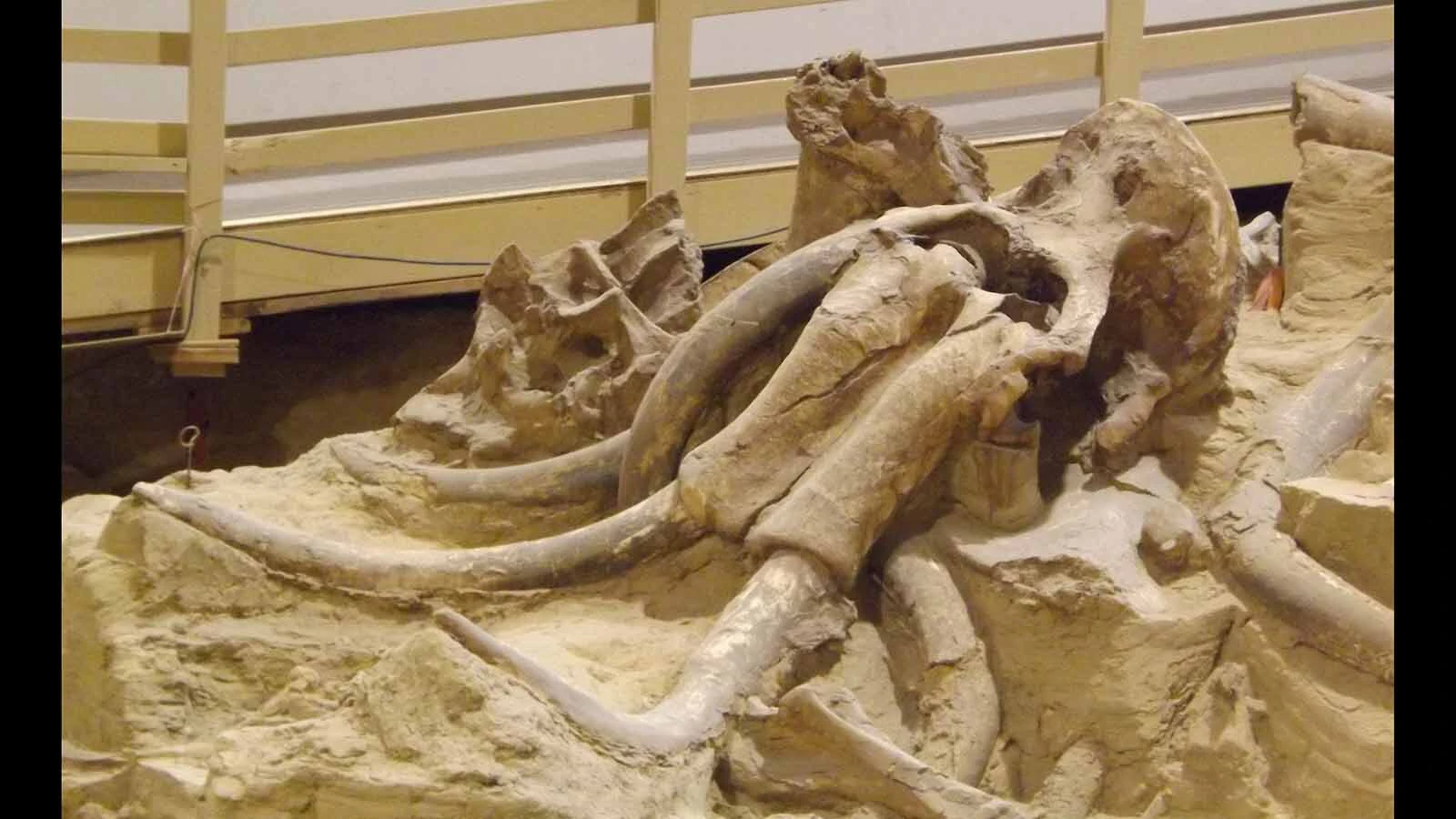
The Mammoth Site in Hot Springs, South Dakota. New research has revealed that the site, which preserved 61 intact mammoth skeletons, is between 160,000 and 232,000 years old — much older than previously thought. (Andrew Rossi, Cowboy State Daily) 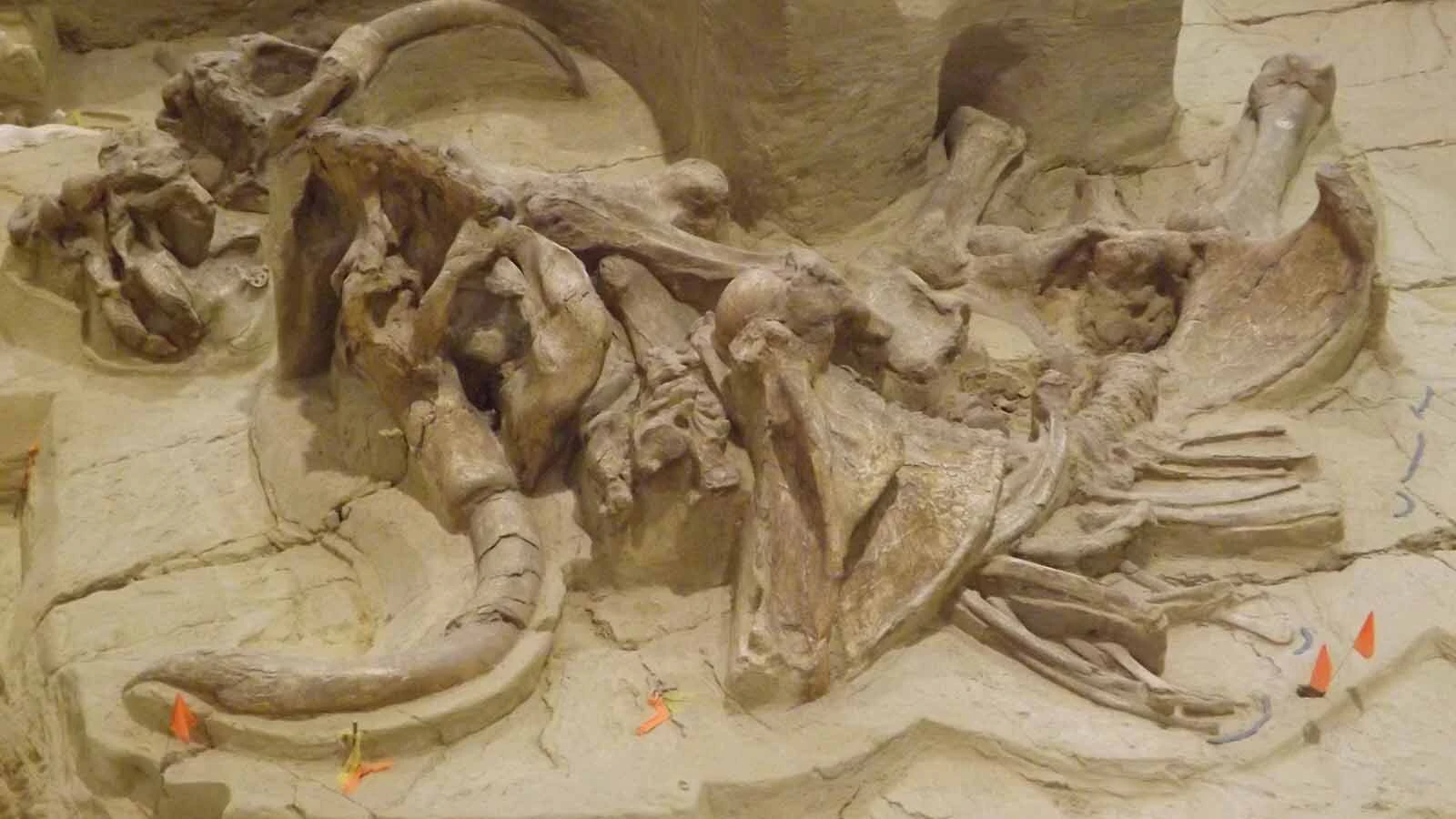
The Mammoth Site in Hot Springs, South Dakota. New research has revealed that the site, which preserved 61 intact mammoth skeletons, is between 160,000 and 232,000 years old — much older than previously thought. (Andrew Rossi, Cowboy State Daily)
Sink Their Teeth Into It
Revising the age of the Mammoth Site wasn’t the only thing to come out of the new study. Jass highlighted how the IRSL results revealed significant changes in the environment surrounding the sinkhole over thousands of years.
“The sedimentary sequence appears to include both an extensive, warmer, interglacial period and an extensive, cooler glacial period,” he said. “We previously estimated a much shorter timeframe in which mammoths would have been trapped. We now suspect the deposit spans interglacial and glacial time.”
If the environment changed over time, there’s reason to believe the animals changed along with it. That’s what has Jass so jazzed.
“Given the long span of time we now estimate for the site, we’re doing some work to understand changes in diet, or lack thereof, preserved in the teeth of the mammoths.”
According to Jass, the change from interglacial to glacial environments should have altered the diets of the mammoths preserved there.
If that’s the case, evidence can be recovered from the teeth of the mammoths, which are excellent indicators of prehistoric diets for everything from dinosaurs to giant "hell-pigs."
“We should see some differences in vegetation through the excavated sequence that reflect that transition, potentially recorded in the type of tooth wear preserved in the mammoths,” he said.
Jass also said mammoth teeth will be sampled and dated to see whether they correlate with the much older age determined from the IRSL sediment analysis. That work has been underway at the site throughout the summer.
“We want to test other dating methods to see how closely they align with the new data,” he said.
Forever And Never Stuck In Place
Since its discovery, the age of the Mammoth Site has gone from 20,000 years to over 200,000 years old. Paleontologists and paleoecologists will be grappling with this new data and the implications for their own work for many years to come.
Among the excitement and intrigue, Jass felt a wave of gratitude for Phil Anderson, the landowner whose generosity made the ongoing work at the Mammoth Site possible.
Anderson was hoping to build a subdivision in that spot. When a construction worker uncovered the first mammoth bones, Anderson halted construction and donated the land and all its yet-to-be-revealed contents for scientific study.
“I think our work illustrates the foresight of the folks who made decisions early on to try and preserve much of the site as it has been found,” he said. “The fact that we’re able to apply different techniques today is a result of the decision to preserve the site as an in-situ site.”
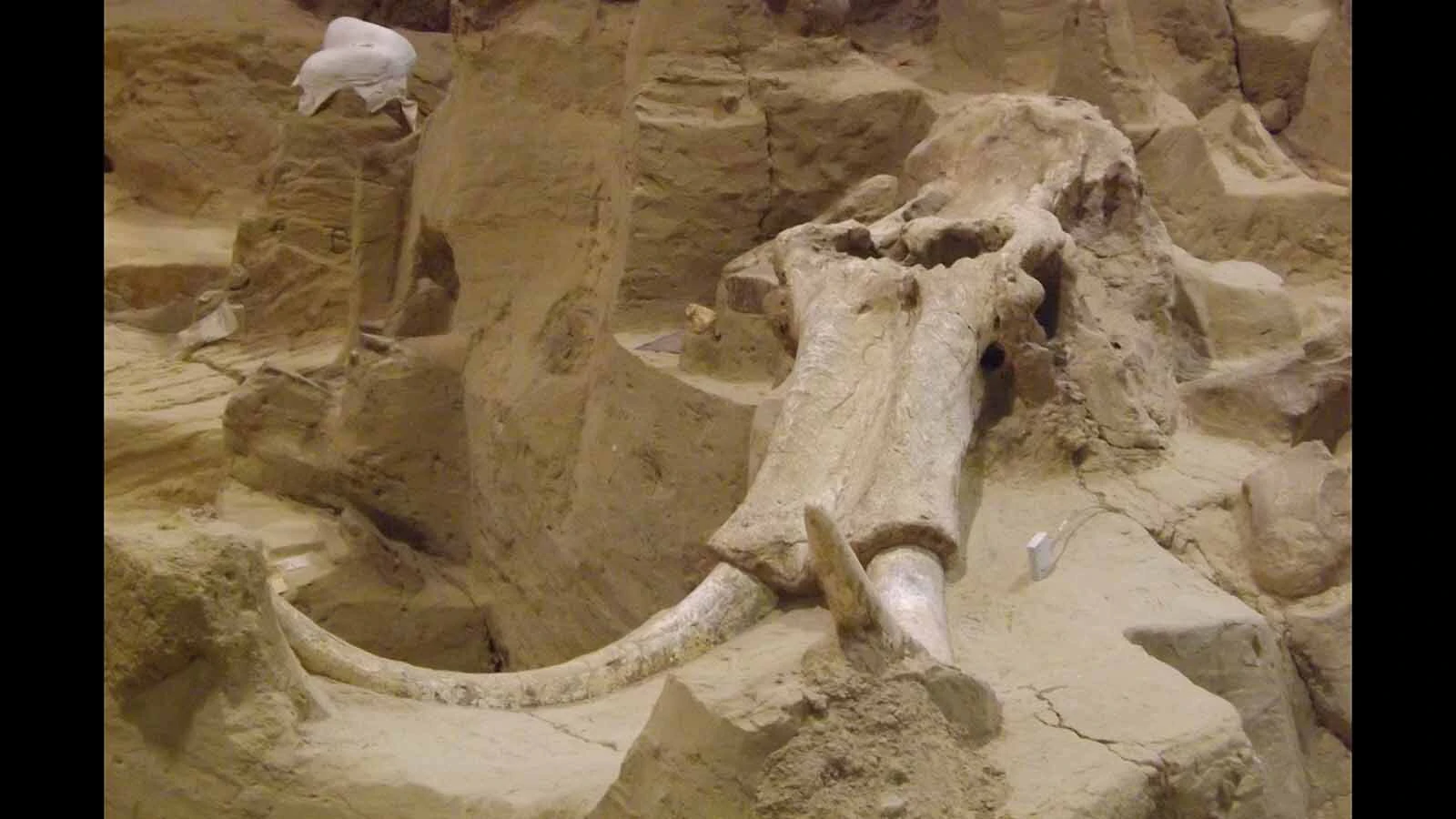
Today, the Mammoth Site is a National Natural Landmark. Everything found in the ongoing excavations stays on-site, including the mammoths who lie where they were found, completely intact, for visitors to see.
Jass and his peers will continue to explore and discover much more at the Mammoth Site. That’s possible because everything’s been so well-maintained and curated since the site was first discovered.
There are many mammoth tasks ahead for Jass, but that’s the fun of it. There are always more things to find and unknowns to answer.
“More than anything, I’m excited about the next set of research questions that we’ll be working on,” Jass said. “It’s an incredibly exciting opportunity to re-evaluate much of what we thought we knew.”
Andrew Rossi can be reached at arossi@cowboystatedaily.com.


