
Ask most Wyoming voters who sits on their fire district board, and you’ll get a shrug.
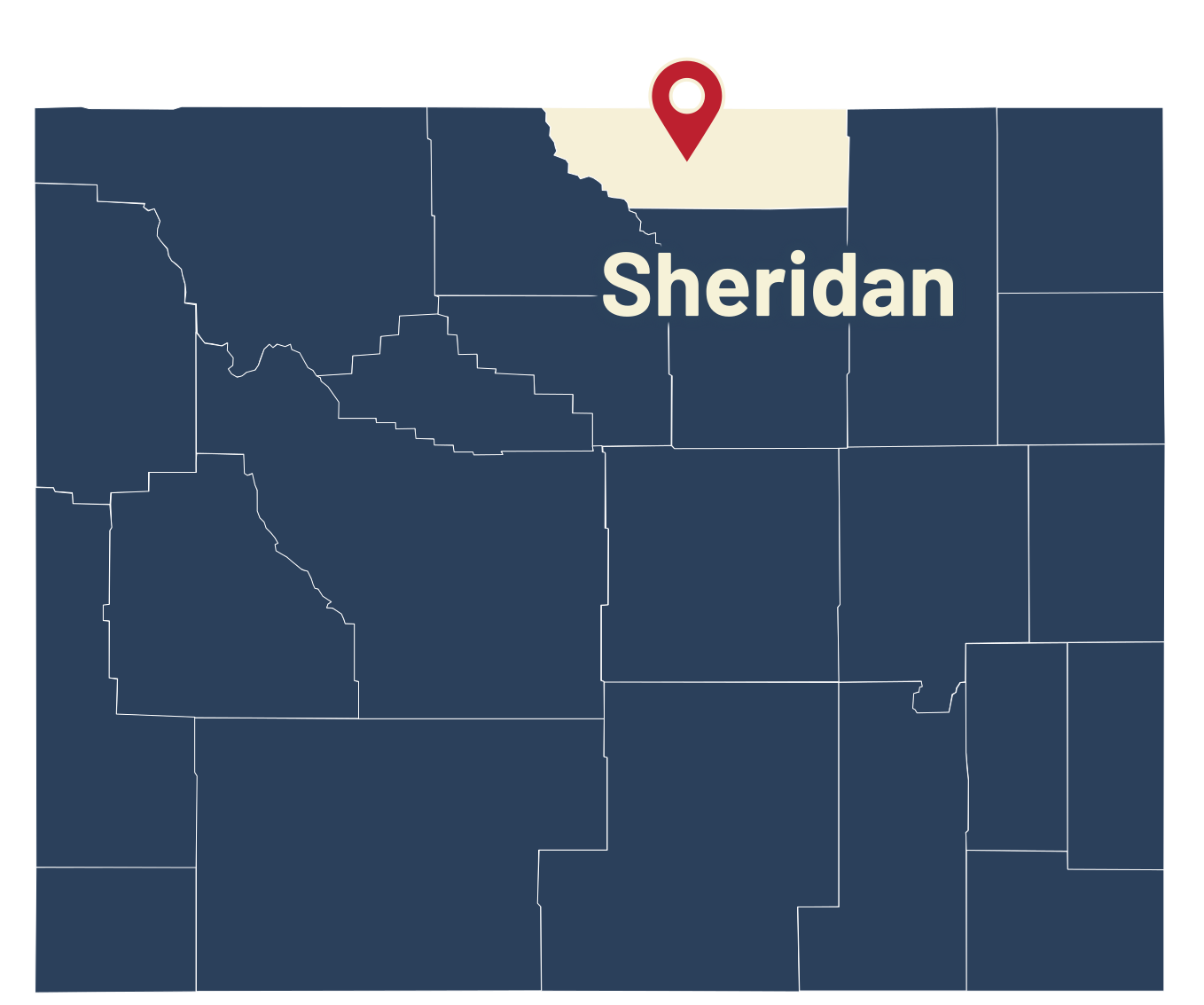
Ask who just voted to fund senior services in their own county, and most won’t know that vote happened either. In Sheridan County, it happened in the August primary: voters created a Senior Citizen Service District by 85 votes, backed by a property tax of up to two mills.
The margin was narrow. The need behind the vote is much larger.
Nearly 29 percent of Sheridan County residents are over age 60, representing 8,909 people.
Senior services already include meals, adult day care and transportation, with demand expected to grow as the population ages. Wyoming law requires voters to revisit the levy every four years, so this isn’t a decision anyone makes once and forgets.
Sheridan County looked at a local need and chose a local response.
Special districts work exactly this way.
Across Wyoming, more than 650 special districts provide services through 27 different types of districts.
They exist because communities identified needs city or county government wasn’t structured or funded to meet, especially across rural areas. Fire protection, water and sewer, conservation, cemeteries, recreation, rural health care and senior services all fit within this form of local government.
We talk a lot about local control in Wyoming. Government is how the community manages itself, and special districts put that idea into practice as plainly as anything in state government.
Residents create a district around a specific service. Local people serve on the board. Local revenue supports the work. Decisions stay close to the people receiving the service and paying for the service.
Here’s the part most of us rarely see.
More than 2,350 Wyoming residents serve on special district boards, most without pay, and the Wyoming Association of Special Districts estimates they put in around 55,000 hours a year, worth more than $1.2 million in volunteer time.
Those hours represent neighbors reading budgets, reviewing equipment needs, overseeing employees, planning services and deciding how limited dollars get spent. In many communities, the people carrying this responsibility are the same people you see at the grocery store, church, school events or local meetings.
A fire district board decides where resources go, what equipment needs replacement and whether volunteers have the training and gear they need.
Conservation district boards work with water quality, irrigation, flood mitigation and land stewardship. Senior districts help support transportation, meals and programs for older residents.
Cemetery districts oversee long-term care of public burial grounds.
Most of this work happens quietly.
You notice the fire district when smoke is rising. You notice senior transportation when someone needs a ride to an appointment. You notice water and sewer systems when service fails. You notice a cemetery district when a family needs one.
Public attention often arrives after resources shrink.
Recent property tax changes help explain why understanding these districts matters.
In 2025, the Legislature passed a new homeowner tax exemption that lowered the taxable value of many houses. Special districts rely almost entirely on property tax revenue, so when that value drops, so does their budget.
The research on recent losses gives the issue a human scale. Park County Weed and Pest lost about $182,000 and reduced its seasonal crew from 12 workers to eight.
Fire and emergency medical services in several areas have faced similar financial pressure. Across special districts, estimated property tax revenue losses reached about $12.7 million.
A tax reduction affects more than a property tax bill. Fewer dollars eventually reach a board deciding whether to replace equipment, reduce staffing, postpone maintenance or trim a service.
None of this means every district needs more money. Public spending always deserves scrutiny. Local control works best when local residents understand both the service and the cost.
Participation matters too.
Some special district board seats will appear on General Election ballots in November. Others won’t. Wyoming law allows many special district elections in March, May or November.
Weed and pest district directors are appointed by county commissioners rather than elected.
So looking only at the top of a November ballot won’t tell you who governs every special district serving your community.
Now Sheridan County residents will carry the responsibility for governing the service their neighbors just created.
The same quiet work happens all across Wyoming.
If local control matters to you, learn which districts serve your home and community. Find out who sits on their boards.
Pay attention when seats come open. Look beyond the familiar races on your ballot.
And when one of those boards needs another neighbor willing to serve, give some thought to whether the person stepping forward should be you.
Local control doesn’t run itself.
Gail Symons can be reached at GailSymons@mac.com