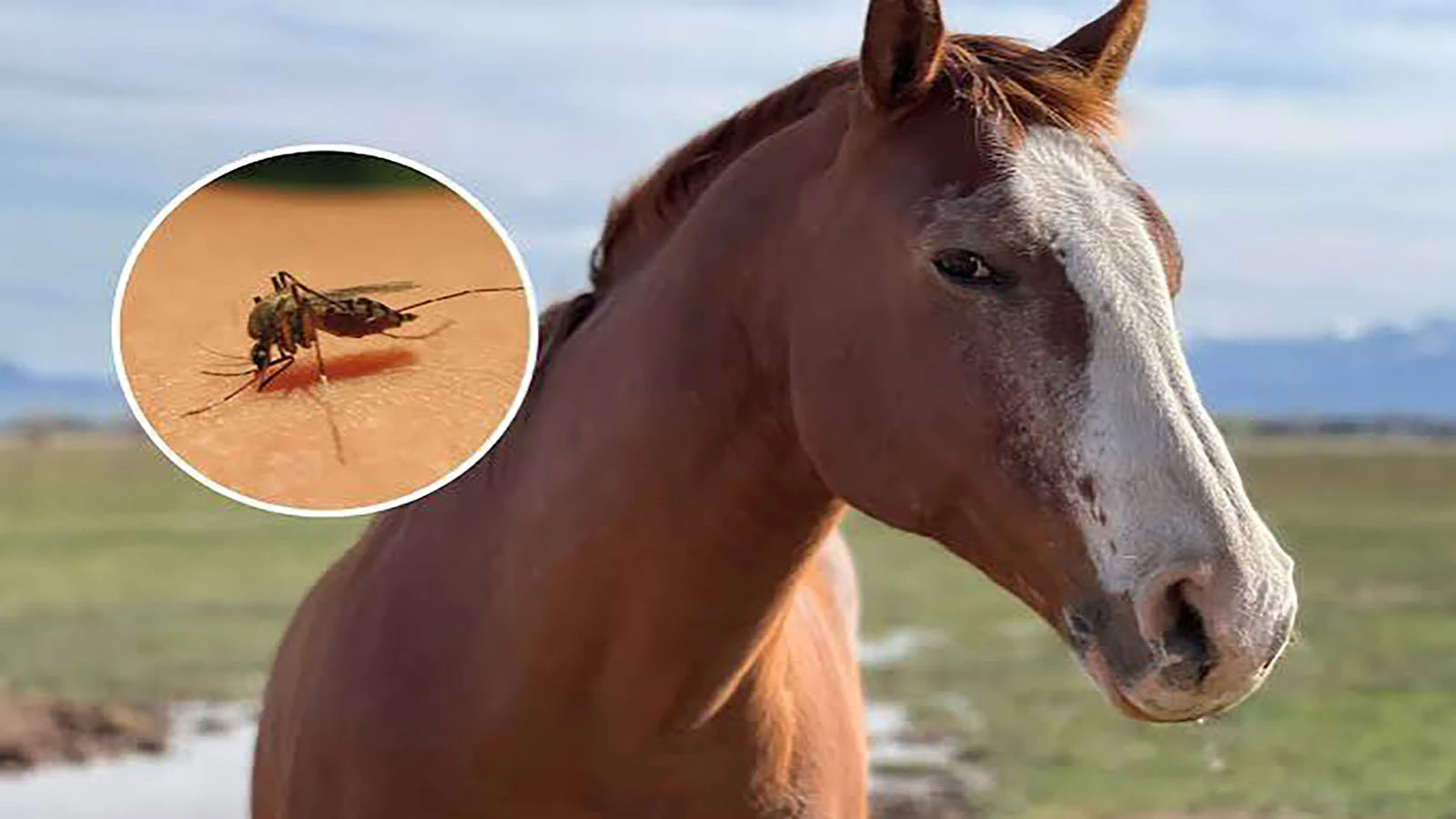
Three cases of West Nile virus have been reported in Wyoming horses so far this year, marking a sharp decline from the nearly 50 reported during an alarming outbreak in 2023.
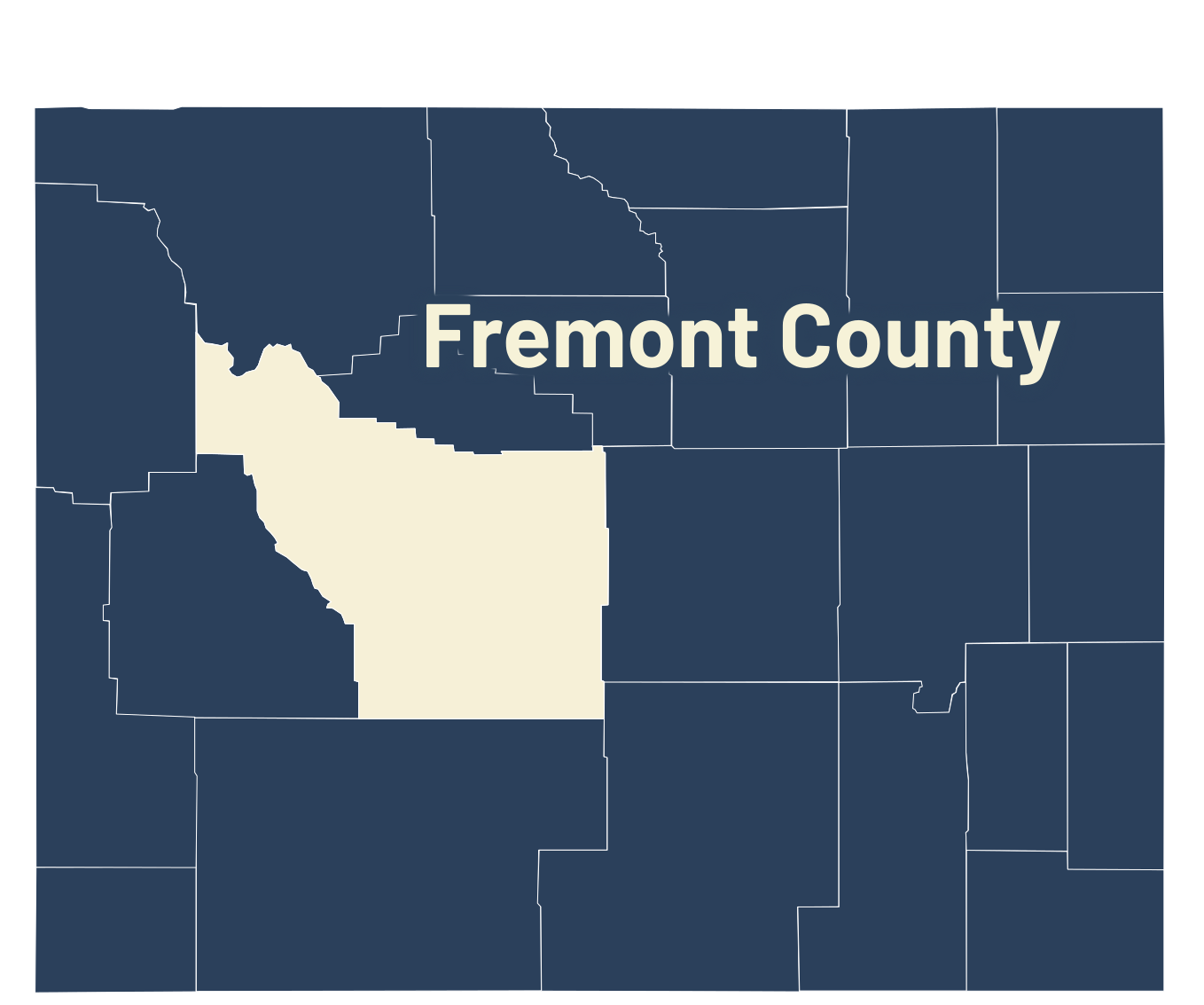
Two of the cases were recently confirmed in Fremont County, while a third horse in Uinta County tested positive last week, Wyoming State Veterinarian Hallie Hasel told Cowboy State Daily.
The Fremont County cases are the first equine West Nile cases reported to the Wyoming Livestock Board this year.
Although the number of cases is lower than usual, Hasel said horse owners should not let down their guard.
“It is quite often fatal, because it is a neurological disease,” she said.
West Nile virus is spread when mosquitoes feed on infected birds and then bite horses or people. Horses cannot spread the virus directly to humans or to other horses.
The disease occurs in Wyoming horses every year, Hasel said, but the number of cases can vary widely depending in part on conditions that affect mosquito populations.
Dry Year, Fewer Mosquitoes
Mosquito populations depend heavily on moisture and standing water.
Wyoming has had relatively little moisture in many areas this year, Hasel said, which could mean fewer places for mosquitoes to breed.
Pockets of standing water, lakes and other wet areas can still provide ideal mosquito habitat. Hasel said the water-rich areas of Fremont County might help explain why two of the state's three reported cases have occurred there.
Calls to several Fremont County veterinarians were not returned before publication. A spokesperson at Lander Valley Animal Hospital declined to comment, saying neither of the horses that tested positive involved that clinic.
Statewide Stats
Fremont County consistently ranks as a county with one of the highest reports of equine West Nile virus.
According to the Wyoming Department of Health Equine Data, Park County has reported the most equine cases between 2017 and 2026, at 17. Fremont County ranks second, with 12.
The Wyoming Weed and Pest Council says Wyoming recorded 50 equine cases of West Nile virus in 2023, compared to just a single case the previous year. That’s because a spring left behind heavy snowmelt and standing water, which facilitated a high mosquito population.
Human cases also saw a jump in 2023, with 27 cases reported compared to three in 2022.
Even with just three cases this year, Hasel said the message for horse owners remains the same: Vaccination is the best defense.
‘The Disease Is Often Fatal’
West Nile virus can range from mild illness to severe neurological disease in horses.
Not every infected horse will show clinical signs, according to the State Livestock Board. Those that do can experience muscle tremors, incoordination, stumbling, weakness in their limbs, impaired vision and, in severe cases, convulsions or an inability to stand.
Hasel urged horse owners to contact a veterinarian if they notice neurological symptoms or other concerning changes in their animals.
Horses with West Nile often require supportive veterinary care, and treatment depends on the severity of the illness, the State Livestock Board reported. There is no specific cure for the virus, although some horses can recover with treatment and supportive care.
That makes prevention particularly important.
“The vaccine is inexpensive, considering the disease is often fatal,” Hasel said.
She also recommends that horses receive appropriate booster shots. Owners should work with their veterinarians to determine the best vaccination schedule.
Reducing Mosquito Exposure
Horse owners can also reduce the risk by limiting mosquito breeding areas and exposure.
That includes removing stagnant water when possible and regularly dumping, cleaning and refilling water buckets and troughs.
Owners can also consider keeping horses inside during peak mosquito feeding times, generally early in the morning and in the evening, and using mosquito repellents approved for equine use.
For Hasel, the relatively low number of West Nile cases reported in Wyoming this year is welcome news.
But with mosquitoes still active and three horses already confirmed with the potentially fatal virus, she said prevention remains critical.
Kate Meadows can be reached at kate@cowboystatedaily.com.